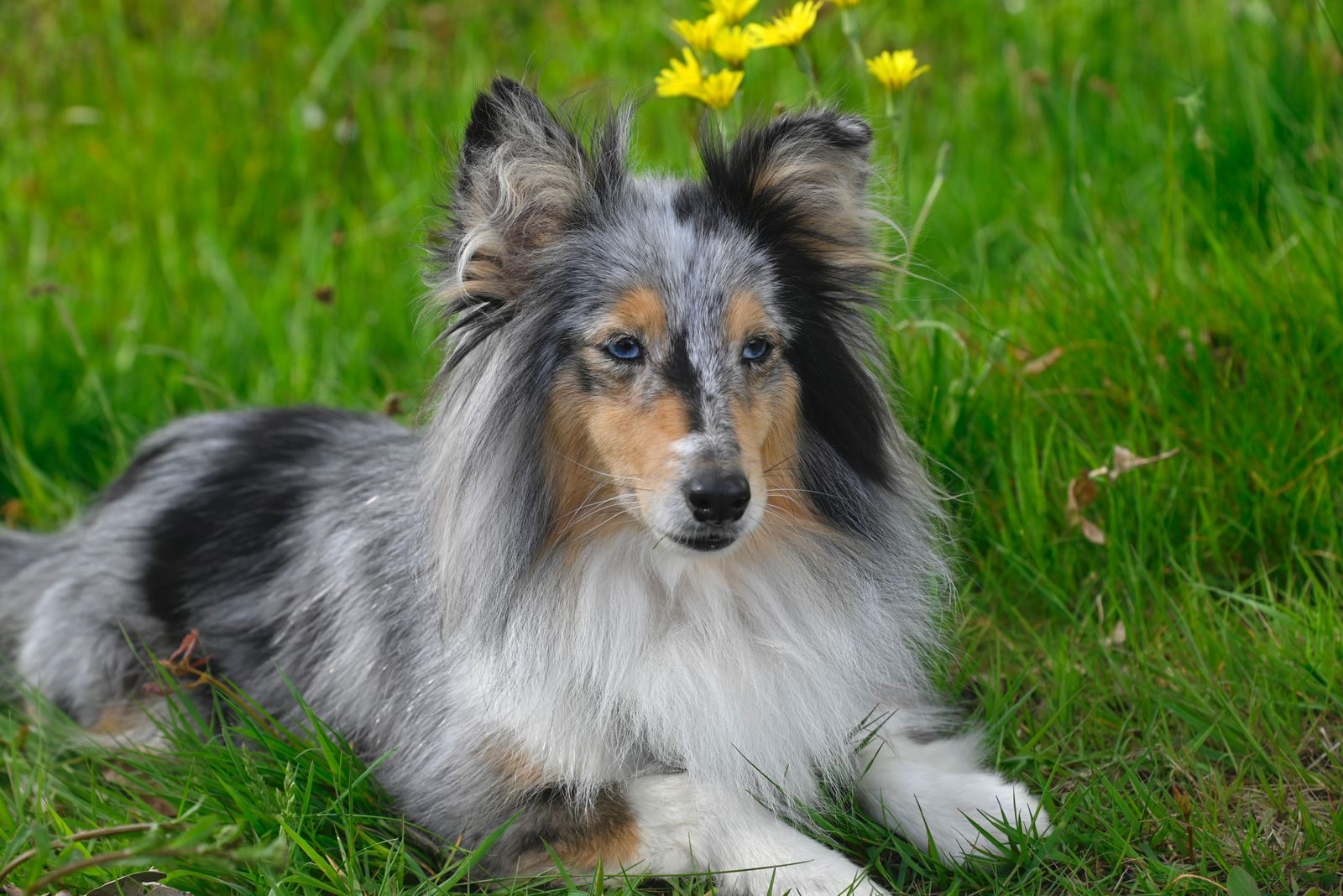
Shetland Sheepdog snapshot
The AKC Official Standard of the Shetland Sheepdog describes a small, alert, rough coated, longhaired working dog. The breed traces to the Border Collie of Scotland by way of the Shetland Islands, with later Collie crosses. The standard sets height at 13 to 16 inches at the shoulder, and heights below or above that range are disqualifications in the show ring. The AKC breed page gives weight as 15 to 25 pounds and life expectancy as 12 to 14 years, and it places the breed in the Herding Group.
| Height | 13 to 16 inches at the shoulder, as stated in the breed standard. Heights outside that range are disqualifications. |
|---|---|
| Weight | 15 to 25 pounds, as listed on the AKC breed page. |
| Lifespan | 12 to 14 years, as listed on the AKC breed page. |
| Coat | A double coat. The outer coat is long, straight, and harsh. The undercoat is short, furry, and dense. The mane and frill are abundant. |
| Colors | Black, blue merle, and sable from golden through mahogany, with varying amounts of white and tan markings, as stated in the breed standard. |
| Temperament | Intensely loyal, affectionate, and responsive to the owner, and reserved toward strangers without fear, in the words of the breed standard. |
| Group | Herding Group, as listed on the AKC breed page. |
| Popularity | No. 29 on the AKC list titled Most Popular Dog Breeds of 2024. |
The parent club for the breed is the American Shetland Sheepdog Association, called ASSA. ASSA was founded in 1929, and it is the AKC parent club for the breed. Parent club means the national club the AKC recognizes for that breed. ASSA keeps the breed health guidance used throughout this guide, it recommends minimum health testing of breeding stock through the CHIC program described below, and it states a sentence every buyer should read in full before reading the condition cards. ASSA lists the breed's known problems, and then states that these problems are not common in the breed, with the emphasis in its own wording. Both halves of that statement matter.
Health tendencies in Shetland Sheepdogs
ASSA lists these known problems in the breed: hip dysplasia, thyroid disease, eye diseases, dermatomyositis, von Willebrand disease, gallbladder mucoceles, and epilepsy. The cards below build on that list, and add the records that sit beside it. MDR1 drug sensitivity earns a card because it is a permanent safety record in this breed, not because it is a disease. Progressive retinal atrophy earns a card as two genetic forms, because the primary sources describe two forms and state plainly that one test does not cover the other. Each card follows the same shape.
One habit runs through every card: the difference between a result and a diagnosis. A result is what a laboratory or a screening program reports, such as a gene result, an eye exam form, or a measured blood level. A diagnosis is a vet's conclusion that a dog has a condition, reached from signs, examination, and tests together. A Sheltie file can hold results for years before any diagnosis exists, and in two cards below a result can exist without the dog ever developing the condition at all.
1. Collie Eye Anomaly
What it is. Collie Eye Anomaly, called CEA, is a condition a puppy is born with, in which the inner structures at the back of the eye do not develop normally. It is also called choroidal hypoplasia. The choroid is the layer inside the eye that carries blood to the retina, the layer that senses light. Hypoplasia means the layer did not develop fully. The main early finding is a thin or underdeveloped choroid. In more severe cases there is a pit or gap in or near the optic nerve, called a coloboma.
Signs to watch for. Many dogs with mild CEA show no sign an owner can see. The changes are at the back of the eye, and they are found by looking into the eye, not by watching the dog at home. In severe cases the signs are vision signs: bumping into objects, hesitance in new places or in dim light, or a puppy that does not track movement as littermates do. An owner should not try to grade CEA at home.
How it is diagnosed. Two different tests answer two different questions. The DNA test checks one known gene change. A study in 2007 found a large deletion in the NHEJ1 gene associated with CEA in the Collie, the Shetland Sheepdog, the Border Collie, and the Australian Shepherd, as summarized by UC Davis VGL. Deletion means a piece of the gene is missing. The test gives a clear, carrier, or affected result for that deletion only. UC Davis VGL also records the limit in plain terms. The NHEJ1 deletion is not fully correlated with optic nerve coloboma.
Care categories. The primary sources used for this guide do not describe a treatment that rebuilds the underdeveloped structures of the eye, and this guide does not invent one. Care is about finding the condition early, grading how severe it is, watching vision over time, and responding to complications such as bleeding inside the eye or retinal detachment if they occur. For most mildly affected dogs, the work is monitoring and honest recording: an eye exam at the right age, the result kept in the file, and rechecks as the vet advises.
2. MDR1 drug sensitivity
What it is. This card is a drug safety card, not an illness card. MDR1 is the older name for the ABCB1 gene. The gene makes a pump protein called P-glycoprotein. That pump helps keep certain drugs out of the brain, at a boundary called the blood brain barrier. UC Davis VGL describes the cause as a deletion of 4 base pairs in the ABCB1 gene. Base pairs are the building blocks that make up a gene. The deletion produces a defective pump, so standard doses of certain drugs can build up in the brain and cause poisoning signs.
How common the gene change is, stated carefully. Washington State University, through its Program in Individualized Medicine, called PRIME, gives an approximate frequency of the MDR1 mutation in Shetland Sheepdogs of 15 percent, on a page dated October 19, 2021, attributed to Washington State University PRIME. The same figure appears in Table 1 of a peer reviewed review by Mealey in 2023. The original genotyping study gives the fuller picture. Neff and others, in 2004, genotyped 190 Shetland Sheepdogs and found a mutant allele frequency of 8.4 percent in that group, with 1.1 percent of the dogs holding two copies, 14.7 percent holding one copy, and 84.2 percent holding no copies, as reported in Table 1 of Neff and others 2004. Allele means one version of a gene. Those study figures describe the dogs in that study. They do not predict any one dog. Washington State University states the point plainly. Only DNA testing can tell an individual dog's status. Appearance and breed alone do not tell it.
Signs to watch for. The signs in this card are signs of a drug reaction, not signs of a disease developing. UC Davis VGL lists tremors, loss of balance and coordination, excess salivation, seizures, slow heart rate, and dilated pupils, and in severe cases respiratory arrest, which means breathing stops. Loss of balance and coordination is called ataxia. The laboratory names drugs that include ivermectin, acepromazine, loperamide, and digoxin, among others. Owners do not need to memorize a drug list, and this guide does not publish one as medical advice.
How it is diagnosed, and why one copy matters. The status is settled by a DNA test. UC Davis VGL describes the inheritance as autosomal incomplete dominance with incomplete penetrance. Incomplete dominance means one copy can have a partial effect, rather than no effect. Incomplete penetrance means the effect does not show in every dog that carries it. In the laboratory's plain summary, a dog with two copies will exhibit sensitivity, and some dogs with only one copy may also exhibit it, usually more mildly.
Care categories. There is no treatment for the gene result itself, because there is nothing to treat. The care categories are prevention and response. Prevention means the result recorded at every clinic, drug choices and doses adjusted by the vet with the result in view, and extra care around sedation and anesthesia, parasite prevention, diarrhea treatment, and some cancer treatment, which are the settings the research for this guide names as the places the record changes decisions. Response means emergency care if a reaction happens, with the clinic told at once that the dog holds an MDR1 result.
3. Von Willebrand disease, Type III
What it is. Von Willebrand disease is an inherited bleeding disorder. The blood is missing, or low in, a protein called von Willebrand factor. That protein helps platelets stick and form a clot. Platelets are the small blood cells that plug a break in a blood vessel. Cornell's Riney Canine Health Center lists the Shetland Sheepdog among the breeds with Type III disease. Type III is the severe form, in which the protein is almost or completely absent.
Signs to watch for. A bleeding disorder shows at the moments blood is supposed to clot. Signs owners notice include bleeding that is slow to stop after a small cut or a lost nail, nosebleeds, bleeding gums, bruising that seems out of proportion to a knock, and blood in the urine. The higher risk moments are often planned ones, which is the good news hidden in this card. Surgery, dental work, and any procedure that can bleed are the settings where an unrecorded result does its damage, and where a recorded result changes the plan in time.
How it is diagnosed, and the number that matters. Cornell's Comparative Coagulation Laboratory describes laboratory diagnosis by the von Willebrand factor antigen assay, written vWF:Ag. Antigen assay means a laboratory test that measures how much of the protein is present. The laboratory states that a result below 50 percent is predicted to be at risk of transmitting or expressing the disease, and that Type 3 values are 1 percent or less, in the Cornell Comparative Coagulation Laboratory's own interpretation. DNA screening also exists, and Cornell and Merck both describe diagnosis as confirmed by a low measured von Willebrand factor level or by DNA screening. The two records do different work. A DNA result can settle inheritance. A measured vWF:Ag level describes the bleeding risk in front of a surgeon more directly. Both belong in the dog's record.
Care categories, and the option Type III does not have. Cornell states a fact that changes surgical planning for this breed. Desmopressin acetate is not used in Type III von Willebrand disease. Desmopressin is a drug that can help some other types by causing stored von Willebrand factor to be released. In Type III there is no stored protein to release, so the shortcut does not exist. Pre surgery planning for Type III therefore centers on blood products and transfusion readiness, and on preparation before a procedure rather than rescue during it.
4. Dermatomyositis (DMS)
What it is. Dermatomyositis, called DMS, is an immune system disease that inflames the skin, and in some dogs the muscles. Immune system disease here means the body's defense system attacks its own tissues. ASSA describes DMS as an autoimmune disease of skin and muscle, and states that in dogs it is most often diagnosed in Shetland Sheepdogs and Collies. Both genetic and environmental factors play a part, in ASSA's account. UC Davis VGL offers its DMS test for the Collie and the Shetland Sheepdog only, which underlines how breed specific this condition is.
Signs to watch for. ASSA describes skin signs as hair loss and crusts on areas with little muscle over bone: the face, the ear tips, the legs and feet, and the tip of the tail. Muscle involvement is uncommon in Shelties, in ASSA's account. Signs can start as early as 12 weeks of age, or they can start in mature dogs. Lesions may lessen with age and may or may not return. Lesion means an area of damaged or changed skin. Stress may make them worse, ASSA states.
How it is diagnosed, and what the DNA test cannot do. ASSA states that a definite diagnosis can be made only by skin biopsy. Biopsy means removing a small piece of skin for examination under a microscope. The DNA test does not replace biopsy. Research in 2017 at Clemson University, by Dr. Leigh Anne Clark and colleagues, identified three gene locations that act in combination to set DMS risk, as ASSA summarizes the work. The peer reviewed study is Evans and others, 2017, in PLoS Genetics. UC Davis VGL names the three locations: locus A is PAN2, locus B is MAP3K7CL, and locus C is the DLA-DRB1 risk allele. Locus means a specific place in the genes. ASSA presents the study risk classes as low risk at 0 to 5 percent, moderate risk at 33 to 50 percent, and high risk at 90 to 100 percent, as ASSA reports the study results. Those classes are risk estimates for groups of dogs with a given gene combination. They are not a promise about one dog. A dog can hold risk genes and never develop skin lesions, and a dog with lesions is diagnosed by biopsy, not by its DNA result.
Care categories. The primary sources used for this guide frame care around diagnosis first, then management of inflamed skin and any muscle involvement, with the course varying from dog to dog. Lesions may lessen with age, and they may return, so the shape of care is often monitoring over time, care during flares, and attention to stress as a factor that may make lesions worse, in ASSA's account. No source used here promises a cure, and this guide does not invent one.
5. Hypothyroidism
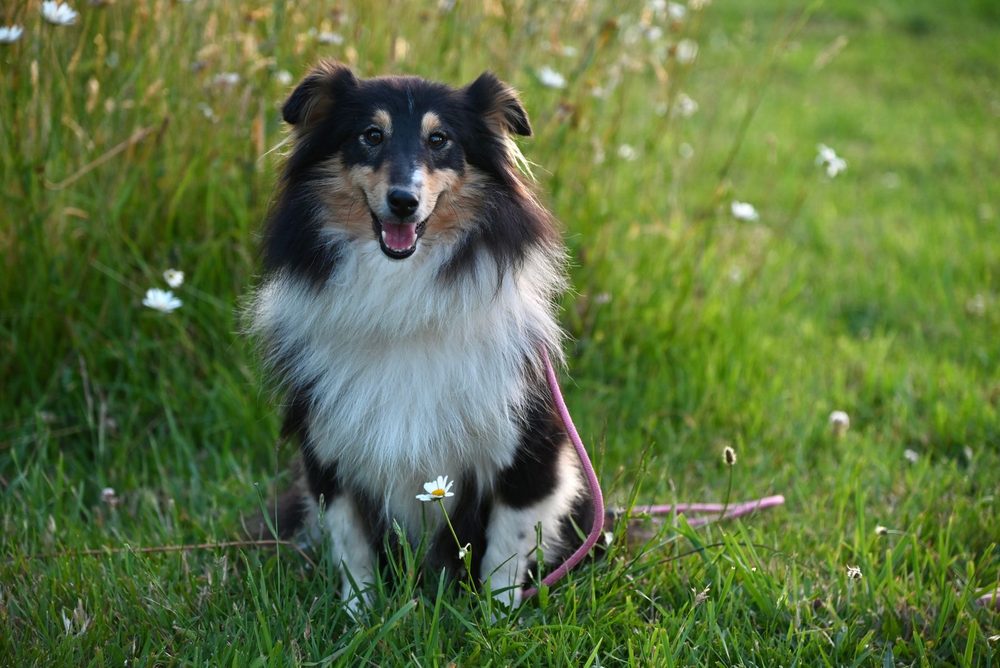
What it is. Hypothyroidism means the thyroid gland makes too little thyroid hormone. The thyroid is a small gland in the neck that helps control energy use, body weight, skin and coat, and body temperature. Cornell's Riney Canine Health Center names the Shetland Sheepdog in its list of breeds most commonly diagnosed with hypothyroidism. Cornell states that more than 90 percent of cases are primary, in Cornell's account, meaning the problem is in the gland itself. The two routes are thyroiditis, which is immune inflammation of the gland, often called autoimmune or lymphocytic thyroiditis, and atrophy, which means the gland shrinks for no known reason. ASSA lists thyroid disease among the known problems in the breed. One disagreement between sources belongs in the open. The Merck Veterinary Manual's predisposed breeds list for hypothyroidism does not include the Shetland Sheepdog. Cornell names Shelties. Merck's list does not. Both positions are recorded here as found, and the Sheltie link in this card rests on Cornell and on ASSA.
Signs to watch for. Cornell lists tiredness, weight gain, feeling the cold, hair loss that is not itchy on the trunk, the base of the tail, the chest, and the bridge of the nose, poor coat, darkening of the skin, repeated skin and ear infections, and slow hair regrowth. Tiredness in the medical record is often written as lethargy. The most common age at diagnosis is 4 to 10 years, with an average of 6 to 7 years, in Cornell's account.
How it is diagnosed. Cornell describes diagnosis by blood tests: Total T4, Free T4, Total T3, TSH, and thyroid autoantibodies. T4 and T3 are thyroid hormones. TSH is a signal hormone that tells the thyroid to work. Autoantibodies are immune proteins directed at the dog's own thyroid, and finding them points toward the thyroiditis route. One record distinction matters here. A thyroid antibody result in a young dog being screened for breeding is a screening result. It is not the same record as a clinical diagnosis of hypothyroidism in a middle aged dog with signs and low hormone levels.
Care categories. Cornell describes treatment as levothyroxine, a replacement hormone, usually given twice a day, for life, with periodic rechecks. That sentence sets the cost shape of this condition. The cost shape is not one large bill. It is a daily tablet for the rest of the dog's life, plus repeat blood tests to check the dose, year after year. A policy can look generous on a single illness and still be weak here if its chronic condition or renewal wording thins cover over time. This condition also connects to another card.
6. Hip dysplasia
What it is. Hip dysplasia means the ball and socket joint of the hip does not fit tightly and does not develop normally. Over time the loose joint wears unevenly and becomes arthritic and painful. Arthritis means inflammation and degeneration of a joint. ASSA lists hip dysplasia among the known problems in the breed, and a hip evaluation is required for a CHIC number in this breed, as the screening section below sets out from the OFA CHIC page read directly for this guide. The sourcing for this card needs stating plainly.
Signs to watch for. Using Cornell's general description, labeled as general and not Sheltie specific, owners may notice difficulty getting up, bunny hopping when running, limping or stiffness in the back legs, reduced activity or unwillingness to jump, decreased muscle mass in the hind legs, a swaying motion in the hips when walking, and shifting weight to the front legs. Bunny hopping means moving both back legs together rather than in turn. In a small, active herding dog, the early version of this list is easy to excuse.
How it is diagnosed. Cornell's general account describes diagnosis by radiographs and physical examination, including a test called the Ortolani sign, which is a hands on test of hip looseness during the exam. Radiographs are X rays. The screening timing matters for this breed's file. Under the general OFA rules recorded in the research for this guide, OFA registers final hip evaluations at 24 months, with preliminary films possible earlier, and PennHIP looseness measurement can be done much earlier. PennHIP is a method that measures how loose the hip joint is. So a breeder's final hip result for a parent dog cannot exist before that parent is two years old, while a looseness measurement can exist much earlier. Diagnosis in a dog with signs is a separate matter from screening in a healthy young dog, and the file should say which kind of record each film is.
Care categories. Cornell's general care pattern starts with medical management in the pattern used for arthritis of a major joint: maintaining a healthy body weight, pain and anti inflammatory medicines, regular low impact exercise, and physical therapy. Surgical categories exist for cases that do not respond well to medical care. One size fact changes the surgical conversation for this breed. Cornell's general page notes that femoral head ostectomy, which is removal of the ball of the joint, is more common for small to medium dogs, while total hip replacement is more common for large breeds.
7. Gallbladder mucocele
What it is. A gallbladder mucocele means the gallbladder fills with thick, gel like mucus instead of free flowing bile. The gallbladder is a small sac that stores bile. Bile is a fluid made by the liver that helps digest fats. In plain words, a mucocele is a mucus filled swelling of that sac. The swollen gallbladder can block bile flow. In the worst case it can rupture, spilling bile into the abdomen. That rupture is called bile peritonitis, and it is an emergency. Peritonitis means inflammation inside the abdomen, here caused by leaked bile.
The gene in this card is not the gene in the MDR1 card. Merck states that a mutation in the ABCB4 gene has been demonstrated in Shetland Sheepdogs and other dogs with gallbladder mucocele. ABCB4 makes a protein that moves fats across cell membranes in the bile system. Merck states that all affected dogs in that description carried one copy of the change. The peer reviewed study behind the finding is Mealey and others, 2010, in Comparative Hepatology. It reports that the ABCB4 mutation was found in 14 of 15 Shelties with mucoceles, compared with 1 of 21 unaffected Shelties, in Mealey and others 2010. Those counts come from a small study group, and this guide reports them as study counts, not as a breed wide rate. ABCB4 is a different gene from ABCB1. ABCB1 is the MDR1 drug sensitivity gene in card 2. ABCB4 is the gallbladder gene in this card. Different gene, different organ, different problem, different record. If a file, a test panel, or a claim letter mixes the two names, ask for it to be corrected in writing.
Signs to watch for. Merck lists signs in decreasing order of frequency: vomiting, abdominal discomfort, loss of appetite, jaundice, rapid breathing, rapid heart rate, increased thirst and urination, fever, diarrhea, and abdominal swelling. Jaundice means a yellowing of the gums, skin, or whites of the eyes. Merck gives an age range in its chapter of 3 to 14 years, with no sex predisposition, and names predisposing factors that include middle to older age, hormone conditions including hypothyroidism, excess cortisol, and diabetes, high blood fats, poor gallbladder movement, and a thickening of the gallbladder lining.
How it is diagnosed. The Gookin 2025 review names diagnosis by ultrasound, and that is the test an owner will meet first in most cases: a scan of the abdomen that shows the gallbladder and what is inside it. Blood tests sit beside the scan, because the conditions that travel with a mucocele, including thyroid disease, excess cortisol, high blood fats, and protein in the urine, are part of the same workup in the review and study record. A mucocele can also be found early, on an ultrasound done for another reason, before the dog shows any sign.
Care categories: an emergency path and a monitoring path. Merck states that removal of the gallbladder, called cholecystectomy, is the best and essential treatment for most clinically affected dogs. Clinically affected means the dog has signs or complications from the condition. Merck describes medical management only for dogs without leakage or obstruction, with monitoring every 6 weeks, in the Merck Veterinary Manual's treatment text. Medical management in that text includes a bile supporting drug and a supplement, under vet direction. After removal, Merck recommends long term treatment to support bile flow, especially for Shetland Sheepdogs in which a genetic risk is surmised, again in the manual's words. Dogs live without a gallbladder after this surgery, because bile still flows from the liver. What changes is storage, not production. One path is planned monitoring in a dog found early. The other is emergency surgery in a dog that arrives sick at night. A policy has to handle both.
8. Progressive retinal atrophy, as two forms
What it is. Progressive retinal atrophy, called PRA, is a group of inherited diseases in which the light sensing cells of the retina slowly die. Night vision usually goes first, then day vision. PRA is an umbrella name, and that is the whole point of this card. Different breeds, and even one breed, can have PRA caused by different genes, with different tests and different courses. In the Shetland Sheepdog, the primary sources describe at least two distinct genetic forms.
Form one: CNGA1 PRA, the Shetland Sheepdog type. UC Davis VGL describes this form as caused by a deletion in the CNGA1 gene, with autosomal recessive inheritance. Two copies are needed for a dog to be affected by this form. The laboratory states that diagnosis is usually in adult dogs, that loss of vision in low light comes first, and that examination findings include pale optic nerve heads, narrowed retinal blood vessels, and increased brightness of the reflective layer at the back of the eye as the retina thins.
Form two: BBS2 PRA, the syndromic form. Syndromic means the same gene change affects more than one body system, so signs can appear outside the eye as well as in it. Hitti-Malin and others, in Genes in 2021, described a variant in the Bardet-Biedl Syndrome 2 gene, written BBS2, that leads to a syndromic retinal degeneration in the Shetland Sheepdog. Genotyping of 505 Shetland Sheepdogs in that study found 7 homozygotes, meaning 7 dogs with two copies of the variant, as reported by Hitti-Malin and others in 2021. Dogs with two copies can also show signs outside the eye, including an upturned nose, a wavy coat, and dental defects, in the study's phenotype description. Phenotype means the observable traits of the dog. This form also sits at the center of the screening program. The BBS2 PRA DNA test is one of the required tests for a CHIC number in this breed, as the screening section below sets out. So a Sheltie file can hold a required BBS2 result and still hold no CNGA1 result at all, if nobody asked for the second test by name.
Signs to watch for, for either form. The early signs are night signs: reluctance to go out in the dark, hesitance on stairs or in dim rooms, bumping into objects in low light that the dog handles easily in daylight, and clumsiness in new surroundings. Later signs are day signs, as day vision follows night vision. Vision loss in a Sheltie is not automatically PRA, and this guide does not diagnose it.
How it is diagnosed, and the care categories. Diagnosis rests on an eye examination that looks at the retina itself, with the gene tests naming which inherited form is in the file where a test has been run. There is no treatment in the primary sources used for this guide that restores vision in these forms, and this guide does not invent one. So the insurance conversation for PRA is about diagnosis, monitoring, ruling out other causes of vision loss, and support as vision declines.
One more condition ASSA names: epilepsy. ASSA also lists epilepsy among the breed's known problems. Epilepsy means repeated seizures with no other cause found. It is diagnosed by ruling out other causes, a method called a diagnosis of exclusion. Treatment, when started, is often lifelong. That short, ASSA attributed account is what the primary sources found for this guide support for this breed, and this guide does not expand it into a full card on general epilepsy material written for other breeds.
Three kinds of genetic result in a Sheltie file
No other section in this guide matters more for a buyer who is comparing policies, because every later section depends on it. A Shetland Sheepdog can come home with a folder of genetic results before it has ever been sick. A breeder may hand over several laboratory pages at once. A breed panel, which is a bundle of DNA tests sold as one product, can report many results on one sheet. The UC Davis VGL Shetland Sheepdog breed panel includes MDR1, dermatomyositis susceptibility, CEA, and PRA of the Shetland Sheepdog type, plus other items, as listed on the laboratory's panel page. Panel inclusion alone is not a claim about how common anything is. It is a list of what was tested. The owner's job, and the insurer's job, is to read each result in the way that kind of result has to be read.
Kind one: a drug safety record, where one copy can matter. The MDR1 result belongs to this kind alone. It does not say the dog has a disease. It does not say the dog will become sick. It says the dog's drug handling pump works fully, partly, or poorly, and it changes drug choice and dose at every future visit. The inheritance pattern explains why. UC Davis VGL describes incomplete dominance with incomplete penetrance, under which two copies will exhibit sensitivity and some one copy dogs may also exhibit it, usually more mildly. So the result is read on a sliding scale of caution, not as a yes or no diagnosis. A two copy result demands the highest caution. A one copy result still demands that the result be in the record and named before drugs are chosen.
Kind two: a single gene result, clear, carrier, or affected. Most Sheltie DNA results belong to this kind. One gene, one known change, three possible readings. Clear means the dog holds no copy of that change and cannot pass that change on. Carrier means the dog holds one copy. For a recessive condition, the carrier shows no disease from that one copy, and can pass either a normal gene or the changed gene to a puppy. Affected, in laboratory wording for a recessive test, means the dog holds two copies. CEA works this way, as UC Davis VGL sets out for the NHEJ1 deletion. Both PRA forms in card 8 work this way, each with its own gene: CNGA1 and BBS2.
Kind three: a three gene risk score. The DMS result belongs to this kind, and it breaks both patterns above. There is no single gene and no clear, carrier, or affected answer. UC Davis VGL names three loci that act together: PAN2, MAP3K7CL, and the DLA-DRB1 risk allele. The report combines them into a risk class. ASSA presents the study classes as low risk at 0 to 5 percent, moderate risk at 33 to 50 percent, and high risk at 90 to 100 percent, as ASSA reports the study results. Those classes describe groups in a study. They do not diagnose the dog on the sofa. A high risk dog may never develop a lesion. A low risk result is not a guarantee phrased as clear. And the only route to a definite DMS diagnosis remains a skin biopsy, in ASSA's account, whatever the risk class says. An owner who files a DMS page under the same mental heading as a CEA page will ask the wrong questions of a vet and of an insurer. An insurer that files it that way will give the wrong answers. Name the kind out loud, every time.
| Question | Drug safety record (MDR1) | Single gene result (CEA, PRA forms, and others) | Three gene risk score (DMS) |
|---|---|---|---|
| What does the result actually say? | How this dog handles certain drugs. It is a safety record, not a disease finding. | How many copies of one known gene change this dog holds: none, one, or two. | How the combination of three gene locations compares with study groups: low, moderate, or high risk. |
| Does one copy matter? | Yes, it can. Some one copy dogs may show sensitivity, usually more mildly, per UC Davis VGL. | For a recessive condition, one copy makes a carrier. The carrier is not affected by that condition. | The question does not apply in that form. Risk comes from the three locations together, not from one copy of one gene. |
| Is the result a diagnosis? | No. The dog is not sick because of the result. | No, not by itself. A vet interprets the result with the dog, and some conditions need an exam or a measured blood level as well. | No. A definite DMS diagnosis is made only by skin biopsy, per ASSA. |
| What should the owner do with it? | Put it in every clinic record, carry a copy, and name it before any new drug, sedation, or anesthesia. | Keep it with the breeding and health file, name the exact gene when sharing it, and pair it with exam findings where an exam exists. | Keep it as a risk record, watch for skin signs on the face, ear tips, legs, feet, and tail tip, and seek a biopsy based diagnosis if lesions appear. |
| The policy question it raises | Is a drug safety record treated as a pre-existing condition, and is emergency care after a drug reaction covered? | Is a carrier result treated as the disease, and is an affected genotype classified before any sign exists? | Is a risk score treated as a diagnosed condition, and are biopsy and chronic skin care covered? |
The breeder screening file: what CHIC requires and what it leaves optional
A Sheltie breeder screening file is not one test. It is a dated set of records, made at different ages, by different methods, that answer different questions. The program that organizes it is CHIC, the Canine Health Information Center, run with the Orthopedic Foundation for Animals, called OFA. The list below was read directly on the OFA CHIC page for the Shetland Sheepdog on November 12, 2026 for this guide, after earlier research in this project could not extract that page in text form. That direct read controls this section.
| Record | What it is | Timing and method | What it settles, and what it does not |
|---|---|---|---|
| Hip evaluation | An evaluation of both hips, by OFA radiographic evaluation or by PennHIP, with results registered with OFA. Radiographic means by X ray. | Final OFA hip evaluations are registered at adult age under OFA rules. A PennHIP looseness measurement can be made much earlier. | It records the hip status of that dog under that method. It does not guarantee a puppy's hips. Hip dysplasia has inherited and environmental parts. |
| Eye examination | An examination of the actual eyes, with results registered with OFA. | The OFA recommendation read for this guide is an eye examination every year until age 5, then every 2 years until age 9. | It describes how that dog's eyes actually are on that date, including conditions no DNA test covers. It is a dated record, which is why the repeat schedule exists. |
| BBS2 PRA DNA test | A DNA test for the BBS2 form of progressive retinal atrophy, with results registered with OFA. | A one time DNA test. It does not need repeating for the same dog. | It gives a result for the BBS2 gene only. It says nothing about the CNGA1 form, and it does not examine the retina. |
| Two elective tests | Two further tests, chosen by the breeder from the elective list in the next table, with results registered so the CHIC requirement is met. | Chosen from the elective list. The choice is part of the record, so ask which two were chosen. | It means two elective records exist. It does not mean every elective test was run. A file can meet CHIC and still hold no MDR1 result, if MDR1 was not one of the two chosen. |
| Elective option | What it records |
|---|---|
| Von Willebrand disease DNA | A DNA result for the inherited bleeding disorder in card 3. |
| MDR1 DNA | The ABCB1 drug safety result in card 2. |
| OFA thyroid evaluation | A screening thyroid evaluation. The recommendation read for this guide is testing at ages 2, 4, and 7. |
| Collie Eye Anomaly DNA | A DNA result for the NHEJ1 deletion in card 1. |
| OFA elbow evaluation | An X ray evaluation of the elbows, registered with OFA. |
| DMS three gene test | The three gene risk test covering PAN2, MAP3K7CL, and DLA-DRB1, in card 4. For the result to count with OFA, the DLA-DRB1 detail must be reported, per ASSA. |
| DEPOHGEN DNA | A DNA test listed by that name on the OFA CHIC page for this breed. |
The optional list is a third list, and confusing it with the elective list is easy. The OFA CHIC page for this breed also lists tests as optional, meaning not required for a CHIC number. That optional list includes a degenerative myelopathy DNA test, a CNGA1 PRA DNA test, a patellar luxation evaluation, a cardiac evaluation, dentition, and a DNA test for maxillary canine tooth mesioversion. Patellar luxation means the kneecap slips out of place. Dentition means the teeth and their alignment. Mesioversion means a tooth angled toward the middle. Read the CNGA1 entry slowly. One of the two PRA forms in this breed sits on the optional list, while the other sits on the required list. Neither placement measures seriousness. Placement measures what the program requires.
What to ask a breeder, in writing. Ask for the hip evaluation for both parents, with the method used and the age of the dog when it was done. Ask for the most recent eye examination for both parents, with its date, and check it against the repeat schedule yourself. Ask for the BBS2 PRA DNA results for both parents. Ask which two elective tests were chosen for each parent, and ask for those results by name, because one breeder's two choices are not another breeder's two choices. If MDR1, von Willebrand, CEA, thyroid, or DMS results exist, ask for each page separately. Then ask separately again for any optional tests that were run, including the CNGA1 PRA result.
Policy decisions that matter for a Shetland Sheepdog
For a Sheltie, read a policy from the exclusions inward, not from the benefits outward. Does the wording that carves things out carve out this breed's genes, eyes, skin, thyroid, hips, and gallbladder. Work down this table in order, because the first rows can make the later rows irrelevant. The table names kinds of wording to look for and wording to watch out for. It does not rank insurers, rate plans, or pick a product.
| Policy feature | Why it matters for a Sheltie | Stronger wording looks like | Watch out for |
|---|---|---|---|
| Hereditary condition coverage | CEA, von Willebrand disease, DMS risk conditions, hip dysplasia, and both PRA forms are inherited or genetic in nature. This row decides more Sheltie claims than any other. | Hereditary conditions are covered on the same terms as other illnesses, with no breed carve out. | Hereditary exclusions, low separate limits for genetic conditions, or coverage that starts only after a long special wait. |
| Genetic result classification | A Sheltie file can hold all three kinds of result before any sign exists: an MDR1 safety record, single gene clear, carrier, or affected results, and a DMS risk score. Each kind means something different. | The policy states how genetic results are classified by kind, a carrier result for a recessive condition is not treated as the disease, a risk score is not treated as a diagnosis, and a drug safety record is not treated as an illness. | Wording that treats any positive DNA result as a pre-existing condition, with no distinction between carrier, affected, risk, and safety records. |
| Timing and pre-existing condition wording | CEA is present from birth. DMS signs can start at 12 weeks. Final hip results cannot exist until adulthood. Timing in this breed cuts in both directions. | Signs, findings, and results are each defined, and the plan states how a condition present from birth, a screening result, and a first clinical sign are each treated. | Wording that reaches back to any record of any kind before enrollment, or that treats a screening result and a diagnosed condition as the same event. |
| Eye wording | The eye file holds DNA results for separate conditions, dated eye examinations, and two distinct PRA genes. PRA care is diagnosis, monitoring, and support, not surgery. | Hereditary eye conditions, specialist eye examinations, and retinal monitoring are covered services, and each gene result is read on its own terms. | Eye exclusions for this breed, wording that reads a clear result for one gene as the whole eye record, or a carrier result treated as an eye diagnosis. |
| Surgery, bleeding, and blood products | Von Willebrand Type III removes the desmopressin option other types have, so surgical planning centers on blood products and readiness. Gallbladder surgery is the other large surgical event in this breed. | Surgery, dental procedures, blood products, and transfusion care are covered services, with any advance approval step stated in plain terms. | Surgical cover that excludes care connected to a known bleeding disorder, or transfusion care limited in a way a planned Type III procedure would exceed. |
| Emergency and gallbladder wording | A mucocele can arrive as a night emergency in an older dog, and can also be found early and monitored with repeat scans every 6 weeks on the medical path described by Merck. | Emergency clinic care, abdominal ultrasound, emergency gallbladder removal, and repeat monitoring scans are covered services, at night and on weekends as well as in office hours. | Emergency care limited to certain hours or clinics, monitoring scans excluded as routine care, or an early incidental finding reclassified in a way that removes the later emergency claim. |
| Chronic condition renewal wording | Hypothyroidism needs a daily tablet for life plus periodic blood tests. DMS can need care across flares over years. Hip arthritis care runs across renewals. | A covered chronic condition stays covered at renewal, repeat episodes are counted under a clear rule, and long term medicine and monitoring tests are covered services. | Cover that thins out after the first year, a condition reclassified as pre-existing at renewal, or medicine covered while the blood tests that set its dose are not. |
| Specialist, imaging, and laboratory wording | Sheltie diagnosis runs through specialists and laboratories: eye examinations, skin biopsy, ultrasound, hip films, vWF:Ag measurement, and thyroid blood panels. | Specialist referral, imaging, biopsy and laboratory examination, and named laboratory assays are covered services when a vet recommends them. | Imaging or biopsy covered only after a diagnosis that the test itself is needed to reach, or specialist care covered only in emergencies. |
Life stages: puppy, adult, and senior
Puppy
The puppy stage builds the file, and in this breed the file starts unusually early. Ask the breeder for the screening records set out above, for both parents, before the puppy comes home. DNA results can exist from the first weeks, because the tests in this guide use a cheek swab or a blood sample. A final hip evaluation cannot exist yet for a puppy, and neither can it exist for a young parent, because final hip films belong to adult dogs. A puppy file with DNA results, parent records, and no hip grade of its own is therefore complete for its age, not missing a piece. Two early timing facts deserve a place on the puppy calendar. CEA is present from birth, so the puppy eye examination is an early record, not a later extra. DMS signs can start as early as 12 weeks, per ASSA, so skin changes on the face, ear tips, legs, feet, or tail tip in a young puppy deserve a prompt vet visit and a written record, even when they turn out to be something ordinary.
The MDR1 result belongs in this stage, whatever it says. Ask whether the puppy, or both parents, have been tested, and if a result exists, take it to the very first vet visit and ask for it to be entered in the clinic record that day. Puppy life is full of first drugs: first parasite prevention, first treatment for an upset stomach, first sedation if any procedure is needed. The safety record should be in place before the first of those decisions, not added after. Enrolling in the first weeks at home, before the puppy's own record adds a skin lesion note, an eye finding, or a genetic classification argument, is the single most valuable move a Sheltie owner makes. The waiting periods every policy carries then run while the puppy is at its healthiest. Our guide to pet insurance for puppies covers the first year in full.
Adult
Adulthood is when most of the breed's list declares itself, and when the file built in puppyhood starts doing its work. The hip evaluations for breeding dogs fall at the start of this stage. The eye examination schedule in the CHIC section continues through the adult years, every year until age 5 and then every 2 years until age 9 on the OFA recommendation read for this guide, and that rhythm is worth knowing even for a pet dog, because the eye conditions in this guide develop at different times. Hypothyroidism belongs to this stage most often, with Cornell giving the most common age at diagnosis as 4 to 10 years.
Fill in an MDR1 drug safety card, and keep it with the dog's records. Copy the table below onto a card, into a notes app, or into the front of the dog's health folder. Keep the filled card with the dog's records, and give a copy to every clinic that treats the dog, including the emergency clinic you would use at night. Update the last row every time a new clinic is told. If the dog has not been tested, write not tested in the result row, because an honest blank that says not tested protects the dog better than an empty space a busy clinic might read as clear.
| Field | Fill in |
|---|---|
| Dog's name | Write the dog's full name as it appears in the vet record |
| MDR1 result | Write the exact result from the laboratory report: no copies, one copy, two copies, or not tested |
| Date of result | Write the date on the laboratory report, and the laboratory name beside it |
| Vet clinics told | List every clinic told, with the date each was told: regular clinic, emergency clinic, and any specialist |
Bring the card to every visit where a new drug, a preventive, a sedative, or an anesthesia plan is discussed, and say the result out loud even when the card has been filed. Records move between clinics more slowly than dogs do. The card is the bridge.
Senior
A Sheltie senior is a dog managing several parts of this guide at once, in a breed the AKC breed page lists at 12 to 14 years of life expectancy. The gallbladder card moves to the front in this stage. Merck gives an age range for mucocele cases of 3 to 14 years, the Mealey 2010 study group of affected Shelties had a median age of 9 years in that study, and the Gookin 2025 review frames the condition as one of older, small purebred dogs. Median means the middle value in a group.
The thyroid thread runs through this whole stage. A Sheltie diagnosed with hypothyroidism in middle age stays on levothyroxine, the replacement hormone, for life, with periodic blood rechecks to check the dose, in Cornell's account. Hypothyroidism is also one of the hormone conditions Merck lists as predisposing a dog to gallbladder mucocele. A senior Sheltie can therefore hold both records at once, a daily tablet condition and a watched gallbladder. For a dog whose mucocele is found early on ultrasound, before any leakage or obstruction, Merck describes a medical path with monitoring every 6 weeks instead of surgery. Ask, in writing, whether those repeat monitoring scans stay covered for as long as the monitoring continues, because a monitoring plan that loses its scans at renewal is not a plan.
Two more senior habits close this section. The first is vision. There is no treatment that restores vision in either form of PRA in this breed, so senior eye care is about monitoring, ruling out other causes of vision loss, and helping the dog adapt as sight fades, with the eye examination record kept current beside the two DNA results. The second is procedure planning. Any senior surgery or dental work in a Sheltie with a von Willebrand record should be planned around a measured vWF:Ag level and blood product readiness. Cornell notes that desmopressin, the drug that helps some other types, is not used in Type III, so the shortcut some owners expect does not exist for this breed's severe form. Dermatomyositis lesions, in ASSA's account, may lessen with age and may or may not return, which makes the senior skin record a watch brief rather than a closed file.
A claim, step by step: a gallbladder emergency on a Sunday night
The example below is hypothetical. It is not a real dog, a real claim, or a guarantee of how any insurer will decide. It follows an older Shetland Sheepdog through a gallbladder mucocele emergency that begins on a Sunday night, because that arc is what Sheltie gallbladder coverage has to handle, and because it shows how several records from earlier in this guide meet in one night. Pet insurance generally reimburses after you pay the vet, as explained in how pet insurance works. If a claim is accepted, the insurer applies the deductible and the reimbursement share described in the policy wording.
Sunday evening: the signs stop looking ordinary
A nine year old Sheltie vomits twice during the day, refuses its evening meal, and stands with a tense, sore belly. By late evening the gums look slightly yellow. Read against the Merck sign list in the gallbladder card, that is vomiting, abdominal discomfort, loss of appetite, and jaundice arriving together in an older dog. The owner does not wait for Monday.
The emergency workup: naming the problem
At the clinic, the team examines the dog, runs blood tests, and performs an abdominal ultrasound, which is the diagnostic test the Gookin 2025 review names for this condition. The scan shows a gallbladder filled with thick material, consistent with a mucocele. The record at this point matters in detail. It names the signs and when they started, the scan finding in plain words, the blood test results, and the dog's existing conditions and medicines.
The decision: surgery to remove the gallbladder
The emergency vet advises that this dog is clinically affected, with signs, a blocked and swollen gallbladder picture, and a risk of rupture and bile peritonitis if the gallbladder fails. Merck describes removal of the gallbladder, cholecystectomy, as the best and essential treatment for most clinically affected dogs, and the plan follows that path. Before surgery, the team plans around the full file: the thyroid condition, the drug safety record, and the bleeding record if a von Willebrand result is in the file, because anesthesia, drugs, and surgery in one dog draw on every card in this guide at once.
Recovery, and the monitoring that follows
After removal of the gallbladder, the dog recovers at the clinic and then at home under the clinic's instructions. Merck recommends long term treatment to support bile flow after removal, especially for Shetland Sheepdogs in which a genetic risk is surmised, and the discharge record should name whatever long term plan the treating vet sets, in that vet's own terms for that dog. Keep the discharge summary, the surgery report, the ultrasound report, and every blood result together. The recovery record is not paperwork for its own sake.
Submitting the claim
The claim is filed with the itemized invoices, the full emergency clinical records, the ultrasound and surgery reports, the discharge summary, and the records that show the dog's history before that night: the MDR1 safety card, the thyroid diagnosis and medicine record, and the breeder screening file where it answers a hereditary question. The owner keeps copies of everything, in date order, in one file with the policy and with the written insurer answers from the checklist below. A gallbladder claim in a Sheltie is rarely one document.
| Document | Why it matters |
|---|---|
| The breeder screening file (hip, eye, BBS2 DNA, the two chosen elective results, and any optional results, for both parents where available) | It shows the hereditary record the dog started with, and it answers the pre-existing question before it is asked. |
| The dog's own genetic results, each labeled by kind and by gene (MDR1 safety record, single gene results by gene name, DMS risk score) | They settle which kind of result is in the file. A claim review that merges the three kinds, or merges ABCB1 with ABCB4, can be corrected from these pages. |
| The MDR1 drug safety card, filled in | It dates when each clinic was told the result, which matters after any drug reaction claim and in any emergency record. |
| Eye examination forms, with dates | They show the actual eye on an actual date, beside the DNA results that cannot show it. |
| Measured laboratory levels where they exist (vWF:Ag for bleeding risk, thyroid panels for dose checks) | A measured level describes the dog in front of the vet in a way a DNA line alone does not. |
| Biopsy report, if skin lesions were ever biopsied | A definite DMS diagnosis rests on biopsy, per ASSA. This report is the difference between a risk score and a diagnosis. |
| Ultrasound, surgery, and discharge reports for any gallbladder episode, plus the monitoring scan dates for a dog on the monitoring path | They prove which path the dog was on, emergency or monitoring, and when each step happened. |
| Itemized invoices and full clinical records, in date order | A claim is paid from records, not from memory. Date order is what makes a multi year arc readable. |
| Written insurer answers to the checklist questions below | A written answer shows what you were told before you relied on it. A verbal answer on a sales call is not part of your contract. |
What drives a Sheltie premium
No responsible guide will name a price for your dog, because the quote depends on the dog, the address, and the settings chosen. What can be explained is why a Sheltie is priced the way it is, and which choices move the number. The full mechanics are in what pet insurance costs and why, and the comparison method is in how to compare plans.
Breed risk profile. Insurers see a breed whose file is record heavy before it is claim heavy. Three kinds of genetic result can sit in a puppy file. Two eye systems, DNA and examination, run in parallel for life. A bleeding disorder changes the price and planning of ordinary procedures. Around those records sits a condition list that spans a daily tablet condition, a biopsy diagnosed skin condition, a screened joint, and an emergency abdominal condition in older dogs.
Size, and what size does and does not do. A Sheltie is a small dog, at 15 to 25 pounds on the AKC breed page, and medication doses generally follow body size. That fact cuts in the owner's favor on many everyday medicines compared with a giant breed. It does not cut the same way on the breed's defining events.
Age curve and lifespan. Premiums generally rise with age. A breed that lives 12 to 14 years, per the AKC breed page, spends a long senior stretch in the years when thyroid medicine and its blood tests, hip arthritis care, vision monitoring, and gallbladder risk run at the same time. The front of life is record heavy in a different way, with screening results, a puppy eye record, and a drug safety record all arriving early.
Pre-purchase checklist for a Sheltie policy
- Read the breed condition exclusions first, and check the Sheltie core list against them one condition at a time.
- Confirm hereditary conditions are covered, including Collie Eye Anomaly, von Willebrand disease, dermatomyositis, hip dysplasia, and progressive retinal atrophy in both of its genetic forms.
- Ask how each kind of genetic result is classified, separately: the MDR1 drug safety record, single gene clear, carrier, and affected results by gene name, and the DMS three gene risk score.
- Confirm that a carrier result for a recessive condition is not treated as the disease, and that a DMS risk score is not treated as a diagnosis.
- Ask how a condition present from birth, a screening result, and a first clinical sign are each treated under the pre-existing condition wording.
- Get a written answer on specialist eye examinations, skin biopsy and laboratory examination, abdominal ultrasound and repeat monitoring scans, hip imaging, vWF:Ag measurement, and thyroid blood panels.
- Ask whether emergency gallbladder removal, blood products, and transfusion care are covered services, including at an emergency clinic at night and on weekends.
- Read the bilateral rule with hips in mind, and list every orthopedic waiting period that could touch this breed.
- Confirm hypothyroidism medicine and its periodic dose check blood tests stay covered at renewal, for life.
- Keep the breeder screening file, every genetic result labeled by kind and gene, the filled MDR1 drug safety card, and your written insurer answers together with the policy, and enroll as a puppy, before the record grows.
Questions to ask an insurer, in writing
Copy each question exactly as written, name the breed, and keep the written answers with your policy documents.
- MDR1. My Shetland Sheepdog holds an MDR1, or ABCB1, DNA result recorded before enrollment. How is that result classified under this policy: as a pre-existing condition, as a disease, or as a drug safety record with no disease status? If my dog ever reacts to a drug on the MDR1 list, is the treatment for that reaction covered?
- Single gene results. My dog holds single gene DNA results, including carrier results, for Collie Eye Anomaly and for the CNGA1 and BBS2 forms of progressive retinal atrophy. Is a carrier result treated as the disease itself? How is an affected result for one form of PRA treated when the other form was never tested?
- DMS risk score. My dog holds a dermatomyositis risk result built from three genes, reported as low, moderate, or high risk. Is that score treated as a diagnosis of dermatomyositis? If skin lesions appear later and a skin biopsy confirms dermatomyositis, is the condition covered as a new condition?
- Hereditary list. Are Collie Eye Anomaly, von Willebrand disease, dermatomyositis, hip dysplasia, hypothyroidism, gallbladder mucocele, and progressive retinal atrophy covered for a Shetland Sheepdog under this plan?
- Gallbladder. Is gallbladder mucocele covered for this breed, including emergency ultrasound, emergency removal of the gallbladder at a night or weekend emergency clinic, and repeat monitoring scans for a dog found early and monitored?
- Bleeding and surgery. My dog holds a von Willebrand DNA result, and a measured vWF:Ag level may also be in the file. How is each of those records classified? Are clotting tests before a planned operation or dental work covered, and are blood products and transfusion care covered if my dog bleeds during a procedure?
- Eyes. Are eye examinations by a board certified veterinary ophthalmologist covered, including the repeat examinations on the schedule in this breed's screening program? How is Collie Eye Anomaly treated if it was found on a puppy eye examination recorded before enrollment, and is care connected with vision loss from either form of progressive retinal atrophy covered?
- Chronic conditions and joints. Is hypothyroidism covered for the life of the dog, including the daily hormone medicine and the periodic blood tests that check the dose, at every renewal? Is hip dysplasia covered as a hereditary condition for this breed, does an orthopedic waiting period apply to it, and how is the second hip treated under the bilateral rule after the first hip is diagnosed?
Questions Sheltie owners ask
Is an MDR1 result a disease, and is a dog with one copy sick?
No. MDR1, or ABCB1, is a drug safety record, not a disease. The gene change weakens a pump that helps keep certain drugs out of the brain, per UC Davis VGL. A dog with the result is not sick. The inheritance is described by UC Davis VGL as incomplete dominance with incomplete penetrance, which means a dog with two copies will exhibit drug sensitivity, and some dogs with one copy may also exhibit it, usually more mildly. So one copy matters for drug choices, and it still does not make the dog a sick dog.
Does a clear PRA DNA result mean my Sheltie will not develop PRA?
No, not for PRA as a whole. Progressive retinal atrophy in this breed has at least two genetic forms. A clear result for the CNGA1 form covers that gene only, and UC Davis VGL states plainly on its test page that this is not the only cause of PRA in the breed. A clear result for the BBS2 form, described by Hitti-Malin and others in 2021, likewise covers that gene only. A clear result for one form says nothing about the other. That is why the eye record also includes examinations of the actual eye, on the repeat schedule set out in the screening section, beside any DNA result.
What does a DMS risk result actually mean for my dog?
It is a risk score, not a diagnosis. Dermatomyositis risk in this breed is set by three gene locations acting together: PAN2, MAP3K7CL, and the DLA-DRB1 risk allele, per UC Davis VGL. ASSA presents the study risk classes as low risk at 0 to 5 percent, moderate risk at 33 to 50 percent, and high risk at 90 to 100 percent, as ASSA reports the study results. Those classes describe study groups with a given gene combination. A high risk dog may never develop skin lesions, and a definite diagnosis of dermatomyositis can be made only by skin biopsy, in ASSA's account. Watch for hair loss and crusts on the face, ear tips, legs and feet, and tail tip, and have lesions examined promptly whatever the risk class says.
Does a CHIC number mean a Sheltie's parents were healthy?
No. A CHIC number means the required tests for the breed were done and the results were registered and made public. It does not mean all results were normal. On the OFA CHIC page for this breed, read directly on November 12, 2026, the required records are a hip evaluation, an eye examination, and the BBS2 PRA DNA test, plus two elective tests chosen from a set list. Which two electives were chosen is part of the record, and tests such as MDR1 and the CNGA1 PRA test can sit on the elective or optional side of the line.
When should I enroll a Shetland Sheepdog in pet insurance?
As a puppy, before the dog's own record adds the notes this breed can collect early. Collie Eye Anomaly is present from birth, so a puppy eye record can exist in the first months. Dermatomyositis signs can start as early as 12 weeks, per ASSA. DNA results of all three kinds can exist from the first weeks, and each one raises a classification question that is easier to settle before enrollment than after. Early enrollment also lets the waiting periods run while the puppy is least likely to need the care those periods gate.
What should I do if my older Sheltie vomits, goes off food, and looks yellow?
Treat that picture as a same day emergency, including at night and on weekends. The Merck Veterinary Manual lists vomiting, abdominal discomfort, loss of appetite, and jaundice among the signs of gallbladder mucocele, a condition in which incidence is increased in Shetland Sheepdogs, per Merck. A swollen gallbladder can block bile flow and can rupture, spilling bile into the abdomen. Diagnosis is by ultrasound, per the Gookin 2025 review, and removal of the gallbladder is the best and essential treatment for most clinically affected dogs, per Merck.
Sources and further reading
- American Kennel Club, Shetland Sheepdog breed page, checked live on November 12, 2026, for height of 13 to 16 inches, weight of 15 to 25 pounds, life expectancy of 12 to 14 years, and Herding Group placement.
- American Kennel Club, Most Popular Dog Breeds of 2024, for the year labeled 2024 list in which the Shetland Sheepdog ranks No. 29.
- American Kennel Club, Official Standard of the Shetland Sheepdog (approved May 12, 1959; reformatted July 18, 1990), at images.akc.org, for height, the double coat, colors, temperament, and general appearance.
- American Shetland Sheepdog Association, Health Considerations page, for the parent club founded in 1929, the known problems list, the statement that these problems are not common in the breed, and the CHIC testing recommendation.
- American Shetland Sheepdog Association, Dermatomyositis page, for DMS signs and locations, onset as early as 12 weeks, diagnosis only by skin biopsy, the 2017 Clemson research, and the risk classes ASSA presents.
- Orthopedic Foundation for Animals, CHIC breed page for the Shetland Sheepdog, read directly on ofa.org on November 12, 2026, for the required records, the elective list, the optional list, the permanent identification rule, and CHIC number timing. Full detail is in the screening section above.
- UC Davis Veterinary Genetics Laboratory, Collie Eye Anomaly test page, for CEA inheritance, the NHEJ1 deletion found in 2007, and the statement that the deletion does not fully predict a coloboma.
- UC Davis Veterinary Genetics Laboratory, Multidrug Sensitivity (MDR1) test page, for the ABCB1 deletion, reaction signs and named drugs, and incomplete dominance with incomplete penetrance.
- Washington State University PRIME, Dog breeds commonly affected by MDR1 mutation (October 19, 2021), for the approximate MDR1 frequency of 15 percent in Shetland Sheepdogs, attributed to Washington State University PRIME, and only DNA testing telling an individual dog's status.
- Neff MW and others, Proceedings of the National Academy of Sciences, 2004, Table 1, for genotyping of 190 Shetland Sheepdogs, with the allele and genotype figures used in card 2.
- Mealey KL, Journal of Veterinary Pharmacology and Therapeutics, 2023, volume 46, pages 1 to 16, Table 1, for the same approximate MDR1 frequency in a peer reviewed review.
- Cornell Riney Canine Health Center, von Willebrand Disease page, for the breed in the Type III list and desmopressin not being used in Type III. Cornell Comparative Coagulation Laboratory, Canine von Willebrand Disease, for the vWF:Ag assay, the below 50 percent at risk threshold and Type 3 values of 1 percent or less attributed to that laboratory, and the Type 1 and Type 3 classification.
- Merck Veterinary Manual, Platelet Disorders in Animals, for Type 3 disease as a total absence of von Willebrand factor, most commonly in Shetland Sheepdogs and Scottish Terriers.
- UC Davis Veterinary Genetics Laboratory, Dermatomyositis test page, for the three loci PAN2, MAP3K7CL, and DLA-DRB1. Evans JM and others, PLoS Genetics, 2017, volume 13, issue 2, article e1006604, for the three locus risk model.
- Cornell Riney Canine Health Center, Hypothyroidism page, for the breed named among those most commonly diagnosed, more than 90 percent primary in Cornell's account, age 4 to 10 years, signs, blood tests, and levothyroxine for life. Merck Veterinary Manual, Hypothyroidism in Animals, recorded also for its predisposed list not including this breed.
- Cornell Riney Canine Health Center, Canine Hip Dysplasia page, for general background only on diagnosis and care, including femoral head ostectomy in small to medium dogs. Cornell does not name Shetland Sheepdogs on that page.
- Merck Veterinary Manual, Canine Gallbladder Mucocele, for increased incidence in this breed, ABCB4, predisposing factors, the sign list, gallbladder removal, and monitoring every 6 weeks on the medical path, per Merck.
- Mealey KL and others, Comparative Hepatology, 2010, volume 9, article 6 (PMID 20598156), for ABCB4 found in 14 of 15 affected and 1 of 21 unaffected Shelties in that study. Aguirre AL and others, JAVMA, 2007, volume 231, pages 79 to 88, for the breed case series. Aicher KM and others, PLoS ONE, 2019, volume 14, issue 2, article e0212638, for concurrent hormone and fat conditions in dogs with mucoceles in general. Gookin JL, JAVMA, 2025, volume 263, issue 6, page 777 (PMID 40107232), for diagnosis by ultrasound and definitive surgical treatment.
- UC Davis Veterinary Genetics Laboratory, PRA (Shetland Sheepdog type) test page, for the CNGA1 form and the statement that it is not the only cause of PRA in the breed.
- Hitti-Malin RJ and others, Genes, 2021, volume 12, issue 11, article 1771, for the BBS2 syndromic form, 505 dogs genotyped and 7 homozygotes in that study, and signs outside the eye. Wiik AC and others, Animal Genetics, 2015, volume 46, pages 515 to 521, for the CNGA1 association, as cited in the BBS2 paper.
- Merck Veterinary Manual, The Ocular Fundus in Animals, for Collie Eye Anomaly occurring in Shetland Sheepdogs. UC Davis Veterinary Genetics Laboratory, Shetland Sheepdog breed panel page, for panel contents, recorded as a test list and not as a prevalence claim.
Sources checked on November 12, 2026.