
Cancer at a glance
Cancer in dogs is a group of diseases, not a single disease. The American Veterinary Medical Association, shortened to AVMA, puts the scale of it plainly: approximately 1 in 4 dogs will develop cancer at some point during their life, and the risk rises to approximately 1 in 2 for dogs aged 10 years or older, according to the AVMA pet owner brochure on cancer in pets. What a diagnosis means for one dog depends on the type of cancer, where it is, and how far it has spread. That is why this guide spends as much of its length on the pathway to a confirmed diagnosis as it does on treatment.
| What it is | Neoplasia is the uncontrolled, abnormal growth of cells or tissues, in the AVMA wording. A growth that stays in one place and does not invade or spread is benign. A growth that invades nearby tissue or spreads to other parts of the body is malignant, and only malignant neoplasms are truly cancers, in the AVMA wording |
|---|---|
| How common it is | Approximately 1 in 4 dogs will develop cancer at some point in their life, rising to approximately 1 in 2 in dogs aged 10 years or older, according to the AVMA |
| Common types named in this guide | Lymphoma, a cancer of white blood cells. Hemangiosarcoma, a cancer of the cells that line blood vessels. Osteosarcoma, a cancer of bone. Mast cell tumors, a skin cancer. Other cancers occur, and this list is not complete |
| Typical first signs | A lump or bump that grows or changes, loss of appetite or unexplained weight loss, a sore that does not heal, bleeding, persistent vomiting or diarrhea, difficulty eating, swallowing, or breathing, and behavior changes such as hiding, in the AVMA warning sign list |
| Emergency signs | Sudden collapse or severe weakness, pale gums, rapid or difficult breathing, and a swollen or tight belly. Cornell lists these among the signs when a blood vessel tumor inside the body ruptures and bleeds |
| How it is diagnosed | History and a physical examination first, then tests such as blood and urine tests, X-rays, and ultrasound. Cytology, which means drawing cells from a growth and examining them under a microscope, gives basic information about many tumors. A biopsy, which means taking a tissue sample, is often needed to confirm the diagnosis, in the AVMA pathway. Staging tests then look for spread |
| How it is treated | Each cancer and each patient is different, in the AVMA wording. Treatment categories include surgery, chemotherapy, radiation therapy, other specialist therapies, and palliative care focused on comfort and quality of life. One category or a combination may be recommended |
| The insurance question | Whether staging, biopsy, and imaging are covered, whether chemotherapy and radiation are covered or excluded, and whether the annual limit and any per condition limit can hold a full course of care that may cross a renewal date |
What cancer means in dogs, in plain language
Start with three words your vet may use, because insurance paperwork uses them too. A tumor is a growth or mass. Neoplasia is the process behind it, the uncontrolled, abnormal growth of cells or tissues, in the AVMA definition. Cancer is the malignant form of that process. A benign growth tends to grow slowly, stays in one place, and does not spread, although the AVMA notes it can still cause harm if it presses on a vital structure such as a blood vessel or a nerve. A malignant growth can invade the tissue around it and can spread, which vets call metastasizing, to other parts of the body. A lump on your dog is therefore a question, not an answer. Fatty lumps called lipomas are a common benign example the AVMA names. Only testing can sort a benign lump from a malignant one.
Oncology is the branch of medicine that focuses on the diagnosis and treatment of cancer, in the AVMA wording. A veterinary oncologist is a veterinarian with advanced training and certification in oncology. Your own veterinarian may handle the first stages of a case and refer you to an oncologist or a specialty clinic for staging, treatment planning, or treatment itself. Referral is a normal part of cancer care, not a sign that something has gone wrong, and it matters for insurance because specialist visits, referral imaging, and referral treatment are exactly the services some policies treat differently.
The types owners hear most often
Lymphoma. A cancer of lymphocytes, a type of white blood cell. Cornell describes lymphoma as one of the most common cancers of dogs, arising in lymph nodes and also in organs such as the spleen, liver, intestinal tract, and skin. In dogs, Cornell notes, the most common presentation is non painful enlargement of lymph nodes, typically under the jaw, in front of the shoulders, and behind the knees. Signs vary with the organs involved and can include decreased appetite and energy, vomiting, diarrhea, weight loss, and increased drinking and urination.
Hemangiosarcoma. A cancer of endothelial cells, the cells that line blood vessels, in Cornell's description. The most common sites in dogs are the spleen, the heart, and the skin, and it can occasionally be found in other organs. Because these tumors are filled with blood, they can rupture and cause internal bleeding. Cornell is direct that a tumor on the spleen or heart may cause only vague signs at first, such as decreased appetite, lethargy, or weakness, or it may present as an emergency after a collapse. Our Golden Retriever guide covers this cancer in depth, because it sits at the center of that breed's health record.
Osteosarcoma. A cancer of bone. Cornell calls it the most common primary bone tumor in dogs, and notes that pain is its most common sign, with progressive lameness and sometimes swelling at the site. It commonly spreads to the lungs, in Cornell's summary. Large and giant breed dogs have an increased incidence, and Cornell names the Rottweiler among the breeds at increased risk. Our Rottweiler guide walks through the bone cancer claim story for that breed.
Mast cell tumors. A skin cancer. Cornell calls mast cell tumors the most common malignant skin tumor in dogs, and warns that they vary in appearance and can look like many noncancerous skin tumors. That is why Cornell advises having lumps and bumps on or under the skin evaluated by a veterinarian rather than judged by eye at home. Diagnosis usually starts with a fine needle aspirate, which means collecting cells with a small needle for examination under a microscope.
Other cancers occur in dogs, including cancers of the mammary glands, the mouth, the bladder, and soft tissues. This guide does not try to list them all. The insurance lesson is the same across types. The name of the cancer, its location, and its stage drive the pathway, and the pathway is what a claim follows.
Why breed still matters on a general page
This is a general guide, not a breed guide, and any dog can develop cancer. Breed still matters for two reasons. The first is tendency. Some cancers are seen more often in some breeds and family lines, and the AVMA notes that genetics can play a role, increasing the risk of some cancers in certain breeds or breeding lines. The second is research. The Morris Animal Foundation Golden Retriever Lifetime Study follows enrolled Golden Retrievers for their whole lives, and its primary goal is to identify the incidence and risk factors for four major canine cancers: hemangiosarcoma, osteosarcoma, lymphoma, and high grade mast cell tumors, in the Foundation's own description. A study built around one breed exists because cancer risk is not spread evenly across dogs. If your breed guide on this site names a cancer tendency, read this page alongside it.
One more idea belongs in this section, because owners ask about it at the worst moment. Comparative oncology is the study of naturally occurring cancers in pet dogs alongside cancers in people. The National Cancer Institute, shortened to NCI, runs a Comparative Oncology Program, and its Cancer Currents summary explains that dogs develop many of the same types of cancer as humans, that cancers in both can spread to the same organs, and that NCI supported clinical trials at veterinary schools test new treatments in pet dogs with the goal of preserving quality of life and maximizing time with their families. A clinical trial is not standard care, and it is not right for every dog. It is a legitimate question to raise with your oncologist, and the diagnosis section below returns to it.
Signs, sorted by what to do next
The AVMA is honest about why cancer is hard to spot early. Pets can hide signs of illness, the signs can be subtle or can mimic other diseases, and sometimes there are no signs until the cancer has reached an advanced stage. The signs also depend on the type of cancer, where it is located, and how far it has spread. The table below sorts the AVMA warning signs and the Cornell emergency signs by the response they call for. It is general information, not a diagnosis. Several of these signs are also seen with noncancerous diseases, in the AVMA wording, but they still need a veterinarian's attention to determine the cause. When in doubt, treat a sign as one level more urgent than the table suggests.
| What you see | What it can mean | What to do next | Write this down |
|---|---|---|---|
| A new lump or bump, or an existing lump that grows or changes in color or texture over time | A growth that needs testing. It may be benign, such as a fatty lipoma, or malignant. Appearance alone cannot tell, and Cornell makes the same point about mast cell tumors, which can look like noncancerous skin tumors | Book a vet visit promptly. Ask whether the lump should be sampled with a needle, which is the usual first test, and do not adopt a watch and wait plan without a test result or a clear recheck date | The date you first felt it, where it is, and its size measured against a coin or a ruler. A dated photo with the coin beside it helps at the recheck |
| Loss of appetite, unexplained weight loss, or a dog that is less interested in things it used to enjoy. Hiding or other behavior changes | General signs the AVMA lists for cancer, and also signs of many other illnesses. In lymphoma, Cornell notes decreased appetite and energy among the signs that vary with the organs involved | Book a vet visit promptly. Say appetite and weight change when you call, so the visit is scheduled as a workup and not only as a routine check | When the change started, what and how much the dog is eating now, and any change in drinking, urination, vomiting, or diarrhea |
| A persistent sore or wound that will not heal. Bleeding from the mouth, nose, or other body openings. Persistent vomiting or diarrhea. Difficulty eating, swallowing, or breathing | Warning signs on the AVMA list. Each one has noncancerous causes as well, and each one still needs a cause found | Call the vet today, and treat breathing difficulty as urgent. A dog that cannot breathe comfortably does not wait for a routine appointment | How long the sign has lasted, how often it happens, and a short phone video if the sign comes and goes and you can take one safely |
| Unexplained swelling, heat, pain, or lameness. A firm swelling on a leg, in a large breed dog in particular | For a leg, bone cancer belongs on the list of possibilities a vet will work through, alongside injury and infection. Cornell names pain and progressive lameness as the most common signs of a bone tumor | Book a vet visit this week, and go the same day if the dog will not bear weight. A weakened bone can break, so restrict jumping and rough play until the leg has been examined and imaged | Which leg it is, when the lameness started, whether it is improving or worsening, and whether there was any injury you know of |
| Swollen glands you can feel under the jaw, in front of the shoulders, or behind the knees, without pain | Cornell describes non painful enlargement of lymph nodes as the most common presentation of lymphoma in dogs. Infections and other conditions can also enlarge lymph nodes | Book a vet visit promptly. Lymph node sampling is usually a quick needle test, and Cornell notes that lymphoma diagnosis usually starts with cells obtained with a needle for a pathologist to examine | Which glands feel enlarged, when you first noticed them, and any change in appetite, energy, drinking, or weight alongside them |
| Sudden collapse or severe weakness. Pale gums. Rapid or difficult breathing. A swollen or tight belly | Cornell lists these among the signs when a blood vessel tumor on the spleen or heart ruptures and bleeds inside the body. Other emergencies can cause the same picture | Emergency, now. Go to an emergency hospital and call ahead. Keep the dog calm and still, and do not offer food. Emergency surgery may be required if a splenic tumor has ruptured, in Cornell's summary | The time the collapse happened, and whether there were quieter signs in the days before it, such as lower appetite or tiring more easily |
The last column matters beyond the vet visit. Your dated notes become part of the timeline an insurer reads later. A note that a lump was first felt on a specific date, was sampled on another date, and came back benign or malignant is a record. A memory reconstructed after a diagnosis is not. The lump log in the next section turns that habit into a simple tool.
Tool: a lump and change log
Keep one log for any lump, swelling, or persistent change, in a notebook or a phone note, and bring it to every visit. It helps your vet judge change over time, and it gives a claim file clean first sign dates instead of guesses.
| What to record | What to write down | Why it helps |
|---|---|---|
| Date and place | The date you first noticed it, and exactly where on the body it is, for example left side of the neck or right hind leg | First sign dates decide pre-existing questions, and location decides which records belong to which finding |
| Size and photo | The size measured with a ruler, or beside a coin in a dated photo | Growth over time is itself a warning sign on the AVMA list, and a photo proves change better than a description does |
| What the vet found | Whether cells or tissue were sampled, the test name, and the result in the words the report uses | A sampled and recorded result is a very different record from a lump that was noted and never tested |
| Recheck plan | The recheck date the vet set, or the change that should trigger a sooner visit | Watching a lump is only a plan if the watching has a date and a trigger attached to it |
Diagnosis and staging: the pathway that comes first
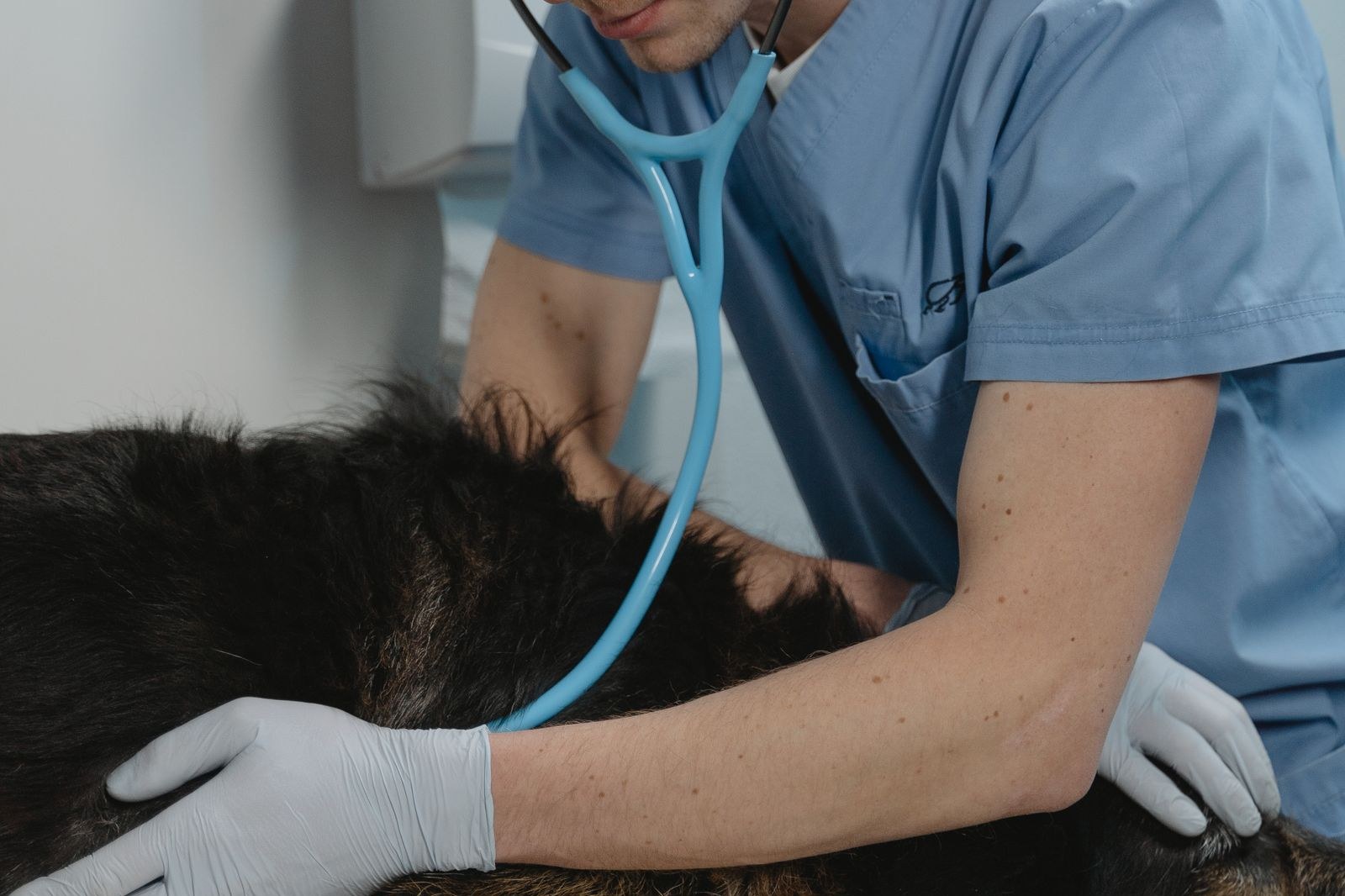
Owners often picture a cancer claim as a treatment claim. In practice the first claim is a diagnosis claim, and it can be a substantial one. The AVMA pathway starts with suspicion from the medical history and the physical examination. Additional tests, such as X-rays, blood tests, and ultrasound examinations, may be needed to support the diagnosis. Two sampling steps then do most of the confirming, and the difference between them matters.
Cytology means withdrawing some cells from the affected area to examine under a microscope, in the AVMA wording. It is usually done with a needle, it is quick, and Cornell notes that for lymphoma it rarely needs anesthesia and results usually come back fast. Cytology can give basic information about a tumor type, and for some cancers it can confirm a diagnosis.
Biopsy means collecting a tissue sample from the tumor to examine under a microscope, in the AVMA wording. A biopsy is often necessary to confirm a diagnosis and to help determine whether a tumor is benign or malignant, and for some cancers, such as hemangiosarcoma, Cornell is clear that a definitive diagnosis requires biopsy of tumor tissue, often from surgery. Biopsy results also carry detail that shapes treatment, such as the grade of a tumor, which describes how aggressive it looks under the microscope.
Staging is the step owners hear least about before they are inside it. Stage means how large the tumor is and how far it has spread to other areas of the body, in the AVMA wording, and the AVMA names stage and type as the two things about the cancer itself that affect treatment success. Staging is how the team answers the stage question. Depending on the cancer, staging can include a complete blood count and chemistry profile, urine testing, chest X-rays to look for spread to the lungs, abdominal ultrasound to look at organs such as the spleen and liver, sampling of nearby lymph nodes, and, for some cancers, a bone marrow sample. Advanced imaging, such as a CT scan, an MRI scan, or a PET scan, can help identify a tumor's location and possible treatment options, in the AVMA wording. Not every dog needs every test. The point for insurance is that staging is not one test. It is a sequence, often at a referral hospital, and it happens before the treatment decision it informs.
Keep every document this pathway creates, in one folder, from the first visit. The examination notes, the cytology or pathology report, the imaging reports, and the staging summary are the documents that connect a diagnosis to a treatment in a claim file. A claim that arrives with a pathology report and a staging summary is a different file from a claim that arrives with invoices alone, because the insurer's first question in a cancer case is what the confirmed diagnosis actually is.
Two questions belong in this section rather than the treatment section, because they are asked during staging. The first is whether a clinical trial fits your dog. The AVMA advises asking your veterinarian whether there are clinical trials investigating treatments for your pet's condition, and the NCI summary explains that trial dogs are patients, not laboratory animals, that trials are run through veterinary schools, and that NCI funded trials typically offer substantial, if not complete, financial support for the cost of care. Trial eligibility, cost support, and how trial care interacts with an insurance claim all vary, so ask both the trial team and the insurer before enrolling, and get the insurer answer in writing. The second question is what the oncologist expects the pathway to look like from here: which treatment categories are realistic for this type and stage, how many visits they involve, and what monitoring follows. That expected pathway is the shape you test your policy limits against, in the policy section below.
Treatment paths, in general categories
Each type of cancer requires individual care, in the AVMA wording, and advances in veterinary medicine mean that cancer is no longer a hopeless diagnosis. The AVMA also states the honest limit in the same document: sometimes cancer can be cured, while other times it can only be managed to limit spread and to prolong comfort and life. Response to treatment depends on the type and the extent of the cancer and on the availability and effectiveness of therapy, and a pet's age and overall health also come into play. The categories below are the ones the AVMA and Cornell name. Your veterinary team will explain which of them fit your dog, and no guide can make that judgment in advance.
Surgery
Surgery removes a tumor, or an organ carrying one, when removal is possible and worthwhile. It is the treatment of choice for many localized tumors. Cornell gives concrete examples across the types in this guide: removal of the spleen for a splenic hemangiosarcoma, often as an emergency when the tumor has ruptured; surgery, often amputation, to remove a painful bone tumor in osteosarcoma; and surgical removal of a mast cell tumor, with the tumor grade guiding what follows. Surgery can be the whole treatment for a benign or fully removed low grade tumor, or the first step before further therapy.
Chemotherapy
Chemotherapy uses medication to treat cancer throughout the body, which is why it is the main category for cancers that have spread or are likely to have spread, and for lymphoma, which Cornell describes as treated with chemotherapy. Cornell notes that multidrug protocols are given over a period of months, with visits that are frequent at first and then spaced further apart, with rechecks after treatment ends. The AVMA addresses the worry owners bring to this word directly: pets often tolerate chemotherapy better than people do, with fewer and milder side effects. Chemotherapy after surgery is also a standard part of the pathway for cancers such as hemangiosarcoma and osteosarcoma, where Cornell describes it as used to delay progression or spread. Whether it is recommended, and which protocol, is an oncologist decision for your dog's type and stage.
Radiation therapy
Radiation therapy directs focused radiation at a tumor or a tumor site. Cornell names it among the treatment options for mast cell tumors, including for tumors that could not be completely removed by surgery, and as a palliative option for bone cancer pain in osteosarcoma. The AVMA lists radiation among its treatment approaches, and notes that pain management is an important aspect of what to expect from the various treatment options. Radiation is delivered at specialist facilities with specialist equipment, which is one reason the policy wording about where treatment happens matters for this category.
Other specialist therapies, and palliative care
The AVMA treatment list also includes cryosurgery, which means killing cancer cells by freezing, hyperthermia, which means killing cancer cells by heating, and immunotherapy, which means stimulating the pet's immune system to fight the cancer. These categories apply to specific cancers and situations, and an oncologist will say whether any of them fit. Palliative care stands apart from the treatment categories. The AVMA defines it as care that focuses on maintaining a pet's comfort and quality of life rather than fighting the cancer, and states that it may be an option in its own right. Choosing comfort care is a legitimate care decision, made with your veterinary team around your dog's quality of life. It is not a failure to treat, and the policy question attached to it, whether pain medication and supportive visits for a covered condition are covered when the goal is comfort, is asked in the checklist below.
One pattern crosses all four categories, and it is the pattern this guide is built around. Cancer care is rarely one visit. It is staging, then a decision, then treatment in stages, then monitoring for response and for recurrence, which Cornell describes as rechecks after treatment ends, with treatment sometimes restarted if the cancer returns. Each stage generates its own visits, invoices, and records, and the stages can span months and a policy renewal. A policy has to survive the whole sequence, not only the first invoice.
The policy clauses that decide a cancer claim
Most pet insurance disputes about cancer are not arguments about what happened at the hospital. They are arguments about what the policy said before anything happened. The table below names each clause that does the deciding for cancer, explains it in plain language, and states the question to settle. Every answer lives in the insurer's sample policy, which is the full contract wording, not the marketing summary. Read it before you enroll, and keep the answers in writing. Our guides to what pet insurance covers and what shapes the cost of pet insurance explain the general mechanics behind these clauses.
| Clause to check | What it means | The cancer question to settle |
|---|---|---|
| Annual limit | The annual limit caps what a plan pays in one policy year. The deductible is the amount you pay first, and the reimbursement rate is the share of covered costs the plan pays after the deductible, up to that limit | Picture one policy year containing staging, possible surgery, a course of chemotherapy or radiation, monitoring visits, and ordinary illness care. Does the limit survive that year, or does a single cancer use it up and leave the rest of the year uncovered? |
| Chemotherapy and radiation wording | Some plans treat chemotherapy and radiation as ordinary covered treatment for a covered illness. Others exclude them, cap them separately, or cover them only under conditions stated in the contract | Are chemotherapy and radiation therapy each covered for a covered cancer, by name? Is there a separate limit for either one, a limit on the number of treatments, or a rule about the type of facility that must deliver them? |
| Per condition limit | Some plans also cap what they will pay for a single condition, either in a year or across the life of the policy, inside the annual limit | Does this plan have a per condition limit that one cancer could exhaust? If it does, a generous sounding annual limit may not be the limit that decides your claim |
| Generic cancer wording | Plans write cancer coverage in general words that hide specific decisions: which cancers, which services, and which stages of care count as covered | Read for wording that limits cancer by type, excludes a named cancer, covers diagnosis but not treatment, or covers treatment but limits diagnostics. If a sentence about cancer could be read two ways, ask the insurer which reading is correct, in writing |
| Diagnostics and staging as covered services | The contract lists which services count: consultations, bloodwork, cytology, biopsy, imaging, specialist visits, surgery, hospitalisation, medication, and monitoring | Are cytology, biopsy and pathology, ultrasound, X-rays, CT and MRI scans, specialist oncology visits, and staging bloodwork each covered, and does any of them carry a sublimit, a smaller cap inside the main limit, or a referral requirement? |
| Pre-existing condition definition | A pre-existing condition is one whose signs appeared before the policy started or during a waiting period, whether or not it was formally diagnosed | Would an earlier record note about a lump, a mass, a swelling, or weight loss make later cancer care pre-existing, even though no one knew it was cancer then? For cancer this is the most consequential definition in the contract, because lumps are noted at routine visits years before anyone is worried |
| Waiting periods | Most plans delay illness coverage for a stated period after enrollment, and some apply different rules to specific conditions. Our guide to waiting periods explains how these delays work | How long is the illness waiting period in this plan, and is there any cancer specific or specialist related rule attached to it? A cancer whose first signs appear inside a waiting period is usually treated under pre-existing rules, however the diagnosis lands later |
| Renewal and continuing condition handling | Policies differ on whether a condition covered in one policy year stays covered in the next, and on how limits reset | If staging happens in one policy year and chemotherapy runs into the next, is the cancer still covered, which year's limit does the later care count against, and does a new deductible apply? Cancer is the condition most likely to cross this line |
| Recurrence and a second cancer | A dog treated for one cancer can develop the same cancer again, or a different cancer later. Policies differ on how each is classified | Is a recurrence treated as the same condition, with any per condition limit already partly used, and is a new and different cancer treated as a new condition? Ask both halves, because Cornell notes that dogs that have had one mast cell tumor, for example, are at risk of developing another |
Two rows deserve emphasis because they catch owners out most often. The first is the limit row, read together with the per condition row. Cancer is not a single invoice condition. A limit that looks adequate against one operation can be consumed by staging plus surgery plus a treatment course plus monitoring, all legitimately part of one diagnosis. The second is the pre-existing row, read together with your lump log. Insurers read the medical record, not your memory of it. A lump noted and sampled, with a benign result on file, is a strong record. A lump noted and never tested is an open question an insurer can answer against you. Neither fact is a reason to hide a lump from your vet. It is a reason to test lumps when your vet recommends testing, and to enroll before the first worrying note exists if you can.
A cancer claim, step by step
This walkthrough uses no dollar figures, because treatment costs vary by cancer type, region, hospital, and stage, and invented figures would not help you judge a real policy. It follows the sequence of a typical claim so you can see where the paperwork is created and where the clauses above are applied.
- A sign is noticed. You feel a new lump, notice weight loss, or your dog collapses and is stabilised at an emergency hospital. Note the date. Your lump log entry, or your note of the emergency, is the first document in the file.
- The first examination. Your veterinarian examines the dog, records the findings, and orders the first tests. The examination notes and the test results start the medical record for this condition. Keep the invoice and the visit notes.
- Sampling and a confirmed diagnosis. Cells are drawn for cytology, or tissue is taken for biopsy, and a pathology report names the cancer type. Keep the report itself, not only the bill. It is the document the whole claim hangs on, because a mass is not a diagnosis until pathology says what it is.
- Staging. Bloodwork, imaging, and any further sampling establish how far the cancer has spread and whether the dog is fit for the treatment options. Keep every staging report. Staging is also the moment the expected pathway becomes clear enough to test against your annual limit and any per condition limit.
- The treatment decision. Your veterinarian, or the oncologist you were referred to, sets out the realistic categories for this type and stage: surgery, chemotherapy, radiation, another specialist therapy, palliative care, or a combination. If a clinical trial is an option you want to explore, ask about insurer treatment of trial care now, in writing, before enrolling in the trial.
- Filing as you go. Cancer care runs in stages, so file in stages. Submit each stage with its invoices, medical notes, and reports rather than waiting for the end of treatment, and keep your own complete copy of every packet with the date you sent it.
- The assessment. The insurer matches the file against the clauses in the table above. When did the first sign appear in the record, relative to the policy start and the waiting periods? Are staging and each treatment category covered services in this plan? Which limit is the running total counting against? The answers, not the size of the bills, decide the outcome.
- Reimbursement and the deductible. For accepted care, the plan applies the deductible and the reimbursement rate stated in the policy, up to the remaining limit. Our guide to how pet insurance works walks through that arithmetic with a labelled hypothetical example.
- Monitoring and recurrence. Recheck visits, repeat imaging, and medication refills may follow for months, and treatment may restart if the cancer returns. File monitoring care as it happens, under the same condition, and ask early how a renewal date inside the treatment course will be handled, so the answer is on file before it is tested.
If a claim is denied or reduced, ask for the decision in writing with the exact clause cited. A denial that names a clause can be checked against the sample policy you read at purchase. A decision based on an earlier lump note can be answered with the log and the pathology timeline you kept. Neither guarantees a reversal. Both turn an argument into a document review, which is the ground where owners do best.
Before you enroll a dog with cancer in mind
- Get a written answer on whether cancer in general is covered under the exact plan you are considering, and whether any cancer type is excluded or named anywhere in the contract.
- Confirm chemotherapy and radiation therapy are covered by name, and note any separate limit, treatment count limit, or facility rule attached to either one.
- Check that staging is covered: bloodwork, cytology, biopsy and pathology, ultrasound, X-rays, CT and MRI scans, and specialist oncology visits, and note any sublimits.
- Choose the annual limit by picturing staging, surgery, a treatment course, and monitoring in a single policy year, and check whether a per condition limit sits inside it.
- Ask what earlier signs count as pre-existing for cancer: a lump note, a mass seen on imaging, unexplained weight loss, or a swelling that was never tested.
- Ask how care that crosses a renewal date is handled, which year's limit later treatment counts against, and whether a new deductible applies.
- Ask how a recurrence of the same cancer, and a new and different cancer, are each classified.
- Ask how pain medication and palliative comfort care for a covered cancer are treated, in case comfort becomes the goal of care.
- Enroll while the medical record shows no worrying signs if you can, and have new lumps tested promptly either way, so the record shows results and not only questions.
- Start the lump and change log now, while it is a calm habit, and keep breeder or rescue paperwork that shows your dog's history with it.
Questions to ask, side by side: the oncologist and the insurer
Cancer decisions need two kinds of answers at the same time: medical answers about your dog, and contract answers about your policy. This tool puts the two lists side by side so you can work both in the same week. Copy the insurer column into an email or the insurer's contact form, and keep the replies with your policy. Written answers are the ones that can be quoted back at claim time.
| Ask the oncologist or your veterinarian | Ask the insurer, in writing |
|---|---|
| What is the confirmed diagnosis, in the exact words the pathology report uses, and what is the grade or type detail that shapes treatment? | Is this cancer type covered under my plan, and is any cancer type excluded or limited anywhere in my contract? |
| What stage is this cancer, which staging tests are still needed, and what will those tests change about the plan? | Are staging tests covered, including bloodwork, cytology, biopsy and pathology, ultrasound, X-rays, and CT or MRI scans, and are there sublimits on any of them? |
| Which treatment categories are realistic for this type and stage: surgery, chemotherapy, radiation, another therapy, or comfort care, and in what order? | Are chemotherapy and radiation therapy covered by name for this cancer, and is there a separate limit, a treatment count limit, or a facility rule for either? |
| How many visits does the recommended course usually involve, over what period, and what monitoring follows it? | If this course of care crosses my renewal date, which policy year's annual limit does the later care count against, and does a new deductible apply? |
| What signs would mean the cancer is returning, how will we check for that, and how often? | How is a recurrence of this cancer classified, and how is a new and different cancer classified? Is there a per condition limit that this cancer is already counting against? |
| If we choose comfort care, what will that involve, and how will we judge quality of life together? | Are pain medication, recheck visits, and palliative comfort care for a covered cancer covered services under my plan? |
| Is there a clinical trial for this cancer that my dog could realistically join, and what would it involve? | If my dog joins a clinical trial, how is trial related care treated under my plan, and what documentation would you need? |
For the wider comparison method behind the insurer column, see how to compare plans and what pet insurance covers.
Frequently asked questions
Is cancer covered by pet insurance?
It depends on the exact policy. Cancer is an illness, so an accident and illness plan that has passed its waiting periods may treat it like other illness care, subject to the deductible, the reimbursement rate, and the limits in the contract. Some plans limit cancer in specific ways, with a separate cancer limit, an exclusion for a named cancer type, or chemotherapy or radiation carved out of the covered services. Accident only plans leave illness, including cancer, outside the policy. The only reliable answer comes from the sample policy for the plan you are considering, confirmed in writing.
A lump was noted at a vet visit before I enrolled. Is cancer now pre-existing?
It can be treated that way, and this is one of the most common cancer claim problems. Insurers read the medical record for signs that were present before the policy started or during a waiting period, whether or not anyone knew what the sign was at the time. A record note about a lump, a swelling, weight loss, or a mass seen on imaging can be used to place later cancer care on the pre-existing side of the line. A lump that was sampled and recorded as benign is a different record from a lump that was noted and never tested. Ask the insurer, in writing, how a documented lump or mass in your dog's record would be treated.
Does insurance pay for staging, biopsy, and imaging, or only for treatment?
Only if those services are in the plan's covered services list. Staging is the work that establishes the type and the extent of a cancer, and it can involve bloodwork, cytology, biopsy, ultrasound, X-rays, and CT or MRI scans, often at a referral hospital. Some policies include diagnostics as standard illness care. Others sublimit advanced imaging, or treat diagnostic work differently from treatment. Check staging, biopsy, and each imaging type by name before enrolling, because in a cancer claim the diagnosis pathway arrives first and the treatment decision depends on it.
Are chemotherapy and radiation covered, or are they excluded?
Both answers exist in the market, which is why this question has to be settled in the contract wording and not assumed. Some accident and illness policies include chemotherapy and radiation as covered treatment for a covered cancer. Some exclude one or both, cap them separately, or cover them only at certain facilities. Ask in writing whether chemotherapy, radiation therapy, and the specialist visits and monitoring that come with them are covered for your dog, and whether any separate limit applies to them.
What happens if cancer care crosses a renewal date or uses up the annual limit?
Policies handle this differently, and cancer is the condition most likely to test it, because staging, surgery, and a course of chemotherapy or radiation can fall in one policy year and monitoring can continue into the next. Some plans keep a covered condition covered at renewal. Others apply per condition limits, or treat the new policy year under fresh terms. Ask how a cancer diagnosed in one year is treated in the next, whether the annual limit resets while treatment is still running, and whether any per condition limit would already be used up by the first course of care.
If we choose comfort care instead of treatment, is any of that covered?
It depends on how the policy defines covered care. Palliative care, which the American Veterinary Medical Association describes as care that focuses on maintaining a pet's comfort and quality of life rather than fighting the cancer, can involve pain medication, recheck visits, and supportive care. Some policies cover medication and visits for a covered condition whatever the treatment goal is. Others tie coverage to active treatment categories. Ask in writing how pain management and comfort care for a covered cancer are treated, so a decision made for your dog's quality of life is not also a surprise in the claim.
Sources and further reading
- American Veterinary Medical Association, Cancer in Pets (pet owner brochure, 2025 edition). What neoplasia and cancer are, how common cancer is in dogs, the warning signs, how cancer is diagnosed with cytology, biopsy, and imaging, treatment categories including palliative care, and clinical trials.
- Cornell University College of Veterinary Medicine, Oncology service. Lymphoma, mast cell tumors, osteosarcoma, and hemangiosarcoma: presentations, diagnosis, staging tests, and treatment categories.
- Cornell Riney Canine Health Center, Hemangiosarcoma in dogs. Signs including collapse and pale gums, definitive diagnosis by biopsy, and surgery and chemotherapy categories.
- Morris Animal Foundation, Golden Retriever Lifetime Study: 2025 outcomes and impact. The lifetime study of Golden Retrievers and its primary goal, the incidence and risk factors for hemangiosarcoma, osteosarcoma, lymphoma, and high grade mast cell tumors.
- National Cancer Institute, Cancer Currents: Helping dogs, and humans, with cancer. The Comparative Oncology Program, naturally occurring cancers in pet dogs, and NCI supported clinical trials at veterinary schools.
Sources checked on November 6, 2026. CoverageForPets is operated by its publisher and researched from the primary sources listed above. This guide is general information only. It is not veterinary advice and not a recommendation to buy any specific policy.