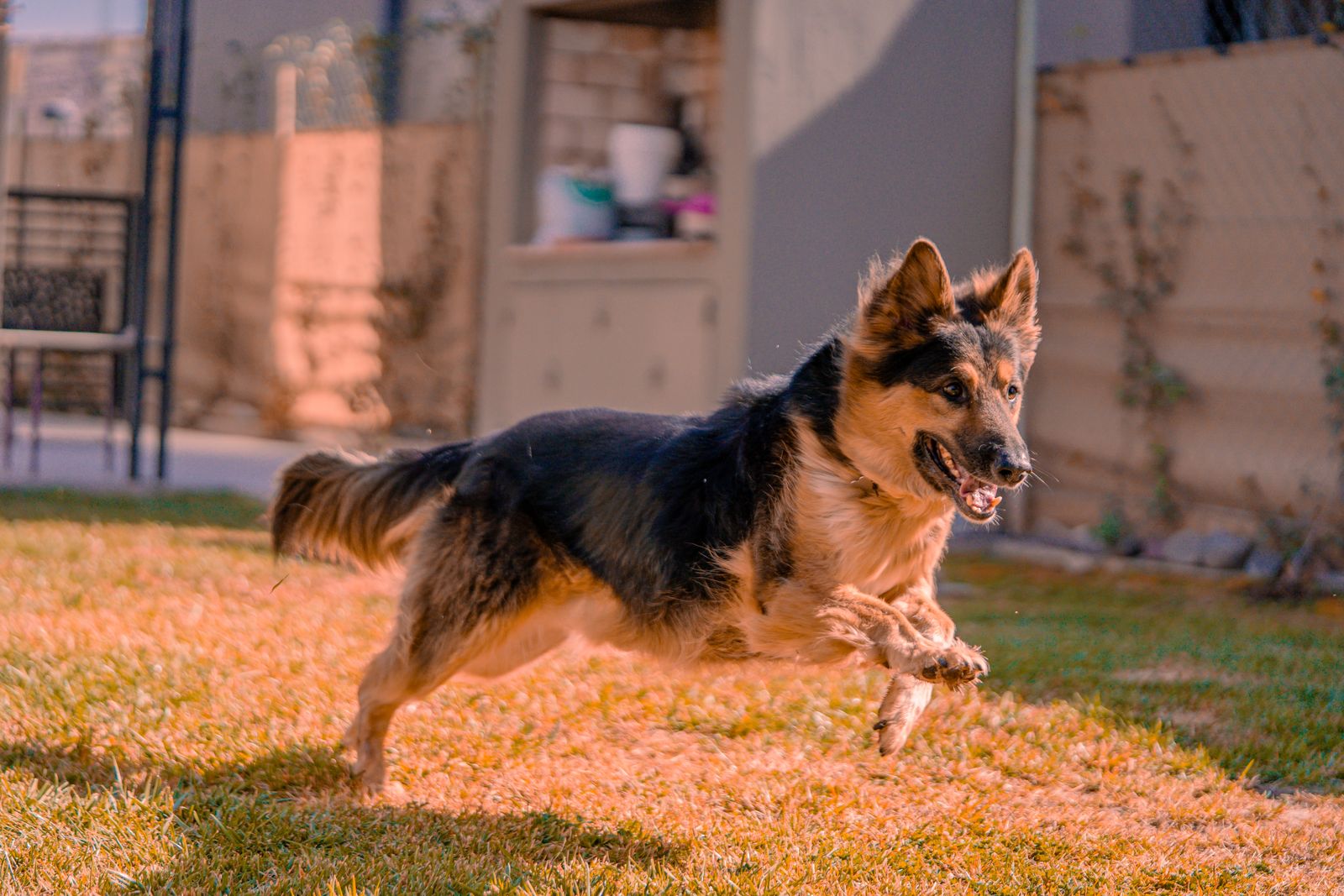
Hip dysplasia at a glance
Hip dysplasia is a condition of the hip joint, the ball and socket joint that connects the thigh bone to the pelvis. When the joint forms incorrectly, the ball sits loosely in the socket instead of fitting snugly. Cornell describes that looseness, called laxity, as the starting point. Over time the loose fit wears the joint, arthritis develops, and pain and stiffness follow. This guide explains the condition in plain language first, including the screening systems that measure it early. It then turns to the insurance questions that decide whether a policy actually helps.
| What it is | An inherited condition in which the hip joint forms incorrectly, so the ball sits loosely in the socket. The looseness leads over time to arthritis, pain, and discomfort |
|---|---|
| Who is at risk | Most common in medium and large breeds. Cornell names Labradors, German Shepherds, Rottweilers, and Bulldogs among the breeds where it is common. Any dog can be affected |
| Typical signs | Difficulty getting up, bunny-hopping when running, limping or stiffness in the back legs, swaying hips when walking, and reduced willingness to jump or play |
| How screening works | OFA grading reads hip shape from radiographs and gives final grades after the dog is two years old. PennHIP measures looseness as a Distraction Index and can be done from 16 weeks of age |
| How it is diagnosed | Radiographs combined with a physical examination and palpation of the hip joint, including the Ortolani sign, a palpation test for looseness |
| How it is treated | Many dogs are managed medically with weight control, pain relief, low impact exercise, and physical therapy. Severe cases that respond poorly may be referred for surgery, from joint preserving procedures in young puppies to total hip replacement or femoral head ostectomy in mature dogs |
| The insurance question | Whether the policy treats hip dysplasia as hereditary for your dog's breed, what orthopedic waiting period applies, and how the policy treats the second hip after the first is treated |
What hip dysplasia is, in plain language
A healthy hip is a tidy piece of engineering. The head of the thigh bone, called the femoral head, is a smooth ball. It sits inside a cup in the pelvis called the acetabulum, or the socket. In a well formed joint the ball is deeply seated, the socket covers it well, and the two surfaces move together with very little play. The OFA describes an Excellent hip in exactly those terms: a deep seated ball that fits tightly into a well formed socket with minimal joint space.
Hip dysplasia is what happens when that fit never forms properly. Cornell calls it a common inherited orthopedic condition that occurs when the hip joint forms incorrectly, leading to looseness or laxity. The American College of Veterinary Surgeons describes the same starting point in growth: the condition begins in dogs as they grow and results in instability, a loose fit of the hip joint. A loose ball does not glide. It shifts and knocks inside a socket that is often too shallow to hold it.
The joint answers that abnormal movement with change, and the change is the disease owners actually live with. Over time, Cornell explains, laxity causes arthritis to develop, with loss of cartilage and bony remodeling. The ACVS describes the long term response the same way: progressive loss of cartilage, scar tissue around the joint, and the formation of bone spurs around the ball and socket. Pain, stiffness, and a shrinking range of movement follow from the arthritis, not from the loose fit alone. That is why a young dog can have markedly loose hips and seem fine, while the same dog years later struggles to rise after a nap.
The cause is mostly written before birth, and partly written by how the puppy grows. Cornell states that hip dysplasia is a genetic condition that can be modified by environmental influences such as nutrition and growth rate. Overfeeding and rapid growth in puppies can worsen the condition in dogs already predisposed to it, while slower, controlled growth can reduce how strongly the trait shows. The ACVS puts the balance plainly: the cause is multifactorial, meaning many factors combine, but heredity is the biggest single risk factor. Both points matter for the rest of this guide. Heredity is why insurers classify the condition the way they do, and growth is why the first months of feeding carry weight far beyond puppyhood.
One more distinction shapes everything that follows. There is no single gene test that settles hip dysplasia the way a DNA test can settle some other inherited conditions. The trait is influenced by many genes and by growth, so the only way to assess a dog's hips is to examine and image the joint itself. That is what the screening systems in this guide do. They are not paperwork for breeders only. They are the earliest reliable picture of the joint your insurer will one day be asked to pay to treat.
Signs at home, sorted by what to do next
Hip dysplasia rarely announces itself with a crisis. It shows up as small changes in how a dog moves through ordinary life. Cornell lists the common signs: difficulty getting up, bunny-hopping when running, limping or stiffness in the back legs, reduced activity or unwillingness to jump, decreased muscle mass in the hind legs, swaying in the hips when walking, and shifting weight onto the front legs. Cornell also notes that some dogs show little to nothing early on, while others show signs as early as a few months old or not until later in life, depending on severity and on how arthritis develops. The table below sorts the common signs by the response they call for. It is general information, not a diagnosis. Signs like these can have other causes, including injuries and other joint problems, and only a veterinarian who examines your dog can say what is going on.
| What you see | What it can mean | What to do next | Write this down |
|---|---|---|---|
| A puppy or young dog who bunny-hops when running, using both back legs together. Swaying hips when walking | An early movement pattern that can go with hip looseness. Cornell lists both patterns among the signs of the condition | Raise it at the next vet visit, and ask about screening. For a predisposed breed, this conversation is time sensitive, because early screening and the joint preserving options belong to puppyhood | The age when you first noticed it, and a short phone video of the dog running and walking if you can take one safely |
| Stiffness in the back legs after rest that eases as the dog moves. Slowing on walks the dog used to enjoy | Joints that are becoming sore with use and rest, a pattern that fits developing arthritis as well as simple tiredness | Book a vet visit. Keep exercise regular and low impact rather than stopping it, and note whether the stiffness is worse in the morning or after heavy days | When the stiffness appears, how long it lasts, and which activities make the next day worse |
| Difficulty getting up. Reluctance to jump into the car, climb stairs, or join play. Weight visibly shifting onto the front legs | The back end is doing less work because using it hurts or feels unstable. Cornell lists difficulty rising and unwillingness to jump among the core signs | Book a vet visit soon. Help with ramps or a supported lift for the car in the meantime, and keep the dog at a healthy weight while you wait to be seen | Which movements the dog now avoids, and when each avoidance started |
| Limping in a back leg, or a leg held up after exercise. Hind leg muscle looking thinner than it used to | One hip may be hurting more than the other, or the dog may be unloading a painful leg enough that the muscle shrinks. Cornell lists both limping and decreased hind leg muscle mass as signs | Call the vet promptly. Restrict running and jumping until the dog is examined. Do not start a pain medication left over from another problem without asking the vet first | Which leg, whether the limp follows exercise or appears at rest, and any fall, slip, or rough play before it started |
| A dog who cannot rise without help, cries when the hip area is touched, or suddenly cannot bear weight on a back leg | Pain beyond the slow pattern of this condition. A sudden change can also mean an injury or another emergency on top of a weak hip | Same-day urgent care. Keep the dog still and supported. A sudden inability to use a leg is never a wait and see sign, whatever its cause turns out to be | The time the change appeared, and exactly what the dog was doing just before it |
The last column matters for two readers, not one. Your vet uses that timeline to judge how a joint is changing. An insurer uses the same record later to judge when signs began. A dated note written on the day you noticed a change is worth more to both of them than a memory rebuilt months afterward. Keep the notes factual and brief: date, what you saw, how long it lasted, and what happened next.
Which dogs are at risk, and why
Size is the simplest predictor. Cornell describes hip dysplasia as common in medium and large breeds, and names Labradors, German Shepherds, Rottweilers, and Bulldogs as examples. The ACVS likewise notes that the condition occurs most commonly in large breed dogs. A bigger dog puts more force through the hip with every step, so a loose fit that a small dog might carry quietly becomes wear, arthritis, and pain in a heavy one. Small dogs can be affected too. The risk is lower and the signs are often milder, but the condition is not exclusive to giants.
Family history is the second predictor, and it is the one screening exists to measure. A puppy inherits hip shape from both parents, and Cornell adds a caution that surprises many buyers: a dog with normal hips can produce puppies with hip dysplasia, depending on its mate. Hip quality in a litter is a property of the pairing, not of one parent alone. That is why the checklist later in this guide asks about both parents, and about grandparents where records exist, rather than accepting a single good grade as a guarantee.
Growth is the third factor, and the only one an owner influences from the first week home. Cornell advises avoiding overfeeding, especially in fast growing puppies of large breeds, feeding diets properly formulated for large breed growth, and not supplementing growing puppies with calcium or vitamin D. Rapid growth loads a joint that is still forming. Slow, steady growth gives the socket and the muscles around it time to develop together. The food bowl does not create the inherited tendency. It can decide how hard that tendency lands.
Weight then carries the same lesson into adult life. Excess weight is load, and load is what a loose, arthritic joint feels most. Cornell's outcome guidance and the ACVS medical management guidance agree on this point from opposite ends of the condition: keeping the dog slim is central both to slowing the disease and to living comfortably with it once arthritis is present. Of every factor in this section, weight is the one that stays in the owner's hands for the dog's whole life.
For the breed by breed detail, see our guides to pet insurance for Labrador Retrievers, pet insurance for German Shepherds, pet insurance for Golden Retrievers, and pet insurance for Rottweilers. Our breed guides that carry a hip dysplasia card also include Poodles, German Shorthaired Pointers, Australian Shepherds, and Bulldogs. Newer breed guides that carry a hip dysplasia card also include Cavalier King Charles Spaniels, Cane Corsos, Pembroke Welsh Corgis, Doberman Pinschers, and Boxers. The full list is on the breed guides hub, and every condition guide on this site is collected on the condition guides hub.
Screening and diagnosis: OFA and PennHIP, explained plainly
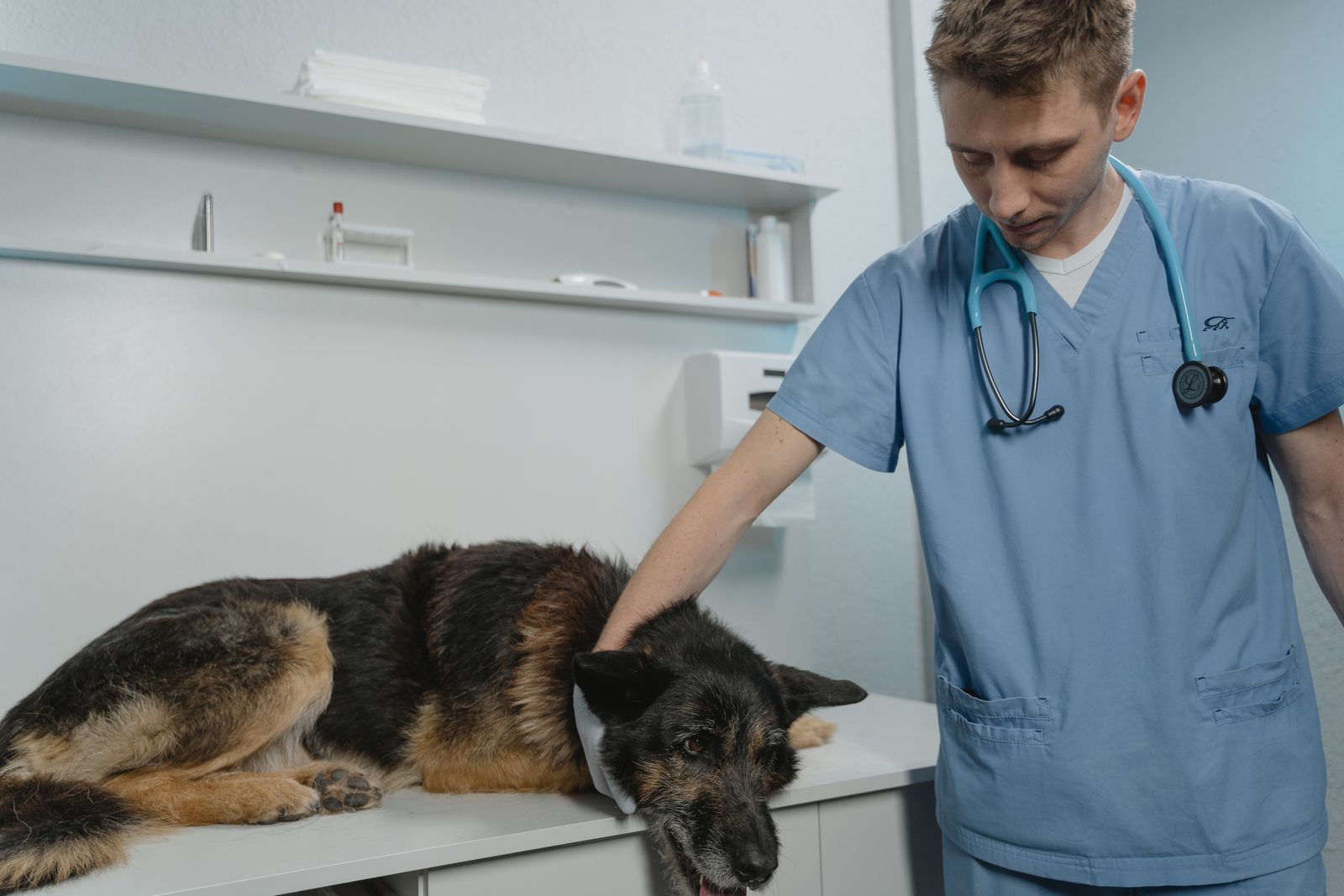
Screening and diagnosis use the same tools for two different jobs. Screening assesses the hips of a dog who may show no signs at all, usually a breeding dog or a puppy from an at-risk breed, to predict future arthritis and to guide breeding choices. Diagnosis investigates a dog who already shows signs, to confirm what is happening in the joint and to plan treatment. Owners meet both, sometimes in the same year, so it helps to understand each system on its own terms before comparing them.
The clinical examination comes first
Cornell is clear that imaging does not stand alone. Hip dysplasia is diagnosed by radiographs, which are X-ray images, in combination with a physical examination and palpation of the hip joint. Palpation means the vet feels and moves the joint by hand. One named test is the Ortolani sign, a palpation check for looseness in the joint. Cornell adds that subtle changes in hip shape can be difficult to detect on an image, so a physical examination is always necessary alongside it. Specific positioning is needed for these radiographs, which is why dogs are sedated or anesthetized for the imaging. A tense dog with tight muscles can hide the very looseness the image is meant to reveal.
OFA: a grade for the joint as it stands
The Orthopedic Foundation for Animals, shortened to OFA, runs the longest standing hip evaluation system. A veterinarian takes a hip extended radiograph, with the dog on its back and the back legs extended. The image is read independently by three radiologists, and the final grade is the consensus of those three readings. The OFA sorts hips into seven categories. Excellent, Good, and Fair are within normal limits and receive OFA numbers. Borderline sits between normal and dysplastic, with no clear consensus, and the OFA recommends repeating the radiographs at a later date, usually six months on, to check for progressive change. Mild, Moderate, and Severe are the dysplastic grades, describing a ball that sits partly or barely in a shallow socket, with arthritic bone changes appearing as the grade worsens.
Timing is the defining feature of the OFA system. Cornell summarises it directly: OFA hips are graded based on radiographs taken after the dog is two years old. A younger dog can receive a provisional, or preliminary, evaluation, but the final certification waits for maturity, when hip shape has settled. That makes OFA a record of the adult joint as it stands. Cornell also records its limit honestly. The OFA radiograph does not accurately predict the later development of osteoarthritis in puppies, which means a puppy can look unremarkable early and still carry looseness that matters. For breeding decisions made at maturity, and for a permanent public record that a buyer can verify, the system does its job well. For predicting a young puppy's future, it was never designed to be the earliest word.
PennHIP: a measurement of looseness itself
PennHIP, the University of Pennsylvania Hip Improvement Program, now operated through Antech Imaging Services, starts from the other end of the problem. Instead of grading the shape of the joint, it measures the looseness that Cornell and the ACVS both identify as the engine of the disease. The method uses three radiographic views, including a compression view, which shows the ball seated in the socket, and a distraction view, taken with a special device that gently pushes the ball away from the socket to reveal how far it can move. PennHIP can only be performed by a veterinarian certified in the technique, using that device, with the dog under deep sedation or general anesthesia so the muscles around the hip are completely relaxed.
The result is a number, not a grade. The Distraction Index, shortened to DI, expresses how far the centre of the ball displaces from the centre of the socket, divided by the radius of the ball. Antech explains that the index runs from 0 to 1 or more, that it carries no pass or fail meaning, and that hips with a DI below 0.3 are considered tight, while a DI close to 1 means an extremely loose hip. Antech also describes the index intuitively, as an indication of how far out of joint the ball sits under distraction. The report places the dog's result against other dogs of the same breed, so an owner can see whether this puppy's looseness is typical for the breed or at its loose end. Because the method measures a physical property of the joint rather than waiting for its final shape, PennHIP can be performed from 16 weeks of age, and Cornell calls its distraction method the most accurate measurement of hip laxity in puppies.
Side by side, and what each result means for insurance
| Question | OFA evaluation | PennHIP evaluation |
|---|---|---|
| What it measures | Hip conformation, meaning the shape and fit of the ball and socket, plus arthritic change already present | Hip laxity, meaning how far the ball can be displaced from the socket under a measured force |
| The result | One of seven grades, from Excellent to Severe, decided by consensus of three radiologists | A Distraction Index for each hip, a number from 0 to 1 or more, with a comparison against the same breed. There is no pass or fail |
| Earliest useful age | Preliminary readings are possible in younger dogs. Final certification rests on radiographs taken after the dog is two years old | From 16 weeks of age, because laxity can be measured before the joint reaches its final shape |
| Who can do it | Any veterinarian can take and submit the radiographs for OFA reading | Only a veterinarian certified in the PennHIP technique, using the distraction device |
| What it is best at | A permanent, verifiable record of the mature joint, used across generations of breeding records | Early prediction of arthritis risk in a puppy, while joint preserving choices still exist |
| Age | What can happen | Why the timing matters |
|---|---|---|
| From 16 weeks | A PennHIP evaluation can measure hip laxity and produce a Distraction Index for each hip | This is the earliest reliable picture of looseness, taken while the joint preserving options below are still open |
| 12 to 20 weeks | The window Cornell gives for juvenile pubic symphysiodesis, the joint preserving procedure that changes how the pelvis grows. Earlier is better | Cornell advises screening predisposed breeds and symptomatic puppies for laxity before 20 weeks of age, so a puppy who needs this option is found inside its window |
| Before orthopedic maturity | Triple pelvic osteotomy is preferably performed in this period, while the joint is still developing and before arthritis begins | A diagnosis that arrives after maturity closes this path and leaves medical management and the salvage procedures |
| Younger than two years | An OFA preliminary evaluation can be read, but it is provisional rather than final | Useful as an early indication for a growing dog. It is not the permanent record, and it does not replace the final evaluation |
| Two years and older | The final OFA evaluation, based on radiographs taken after the dog is two years old, with one of the seven grades assigned | This is the mature joint on record: the result breeders, buyers, and future vets will refer back to |
| After a Borderline grade | The OFA recommends repeating the radiographs at a later date, usually six months on, to compare the films over time | Progressive arthritic change, or its absence, is what separates a truly dysplastic joint from a borderline one |
Neither result is a diagnosis of pain, and neither one, on its own, decides a claim. What screening results do is create dated, professional records of the joint before symptoms begin. Those records cut both ways, and owners should understand both edges. A strong screening history supports the story that a dog was sound when a policy began. A screening result that already showed looseness or dysplasia, dated before enrollment, is exactly the kind of document an insurer can point to when calling later hip care pre-existing. Screening is still worth doing early, because the medical value is real and time limited. The lesson is about sequence, not avoidance: understand what a result will show, keep every report, and think about enrollment timing before the first hip sign, not after it.
Cornell names one further method for completeness. Its own dorsolateral subluxation method images the hips while the dog kneels on the table, and correlates well with palpation findings. Most owners will meet OFA or PennHIP first. The point of naming a third approach is simple: hip assessment is a family of imaging and examination techniques, and the right one for a given dog is a conversation with the veterinarian who will interpret it.
Treatment paths, in general categories
Treatment follows severity, age, and how the dog responds. Cornell frames the decision that way directly: treatment depends on the severity of the condition, the dog's age, and response to therapies. Many dogs are managed medically for much or all of their lives. Dogs with severe disease who respond poorly to medical management may be referred to a board certified veterinary surgeon to discuss surgery. Only the veterinarian examining your dog can say which path fits. What follows is the map of paths, not a recommendation.
Medical management
Medical management treats the arthritis and the pain, and supports the joint from the outside. Cornell lists its parts: maintaining a healthy body weight, nonsteroidal anti-inflammatory drugs, which are pain and inflammation medicines that require intermittent blood work monitoring, other pain relievers, cartilage protective supplements and omega-3 fatty acids, regenerative medicine therapy, regular low impact exercise such as walking and swimming, and physical therapy, including muscle strengthening work. The ACVS medical management guidance covers the same ground and stresses the same centre of gravity: all dogs with this condition should be kept very slim from the outset, because weight control is the most effective long term method of keeping them comfortable. Strong muscles around a weak joint act as its support crew, which is why controlled exercise is part of the treatment rather than a break from it.
The honest limit of medical management is that it manages. It does not rebuild the joint, and the arthritis behind the pain is progressive. Owners should ask the vet what change would trigger a surgical conversation: pain that medication no longer controls, loss of muscle despite therapy, or a dog withdrawing from ordinary life. Knowing the trigger in advance turns a slow decline into a decision with a marker on it.
Joint preserving surgery in young puppies
Two procedures exist only inside a puppyhood window, and they are the medical reason early screening matters. Juvenile pubic symphysiodesis, shortened to JPS, is a minimally invasive procedure that alters how the pelvis grows so the socket comes to cover the ball better as the puppy develops. Cornell states that it must be performed between 12 and 20 weeks of age at the latest, and that earlier is better. Triple pelvic osteotomy, shortened to TPO, repositions the socket by placing implants in the pelvic bones, and Cornell notes it is preferably performed before orthopedic maturity. Both procedures aim to eliminate looseness before arthritis begins. Neither exists as an option for the adult dog who is diagnosed at three years old, which is why Cornell advises that predisposed breeds and symptomatic puppies be screened for laxity before 20 weeks of age, while these interventions are still possible.
Surgery for the mature dog
For a mature dog whose pain is no longer controlled medically, Cornell describes the surgical options as generally salvage procedures, meaning they relieve pain by changing or replacing the joint rather than restoring its original shape. Femoral head and neck ostectomy, shortened to FHO, removes the ball and the neck of the thigh bone so the painful bone to bone contact ends and a false joint of muscle and scar tissue forms. Cornell notes it is more common for small to medium sized dogs. Total hip replacement, shortened to THR, replaces the ball and socket with implants. Cornell notes it is more common for large breed dogs, and that dogs who undergo it can have normal gait and range of motion. The ACVS describes the same replacement in mechanical terms: both the ball and the socket are replaced with metal and plastic implants, fixed in place by bone cement, metal pegs, or a press fit that bone grows into.
Recovery and rehabilitation belong to the treatment, not to an optional extra after it. Cornell lists physical therapy among the tools of medical management, and post surgical dogs follow controlled exercise programmes while tissues heal and muscle rebuilds. That has a direct policy consequence, developed in the table below. A plan that covers an operation but excludes rehabilitation, or covers the first hip but treats the second differently, tells a very different story from its headline. Read the services list, not the summary.
Through every path, the daily work stays with the owner: a lean dog, measured food, regular gentle exercise, ramps or steps where jumping can be avoided, and recheck visits that keep the record current. None of that is glamorous. All of it is treatment, in the sense that it changes how the joint feels and how long the dog stays active.
The policy clauses that decide a hip dysplasia claim
Most pet insurance disputes about hips are not arguments about what happened at the clinic. They are arguments about what the policy said before anything happened. Nine clauses do nearly all of that deciding for this condition. The table below names each clause, explains what it does in plain language, and states the question to settle for hip dysplasia specifically. Every answer lives in the insurer's sample policy, which is the full contract wording, not the marketing summary. Read it before you enroll, and keep the answers in writing. Insurer wording differs from plan to plan, so this table describes what to check, in general terms, rather than quoting any one company's contract. For the wider background, see what pet insurance covers and our guide to waiting periods.
| Clause to check | What it means | The hip dysplasia question to settle |
|---|---|---|
| Hereditary condition coverage | Some plans exclude conditions passed down through a breed's bloodlines, or cover them only under a hereditary section with its own rules | Is hip dysplasia covered for your dog's breed at all? Cornell and the ACVS both describe the condition as inherited, so a hereditary exclusion removes the very condition the breed is known for |
| Breed specific exclusions | A plan may name certain conditions for certain breeds and exclude them outright | Does the exclusion list name hip dysplasia, joint dysplasia, or your dog's breed anywhere? Check the exact breed name as it appears on your dog's records |
| Orthopedic waiting period | Many plans delay coverage for bone and joint problems beyond the standard illness waiting period. The delay is stated in the sample policy | How long is the orthopedic waiting period in this plan, and can a veterinary examination or a screening result shorten or waive it? Hip signs that first appear inside the window are treated as pre-existing, however clearly they are later diagnosed |
| Pre-existing condition definition | A pre-existing condition is one whose signs appeared before the policy started or during a waiting period, whether or not it was formally diagnosed | Would an earlier note about limping, stiffness, a sore hip, or a screening result showing looseness make all later hip care pre-existing? For this condition, that definition is the most consequential line in the contract |
| Bilateral condition rule | Many policies treat the two sides of the body as linked. A condition treated on one side can change how the same condition on the other side is handled | If the left hip is treated this year and the right hip needs the same care later, is the second hip a new claim, a continuation of the first, or excluded as the other side of a bilateral condition? Hip dysplasia often involves both hips, so this answer is rarely hypothetical |
| Chronic condition and renewal handling | Some plans treat a condition as finished after a symptom free period. Others classify a long term diagnosis as continuing across renewals | Once arthritis from hip dysplasia is on the record, is hip care covered in later policy years, or does the first year's handling cap what the condition can ever claim? |
| Annual limit and per condition limits | The annual limit caps what a plan pays in a policy year. Some plans also cap a single condition across its lifetime | Picture one year containing specialist consultations, imaging, a major hip operation, hospital care, medication, and rehabilitation. Does the limit survive that year with room for ordinary illness care as well? |
| Covered services list | The contract lists which services count: consultations, imaging, surgery, hospitalisation, medication, rehabilitation | Are radiographs, specialist orthopedic consultations, each category of hip surgery, hospital care, long term pain medication, and rehabilitation each covered, and does any of them carry a sublimit, a smaller cap inside the main limit? |
| Screening and preventive services | Plans draw a line between diagnosing a problem that has appeared and screening a dog who shows no signs | Are OFA or PennHIP evaluations, and radiographs taken before any signs appear, covered services, excluded as screening, or simply outside the policy? The answer affects puppy owners first, because screening belongs to puppyhood |
Three of these rows deserve emphasis because they catch owners of at-risk breeds most often. The waiting period row is a timing trap. Owners often start shopping for insurance on the day a puppy first limps, which is exactly the day the orthopedic clock starts working against them. The pre-existing row is a records trap. Insurers read the medical and screening record, not your memory of it, and this condition generates records earlier than almost any other, through breeder screening and puppy examinations. The bilateral row is the trap unique to paired joints. A policy can handle a first hip generously and a second hip very differently, and by the time the second hip needs care, the policy cannot be changed. Settle all three answers in writing before the dog needs any of them.
A hip dysplasia claim, step by step
This walkthrough uses no dollar figures, because treatment prices vary by region, hospital, and severity, and invented figures would not help you judge a real policy. It follows the sequence of a typical claim so you can see where the paperwork is created.
- Signs are noticed and recorded. Your dog shows signs from the table above, or a screening result raises a question. Note the date. The first dated record of a hip sign, wherever it is written, is the date an insurer will work from later.
- The first examination. The vet examines the dog, palpates the hips, checks gait and muscle condition, and writes the findings in the medical record. This record is the foundation of any later claim. Keep the invoice and the visit notes.
- Imaging and any screening history. Radiographs are taken under sedation so the joint can be positioned and its looseness assessed. If the dog was screened as a puppy, those OFA or PennHIP reports join the file. Together they show when the joint's condition was first documented, which is central to the pre-existing check.
- The treatment plan. The vet sets out medical management, or refers the dog to a board certified surgeon if the case is severe or responding poorly. The plan, and the reasons for it, are documented. If surgery proceeds, the operation, hospital stay, and medication are each recorded.
- Filing the claim. You submit the claim form with the invoices, the medical record, and the imaging reports. Most insurers also ask for the dog's full history from every vet the dog has seen, because the pre-existing check runs on the whole record, including puppy visits and any screening paperwork you hold.
- The assessment. The insurer matches the case against the clauses in the table above. Was the first hip sign inside an orthopedic waiting period? Did any earlier note or screening result describe looseness? Is hip dysplasia hereditary classified for this breed in this plan, and how does the bilateral rule treat this hip? The answers, not the size of the bill, decide the outcome.
- Reimbursement and the deductible. If the claim is accepted, the plan applies the deductible, which is the amount you pay first, and the reimbursement level stated in the policy, up to the remaining annual limit. Our guide to how pet insurance works walks through that arithmetic with a labelled hypothetical example.
- Ongoing and second hip claims. Medication refills, recheck imaging, and rehabilitation sessions may follow for months or years, and a second hip may need care in a later year. File each item as it happens, keep the folder complete, and note how the insurer classified the second hip. That classification is the bilateral rule operating in real life.
If a claim is denied, ask for the denial in writing with the exact clause cited. A denial that names a clause can be checked against the sample policy you read at purchase. A denial based on timing can be answered with the dated timeline you kept, including screening reports and first visit notes. Neither guarantees a reversal. Both turn an argument into a document review, which is the ground where owners do best.
Before you enroll a dog at risk of hip dysplasia
- Get a written answer on whether hip dysplasia is covered for your dog's exact breed under the exact plan you are considering.
- Confirm hereditary conditions are covered, because hip dysplasia is described by Cornell and the ACVS as an inherited condition.
- Find the orthopedic waiting period in the sample policy, and ask whether a veterinary examination or screening can shorten or waive it.
- Ask what earlier signs count as pre-existing for hips: limping, stiffness, reluctance to jump, or a screening result that showed looseness.
- Ask how the second hip is treated after the first, in writing. This is the bilateral question, and it matters more for hips than for almost any other joint.
- Check that radiographs, specialist orthopedic consultations, hip surgery, hospital care, long term pain medication, and rehabilitation are covered services, and note any sublimits.
- Ask whether screening itself, such as an OFA evaluation or a PennHIP evaluation before signs appear, is covered, excluded, or outside the policy.
- Choose the annual limit by picturing specialist care, imaging, a major operation, hospital days, medication, and rehabilitation in a single policy year.
- Enroll young, while the medical record shows no hip signs, and keep breeder, screening, and rescue paperwork that shows the dog's history in one folder.
The breeder and first-vet-visit screening checklist
This is the tool this guide is built around. Hip dysplasia is unusual among conditions because the decisive records are created before most owners think about insurance at all: at the breeder's, and at the first puppy visits. Work through the breeder half before you bring a puppy home, and the veterinary half in the first months after.
Ask the breeder, and verify the answers:
- Ask whether both parents were hip screened, by which system, and what the results were. For OFA, ask for the grade and the OFA number. For PennHIP, ask for the Distraction Index for each hip and how it compared with the breed.
- Verify an OFA result rather than taking it on trust. Excellent, Good, and Fair grades are given OFA numbers and sit in the public record, so a named dog's result can be checked.
- Ask about grandparents and other close relatives where records exist. Cornell notes that genetic risk is judged from pedigree and from the hip quality of offspring, because a single radiograph does not show a dog's genetic risk by itself.
- Ask whether any dog in the recent family was diagnosed with hip dysplasia or treated for hip arthritis, and at what age the signs appeared.
- Confirm that no parent with hip dysplasia was bred. Cornell states plainly that dogs with the condition should never be used for breeding.
- Get every screening report in writing and keep the copies. Verbal summaries cannot be checked later, by you, a vet, or an insurer.
At the first veterinary visits, ask and record:
- Ask the vet to palpate the hips and check for looseness, including the Ortolani sign, and to record what was found, even if the finding is normal.
- For a breed Cornell names as predisposed, or a puppy showing any sign in the table above, ask about PennHIP screening before 20 weeks of age, while the joint preserving options Cornell describes are still open.
- Ask which growth diet fits a large breed puppy, how much to feed, and how the vet wants growth tracked. Cornell advises against overfeeding and against adding calcium or vitamin D supplements for growing puppies.
- Ask when an OFA preliminary reading would be useful, and diarise the final OFA evaluation after the dog is two years old if you want a permanent record of the mature joint.
- Ask the vet to note gait, muscle condition, and body weight at every puppy visit. A clean, dated run of normal findings is the strongest record a future claim can rest on.
- File every report, image, and invoice in one folder from the first visit. That folder is the dog's hip history, and it serves the vet, the insurer, and any future surgeon equally.
Questions to ask an insurer, in writing
Copy these into an email or the insurer's contact form, and keep the reply with your policy. Written answers are the ones that can be quoted back at claim time.
- Is hip dysplasia covered for my dog's breed under this plan, and is it classified as a hereditary condition?
- What waiting period applies to orthopedic and joint conditions, and can a veterinary examination or screening result shorten or waive it?
- My dog's record contains a note about limping on a past visit. Would that make later hip treatment pre-existing under this plan?
- My puppy has a screening result on file. How does this plan treat a screening result that predates the policy?
- If one hip is treated and the other hip needs the same care later, how is the second hip handled under this plan's bilateral rule?
- Are radiographs, specialist orthopedic consultations, hip surgery, hospitalisation, long term pain medication, and rehabilitation covered, and are there sublimits on any of them?
- Does this plan have a per condition limit that a first hip claim could reduce for the second hip?
For the wider comparison method behind these questions, see how to compare plans. For the money side in general terms, see what shapes the cost of pet insurance.
Frequently asked questions
Is hip dysplasia covered by pet insurance?
It depends on the exact policy. Some plans cover hip dysplasia as a standard illness. Others classify it as hereditary and apply hereditary rules, attach a longer orthopedic waiting period, or restrict it for breeds known for hip problems. The only reliable answer comes from the sample policy for the plan you are considering, confirmed in writing for your dog's breed.
My puppy's parents had good hips. Does that mean my dog will not develop hip dysplasia?
No. Cornell is direct on this point. A radiograph does not show genetic risk by itself, and a dog with normal hips can still produce puppies with hip dysplasia, depending on its mate. Screening both parents lowers the risk in the litter. It does not remove it, which is why your own dog's screening, weight, and records still matter.
What is the difference between OFA and PennHIP screening?
They measure different things. The OFA method grades hip shape from radiographs, using seven grades from Excellent to Severe, and final certification is based on radiographs taken after the dog is two years old. PennHIP measures looseness itself and reports it as a Distraction Index, a number from 0 to 1, and it can be done from 16 weeks of age by a certified veterinarian. A grade describes the joint that is there now. An index estimates the arthritis risk that looseness carries.
If one hip is treated, will insurance cover the other hip later?
That is exactly what a bilateral rule decides, and policies differ. Some plans treat the second hip as part of the same condition, so a limit or an exclusion applied to the first hip follows to the second. Others assess the second hip under the terms in force when it is treated. Because hip dysplasia often involves both hips, ask how the second hip is handled before you enroll, and keep the answer in writing.
My dog limped once and the vet wrote it down. Is hip dysplasia now pre-existing?
It can be treated that way. Insurers read the medical record for signs such as limping, stiffness in the back legs, or reluctance to jump, even when no formal hip diagnosis was made. A note like that, dated before the policy started or during a waiting period, can be used to treat later hip care as pre-existing. This is a main reason owners of at-risk breeds are advised to enroll before hip signs reach the record.
Can hip dysplasia be prevented?
The inherited tendency cannot be removed, but its course can be softened. Cornell advises screening breeding dogs radiographically and never breeding a dog with hip dysplasia. For a pet dog, the levers are a healthy weight for life, a properly formulated diet for a growing large breed puppy, and no added calcium or vitamin D supplements for growing puppies unless a veterinarian directs them. Early screening matters too, because the joint preserving options only exist in a young puppy.
Sources and further reading
- Cornell Riney Canine Health Center, Canine hip dysplasia (CHD)
- Orthopedic Foundation for Animals, Hip Dysplasia
- Orthopedic Foundation for Animals, Hip Grade Details
- PennHIP through Antech Imaging Services, Measuring Hip Joint Laxity
- American College of Veterinary Surgeons, Canine Hip Dysplasia
Sources checked on November 6, 2026. CoverageForPets is operated by its publisher and researched from the primary sources listed above. This guide is general information only. It is not veterinary advice and not a recommendation to buy any specific policy.