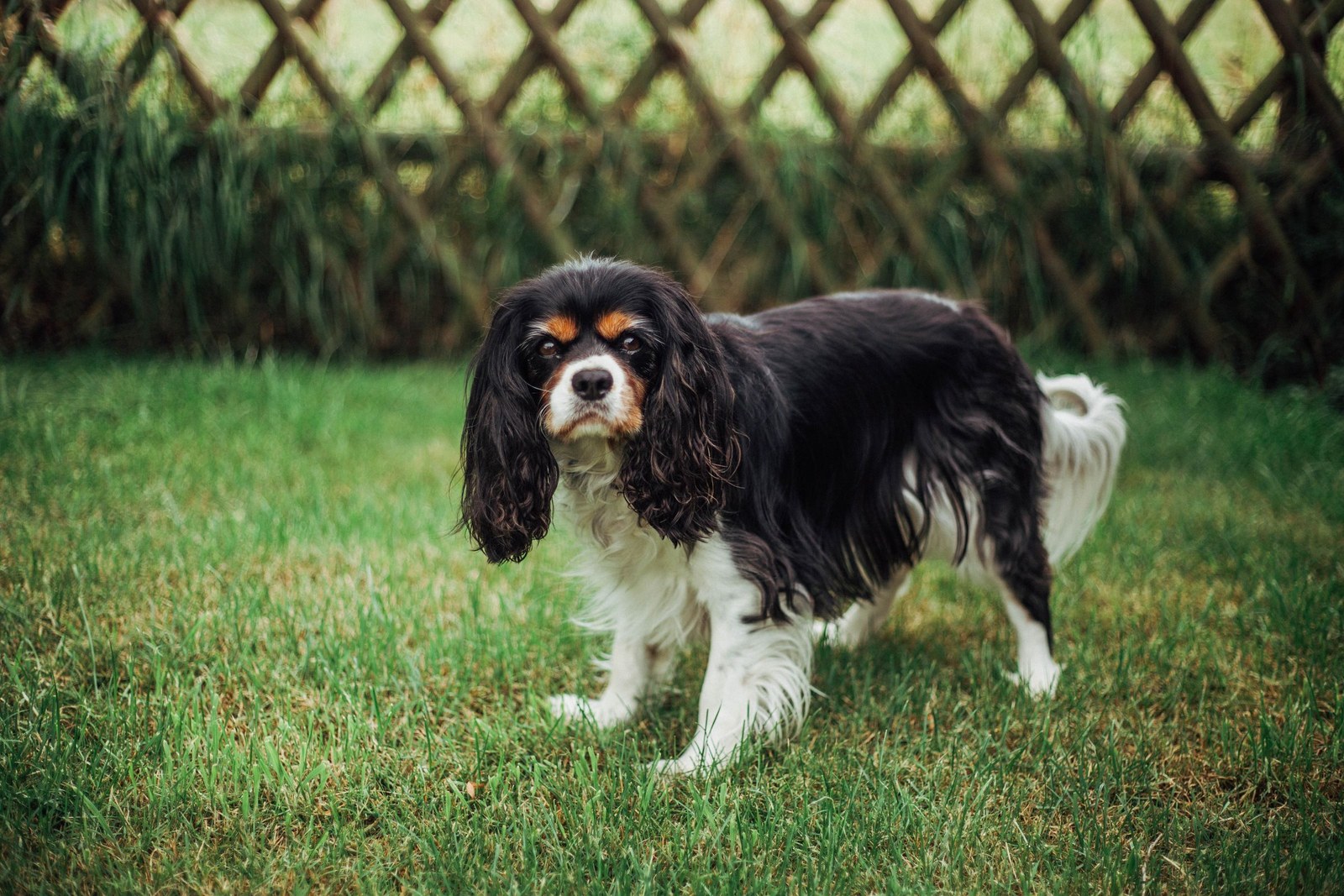
Cavalier King Charles Spaniel snapshot
The American Kennel Club describes the Cavalier as the best of two worlds, combining the gentle attentiveness of a toy breed with the verve and athleticism of a sporting spaniel. It is a small dog with a long, silky coat, very long ears, and a gentle, melting expression around large round eyes. The muzzle matters when you identify this breed. A Cavalier has a noticeably longer muzzle than the King Charles Spaniel, also called the English Toy Spaniel, which has a flatter face and a shorter nose. The AKC calls Cavaliers affectionate, gentle, and graceful, and owners meet that temperament as a dog that wants to be with its people, joins in whatever the household is doing, and still has enough spaniel in it to enjoy a real walk. The breed ranked No. 13 in AKC registrations for 2024, which makes it one of the most commonly owned toy breeds in the country.
| Height | 12 to 13 inches at the shoulder. |
|---|---|
| Weight | 13 to 18 pounds. |
| Lifespan | 12 to 15 years, as listed by the AKC. |
| Coat | A long, silky coat of moderate length, in four colors: Blenheim (chestnut and white), tricolor, black and tan, and ruby. |
| Temperament | Affectionate, gentle, and graceful, with the attentiveness of a companion breed and the energy of a small sporting spaniel. |
| Energy and exercise | Moderate and adaptable. Cavaliers match the household pace, from apartment living to active walks, and they need company as much as exercise. |
Two snapshot facts shape the insurance picture. The first is the heart. This is a small, otherwise sturdy companion dog whose main health risk is a progressive valve disease that can be detected years before it causes a single symptom. Detection is good for the dog. It is also what makes timing and paperwork unusually important for the owner. The second is the lifespan range. A Cavalier that lives into its early teens will pass through the ages when a murmur usually appears, when heart enlargement may follow, and when daily heart medication may begin. A policy for this breed is not really bought for the puppy years. It is bought for the long middle and late years when the heart file gets thick.
Health tendencies in Cavalier King Charles Spaniels
CavalierHealth.org, a breed health resource that compiles the veterinary specialist literature on this breed, focuses on the severe inherited disorders that affect Cavaliers, and it names mitral valve disease and syringomyelia first. The breed club health programs add heart, eye, hip, and kneecap screening for breeding dogs through the OFA Canine Health Information Center, called CHIC. The six cards below cover the conditions that most shape an insurance decision for this breed. They are tendencies, not predictions about an individual dog. In this breed, though, the first tendency is strong enough that every Cavalier owner should plan around it rather than hope around it.
This section is general information about conditions a breed can be prone to. It is not veterinary advice and it is not a diagnosis of any dog. Signs listed here are possible signs owners may notice, and many of them have several causes. Only a veterinarian who examines your dog can say what a sign means.
Mitral valve disease (myxomatous mitral valve disease)
What it is
A progressive degeneration of the mitral valve, the valve between the two chambers on the left side of the heart. The valve leaflets thicken and no longer close cleanly, so some blood leaks backward into the left atrium with every beat. That leak is called mitral regurgitation. Over time the leak grows, the left side of the heart enlarges to handle the extra volume, and in some dogs the process ends in congestive heart failure, which means fluid builds up in the lungs because the heart can no longer move blood forward efficiently. CavalierHealth.org reports that mitral valve disease was over twenty times more likely to occur in Cavaliers than in the other breeds in the research it compiles, and that by age five, over half of all Cavaliers may be expected to have a heart murmur from the disease. The same source describes it as the breed's leading health problem. Onset in this breed is also earlier than in other dogs, which is why the screening and breeding rules below are built around ages, not just results.
Signs owners may notice
- At first, usually nothing at home. The first sign is normally a heart murmur a vet hears with a stethoscope at a routine visit.
- A soft cough, often worse at night or after excitement, as the disease advances.
- Faster or heavier breathing at rest, and a dog that tires sooner on walks it used to manage easily.
- Reduced appetite, weight loss, restlessness at night, or episodes of weakness or fainting in later stages.
How vets usually evaluate and treat it
Evaluation starts with auscultation, which means listening to the heart with a stethoscope. A murmur is graded for loudness, and a louder murmur generally tracks with a larger leak, but the murmur alone does not stage the disease. Staging follows the consensus guidelines of the American College of Veterinary Internal Medicine, called ACVIM. Stage A is a dog at high risk with no structural disease, which describes a young Cavalier with no murmur. Stage B is a dog with the valve disease but no signs of heart failure, split into B1, with no heart enlargement, and B2, with enlargement of the left atrium and left ventricle shown on imaging. Stage C is a dog that has had congestive heart failure, and Stage D is heart failure that no longer responds to standard treatment. The test that separates B1 from B2 is an echocardiogram, an ultrasound scan of the heart, usually done or reviewed by a veterinary cardiologist. Chest X-rays show heart size and fluid in the lungs, and blood tests and an electrocardiogram may be added. The ACVIM guidelines recommend no drug treatment for Stages A and B1, and they recommend pimobendan, a heart medication, for dogs that meet the Stage B2 criteria, based on the EPIC clinical trial in dogs with preclinical disease and heart enlargement. Dogs in heart failure are managed with diuretics that remove fluid, pimobendan, and other heart medications, usually for life, with repeat imaging and rechecks to adjust doses. The disease is managed, not cured, and the management can run for years.
| Stage | What it means | The owner's next step |
|---|---|---|
| A | At high risk because of the breed, with no murmur and no structural disease found. | Start the record card, ask about the heart at every routine visit, and enroll while the record is clear. |
| B1 | A murmur or valve change is present, but imaging shows no heart enlargement. | Keep the monitoring rhythm your vet sets. No drug treatment is recommended at this stage under the ACVIM guidelines. |
| B2 | The valve disease has enlarged the left side of the heart on imaging, still with no signs of heart failure. | Expect a cardiology led plan. The ACVIM guidelines recommend pimobendan for dogs that meet this stage's criteria, and repeat scans track the enlargement. |
| C | The dog has had congestive heart failure, meaning fluid in the lungs from the heart. | Treat any fast or labored resting breathing as an emergency. Daily medication and close rechecks are now the routine. |
| D | Heart failure that no longer responds to standard treatment. | Work closely with the cardiology team on comfort and quality of life decisions, and keep the emergency plan written down at home. |
Syringomyelia and Chiari-like malformation
What it is
Syringomyelia is a condition in which fluid filled cavities, called syrinxes, form inside the spinal cord. In Cavaliers it is usually linked to Chiari-like malformation, a mismatch in which the back of the skull is too small for the brain it holds, so fluid that should circulate freely around the brain and spinal cord is forced and disrupted at the junction of skull and neck. The British Veterinary Association, in its breed project material, explains that this abnormality at the skull and neck can force cerebrospinal fluid down the center of the spinal cord, where it distends the tissue and forms cavities. Those cavities can damage the cord itself, and the damage is what produces pain. Read this card carefully rather than fearfully. A scan finding and a painful dog are not the same thing. Some Cavaliers have a syrinx on a scan and no clear signs at home, and some dogs with suggestive signs turn out to have a different, more treatable cause. The next card section explains why the workup matters.
Signs owners may notice
- Scratching at the neck or shoulder, often on one side, without the foot actually touching the skin. Vets call this phantom scratching.
- Neck or back pain: yelping without an obvious cause, reluctance to jump or climb, or holding the head in a guarded position.
- Sensitivity to touch around the head, neck, or ears, or a dog that objects to a collar it used to accept.
- In more advanced cases, weakness or wobbliness, a curved spine posture, or a head tilt.
When it can be urgent
Syringomyelia usually develops gradually and is a prompt appointment problem, not a midnight emergency. Sudden severe pain, a dog that cries out repeatedly, new weakness in the legs, or loss of balance needs same day care, because sudden signs can also point to a disc problem or another neurological emergency that should not wait for a scan slot weeks away.
How vets usually evaluate and treat it
There is an important lookalike to rule out first. Primary secretory otitis media, called PSOM or glue ear, is reported almost exclusively in this breed, according to CavalierHealth.org. A thick mucus plug fills the middle ear, and it can cause head and neck pain, ear scratching, a head tilt, and hearing loss that closely imitate syringomyelia. Some Cavaliers have both conditions. A careful workup looks in the ears as well as at the spine, because glue ear is treated very differently, sometimes with a procedure to flush the middle ear. The confirming test for syringomyelia itself is magnetic resonance imaging, called MRI, of the brain and neck, because the cavities sit inside the cord and do not show on X-rays. Research on the signs of this condition in Cavaliers, including a study of one hundred thirty dogs with MRI confirmed diagnoses published in the Journal of Veterinary Internal Medicine, found vocalization, spinal pain, reduced activity, and reduced ability with stairs and jumping among the common signs, and found phantom scratching mainly in dogs with wide syrinxes. Treatment is usually medical: pain relief aimed at nerve pain, sometimes medication that reduces spinal fluid production, and careful exercise and weight management. Surgery at the skull and neck junction exists for selected cases and is a specialist decision. Many dogs are managed for years on medication, which makes this a long, repeat claim condition as much as a diagnostic one.
Patellar luxation (slipping kneecaps)
What it is
A developmental condition in which the kneecap, called the patella, slips out of the groove at the front of the thigh bone where it should track. The Merck Veterinary Manual describes patellar luxation as displacement of the patella from that groove, either toward the inside of the leg or toward the outside. Each slip wears the joint and stretches the tissues that hold the kneecap in place. Cavaliers are one of the small breeds in which it is commonly found, and kneecap evaluation is one of the four screening tests in the breed's CHIC program. Many Cavaliers with the mildest form live comfortably with no treatment at all. The grade is what decides.
Signs owners may notice
- A sudden skip or hop on a back leg for a few steps, then normal walking again. Merck describes this intermittent, non weight bearing lameness that resolves within a few steps as the characteristic sign.
- Holding a back leg up briefly, or kicking it out behind to pop the kneecap back into place.
- Lameness that becomes more frequent over time in higher grades.
- In severe cases, a crouched stance on the back legs and consistent difficulty walking.
When it can be urgent
A skipping gait is a routine appointment problem. A dog that suddenly will not bear any weight on a leg, cries with movement, or has a swollen knee may have an injury on top of the luxation, such as a ligament tear, and that change deserves prompt care rather than a wait and see.
How vets usually evaluate and treat it
Vets evaluate by feeling the kneecap while moving the joint, and they grade the luxation from 1 to 4, following the system Merck sets out. In Grade 1 the kneecap can be pushed out by hand but returns on its own, and signs are mild or absent. In Grade 2 it slips out on its own or with handling and can stay out briefly. In Grade 3 it is out most of the time but can be put back by hand. In Grade 4 it is permanently out and cannot be put back. X-rays show the joint and any bone changes. Merck notes that conservative care, including weight management, controlled exercise, physical therapy, and pain relief, aims at comfort but does not correct the anatomy, and that surgery is typically recommended for moderate to severe grades, for marked lameness, or for signs that keep worsening. Surgery categories include deepening the groove and realigning the tendon attachment so the kneecap tracks straight.
Hip dysplasia
What it is
An inherited looseness of the hip joint. The ball and socket fit poorly, the joint wears unevenly, and arthritis follows over time. Cornell's Riney Canine Health Center describes that looseness leading to pain and arthritis in affected dogs. Owners are often surprised to find hips on a toy breed's screening list, but hip evaluation is one of the four tests in the Cavalier CHIC program, done as an OFA radiographic evaluation or a PennHIP evaluation, precisely because the condition does occur in this breed. A Cavalier loads a small frame on those joints for a long life, and hip pain in a senior Cavalier is easily mistaken for the dog simply slowing down with age, or for heart related exercise limits, which this breed may have at the same time.
Signs owners may notice
- Stiffness after rest, trouble rising, or reluctance on stairs and jumps.
- A swaying or bunny hopping gait at a run.
- Slowing down on exercise the dog used to enjoy, or lagging on the way home.
- Loss of muscle over the hips and thighs in a dog that is moving less.
When it can be urgent
Hip dysplasia is a slow condition and a routine appointment problem. A dog that suddenly cannot bear weight on a back leg, or cries out during movement, may have an injury rather than arthritis, and that change deserves prompt care. In a Cavalier, also tell the vet about any breathing change at the same visit, because this breed can hold a joint problem and a heart problem at once.
How vets usually evaluate and treat it
Evaluation combines a hands on joint exam with hip X-rays. The screening evaluations used for breeding dogs grade or measure the joint itself, and a dated result for each parent belongs in the puppy file described below. In a pet dog with signs, treatment usually starts with weight control, controlled exercise, pain and anti-inflammatory medication, and rehabilitation. Keeping a Cavalier lean matters twice over, because extra weight loads both the hips and the heart. Surgery is a category for dogs whose pain does not respond to medical management.
Inherited eye conditions and dry eye
What it is
The Cavalier eye file has several entries. Hereditary cataracts cloud the lens and can reduce vision. Retinal conditions affect the light sensitive tissue at the back of the eye. Dry eye, called keratoconjunctivitis sicca, means the eye does not produce enough tears, so the surface dries, inflames, and can ulcerate. One severe inherited form is unique to this breed: congenital keratoconjunctivitis sicca and ichthyosiform dermatosis, known as dry eye curly coat syndrome. Peer reviewed research published in PLoS Genetics identified the deletion in the FAM83H gene associated with it, and it describes affected puppies as born with a rough, curly coat, with dry eye appearing when the eyelids open, followed by thickened footpads and distorted nails. A DNA test exists for that syndrome, and for the eye conditions without one, the breed program answers with an eye examination by a board certified veterinary ophthalmologist, recorded through the eye certification registry.
Signs owners may notice
- A cloudy, bluish, or white look inside the pupil when a cataract forms.
- Thick, sticky discharge, red eyes, squinting, or pawing at the face with dry eye.
- Bumping into furniture that has moved, or hesitation in dim light, as vision fades.
- In a young puppy, a rough or curly coat that looks different from its littermates, which is a breeder conversation, not a wait and see.
When it can be urgent
Gradual vision change is a prompt appointment. A suddenly painful, red, or cloudy eye, an eye held shut, or a visible sore on the surface of the eye is a same day problem, because a corneal ulcer can deepen quickly and time protects sight.
How vets usually evaluate and treat it
Evaluation is an eye examination, with a tear production test for dry eye and dilation so the lens and retina can be inspected directly. Dry eye is usually managed with daily tear stimulating and lubricating medication for life, plus treatment of any ulcer or infection. Cataracts are assessed individually, and surgery can be an option in suitable dogs. There is no treatment that restores vision lost to advanced retinal degeneration, so care focuses on confirming the diagnosis and helping the dog adapt. The yearly certification exam for breeding dogs is a screening record of what the eye showed that day. It is valuable paper, and it is not a lifetime guarantee for any puppy those dogs produce.
Episodic falling syndrome
What it is
An inherited neurological condition found in this breed, in which episodes of increased muscle tone are triggered by exercise, excitement, or stress. During an episode the muscles cannot relax properly, the legs stiffen, and the dog may stumble, hold a strange posture, or fall over while remaining aware of its surroundings. The same PLoS Genetics research that identified the dry eye curly coat mutation identified a deletion in the BCAN gene associated with episodic falling, and the Canine Genetic Testing service at the University of Cambridge lists both conditions among the DNA tests it offers for this breed, describing episodic falling as a paroxysmal exertion induced dyskinesia, which means episodes of abnormal movement brought on by exertion. Episodes usually begin in young dogs, often in the first year of life. That timing is what makes this condition an insurance topic at all: it can declare itself while a puppy policy is still new.
Signs owners may notice
- Stiffening of the legs during or just after exercise, excitement, or a stressful moment.
- A bunny hopping or deer like stiff posture, with the front and back legs held rigid.
- Falling to one side during an episode, then recovering and behaving normally afterward.
- Episodes that repeat in similar situations, which is the pattern to describe to your vet. A phone video of an episode is genuinely useful at the appointment.
When it can be urgent
A single brief episode in a dog that recovers fully is a prompt appointment, with a video if you can get one safely. An episode that does not resolve, repeated episodes in a short span, collapse with loss of awareness, or any episode in a dog that seems unwell afterward needs same day care, because seizures and heart rhythm problems can look similar at a glance and are ruled out, not assumed away.
How vets usually evaluate and treat it
Vets evaluate from the history, the video, and a neurological examination, and they work to separate episodic falling from epilepsy, from syringomyelia, and from heart related fainting, which matters doubly in a breed with this heart profile. A DNA test can confirm the genetic form. There is no cure, and management focuses on recognizing and reducing triggers, keeping exercise steady rather than explosive, and medication in dogs whose episodes are frequent. Many affected dogs improve as they mature. Because the gene test exists, this is also a breeder screening question: both parents can be tested, and carriers can be bred safely to clear dogs without producing affected puppies.
The heart-screening record card
No other breed in this series gets a record card as its main tool, and no other breed needs one as much. A Cavalier's heart story is told in dated snapshots: a clear listening exam one year, a soft murmur the next, an ultrasound measurement after that. Each snapshot only means something next to the ones before it. Spread across different clinics, puppy papers, and a breeder's folder, the story is hard to read. Kept on one card, it is the document your vet stages from, the document a cardiologist asks for, and the document that answers an insurer's first question, which is always when anyone first knew. Start the card with the puppy. Keep it for the life of the dog. This card is general information to help you organize records. It is not a medical record substitute, and your veterinary practice remains the official record keeper.
| Field to record | What to write | Why it earns its row |
|---|---|---|
| Date of examination | The exact date of every heart check, including routine puppy visits where the vet listened. | Dates are the whole pre-existing argument in this breed. The first murmur date decides more claims than any other line. |
| Who examined, and how | The vet's name and practice, whether they are a board certified cardiologist, and whether the exam was listening only (auscultation) or included an echocardiogram. | A cardiologist auscultation carries different weight from a general check, and the breeding protocol asks for cardiologists by name. |
| Murmur: present or absent | Clear, or murmur heard. If a murmur was heard, which side and where it was loudest, if the report says. | The clear to murmur transition is the turning point of a Cavalier's record, and it should never be a date you have to guess. |
| Murmur grade | The grade the vet assigned, recorded exactly as written in the report. | Grade trends help vets judge progression, and a grade in a report is evidence. A grade remembered at home is not. |
| Echocardiogram results | The date of each scan, who performed it, the left atrial and left ventricular size findings as reported, and the ACVIM stage assigned (A, B1, B2, C, or D). | The B1 to B2 step is where treatment recommendations change. The stage line is the fastest way for any new vet to read your dog's position. |
| Chest X-ray and other tests | Dates and one line summaries of chest X-rays, electrocardiograms, and blood tests done for the heart. | Heart failure is confirmed on imaging. A dated X-ray line separates a cough that was lungs from a cough that was a cold. |
| Breathing rate at home | If your vet asks you to track it, the resting or sleeping breathing rate you counted, with dates, in the format your vet requested. | A rising home breathing rate is often the earliest sign owners can give a vet that heart failure is developing. |
| Medication log | Every heart medication, the date started, the dose as prescribed, and every change, with the reason noted. | Claims for repeat medication are read against start dates. A clean log prevents gaps that look like the condition began later, or earlier, than it did. |
| Symptoms diary line | One line per episode: date, what you saw (cough at night, tiring on the hill, a faint), and what happened next. | Vague early notes decide pre-existing arguments. Your own dated line, written at the time, is more accurate than anyone's memory a year later. |
| Parents' heart certificates | Filed at the front: each parent's cardiologist certificate dates and ages at examination, and the grandparents' age five clear results if the breeder supplied them. | This is the breeding protocol evidence. It shows what careful screening stood behind your puppy before you ever enrolled. |
Two habits make the card work. First, update it at the appointment, not at the end of the month. Ask the vet directly, at every visit from puppyhood on, whether a murmur was heard, and write the answer down even when the answer is no. A run of dated clear results is powerful paper. Second, bring the card to every new provider: a new general vet, a cardiologist, an emergency hospital at night. In an emergency, the card tells the team your dog's stage and current medication in one page, at the moment when you are least able to recite them from memory.
Breeder screening and the heart protocol
This breed has something most breeds do not: a written breeding protocol for its main disease, agreed by cardiologists and geneticists and endorsed by the Cavalier King Charles Spaniel Club, USA in 1998. CavalierHealth.org sets out the MVD Breeding Protocol in full. Its logic is simple. A single clear heart check on a young dog proves little in a breed where murmurs arrive with age. What protects a puppy is a parent whose heart stayed clear late, and grandparents whose hearts were still clear at five years old. The protocol therefore works in ages. Use it when you talk to a breeder, and keep the evidence with the record card above.
- The MVD Breeding Protocol age rule, checked for both parents. Breeding Cavaliers should be at least five years old and clear of mitral valve murmurs, as diagnosed by a board certified veterinary cardiologist. The only exception allows breeding from two and a half years old when both of that dog's parents were clear of murmurs at five years old. A parent bred younger than that, without the grandparent evidence, is outside the protocol.
- Cardiologist certificates, not vet checked summaries. Ask for copies of the actual examining documents signed by the cardiologists, with dates as recent as possible. A general health check by a regular vet is not the protocol standard for hearts in this breed.
- Annual heart examinations for breeding dogs. Hearts change with age in this breed, so a certificate from several years ago is a historical document, not a current clearance.
- The CHIC screening set for both parents, verified by you in the OFA database: a cardiac evaluation, a hip evaluation, a patellar (kneecap) evaluation, and an eye examination by a board certified veterinary ophthalmologist. A CHIC number means the tests were done and the results published. It does not mean every result was normal. Read the results themselves.
- DNA results for episodic falling syndrome and for dry eye curly coat syndrome for both parents, or clear by parentage records. Both conditions have identified mutations and available tests, so there is no reason for a careful breeder to guess.
- Any MRI screening for syringomyelia the breeder has done on the parents, with the grading report. MRI screening is not part of the CHIC set, and not every careful breeder does it, but a breeder who has scanned should be willing to show and explain the grades.
- The breeder's own answers about heart history in the lines behind your puppy, in writing where you can. Ask at what ages the grandparents were last examined clear. In this breed, the grandparents' hearts are not trivia. They are the exception clause in the protocol itself.
- A dated copy of everything above, filed before you enroll. If a claim is ever questioned, this file shows what was tested, what was found, and when you knew it.
| The file can show | The file cannot show |
|---|---|
| That both parents were examined by cardiologists on stated dates, and what their hearts showed on those dates. | Whether your puppy's own heart will stay clear. The protocol lowers early onset risk across generations. It does not promise any individual dog a clear heart for life. |
| Whether the breeding followed the protocol ages, including the grandparents' clear results at five years. | A guarantee about syringomyelia from heart paper. The heart protocol says nothing about the spinal cord. |
| DNA results for episodic falling and dry eye curly coat syndrome, or clear by parentage records. | Any prediction about mitral valve disease from DNA. There is no validated DNA test that clears a Cavalier's heart. |
| Hip, kneecap, and eye results for both parents on the examination dates. | What those same joints and eyes, or your dog's, will show at a later age. |
| An MRI grade for a parent on the scan date, where the breeder scanned. | Certainty about pain. A scan grade describes anatomy, and dogs with similar scans can have very different symptoms. |
Read the checklist honestly, in both directions. A breeder who follows the heart protocol is doing the single most effective thing anyone can do about this breed's main disease, and the Danish experience compiled by breed health sources suggests scheme based screening can shift onset later across a population. But screening shifts odds and timing. It does not repeal the breed tendency. That is exactly why the policy still matters, and why the next section is about cardiac wording rather than about price.
Policy decisions that matter for a Cavalier King Charles Spaniel
For a Cavalier, the policy table is a heart table with a neurology row. The breed's main condition is hereditary, progressive, detectable years before it is symptomatic, and managed with repeat imaging and daily medication once it advances. The clauses below are the ones that decide whether coverage survives contact with that reality.
| Policy feature | Why it matters for a Cavalier King Charles Spaniel | Stronger wording looks like | Watch out for |
|---|---|---|---|
| Hereditary condition coverage | Mitral valve disease, syringomyelia, episodic falling, hip dysplasia, and the inherited eye conditions are the breed list, and most of them are hereditary by definition. | Hereditary and congenital conditions are covered on the same terms as other illnesses. | Hereditary exclusions, or breed specific exclusions aimed at heart or neurological conditions in this breed. |
| Cardiac coverage terms | The heart is the claim this breed is most likely to file, and to keep filing for years. | Cardiac conditions are covered without a separate per condition cap, and cardiology diagnostics are covered categories. | A cardiac sublimit, a heart disease carve out, or wording that covers the medication but not the echocardiograms that stage the disease. |
| Pre-existing condition definitions | A murmur can be recorded years before symptoms, and neck pain or scratching notes can predate a syringomyelia diagnosis by months. | A clear definition tied to signs a vet recorded, with a stated route for conditions that were treated and resolved. | Broad wording that lets a single early note, including a murmur at a puppy visit, anchor the exclusion of a whole body system for life. |
| Chronic condition renewal terms | Heart disease, syringomyelia pain management, and dry eye are all managed at every renewal once diagnosed. | A condition covered in one policy term stays covered in later terms while enrollment continues. | Wording that caps a condition per year, ends coverage for a condition at renewal, or reclassifies it as pre-existing. |
| Diagnostics and imaging coverage | This breed's diagnoses are test driven: echocardiograms for the heart, MRI for the spine, X-rays for hips, knees, and lungs. | Ultrasound, MRI, X-rays, and lab work are covered categories when used to diagnose or stage a covered condition. | Policies that exclude advanced imaging, or cover it only with pre-approval steps that are hard to complete before a needed scan. |
| Specialist coverage | Cardiology is a routine stop in this breed, and neurology and ophthalmology are common ones. These are not exotic referrals for a Cavalier. | Referral visits and specialist examinations are covered without a separate penalty or cap. | Policies that limit specialist care, pay it at a lower rate, or require approval timelines that do not match how referrals actually happen. |
| Bilateral condition rule | Kneecaps and hips come in pairs, and eye conditions in this breed often involve both eyes over time. | Each side is judged on its own record, with clear terms for the second side. | Wording that treats the second knee, hip, or eye as pre-existing after the first is diagnosed. |
| Waiting periods | Episodic falling often appears in the first year, and a murmur can be found at any routine visit, so the calendar at enrollment matters. | Stated illness and orthopedic waiting periods that you can map against your puppy's age and first vet visits before you buy. | Long or layered waiting periods for hereditary or orthopedic conditions that leave the highest risk early window uncovered. |
Life stages: puppy, adult, and senior
Puppy
The puppy stage is when this breed's two files are built: the breeder file and the heart record card. Collect the parents' cardiologist certificates and check them against the protocol ages before the puppy comes home, or as soon as you can afterward. Verify the CHIC results in the OFA database yourself. At the first vet visit, ask directly whether a murmur was heard, and start the record card with the answer and the date. Enroll in this stage, while the record shows examinations with clear results rather than findings, and let the waiting periods run while the puppy is well. If episodic falling episodes appear in these months, film one if you can do so safely, and take the video to the appointment. A dated video is better evidence than a description from memory.
Adult
Adulthood is when the heart usually speaks first. A murmur found at a routine adult visit is not a crisis, and it is not nothing. It is the start of the staging process: a cardiologist visit, an echocardiogram to separate Stage B1 from B2, and a monitoring rhythm after that. The insurance work of this stage is keeping the record card current, filing claims as they happen, and reading the renewal documents each year for changes to cardiac or chronic condition wording. Watch the whole dog, not only the heart. Neck pain, phantom scratching, a skipping back leg, or a cloudy eye in an adult Cavalier each deserve their own workup, and each workup goes more smoothly when the heart stage is already documented, because anesthesia and medication decisions in this breed are made with the heart in mind.
Senior
A senior Cavalier may be managing heart medication, a pain plan, and stiffening joints at the same time, and the conditions interact. Exercise has to be enough for the joints and gentle enough for the heart. Appetite and weight changes can belong to either file. Keep the cardiology rechecks going even when the dog seems stable, because dose decisions are made from measurements, not impressions, and keep counting resting breathing rate at home if your vet has asked you to. Review the policy each year for age based changes and premium increases. A plan that thins out exactly when a long lived breed's most predictable condition advances fails the purpose it was bought for.
A claim, step by step: a murmur becomes a staged heart condition
The example below is hypothetical. It is not a real dog, a real claim, or a guarantee of how any insurer will decide. It follows a Cavalier from a routine visit where a murmur is first heard, through the scan that stages the disease, to the years of monitoring and medication that follow, because that full arc is what cardiac coverage in this breed has to handle. Pet insurance generally reimburses after you pay the vet, as explained in how pet insurance works.
The routine visit where the murmur is heard
The dog comes in for a vaccination and a checkup, feeling entirely well. The vet listens longer than usual and notes a soft heart murmur in the record, with a grade. Nothing hurts and nothing is treated that day. That single dated note is the most important document in the dog's insurance life, because every later heart claim will be lined up against it. In this example the policy was started when the dog was a puppy, so the note lands well inside the policy period, with the waiting periods long finished.
The referral and the scan that stages it
The vet recommends a cardiology visit. The cardiologist listens, then performs an echocardiogram, an ultrasound scan that shows the thickened mitral valve, the backward leak, and the size of the left atrium and left ventricle. The measurements place the dog at Stage B2 under the ACVIM system: the valve disease is real, the heart has enlarged, and there are still no signs of heart failure. Keep the full scan report. It is the page that converts a murmur note into a staged diagnosis.
Checking the record against the policy
On paper, the insurer lines the diagnosis up against the policy dates and the earlier record. The enrollment date is from puppyhood. The record card shows dated clear heart checks before that first murmur note, the breeder file shows the parents' cardiologist certificates, and there is no heart note of any kind before the policy began. That clean sequence is the strongest position an owner can be in, and it cannot be created after the fact. It is the entire practical argument for enrolling this breed early.
Submitting the first claim
The first claim is filed with the cardiology invoice, the echocardiogram report, and the referring vet's notes. Filing the staging story at once is better than filing fragments, because the scan only makes sense alongside the murmur that prompted it. The diagnosis date recorded is the date of the confirming scan, and every later heart claim refers back to it and to the stage assigned that day.
Treatment begins, and how reimbursement works
Because the dog meets the Stage B2 criteria, the cardiologist starts pimobendan, following the ACVIM recommendation for this stage, and sets a recheck rhythm of repeat examinations and scans. Each eligible bill moves through the same mechanics described in what pet insurance costs and why. Charges count against the deductible first, the policy's reimbursement rate applies to eligible charges after that, and totals are tracked against the annual limit. The scan is the large early bill. The medication and rechecks are the recurring ones, and both halves have to be covered for the policy to do its job.
The monitoring years
For a long stretch, the claims are unglamorous and regular: a recheck, a repeat scan, a medication refill, a blood panel. The record card earns its keep here, because each visit adds one line and the trend across the lines is what the cardiologist manages from. This is also where classification fights tend to happen. An insurer may call a repeat scan routine monitoring rather than care for a covered condition. The clause answers you collected before buying, about diagnostics and chronic conditions, are what settle that argument.
If heart failure arrives, and where claims get denied
Years later the home breathing rate climbs, the dog coughs at night, and a chest X-ray shows fluid in the lungs. The stage moves to C, diuretics are added, and the dog is stabilized. Denial pressure points in this breed story are an insurer dating the condition to a murmur or symptom note from before enrollment, advanced imaging denied as not medically necessary, monitoring reclassified as routine care, and renewal wording that caps or drops a named chronic condition. Each of those is a clause question, and each can be asked in writing before you buy, while the record is still clean.
What drives a Cavalier King Charles Spaniel premium
No responsible guide will name a price for your dog, because the quote depends on the dog, the address, and the settings chosen. What can be explained is the shape of Cavalier pricing and the choices that move it. The full mechanics are in what pet insurance costs and why.
Breed risk profile. Insurers see a small dog with an unusually predictable and expensive future: a hereditary heart condition that a large share of the breed develops, staged with specialist scans and managed with daily medication for years, plus a neurological condition whose confirming test is an MRI. That profile prices differently from a breed whose main risk is a single accident. The predictability cuts both ways for the owner. It is exactly the kind of known, dated, test driven expense that insurance mechanics are built to spread.
Size. A Cavalier is a small dog, and medication doses, anesthesia, and imaging generally cost less at this weight than they do for a large breed. Size softens the individual bill sizes. It does not soften the likelihood of the heart claims themselves, and insurers price both halves of that equation.
Age curve and lifespan. Premiums generally rise with age, and the AKC lifespan range for this breed runs into the mid teens. The middle and senior years are when heart staging, medication, and monitoring arrive, so the honest comparison between policies is not the puppy premium. It is what each policy still covers, and at what premium, when the dog is nine or eleven and the heart file is thick.
Location and plan settings. Vet prices in your area set the bill sizes the insurer expects, and your deductible, reimbursement rate, and annual limit choices trade premium against claim returns. One honest note for this breed. A breeder who followed the heart protocol is worth choosing, and the certificates are worth keeping, but do not expect them to lower a quote. Insurers price the breed and the individual dog's own record, not the parents' test results.
Pre-purchase checklist for a Cavalier King Charles Spaniel policy
- Collect the breeder evidence first: cardiologist certificates for both parents checked against the MVD Breeding Protocol ages, the CHIC results verified in the OFA database, and the DNA results for episodic falling and dry eye curly coat syndrome.
- Start the heart-screening record card at the first vet visit, with the date and the murmur answer written down, even when the answer is clear.
- Confirm hereditary conditions are covered, including mitral valve disease, syringomyelia, episodic falling, hip dysplasia, patellar luxation, and inherited eye disease.
- Verify the cardiac wording specifically: no heart disease exclusion, no separate cardiac cap, and cardiology referrals and echocardiograms covered as diagnostics.
- Read the pre-existing definition against this breed's reality of a murmur recorded years before any symptom.
- Confirm a condition covered in one term stays covered at renewal, since the breed's main conditions are managed for years.
- Check that MRI and neurology referral are covered categories before a syringomyelia question ever arises.
- Read the bilateral clause for knees, hips, and eyes, and the orthopedic waiting period that applies to them.
- Enroll as a puppy, after the breeder file is collected and before any murmur or other finding enters the medical record.
Questions to ask an insurer, in writing
- How do you treat a heart murmur recorded before enrollment when a Cavalier is later diagnosed with mitral valve disease?
- Are echocardiograms, cardiology referrals, and repeat staging scans covered categories for a covered heart condition, or classed as routine monitoring?
- Once mitral valve disease is diagnosed and covered, will it remain covered at every renewal while I stay enrolled, including daily medication and monitoring blood tests?
- Is MRI covered when a vet recommends it to investigate neck pain or scratching that may be syringomyelia, and is a neurology referral covered on the same terms?
- How do you treat signs recorded before a diagnosis, such as neck pain, phantom scratching, or a funny turn later named as syringomyelia or episodic falling?
- Is there any breed specific exclusion, cardiac sublimit, or hereditary condition carve out that applies to Cavalier King Charles Spaniels?
Questions Cavalier King Charles Spaniel owners ask
Does pet insurance cover mitral valve disease in Cavalier King Charles Spaniels?
An accident and illness policy can cover mitral valve disease when hereditary conditions are included, the illness waiting period has passed, and no murmur or other sign was recorded before enrollment. That last condition is the hard one in this breed, because a murmur is often the first recorded sign and it can appear years before any symptom. Enroll before the first murmur is written down, and verify in writing that cardiac conditions are not excluded or capped for this breed.
My Cavalier already has a heart murmur. Is it too late to enroll?
You can usually still enroll, but a murmur recorded before the policy starts will normally be treated as a pre-existing sign of heart disease, and claims for that condition are likely to be excluded. Other, unrelated conditions can still be covered on the policy's normal terms. Ask the insurer in writing how a recorded murmur affects cardiac coverage for your dog, and keep the answer. The same logic is why owners of murmur free puppies are urged to enroll early.
Is syringomyelia covered, and how is it diagnosed?
It can be covered as an illness when hereditary and neurological conditions are not excluded and the signs were not present before enrollment or during the waiting period. Syringomyelia is diagnosed with magnetic resonance imaging, called MRI, because the fluid filled cavities sit inside the spinal cord and cannot be seen on an ordinary X-ray. Check that MRI, a neurology referral, and long term pain medication are covered categories, and ask how the policy treats signs such as neck pain or scratching that were noted before the scan gave them a name.
What heart records should I keep for my Cavalier?
Keep a dated record of every heart examination for the life of the dog: the date, who listened and with what qualifications, whether a murmur was heard, the murmur grade if one was given, any echocardiogram measurements and the disease stage assigned, and every medication started or changed. Add the parents' cardiologist certificates from before you bought the puppy. That single file supports breeder claims, helps each new vet stage the disease accurately, and shows an insurer exactly what was known about the heart, and when.
Does pet insurance cover echocardiograms and cardiologist visits for a Cavalier?
It depends on the wording, which is why this breed's owners should ask before they buy. An echocardiogram is an ultrasound scan of the heart, and it is the test that stages mitral valve disease and separates watchful waiting from the stage where medication is recommended. Check that specialist referral visits and diagnostic imaging for a covered condition are covered categories, and ask whether a routine screening echo for a healthy dog is treated differently from an echo done because a murmur was found.
When is the best time to enroll a Cavalier King Charles Spaniel?
As a puppy, after you have collected the parents' heart certificates and before any murmur, neck pain, scratching episode, kneecap note, or eye finding is in the medical record. This breed's defining condition can be recorded years before it causes symptoms, and once a murmur is on paper it is very hard to keep heart disease inside the policy. Enrolling early clears the waiting periods while the record is clean, and it is the single most valuable timing decision a Cavalier owner makes.
Sources and further reading
- American Kennel Club, Cavalier King Charles Spaniel breed page for size, weight, lifespan, coat, temperament, and the breed's standing among registered breeds.
- CavalierHealth.org, Cavalier King Charles Spaniel health overview for the severity and frequency of mitral valve disease in the breed, the MVD Breeding Protocol devised in 1997 and 1998 and endorsed by the Cavalier King Charles Spaniel Club, USA, and the breed's other major inherited disorders.
- CavalierHealth.org, Primary secretory otitis media in the Cavalier King Charles Spaniel for glue ear, its signs, and why its pain and sensations can be mistaken for syringomyelia.
- Orthopedic Foundation for Animals, recommended tests and CHIC program for the Cavalier King Charles Spaniel for the breed screening set: cardiac evaluation, hip evaluation, patellar evaluation, and eye examination.
- British Veterinary Association, Cavalier King Charles Spaniel Syringomyelia Project for how syringomyelia forms at the skull and neck junction, its signs including neck pain and phantom scratching, and MRI based screening and grading.
- Keene BW and others, ACVIM consensus guidelines for the diagnosis and treatment of myxomatous mitral valve disease in dogs (Journal of Veterinary Internal Medicine, 2019 update) for the A, B1, B2, C, and D staging system and the stage based treatment recommendations, including pimobendan at Stage B2.
- Rusbridge C and others, Behavioral and clinical signs of Chiari-like malformation-associated pain and syringomyelia in Cavalier King Charles spaniels (Journal of Veterinary Internal Medicine, 2019) for the signs seen in one hundred thirty MRI diagnosed dogs, and which signs track with wide syrinxes.
- Merck Veterinary Manual, Patellar luxation in dogs and cats for the skipping gait, the four luxation grades, conservative care, and when surgery is typically recommended.
- Cornell Riney Canine Health Center, Canine hip dysplasia for joint looseness leading to arthritis, diagnosis, and treatment categories.
- Forman OP and others, Parallel mapping and simultaneous sequencing reveals deletions in BCAN and FAM83H associated with discrete inherited disorders in a domestic dog breed (PLoS Genetics, 2012) for the gene deletions behind episodic falling and dry eye curly coat syndrome in this breed.
- University of Cambridge, Canine Genetic Testing, Cavalier King Charles Spaniel tests for the DNA tests offered for episodic falling and curly coat dry eye syndrome and how those conditions present.
Sources checked on November 6, 2026.