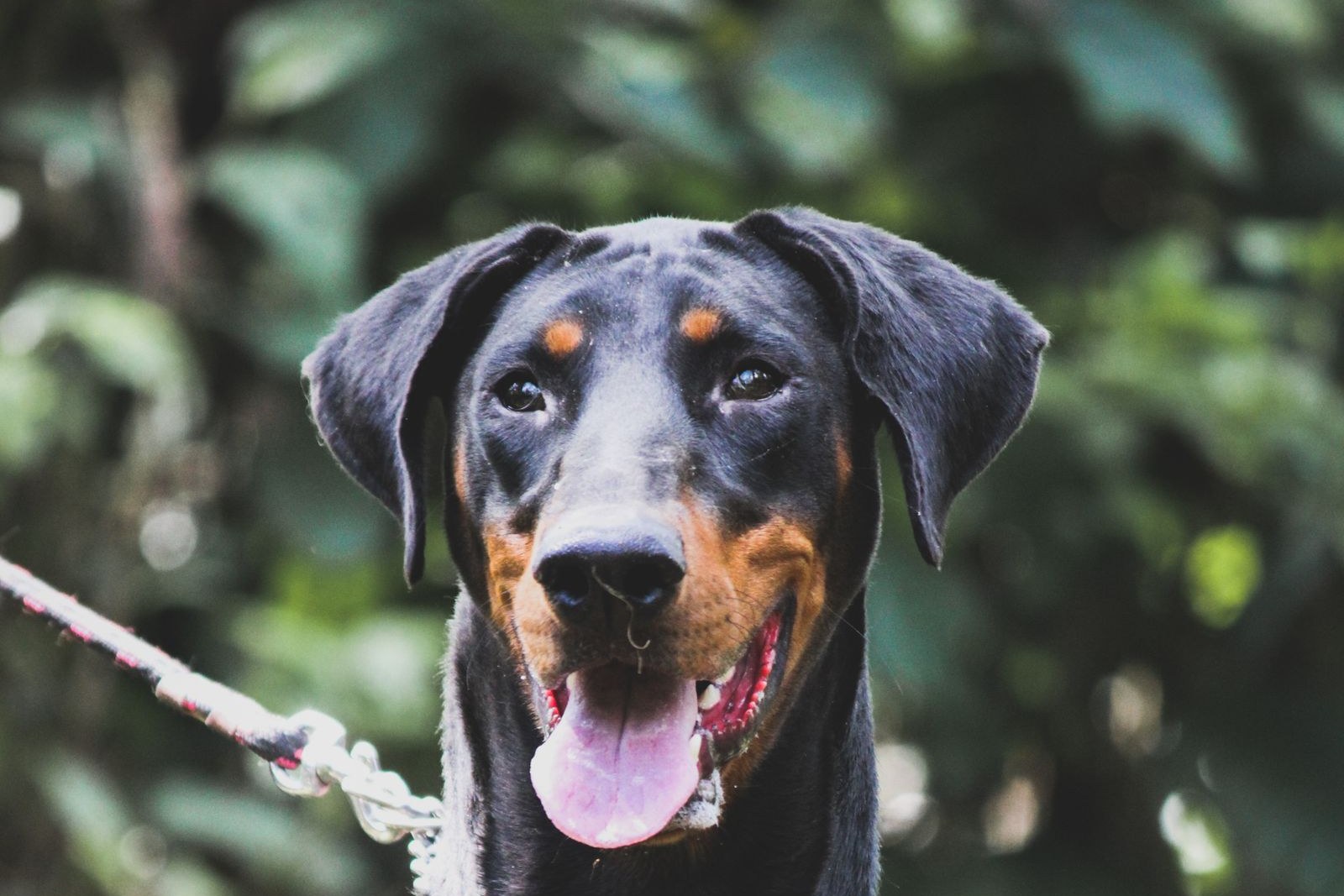
Doberman Pinscher snapshot
The American Kennel Club describes the Doberman Pinscher as sleek and powerful, a dog with a magnificent physique and keen intelligence that stands among the finest protection dogs. The breed is a working dog in the truest sense. It was built for endurance and speed, it bonds closely to its people, and it needs real exercise and real work for its mind every day. The AKC calls the breed fearless and vigilant, and owners meet that vigilance as a dog that watches doors, learns routines fast, and stays close. The breed ranked No. 16 in AKC registrations for 2024, which makes it one of the most commonly owned large working breeds in the country.
| Height | 26 to 28 inches at the shoulders for males. 24 to 26 inches for females. |
|---|---|
| Weight | 75 to 100 pounds for males. 60 to 90 pounds for females. |
| Lifespan | 10 to 12 years, as listed by the AKC. |
| Coat | A short, smooth, close lying coat in black, red, blue, or fawn, each with sharply defined rust markings above the eyes, on the muzzle, throat, chest, legs, and feet. |
| Temperament | Energetic, watchful, determined, alert, fearless, loyal, and obedient, in the words of the breed standard. |
| Energy and exercise | High. A muscular athlete that needs daily vigorous exercise and mental work, and that keeps its condition only when it gets both. |
Two snapshot facts shape the insurance picture. The first is the chest and the build. A Doberman is a large, deep chested, athletic dog, and that shape carries the bloat risk covered below, alongside the hip screening that any large athletic breed needs. The second is what the lifespan range hides. The years in the middle of that range are exactly when this breed's heart disease tends to declare itself, sometimes on a screening test and sometimes with no warning at all. A Doberman policy is therefore not mainly a puppy purchase. It is a decision about who pays for cardiology, year after year, across the dog's adult life.
Health tendencies in Doberman Pinschers
The Doberman Pinscher Club of America, the breed's parent club, names the most prevalent health problems in Dobermans as hip dysplasia, cardiomyopathy, hypothyroidism, cervical vertebral instability, called Wobbler syndrome, and von Willebrand disease. The breed's CHIC screening program, run with the Orthopedic Foundation for Animals, adds an eye examination and a cardiac evaluation to that list. The six cards below cover those five club named conditions plus bloat, the deep chest emergency that the veterinary references name for this breed. They are tendencies, not predictions about an individual dog, and careful breeding and screening lower some of the risk without erasing any of it.
This section is general information about conditions a breed can be prone to. It is not veterinary advice and it is not a diagnosis of any dog. Signs listed here are possible signs owners may notice, and many of them have several causes. Only a veterinarian who examines your dog can say what a sign means.
Dilated cardiomyopathy (DCM)
What it is
A disease of the heart muscle in which the muscle thins and stretches, the chambers enlarge, and the heart pumps less and less well. The Doberman Pinscher Club of America explains that in the Doberman the disease is primary, a genetic predisposition that starts inside the heart muscle cell itself, and not a side effect of some other illness. Cornell's Riney Canine Health Center notes that two known gene variants, in the genes called PDK4 and TTN, can predispose Dobermans to the disease, and that each variant acts in a dominant pattern, so even one copy can raise the risk. The disease has two ways of ending a story. The heart can fail slowly, with fluid backing up into the lungs. Or the stretched muscle can produce dangerous irregular rhythms, and the club is plain that malignant rhythm problems can lead to sudden death in a dog that seemed well.
Signs owners may notice
- No signs at all for a long early stretch. Cornell calls this the hidden, or occult, stage, and it is the reason screening exists.
- Fainting or collapse, sometimes during exercise or excitement, when an irregular rhythm interrupts the heartbeat.
- Coughing, faster or harder breathing, and tiring sooner on exercise the dog used to handle easily.
- Poor appetite, weight loss, weakness, and a swollen belly as heart failure advances.
How vets usually evaluate and treat it
Evaluation starts with an exam, listening for a murmur, a gallop sound, or irregular beats, and a chest X-ray that can show an enlarged heart and fluid in the lungs. The two defining tests are the pair this guide builds its record around. An echocardiogram is an ultrasound of the heart. It shows the dilated chambers and measures how poorly the muscle is contracting. A Holter monitor is a recorder the dog wears for 24 hours. It runs a continuous heart tracing across a full normal day and counts premature ventricular contractions, the early extra beats that can be the first sign of the hidden stage. Blood work may be added to check for other disease. There is no cure. Treatment is medication that helps the heart contract, eases its workload, controls irregular rhythms, and clears fluid when failure is present, with repeat echocardiograms and Holters to follow the disease over time.
Von Willebrand disease (vWD)
What it is
An inherited bleeding disorder in which the blood carries too little working von Willebrand factor, a protein that helps platelets stick and a clot form. Cornell describes von Willebrand disease as the most common inherited bleeding disorder in dogs, seen more often in certain breeds, with Doberman Pinschers at the head of that list. The Doberman form is type I, a partial deficiency that brings a mild to moderate bleeding risk in most dogs. Cornell adds two points owners miss. Some dogs show no signs at all until a wound or a surgery tests their clotting. And a dog with only one copy of the variant, a carrier, can still have reduced levels of the factor. A DNA test sorts dogs into clear, carrier, and affected, which is why the breed's screening program requires it.
Signs owners may notice
- Bruising easily, or bleeding under the skin from minor knocks.
- Bleeding from the gums while teething or chewing, or nosebleeds that are slow to stop.
- Blood in the urine, or dark, tarry stools that suggest bleeding in the gut.
- Bleeding that goes on too long after a cut, a nail trim, or any surgery, including a spay or neuter.
When it can be urgent
Bleeding that does not slow, pale gums, weakness, or heavy bleeding after an injury or an operation is a same day emergency. A dog that cannot clot well does not have the margin a normal dog has, and blood loss that looks modest on the outside can be serious in this breed.
How vets usually evaluate and treat it
Vets usually start with blood work to rule out other bleeding disorders, then a simple timed test of how quickly a small cut in the gum stops bleeding. A blood test that measures the amount of von Willebrand factor gives the firm diagnosis, and the DNA test shows the dog's inherited status for the type I variant. There is no cure. Care is planning. Before a needed surgery, a vet can give intravenous medication or blood products, such as cryoprecipitate or fresh frozen plasma, that temporarily raise the factor level, and certain everyday medications that interfere with platelets, including common anti-inflammatory pain relief, may need to be avoided. That planning only happens if the status is known and written down where the treating vet can see it.
Cervical vertebral instability (Wobbler syndrome)
What it is
A condition of the neck spine in which the spinal cord is compressed in the lower neck, so the signals between brain and legs arrive garbled. The Doberman Pinscher Club of America lists it among the breed's most prevalent problems, describes it as an inherited disease of the spinal column, and notes that it usually appears in adults. In middle aged Dobermans the compression usually comes from the disc side of the problem, a bulging disc and thickened ligaments pressing on the cord, a form the veterinary neurology literature calls disc associated cervical spondylomyelopathy. The informal name is the honest one. The dog wobbles, worst in the back legs, because the back legs are where a lower neck cord problem shows first.
Signs owners may notice
- An unsteady, swaying walk in the back legs, with steps that cross or scuff.
- Dragging the back feet, with the tops of the rear toenails wearing down.
- Weakness or clumsiness that slowly worsens over weeks or months, sometimes with front leg stiffness too.
- Neck pain in some dogs, a held low head, or reluctance to bend the neck, although pain can also be absent.
When it can be urgent
A dog that suddenly cannot walk, cannot rise, or loses control of its legs over hours rather than months needs same day emergency care. Slow wobbling is a prompt neurology appointment. A sudden collapse of leg function is a different event, and spinal cord problems reward speed.
How vets usually evaluate and treat it
Evaluation starts with a neurological examination that maps which legs are affected and how badly. Plain X-rays can rule out some other causes, but the neurology literature is clear that the compression itself is confirmed with advanced imaging, usually MRI, which shows the cord and the exact point of pressure. Blood work is part of the workup in this breed, because thyroid disease and von Willebrand disease can both complicate the picture and any surgery. Treatment depends on severity. Mild cases may be managed with medication and strict activity restriction. Surgery to relieve the compression is the other category, in dogs whose signs progress or whose cord is badly squeezed. In a Doberman, the heart and the clotting status are part of the surgical decision, not an afterthought.
Hip dysplasia
What it is
An inherited looseness of the hip joint. The ball and socket fit poorly, the joint wears unevenly, and arthritis follows over time. Cornell's Riney Canine Health Center describes that looseness leading to pain and arthritis, and hip evaluation is part of the breed's CHIC screening program, done either as an OFA radiographic evaluation or as a PennHIP evaluation. The breed club insists that both parents of a litter hold OFA certificates that the buyer has actually seen, and warns against taking a breeder's word for it. A large, athletic dog loads its hips hard for years, so a screening result in the parents and a dog's own comfort in middle age belong in the same file.
Signs owners may notice
- Stiffness after rest, trouble rising, or reluctance on stairs and jumps.
- A swaying or bunny hopping gait at a run.
- Slowing down on exercise the dog used to enjoy, or lagging on the way home.
- Loss of muscle over the hips and thighs in a dog that is moving less.
When it can be urgent
Hip dysplasia is a slow condition and a routine appointment problem. A dog that suddenly cannot bear weight on a back leg, or cries out during movement, may have an injury rather than arthritis, and that change deserves prompt care.
How vets usually evaluate and treat it
Evaluation combines a hands on joint exam with hip X-rays. The screening evaluations used for breeding dogs grade or measure the joint itself, and the OFA route grades radiographs taken after the dog is two years old. In a pet dog with signs, treatment usually starts with weight control, controlled exercise, pain and anti-inflammatory medication, and rehabilitation. Surgery is a category for dogs whose pain does not respond to medical management, and it ranges from joint procedures in young dogs to total hip replacement in suitable adults. In this breed, any hip surgery plan also runs through the clotting question in the card above.
Hypothyroidism (autoimmune thyroiditis)
What it is
A hormonal condition in which the thyroid glands produce too little thyroid hormone, slowing metabolism. Cornell explains that in most dogs the cause is primary, and that one of the two main processes is thyroiditis, an immune attack on the gland that often has a hereditary origin and can run over months or years. That immune form, autoimmune thyroiditis, is why the breed's CHIC program includes a thyroid evaluation from an approved laboratory, with autoantibodies measured alongside the hormone levels. The breed club requires tested parents with normal results, and treats an untested pairing as a reason not to buy the puppy at all.
Signs owners may notice
- Weight gain even though food and exercise have not changed.
- Low energy, dullness, sleeping more, and less interest in exercise or play.
- A thinning or dull coat, hair loss along the body or tail, darkened skin, and recurring skin or ear infections.
- Seeking warm places and seeming to feel the cold more than before.
When it can be urgent
Hypothyroidism develops slowly and is almost never an emergency on its own. Severe weakness, collapse, marked confusion, or a dog that cannot be roused needs same day care, because those signs suggest something more serious than a routine thyroid case, whether or not the thyroid is involved. In a Doberman, collapse also belongs on the heart list above, and the emergency team will treat it that way.
How vets usually evaluate and treat it
Vets usually evaluate with an exam, weight history, and a thyroid blood panel rather than a single value, because other illness can distort thyroid results. Cornell lists the panel as total and free hormone values, the stimulating hormone, and thyroid autoantibodies, which can point to the hereditary immune form. Cornell notes the condition most commonly appears in dogs between the ages of 4 and 10 years. Treatment is a synthetic thyroid hormone given daily, usually for the rest of the dog's life, with follow up blood tests a few weeks after starting and at intervals for life to confirm the dose is right. That makes this a small claim repeated for years, which is its own kind of insurance test.
Bloat (gastric dilatation and volvulus, GDV)
What it is
A life threatening emergency in which the stomach fills with gas and can twist on itself, trapping its contents and cutting off blood flow. The Merck Veterinary Manual names the Doberman Pinscher among the breeds affected most frequently, and the Doberman's deep chest is the shape this emergency follows. Merck's owner guidance describes a swollen stomach, pain, and a dog that tries to vomit and brings nothing up. There is no home treatment and no watchful waiting with this condition.
Signs owners may notice
- Repeated retching that produces nothing, or only foam and saliva.
- A belly that looks swollen or feels tight, often high behind the ribs.
- Restlessness, pacing, drooling, and an inability to settle.
- Rapid breathing, pale gums, weakness, or collapse as shock develops.
How vets usually evaluate and treat it
Emergency teams usually stabilize the dog first, with fluids and decompression of the stomach, and confirm the twist with an abdominal X-ray. Treatment is surgery to untwist and inspect the stomach, remove any tissue that has died, and usually tack the stomach to the body wall, a procedure called gastropexy, so it cannot twist again. Some owners discuss a preventive gastropexy with their vet before any emergency, sometimes at the time of a spay or neuter. That preventive version is an elective surgery decision, and it is separate from the emergency operation. In this breed the emergency team also works against the two risks in the first cards on this page, an irritable heart under anesthesia and a clotting system that may not be normal. Tell the team two facts on arrival, before they ask: your dog's von Willebrand status from the DNA test, and any heart history or heart medication. Both change the anesthesia and surgery plan in the first minutes, and a bloated dog does not give the team time to go looking for them in a file.
The cardiac screening record
Every breed guide on this site includes one tool. For the Doberman, the tool is a record, because this breed produces more consequential paperwork than any other dog on the site. A DNA result before the puppy comes home. A heart ultrasound and a 24 hour rhythm recording, repeated every year of adult life. Thyroid panels, hip films, an eye exam. Most owners keep these as scattered PDFs and portal printouts. An insurer, an emergency team, and a cardiologist each read them as one timeline, and the timeline only exists if someone builds it. This section builds it in two parts. First, the breeder screening file to collect before a puppy comes home. Second, the lifetime record to keep for the dog you have.
Before the puppy comes home: the screening file to collect
The breed's CHIC program, run by the Doberman Pinscher Club of America with the Orthopedic Foundation for Animals, sets the required tests for a Doberman to earn a CHIC number. The program requires a hip evaluation, an autoimmune thyroiditis evaluation, an eye examination by a boarded ophthalmologist, a cardiac evaluation, a von Willebrand disease DNA test, and a working aptitude evaluation. A CHIC number means the tests were done and the results made public. It does not promise that every result was normal, so read the results themselves. The club's own buying guidance adds the habits that make the file real. Parents' hip certificates should be documents you have seen, checked against the OFA database, not a claim. Both parents should have von Willebrand DNA results and normal thyroid results. And ask directly about dilated cardiomyopathy and sudden death in the dogs behind the litter, because for this breed's heart disease, family history is information no single test replaces.
- Hip evaluation, both parents. An OFA certificate or a PennHIP report for each parent, verified in the OFA database. The club's guidance is blunt about not accepting a verbal assurance.
- Cardiac evaluation, both parents. Ask what the evaluation included and when it was last repeated. An echocardiogram and a Holter from years ago are a dated snapshot, and this disease can develop between tests.
- Von Willebrand DNA test, both parents. Clear, carrier, or affected for the type I variant. The puppy's own odds and the puppy's own test plan follow from these two results.
- Autoimmune thyroiditis evaluation, both parents. A panel from an approved laboratory, including autoantibodies, with normal results on paper.
- Eye examination, both parents. An exam by a board certified veterinary ophthalmologist, the breed's CHIC eye requirement.
- Family history, asked out loud. Any relatives lost suddenly, any known cardiomyopathy, any relatives with Wobbler syndrome. The club notes there is no test for the neck condition, so breeders rely on knowing which dogs were affected. A breeder who can answer these questions in detail is showing you their records.
The lifetime record: one page per dog
Start this record the week the dog comes home and add a line at every test, whether the result is normal or not. The normal lines matter as much as the abnormal ones. They are the dated proof of a clean baseline, they show a screening rhythm an insurer can follow, and they are the first thing a cardiologist asks for when a new finding appears. A normal echocardiogram or Holter is a snapshot of that day, as the breed club's screening advice implies by insisting on repetition. The record below is the pattern. Copy it into a notebook, a spreadsheet, or the notes app you actually use, and keep the reports themselves behind it.
| Date | Test | Result as reported | Who performed it | Next one due |
|---|---|---|---|---|
| Write the exact date | Echocardiogram | Chamber sizes and pumping function in the report's own words, and whether the cardiologist called it normal, borderline, or changed | Vet or cardiologist, and clinic | The recall date the report recommends |
| Write the exact date | 24 hour Holter monitor | The rhythm summary as reported, including any premature ventricular contractions counted and the cardiologist's read of them | Vet, cardiologist, or monitoring service | The recall date the report recommends |
| Once, before or soon after homecoming | Von Willebrand DNA test | Clear, carrier, or affected, and the laboratory name | DNA laboratory | None. This result does not change, and it travels with the dog |
| Write the exact date | Thyroid panel | Hormone values and autoantibody result as reported | Vet and approved laboratory | As your vet advises |
| Write the exact date | Hip evaluation | OFA grade or PennHIP result as reported | Vet and OFA or PennHIP | Usually once, in young adulthood |
| Write the exact date | Eye examination | Findings as reported | Board certified veterinary ophthalmologist | As the examiner advises |
| Write the date you learned it | Family history note | Any sudden death, cardiomyopathy, or Wobbler syndrome in relatives, in the breeder's or vet's words | Breeder or vet | Update whenever you learn more |
Keep the record where a bad night can reach it. The emergency team treating a collapsed or bloated Doberman wants three facts fast: the heart history, the clotting status, and the medications on board. A one page record answers all three in the owner's own hand. Tell the team the DNA result out loud as well. A dog whose von Willebrand status is unknown in an emergency gets treated with more caution, and a dog whose status is known gets a plan.
Policy decisions for this breed
Coverage for Dobermans is decided in the definition pages and the exclusion list, and this breed tests eight specific points harder than most. Read each row against the actual policy document before you buy, and keep a copy of the document itself, because the wording in force on the day of a claim is the wording that counts.
| Decision point | Why it matters for this breed | What to look for |
|---|---|---|
| Hereditary condition coverage | The breed's defining risks are inherited: cardiomyopathy, von Willebrand disease, Wobbler syndrome, hip dysplasia, and the immune thyroid disease. | Hereditary and congenital conditions covered in the main policy, not excluded, not capped in a separate low sublimit, and not limited to a short named list that leaves this breed's conditions outside it. |
| Cardiac diagnostics and monitoring | The diagnosis and the follow up both run on echocardiograms and 24 hour Holter recordings, repeated for life once the disease is found. | Cardiology referral, echocardiogram, and Holter monitoring named as covered diagnostics, for the first workup and for repeat monitoring of a diagnosed condition, not only for a one time diagnosis. |
| Screening versus illness wording | A well dog's screening echo or Holter may be classed as screening or preventive care even when a breed club recommends it, and a borderline result can be read as the start of the disease. | Written clarity on three points: whether recommended screening is ever reimbursable, how a borderline or equivocal result is classified, and from what date an abnormal finding counts as the condition starting. |
| Pre-existing definition and the DNA result | Owners of this breed hold genetic results and screening reports before anything is wrong, and a carrier or affected DNA status is a risk record, not a sickness. | A definition tied to signs, diagnosis, or treatment rather than to test results alone, and a written answer on whether a known DNA result or a normal range screening finding can make a later claim pre-existing. |
| Chronic condition renewal terms | Cardiomyopathy medication, rhythm checks, and thyroid hormone are all for life once started. A policy that resets or drops a diagnosed condition rewrites the deal at the worst moment. | Conditions covered in one policy year stay covered in the next while you remain enrolled, with no per condition lifetime cap that a lifelong cardiac condition would exhaust early. |
| Bilateral clause for hips | Hip dysplasia usually involves both hips over a lifetime, even when one side complains first. | How the second hip is treated after the first is claimed. Prefer wording that does not make the second side pre-existing by definition, and check the orthopedic waiting period length against it. |
| Emergency surgery and pre-approval | Bloat surgery happens at night, immediately, and a twisted stomach cannot wait for an office to open. The same is true of a collapsed dog with a dangerous rhythm. | Emergency treatment covered without a pre-approval step that an emergency makes impossible, 24 hour claim notification that can happen after the dog is stable, and no penalty for using the nearest emergency hospital. |
| Advanced imaging and specialist surgery | Wobbler syndrome cannot be confirmed without advanced imaging, and its surgery is specialist work. The heart and clotting workups around it are part of the same episode. | Neurology referral and MRI covered as diagnostics, spine surgery inside the surgical benefit rather than excluded, and pre-surgical cardiac and blood work treated as part of the covered episode. |
One habit protects every row. Get the answers that matter in writing, in the policy document or in an email from the insurer, and file them with the screening record from the section above. Verbal summaries at the point of sale are not claim evidence, and Doberman claims are exactly the kind that get read closely.
Doberman Pinscher puppies, adults, and seniors
Puppies (under 1 year). The puppy year is a paperwork year before it is a medical one. Collect the breeder screening file from the record section before or at homecoming: parent hip certificates you have seen, von Willebrand DNA results for both parents, thyroid results, a cardiac evaluation, and an eye exam. Order the puppy's own von Willebrand DNA test if the parents' results leave any doubt, because that single result shapes every future surgery plan. Enroll early, while the record is all vaccinations and normal exams, so the waiting periods run while the dog is well. Socialization and training are not insurance topics, but in a vigilant working breed they shape lifetime vet visits, and a dog that can be handled calmly gets better care with less sedation. Ask your vet when to schedule the baseline cardiac screening as the dog matures, and start the lifetime record with the puppy's first entries.
Adults (1 to 7 years). The adult years are when this breed's list wakes up. The club describes adult onset for the neck condition, Cornell puts the common thyroid years at 4 to 10, and cardiomyopathy most often declares itself in the middle years, found on a screening test or announced by a faint. This is the season the annual echo and Holter earn their place, and the season a lapsed policy hurts most, because a condition found while uninsured follows the dog into every later application. Keep weight lean, because a working athlete hides early exercise intolerance behind enthusiasm, and log any change in stamina, cough, or fainting episode with a date. A dated owner note, matched later to a vet record, is often what separates a covered new condition from an argument about when it started.
Seniors (7 years and over). Senior Doberman care is mostly the management of things already found. Heart medication adjusted against repeat echocardiograms and Holters. Thyroid dose checked against blood panels. Hips managed with weight, medication, and honest assessments of pain. New problems arrive too, and a senior workup in this breed should always include the heart before any anesthesia is planned, for dentistry as much as for surgery. Check at renewal that nothing about the policy changes with age, and keep the dog enrolled without a gap. A senior Doberman cannot requalify as a healthy young dog, and the conditions already being managed are the strongest argument the breed ever makes for continuous coverage.
A claim, step by step
This is a hypothetical walkthrough. It uses no dollar figures, because what a claim pays depends on the policy's own deductible, reimbursement rate, and limits, which are set out in the how pet insurance works guide. The purpose here is the sequence, because in this breed the sequence usually starts with a screening test rather than a symptom.
- The screening finds something. At a routine adult check, your vet hears an irregular rhythm, or the annual Holter comes back showing runs of premature ventricular contractions. Your vet refers your dog to a cardiologist, and an echocardiogram shows early chamber enlargement with reduced pumping. The diagnosis is dilated cardiomyopathy, in its early stage, found before heart failure.
- Treatment starts, and repeats. The cardiologist prescribes daily heart medication, sets a schedule of repeat echocardiograms and Holters to track the disease, and gives you the warning signs that mean an emergency visit. There is no single operation that ends this claim. It becomes a managed condition, which is exactly the kind the renewal wording in the policy table governs.
- You pay the clinic and keep the record. Under a reimbursement policy you pay the invoices as they come and keep everything: the referral note, the Holter report, the echocardiogram report, the itemized bills, and the screening record showing the dated normal results from the years before. That earlier record is not nostalgia. It is the evidence that the condition began inside the policy period.
- You submit the claim. You send the claim form, the itemized invoice, and the medical notes for the visit through the insurer's app or portal. For a first cardiac claim, expect the insurer to request the full medical history, including the screening file. Complete records, sent once, move faster than fragments sent three times.
- The insurer applies the policy arithmetic. The claim is checked against the waiting period and the enrollment date, the deductible is applied, and the reimbursement percentage in your policy is applied to the covered amount, subject to any annual or per condition limit. A monitoring visit later in the year runs through the same arithmetic as part of the same condition.
- Know the common denial reasons before they happen. The usual cardiac disputes are that an earlier rhythm note or borderline echo predates enrollment, that a test was classed as screening rather than diagnosis, or that the full history was not supplied. The first two are decided by the wording rows in the policy table above, which is why they are checked before purchase. The third is decided by your record keeping.
- What changes if the first sign is an emergency. If the disease announces itself as a collapse instead of a screening result, the first claim is an emergency visit with stabilization, imaging, and cardiology, and the same steps follow once the dog is stable. Tell the emergency team the von Willebrand status and the heart history on arrival. In this breed those two facts shape the treatment plan while the claim is still paperwork.
What drives the cost of insuring a Doberman Pinscher
This page publishes no prices, because a premium quote depends on the individual dog and the policy settings, and the cost guide explains the mechanics in full. For a Doberman, the drivers to think with are these. Size and breed risk come first. A large working breed with a documented inherited heart disease sits in a different pricing band from a small companion breed, because insurers price the claims a breed's population tends to produce, and cardiology is not cheap care. Age at enrollment follows. The premium for a puppy reflects puppy risks, and the rate steps up as the dog enters the years when the heart, thyroid, and neck conditions on this page usually appear. The policy settings you choose move the number more than any breed factor does. The deductible, the reimbursement percentage, and the annual limit trade monthly cost against what a claim year returns, and a lifelong cardiac condition tests the limit and renewal terms, not the first year premium. Location matters as well, because cardiology and emergency surgery are priced by the market the clinic sits in. The honest way to compare is to quote the same dog, at the same age, with the same settings, across insurers, and to weigh the wording rows from the policy table alongside the quote, because for this breed the cheapest wording is often the wording that excludes the heart.
Before you buy: the Doberman Pinscher checklist
Work through this list with the policy document open. If a box cannot be ticked from the document itself, that is the answer about that policy for this breed.
- Hereditary conditions are covered in the main policy, including cardiomyopathy, von Willebrand disease, Wobbler syndrome, hip dysplasia, and thyroid disease.
- Cardiology referral, echocardiograms, and 24 hour Holter monitoring are covered for diagnosis and for repeat monitoring of a diagnosed condition.
- The screening wording is clear: I know how recommended screening is classed, how a borderline result is treated, and from what date an abnormal finding counts as the condition starting.
- I have a written answer on whether a known von Willebrand DNA result, or any genetic test result, can make a later claim pre-existing.
- A condition diagnosed while enrolled stays covered at renewal for as long as I keep the policy, with no per condition cap a lifelong heart condition would exhaust early.
- The bilateral wording does not write off the second hip, and I know the orthopedic waiting period length.
- Emergency care, including bloat surgery, needs no pre-approval step an emergency makes impossible, and I can notify the claim after the dog is stable.
- Neurology referral and MRI are covered diagnostics, and spinal surgery is not excluded.
- I have collected the breeder screening file, or the rescue history I could get, and started the lifetime screening record.
- The waiting periods are known, and the dog will be enrolled before the next scheduled cardiac screening, so a first abnormal finding lands inside the policy period.
Questions to ask an insurer, word for word
- If my Doberman's annual Holter shows irregular beats and a cardiologist diagnoses dilated cardiomyopathy, is the diagnosis visit covered, and are the repeat echocardiograms and Holters in following years covered as the same condition?
- My dog has a von Willebrand DNA result on file. Does a known carrier or affected status change how you treat a bleeding claim, or the blood products given before a planned surgery?
- A screening echocardiogram comes back borderline, with no diagnosis and no treatment. From what date do you consider the condition to have started if it is diagnosed a year later?
- Is a preventive gastropexy covered, excluded, or classed as preventive care, and is emergency GDV surgery covered without pre-approval?
- How do you treat the second hip if the first hip is claimed for dysplasia, and how long is your orthopedic waiting period?
- Are neurology referrals and MRI covered for a gait problem, and is surgery for cervical vertebral instability inside the surgical benefit?
Questions Doberman Pinscher owners ask
Does pet insurance cover dilated cardiomyopathy in Doberman Pinschers?
An accident and illness policy can cover dilated cardiomyopathy when hereditary conditions are included, the illness waiting period has passed, and no cardiac signs or abnormal screening results were recorded before enrollment. The hard point in this breed is the screening record itself. An irregular rhythm, a borderline echocardiogram, or a cardiologist note from before the policy started can be read as the start of the condition, so enroll before the first abnormal finding and keep every screening result, normal ones included.
What cardiac screening should a Doberman have, and how often?
The screening pair for this breed is an echocardiogram, an ultrasound of the heart that measures chamber size and pumping function, and a Holter monitor, a recorder the dog wears for 24 hours that counts irregular beats across a full day. The Doberman Pinscher Club of America describes annual cardiac screening as the best strategy for finding the disease in its early, hidden stage. A single normal result is a dated snapshot, not a lifetime clearance, which is why the record in this guide tracks results year by year.
Is von Willebrand disease covered, and why does the DNA result matter to an insurer?
Bleeding from von Willebrand disease can be covered as an illness when hereditary conditions are not excluded and the bleeding problem was not known before enrollment. The DNA test sorts dogs into clear, carrier, and affected for the type I form, and Cornell notes that even carriers can have reduced levels of the clotting factor. Keep the result in the policy file, and ask in writing whether a known affected or carrier status changes how a bleeding claim, or care before a planned surgery, is handled.
Does pet insurance cover Wobbler syndrome in Dobermans?
It can, when spinal and hereditary conditions are covered and the first gait changes were not recorded before enrollment or during the waiting period. Wobbler syndrome is diagnosed with a neurological examination and advanced imaging such as MRI, and treatment ranges from medication and restricted activity to surgery in suitable dogs. Check that neurology referral and advanced imaging are covered categories, and read any exclusion for spinal conditions before you rely on the policy for this breed.
Does pet insurance cover bloat surgery for a Doberman, and a preventive stomach tack?
Emergency surgery for gastric dilatation and volvulus is the kind of sudden, life threatening event accident and illness policies are built around, provided the signs did not predate the policy. A preventive gastropexy, the stomach tack done before any emergency, is treated differently by many policies and may be classed as preventive care that a standard policy does not pay for. Ask in writing how each is handled, and ask your vet about gastropexy on its own merits, not only as an insurance question.
When is the best time to enroll a Doberman Pinscher?
As a puppy, after you have collected the breeder screening records and before any cardiac finding, bleeding note, gait change, thyroid result, or hip note is in the medical record. This breed's main conditions tend to appear in adults, and several are managed for life once diagnosed. Enrolling early clears the waiting periods while the dog is well, and it keeps the first sign of a lifelong condition inside the policy period instead of before it.
Sources and further reading
Sources checked on November 6, 2026. Coverage is general information only. Always confirm the exact terms in your own policy document.
- American Kennel Club: Doberman Pinscher breed page (breed description, size, coat, temperament, lifespan)
- Cornell University Riney Canine Health Center: Dilated cardiomyopathy (occult stage, echo and Holter diagnosis, PDK4 and TTN variants)
- Doberman Pinscher Club of America: Dilated cardiomyopathy (primary genetic disease in the breed, annual screening, sudden death risk)
- Cornell University Riney Canine Health Center: Von Willebrand disease (type I in Dobermans, carrier levels, diagnosis, pre-surgery care)
- Doberman Pinscher Club of America: Tips on buying a puppy (the breed's prevalent health problems and the parent testing to insist on)
- Orthopedic Foundation for Animals: CHIC program requirements for the Doberman Pinscher (hips, autoimmune thyroiditis, eye exam, cardiac evaluation, von Willebrand DNA, working aptitude)
- Cornell University Riney Canine Health Center: Hypothyroidism (thyroiditis, panel testing, lifelong hormone treatment)
- Cornell University Riney Canine Health Center: Canine hip dysplasia (OFA and PennHIP evaluation, management and surgery categories)
- Merck Veterinary Manual: Disorders of the stomach and intestines in dogs (gastric dilatation and volvulus, the breeds affected most often, signs and treatment)