GDV at a glance
Gastric dilatation-volvulus is a condition of the stomach. The stomach fills with gas, fluid, or food and expands. In the full form of the condition it also rotates, which seals it at both ends and cuts off its blood supply. The American College of Veterinary Surgeons, called the ACVS in this guide, describes GDV as a rapidly progressive, life threatening condition of dogs that requires immediate medical attention. This guide explains the condition in plain language first. It then turns to the insurance questions that decide whether a policy actually helps on the one night there is no time to ask them.
| What it is | The stomach dilates with gas, fluid, or food and, in GDV, rotates on itself. The rotation blocks the stomach at both ends and disrupts blood flow to the stomach and the spleen |
|---|---|
| Why minutes matter | The ACVS reports that mortality rates rise with the severity of the disease and with how long signs have been present, and puts reported mortality at approximately 15%. Stabilization and surgery are best performed early in the course of the disease |
| First signs | Restlessness and an anxious look, looking at the abdomen, standing and stretching, drooling, and a belly that begins to distend |
| The go-now signs | Retching without producing anything, a swollen or tight abdomen, panting and rapid breathing, weakness, and collapse |
| Who is at risk | Large and giant breed dogs with a deep chest. Risk also rises with age, with a close relative who has had the condition, with fast eating, and with a single large meal fed once a day |
| How it is confirmed | A physical examination first, then abdominal X-rays to confirm whether the stomach has rotated. Blood work and an electrocardiogram are commonly part of the workup |
| How it is treated | Emergency stabilization for shock, decompression of the stomach, then surgery to return the stomach to its normal position, check the stomach wall and spleen, and fix the stomach to the body wall |
| The insurance question | Whether the policy covers emergency care and surgery at an after-hours hospital with no approval needed in advance, and how it treats a preventive gastropexy done before any emergency |
What GDV is, in plain language
Start with the two words separately, because they describe two events that can happen together. Dilatation means the stomach stretches. Gas, fluid, food, or a combination of them accumulates inside it, and the stomach expands far beyond its normal size. Volvulus means the expanded stomach rotates on itself. Purdue University veterinary publications describe the rotation as generally clockwise, up to a full turn. A stomach that has rotated is closed at both ends. Nothing can leave, so the gas and fluid keep building.
The danger is not the size of the stomach alone. It is what the size and the twist do to the rest of the body. The ACVS lists the consequences plainly. The swollen stomach prevents adequate blood from returning to the heart from the abdomen. The lining of the stomach loses its blood flow, and the stomach wall can rupture. The enlarged stomach presses on the diaphragm, the muscle that lets the lungs expand, so breathing becomes harder. The rotation can also block the blood supply to the spleen. Purdue describes the central life threatening problem as shock, caused by compression of the large veins that carry blood back toward the heart.
From there the effects spread. Poor oxygen delivery can damage the liver, the kidneys, and other organs. The ACVS notes that cardiac arrhythmias, which are abnormal heartbeats, are commonly seen because of that oxygen shortage. Damaged tissue in the gut can allow bacteria into the bloodstream. This is why GDV is not a wait and see condition at any stage. A problem that begins in the stomach becomes a whole body emergency on a short clock.
One distinction matters at the hospital and later on the claim. A stomach can dilate without rotating. That is gastric dilatation on its own, and it is still an emergency that needs veterinary care. From home, an owner cannot reliably tell dilatation alone from dilatation with the twist. The signs overlap, and the X-ray at the hospital is what separates them. Treat every suspected case as the full condition until a veterinarian says otherwise.
Why it happens is only partly understood. The ACVS calls the condition multifactorial, meaning several factors combine, and says it is commonly associated with rapid ingestion of large meals. Merck adds that stress may trigger an acute episode. No owner should read that as blame. A well cared for dog, fed a normal meal, can still bloat. The risk factors in the section on breeds below shift the odds. They do not write a script any single owner could have avoided with certainty.
Signs at home, sorted by what to do next
This section works differently from the signs sections in our other condition guides, because GDV works differently. There is no watch closely tier here. The ACVS advises that a dog showing these signs should be evaluated by a veterinarian immediately, and Merck is direct that a successful outcome depends on prompt diagnosis and treatment. The table below sorts the common signs by how far the condition may have progressed. Every row ends at the same place. Go to an emergency hospital now. The signs are general information, not a diagnosis. Other conditions can produce some of the same signs, and only a veterinarian who examines your dog can say what is going on. That uncertainty is not a reason to wait. It is the reason the hospital, not the kitchen table, is where the sorting should happen. A one screen version of the first steps, written for the moment itself, is the emergency action card near the end of this guide.
| What you see | What it can mean | What to do next | Note this down |
|---|---|---|---|
| Restlessness, pacing, and an anxious look. The dog looks at its own abdomen, stands and stretches, and cannot settle | Often the first stage, as the stomach begins to fill and cause pain. The ACVS lists these among the initial signs tied to abdominal pain | Call the emergency clinic and go in. In a deep-chested dog, unexplained restlessness after a meal is reason enough. Do not wait for the belly to change shape before travelling | The time the restlessness started, and when and how much the dog last ate |
| Drooling or heavy salivation, sometimes with lip licking and signs of nausea | The stomach is distended enough to make the dog feel sick, without a route for anything to come up | Go now. Drooling alongside restlessness is part of the pattern in both the ACVS and Merck sign lists, not a separate minor problem | When the drooling began, and whether the dog has eaten or exercised since the last meal |
| Repeated retching or attempts to vomit that produce nothing, or only foam and saliva | The hallmark sign. The stomach is obstructed, so the dog tries to empty it and cannot | Emergency, now. This sign on its own justifies the trip at any hour. Call ahead and say the words unproductive retching and suspected bloat, so the team can prepare | The time of the first retching you noticed. The ACVS lists signs present for more than 6 hours among the factors tied to higher mortality, so the start time matters |
| A belly that is visibly swelling, feels tight, or has grown since you last looked | The stomach is dilating with gas and fluid. Merck describes abdominal pain and swelling among the common signs of bloat | Emergency, now. Do not press on the abdomen to test it, and do not offer food or water to settle the stomach. Travel to the hospital | How fast the swelling is changing, and a note of the last normal time you saw the dog comfortable |
| Panting, rapid or laboured breathing, and obvious discomfort or pain | The enlarged stomach is pressing on the diaphragm, and the body is beginning to struggle for oxygen. The ACVS describes exactly this pressure effect | Emergency, now. Keep the dog as calm and still as you safely can in the car. Breathing trouble means the condition is progressing, not stabilising | When the breathing changed, and any calming medication already given, with the time it was given |
| Weakness, stumbling, pale gums, a rapid and weak pulse, or collapse. The dog may lie down and be unable or unwilling to rise | Shock. Purdue describes pale mucous membranes, prolonged capillary refill, and rapid, weak pulses as the signs of the shock that GDV causes | Emergency, now. This is the advanced stage. Support the dog to lift it if it is large, travel immediately, and phone from the car if someone else can dial | Arrival time at the hospital. This time, and the sign start time, anchor both the medical record and the claim record later |
The last column earns its place on this page more than on any other in this library. In a GDV night, time is a medical fact. The team will ask when signs began because the answer shapes treatment and prognosis. The same two timestamps, when signs started and when you arrived, are the spine of the insurance record described later in this guide. A note typed into a phone in the car park is enough. It does not need to be tidy to be useful.
Which dogs are at risk, and why
The shape of the chest is the starting point. The ACVS ties GDV to a deep chest, described as an increased thoracic height to width ratio. In plain language, the chest is deep from backbone to breastbone and comparatively narrow side to side. That shape leaves room for a filled stomach to swing and rotate. It is why the breeds named for this condition are mostly large and giant, long legged dogs rather than compact ones.
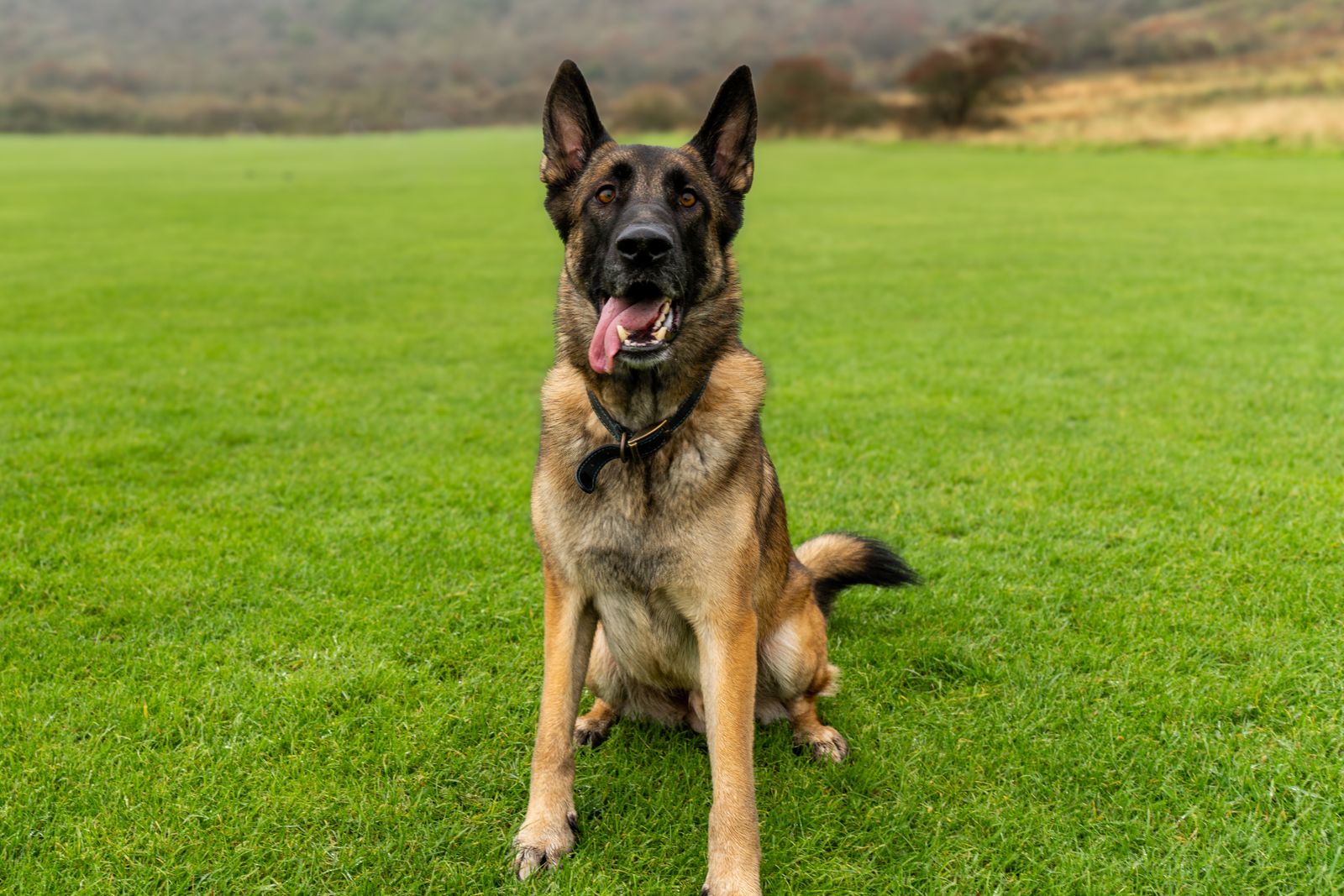
The breed lists from the sources agree closely. The ACVS names Great Danes, Weimaraners, St. Bernards, Irish Setters, and Gordon Setters among the breeds commonly seen with the condition. Merck's list of the most frequently affected adds Doberman Pinschers, German Shepherds, Standard Poodles, and Basset Hounds. The ACVS also notes that gastric dilatation, with or without volvulus, has been reported in nearly all breeds. A small dog is at lower risk, not at no risk, and a mixed breed with a deep chest carries the shape that matters even without a breed name attached to it.
The best structured evidence on risk factors comes from Purdue University. In a prospective study published in JAVMA in 2000, Purdue researchers followed 1,637 large and giant breed dogs from 11 breeds, including Rottweilers and Standard Poodles, and recorded which dogs developed GDV. Four factors were significantly associated with higher risk: increasing age, having a first degree relative, meaning a parent, sibling, or offspring, with a history of GDV, eating faster, and eating from a raised feeding bowl. The raised bowl finding surprised many owners, because raised bowls were once recommended as prevention. The researchers estimated that about 20% of GDV cases in the large breeds and about 52% in the giant breeds in that study were attributable to the raised bowl. That is an association from one study, not proof that a bowl alone causes the condition, and it is a question worth raising with your own veterinarian rather than a rule to apply on your own.
Other factors appear across the sources in softer form. The ACVS lists being fed a single large meal once daily among the associations, and says elevated feeding, a previous removal of the spleen, large or giant size, and stress have been suggested as raising incidence. Merck adds a lean body size, a dry food diet, and aggressive or fearful behaviour to its risk list, and notes that a dog whose parent, sibling, or offspring has had the condition is at increased risk, and that incidence increases with age. Read these as tendencies that stack. An older, deep-chested dog who eats one large meal quickly, and whose parent bloated, is carrying several of them at once.
For the breed by breed detail, see our guides to pet insurance for German Shepherds, pet insurance for Rottweilers, pet insurance for German Shorthaired Pointers, and pet insurance for Standard Poodles. Each of those guides covers bloat inside its own breed's policy picture, including the gastropexy question. The full list of breed guides is on the breed guides hub, and every condition guide on this site is collected on the condition guides hub.
What happens at the emergency clinic, in general terms
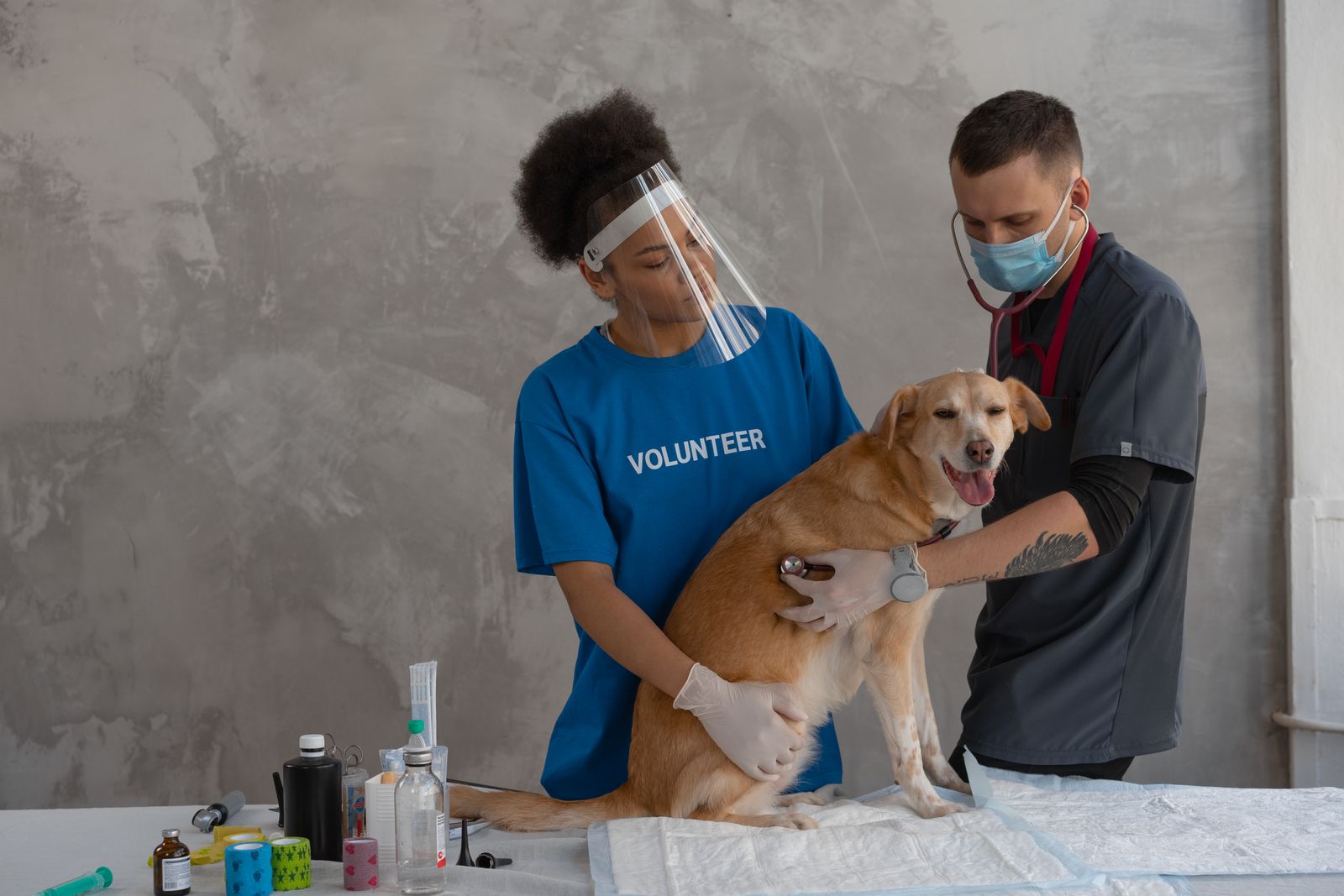
Owners who have never lived through this night often picture the surgery as the whole event. In practice the night has a sequence, and each step creates a document that matters later. This section walks through that sequence in general terms. Individual hospitals vary in detail, and the treating team decides what your dog needs.
Stabilization comes first. Because these dogs are medically unstable, the ACVS explains that most need pre-operative stabilization, such as intravenous fluids and oxygen therapy, before general anaesthesia. A blood transfusion can be part of that picture if the spleen's blood vessels have been stretched and damaged and bleeding is a concern. The first goal is a dog stable enough for what comes next, not a dog rushed into surgery in shock.
Tests run alongside. The ACVS lists the usual workup. Blood work includes a complete blood count, serum chemistry, blood electrolytes, and a urinalysis. Those results show the metabolic disturbances travelling with the condition and help rule out diseases that can mimic its signs. Abdominal X-rays are used to confirm the diagnosis and to show whether the stomach has rotated. An electrocardiogram, shortened to ECG, evaluates the heart rhythm, because arrhythmias are common later in the course of the disease. A blood gas analysis is also commonly performed to judge how badly breathing is compromised.
The stomach is decompressed. Gastric decompression means letting the trapped gas and fluid out. The ACVS describes passing a tube down the oesophagus into the stomach to release the air and fluid, often followed by lavage, which is flushing water in and out to remove remaining food particles. If the tube cannot be passed, a needle or catheter may be placed into the stomach through the body wall to release air first. Merck describes the same two routes. Decompression is both a treatment and a turning point. It relieves the pressure that is strangling blood return.
Surgery follows when GDV is established. The ACVS is plain that surgery is indicated once the diagnosis of GDV has been established. The operation involves a full exploration of the abdomen and de-rotation, which means returning the stomach to its normal position. The team checks the viability of the stomach wall, the spleen, and the other organs. Removal of part of the stomach wall, called a partial gastrectomy, or of the spleen, called a splenectomy, is performed if the tissue has died or been too badly damaged. Once the stomach is back in position, it is permanently fixed to the abdominal wall. That fixing step is the gastropexy, covered in its own section below.
Hospital days come after. Most dogs are hospitalized for several days after surgery and given supportive medication, with vital parameters and the heart's electrical activity monitored. The ACVS lists the complications the team watches for, including low blood pressure, bleeding, infection, cardiac arrhythmia, and shock. Immediate aftercare at home includes exercise restriction for a few weeks while the incisions heal. Longer term, the ACVS expects dietary management to shift toward multiple small meals each day rather than a single large meal, with continued monitoring for returning signs. Keep every discharge sheet, surgical report, and itemized invoice from this sequence in one folder. That folder is the claim file, and it is far easier to build as you go than to assemble later.
Gastropexy as prevention
A gastropexy is an operation that attaches the stomach to the body wall, permanently. Its purpose is narrow and worth stating exactly. The ACVS explains that the procedure is meant to prevent volvulus, the rotation, if the stomach dilates again. It does not stop the stomach from filling with gas. A dog with a gastropexy can still bloat in the sense of dilatation, and dilatation alone still needs prompt veterinary care. What the fixing removes is the twist, which is the part that seals the stomach and strangles its blood supply.
Gastropexy during emergency surgery
In an emergency repair, the gastropexy is not an add-on chosen from a menu. In the ACVS description of GDV surgery, once the stomach has been returned to its normal position it is permanently affixed to the abdominal wall. The fixing is part of completing the repair, because a stomach that has twisted once has shown it can. For insurance, this matters. A gastropexy performed inside the treatment of a covered emergency is part of that emergency treatment, and owners should expect it to be assessed as part of the emergency claim, under the policy's terms for the episode as a whole.
Elective gastropexy before any emergency
The same operation can be done in advance, in a healthy dog who has never bloated. This is called a prophylactic, or preventive, gastropexy. The ACVS states that it is currently recommended by many veterinary surgeons for breeds at risk of the condition, and for dogs that have relatives who have had it. It can often be done at the same time as a spay or neuter, and minimally invasive techniques are possible for the preventive operation, including laparoscopic assisted and endoscopically assisted approaches. Whether it fits your dog is a conversation with your veterinarian, weighing the breed, the family history, and the dog in front of you. It is a medical decision first and an insurance question second.
How policies treat each kind
The two situations land in different places in most policy wording. Emergency gastropexy rides inside a covered emergency. Elective gastropexy is a planned procedure on a healthy dog, which puts it in the territory many policies label preventive or elective care and exclude from a standard accident and illness plan. Some plans handle preventive procedures under a separate wellness benefit, with its own limits and rules, and some do not handle them at all. None of that is visible in a headline about emergency cover. The sample policy's definitions of preventive and elective procedures are where the answer lives, and the checklist below turns it into questions to ask in writing before you rely on either version.
The policy clauses that decide a GDV claim
A GDV claim is rarely argued on what happened at the hospital. The hospital record is usually clear. The argument, when there is one, is about what the policy said before the night began. The table below names the clauses that do the deciding for this condition, explains each in plain language, and states the GDV question to settle. Every answer lives in the insurer's sample policy, which is the full contract wording, not the marketing summary. Read it before you enroll, and keep the answers in writing.
| Clause to check | What it means | The GDV question to settle |
|---|---|---|
| Emergency care coverage | Whether emergency treatment and emergency surgery are covered services, and under which part of the plan. GDV is an illness emergency, so it belongs to the illness side of an accident and illness policy | Is emergency GDV surgery covered under this plan at all? An accident only plan does not cover an illness, however sudden it feels on the night |
| Pre-authorization rules | Some plans ask for approval before certain treatments. Emergency wording usually replaces approval in advance with a duty to notify the insurer within a set time afterwards | What exactly does this plan require when emergency treatment cannot wait? Approval before treatment, notice after treatment, or neither? This is the single most important GDV clause in the contract |
| After-hours and hospital choice | Some plans limit where covered treatment can happen, or treat emergency and referral hospitals differently from a primary clinic | Is treatment at the nearest open emergency hospital covered, including after-hours fees, or does the plan expect a specific type of facility? GDV does not wait for your usual clinic to open |
| Waiting period and when it ends | Coverage for illness begins after the illness waiting period stated in the policy. An emergency inside that window is treated the same as any other early illness | When does illness cover start under this plan, in writing? A GDV episode before that date is not covered, however genuine the emergency. Our guide to waiting periods explains how these delays work |
| Pre-existing condition definition | A pre-existing condition is one whose signs appeared before the policy started or during a waiting period, whether or not it was formally diagnosed | Would an earlier recorded episode of gastric dilatation, unproductive retching, or a swollen abdomen make later GDV care pre-existing? For this condition, a single earlier stomach episode in the record carries unusual weight |
| Prevention and elective exclusions | Many plans exclude preventive or elective procedures, meaning planned care done to reduce a future risk rather than to treat a present problem | Is a prophylactic gastropexy excluded as preventive, covered under a wellness benefit, or covered in some other way? And is a gastropexy done inside emergency surgery treated as part of the emergency instead? |
| Annual limit | The annual limit caps what a plan pays in a policy year. One GDV night can contain stabilization, imaging, surgery, and several hospital days | Picture the whole episode in one policy year. Does the limit survive that night with room for ordinary illness care in the same year as well? |
| Repeat episode handling | Policies differ on whether a later episode is a new claim or a continuation of the first condition, and on how dilatation without volvulus is classified after a first GDV | If the stomach dilates again after a gastropexy, with no twist, how is that episode treated? As a new illness, as the same condition, or as pre-existing from the first episode onward? |
Two rows deserve emphasis because they are specific to this condition. The pre-authorization row is a design question, not a paperwork detail. A plan that genuinely requires approval before emergency surgery is a poor match for a condition measured in minutes, and that fact is knowable on the day you buy, which is the only day it can be fixed. The prevention row is where owners get surprised in the other direction. A policy can be generous on the emergency itself and still exclude the preventive operation that would have stopped the twist. Both facts belong in the same buying decision. Our guide to what pet insurance covers sets out how covered services and exclusions are usually organised.
An emergency GDV claim, step by step
This walkthrough uses no dollar figures, because treatment prices vary by region, hospital, and severity, and invented figures would not help you judge a real policy. It follows the sequence of a typical emergency claim in which nobody called the insurer before treatment, because there was no time to call anyone. That sequence is normal for this condition, and the policy's emergency wording is written for it.
- Signs begin at home. Your dog shows signs from the table above. You note the time, call the emergency hospital, and travel. Care comes first. No step in this list happens before the dog is on the road.
- Arrival and triage. The hospital team assesses the dog, begins stabilization, and starts the medical record. That record, with its arrival time and presenting signs, is the foundation of both the treatment and the claim.
- Diagnostics and decompression. Blood work, X-rays, and an ECG follow, and the stomach is decompressed. Keep the imaging report as well as the invoices. The X-ray finding is the document that confirms whether the stomach had rotated.
- Surgery and hospital days. If GDV is confirmed, surgery proceeds, and the surgical report describes what was found and done, including the gastropexy and any tissue removed. Hospital monitoring days are documented as they happen. Keep each day's records and the discharge sheet.
- Any notice the policy requires. Once the dog is stable, check the policy for an emergency notice duty. If the plan asks to be notified within a set time after emergency treatment, make that call or send that message now, and note when you did it. This is a notification step, not a request for permission after the fact.
- Filing the claim. You submit the claim form with the itemized invoices, the medical record, the imaging report, and the surgical report. Most insurers also ask for the dog's history from every vet the dog has seen, because the pre-existing check runs on the whole record, not only this episode.
- The assessment. The insurer matches the episode against the clauses in the table above. Had the illness waiting period ended? Did any earlier record describe stomach signs? Does the emergency wording cover treatment given without approval in advance? The answers, not the size of the bill, decide the outcome.
- Reimbursement and the deductible. If the claim is accepted, the plan applies the deductible, which is the amount you pay first, and the reimbursement percentage stated in the policy, up to the remaining annual limit. Our guide to how pet insurance works walks through that arithmetic with a labelled hypothetical example.
- Follow-up claims. Recheck visits, medication, and any care tied to recovery may follow over the next weeks. File them as they happen, under the same episode, and keep the folder complete until the veterinary team discharges the dog.
If a claim is denied, ask for the denial in writing with the exact clause cited. A denial that rests on the pre-authorization wording can be checked against the emergency exception in the sample policy you read at purchase. A denial that rests on an earlier stomach episode in the record can be answered with the timeline you kept from the first night. Neither guarantees a reversal. Both turn an argument into a document review, which is the ground where owners do best.
Before you enroll a dog at risk of GDV
- Get a written answer on whether emergency GDV surgery is covered under the exact plan you are considering, as an illness emergency.
- Confirm what the plan requires in an emergency that cannot wait: approval in advance, notice afterwards, or neither. Keep that answer with the policy.
- Confirm treatment at any open emergency hospital is covered, including after-hours care, since GDV rarely happens at your usual clinic in office hours.
- Find the illness waiting period end date and write it down. Until that date, even this emergency is outside cover.
- Ask how an earlier recorded stomach episode would be classified, including dilatation that resolved without surgery.
- Ask, separately and in writing, how a gastropexy is treated inside emergency surgery and as a preventive operation in a healthy dog.
- Choose the annual limit by picturing stabilization, imaging, surgery, and hospital days arriving in a single night of a single policy year.
- Ask how a later episode of dilatation without a twist, after a gastropexy, would be handled at claim time.
- At home, save the emergency hospital's number and address in your phone now, and agree with your household who drives and who calls on the worst night.
Questions to ask an insurer, in writing
Copy these into an email or the insurer's contact form, and keep the reply with your policy. Written answers are the ones that can be quoted back at claim time.
- Is emergency surgery for gastric dilatation-volvulus covered under this plan, as an illness?
- If my dog needs emergency treatment at night with no time to contact you first, what does this policy require from me, and by when?
- Is care at the nearest open emergency hospital covered, including after-hours fees?
- When does illness coverage begin under this plan, and what is the exact end date of the waiting period for my dog?
- My dog's record contains an earlier episode of a swollen stomach that resolved. Would that make later GDV treatment pre-existing under this plan?
- How is a gastropexy classified when it is done as part of emergency GDV surgery, and how is it classified when it is done preventively in a healthy dog?
- If my dog's stomach dilates again after a gastropexy, without twisting, how would that episode be treated?
For the wider comparison method behind these questions, see how to compare plans and what pet insurance covers. For the money side in general terms, see what shapes the cost of pet insurance.
The emergency action card
Copy this card to your phone or print it for the fridge. It is written for the moment itself, when reading a full guide is not an option.
Emergency action card: suspected bloat (GDV)
Signs that mean go now: retching that produces nothing; a swelling or tight belly; restlessness and pacing after a meal; drooling; panting or hard breathing; weakness, pale gums, or collapse.
First steps: call the emergency hospital and say you suspect bloat; note the time the signs started; travel now, do not wait for morning; keep the dog calm and still on the journey; do not offer food or water, and do not press on the belly.
Tell the clinic: the breed and age of the dog; when the signs started; when and how much the dog last ate, and whether it exercised after eating; any relative of the dog who has bloated, if you know it; any previous stomach episode, spleen surgery, or gastropexy; medicines the dog takes. Insurance details can wait until the dog is stable.
One preparation step makes this card work better. Walk the route, in the ordinary sense of knowing it, before you ever need it. Save the hospital's address so the phone can navigate without typing, and check which hospital near you is open all night, because not every clinic is. In a GDV night, the minutes saved by a saved address are worth more than any argument won later.
Frequently asked questions
Is bloat (GDV) covered by pet insurance?
Gastric dilatation-volvulus is an illness emergency, so an accident and illness policy that has passed its illness waiting period will generally treat it like other covered emergencies, subject to the deductible, the reimbursement terms, and the annual limit in the policy. An accident only policy is a different matter, because bloat is not an accident. The answer for your dog lives in the sample policy for the exact plan, read before an emergency, not during one.
My dog needs emergency surgery tonight. Do I have to call the insurer first?
Go to the emergency hospital first. GDV care cannot wait for a phone queue, and the veterinary sources for this guide are clear that stabilization and surgery are best done early. Some policies ask for notice within a set time after emergency treatment rather than approval before it, and some have an advice line you can call from the car if it costs no time. Check your own policy wording now, while nothing is wrong, so the rule is known before the night it matters.
Is a preventive gastropexy covered by pet insurance?
Often not under a standard accident and illness policy, because a gastropexy done in a healthy dog before any emergency is a preventive, elective procedure, and many policies exclude preventive procedures. A gastropexy done as part of emergency GDV surgery is a different situation, because it is part of treating a covered emergency. The wording varies by plan, so ask the insurer in writing how it treats gastropexy in both situations before you count on either one.
Can a dog bloat again after a gastropexy?
The stomach can still fill with gas, but it should not be able to twist. The American College of Veterinary Surgeons explains that a gastropexy will not prevent the stomach from expanding, and should prevent the life threatening volvulus, the rotation, from occurring. A later episode of dilatation without the twist is still a veterinary problem that needs prompt care, and how a policy treats it depends on its repeat episode and pre-existing wording.
My dog had a swollen stomach episode before I enrolled. Is GDV now pre-existing?
It can be treated that way. Insurers read the medical record for earlier signs, and a recorded episode of gastric dilatation, repeated retching, or a swollen abdomen, dated before the policy started or during a waiting period, can be used to treat later stomach care as pre-existing or as the same condition returning. This is a strong reason to enroll a deep-chested dog while its record shows no stomach episode, and to ask the insurer in writing how an earlier episode would be classified.
Can GDV be prevented?
The risk can be reduced, not removed. The steps the veterinary sources support are feeding smaller meals more often rather than one large meal a day, slowing down a fast eater, and talking to your veterinarian about a preventive gastropexy if your dog is in a high risk breed or has a close relative who has bloated. Purdue research also linked raised feeding bowls to higher risk, not lower, which surprised many owners. None of this replaces knowing the signs, because the outcome still turns on how fast the dog reaches a hospital.
Sources and further reading
- American College of Veterinary Surgeons, Gastric Dilatation-Volvulus
- Merck Veterinary Manual, Disorders of the Stomach and Intestines in Dogs (Bloat section)
- Purdue University Animal Disease Diagnostic Laboratory, Gastric Dilatation-Volvulus in Dogs
- Glickman et al., Non-dietary risk factors for gastric dilatation-volvulus in large and giant breed dogs, Purdue University, JAVMA 2000 (PubMed record)
Sources checked on November 6, 2026. CoverageForPets is operated by its publisher and researched from the primary sources listed above. This guide is general information only. It is not veterinary advice and not a recommendation to buy any specific policy.