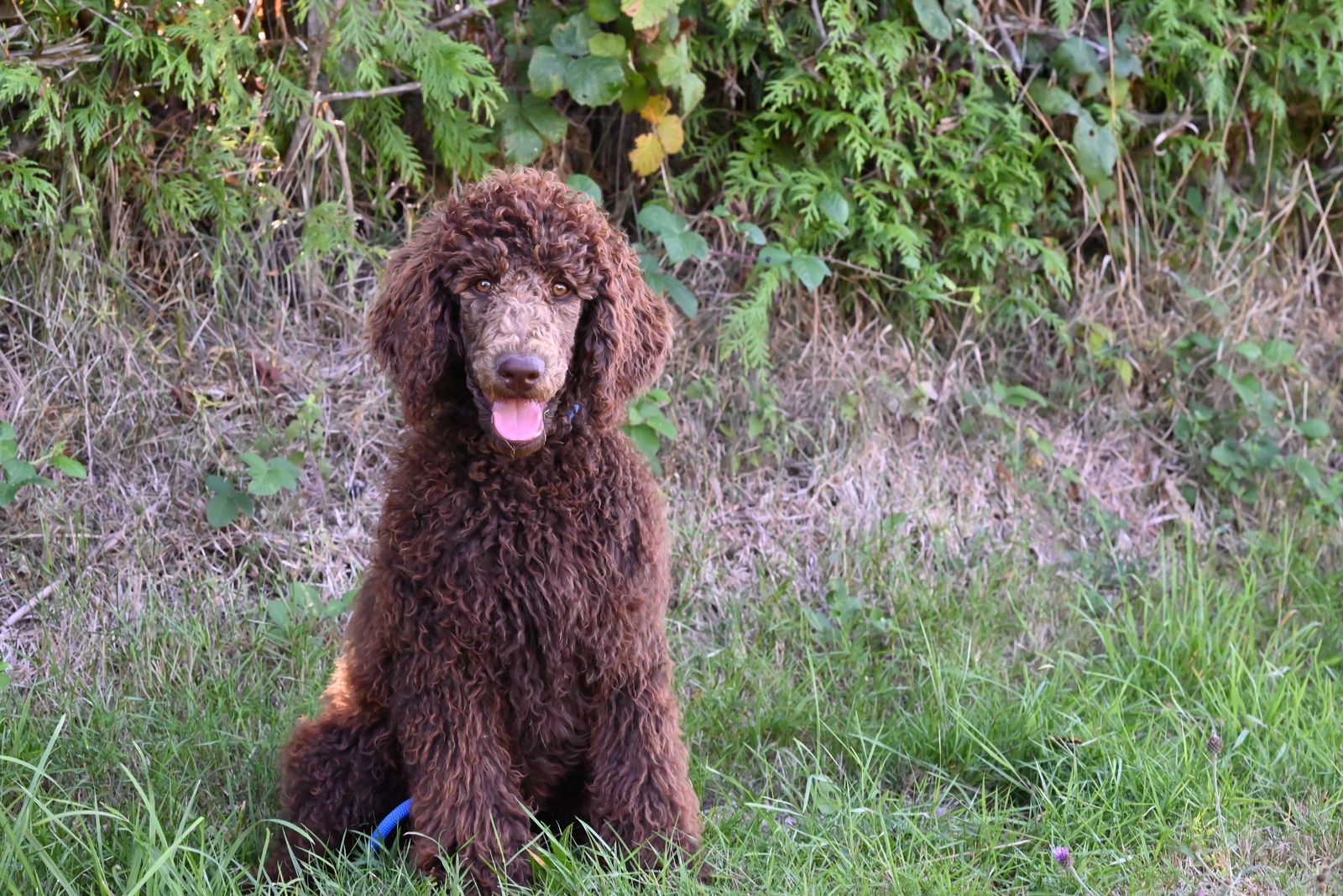
Standard Poodle snapshot
The American Kennel Club describes the Poodle as an elegant athlete beneath a curly, low allergen coat, and the Standard is the largest and oldest of the three Poodle sizes. The breed began as a water retrieving dog, and the modern Standard keeps that build and that brain. The AKC calls Poodles intelligent, active, and proud, and owners meet that intelligence as a dog that learns routines fast, notices everything, and needs real work and exercise rather than a short walk around the block. The breed ranked No. 5 in AKC registrations for 2024, which makes it one of the most commonly owned large breeds in the country.
| Height | Over 15 inches at the highest point of the shoulders. Most Standards stand well above that minimum. |
|---|---|
| Weight | 60 to 70 pounds for males. 40 to 50 pounds for females. |
| Lifespan | 10 to 18 years, as listed by the AKC. |
| Coat | A dense, curly, low shedding coat that needs regular clipping and grooming to keep skin healthy and mats away. |
| Temperament | Intelligent, active, and elegant, with the alertness of a working retriever. |
| Energy and exercise | High for a non sporting breed. Needs daily exercise and mental work, and many Standards still swim and retrieve with enthusiasm. |
Two snapshot facts shape the insurance picture. The first is the chest. A Standard is a large, deep chested dog, and that shape carries the bloat risk covered below, alongside the hip screening that any large athletic breed needs. The second is the lifespan range. A dog that can live well into its teens will renew a policy many times, and this breed's main conditions, once diagnosed, are managed at every one of those renewals. Long life plus lifelong conditions is the math this whole guide is built on.
Health tendencies in Standard Poodles
The Poodle Club of America health statement for the breed names a defined testing program for Standards, and it also lists the wider health concerns seen in the breed, including Addison's disease, bloat, chronic active hepatitis, Cushing's disease, and epilepsy. The six cards below cover the conditions that most shape an insurance decision for this breed. They are tendencies, not predictions about an individual dog, and a well screened line lowers some of the risk without erasing any of it.
This section is general information about conditions a breed can be prone to. It is not veterinary advice and it is not a diagnosis of any dog. Signs listed here are possible signs owners may notice, and many of them have several causes. Only a veterinarian who examines your dog can say what a sign means.
Addison's disease (hypoadrenocorticism)
What it is
A hormonal condition in which the adrenal glands produce too little cortisol, and usually too little aldosterone, the hormone that keeps sodium and potassium in balance. The Merck Veterinary Manual explains that the cause is usually unknown, that an immune process in which the body damages its own tissue is likely, and that the condition may be inherited in Standard Poodles. Cornell veterinarians call Addison's the great pretender, because its signs imitate many other illnesses and come and go. It most often appears in young to middle aged dogs.
Signs owners may notice
- Repeated episodes of vomiting and diarrhea that seem to clear up, then return.
- Low appetite, weight loss, and a gradual loss of body condition.
- Lethargy, weakness, shaking, or a dog that seems depressed and flat.
- Drinking and urinating more, dehydration, or belly pain.
How vets usually evaluate and treat it
Vets usually start with the history, an exam, and bloodwork. The classic pattern is low sodium and high potassium, although that pattern can be absent early. The diagnosis is confirmed with an ACTH stimulation test, which measures cortisol before and after a dose of the hormone that should trigger the adrenal glands. Affected dogs have low cortisol and little response. Treatment is hormone replacement for life, given as daily glucocorticoid medication plus mineralocorticoid support by pill or by a regular injection, with repeat blood tests to keep the balance right. Once a dog is diagnosed and stabilized, the condition is managed, not cured.
Sebaceous adenitis
What it is
An inflammatory skin disease in which the immune system attacks and destroys the sebaceous glands, the small oil glands that keep skin and coat lubricated. The Merck Veterinary Manual describes it as an immune mediated disorder of skin renewal with a hereditary component in some breeds, and it lists the Standard Poodle among the breeds predisposed to it. OFA screening material notes that it is seen primarily in Standard Poodles, Akitas, and Samoyeds. Without those glands, the coat turns dry and brittle and the skin scales and sheds hair.
Signs owners may notice
- Scaling and flaking, often first along the back, neck, head, and ears.
- Hair that feels dry and brittle, with thinning or patchy hair loss.
- Tight scales that wrap around hair shafts, sometimes called follicular casting.
- A musty odor, and repeat skin infections in the damaged areas.
When it can be urgent
Sebaceous adenitis itself develops gradually and is a prompt routine appointment, not an emergency. A skin infection that spreads fast, deep sores, fever, or a dog that stops eating alongside skin changes needs same day care, because the infection, not the underlying gland disease, is the urgent part.
How vets usually evaluate and treat it
Because scaling and hair loss have many causes, vets usually rule out parasites, infection, and other skin disease first, and the definitive diagnosis is a skin biopsy examined by a specialist pathologist. That biopsy is also the screening tool the breed program uses for breeding dogs, through the OFA sebaceous adenitis evaluation. Merck notes the condition is incurable and needs lifelong management in most cases. Management categories include medicated baths and moisturizing topical care, oil based coat treatments, treatment of secondary infections, and in many dogs a medication such as modified cyclosporine that calms the immune attack on the glands.
Inherited eye conditions (progressive retinal atrophy and cataracts)
What it is
The Standard Poodle eye file has two main entries. Progressive retinal atrophy, or PRA, is a group of inherited diseases in which the retina slowly degenerates, causing progressive vision loss that can end in blindness. The Merck Veterinary Manual describes the increased light reflection, thinning retinal blood vessels, and optic nerve changes a vet can see in an affected eye. Cataracts are clouding of the lens. They can be inherited, and they can also form as a late complication of retinal disease. The breed program answers this risk with a yearly eye examination by a board certified veterinary ophthalmologist, recorded through the eye certification registry.
Signs owners may notice
- Hesitation in dim light or at night, the usual first sign of retinal degeneration.
- Bumping into furniture that has moved, or new clumsiness on stairs.
- Eyes that shine more than usual in photographs or low light, or pupils that stay wide.
- A cloudy, bluish, or white look inside the pupil when a cataract forms.
When it can be urgent
Gradual vision change is a prompt appointment. A suddenly painful, red, or cloudy eye, or vision loss that arrives over days rather than months, is a same day problem, because sudden eye signs point to other conditions, such as glaucoma or retinal detachment, where time protects sight.
How vets usually evaluate and treat it
Evaluation is a full eye examination by a veterinary ophthalmologist, with dilation so the retina can be inspected directly. The yearly certification exam is a screening exam. It records what the eye shows that day, and a normal result is a dated record, not a lifetime guarantee. There is no treatment that restores vision lost to PRA, so care focuses on confirming the diagnosis, checking whether cataract surgery makes sense in the individual dog, and helping the dog adapt as sight fades. Cataracts are different. In suitable dogs, surgery can remove the clouded lens, which is why insurers treat the two conditions differently.
Hip dysplasia
What it is
An inherited looseness of the hip joint. The ball and socket fit poorly, the joint wears unevenly, and arthritis follows over time. Cornell's Riney Canine Health Center describes that looseness leading to pain and arthritis, and hip evaluation is the first required test in the Poodle Club of America program for Standards, done either as an OFA radiographic evaluation or as a PennHIP evaluation. A large, athletic, long lived breed loads its hips for many years, so a screening result in the parents and a dog's own comfort in middle age belong in the same file.
Signs owners may notice
- Stiffness after rest, trouble rising, or reluctance on stairs and jumps.
- A swaying or bunny hopping gait at a run.
- Slowing down on exercise the dog used to enjoy, or lagging on the way home.
- Loss of muscle over the hips and thighs in a dog that is moving less.
When it can be urgent
Hip dysplasia is a slow condition and a routine appointment problem. A dog that suddenly cannot bear weight on a back leg, or cries out during movement, may have an injury rather than arthritis, and that change deserves prompt care.
How vets usually evaluate and treat it
Evaluation combines a hands on joint exam with hip X-rays. The screening evaluations used for breeding dogs grade or measure the joint itself. In a pet dog with signs, treatment usually starts with weight control, controlled exercise, pain and anti-inflammatory medication, and rehabilitation. Surgery is a category for dogs whose pain does not respond to medical management, and it ranges from joint procedures in young dogs to total hip replacement in suitable adults.
Bloat (gastric dilatation and volvulus, GDV)
What it is
A life threatening emergency in which the stomach fills with gas and can twist on itself, trapping its contents and cutting off blood flow. The Poodle Club of America lists gastric dilatation and volvulus among the health concerns in this breed, and the Standard's deep chest is the shape this emergency follows. Merck's owner guidance describes a swollen stomach, pain, and a dog that tries to vomit and brings nothing up. There is no home treatment and no watchful waiting with this condition.
Signs owners may notice
- Repeated retching that produces nothing, or only foam and saliva.
- A belly that looks swollen or feels tight, often high behind the ribs.
- Restlessness, pacing, drooling, and an inability to settle.
- Rapid breathing, pale gums, weakness, or collapse as shock develops.
How vets usually evaluate and treat it
Emergency teams usually stabilize the dog first, with fluids and decompression of the stomach, and confirm the twist with an abdominal X-ray. Treatment is surgery to untwist and inspect the stomach, remove any tissue that has died, and usually tack the stomach to the body wall, a procedure called gastropexy, so it cannot twist again. Some owners discuss a preventive gastropexy with their vet before any emergency, sometimes at the time of a spay or neuter. That preventive version is an elective surgery decision, and it is separate from the emergency operation.
Hypothyroidism (autoimmune thyroiditis)
What it is
A hormonal condition in which the thyroid glands produce too little thyroid hormone, slowing metabolism. Cornell describes hypothyroidism as an endocrine disease that most commonly appears in middle aged dogs. In this breed the screening angle matters most. The Poodle Club of America program includes an autoimmune thyroiditis evaluation from an approved laboratory, because in many Poodles the low thyroid output follows an immune process that attacks the gland, and that process can be detected in breeding dogs before a pet dog ever shows a sign.
Signs owners may notice
- Weight gain even though food and exercise have not changed.
- Low energy, sleeping more, and less interest in exercise or play.
- A thinning or dull coat, hair loss on the body or tail, and recurring skin or ear trouble.
- Seeking warm places and seeming to feel the cold more than before.
When it can be urgent
Hypothyroidism develops slowly and is almost never an emergency on its own. Severe weakness, collapse, marked confusion, or a dog that cannot be roused needs same day care, because those signs suggest something more serious than a routine thyroid case, whether or not the thyroid is involved.
How vets usually evaluate and treat it
Vets usually evaluate with an exam, weight history, and a thyroid blood panel rather than a single value, because other illness can distort thyroid results. Cornell notes that treatment is a synthetic thyroid hormone given daily, with follow up blood tests after starting and at intervals afterward to confirm the dose is right. Most dogs then stay on the medication for life, with periodic rechecks. That makes this a small monthly claim repeated for years, which is its own kind of insurance test.
The breeder screening evidence checklist
No other breed in this series hands its owner this much paper, and no other guide has this section. The Poodle Club of America program for Standards, run with the OFA Canine Health Information Center, or CHIC, program, requires a hip evaluation and an eye examination, plus health electives, and the club statement adds thyroid evaluation and two DNA tests. A CHIC number means a dog was screened under the breed protocol and the results were made public. It does not mean every result was normal. Read the results themselves, and keep them. Use this checklist when you talk to a breeder, and keep the completed file with your policy documents.
- Hip evaluation for both parents, as an OFA radiographic result or a PennHIP report. Record the grade or score and the date, not only the breeder's summary of it.
- Eye examination for both parents by a board certified veterinary ophthalmologist, recorded through the eye certification registry. Check the date. The breed program calls for a yearly examination, so an old certificate is a gap, not a pass.
- Autoimmune thyroiditis evaluation from an OFA approved laboratory, one of the health electives in the breed program.
- DNA test for neonatal encephalopathy with seizures, called NEwS, or a clear by parentage record. This is a severe inherited condition of puppies, and the club statement names the test directly.
- DNA test for von Willebrand disease type I, or clear by parentage. Cornell describes von Willebrand disease as the most common inherited bleeding disorder in dogs, a condition in which blood does not clot properly, and it lists Poodles among the breeds that carry the type I form.
- Sebaceous adenitis evaluation by skin biopsy, read by an approved dermatopathologist, where the breeder has done it. It is an elective in the program, and it is the only screening route for a condition with no DNA test.
- Cardiac evaluation where available, the other elective direction in the program, done by auscultation or by a cardiologist examination.
- Each parent's CHIC number, verified by you in the OFA database. Confirm the results behind the number match what the breeder told you.
- The breeder's own history answers, in writing where you can. Ask directly about Addison's disease and sebaceous adenitis in the lines behind your puppy, because no laboratory test can answer those two questions for you.
- A dated copy of everything above, filed before you enroll. If a claim is ever questioned, this file shows what was tested, what was found, and when you knew it.
| The file can show | The file cannot show |
|---|---|
| Hip structure of both parents, graded or measured on a dated evaluation. | Whether your puppy's own hips will stay comfortable in old age. |
| What a specialist saw in each parent's eyes on the examination date. | What those eyes, or your dog's eyes, will show at a later examination. |
| DNA results for NEwS and von Willebrand disease type I, or clear by parentage records. | Any prediction about Addison's disease, which has no DNA test. |
| A skin biopsy result for sebaceous adenitis on the day the sample was taken. | A guarantee about sebaceous adenitis, which can appear later and also has no DNA test. |
| A thyroid panel result from an approved laboratory. | Whether thyroid output will stay normal across your dog's middle age. |
Read the checklist honestly, in both directions. A complete file is real evidence of careful breeding, and it lowers the chance of several conditions on this page. It cannot rule out the two conditions this breed is most known for. There is no predictive DNA test for Addison's disease, and none for sebaceous adenitis. Screening is why this breed's owners can plan with better information than most. It is also why the policy still matters, because the conditions screening cannot exclude are lifelong, expensive to work up, and exactly what insurance exists for.
Policy decisions that matter for a Standard Poodle
For a Standard Poodle, the policy table is about records and renewals. The breed's conditions are mostly hereditary, several are lifelong, and one is a midnight emergency. The clauses below are the ones that decide whether the screening work you did before buying the puppy is matched by coverage that holds up afterward.
| Policy feature | Why it matters for a Standard Poodle | Stronger wording looks like | Watch out for |
|---|---|---|---|
| Hereditary condition coverage | Addison's disease, sebaceous adenitis, inherited eye disease, hip dysplasia, and thyroid disease make up most of the breed list. | Hereditary and congenital conditions are covered on the same terms as other illnesses. | Hereditary exclusions, or breed specific exclusions aimed at conditions like these. |
| Pre-existing condition definitions | Addison's signs are vague and intermittent, and skin and thyroid changes build slowly, so early notes carry unusual weight. | A clear definition tied to signs a vet recorded, with a stated route for conditions that were treated and resolved. | Broad wording that lets any earlier vague symptom note anchor a denial for a later diagnosis. |
| Chronic condition renewal terms | Addison's disease, sebaceous adenitis, and hypothyroidism are managed at every renewal for the rest of the dog's life. | A condition covered in one policy term stays covered in later terms while enrollment continues. | Wording that caps a condition per year, ends coverage for a condition at renewal, or reclassifies it as pre-existing. |
| Diagnostics coverage | The breed's diagnoses are test driven: ACTH stimulation testing, skin biopsy, thyroid panels, and specialist eye examinations. | Lab work, biopsy, advanced testing, and specialist exams are covered categories for a covered condition. | Medication only thinking, where the tests that establish the diagnosis are excluded or separately capped. |
| Specialist coverage | Dermatology for skin, ophthalmology for eyes, and internal medicine for adrenal disease are routine stops in this breed, not exotic ones. | Referral visits and specialist examinations are covered without a separate penalty or cap. | Policies that limit specialist care, or require approval steps that are hard to complete before a needed visit. |
| Bilateral condition rule | Hips come in pairs, and eye disease in this breed is often a both eyes story over time. | Each side is judged on its own record, with clear terms for the second side. | Wording that treats the second hip or eye as pre-existing after the first is diagnosed. |
| Emergency surgery terms | Bloat surgery happens at night, with no time to call an insurer first. | Emergency care is covered on the policy's normal terms, with any notice requirement set after the dog is stable. | Pre-approval requirements that an emergency cannot meet, or emergency care carved out by breed. |
| Preventive procedure classification | A preventive gastropexy and routine screening tests sit near the line between preventive care and treatment. | The policy states plainly which preventive procedures and screening tests it pays for, and which it does not. | Assuming a stomach tack or a screening panel is covered because treatment of the condition itself is covered. |
Life stages: puppy, adult, and senior
Puppy
The puppy stage is when this breed's file is built. Collect the screening evidence for both parents before or when the puppy comes home, using the checklist above, and verify the CHIC numbers yourself. Start the puppy's own record cleanly. The first vet visit sets the baseline that every later claim is read against, so keep the visit notes, the weight record, and any eye or skin comments. Enroll in this stage, while the record is a baseline and not a list of symptoms, and let the waiting periods run while the puppy is well.
Adult
Adulthood is when the breed list tends to declare itself. Addison's disease most often appears in young to middle aged dogs, sebaceous adenitis can appear across a wide span of adult years, and thyroid changes usually arrive in middle age. The insurance work of this stage is administrative discipline. File claims as they happen, keep every blood panel and biopsy result, and watch the renewal documents each year for changes to the conditions your dog now has. A Poodle owner with a tidy file wins arguments that a disorganized owner loses, because this breed's claims turn on dates and prior notes.
Senior
A senior Standard can be a senior for a long time. Vision loss from retinal disease, arthritis from hips that were screened in the parents a decade earlier, and one or more hormone conditions managed daily can all overlap. Keep the eye examinations going, because new eye signs in an older dog still deserve a prompt visit rather than an assumption about age. Review the policy for age based changes and premium increases. A plan that thins out exactly when a long lived breed needs it most fails the purpose it was bought for.
A claim, step by step: an Addison's disease diagnosis
The example below is hypothetical. It is not a real dog, a real claim, or a guarantee of how any insurer will decide. It follows a middle aged Standard Poodle through months of vague illness, a crisis, the test that names the condition, and the lifelong claims that follow, because that full arc is what coverage in this breed has to handle. Pet insurance generally reimburses after you pay the vet, as explained in how pet insurance works.
The vague months, and the notes that start the file
Over several months the dog has two or three flat spells. Appetite drops for a few days, there is a loose stool or a vomit, energy fades, and then the dog seems fine again. Each episode earns a vet visit and a short note. Those notes look minor at the time. In this breed they become the early chapters of the claim story, which is why the dates matter and why enrolling before the first flat spell is worth so much.
The crisis visit
One weekend the pattern breaks. The dog vomits repeatedly, will not eat, shakes, and collapses. At the emergency hospital the team finds dehydration, a slow heart rhythm, and bloodwork with low sodium and high potassium. The dog is stabilized with fluids and close monitoring. The invoice from this visit is the largest single document in the file, and the records, the exam, the heart tracing, and the blood results, are the evidence that this was a crisis and not a routine stomach upset.
The test that names it
With Addison's disease on the list, the vet runs an ACTH stimulation test. Cortisol is measured, the stimulating hormone is given, and cortisol is measured again. The result shows low cortisol with little response, which confirms hypoadrenocorticism. The working story is now a diagnosis, and hormone replacement begins. Keep the test report with the claim. It is the single page that separates this condition from the long list of illnesses it imitates.
Checking the waiting period and the record
On paper, the insurer lines the diagnosis up against the policy dates and the earlier record. The policy was started when the dog was a puppy, the illness waiting period ended years ago, and the breeder screening file is in the folder. The hard question is the vague months. An insurer can ask whether those earlier flat spells were the same condition showing itself before it was named. A clean enrollment date, years before any symptom note, is the strongest answer an owner can give, and it cannot be created after the fact.
Submitting the claim
The claim is filed with the emergency invoice and records, the ACTH stimulation report, and the earlier visit notes that show the run up to the crisis. Filing the whole story at once is better than filing fragments, because the diagnosis only makes sense as an arc. The diagnosis date recorded is the date of the confirming test, and later claims refer back to it.
Stabilizing, and how reimbursement works
Ongoing care settles into hormone replacement, given as daily medication plus a regular mineralocorticoid injection or pill, with blood tests at intervals to confirm sodium and potassium stay in range. Each eligible bill moves through the same mechanics described in what pet insurance costs and why. Charges count against the deductible first, the policy's reimbursement rate applies to eligible charges after that, and totals are tracked against the annual limit. The emergency bill is the peak. The years of smaller bills are the long tail, and both halves have to be covered for the policy to do its job.
Renewal, repeat claims, and where they get denied
At renewal, the decisive question is whether Addison's disease is still a covered condition or has been reclassified. Under wording that keeps covered chronic conditions covered, the medication, injections, and monitoring panels in the new term are filed the same way, referencing the original diagnosis date. Denial pressure points in this breed story are an insurer reading the vague pre-enrollment signs as the true start of the condition, monitoring bloodwork denied as routine care rather than management of a covered condition, and renewal wording that caps a named chronic condition. Each of those is a clause question, and each can be asked in writing before you buy.
What drives a Standard Poodle premium
No responsible guide will name a price for your dog, because the quote depends on the dog, the address, and the settings chosen. What can be explained is the shape of Poodle pricing and the choices that move it. The full mechanics are in what pet insurance costs and why.
Breed risk profile. Insurers see a large, long lived breed whose expensive conditions are mostly hereditary and mostly chronic, plus one surgical emergency. That profile prices differently from a breed with one dominant injury risk. The diagnostic workups matter to the pricing too, because this breed's conditions are found by testing, and testing is a covered cost category the insurer expects to fund.
Size. A Standard is a big dog. Medication doses, anesthesia, imaging, and surgery all scale with weight, and a dog in the 40 to 70 pound range costs more to treat than the small breeds in this series. Size is built into breed pricing before any individual factor is considered.
Age curve and lifespan. Premiums generally rise with age, and the AKC lifespan range for this breed runs into the late teens. The total cost of insuring a Standard Poodle is therefore a long horizon calculation. A cheaper policy with chronic condition caps can cost more over a decade than a stronger policy, because the caps bite every year of a lifelong hormone or skin condition.
Location and plan settings. Vet prices in your area set the bill sizes the insurer expects, and your deductible, reimbursement rate, and annual limit choices trade premium against claim returns. One honest note for this breed. A strong screening file from your breeder is valuable evidence and good breeding practice, but do not expect it to lower a quote. Insurers price the breed and the dog's own record, not the parents' test results.
Pre-purchase checklist for a Standard Poodle policy
- Collect the breeder screening evidence first, using the screening checklist in this guide, and verify both parents' CHIC numbers in the OFA database.
- Confirm hereditary conditions are covered, including Addison's disease, sebaceous adenitis, inherited eye disease, hip dysplasia, and thyroid disease.
- Read the pre-existing definition against this breed's reality of vague, intermittent early signs.
- Confirm a condition covered in one term stays covered at renewal, since the breed's main conditions are lifelong.
- Check that the diagnostic tests are covered as a group: ACTH stimulation testing, skin biopsy, thyroid panels, and specialist eye examinations.
- Confirm dermatology, ophthalmology, and internal medicine referral visits are covered categories.
- Read the bilateral clause for hips and eyes, and the orthopedic waiting period that applies to hips.
- Ask how emergency GDV surgery is handled, and separately how a preventive gastropexy is classified.
- Enroll as a puppy, after the screening file is collected and before any symptom note enters the medical record.
Questions to ask an insurer, in writing
- Once Addison's disease is diagnosed and covered, will it remain covered at every renewal while I stay enrolled, including the monitoring blood tests?
- Are the ACTH stimulation test, skin biopsy for sebaceous adenitis, and thyroid panels covered diagnostic categories?
- How do you treat vague signs recorded before a diagnosis, such as intermittent vomiting or low energy, when the later diagnosis is Addison's disease?
- Is sebaceous adenitis covered as a hereditary skin condition, and does prescribed medicated bathing count as treatment?
- Are emergency GDV surgery and a preventive gastropexy treated differently, and if so, how is each classified?
- How are inherited eye conditions handled, including ophthalmologist examinations for progressive retinal atrophy and surgery for cataracts?
Questions Standard Poodle owners ask
Does pet insurance cover Addison's disease in Standard Poodles?
An accident and illness policy can cover Addison's disease when hereditary conditions are included, the illness waiting period has passed, and no signs were recorded before enrollment. That last point is the hard one in this breed, because Addison's signs are vague and come and go. A note about repeated vomiting, low appetite, or low energy from before the policy started can be read as an early sign, so enroll early and keep a clean, dated record.
What breeder health records should I keep for my insurer?
Keep the parents' hip evaluation results, the dated eye examination by a board certified veterinary ophthalmologist, the thyroid evaluation, the DNA results for neonatal encephalopathy and von Willebrand disease, and any sebaceous adenitis biopsy or cardiac evaluation, together with each parent's CHIC number. Verify the results in the OFA database yourself. Those papers support the breeder's claims, and they also document what was known, and not known, about your dog before you enrolled.
Is sebaceous adenitis covered, and how is it diagnosed?
It can be covered as an illness when skin conditions and hereditary conditions are not excluded and the signs were not present before enrollment or during the waiting period. Vets diagnose sebaceous adenitis with a skin biopsy, because scaling and hair loss have several other causes. Check that biopsy, dermatology referral, medicated bathing care, and long term medication are covered categories, because management continues for life once the glands are damaged.
Are inherited eye conditions covered for Standard Poodles?
They can be, when eye disorders are covered and hereditary conditions are not carved out. Progressive retinal atrophy causes gradual vision loss and has no treatment that restores sight, so the practical coverage questions are the ophthalmologist examinations that detect it and the care around it. Cataracts are different, because surgery can be an option in suitable dogs. Ask in writing how inherited eye disease and cataract surgery are each handled for this breed.
Does pet insurance cover bloat surgery, and a preventive stomach tack?
Emergency surgery for gastric dilatation and volvulus is the kind of sudden, life threatening event accident and illness policies are built around, provided the signs did not predate the policy. A preventive gastropexy, the stomach tack done before any emergency, is treated differently by many policies and may be classed as preventive care that a standard policy does not pay for. Ask in writing how each is handled, and ask your vet about gastropexy on its own merits, not only as an insurance question.
When is the best time to enroll a Standard Poodle?
As a puppy, after you have collected the breeder screening records and before any vague illness, skin change, eye finding, or hip note is in the medical record. This breed's important conditions tend to appear in young and middle aged adults, and several are managed for life once diagnosed. Enrolling early clears the waiting periods while the dog is well, and it keeps the first sign of a lifelong condition inside the policy period instead of before it.
Sources and further reading
- American Kennel Club, Poodle (Standard) breed page for size, weight, lifespan, coat, temperament, and the breed's standing among registered breeds.
- Poodle Club of America, Health Statement, December 11, 2024 for the Standard testing program: hip evaluation, ACVO eye examination, autoimmune thyroiditis evaluation, DNA tests for NEwS and von Willebrand disease type I, the health electives, and the wider list of health concerns in the breed.
- Orthopedic Foundation for Animals, recommended tests and CHIC program for the Standard Poodle for how screening results are recorded and made public, and for the sebaceous adenitis evaluation.
- Merck Veterinary Manual, Disorders of the adrenal glands in dogs for Addison's disease, its inheritance in Standard Poodles, its signs, and confirmation by adrenal function testing.
- Merck Veterinary Manual, Sebaceous adenitis in dogs and cats for the immune mediated destruction of sebaceous glands, breed predisposition, biopsy diagnosis, and lifelong management.
- Merck Veterinary Manual, Disorders of the retina, choroid, and optic disk in dogs for progressive retinal atrophy and the retinal changes a veterinarian can see.
- Cornell Riney Canine Health Center, Canine hip dysplasia for joint looseness leading to arthritis, diagnosis, and treatment categories.
- Cornell Riney Canine Health Center, Hypothyroidism for thyroid hormone deficiency, its signs, and daily hormone treatment with monitoring.
- Cornell Riney Canine Health Center, Von Willebrand disease for the inherited bleeding disorder, its type I form in Poodles, and genetic testing.
- Merck Veterinary Manual, Disorders of the stomach and intestines in dogs for gastric dilatation and volvulus, its signs, and why it is an emergency.