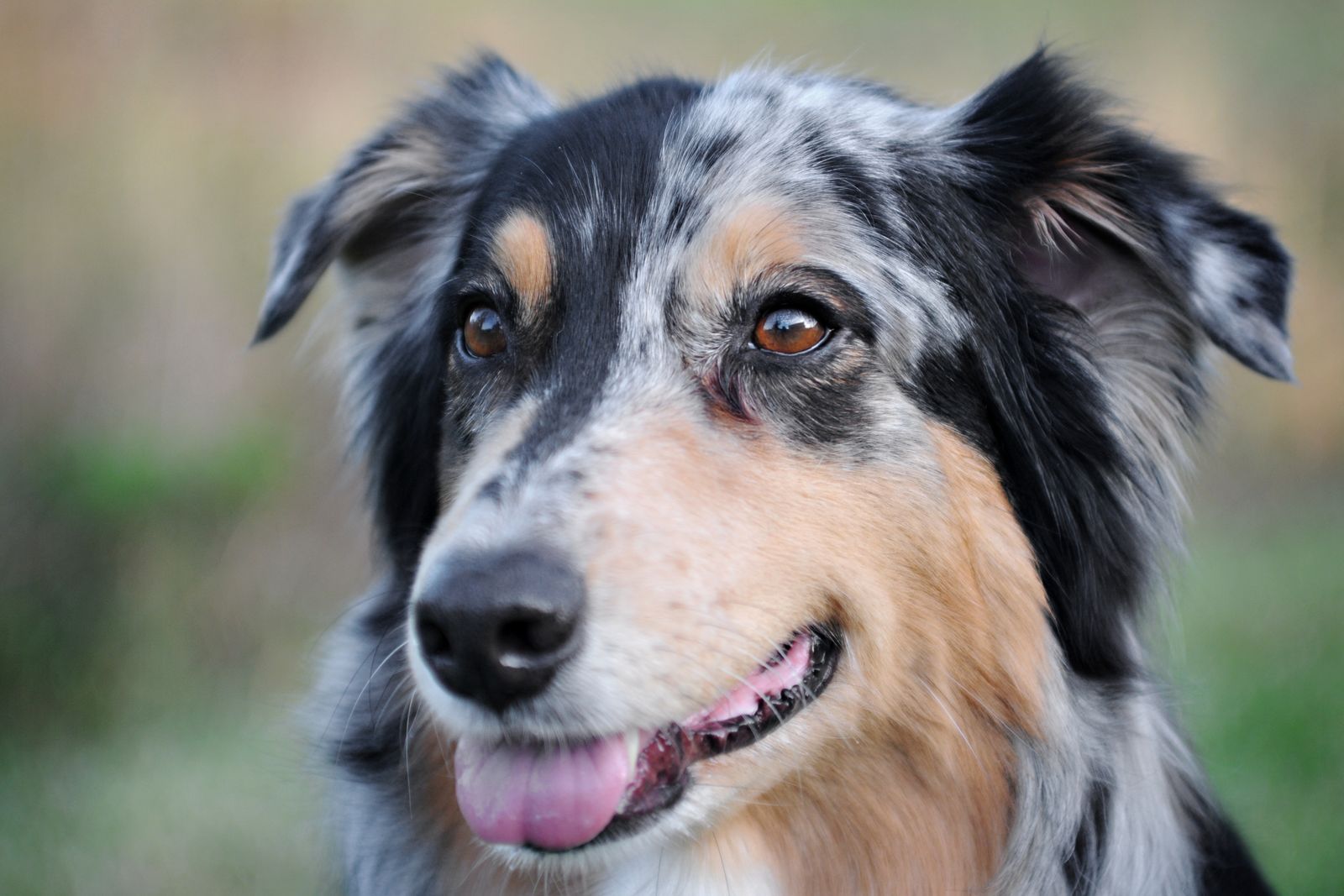
Australian Shepherd snapshot
The American Kennel Club describes the Australian Shepherd as a lean, tough ranch dog, and one of those only in America stories, a European breed perfected in California by way of Australia. The AKC lists the temperament as smart, work oriented, and exuberant, and notes the breed's strong impulse to herd almost anything, birds, dogs, or children included. Despite the name, this is an American herding breed, ranked No. 12 in the AKC registration rankings for 2024. It is a dog that needs a job, real exercise, and mental work every day, and that energy loads its hips, elbows, and eyesight across years of sport and outdoor life.
| Height | 20 to 23 inches at the shoulder for males. 18 to 21 inches for females. |
|---|---|
| Weight | 50 to 65 pounds for males. 40 to 55 pounds for females. |
| Lifespan | 12 to 15 years, as listed by the AKC. |
| Coat | A medium length double coat, straight to slightly wavy and weather resistant. Colors are black, blue merle, red, and red merle, with or without white markings and tan points. |
| Temperament | Smart, work oriented, and exuberant, with a strong herding instinct and a close bond with its own people. |
| Energy and exercise | Very high. A herding breed that needs daily vigorous exercise and a task to think about, not only a walk around the block. |
The snapshot facts that matter most for insurance are the lifespan and the working build. A dog that commonly lives 12 to 15 years will renew a policy many times, so chronic condition wording matters. A medium sized, heavily boned herding dog also carries a specific genetic file, the MDR1 result and the eye results, that most breeds never need. Owners who keep that file complete from puppyhood give both their veterinarian and their insurer a clean, dated record.
Health tendencies in Australian Shepherds
The United States Australian Shepherd Association, the AKC parent club for the breed, sets the screening pattern that the OFA Canine Health Information Center program, called CHIC, uses for this breed. The required tests are an OFA evaluation for hip dysplasia, an OFA evaluation for elbow dysplasia, and an annual eye evaluation by a board certified veterinary ophthalmologist, registered with the OFA. The club lists DNA testing for hereditary cataracts, for multidrug sensitivity, the MDR1 test, and for collie eye anomaly as highly recommended. Those lists are the map for this section. Each condition below is a tendency, not a prediction.
This section is general information about conditions a breed can be prone to. It is not veterinary advice and it is not a diagnosis of any dog. Signs listed here are possible signs owners may notice, and many of them have several causes. Only a veterinarian who examines your dog can say what a sign means.
MDR1 drug sensitivity (the ABCB1 mutation)
What it is
An inherited change in the MDR1 gene, also called ABCB1. The gene normally makes a protein called P-glycoprotein, a pump that moves many drugs and toxins out of the brain. Washington State University explains that dogs with the mutation can become very ill or die if given certain medications, because the pump is defective and drugs build up in the nervous system. WSU lists the Australian Shepherd among the breeds where the mutant gene is found, alongside Collies and other herding breeds. A dog can carry one copy of the mutation or two copies. Dogs with two copies are the most sensitive, and dogs with one copy can also react. The only way to know a dog's status is a DNA test, usually a cheek swab sent to a laboratory such as the WSU Veterinary Clinical Pharmacology Laboratory, the laboratory that identified the mutation.
Signs owners may notice
- There are no everyday signs. A healthy Aussie with the mutation looks and acts normal until a problem drug is given. That silence is the point of testing before a drug is needed.
- After a problem drug, WSU guidance describes neurological signs: wobbliness, tremors, disorientation, drooling, blindness, and seizures. In severe cases a dog can fall into a coma.
- After a sedative on the problem list, a dog with the mutation may stay sedated far more deeply and far longer than expected.
How vets usually evaluate and manage it
There is no treatment that removes the mutation. Management is information. The DNA result goes on the medical record, and the veterinarian checks each new drug against the current WSU problem drug list. Loperamide, the over the counter anti-diarrheal sold for people, is to be avoided in all dogs with the mutation, because at ordinary diarrhea doses it causes neurological toxicity. Acepromazine, a tranquilizer and pre-anesthetic drug, needs a reduced dose. Butorphanol, some chemotherapy drugs, and several other medicines also need dose changes or close monitoring. Ivermectin needs a careful sentence of its own. WSU states that the low dose used for heartworm prevention is safe in dogs with the mutation, while the much higher doses used for problems such as mange can cause neurological toxicity. A blanket fear of heartworm prevention is therefore the wrong lesson. The right lesson is specific to the drug and the dose, and it is why the written result belongs in the file.
Collie eye anomaly
What it is
An inherited defect in the development of the layers at the back of the eye, present from birth. Despite the name, it affects Australian Shepherds as well as Collies and related herding breeds. The mildest and most common form is choroidal hypoplasia, an area where the choroid, the layer of blood vessels that feeds the retina, is thin and underdeveloped. More severe forms add a coloboma, a pit or gap in or near the optic disc, and in the most severe cases the retina can detach. The condition is generally not progressive on its own. Most affected dogs keep useful vision, while a smaller number with detachment lose vision in the affected eye. A DNA test exists, and an eye exam in the first weeks of life can also detect it, before pigment in the maturing eye can hide the mild form.
Signs owners may notice
- Often nothing at all. Mild collie eye anomaly has no outward sign, and the dog navigates normally. It is found on an exam, not at home.
- In more severe cases, bumping into objects on one side, reluctance on stairs or with jumping, or clumsiness in dim light or in a new place.
- A suddenly blind eye, sometimes with a cloudy or bloodshot look, which can mean the retina has detached. That change is urgent, not a watch and wait sign.
When it can be urgent
Sudden vision loss in one or both eyes, a painful or cloudy eye, or a dog that abruptly cannot navigate a familiar room needs same day care. Retinal detachment is the complication where hours and days matter most for any chance of preserving vision.
How vets usually evaluate and manage it
Evaluation is a dilated eye exam by a veterinarian, ideally a board certified veterinary ophthalmologist, who looks at the back of the eye for the thin choroid area, a coloboma, or a detachment. Breeders screen puppies early, at about six to eight weeks of age, because mild changes can be masked as the eye matures. A DNA result settles carrier status in a way an adult eye exam alone cannot. There is no treatment that rebuilds the underdeveloped layers. Management is monitoring at repeat eye exams, prompt care for a detachment, and honest breeding decisions.
Hereditary cataracts, with progressive retinal atrophy
What it is
A cataract is a clouding of the lens, the clear structure behind the pupil that focuses light onto the retina. The Merck Veterinary Manual explains that a cataract blocks light from reaching the retina, that vision loss can range from mild problems to blindness, and that cataracts are often inherited in dogs. Merck's table of inherited cataracts lists the Australian Shepherd with an age of onset of 2 to 4 years, which is young adult life, not old age. In this breed, a mutation in the HSF4 gene accounts for a large share of hereditary cataracts, and its DNA test is on the breed club's highly recommended list. The same card must also name progressive retinal atrophy, called PRA. Cornell describes PRA as an inherited disease in which the light sensing cells of the retina slowly degenerate. The rod cells, which serve night vision, usually fail first, and there is no cure.
Signs owners may notice
- A cloudy, white, or bluish area inside the pupil, rather than on the surface of the eye. Merck warns that this true lens clouding should not be confused with the normal hardening of the lens center in older dogs, which does not blind.
- Hesitation in dim light, reluctance to enter a dark room or go outside at night, and trouble with stairs. Cornell lists these night vision signs first for PRA, because night vision goes before day vision.
- Bumping into door frames, clumsiness in new surroundings, dilated pupils, or eyes that look unusually reflective when light shines on them.
- A red, painful, or suddenly cloudy eye in a dog with a known cataract. A mature cataract can trigger inflammation inside the eye and raise the risk of glaucoma.
How vets usually evaluate and treat it
Evaluation is a full eye exam, usually with the pupil dilated, so the lens and the retina can both be seen. Referral to a veterinary ophthalmologist is the usual path for a confirmed cataract, for PRA testing such as electroretinography when the retina cannot be viewed, and for any surgery decision. Merck notes that treatment for a vision blocking cataract is surgery to remove the affected lens, and that removal works best before the cataract is fully mature and before inflammation starts inside the eye. Dogs that do not have surgery need continued monitoring, because complications such as glaucoma can follow. PRA has no surgical fix. Its care is monitoring and home safety as vision fades.
Epilepsy (idiopathic epilepsy)
What it is
A neurological condition of repeated seizures where no underlying cause is found. Cornell explains that a seizure is abnormal, excessive activity of brain cells, that idiopathic epilepsy is diagnosed when no structural or metabolic cause turns up, and that dogs with this condition typically have their first seizures between 6 months and 6 years of age. Epilepsy is a recognized concern in this breed, and it differs from the eye conditions above in one hard way. There is no DNA test for it. A breeder cannot hand you a clear result, which makes the health history of the lines part of the screening file.
Signs owners may notice
- A generalized episode where the dog falls over, stiffens, paddles its legs, and loses awareness, sometimes with drooling or loss of bladder control.
- Shorter or stranger episodes, such as staring, lip licking, snapping at the air, or sudden unsteadiness, which can be focal seizures and are easier to miss.
- A period after an episode where the dog seems tired, clingy, confused, or unusually hungry, and a restless period before some episodes that owners learn to recognize.
How vets usually evaluate and treat it
Because epilepsy is a diagnosis of exclusion, vets usually start with a full exam, a description or video of the episode, bloodwork, and a urine test to rule out metabolic causes. Referral to a neurologist, MRI imaging, and spinal fluid testing may follow. Treatment is usually daily anti-seizure medication when seizures are frequent enough to warrant it, with monitoring blood tests and a seizure diary kept at home. Once medication starts, it commonly continues for life.
Hip and elbow dysplasia
What it is
Two developmental joint problems that share one card because the breed screens for both in the same X-ray session. In hip dysplasia, the hip joint forms with looseness, the joint wears unevenly, and arthritis develops over time. Cornell describes that looseness leading to arthritis and pain, and notes that the condition is inherited and can be worsened by rapid growth and overfeeding in puppies. Elbow dysplasia is a group of developmental faults inside the elbow joint with the same endpoint, pain and arthritis in a front leg. Both sit on the breed's required CHIC screening list, with OFA evaluations registered publicly.
Signs owners may notice
- Stiffness after rest, trouble rising, reluctance on stairs and jumps, and a swaying or bunny hopping gait at a run.
- Front leg lameness that is worse after exercise, a shortened stride in front, or turning the elbow out while standing, which points to the elbow rather than the hip.
- Slowing down on work or play the dog used to ask for, loss of muscle over the hindquarters, and shifting weight forward onto the front legs.
When it can be urgent
Dysplasia itself is a slow condition and a routine appointment problem. A dog that suddenly will not bear weight on a leg, cries out, or has a swollen joint after a fall or a collision may have a fracture or a ligament injury instead, and that change needs prompt care.
How vets usually evaluate and treat it
Evaluation is a hands on joint exam plus X-rays, taken under sedation so the joints can be positioned correctly. Cornell notes that OFA grading uses radiographs taken after the dog is two years old for a final certification, and that the PennHIP method measures hip looseness directly. Treatment usually leans medical first: weight control, controlled low impact exercise, pain medication, joint support, and rehabilitation. Surgery enters the conversation for severe cases and for cases that stop responding to medical care.
Double merle eye and hearing defects
What it is
A breeding outcome, not bad luck. Merle is the mottled coat pattern many people picture when they picture an Aussie. A puppy that inherits the merle change from both parents is called a double merle. Double merles are often mostly white, and they carry a high risk of deafness in one or both ears and of eye defects that range from a misshapen pupil and an abnormally small eye to blindness. The pigment cells the double dose removes are needed in the inner ear and in the developing eye, which is why the defects cluster there. Responsible breeders do not mate two merles together, and a mostly white puppy offered as rare should prompt a direct question about both parents.
Signs owners may notice
- A puppy that does not startle at a loud sound, does not come when called from another room, or sleeps through household noise that wakes other dogs.
- Eyes that look small, off center, or uneven, a puppy that bumps into objects on one side, or a puppy that tracks movement poorly in dim light.
- No signs at all in a puppy deaf in only one ear, which is why a hearing test, not observation, settles the question.
When it can be urgent
These defects are present from birth and are not an emergency. The urgent decision is a buying decision. Once a deaf or vision impaired puppy is home, the work is training and safety, including hand signals and supervision around water and traffic. A puppy with a painful or cloudy eye needs prompt care at any age.
How vets usually evaluate and manage it
Hearing is tested with a BAER test, which measures the brain response to sound in each ear separately. Eyes are evaluated with a full ophthalmologist exam. There is no treatment that restores hearing or rebuilds a malformed eye. Management is early diagnosis, training built for the senses the dog has, and safety routines. For buyers, the evaluation happens before purchase: ask for the hearing test result for any mostly white puppy, and walk away from a litter where two merles were mated on purpose.
Policy decisions that matter for an Australian Shepherd
For this breed, the policy table is about records and categories. The genetic file decides which drugs are safe. The eye file decides whether surgery is a covered illness or an excluded hereditary condition. The joint file decides whether the second side counts. Read these rows before you compare prices.
| Policy feature | Why it matters for an Australian Shepherd | Stronger wording looks like | Watch out for |
|---|---|---|---|
| Hereditary condition coverage | MDR1 sensitivity, hereditary cataracts, collie eye anomaly, epilepsy, and hip and elbow dysplasia all come through the bloodline. | Hereditary and congenital conditions are covered on the same terms as other illnesses. | Hereditary exclusions, or breed specific exclusions aimed at eye or joint conditions in herding breeds. |
| Genetic test result handling | The MDR1 and eye DNA results are screening records most owners of this breed will have. | A test result alone is not treated as an illness or a pre-existing condition. | Wording so broad that any known genetic risk counts as a condition the dog already has. |
| Eye surgery and specialist coverage | Cataract surgery is the breed's most likely planned surgery, and a veterinary ophthalmologist performs it. | Ophthalmology exams, eye surgery, and follow up eye medication are covered categories. | Eye exclusions, or surgery sublimits that fit a minor procedure but not lens surgery. |
| Congenital condition terms | Collie eye anomaly and double merle defects are present from birth, even when they are found later. | Congenital conditions found after enrollment are covered, with complications judged on their own record. | A blanket congenital exclusion, which removes the breed's birth present eye findings and their complications in one stroke. |
| Orthopedic waiting period and bilateral rule | Hips and elbows are screened joints, they come in pairs, and active dogs load both sides hard. | A stated waiting period you can plan around, and each side judged on its own record. | Wording that treats the second hip or elbow as pre-existing after the first is diagnosed. |
| Epilepsy workup and chronic renewal terms | A first seizure triggers bloodwork, referral, and possibly MRI before it triggers lifelong daily medication. | Diagnostics and specialist care are covered, and a covered chronic condition stays covered at renewal while enrollment continues. | Medication only thinking, renewal caps on a named chronic condition, or reclassifying a covered condition as pre-existing at renewal. |
| Sedation, anesthesia, and prescription handling | An MDR1 result changes drug choice and dose for routine procedures and emergencies across the dog's life. | Anesthesia and medication for a covered procedure are covered without penalty for a documented dose adjustment. | Wording that ties coverage to a standard protocol, the wrong frame for a dog whose safe protocol is not standard. |
| Emergency care without pre-approval | A drug reaction, a detached retina, and a cluster of seizures all arrive without an appointment. | Emergency care for a covered condition is reimbursable when records and invoices are filed after the visit. | A pre-approval requirement with no emergency exception, applied to a midnight drug reaction claim. |
Life stages: puppy, adult, and senior
Puppy
The puppy stage builds the file this breed lives on. The MDR1 cheek swab can be done young, and the result should travel with the puppy to every clinic. A first eye exam checks for collie eye anomaly while it is still easy to see, and the breeder should hand over both parents' hip, elbow, and eye results, plus DNA results for MDR1, hereditary cataracts, and collie eye anomaly. Ask the merle question in plain words: were both parents merle. Enrolling in this window, before any finding is recorded, is the strongest coverage move an Aussie owner makes. Keep growth steady rather than fast, because Cornell notes that rapid growth and overfeeding can worsen hip development.
Adult
Adulthood is when the hereditary list tends to declare itself. Merck places inherited cataract onset for this breed at 2 to 4 years. Cornell places the usual first seizures of idiopathic epilepsy between 6 months and 6 years. Joint soreness after hard work often appears in these years too. The insurance work of this stage is discipline. File the MDR1 card with every new clinic, take the annual eye exam seriously even when vision looks fine, log any seizure like episode with a date and a video, and file claims as they happen so the record stays continuous.
Senior
A senior Aussie can stay active for a long time, and the senior file is usually a managed file: arthritis from hips or elbows, ongoing seizure medication, and eyes that need watching for cataract change and retinal disease. Night vision loss in an older dog should still be examined rather than assumed to be age, because PRA and a treatable eye problem can look alike at home. Review the policy at each renewal for age based changes. A plan bought for the working years should still be standing in the retirement years.
A claim, step by step: hereditary cataract surgery
The example below is hypothetical. It is not a real dog, a real claim, or a guarantee of how any insurer will decide. It follows a young adult Australian Shepherd from a cloudy lens at a routine eye exam through referral, cataract surgery on one eye, and monitoring of the second eye. Pet insurance generally reimburses after you pay the vet, as explained in how pet insurance works.
The cloudy lens, and the exam that starts the file
At an annual eye exam, the veterinarian dilates the dog's pupils and finds a cataract forming in one lens, with the other lens still clear. The dog is three years old, inside the onset window Merck lists for this breed. The dated exam report is the first document in the claim file. Because the owner enrolled the dog as a puppy and no earlier eye finding exists, the timeline starts clean.
Referral to the ophthalmologist
The general veterinarian refers the dog to a board certified veterinary ophthalmologist. The specialist repeats the dilated exam, checks the retina behind the cataract, measures eye pressure, and talks through timing. Merck notes that lens removal works best before a cataract is fully mature and before inflammation begins inside the eye, so waiting until the dog is blind is the wrong plan. The specialist's report and the referral letter join the file, because the insurer reads the surgery as justified by these records, not by the invoice alone.
Checking the policy before booking surgery
Before a surgery date is set, the owner checks three clauses in writing: hereditary eye coverage for this breed, whether eye surgery needs any pre-approval step, and how the second eye will be treated if its lens changes later. The answers come back by email and are saved. Cataract timing usually allows this step, and a planned surgery is the easiest claim to document well.
Surgery day, and the MDR1 card at the desk
On surgery day the owner hands the clinic the insurance details and the MDR1 medication alert card. The dog in this example carries one copy of the mutation, so the anesthesia team checks the sedative and pain control plan against the WSU problem drug list and adjusts a dose where WSU guidance calls for it. The lens is removed, the dog goes home with eye medication and a cone, and the owner collects the itemized invoice and the surgical report. The MDR1 adjustment changes nothing about the bill categories. It changes whether the day is safe.
Submitting the claim
The claim is filed with the annual exam report, the referral letter, the specialist report, the surgical report, and the itemized invoice, with the date of the first lens finding stated clearly. The insurer lines the finding up against the enrollment date and the waiting periods. Hereditary coverage is in place, the finding came years after enrollment, and no earlier lens note exists. The claim is assessed as an illness claim for a hereditary condition, which is exactly the assessment the policy table above was built to confirm in advance.
Follow up care and how reimbursement works
Healing care settles into recheck exams, pressure checks, and eye medication while the eye recovers. Each eligible bill moves through the same mechanics described in what pet insurance costs and why. Charges count against the deductible first, the policy's reimbursement rate applies to eligible charges after that, and totals are tracked against the annual limit. The second eye stays on a monitoring schedule, with each exam report filed for a possible later claim.
Renewal, the second eye, and where claims get denied
At renewal, the decisive question is whether a treated hereditary eye condition stays covered for follow up care and for the second eye. Under wording that keeps covered conditions covered, rechecks and any later second eye claim are filed the same way, referencing the original diagnosis date. Denial pressure points are a puppy eye note read as a pre-existing lens finding, surgery denied under a hereditary exclusion the buyer never saw, and a second eye denied under an unread bilateral clause. Each can be asked in writing before you buy.
What drives an Australian Shepherd premium
No responsible guide will name a price for your dog, because the quote depends on the dog, the address, and the settings chosen. What can be explained is the shape of Aussie pricing and the choices that move it. The full mechanics are in what pet insurance costs and why.
Breed risk profile. Insurers see a medium sized herding dog with a documented genetic file: drug sensitivity, hereditary eye disease, epilepsy, and screened joints. The eye surgery pathway and the epilepsy workup are the two claim shapes that most distinguish this breed, and both reward a policy with strong diagnostics and specialist coverage.
Size and working life. A dog of 40 to 65 pounds costs more to anesthetize, image, and medicate than a small breed, and less than a giant breed. A dog in herding, agility, or trail work also meets more injury chances than a sedentary dog, and an accident and illness policy, rather than an accident only policy, matches this breed's real risk list.
Age curve and lifespan. Premiums generally rise with age, and a breed that lives 12 to 15 years spends a long time in the higher priced years. Hereditary cataracts arriving at 2 to 4 years argue for enrolling young and keeping coverage continuous, because a policy bought after the first lens finding treats that finding as history.
Location and plan settings. Vet prices in your area set the bill sizes the insurer expects, and specialist care such as ophthalmology and neurology prices differently by region. Your deductible, reimbursement rate, and annual limit choices trade premium against claim returns. For this breed, check that the annual limit leaves room for an eye surgery and a seizure workup in the same policy year, because the two claims do not schedule themselves in different years.
Pre-purchase checklist for an Australian Shepherd policy
- Order the MDR1 DNA test if you do not already have the result, and file the written result with your veterinarian before any procedure is booked.
- Confirm hereditary and congenital conditions are covered, including hereditary cataracts, collie eye anomaly, epilepsy, and hip and elbow dysplasia.
- Ask whether a genetic test result alone is ever treated as a pre-existing condition. Get the answer in writing.
- Confirm ophthalmology exams and cataract surgery are covered categories, and ask how the second eye is handled.
- Read the orthopedic waiting period and the bilateral clause for hips and elbows before you enroll, not after a lameness note.
- Confirm the epilepsy workup is covered as a whole: bloodwork, neurology referral, MRI, and monitoring blood tests, plus daily medication at renewal.
- Confirm emergency care after an adverse drug reaction is reimbursable without a pre-approval step that an emergency cannot meet.
- Collect the breeder file before you buy the policy: both parents' hip, elbow, and eye results, DNA results for MDR1, hereditary cataracts, and collie eye anomaly, and a straight answer on whether both parents were merle.
- Enroll as a puppy, before an eye finding, a first seizure, a joint note, or a drug reaction enters the medical record.
The MDR1 result and medication alert card
This card is the breed specific tool for this guide. Copy it onto a card or a phone note and fill every line in. Keep one copy with the vaccination record, one with any pet sitter or boarding facility, and one in the insurance file. Update it when the WSU problem drug list or your dog's medication plan changes, and take it to every new clinic.
| Dog and owner | Dog's name: ______. Owner name and phone: ______. Regular veterinarian and phone: ______. Emergency hospital and phone: ______. |
|---|---|
| MDR1 result | Result, using the laboratory's own words: normal and normal, normal and mutant, or mutant and mutant. Laboratory: ______. Date of test: ______. A copy of the full report is filed with: ______. |
| What the result means | This dog's body may not move certain drugs out of the brain normally. Check drug choice and dose against the current Washington State University problem drug list before any new medication or sedation. |
| Drugs to avoid or adjust | Write the current WSU list here with your veterinarian's help. At minimum, discuss loperamide, which WSU says to avoid in all dogs with the mutation, and acepromazine and butorphanol, which need dose changes. Note that WSU states the heartworm prevention dose of ivermectin is safe, while much higher doses are not. |
| Safe plan for procedures | Sedation and anesthesia plan agreed with the regular veterinarian: ______. Parasite prevention product in use: ______. Any past drug reaction, with drug, date, and signs: ______. |
| Instructions for sitters | Give no medication of any kind, including any human over the counter product, without calling the owner or the veterinarian first. If the dog shows tremors, wobbliness, or cannot be woken after any medication, call the emergency hospital at once and show them this card. |
Questions to ask an insurer, in writing
- Is a genetic test result, such as an MDR1 result, ever treated as a pre-existing condition by itself?
- Are hereditary cataracts and cataract surgery covered for an Australian Shepherd, including care of the second eye?
- How are congenital eye conditions, such as collie eye anomaly, and their complications classified?
- Is emergency care after an adverse drug reaction covered without pre-approval?
- What orthopedic waiting period applies to hips and elbows, and how does your bilateral rule treat the second side?
- Once epilepsy is diagnosed and covered, will it remain covered at every renewal while I stay enrolled?
Questions Australian Shepherd owners ask
Does pet insurance cover MDR1 testing for an Australian Shepherd?
A standard accident and illness policy usually treats a genetic test as screening or preventive care, not as treatment of an illness, so the test itself is often not reimbursed. The result still matters for coverage. A known MDR1 result guides safe prescribing for the rest of the dog's life, and emergency care after an adverse drug reaction is an illness or emergency claim like any other, judged on the policy dates and the medical record. Ask in writing whether genetic screening is included, excluded, or covered under an optional wellness add-on.
My Australian Shepherd carries the MDR1 mutation. What should I do before any procedure?
Give the written result to every clinic that treats your dog, including emergency hospitals and any new veterinarian, and keep a copy with pet sitters and boarding facilities. Fill in the medication alert card in this guide and keep it with the vaccination record. Before sedation, anesthesia, parasite treatment, or any new prescription, ask the veterinarian to check the current Washington State University problem drug list against your dog's result. Never give an over the counter anti-diarrheal or a leftover medication without asking first.
Are hereditary cataracts and cataract surgery covered for Australian Shepherds?
They can be, when hereditary conditions are covered, the signs began after enrollment and after the waiting periods, and eye surgery is not excluded. Because cataracts in this breed often appear in young adult dogs, the enrollment date matters. A lens change noted at an eye exam before enrollment can make later cataract care a pre-existing question. Ask in writing how cataract surgery, ophthalmology exams, and care of the second eye are handled for this breed.
My puppy was diagnosed with collie eye anomaly. Will insurance help?
It depends on timing and on the congenital wording of the policy. Collie eye anomaly is present from birth, so many policies treat it under their congenital condition terms, and a diagnosis recorded before enrollment is usually a pre-existing condition. Mild cases often need monitoring rather than treatment. Care for complications, such as a detached retina, is judged under the same congenital and pre-existing rules. Ask how congenital eye conditions and their complications are classified before you enroll a puppy from lines where this condition appears.
Does pet insurance cover epilepsy in Australian Shepherds?
An accident and illness policy can cover epilepsy when hereditary and neurological conditions are included, the illness waiting period has passed, and no seizure or seizure like episode was recorded before enrollment. The workup matters as much as the medication, because epilepsy is diagnosed by ruling other causes out. Check that bloodwork, neurology referral, and advanced imaging are covered categories, and that daily medication and monitoring stay covered at renewal.
When is the best time to enroll an Australian Shepherd?
As a puppy, before an eye finding, a first seizure, a joint note, or a drug reaction enters the record. Early enrollment also lets you file the MDR1 result, the first ophthalmologist eye exam, and the breeder screening papers while the record is clean. Australian Shepherds live into their early teens in many cases, so renewal terms for chronic conditions deserve the same attention as the first year price.
Sources and further reading
- American Kennel Club, Australian Shepherd breed page for height, weight, lifespan, coat, temperament, and the breed's herding character.
- Washington State University, Veterinary Clinical Pharmacology Laboratory, MDR1 in dogs and problem medications for the mutation, the breeds affected including the Australian Shepherd, and the need for DNA testing to know a dog's status.
- Washington State University, Is your pet at risk of an adverse reaction to common drugs for the drug specific guidance on loperamide, acepromazine, and ivermectin doses.
- United States Australian Shepherd Association health statement, for the required OFA hip and elbow evaluations and the annual ophthalmologist eye evaluation, and for hereditary cataract, MDR1, and collie eye anomaly DNA testing as highly recommended.
- Cornell Riney Canine Health Center, Idiopathic epilepsy in dogs for seizures with no identifiable cause, age of first seizures, emergency signs, rule out testing, and lifelong medication.
- Cornell Riney Canine Health Center, Canine hip dysplasia for joint looseness leading to arthritis, growth rate effects, OFA grading, and medical versus surgical care.
- Cornell Riney Canine Health Center, Progressive retinal atrophy for slow night vision loss first, its signs, testing, and the absence of a cure.
- Merck Veterinary Manual, Disorders of the lens in dogs for a cataract as a cloudy lens blocking light, inherited cataracts, and surgery to remove the affected lens.
- Merck Veterinary Manual, Table of inherited cataracts in dogs for the Australian Shepherd age of onset of 2 to 4 years.
- Merck Veterinary Manual, Hip dysplasia in dogs for abnormal development of the hip joint with laxity and later degenerative joint disease, lameness and bunny hopping signs, radiography, and medical versus surgical care.