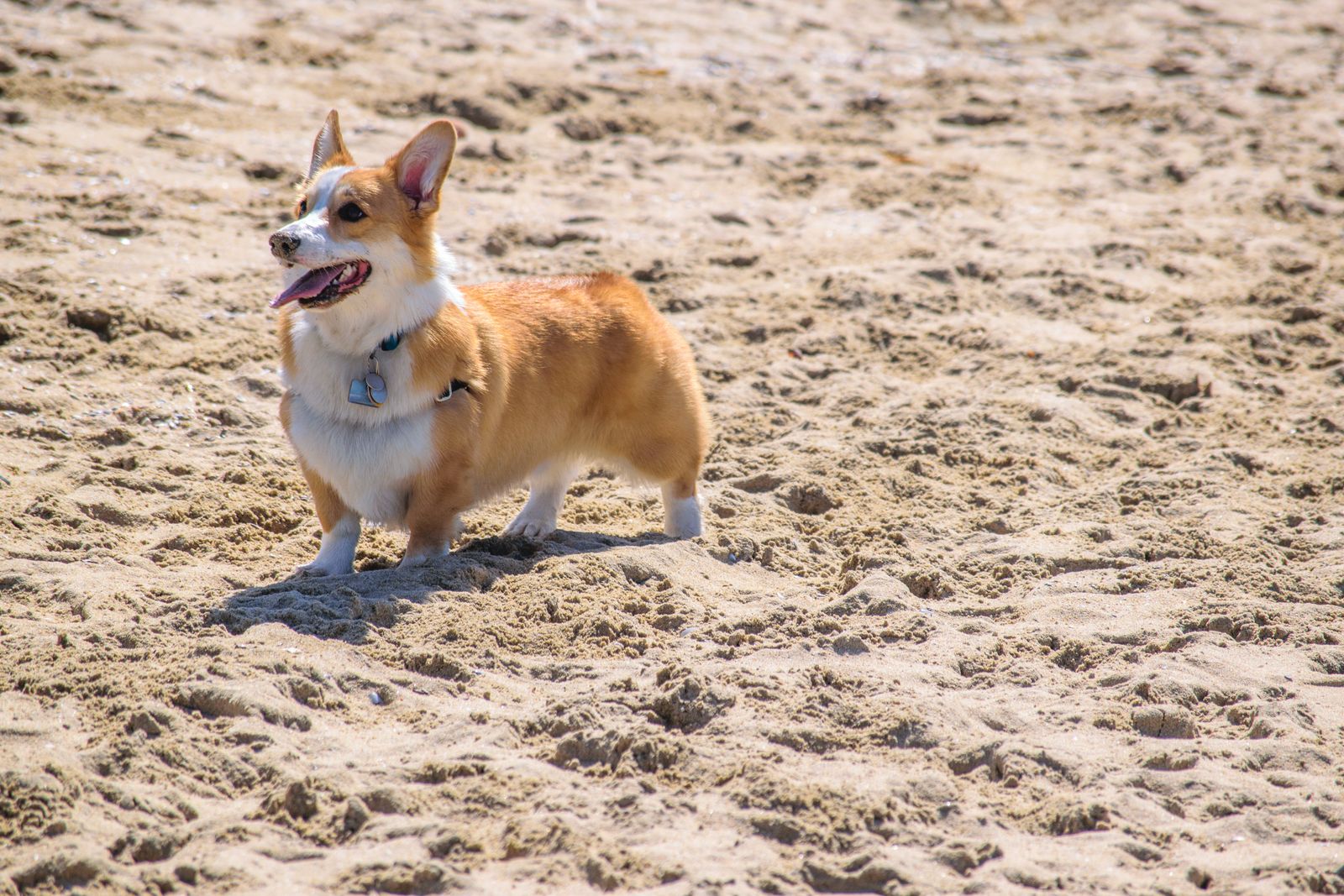
Pembroke Welsh Corgi snapshot
The American Kennel Club describes the Pembroke Welsh Corgi as a strong, athletic, and lively little herder who is affectionate and companionable without being needy, and one of the most popular herding breeds in the world. The breed ranked No. 15 in AKC registrations for 2024. The Pembroke Welsh Corgi Club of America calls the breed a true dwarf, or chondrodysplastic, breed: despite its smaller size, a Pembroke is proportionally built just like the larger, normal sized dogs. That one sentence explains most of this page. The dog is not a scaled down version of a herder. It is a herder's body on shortened legs, with a long spine doing the work in between, and it was bred to spend its days driving cattle by staying low and quick.
| Height | 10 to 12 inches at the highest point of the shoulders. |
|---|---|
| Weight | In proportion to size, not exceeding 30 pounds for males and 28 pounds for females. A medium sized dog in show condition weighs approximately 27 pounds, and a female approximately 25 pounds. |
| Lifespan | 12 to 15 years, as listed by the AKC. |
| Coat | A medium length double coat, with a short, thick, weather resistant undercoat and a coarser, longer outer coat. It sheds, and sheds heavily at times. |
| Temperament | Affectionate and companionable without being needy, with a bold but kindly outlook and an intelligent, interested expression. |
| Energy and exercise | High for its size. A cattle herder bred for a full day of work, it needs daily exercise and a job for its brain, and a pet home has to supply both on purpose. |
Two snapshot facts shape the insurance picture. The first is the build. A long back on short legs is the chondrodystrophic shape, and Cornell's veterinary guidance lists the Pembroke Welsh Corgi by name among the breeds predisposed to the disc disease that shape brings with it. The second is the weight line in the standard itself. The breed's own standard caps a male at 30 pounds, which means a pet Corgi carrying even a few extra pounds is carrying them well past the proportions the breed was designed for, on a spine and a set of hips that were never built for the load. The scale is not a cosmetic topic in this breed. It is a structural one.
Health tendencies in Pembroke Welsh Corgis
The Pembroke Welsh Corgi Club of America describes the breed as relatively healthy, with a few health concerns that affect it, and it names the screening its breeders use: many test for hip dysplasia, eye disorders, and von Willebrand disease, and further screening is available for elbow dysplasia, cardiac health, and degenerative myelopathy. The six cards below cover the conditions that most shape an insurance decision for this breed. Two of them are diseases of the same spine, and they behave in opposite ways, which is why this guide separates them carefully. They are tendencies, not predictions about an individual dog.
This section is general information about conditions a breed can be prone to. It is not veterinary advice and it is not a diagnosis of any dog. Signs listed here are possible signs owners may notice, and many of them have several causes. Only a veterinarian who examines your dog can say what a sign means.
Intervertebral disc disease (IVDD)
What it is
A disease of the discs that cushion the spine. Cornell's Riney Canine Health Center explains that in chondrodystrophic breeds, the soft center of the disc hardens prematurely at an early age, from birth to one year of age, and that this degeneration can lead to Type I disc disease, in which the center of the disc ruptures through tears in its outer layer and presses on the spinal cord and nerves. Cornell lists the Pembroke Welsh Corgi by name among the predisposed breeds, alongside its Cardigan cousin and the Dachshund. In a long backed breed, this is the sudden version of the spine story: a disc that has been quietly hardening since puppyhood can rupture on an ordinary day, on a jump down from a sofa or a twist on the stairs.
Signs owners may notice
- Yelping when moving, when being petted, or when being lifted, or a dog that suddenly guards its back or neck.
- A stiff neck or an arched back, and reluctance to jump, walk, or climb.
- Wobbliness or loss of coordination in the back legs, knuckling, or dragging a paw.
- Sudden or gradual weakness in the hind legs.
How vets usually evaluate and treat it
Evaluation starts with the clinical signs and a physical and neurologic examination. Cornell notes that X-rays may show disc calcification or a narrowed disc space, and that advanced imaging such as CT or MRI shows the detail a surgeon needs. Treatment splits by severity. Milder cases may be treated with strict rest and pain medication. More severe cases may warrant surgery to take the pressure off the spinal cord. Cornell adds two management points that matter for the rest of this guide: maintain an ideal body condition, and modify activities to put less stress on the spine, such as providing steps or ramps to reduce jumping on and off objects.
Degenerative myelopathy (DM)
What it is
A slow, progressive disease of the spinal cord in older dogs, and the second, very different spine disease in this breed. The Pembroke Welsh Corgi Club of America publishes a detailed explanation of degenerative myelopathy written for the breed by Dr. Jerold S. Bell of the Cummings School of Veterinary Medicine at Tufts University. It describes DM as a specific genetic disease causing spinal cord degeneration, with a complex mode of inheritance in which more than one gene pair has to combine to cause a clinically affected dog. Signs usually begin between 8 and 14 years of age, and the average age of onset in Pembroke Welsh Corgis is 11 years. Unlike disc disease, DM is not painful. It is a loss of coordination and then of function. There is no treatment that alters its progression, and a confirmed diagnosis can only be made by examining the spinal cord after death, because several other disorders, including disc disease, can imitate its signs.
Signs owners may notice
- Weakness in the hind legs that builds slowly over months, not days.
- Scuffing of the hind toes, worn nails on the back feet, or crossing of the hind legs when walking.
- A swaying, uncoordinated back end, progressing to dragging of the hind legs.
- In advanced disease, loss of bladder and bowel control and weakness reaching the front legs.
When it can be urgent
Degenerative myelopathy itself moves slowly, over 6 months to 2 years in the breed club's account. Weakness that arrives suddenly, or any sign of pain alongside weakness, does not fit that pattern and needs prompt or emergency care, because a sudden, painful presentation points back toward disc disease or another treatable problem, not toward DM.
How vets usually evaluate and treat it
Evaluation is largely a process of ruling out the lookalikes. A neurologic examination, and imaging where a vet needs to exclude disc disease or another compressive problem, come before anyone leans on the DM label. The DNA test for the sod1 gene mutation is the piece owners most often misunderstand. The breed club's explanation reports that, in Pembrokes, 52.7% of the breed tests homozygous at risk for the sod1 mutation, 35.1% test as carriers, and 12.2% test homozygous normal, and that on average only about 1.1% of Pembrokes testing homozygous at risk become clinically affected, because a second, still unidentified gene or genes must also be present. OFA adds that variants in a second gene, SP110, modify the risk further in this breed, and it offers a risk modifier test for Pembrokes that test at risk. Care for an affected dog is supportive: nursing care, mobility help, and, as the breed club notes, a canine wheelchair can keep a dog mobile as the disease advances.
One back, two diseases: telling the spine stories apart
This breed carries two spinal diseases that can look similar in a living room and are opposites in the clinic. An owner who can describe which pattern a dog is showing gives the vet a head start, and gives an insurer a cleaner record. The table below is a description aid, not a diagnosis. Only a veterinarian who examines the dog can say which condition, if either, is present.
| Disc disease (IVDD) | Degenerative myelopathy (DM) | |
|---|---|---|
| Speed | Sudden, over hours or days, sometimes on a jump or a twist. | Slow, over 6 months to 2 years. |
| Pain | Usually painful: yelping, a guarded back, a tense belly. | Not painful. The breed club describes it as a loss of motor and sensory function, not a pain condition. |
| Typical age | Usually first recognized in young adult dogs. | Signs usually begin between 8 and 14 years, with an average onset of 11 in this breed. |
| First signs | Back or neck pain, reluctance to jump, then wobbliness or weakness. | Scuffed hind toes, crossing hind legs, a swaying back end, in a dog that seems comfortable. |
| First step | Same day or emergency care, especially if the legs are failing. Early intervention gives the best outcome. | A prompt routine appointment for a neurologic workup that rules out the treatable lookalikes, disc disease first. |
| Insurance shape | Imaging, possible surgery, rehabilitation. A waiting period and prior back notes decide the claim. | Diagnostics and supportive care over years. Genetic test wording and renewal terms decide the claim. |
Hip dysplasia
What it is
An inherited looseness of the hip joint. The ball and socket fit poorly, the joint wears unevenly, and arthritis follows. Cornell's Riney Canine Health Center describes the hip forming incorrectly, leading to laxity, and laxity leading over time to arthritis, pain, and discomfort. Owners are sometimes surprised to find hips on a small breed's screening list, but the breed club recommendations the AKC publishes for the Pembroke Welsh Corgi include a hip evaluation, done as an OFA radiographic evaluation or a PennHIP evaluation, and the club's own health page tells puppy buyers to ask whether the sire and dam were screened clear of hip dysplasia by one of those routes. A compact dog still carries its whole weight on the same four joints, and a long backed dog that is also carrying extra pounds loads those joints harder.
Signs owners may notice
- Difficulty getting up, or stiffness in the back legs after rest.
- Bunny hopping when running, or a swaying movement in the hips when walking.
- Reduced activity, or new unwillingness to jump and climb.
- Loss of muscle over the hindquarters, or a dog that shifts its weight toward the front legs.
When it can be urgent
Hip dysplasia is a slow condition and a routine appointment problem. A dog that suddenly cannot bear weight on a back leg, or cries out when the hip is moved, may have an injury or a spinal problem rather than arthritis, and that change deserves prompt care.
How vets usually evaluate and treat it
Cornell explains that hip dysplasia is diagnosed by X-rays combined with a physical examination and palpation of the joint, with the dog sedated or anesthetized for the positioning the images need. The screening evaluations used for breeding dogs measure the joint itself: the PennHIP method measures laxity, and OFA grading rests on radiographs taken after the dog is two years old, with a provisional route for younger dogs. In a pet dog with signs, treatment usually starts with the same foundation as disc care in this breed, a healthy body weight, low impact exercise such as walking and swimming, pain medication where a vet advises it, and physical therapy. Surgery is a category for dogs whose pain does not respond to medical management, and Cornell notes that the femoral head ostectomy route is more common for small to medium sized dogs, which is the size class a Corgi actually sits in.
Excess weight and obesity
What it is
This is the one card in this guide that is not an inherited disease. It is the multiplier on all the others. Cornell's guidance on obesity and weight loss in dogs explains that obesity affects nearly every major organ and body system and often leads to shorter lifespans, that its most common risk is worsening arthritis because extra weight increases the stress on bones, joints, and muscles, and that fat tissue itself releases substances that keep inflammation going. Read that against this breed's shape. Every extra pound is carried by a long spine whose discs hardened early, and by hips that the breed screens precisely because they can fit poorly. Cornell's disc guidance makes the connection explicit by listing an ideal body condition as part of disc disease care, and its hip guidance does the same for joint care. In most breeds, weight is a general health topic. In this breed, it is a back topic and a hip topic wearing a food label.
Signs owners may notice
- Ribs that are hard to feel under a layer of fat, when Cornell's ideal is ribs that can be felt but not seen.
- No tucked waist when the dog is viewed from above, and no tuck of the abdomen from the side.
- A body condition score above the ideal range. Cornell describes the score running from 1 to 9, with 4 or 5 being ideal.
- Slowing down on exercise, heavier breathing after ordinary effort, or new stiffness that tracks with the weight gain.
When it can be urgent
Weight gain itself is a routine appointment topic, and Cornell advises working with a veterinarian on a weight loss program rather than cutting food sharply on your own. Sudden weight gain over days, a swollen belly, or weight gain arriving with marked lethargy or breathing difficulty is a same day problem, because rapid change points to something other than food.
How vets usually evaluate and treat it
A vet evaluates with a weight, a weight history, and a body condition score, then sets a target weight with the owner. Cornell's program elements are portioned feeding instead of free choice feeding, measured food rather than heaped servings, treats kept to a small share of the day's intake, a weight loss diet where the vet recommends one, and low impact exercise such as walking or swimming added to the food change, not substituted for it. Cornell also advises weighing the dog at least every two weeks during a weight loss plan, which is exactly the habit the record tool in this guide is built around. One honest caution from the same source: in an otherwise healthy dog the common causes are feeding patterns, but medical conditions such as an underactive thyroid can also play a role, so a dog that gains on a measured diet deserves a medical look, not just a smaller bowl.
Inherited eye conditions (progressive retinal atrophy)
What it is
The breed club health program answers this breed's eye risk with examinations: the recommendations the AKC publishes for the Pembroke Welsh Corgi include an ophthalmologist evaluation for breeding dogs, and the club tells buyers to ask whether the parents' eyes were certified clear of inherited conditions by a certified veterinary ophthalmologist. The condition with a DNA test in this breed is progressive retinal atrophy, in its rod cone dysplasia 3 form, which the AKC lists among the DNA tests identified in the breed. The Merck Veterinary Manual describes progressive retinal atrophy as a group of diseases that cause degeneration of the retina. The first sign is usually night blindness, vision loss progresses to total blindness over a period ranging from months to years, and no effective treatment is available. DNA tests, Merck notes, have been developed to detect carrier and affected dogs before signs develop in many breeds.
Signs owners may notice
- Hesitation in dim light or at night, the usual first sign of retinal degeneration.
- Bumping into furniture that has moved, or new clumsiness in unfamiliar rooms.
- Eyes that shine more than usual in photographs or low light, or pupils that stay wide.
- A cloudy look inside the pupil later on, because cataracts are common late in the course of retinal disease.
When it can be urgent
Gradual vision change is a prompt appointment. A suddenly painful, red, or cloudy eye, or vision loss that arrives over days rather than months, is a same day problem, because sudden eye signs point to other conditions, such as glaucoma or retinal detachment, where time protects sight.
How vets usually evaluate and treat it
A veterinarian examines the back of the eye for the retinal changes that fit this disease, and Merck notes the condition can be confirmed with electroretinography, a specialized test that measures the electrical responses of the eye. The yearly style certification examination used in breeding programs is a screening exam: it records what the eye shows that day, and a normal result is a dated record, not a lifetime guarantee. Because there is no treatment that restores vision, care focuses on confirming the diagnosis, separating retinal disease from a cataract that might be treated on its own merits, and helping the dog adapt as sight fades.
Von Willebrand disease (type I)
What it is
An inherited bleeding disorder in which the blood does not clot properly. Cornell's Riney Canine Health Center describes von Willebrand disease as the most common inherited bleeding disorder in dogs, caused by a protein, von Willebrand factor, that is reduced, dysfunctional, or absent. Cornell lists the Pembroke Welsh Corgi among the breeds predisposed to the type I form, which is a partial deficiency of the protein and carries a mild to moderate bleeding risk, and the breed club names von Willebrand testing among the tests its breeders commonly perform. Many affected dogs show no sign at all in ordinary life. The disorder declares itself at the moments blood has to clot on demand: a surgery, a dental extraction, or an injury.
Signs owners may notice
- Bruising that appears easily, or skin bleeding from minor wounds.
- Bleeding from the gums, including during teething or chewing, or nosebleeds.
- Blood in the urine, or dark, tarry stools that suggest bleeding in the gut.
- Bleeding that runs longer than expected after a surgery or a lost tooth.
How vets usually evaluate and treat it
Cornell explains that a vet may start with bloodwork to rule out other bleeding disorders, then a simple test that times how quickly a clot forms at the gum, and then a blood test that measures the amount of von Willebrand factor for a definitive diagnosis. A DNA test identifies dogs at risk, and Cornell advises that genetic results be followed by blood measurement of the factor itself to assess the actual bleeding risk. There is no cure. Management is planning: medications or blood products such as cryoprecipitate or fresh frozen plasma can be given before a necessary surgery or to control bleeding, by temporarily raising the amount of the factor in the blood, and a vet may avoid certain common pain medications in these dogs because they can interfere with platelet function and add bleeding risk.
The back and weight record: this breed's working tool
No other breed guide on this site has this section, because no other breed in the series makes one household habit carry this much medical and insurance weight. Cornell's own disc guidance tells Corgi owners to maintain an ideal body condition and to change how the dog moves through the house, with steps or ramps in place of jumping. Its obesity guidance tells owners to weigh the dog regularly during any weight plan. And every spinal claim in this breed turns on dates: when the stiffness was first seen, when the weight started climbing, what the dog was doing the week the back went. A simple record, kept from puppyhood, holds all three threads in one place. Keep it on paper or in a phone note. The format matters less than the dates.
| Date | Weight and body condition | Movement notes | Back and access notes | Action taken |
|---|---|---|---|---|
| The date, every time. An undated note is close to useless later. | The dog's weight, and the body condition score if your vet gives one. Cornell's ideal is a score of 4 or 5 on the 1 to 9 scale. | Stairs taken or refused, jumps on and off furniture, walk distance, any yelp, stiffness, scuffed hind nails, or swaying in the back end. | Ramp in use or not, how the dog is lifted, any new furniture or car the dog has started jumping into. | What you did: nothing, a rest day, a call to the vet, a visit. Write the vet's exact words when there was a visit. |
| Example shape, with invented entries: a weigh-in date. | Weight recorded at the vet or on a home scale, with the score from the visit. | Refused the porch steps twice this week. Scuffing sound from the back feet on the pavement. | Ramp moved to the porch. Dog now lifted with two hands, chest and rear supported, back kept level. | Vet called the same day. Appointment booked, and this note went with the dog. |
The example row is a format example only. Its entries are invented to show the shape of a useful row, and they describe no real dog. What makes the record work in practice is a short set of habits around it:
- Weigh on a rhythm, not on a worry. Monthly for an adult, and at least every two weeks during any weight loss plan, which is the interval Cornell advises. Same scale where you can, so the trend is real.
- Note the first stiffness, not the worst day. The first morning a Corgi is slow to rise, the first refused jump, and the first scuffed nail are the entries that matter, for the vet and for any later claim. Write them the day they happen.
- Record the access changes. When a ramp goes in, when the dog starts being carried up the stairs, when a new car sits higher off the ground, write it down. Cornell names ramps and steps as disc care, and a dated record shows the change was made before a crisis, not after one.
- Lift like the spine is the point, because it is. Support the chest and the rear at the same time and keep the back level, rather than scooping under the belly and letting the long back sag in the middle. Note who in the house has been shown how, because habits drift.
- Bring the record to every vet visit, and ask for the weight and the body condition score to go into the chart. A trend the vet has seen building is a different conversation from a number that appears on the day of a crisis.
- Keep the breeder screening papers with the record. For this breed that means the parents' hip evaluation results and the eye examination records the AKC published recommendations call for, plus any DNA results for degenerative myelopathy, von Willebrand disease, and progressive retinal atrophy, each verified where you can in the OFA database. The record and the screening file together show what was known about this dog, and when it was known.
Read the tool honestly in both directions. A record does not prevent a disc from rupturing, and it does not change what a DNA test says. What it does is remove the two arguments that sink Corgi claims and delay Corgi care: nobody can say when the signs started, and nobody noticed the weight until the back or the hips forced the issue. In a breed where the first sign is so often a small one, a dated line in a notebook is a genuinely medical instrument.
Policy decisions that matter for a Pembroke Welsh Corgi
For a Pembroke Welsh Corgi, the policy table is about the spine at two speeds and the weight underneath both. One spinal disease can need emergency surgery in a young adult, the other needs years of diagnostics and supportive care in a senior, and the hips sit under the same body. The clauses below are the ones that decide whether coverage matches that shape.
| Policy feature | Why it matters for a Pembroke Welsh Corgi | Stronger wording looks like | Watch out for |
|---|---|---|---|
| Hereditary condition coverage | Disc disease in a chondrodystrophic breed, degenerative myelopathy, hip dysplasia, inherited eye disease, and von Willebrand disease make up most of the breed list. | Hereditary and congenital conditions are covered on the same terms as other illnesses. | Hereditary exclusions, or breed specific exclusions aimed at dwarf or chondrodystrophic breeds and their backs. |
| Spinal and orthopedic waiting periods | Disc disease is usually first recognized in young adult dogs, so a long spinal waiting period is a real exposure window, not a technicality. | The spinal waiting period is stated plainly, in days, and runs from enrollment without extra conditions. | A general illness waiting period quoted at purchase, with a longer spinal or orthopedic period buried in the full policy text. |
| Pre-existing condition definitions | The first Corgi back signs are small ones: a stiff morning, a refused jump, a yelp on the stairs. Early notes and DNA results both sit near this definition. | A clear definition tied to signs a vet recorded, and a stated position on genetic test results with no clinical signs. | Broad wording that lets one early stiffness note, or an at risk DNA result alone, anchor a denial for later spinal disease. |
| Advanced imaging and specialist coverage | Both spine diseases are diagnosed with specialist help: MRI or CT and a neurology workup for disc disease, and imaging to exclude lookalikes for degenerative myelopathy. | Advanced imaging, neurology referral, and specialist examinations are covered categories for a covered condition. | Imaging that needs a separate approval the emergency cannot wait for, or specialist care capped apart from the condition itself. |
| Rehabilitation and supportive care | Recovery after disc surgery runs through rehabilitation, and degenerative myelopathy care is supportive by definition: therapy, nursing, and mobility equipment. | Rehabilitation after a covered surgery is covered, and the policy states how supportive care and mobility aids are treated. | Rehabilitation classed as an optional add on, and carts, harnesses, and therapy excluded as equipment or routine care. |
| Bilateral condition rule | Hips come in pairs, and eye disease in this breed is often a story of both eyes over time. | Each side is judged on its own record, with clear terms for the second side. | Wording that treats the second hip or eye as pre-existing after the first is diagnosed. |
| Chronic and progressive condition renewal terms | Hip arthritis is managed for years, and degenerative myelopathy progresses across renewals once it appears in a senior dog. | A condition covered in one policy term stays covered in later terms while enrollment continues. | Wording that caps a condition per year, ends coverage for a condition at renewal, or reclassifies it as pre-existing. |
| Weight related classifications | Weight management protects the disc and hip claims, but the weight services themselves are usually classed as routine care. | The policy states plainly which nutrition, weight, and preventive services it pays for, and which it does not. | Assuming prescription weight loss food or diet consultations are covered because the orthopedic conditions they protect against are covered. |
Life stages: puppy, adult, and senior
Puppy
The puppy stage is when this breed's file is built and its discs are already changing. Cornell's disc guidance explains that the soft center of the disc hardens from birth to one year of age in chondrodystrophic breeds, so the spine a Corgi will live on is largely set before the first birthday. Collect the breeder screening evidence: the parents' hip evaluation results, as an OFA radiographic result or a PennHIP report, and the dated eye examinations, and keep any DNA results for degenerative myelopathy, von Willebrand disease, and eye disease with them, read the way the breed club teaches, as risk information and not as fate. Start the back and weight record at the first vet visit, teach ramp use and level lifting while the puppy is small enough for the habits to be easy, and enroll in this stage, so the waiting periods run while the record is a clean baseline.
Adult
Adulthood is when the sudden version of the spine story tends to arrive. Disc disease is usually first recognized in young adult dogs, and the adult Corgi is also at its heaviest risk in the plainest sense: a fully grown herder's appetite in a pet home, on a frame the standard caps below 30 pounds. The insurance work of this stage is the record and the scale. Keep the weigh-ins going, note the first stiffness the day it happens, file claims as they arise, and watch the renewal documents each year for changes to spinal, orthopedic, and rehabilitation wording, because those are the clauses an adult Corgi is most likely to use.
Senior
The senior Corgi is where the slow version of the spine story lives. Degenerative myelopathy signs usually begin between 8 and 14 years of age, with an average onset of 11 in this breed, and they arrive in a dog that may also have arthritic hips and fading eyesight from retinal disease. Keep the record going, because in a senior dog the record is how a vet separates a slow, painless decline from a sudden, painful disc episode that needs a different response on a different clock. Review the policy for age based changes and premium increases, and check that a progressive condition diagnosed late in life stays covered across the renewals that follow it.
A claim, step by step: a disc episode in a young adult Corgi
The example below is hypothetical. It is not a real dog, a real claim, or a guarantee of how any insurer will decide. It follows a young adult Pembroke Welsh Corgi through a sudden back episode, the imaging that finds the ruptured disc, surgery, and the rehabilitation that follows, because that full arc is what spinal coverage in this breed has to handle. Pet insurance generally reimburses after you pay the vet, as explained in how pet insurance works.
The morning the back goes
The dog comes down the porch steps slowly, yelps once at the bottom, and will not jump into the car. By afternoon the back is arched, the belly is tense, and the dog refuses the stairs it has used for years. The owner's back and weight record shows the weigh-in from last month and, importantly, no stiffness notes before today. That clean run of ordinary entries is part of the claim file, because it dates the first sign to this morning and not to some earlier, unrecorded month.
The first examination
At the clinic the vet finds back pain on palpation and runs a neurologic examination. The dog is wobbly in the hind legs but can still walk and still feels its toes. With pain present and function partly kept, the first plan is pain medication and strict rest, with clear instructions to return at once if the weakness worsens. The invoice and the examination notes from this visit open the claim, and the neurologic findings, written down while the dog could still walk, become the baseline every later finding is compared against.
When rest is not enough
Two days later the dog is worse, dragging one hind paw and knuckling on the other. That change moves the case out of the rest and medication category. The vet refers the dog to a neurology service the same day. This is the point in the story where the policy's specialist and imaging clauses stop being abstract. A referral that a policy treats as a covered category for a covered condition flows. One that needs a separate approval step costs the dog time it may not have.
The imaging that names it
At the referral hospital, an MRI shows a ruptured disc pressing on the spinal cord in the middle of the back, the Type I pattern Cornell describes for chondrodystrophic breeds. The scan report is the single most important page in the file. It converts a story about a sore back into a located, dated diagnosis, and it is the document the surgeon operates from and the insurer reads first.
Checking the waiting period and the record
On paper, the insurer lines the diagnosis up against the policy dates. The dog was enrolled as a puppy, the spinal waiting period ended long before this week, and the back and weight record shows no earlier back note. The hard question in a Corgi claim is usually whether an earlier vague entry, a stiff morning or a reluctance to jump from a year ago, was the same condition announcing itself. A record that shows ordinary, dated entries with no back signs is the strongest answer an owner can give, and like the enrollment date itself, it cannot be created after the fact.
Surgery, and submitting the claim
The surgeon removes the disc material pressing on the cord, and the dog stays at the hospital while hind leg function is monitored. The claim is filed with the whole arc at once: the first clinic's invoice and neurologic notes, the referral records, the MRI report, and the surgery and hospital invoices. Filing the story complete matters in spinal cases, because the diagnosis only makes sense as a sequence: pain, worsening function, imaging, decompression.
Rehabilitation, and how reimbursement works
Recovery settles into controlled rest, then a rehabilitation program of managed exercise and strengthening as the surgeon directs, with the back and weight record now doing double duty as the recovery log. Each eligible bill moves through the same mechanics described in what pet insurance costs and why. Charges count against the deductible first, the policy's reimbursement rate applies to eligible charges after that, and totals are tracked against the annual limit. The pressure points in this breed's story are rehabilitation billed after the surgical claim closes, a second disc episode at a different level read as the same condition rather than a new one, and any earlier stiffness note read as the true start date. Each of those is a clause question, and each can be asked in writing before you buy.
What drives a Pembroke Welsh Corgi premium
No responsible guide will name a price for your dog, because the quote depends on the dog, the address, and the settings chosen. What can be explained is the shape of Corgi pricing and the choices that move it. The full mechanics are in what pet insurance costs and why.
Breed risk profile. Insurers see a small dog with a big dog's risk list: a surgical spine condition in young adults, a progressive spinal disease in seniors, screened hips, and inherited eye and bleeding conditions. That profile prices differently from a breed of the same size whose risks are mostly minor and short lived. The diagnostic pattern matters too, because this breed's serious conditions are found by imaging and specialist examination, which are covered cost categories an insurer expects to fund.
Size, honestly assessed. A Corgi is a small to medium dog, and size based costs such as medication doses and anesthesia scale lower than they do for the large breeds in this series. The honest point runs the other way: the expensive Corgi events are not size driven. Spinal imaging, spinal surgery, and neurology care cost what they cost because of the specialty involved, not because of the size of the dog on the table.
Age curve and lifespan. Premiums generally rise with age, and the AKC lifespan range for this breed runs from 12 to 15 years, which means a Corgi policy is renewed through the whole senior stretch where degenerative myelopathy and hip arthritis live. A cheaper policy with per condition caps can cost more across a long life than a stronger one, because the caps bite again in every year of a condition that is managed, rather than finished.
Location and plan settings. Vet prices in your area set the bill sizes the insurer expects, and your deductible, reimbursement rate, and annual limit choices trade premium against claim returns. One honest note for this breed. A lean weight record and a complete breeder screening file are valuable evidence and good ownership, but do not expect either to lower a quote. Insurers price the breed and the dog's own record, not the care the owner took before enrolling.
Pre-purchase checklist for a Pembroke Welsh Corgi policy
- Collect the breeder screening evidence first: the parents' hip evaluation results and dated eye examinations, plus any DNA results for degenerative myelopathy, von Willebrand disease, and progressive retinal atrophy, and verify what you can in the OFA database.
- Confirm hereditary conditions are covered, including disc disease, degenerative myelopathy, hip dysplasia, inherited eye disease, and von Willebrand disease.
- Read the spinal and orthopedic waiting period in the full policy text, not only the general illness waiting period.
- Read the pre-existing definition against this breed's reality of small, early back signs, and ask how a genetic test result with no clinical signs is treated.
- Check that MRI and CT imaging, neurology referral, spinal surgery, and post surgical rehabilitation are covered categories.
- Ask how supportive care for a progressive condition is classified, including rehabilitation and mobility equipment such as a cart.
- Read the bilateral clause for hips and eyes, and the renewal terms for chronic and progressive conditions.
- Ask what weight related services are and are not covered, so the weight plan in the record tool runs on honest expectations.
- Start the back and weight record at the first vet visit, and enroll as a puppy, before any back, hip, eye, or weight note enters the medical record.
Questions to ask an insurer, in writing
- Is intervertebral disc disease covered for a chondrodystrophic breed, and what waiting period applies to spinal conditions specifically?
- How do you treat an at risk degenerative myelopathy DNA result, with no clinical signs, if my dog later develops spinal disease?
- Are MRI imaging, a neurology referral, spinal surgery, and rehabilitation after that surgery all covered categories?
- If my dog ruptures a second disc at a different level in a later year, is that the same condition or a new one under your wording?
- How are rehabilitation, nursing care, and mobility equipment such as a wheelchair cart classified for a progressive spinal condition?
- How does the bilateral rule treat the second hip, and how is a note about excess weight in the record treated when an orthopedic claim is filed?
Questions Pembroke Welsh Corgi owners ask
Does pet insurance cover disc disease (IVDD) in Pembroke Welsh Corgis?
An accident and illness policy can cover intervertebral disc disease when hereditary conditions are included, any spinal or orthopedic waiting period has passed, and no back signs were recorded before enrollment. That last point is where Corgi claims are won and lost. A single early note about stiffness, a yelp on the stairs, or reluctance to jump can be read as the start of the condition, so enroll before the first back note exists and check the spinal waiting period in writing.
My Corgi's DNA test says at risk for degenerative myelopathy. Is DM now pre-existing?
A DNA result is a risk result, not a diagnosis, and the breed club's own explanation stresses that most at risk Pembrokes never develop clinical degenerative myelopathy. Policies differ in how they treat genetic test results, though, so ask in writing whether an at risk SOD1 result, by itself and with no clinical signs, affects coverage for later spinal disease. Keep the answer with the test report, and keep dated notes showing your dog moving normally.
Does pet insurance cover hip dysplasia in a small breed like the Corgi?
It can, when hereditary conditions are covered and the orthopedic waiting period has passed. Hip dysplasia is not only a large breed problem. The national breed club recommendations the AKC publishes for the Pembroke Welsh Corgi include a hip evaluation for breeding dogs, done as an OFA radiographic evaluation or a PennHIP evaluation, alongside an eye examination. Ask how the bilateral rule treats the second hip, and whether screening X-rays of a dog with no signs count as covered care or as preventive care the policy does not pay for.
Is von Willebrand disease covered, and why does it matter for a Corgi?
Von Willebrand disease is an inherited bleeding disorder, and Cornell lists the Pembroke Welsh Corgi among the breeds that carry the type I form. It matters most at surgery, including routine surgery such as a spay, a neuter, or a dental cleaning with extractions. Ask whether blood products and the medications used to support clotting during a covered procedure are covered categories, and tell your vet the DNA result before any operation, whether or not insurance is involved.
Are inherited eye conditions like progressive retinal atrophy covered for Corgis?
They can be, when eye disorders are covered and hereditary conditions are not carved out. The AKC identifies a DNA test for progressive retinal atrophy, rod cone dysplasia 3, in this breed, and the breed club program answers the wider eye risk with examinations by a veterinary ophthalmologist. Progressive retinal atrophy causes gradual vision loss and has no treatment that restores sight, so the practical coverage questions are the specialist examinations that detect and monitor it, and the care around a dog that is losing its sight.
When is the best time to enroll a Pembroke Welsh Corgi?
As a puppy, before the first back, hip, eye, or weight note is in the medical record, and early enough that any spinal or orthopedic waiting period runs out while the dog is young and well. Disc disease in this breed is usually first recognized in young adult dogs, and degenerative myelopathy belongs to the senior years, so a policy started in puppyhood is in place for both ends of the spine story. Start the back and weight record in this guide at the same first vet visit.
Sources and further reading
- American Kennel Club, Pembroke Welsh Corgi breed page for size, weight, lifespan, coat, temperament, and the breed's standing among registered breeds.
- American Kennel Club, Herding Group health testing requirements for the national breed club recommendations for the Pembroke Welsh Corgi: a hip evaluation and an ophthalmologist evaluation.
- American Kennel Club, breed specific DNA testing recommendations for the DNA tests identified in this breed, including progressive retinal atrophy rod cone dysplasia 3, von Willebrand disease I, degenerative myelopathy, and the chondrodystrophy and disc disease risk factor.
- Pembroke Welsh Corgi Club of America, Official AKC Breed Standard for height, the weight limits and preferred weights, the foxy head and expression, and the medium length double coat.
- Pembroke Welsh Corgi Club of America, Health and Genetics for the breed as a true dwarf (chondrodysplastic) breed, the conditions breeders test for, the buyer questions about hip and eye screening, and typical lifespan.
- Pembroke Welsh Corgi Club of America, Canine Degenerative Myelopathy and Genetic Testing in PWCs, by Dr. Jerold S. Bell, Tufts University for the signs and progression of degenerative myelopathy, its age of onset in this breed, the sod1 test frequencies in Pembrokes, and why the test result alone is a poor predictor of clinical disease.
- Cornell Riney Canine Health Center, Chondrodystrophy and intervertebral disc disease (CDDY/IVDD) for the early hardening of the disc in chondrodystrophic breeds, the Pembroke Welsh Corgi's breed predisposition, signs, imaging, rest and surgery, ideal body condition, and ramps.
- Cornell Riney Canine Health Center, Canine hip dysplasia for joint looseness leading to arthritis, diagnosis by radiographs and palpation, OFA and PennHIP evaluation, weight control, and surgical categories.
- Cornell Riney Canine Health Center, Obesity and weight loss in dogs for the risks of obesity, the body condition score and its ideal range, portioned feeding, and regular weighing during a weight loss plan.
- Cornell Riney Canine Health Center, Von Willebrand disease for the inherited bleeding disorder, the type I form in Pembroke Welsh Corgis, its signs, the clotting and factor tests, and management around surgery.
- Merck Veterinary Manual, Disorders of the retina, choroid, and optic disk in dogs for progressive retinal atrophy, night blindness as its first sign, confirmation by electroretinography, and the absence of an effective treatment.
- Orthopedic Foundation for Animals, Degenerative Myelopathy Risk Modifier (DMRM) for the Pembroke Welsh Corgi only SP110 risk modifier test, and for the typical ages and progression of degenerative myelopathy.
Sources checked on November 6, 2026.