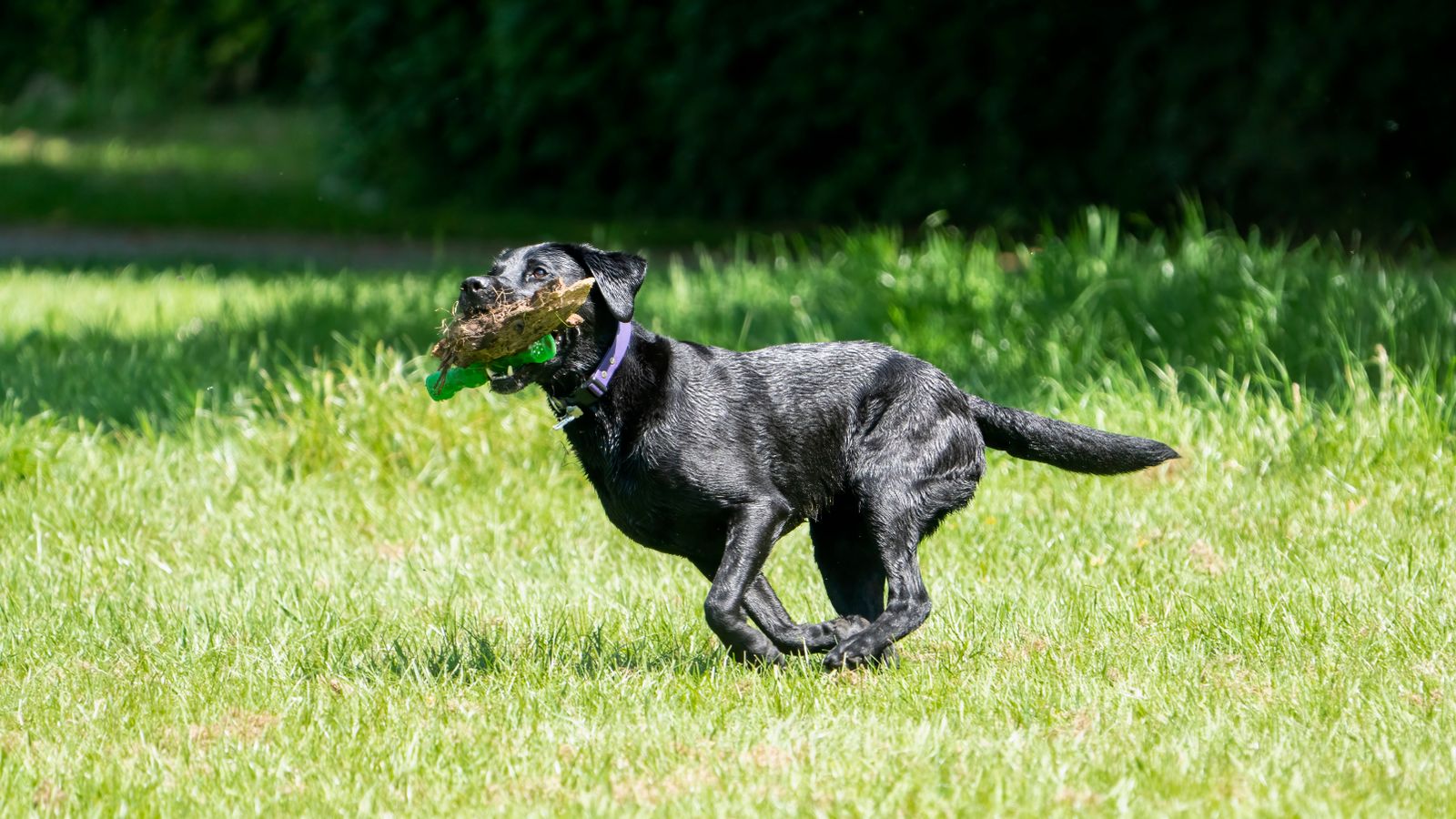
Cruciate ligament injuries at a glance
The cranial cruciate ligament is one of the main stabilisers inside a dog's knee. When it tears, partly or completely, the knee moves in ways it was not built to move. The result is pain, lameness, and, over time, arthritis in the joint. This guide explains the condition in plain language first. It then turns to the insurance questions that decide whether a policy helps, with the second knee and the ligament waiting period at the centre.
| What it is | Damage to the cranial cruciate ligament inside the knee, called the stifle in dogs. The ligament is the counterpart of the ACL in people |
|---|---|
| How it usually happens | Slow degeneration of the ligament over time, shaped by aging, body weight, physical condition, genetics, the shape of the leg, and breed. A sudden trauma to an otherwise healthy ligament is very rare, in the American College of Veterinary Surgeons' description |
| Who is at risk | Dogs of all sizes, breeds, and ages, rarely cats. The American College of Veterinary Surgeons lists a higher incidence in Rottweilers, Newfoundlands, Staffordshire Terriers, Mastiffs, Akitas, Saint Bernards, Chesapeake Bay Retrievers, and Labrador Retrievers |
| Typical first signs | Hind leg lameness, trouble rising or sitting squarely, reluctance to jump into a car, stiffness after rest, and less willingness to play |
| The second knee | The American College of Veterinary Surgeons reports that 40 to 60% of dogs with cruciate disease in one knee will develop a similar problem in the other knee at a future time |
| How it is diagnosed | A hands-on knee examination, testing for the abnormal forward movement of the shin bone. Sedation and X-rays help in subtle or partial cases, and Cornell notes MRI can be used for partial tears that are hard to confirm |
| How it is treated | Surgery to stabilise the knee is typically the best treatment, in the American College of Veterinary Surgeons' assessment. Conservative care with pain medication, strict rest, rehabilitation, and weight control suits some dogs, based on size, age, activity, and instability |
| The insurance question | Whether the policy's bilateral rule keeps the second knee covered, how long the cruciate specific waiting period runs, and whether an earlier limp note makes one knee, or both, pre-existing |
What the cruciate ligament does and how it fails
A dog's knee, which vets call the stifle, joins the thigh bone above to the shin bone below. Inside that joint sits the cranial cruciate ligament. The American College of Veterinary Surgeons, shortened to ACVS in this guide, describes it as one of the most important stabilisers inside the canine knee. Its job is simple to state and hard to replace. It stops the shin bone sliding too far forward under the thigh bone, and it keeps the knee from moving back and forth excessively.
Next to the ligament sits the meniscus, a cartilage-like pad between the two bones. The ACVS describes the meniscus as a shock absorber that also helps with position sensing and load bearing. When the ligament ruptures, the unstable knee can crush or tear the meniscus as well. That is why a dog whose limp seemed to improve can suddenly worsen, and why a clicking sound from the knee matters. The click can point to meniscus damage on top of the ligament injury.
The way this ligament fails surprises most owners. In people, the matching ligament usually tears in a single sporting accident. In dogs, the ACVS is direct. Rupture is usually the result of subtle, slow degeneration that has been taking place over a period of time, rather than the result of sudden trauma to an otherwise healthy ligament, which it calls very rare. The final tear may arrive during ordinary activity, such as a sharp turn at a run or a jump down from a vehicle. The weakness that allowed it built up long before that day.
Partial tearing is part of the same story. The ACVS notes that partial tearing of the ligament is common in dogs, and that a partial tear almost always progresses to a full tear over time. A dog can therefore have a knee that limps after hard exercise, settles with rest, and limps again weeks later, while the ligament frays a little more each time. That on and off pattern is exactly the pattern that creates difficult insurance records, because each early limp can be written into the medical record before anyone names the real problem.
One more distinction matters for everything that follows. Because the failure is usually degeneration, many insurers classify cruciate disease as an illness rather than an accident, whatever the final moment looked like. Some sample policies state this in so many words, listing cruciate ligament injuries among the conditions that will be considered illness conditions under the policy. That single classification decides which waiting period applies, which part of the policy pays, and whether an accident only plan responds at all. It is the first sentence to look for in any policy you are judging for a dog at risk.
Signs at home, sorted by what to do next
Owners usually meet cruciate disease as a change in how a dog moves, not as a diagnosis. A dog that sits with one hind leg stuck out to the side, hesitates at the car, or goes lame after a run is telling you something about a knee. The table below sorts the common signs by the response they call for. It is general information, not a diagnosis. Signs like these can have other causes, including hip problems, a kneecap that slips out of place, or a fracture, and only a veterinarian who examines your dog can say what is going on. When in doubt, treat the sign as one level more urgent than the table suggests, and call your vet.
| What you see | What it can mean | What to do next | Write this down |
|---|---|---|---|
| Stiffness after rest, a mild limp after long exercise, or less willingness to play and jump | An early or partial ligament problem, or another joint problem in its early stage. The ACVS lists lameness that shows mainly after rest among the common signs | Book a vet appointment this week. Rest the dog meanwhile. Leash walks for the toilet only, no running, no stairs where you can avoid them. Do not wait for months to see if it clears, because the record of an early examination protects both the knee and a future claim | The date you first noticed it, which leg it is, and what activity came just before it |
| Difficulty rising from a sit, trouble sitting squarely, or sitting with the affected leg out to the side | The knee hurts or feels unstable when it bends. Vets use the sitting pattern itself as a clue, and the ACVS lists difficulty sitting among its signs | Book a vet appointment promptly. Note whether it is always the same leg. Help the dog into the car rather than letting it jump | Which leg sits out, and whether the dog can rise without help on a hard floor |
| Sudden hind leg lameness during or just after running, sometimes with a yelp. Holding the leg up, or touching only the toe to the ground | A partial tear completing, or a full rupture. The knee has lost its main stabiliser | Call the vet today. Keep the dog still and on a leash. Do not test the leg by encouraging a run or a jump to see how bad it is | The time it happened, what the dog was doing, and whether any weight goes on the leg at all |
| A popping or clicking sound from the knee, a knee that looks thicker than the other side, or a limp that suddenly worsens after a period of improving | Possible meniscus damage inside the unstable knee, or scar tissue building on the inside of the shin bone, which the ACVS lists as firm swelling | Call the vet today, and say the knee clicks. Keep activity to leash toilet breaks until the dog is seen | When the clicking is heard, and whether the knee looks swollen compared with the other side |
| The dog will not bear any weight after a fall or a collision. A knee or leg that swells fast, or a leg held at a strange angle | This combination can involve a fracture or another injury on top of, or instead of, a ligament tear | Same-day urgent care. Carry or support the dog rather than walking it. A possible fracture changes the first steps, and only an examination with imaging can separate the causes | The time of the fall or collision, and what the dog landed on |
The last column matters beyond the vet visit. The notes you make in the first days become part of the story an insurer reads later. A dated note that says when the limp started, which leg it was, and where the dog was examined is worth more than a memory rebuilt at claim time. It also helps your vet. A ligament that has been failing slowly leaves a timeline, and your timeline is evidence of when signs truly began.
Which dogs are at risk, and why
Cruciate disease can affect dogs of all sizes, breeds, and ages, and the ACVS notes it rarely affects cats. The risk is not spread evenly, though, and the unevenness matters for insurance because it tells you which clauses to read first.
The ACVS lists the breeds known to have a higher incidence. They are the Rottweiler, Newfoundland, Staffordshire Terrier, Mastiff, Akita, Saint Bernard, Chesapeake Bay Retriever, and Labrador Retriever. It adds that a genetic mode of inheritance has been shown for Newfoundlands and Labrador Retrievers. At the other end, it lists Greyhounds, Dachshunds, Basset Hounds, and Old English Sheepdogs as less often affected. If your breed is on the higher incidence list, the cruciate sections of any policy deserve the same attention you would give the headline price.
Body shape and body weight do much of the rest of the work. The ACVS names the combination plainly. Aging of the ligament, obesity, poor physical condition, genetics, conformation, which means the skeletal shape and configuration of the leg, and breed. Two of those factors sit in the owner's hands. The ACVS calls poor physical body condition and excessive body weight risk factors for the development of cruciate disease, and notes that both can be influenced by pet owners. Its advice is consistent physical conditioning with regular activity, and close monitoring of food intake to keep the dog lean. A lean, steadily exercised dog loads its knees less on every step, and arrives at any injury in better shape to recover.
The sporting dog adds a field version of the same risk. A dog that turns at speed, launches after a ball, or works uneven ground asks more of the ligament on every outing. Our guide to pet insurance for German Shorthaired Pointers covers that athletic pattern, including the training log that separates an injury story from a slow degeneration story at claim time. For the two breeds where cruciate disease shapes the whole policy decision on this site, see our guides to pet insurance for Labrador Retrievers and pet insurance for Rottweilers. The full list of breed guides is on the breed guides hub, and every condition guide is collected on the condition guides hub.
How a veterinarian diagnoses a cruciate injury
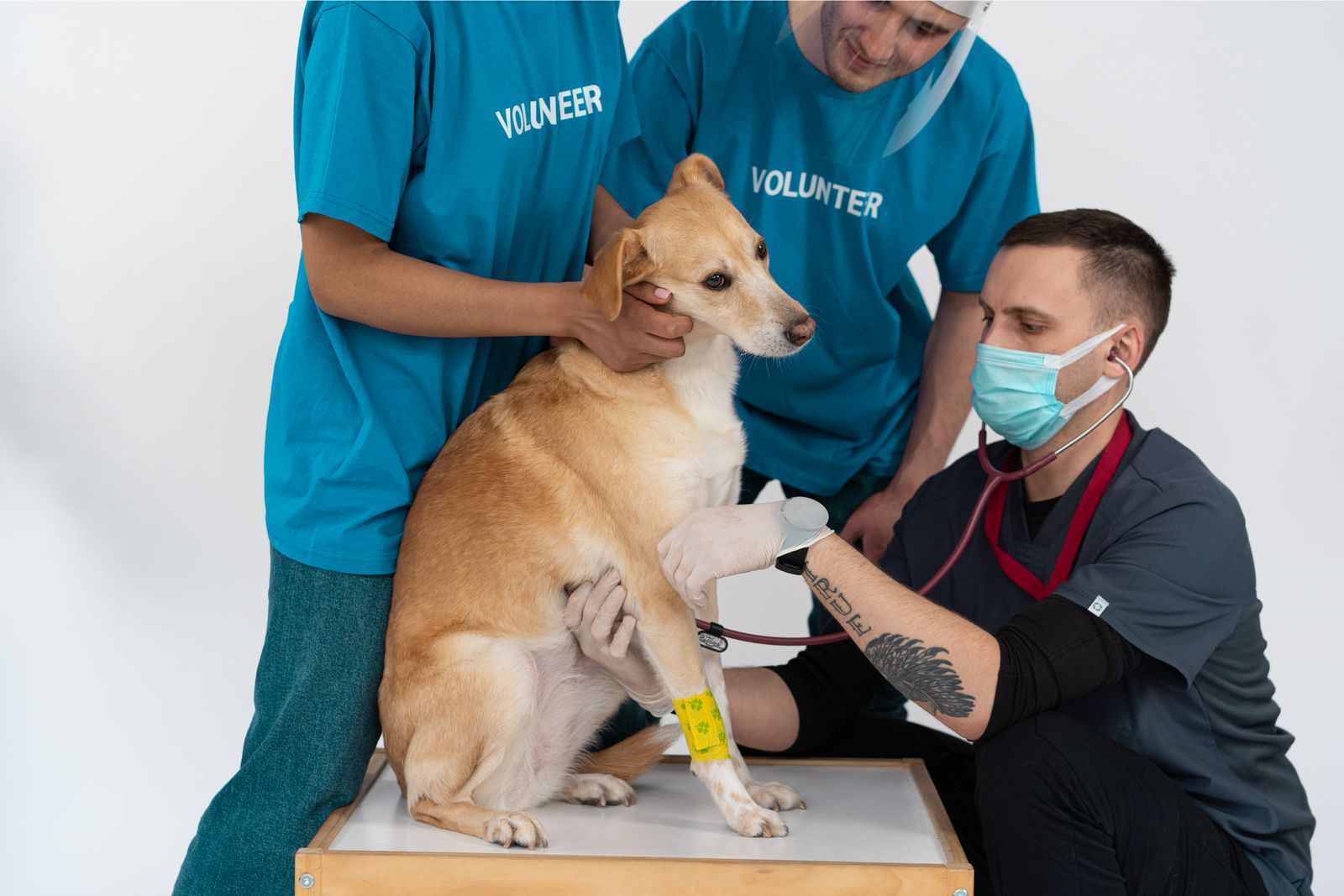
Diagnosis is hands-on first. Cornell's Orthopedic Surgery Service describes a ruptured knee ligament as diagnosed by palpation and X-ray, with MRI available for subtle cases involving partial tears. Palpation means the vet feels and moves the knee by hand. The ACVS names the two tests that settle it. The vet checks for the cranial drawer sign, which is abnormal forward motion of the shin bone, and for tibial thrust, a related movement under load. In an acute, complete rupture these movements are easy to find. In a chronic or partial tear they can be subtle.
That subtlety is why sedation and imaging enter the picture. The ACVS notes that mild sedation, to let the muscles relax, and radiographs, to show arthritic changes and swelling, may be necessary to reach a diagnosis. Radiographs, which are X-rays, do not show the ligament itself. They show the joint around it, they support the examination findings in difficult cases, and they are required for surgical planning when surgery follows. Before surgery, or before anti-inflammatory pain medication is started, the vet will also usually check recent bloodwork, because the dog's overall health matters before orthopedic surgery or certain medications.
For insurance, the diagnostic path matters as much as the diagnosis. Policies treat the pieces differently. One plan may cover the examination and X-rays but treat the sedation, or a referral to a surgical specialist, under different rules. Another may ask for the full medical history before it accepts that a tear is new rather than longstanding. The record the vet writes at this visit, including which tests were positive and what the X-rays showed, is the document a claim stands on. Ask for a copy of the examination notes and the imaging report, not only the invoice, and keep them with the claim folder from the start.
Treatment paths: surgery or conservative care
The first major decision is between surgical treatment and non-surgical treatment, which is also called conservative or medical management. The ACVS is clear that the best option depends on the dog, and it names the factors. Activity level, size, age, skeletal conformation, and the degree of knee instability. What follows is a general description of the paths, not a recommendation for any one dog.
Surgical treatment
The ACVS describes surgical treatment as typically the best treatment for cruciate injury, because it is the only way to permanently control the instability in the knee joint. Surgery does not replace the ligament in the way human surgery often does. In dogs, the ligament itself is not replaced. The operations stabilise the knee by other means, and they fall into two broad families.
The first family changes the geometry of the joint. These are the osteotomy techniques, which means techniques that cut and reposition bone. In a tibial plateau leveling osteotomy, shortened to TPLO, the surgeon makes a semicircular cut at the top of the shin bone, rotates the contact surface to a planned position, and fixes it with a bone plate and screws, so the knee stays stable without the ligament. In a tibial tuberosity advancement, shortened to TTA, a cut along the front of the shin bone lets that section move forward to neutralise the forces around the knee, again fixed with implants. The ACVS notes that many surgeons prefer osteotomy techniques for large, active dogs because of their consistent outcomes in athletic patients. Both techniques need several weeks of confinement while the bone heals.
The second family uses suture to do the ligament's job from outside the joint. In extra-capsular suture stabilisation, heavy suture is placed outside the joint in roughly the position the ligament held, which stabilises the knee while scar tissue forms around it. A related technique uses a purpose built suture and small implants passed through tunnels drilled in the thigh and shin bones for more accurate placement. The ACVS notes the suture approach is often less costly, and that it may not be the best choice for larger and younger patients because arthritic changes can develop sooner. Cornell groups the same two families in the same way, extracapsular suture methods that stabilise the knee outside the joint, and tibial osteotomy techniques that change the anatomy of the joint.
Conservative management
Non-surgical treatment, in the ACVS description, usually combines pain medications, exercise modification, joint supplements, physical rehabilitation, and possibly braces or orthotics. Strict activity restriction is the core of it. The ACVS notes that pain medication can improve comfort, but knee pain persists while instability persists, so leash based restriction does most of the work. Over time, the body may stabilise the knee with scar tissue. The honest limits are stated in the same source. The knee stays predisposed to reinjury when the dog returns to activity, a brace carries possible complications such as sores and continued pain, and arthritis can progress over the years with any treatment, though the ACVS expects it to progress more slowly after surgery than after medical management alone.
Whichever path is chosen, the aftercare is owner work. The ACVS stresses that postoperative care at home is critical, with activity restricted for several weeks after surgery, and it lists the complications that discipline guards against, including infection, implant problems, fracture, a later meniscus tear, continued lameness, and muscle loss. It also reports that physical rehabilitation can speed recovery and improve final outcomes regardless of the surgical technique, starting immediately after surgery with passive range of motion, balance work, and controlled leash walks. Rehabilitation after conservative care has the same logic. It strengthens the muscles around a knee that needs all the support it can get.
The second knee problem
No other joint condition on this site makes the paired structure of the body as important as this one. A dog has two knees, two cruciate ligaments, and, in the breeds at risk, the same inherited and body shape factors acting on both. The ligament that failed on the left was not necessarily weaker than the one on the right. It was often simply first.
The ACVS puts a sourced figure on it. It reports that 40 to 60% of dogs that have cruciate disease in one knee will, at some future time, develop a similar problem in the other knee, and its outcome section adds that the second problem usually arrives within the first 12 to 18 months after the first diagnosis. Read that as a planning horizon, not a prediction for your dog. Many dogs never tear the second ligament. Enough do that any policy judged only on the first knee has been judged on half the risk.
This is where the bilateral rule enters, and it is the clause this guide is built around. A bilateral condition is a condition that affects both sides of the body. Sample policies define it with the cruciate ligaments as the standing example. What policies do with that definition varies, and the variation is the whole game. Some judge the second knee on its own record, so a tear that first appears after enrollment and after every waiting period can be claimed like the first. Others treat the second knee as pre-existing if the first knee showed signs, was treated, or was diagnosed before the policy started or during a waiting period. A few wordings reach further, linking the knees regardless of cause. The practical consequence is sharp. An owner can do everything right for the first knee, pay for covered surgery, complete the rehabilitation, and then discover that the second knee, the statistically likely one, was excluded by a sentence they never read.
There is a home side to the second knee as well. During recovery from the first side, the good leg carries more load, at exactly the time the dog is least fit. Controlled leash walks, the rehabilitation programme, and strict weight management are not only first knee care. They are the best available protection for the knee that has to do double work while its pair heals. Keep the second knee in the follow up conversation with your vet at every recheck, and note any change in how it moves in the same dated log you keep for the first.
The policy clauses that decide a cruciate claim
Most pet insurance disputes about cruciate disease are not arguments about what happened at the clinic. They are arguments about what the policy said before anything happened. Eight clauses do nearly all of that deciding. The table below names each clause, explains what it does in plain language, and states the question to settle for cruciate disease specifically. Every answer lives in the insurer's sample policy, which is the full contract wording, not the marketing summary. Read it before you enroll, and keep the answers in writing.
| Clause to check | What it means | The cruciate question to settle |
|---|---|---|
| Bilateral condition rule | Many policies treat a condition on paired body parts as linked, so the history of one side can decide the coverage of the other side | If the first knee showed signs, was treated, or was diagnosed before the policy started or during a waiting period, is the second knee excluded, and for how long? This is the most consequential clause in a cruciate policy |
| Cruciate or orthopedic waiting period | Many plans delay coverage for ligament and joint problems beyond the standard illness waiting period, and some name cruciate ligament events as their own category with its own clock | How long is the cruciate specific waiting period in this plan? As one named example, a Pets Best disclosure notice for Montana, issued by Independence American Insurance Company, lists 6 months for any cruciate ligament events, against a much shorter standard illness period in the same notice. Does a veterinary examination or a health certificate shorten or waive the wait in the plan you are reading? |
| Accident or illness classification | Policies sort conditions into accident and illness buckets, and each bucket carries its own waiting period and limits | Does this policy treat cruciate ligament injuries as illness conditions, as some sample policies state directly? If so, an accident only plan will not respond to the way this ligament usually fails |
| Pre-existing condition definition | A pre-existing condition is one whose signs appeared before the policy started or during a waiting period, whether or not it was formally diagnosed | Would one earlier note about a hind leg limp, knee pain, or reluctance to jump make later cruciate care pre-existing on that knee? Under the bilateral rule, would it reach the other knee too? |
| Curable versus chronic classification | Some plans restore coverage for a curable condition after a symptom-free period. Ligament and knee conditions are commonly carved out of that path back | If an early partial tear settled with rest before you enrolled, is there any route back to coverage for that knee, or do knee and ligament conditions sit outside the curable rule for the life of the policy? |
| Annual limit and per condition limits | The annual limit caps what a plan pays in a policy year. Some plans also cap a single condition across its lifetime | Picture one policy year containing a specialist workup, surgery, hospital care, and rehabilitation for one knee, with the second knee a real possibility in the following year. Does the limit survive that picture, and would a per condition cap already be partly used? |
| Covered services list | The contract lists which services count: examinations, imaging, specialist referral, surgery, hospitalisation, medication, rehabilitation | Are the orthopedic examination, sedation for the knee tests, X-rays, specialist surgery, and post-surgical rehabilitation each covered, and does any of them carry a sublimit, a smaller cap inside the main limit? |
| Rehabilitation and aftercare terms | Recovery from cruciate care is months of controlled exercise and rechecks, and plans treat that phase differently from the operation itself | Is rehabilitation covered after surgery and during conservative management, is there a session or category limit, and are recheck X-rays to confirm bone healing part of the same claim? |
Two of these rows deserve emphasis because they catch owners out most often. The waiting period row is a timing trap with a breed shaped edge. A longer, ligament specific wait is most likely to bite exactly the active young adult dog whose ligament is degenerating now. Our guide to waiting periods explains how these delays work across conditions, including how a problem that appears during a wait is generally treated as pre-existing afterward. The bilateral row is a records trap with a second knee attached. Insurers read the medical record, not your memory of it. A casual note about a limp from a routine visit can be the document that decides not one claim but two. That is why the strongest cruciate advice in this guide is also the simplest. Enroll while the record is clean if you can, and never hide a limp from your vet to protect a future claim. The dog's care comes first, and a hidden sign helps no one at claim time either.
A cruciate claim, step by step, with a worked example
This walkthrough uses no dollar figures and no percentages, because treatment prices vary by region, hospital, and the operation chosen, and invented figures would not help you judge a real policy. It follows the sequence of a typical claim so you can see where the paperwork is created, and it ends with a fill-in example you complete from your own quote.
- The limp appears. Your dog shows signs from the table above. You restrict activity and call the vet. Note the date, the time, and which leg it is. If the policy has an advice line, a call now also creates a timestamped record that you acted promptly.
- The first visit. The vet examines the knee by hand, records the drawer or thrust findings, and writes them in the medical record. This record is the foundation of the claim. Keep the invoice, the visit notes, and any imaging report.
- The treatment decision. The vet, sometimes with a surgical specialist, sets out the surgical and conservative paths. If surgery proceeds, the operation, the hospital care, and the medication are each documented. The discharge sheet sets the confinement and rehabilitation plan in writing.
- Filing the claim. You submit the claim form with the invoices, the medical record, and the imaging. Most insurers also ask for the dog's full history from every vet the dog has seen, because the pre-existing check, and the bilateral check on the other knee, run on the whole record, not only this episode.
- The assessment. The insurer matches the episode against the clauses in the table above. Had the cruciate waiting period passed? Did any earlier note describe a limp on either knee? Is cruciate disease classified as an illness in this plan? The answers, not the size of the bill, decide the outcome.
- Reimbursement. If the claim is accepted, the plan works through the order set out in the worked example below: the covered amount, the deductible, the reimbursement share, and the annual limit. Our guide to how pet insurance works explains those mechanics in general terms.
- Recovery claims. Recheck visits, healing X-rays, rehabilitation sessions, and medication refills may follow for months. File them as they happen, under the same episode, and keep the folder complete until the vet discharges the dog.
- The second knee watch. If the other knee later shows signs, the same sequence runs again, with one difference. The bilateral rule now decides whether it starts as a fresh claim or as a condition the policy already considers pre-existing. The dated log you kept during the first recovery is part of that record.
A worked reimbursement example, in fill-in form
Hypothetical example. The dog, the bill, and the policy below are invented for teaching the order of the calculation. There are deliberately no amounts and no percentages in it. Copy the lines, and fill each blank from your own quote and your own invoice. The finished worksheet shows you, in your own numbers, what a cruciate claim would actually leave with you.
- Start with the total bill. Write the full amount the clinic charged for the covered episode, from the itemised invoice. Your figure: ______
- Remove anything the policy does not cover. Some plans leave out the examination fee, or a service the covered services list excludes. Subtract those items. What remains is the covered amount. Your figure: ______
- Apply the deductible. The deductible is the amount of covered costs you pay first. If part of it was already met by earlier claims this policy year, only the rest comes off now. Write the deductible left to meet, from your quote: ______ . Subtract it.
- Apply the reimbursement share. The insurer pays its share of what remains, and the rest stays with you. Write the reimbursement share stated in your quote: ______ . Note the order in your own sample policy as you do this step. Policies do not all apply the deductible and the share in the same order, and the order changes the result.
- Check the annual limit. The payment cannot exceed the limit still unused in this policy year. Write the annual limit from your quote, and what earlier claims have already used: ______
- Read the remainder. The covered amount, minus the deductible still owed, shared at the reimbursement rate, and capped by the limit, is what comes back. Everything else is yours. That remainder, in your own figures, is the number to compare across quotes, not the headline limit.
- Run it again for the second knee. Repeat the same lines as if the other knee needed the same care in the following year. The deductible may already be met or may have reset, and the bilateral rule decides whether the exercise is real at all. A policy that looks generous on the first run of this worksheet can look very different on the second.
If a claim is denied, ask for the denial in writing with the exact clause cited. A denial that names a clause can be checked against the sample policy you read at purchase. A denial based on an earlier limp note can be answered with the timeline you kept from the first day. Neither guarantees a reversal. Both turn an argument into a document review, which is the ground where owners do best.
Before you enroll a dog at risk of cruciate disease
- Get a written answer on whether cruciate ligament disease is covered for your dog under the exact plan you are considering, and whether it is classified as an accident or an illness.
- Find the cruciate specific waiting period in the sample policy, not only the standard illness period, and ask whether a veterinary examination or health certificate can shorten or waive it.
- Ask the bilateral question directly: if one knee is diagnosed, treated, or noted with signs, how is the other knee treated, and does that answer change if the first signs appeared during a waiting period?
- Ask what earlier signs count as pre-existing for a knee: a limp, knee pain, reluctance to jump, a partial tear that settled with rest.
- Ask whether knee and ligament conditions are excluded from any curable condition path back to coverage.
- Check that the orthopedic examination, sedation, X-rays, specialist referral, surgery, hospital care, and rehabilitation are covered services, and note any sublimits.
- Choose the annual limit by picturing surgery and rehabilitation for one knee, with ordinary illness care in the same year, and keep the second knee in the picture for the year after.
- Enroll young, while the medical record shows no limp on either knee, and keep breeder or rescue paperwork that shows the dog's history.
- At home, start the weight and conditioning plan now, and keep a simple dated activity log for an active dog, so an injury story and a degeneration story stay easy to tell apart.
Questions to ask an insurer, in writing
Copy these into an email or the insurer's contact form, and keep the reply with your policy. Written answers are the ones that can be quoted back at claim time.
- Are cruciate ligament injuries covered under this plan, and are they classified as accident or illness conditions?
- What waiting period applies to cruciate ligament events specifically, and can a veterinary examination or health certificate shorten or waive it?
- If my dog tears one cruciate ligament while covered, how is the other knee treated if it tears later?
- My dog's record contains a note about a hind leg limp on a past visit. Would that make later cruciate treatment pre-existing on that knee, and on the other knee?
- Are knee and ligament conditions eligible for any curable condition restoration of coverage, or are they excluded from it?
- Are the orthopedic examination, sedation, X-rays, specialist surgery, hospitalisation, and rehabilitation covered, and are there sublimits on any of them?
- Does this plan have a per condition limit that a first knee could partly use before a second knee claim?
For the wider comparison method behind these questions, see how to compare plans and what pet insurance covers. For the money side in general terms, see what shapes the cost of pet insurance.
The at-home kit for a dog with a knee at risk
Owners who fare best through a cruciate episode tend to own the same short list of things before they need them. A crate or pen the dog already accepts as a resting place, so the confinement that follows either treatment path is not a new stress on the hardest week. Non-slip mats or rugs on the hard floors the dog crosses daily, because a recovering knee should never have to catch a slide. A supportive harness or a simple sling for helping a large dog rise and manage steps during recovery. A folder, paper or digital, holding prior imaging, the activity log, and your insurer's written answers on the bilateral rule and the waiting period, ready to hand to a specialist. None of this treats a ligament. All of it removes friction from the weeks when friction costs the most.
Frequently asked questions
Is cruciate ligament surgery covered by pet insurance?
It can be, when the policy includes orthopedic conditions, the ligament waiting period has passed, and the knee showed no signs before the policy started or during that waiting period. Some plans classify cruciate disease as an illness rather than an accident, so an accident only plan is a poor match for the way this ligament usually fails. The sample policy, not the summary page, gives the reliable answer for the plan you are considering.
Is a cruciate tear an accident or an illness?
In most dogs it behaves like an illness that finishes as an injury. The American College of Veterinary Surgeons explains that rupture usually follows slow degeneration of the ligament over time, and that a sudden trauma to an otherwise healthy ligament is very rare. Some sample policies state this directly and treat cruciate injuries as illness conditions. That classification decides which waiting period applies and whether an accident only plan responds at all.
My dog limped for a few days and then seemed fine. Is the knee now pre-existing?
It can be treated that way if the limp reached the medical record. Insurers read the record for signs such as hind leg lameness, knee pain, or reluctance to jump, even when no ligament diagnosis was made. A note dated before the policy started or during a waiting period can be used to treat later cruciate care on that knee as pre-existing, and under a bilateral rule it can affect the other knee as well.
If one knee tears, will insurance cover the other knee later?
That is the bilateral question, and policies answer it differently. The American College of Veterinary Surgeons reports that a large share of dogs with cruciate disease in one knee later develop it in the other. Some policies judge each knee on its own record. Others treat the second knee as pre-existing once the first knee showed signs before enrollment or during a waiting period. Ask how the second knee is handled, in writing, before you enroll.
How long is the waiting period for cruciate ligament claims?
There is no single standard. Some policies apply the ordinary illness waiting period. Others set a separate, longer waiting period for cruciate ligament events by name. One insurer disclosure notice read for this guide lists a cruciate specific period measured in months, far longer than its illness period, with a possible reduction when a veterinarian certifies the pet's health. Find the ligament line in the sample policy for any plan you consider, and ask whether an examination can shorten it.
Can a cruciate injury be managed without surgery?
Sometimes, and the dog in front of the vet decides. The American College of Veterinary Surgeons describes non-surgical management built on pain medication, strict activity restriction, rehabilitation, and weight control, and notes that the body may stabilise the knee with scar tissue over time while the joint stays prone to reinjury and arthritis. The same source describes surgery as typically the best treatment because it is the only way to permanently control knee instability. Size, age, activity level, and the degree of instability all shape the choice. Only the veterinarian examining your dog can say which path fits.
Sources and further reading
- American College of Veterinary Surgeons, Cranial cruciate ligament disease
- Cornell University College of Veterinary Medicine, Orthopedic Surgery Service, including rupture of the cranial cruciate ligament
- Pets Best, Notice to Montana Residents, Independence American Insurance Company, Notice of Important Policy Provisions, waiting periods for cruciate ligament events
Sources checked on November 6, 2026. CoverageForPets is operated by its publisher and researched from the primary sources listed above. This guide is general information only. It is not veterinary advice and not a recommendation to buy any specific policy.