
Puppies at a glance
A puppy is a dog in the first life stage, which the American Animal Hospital Association (AAHA) Canine Life Stage Guidelines describe as running from birth through the end of rapid growth. That stage is unusually crowded: a vaccine series, frequent examinations, parasite control, a decision about spaying or neutering, and rapid growth that shapes joints for life. Running underneath all of it is the creation of the medical record every future claim will be read against.
Four money words appear throughout this guide, so here are their plain meanings first. The deductible is the amount you pay toward covered care first, before the insurer pays anything, per policy period or per condition depending on plan design. Reimbursement is how the insurer pays you back after you have paid the vet: most plans pay you, not the clinic, and pay a share of the covered bill. The annual limit is the most the insurer will pay out in one policy year. And a wellness add-on is an optional extra that pays toward scheduled care such as vaccines and exams.
Two more words decide more puppy claims than any others. Hereditary means passed from parents to offspring through their genes. Congenital means present at birth: a condition a puppy is born with, inherited, developmental, or of unknown cause. The two overlap but are not the same, and policies treat them as separate categories.
| What the first year is | The life stage AAHA defines as birth through the end of rapid growth: frequent exams, a vaccine series, parasite control, and growth decisions that affect joints for life |
|---|---|
| Who is at risk of what | Every puppy faces infectious disease exposure while its vaccine series is incomplete, chewing and swallowing hazards, and growth stage joint development. Some also carry inherited or born-with conditions |
| The record being built | Each visit adds dated notes: exam findings, vaccine dates, weights, and any sign anyone mentions. Insurers read this whole record when a claim is filed, including notes from before enrollment |
| Routine care in year one | Exams, vaccines, parasite prevention, and spay or neuter surgery: preventive care under most accident and illness plans, handled, if at all, by a wellness add-on |
| Illness and accident care | Infections, swallowed objects, injuries, and diagnosed conditions: the side of the policy the main plan exists for, subject to waiting periods and exclusions |
| The timing trap | Signs that appear before enrollment or during a waiting period can be treated as pre-existing afterward. In a year of frequent visits, timing does more work than in any later year |
| The insurance question | Whether the plan was in force, with waiting periods finished, before the puppy's record filled up, and whether its wording on born-with conditions and paired joints matches a first year |
Why the first year is different
Insuring an adult dog is mostly a question about the future. Insuring a puppy is a question about a record being written right now, at the fastest rate of the dog's whole life. The AAHA puppy life stage checklist plans for examinations every 3 to 4 weeks during this stage, alongside the vaccine series. No later life stage visits the vet anything like as often. Each visit also produces dated notes about what was found and what was mentioned, and those notes are the raw material of every future claim decision.
That is the clean record window. At the start, the record says almost nothing, because almost nothing has happened yet. There is no murmur on file, no limp, no itchy skin, no note that the puppy once coughed for a week. Conditions that first appear later, after enrollment and after waiting periods, are the conditions accident and illness insurance is designed around. As the year fills the record in, the set of things that can still be argued about shrinks.
The window closes from both directions. Puppies genuinely meet a lot of new things in year one: infections while the vaccine series is incomplete, parasites, swallowed objects, growth related joint changes, and the first signs of conditions they were born with. And owners mention everything at those frequent visits, as they should. A passing comment that the puppy sometimes bunny hops can be written down in a sentence. Months later, that sentence is evidence about when a condition first showed signs. The answer is not to mention less at the vet. It is to make the enrollment decision early.
Enrolling before the first symptom
Enrollment starts a clock, and the clock has layers. The policy starts on its effective date. Then each category of cover has its own waiting period, the stretch of time after the start during which a condition that appears is not covered. Policies commonly set different waiting periods for accidents, for illnesses, and for categories such as knee and ligament conditions. The exact lengths are stated in each insurer's own documents and vary by insurer and by state. What can be stated plainly is the mechanism, because the mechanism is where puppies get caught.
A condition whose signs appear during a waiting period does not merely go unpaid for that visit. Under typical pre-existing definitions, it can be classified as pre-existing for the life of the policy. The sample policy opened for this guide makes the mechanism explicit. In the Spot Pet Insurance sample policy, form PET-P-20000-1024, underwritten by Independence American Insurance Company, a pre-existing condition is defined as an illness, disease, injury, or change to the pet's health that first occurs or shows symptoms before coverage is effective or during a waiting period, including conditions related to it.
Now place two common puppy illnesses on that clock. Parvovirus is a highly contagious virus that Cornell's Riney Canine Health Center describes as affecting primarily young, unvaccinated dogs, and commonly puppies between the ages of 6 weeks and 6 months. Its earliest signs are lethargy, then reduced appetite and vomiting, progressing to diarrhea. Kennel cough spreads rapidly among dogs in close contact, in Merck's description, and Merck notes the characteristic cough should be suspected when it develops 5 to 10 days after exposure to other dogs. Puppies are at higher risk of severe disease.
Both examples are arguments about sequence, not arguments that insurance fails puppies. Enroll as early as the insurer allows, ideally before or as the puppy comes home, so waiting periods run during the quietest days you have, and budget honestly for the gap itself. If a trial policy starts on the day of adoption, read its conversion terms rather than assuming it solves the timing problem. There is no single enrollment age: each insurer sets its own minimum in its own documents.
Hereditary and congenital wording
No clause matters more for a puppy than the one most buyers skim. Puppies are the only new enrollees who can be carrying conditions that are already present, already developing, and completely invisible.
Start with the two definitions from the snapshot. A hereditary condition is one passed from parents to offspring. Hip dysplasia is the classic example in this guide: Cornell describes it as a common inherited orthopedic condition, in which the hip joint forms incorrectly. A congenital condition is one present at birth. Some congenital conditions are inherited. Some are developmental accidents with no parent to blame. Policies that cover hereditary conditions do not automatically cover congenital ones.
Then read the pre-existing definition against both categories, because there is a genuine tension inside puppy policies. A congenital condition is, by definition, present before any policy could start. Read at its widest, the pre-existing clause would make the congenital coverage some plans advertise meaningless. In practice, insurers resolve this in their own ways: some cover congenital conditions first diagnosed after enrollment and after waiting periods, some exclude named congenital conditions, and some exclude the category entirely. Ask the question in its sharpest form: if a condition my puppy was born with is first diagnosed at eight months old, with no earlier sign in any record, is it covered? Get the answer in writing.
Breeder health guarantees sit beside this clause and are often confused with it. A guarantee is a private promise between you and the breeder, usually written into the purchase contract, and it may offer a replacement puppy, a refund, or help with a named condition found within a stated early period. The AKC's guidance on health testing explains what sits behind a serious guarantee: accountable breeders test the sire and dam before breeding, using the breed specific assessments recommended by the breed's parent club, and a buyer should ask to see those results. It is not insurance.
Before enrollment, collect whatever parent health test results exist: hip and elbow evaluations, eye examinations, heart examinations, and DNA results relevant to the breed. But an insurer judges a claim on your puppy's own medical record, not a parent's clear test.
Growing joints and the puppy limp
A puppy's skeleton is a construction site. Bones grow from growth plates, soft areas near the ends of long bones that close as the dog matures, and joints are shaped by how the growing bones meet, by nutrition, and by growth rate. Cornell's hip dysplasia guidance makes the growth link explicit: the condition is genetic, but it can be modified by environmental influences such as nutrition and growth rate, and overfeeding and rapid growth can worsen it in predisposed puppies. The AAHA puppy checklist directs vets to evaluate breed and size for targeted nutrition at this stage.
The joints that dominate puppy claims are the hip, the elbow, and the kneecap. Hip and elbow dysplasia are developmental conditions in which the joint forms incorrectly, leading to looseness, then arthritis over time. Cornell notes dogs with hip dysplasia may show few or no signs early, or signs as early as a few months old, including difficulty getting up, bunny hopping, limping or stiffness in the back legs, and reduced activity. A luxating patella is a kneecap that slips out of its groove, a finding the AKC notes vets look for at puppy examinations.
Here is why a puppy limp note matters more than the limp itself. Orthopedic conditions are the category where policies most often add extra machinery: longer or separate waiting periods in some plans, exclusions for signs recorded before those periods end, and bilateral rules. Bilateral means affecting both sides of the body. Hips, elbows, knees, and eyes all come in pairs, so a bilateral clause decides what happens when the second side develops the same condition as the first. The Spot sample policy opened for this guide defines a bilateral condition simply as a condition that affects both sides of the body, and treats ligament and knee conditions as bilateral in nature regardless of cause.
So mention the limp, the skip, or the bunny hop to your vet, always, and let the record be accurate. But before those first orthopedic notes exist, have the enrollment decision made, and know what your plan's orthopedic waiting period and bilateral wording say. If an early procedure is discussed, ask how its timing interacts with any waiting period still running.
Three conditions that can start early
The conditions below are not the most common puppy problems. They are the ones where puppyhood timing, growth, and policy wording collide hardest.
Hip dysplasia, in a growing puppy
What it is
A developmental condition in which the hip joint, the ball and socket joint between the thigh bone and the pelvis, forms incorrectly and sits loosely. Cornell describes it as a common inherited orthopedic condition in which looseness leads over time to arthritis and pain.
Signs owners may notice
- Difficulty getting up, or stiffness after rest.
- Bunny hopping when running, or a swaying gait.
- Reluctance to jump or climb, and reduced activity.
- Often, nothing at first, which is why screening exists for predisposed puppies.
When it can be urgent
Hip dysplasia develops gradually and is not a same day emergency. A puppy that suddenly cannot bear weight or stops eating after a fall may have an injury instead, and deserves prompt, same day care.
How vets usually evaluate and treat it
Cornell describes diagnosis by X-rays taken with specific positioning, usually under sedation or anesthesia, combined with examination and palpation of the hip. Management centers on healthy weight, controlled low impact exercise, pain relief where prescribed, and physical therapy, with surgery for selected cases. Cornell also describes joint preserving procedures for puppies diagnosed early that must be performed within a specific window of time.
Cruciate ligament and knee injuries in young dogs
What it is
The cruciate ligaments sit inside the knee and keep the joint stable as the leg bears weight. In adult dogs, ligament failure is often a slow degeneration. In puppies, the growth plates are still open, so injury tends to arrive as an event: a twist, a jump landed badly, or a kneecap that has been slipping and stressing the joint. Policy knee wording usually groups ligament, patella, and soft tissue disorders together.
Signs owners may notice
- Sudden limping on a back leg during or after play.
- A leg held up, or reluctance to bear weight.
- A skipping stride, holding a hind leg up for a few steps then walking normally, which can point at the kneecap.
- Swelling around the knee, or a puppy that stops mid game.
When it can be urgent
A non weight bearing leg, a knee that swells quickly, or lameness after a fall should be seen promptly, the same day where possible.
How vets usually evaluate and treat it
Evaluation starts with a hands on orthopedic examination, feeling how the knee moves and whether it is stable, followed by X-rays where the vet judges them useful. Treatment depends on the findings and the puppy's age and size: rest and controlled activity for some injuries, surgical repair for unstable knees and significant tears.
Skin allergies, and why early itch notes matter
What it is
Atopic dermatitis, the allergic skin disease driven by reactions to environmental substances such as pollens, molds, and dust mites, is described by Cornell as a lifelong condition with a suspected genetic component, in which the skin's outer layer is defective and reacts with inflammation and itch. Cornell notes atopic dogs typically start to show signs between 6 months and 3 years of age.
Signs owners may notice
- Scratching, licking, and chewing at the feet, or face rubbing, the pattern Cornell describes.
- Red skin or hair loss where the puppy licks or scratches.
- Recurring ear trouble alongside the itching.
- An itch that seems seasonal at first, which Cornell notes can progress to year round.
When it can be urgent
Allergic itch itself is rarely an emergency. Skin that becomes hot, swollen, or painful, or sudden facial swelling, should be seen promptly.
How vets usually evaluate and treat it
Cornell is direct that there is no specific test for atopy. Diagnosis is presumptive, built from the classic signs, the examination, the exclusion of fleas, parasites, and skin and ear infections, and the response to treatment. Management often combines topical therapies, flea control, treatment of secondary infections, and medications that reduce itch.
Mouths first: chewing, swallowing, and accidents
If illness is the slow risk of the puppy year, accidents are the fast one, and they mostly enter through the mouth. Puppies explore the world by chewing it. The AAHA puppy checklist flags this stage directly, calling for increased awareness of hazards at this age, including plants, puppy proofing, and foreign body awareness, where a foreign body means any swallowed object that is not food. Socks, corn cobs, toy fragments, sticks, stones, bones, and string are the usual finds.
An obstruction is the emergency inside this section. Merck describes intestinal obstruction as partial or complete blockage, caused among other things by foreign objects, with signs that usually include lethargy, loss of appetite, and vomiting, and sometimes diarrhea, abdominal pain, and abdominal swelling. Evaluation involves abdominal examination and X-rays, with ultrasound useful for some objects, and endoscopy, a camera on a flexible tube, which can identify and sometimes remove objects in the stomach. Merck's bottom line: surgery is usually necessary to relieve the cause. A puppy that is vomiting repeatedly, will not eat, has a painful or swollen belly, or is known to have swallowed something substantial is not a wait and see case.
The insurance translation is mostly about categories and timing. A swallowed object is an accident, so it falls under the accident side of an accident and illness plan, and under an accident only plan as well. That makes the accident waiting period the clause that matters most in the first days at home. Two wording questions follow. First, whether emergency examination, imaging, endoscopy, and surgery for a covered accident are all covered services, including at an emergency hospital. Second, how the plan treats repetition, because a puppy that swallows objects twice has, in claim terms, a pattern.
Chewing hazards extend past swallowing: electrical cords, household chemicals, medications, and toxic plants can all injure a puppy without obstructing anything. The AVMA's pet ownership guidelines set the owner side plainly: provide preventive and therapeutic care in consultation with your veterinarian, ensure proper identification such as a microchip, and plan for emergencies.
Wellness add-ons and routine care
Every puppy buyer meets the same surprise. The care a puppy needs most often in year one is the care a standard accident and illness plan usually does not pay for. The vaccine series, the frequent exams, parasite prevention, and spay or neuter surgery are routine and preventive care: scheduled, expected, and done to a healthy puppy. Base plans are built for the opposite category, the unexpected illness or injury. So the first year's most predictable bills and the policy's main promise barely touch, unless a wellness add-on bridges them.
A wellness add-on, defined in the snapshot as an optional extra that pays toward scheduled care, usually works as a menu of fixed amounts: a set sum toward an exam, toward vaccines, toward a fecal test or parasite screening, sometimes toward microchipping, and sometimes toward spay or neuter surgery. When the menu amount is less than the clinic's charge, the difference is yours. When a service is not on the menu, it is not covered, however routine it feels.
The exam fee deserves its own paragraph, because it hides in both products. Policies differ on whether the veterinarian's examination fee for a covered problem is itself a covered cost, or whether the plan pays for treatment and tests but leaves the exam fee with you. On a first year claim pattern, which is several modest visits rather than one large one, that wording can matter more than the headline reimbursement share. Ask it in exactly those terms: when my puppy is seen for a covered illness, is the exam fee reimbursed, excluded, or wellness only?
Spay and neuter surgery needs the same plain treatment. It is one of the larger scheduled costs of the first year, recommended by the AVMA guidelines as part of managing a pet's reproduction for owners not breeding deliberately, and its timing is a genuine veterinary conversation: the AAHA puppy checklist lists discussing spay and neuter as part of this life stage. What it is not, under a typical base plan, is a covered illness or accident. It appears, if at all, as a wellness menu item.
Breeder, rescue, and shelter starts
Puppies arrive from three kinds of starts, and each start hands you a different thickness of record. A breeder puppy may come with a litter examination record, the first vaccines with dates, a deworming history, a microchip number, the parents' health test results, and a written contract with any health guarantee spelled out. A rescue or shelter puppy may come with whatever the organization did on intake: an exam, shelter vaccines, spay or neuter already done in some cases, and honest gaps where the puppy's earlier life is unknown. None of these starts makes a puppy uninsurable.
Handle the arriving record like evidence, because that is what it becomes. Photograph or scan every page the day the puppy comes home, including vaccine stickers and handwritten notes, and ask for the name of the vet or clinic that produced it, so your own vet can request the original file. Where a vaccine was given by a breeder at home rather than at a clinic, ask your vet how to treat that entry, because clinics and insurers can both be cautious about records they cannot verify. Where the history is missing entirely, say so plainly.
Trial policies are the specific trap of this section. Shelters, rescues, and some breeders offer short trial coverage that begins at adoption, arranged through an insurer partnership. Trials can be genuinely useful: they put some cover in force during the risky first days, exactly when a new policy's waiting periods would still be running. Their traps sit in the conversion step. Read for four things: the deadline to convert, since a lapse can restart the whole clock; continuity, whether conditions treated during the trial stay covered history under the converted policy; the record effect, since anything diagnosed during the trial is in the record permanently; and fit.
Missing history puppies deserve one extra note, because their owners worry most and are often best placed. A puppy with no record before adoption has no documented signs before adoption either. What an insurer can see starts at the first verifiable exam, which makes your own first vet visit, covered next, the founding document of the whole insurance story.
The first vet visit sets the record
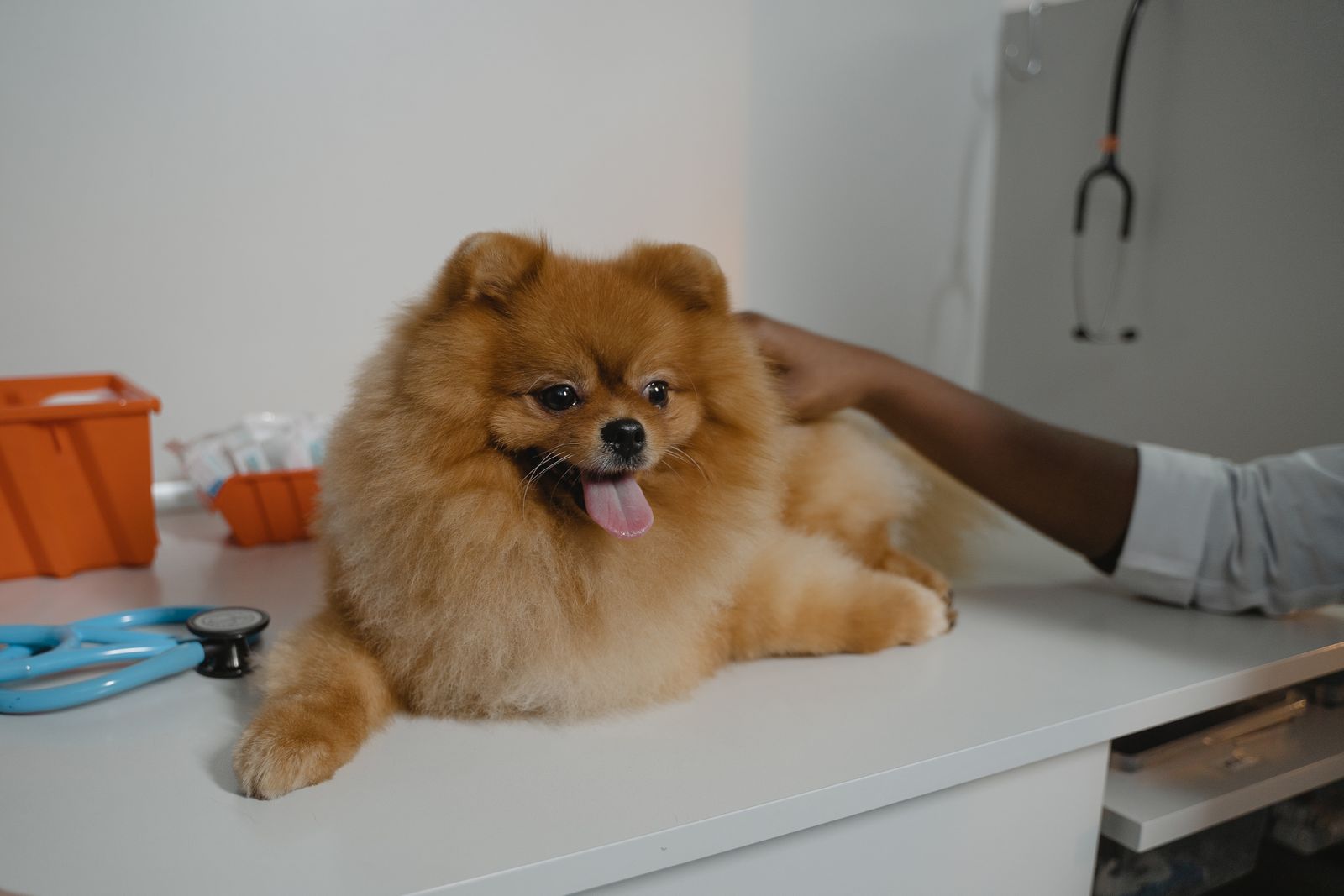
The first visit to your own vet does three jobs at once. It checks the puppy's health while problems are most fixable. It sets the schedule for the vaccine series, parasite control, and everything else the year contains. And it writes the baseline record, the document that later answers the question every claim asks: when did anyone first know about this? The AAHA puppy life stage guidance describes what a thorough first stage examination covers: temperature and body condition, then skin, eyes, ears, nose, mouth, heart, lungs, gastrointestinal system, urinary system, brain and nerves, bones, muscles, joints, and lymph nodes.
Because this visit sets the record, prepare for it like a founding event. Bring the complete arriving record, including vaccine dates and any parent health test results. Bring a stool sample if the clinic asks for one, since the AAHA guidance notes the high prevalence of intestinal parasites in puppies and more frequent fecal examinations during the first year. Write down, before you arrive, anything you have noticed at home, however small. An accurate baseline protects you in both directions.
Questions to ask the vet before and at the first visit
Ask these while the record is young.
- What did today's full examination find, and what exactly will be written in the record?
- Which vaccines has this puppy verifiably had, which doses remain, and on what dates?
- What parasite control starts now, and how often is it repeated during the first year?
- Did you hear any heart murmur, feel any joint looseness, or find anything present from birth that we should monitor?
- For this breed and size, what growth rate and body condition should we aim for, and which growth food do you recommend?
- When should we discuss spay or neuter timing for this puppy?
- Which parent health test results should I request from the breeder if they were not provided: hips, elbows, eyes, heart, or DNA panels?
- What signs at home should make me call the same day rather than waiting for the next visit?
That fourth question deserves emphasis. Findings like a soft heart murmur are common at puppy visits, and vets often monitor them because some murmurs in young puppies resolve as the puppy grows, while others point to a heart condition present from birth that needs referral and imaging. Either way, the wording in the record matters for insurance. A note that names a finding and the plan to recheck it is a document you can later give an insurer alongside the recheck.
The first year, month by month
No other guide on this site has this section, because no other life stage needs it. A puppy's first year runs on a schedule, and the insurance decisions that matter are the ones made before each scheduled step, not after it. What follows is the typical shape of the year, drawn from the AAHA life stage guidance and the Cornell sources used for this guide. It is a planning frame, not a set of rules. Your own vet sets your puppy's actual dates. Read it with two questions running: what gets written into the record at this step, and what should already be decided?
Before the puppy comes home. The decisions in this stretch cost nothing and decide the most. Choose the vet and book the first visit for the puppy's first days at home. Collect the arriving record and the parents' health test results, or the shelter intake record. Read sample policies now, while no clock is running, and plan the enrollment date so waiting periods begin as early as the insurer allows.
The arrival weeks. The first visit happens, and the baseline record is written, as the section above describes. The vaccine series is confirmed or started. Cornell's parvovirus guidance describes the typical pattern: vaccination starting early in puppyhood, with a booster every 2 to 4 weeks until 16 to 20 weeks of age. Waiting periods are usually still running in this stretch.
The middle of the series. Visits repeat on the rhythm the AAHA checklist describes for this stage, every few weeks: the next vaccine doses, weight and growth checks, and parasite prevention kept current. This is also when puppies meet the world more widely, which is also how respiratory infections like kennel cough circulate. By the end of this stretch, the vaccine series is complete, and waiting periods on a policy bought at arrival have typically run their course.
The growth spurt months. Rapid growth dominates. Appetite, body condition, and joint development are the standing agenda, especially for large and giant breeds, where Cornell's guidance on growth rate and feeding applies most strongly. This is the window where growth related joint signs tend to be noticed. It is also when spay or neuter timing is usually discussed, on your vet's advice.
The young adult approach. Growth slows toward the end of rapid growth, the point AAHA uses to close the puppy stage, earlier for small breeds and later for large ones. The year's remaining scheduled care is completed and the visit rhythm stretches out. Take stock once before the first renewal: what is in the record now, and whether the plan still matches the dog the puppy has become.
Breed notes for the puppy year
Most of this guide applies to every puppy. A few breed specific facts change what a first year contains, and each one changes which clause matters most. The notes below link to the full breed guides, and the breeds hub collects every breed this site covers.
Chihuahuas and puppy hypoglycemia. The Merck Veterinary Manual describes puppy hypoglycemia, or low blood sugar, as seen in toy breeds in the first months of life, relating it to a relative immaturity of the liver, and notes it can usually be managed by feeding frequent meals. For a Chihuahua puppy, episodes in the first weeks at home can generate urgent visits and record notes before waiting periods end, so enrollment timing matters more than any single clause. See pet insurance for Chihuahuas.
Great Danes and growth. A giant breed puppy does its growing at giant scale, and the growth guidance in this guide applies at full strength: Cornell's advice against overfeeding fast growing large breed puppies, and in favor of diets formulated for large breed growth, is written for exactly this dog. Great Danes also appear in the Merck Veterinary Manual's list of breeds most frequently affected by bloat, the stomach twisting emergency, a risk of the adult years rather than puppyhood. Our guide to pet insurance for GDV and bloat covers that emergency. See pet insurance for Great Danes.
Dachshunds and backs. The Dachshund's long spine makes back care a lifetime theme, and the puppy year sets the habits: ramps, lifting technique, weight control, and care with jumping while bones and discs develop. The insurance point is wording on hereditary and spinal conditions. See pet insurance for Dachshunds.
French Bulldogs and breathing. French Bulldog puppies can show the breed's airway shape early: noisy breathing and snoring, and, in the AAHA checklist's terms, a respiratory system that deserves screening at this life stage. A note about breathing at a puppy visit is exactly the kind of early record entry later airway claims are read against. See pet insurance for French Bulldogs.
The puppy clauses to compare, side by side
When you compare plans for a puppy, compare these clauses, in this order. Everything else, the monthly price included, matters less in year one than the wording below. The last column restates each clause as the question a puppy owner actually needs answered. Our comparison guide sets out a general method, and our cost guide explains what drives premiums.
| Clause to check | What it means | The puppy question to settle |
|---|---|---|
| Pre-existing condition definition | The rule that decides whether a condition counts as having started before cover, commonly including anything that first occurs or shows symptoms before coverage starts or during a waiting period, plus related conditions | If my puppy's first vet visit notes a minor finding before I enroll, does everything related to it stay excluded, and for how long? |
| Congenital coverage | Whether conditions present at birth are covered, excluded, or covered under conditions. A separate question from hereditary coverage, answered differently by different plans | If a condition my puppy was born with is first diagnosed months after enrollment, with no earlier sign on record, is it covered? |
| Hereditary coverage | Whether conditions passed from parents to offspring, such as hip dysplasia, are covered, and whether any breed or named condition exclusions apply | Are the inherited conditions my puppy's breed is known for covered, or named anywhere in the exclusions? |
| Waiting periods, by category | How long after the policy starts each kind of condition waits before cover begins. Accidents, illnesses, and orthopedic or knee conditions often run on different clocks | What are the exact waiting periods for accidents, for illnesses, and for orthopedic and knee conditions, counted from which date? |
| Bilateral wording | How the policy treats conditions that can affect both sides of the body. Some plans treat a condition on the second side as part of, or excluded by, the first side | If one hip, knee, or eye is treated, what happens when the matching one needs the same care later? |
| Illness during a waiting period | What a waiting period does to later cover. In many plans a condition that appears in the window is classed as pre-existing afterward, not just unpaid then | If my puppy gets an infection during the illness waiting period, is it excluded afterward, and is there any cure based reset? |
| Wellness add-on menu | What routine care the optional add-on pays toward, as itemized fixed amounts: exams, vaccines, parasite screening, microchipping, spay or neuter surgery | Does this menu match the puppy schedule my own vet has planned, and what value could we actually use in year one? |
| Exam fee and limit structure | Whether the examination fee for a covered problem is itself reimbursed, and whether limits apply per year, per condition, or both | When my puppy is seen several times for modest problems, what do the exam fee rule and the deductible design do to what comes back? |
Two of these rows decide most puppy disputes: the pre-existing definition and the congenital row. Read them in the sample policy document itself, not in summaries.
A puppy claim, walked through
This walkthrough is a hypothetical example built to show the paperwork sequence, not a prediction about any real puppy or plan. It uses no prices, because the sequence is the lesson. Imagine this: your puppy, home for two weeks, is enrolled in an accident and illness policy whose accident waiting period has already finished. One evening it chews apart a sock, and by morning it is vomiting and uninterested in food.
- The vet visit comes first, always. You take the puppy to your clinic, or to an emergency hospital if your clinic is closed, and describe what happened and when. Care is never delayed to check coverage. The record written at this visit is the foundation of the claim.
- Diagnosis happens on the vet's terms. The vet examines the abdomen and orders imaging, which shows a suspected obstruction, and the recommendation is endoscopy or surgery. If your plan requires pre-authorization, this is the moment it applies.
- You pay the bill, in most plan designs. Standard reimbursement plans expect the owner to pay the clinic first and claim afterward. You leave with an itemized invoice separating the exam, imaging, anesthesia, procedure, and medication.
- The claim is assembled from records, not memory. You submit the itemized invoices, the visit notes, and, because this is a young puppy, very likely its complete medical record so far, including the breeder or shelter paperwork.
- The insurer checks timing before amounts. Was the policy in force? Had the accident waiting period ended before the sock was swallowed? Is there anything in the arriving record suggesting an earlier episode? For a first claim with clean timing, these checks are quick.
- The decision letter applies the plan's arithmetic. The deductible is applied in the order the policy states, the reimbursement share is calculated on the covered portion, and any excluded item is listed separately. Read the letter line by line against the invoice.
- Payment and the record afterward. The reimbursement arrives by the method you chose. Keep the decision letter with the claim file, because a second episode will be read in the light of the first.
Notice what never appears in that sequence: a price. It does not need one to show the real lesson, which is that a claim is an argument built out of dated records, and in a puppy's first year you are present at the creation of almost every page.
The enrollment checklist
- Enroll as early as the insurer's minimum age allows, and note the date each waiting period ends.
- Read the pre-existing definition in the sample policy itself, including its treatment of waiting period signs.
- Ask, in writing, how congenital and hereditary conditions are treated, as separate questions.
- Find the bilateral wording and work out what a second hip would mean under it.
- Check for separate waiting periods for orthopedic and knee conditions.
- Confirm what happens if the puppy is ill during a waiting period.
- Compare any wellness add-on's menu against your own vet's puppy schedule.
- Ask whether the exam fee for a covered visit is reimbursed or excluded.
- Collect the complete arriving record: exams, vaccine dates, deworming, and parent health test results.
- Book the first vet visit for the puppy's first days at home, and bring the arriving record.
- If a trial policy comes with the puppy, read its conversion deadline and continuity terms.
- Keep every record and written insurer answer in one file.
Questions to ask an insurer, in writing
- What is the minimum enrollment age for this plan, and from what date do its waiting periods run?
- How does this policy define a pre-existing condition, and does that definition include signs during a waiting period and related conditions?
- Are congenital conditions covered? Are hereditary conditions covered? If the answer differs, which conditions fall on each side?
- Does this plan treat conditions affecting both sides of the body as related, and what happens to cover for the second hip or knee?
- Are there separate or longer waiting periods for orthopedic or knee conditions?
- If my puppy is diagnosed with an infection during the illness waiting period, is it excluded afterward, and does any symptom free period restore it?
- Is the examination fee reimbursed for a covered illness visit, and is the deductible per year or per condition?
- Which routine puppy services does the wellness add-on pay toward, at what fixed amounts, and does it cover any part of spay or neuter?
Ask these by email or through the insurer's own messaging, and keep the replies. A written answer from the insurer is part of your policy file, and it is the document that settles arguments later. Our life stage guides hub collects the sibling guides to this one, including the kitten guide.
Frequently asked questions
When can a puppy first be enrolled in pet insurance?
There is no single age that applies to every insurer. Each insurer sets its own minimum enrollment age in its own plan documents, and those minimums differ between insurers. Enroll as early as the plan you choose allows once your puppy is home, and remember that enrolling starts the waiting periods rather than ending them.
Is a congenital condition covered if it is only found later?
It depends on two clauses read together. The first is whether the plan covers congenital conditions at all: congenital means present at birth, and some plans exclude the category, some cover it, and some cover hereditary conditions while treating congenital ones differently. The second is the pre-existing definition. A condition present at birth but with no sign and no record until after enrollment is argued differently from one a vet had already noted. Ask the insurer, in writing, how a born-with condition first diagnosed months after enrollment is classified.
Does pet insurance cover vaccines, exams, or spaying and neutering?
Under a typical accident and illness plan, no. Vaccines, routine examinations, parasite prevention, and spay or neuter surgery are preventive and routine care, and base plans are built for unexpected illness and injury instead. That care is handled, if at all, by an optional wellness add-on, which pays fixed amounts toward listed services. Check its menu item by item against your own vet's puppy schedule, and ask whether the examination fee is reimbursed when a puppy is seen for a covered illness.
What if the breeder's vet already noted a heart murmur?
That note is part of your puppy's medical record, and it predates any policy you can now buy. A murmur is a sound a vet hears on examination. Some murmurs in young puppies resolve as the puppy grows, while others are the first sign of a heart condition present from birth, which is why your vet may recommend a recheck or a referral. For insurance, an insurer may treat later heart care as pre-existing, because a related sign was recorded before enrollment. That is not certain, and plans differ. Ask the insurer in writing how that specific note is treated.
Is a trial policy from a shelter or breeder worth converting?
It can be, but only if the conversion terms protect the head start the trial gave you. Read four things before the trial ends: the deadline to convert, whether converting by that deadline avoids new waiting periods, whether anything diagnosed during the trial stays treated as covered history under the full policy, and whether the full policy is a plan you would have chosen. A trial that lapses gives that advantage back.
What happens if my puppy gets sick during the waiting period?
The illness is not covered for that episode, and the longer effect matters more. Under typical pre-existing definitions, a condition that first occurs or shows symptoms during a waiting period is treated as pre-existing, which can exclude later care for the same condition as well. The sample policy opened for this guide states that mechanism directly: its definition includes a change to the pet's health that first occurs or shows symptoms before coverage is effective or during a waiting period, including related conditions. Some plans soften this for curable conditions after a stated symptom and treatment free period. Keep the full record of any illness that lands in the window.
Sources and further reading
- Cornell Riney Canine Health Center, Parvovirus: Transmission to treatment
- Cornell Riney Canine Health Center, Canine hip dysplasia (CHD)
- Cornell Riney Canine Health Center, Atopic dermatitis (atopy)
- Merck Veterinary Manual, Disorders of the Stomach and Intestines in Dogs (owner edition)
- Merck Veterinary Manual, Kennel Cough (professional edition)
- Merck Veterinary Manual, Congenital and Inherited Disorders of the Nervous System in Dogs (owner edition, puppy hypoglycemia)
- American Animal Hospital Association, 2019 AAHA Canine Life Stage Guidelines, Life Stage Checklists
- American Veterinary Medical Association, Pet ownership guidelines
- American Kennel Club, What is Health Testing for Dogs?
- Spot Pet Insurance, sample Accident and Illness Policy, form PET-P-20000-1024, Independence American Insurance Company (sample policy wording quoted as a named example)
Sources checked on November 6, 2026. CoverageForPets is operated by its publisher and researched from the primary sources listed above. This guide is general information only. It is not veterinary advice and not a recommendation to buy any specific policy.