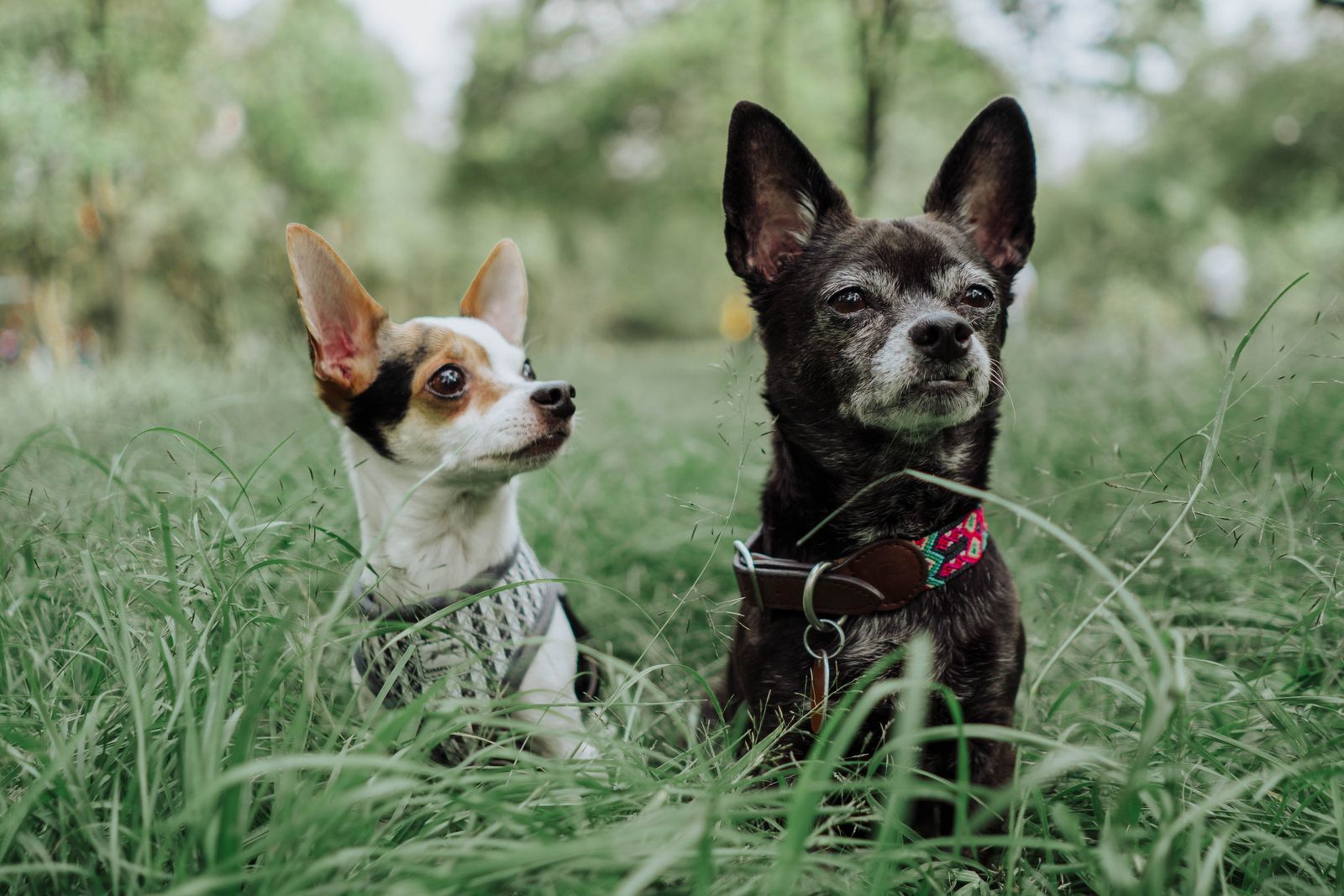
Chihuahua snapshot
The American Kennel Club describes the Chihuahua as a tiny dog with a huge personality, a national symbol of Mexico, and one of the oldest breeds of the Americas, with a lineage going back to the ancient kingdoms of pre-Columbian times. The dog owners live with matches that billing. The AKC lists the breed temperament as charming, graceful, and sassy, and the breed standard calls for a graceful, alert, swift moving little dog with a saucy expression and terrier-like qualities. A Chihuahua bonds closely, watches everything, and tends to have strong views about strangers, laps, and blankets. It comes in two coat varieties, smooth and long, and the two are the same breed in every other respect.
| Height | 5 to 8 inches at the shoulder. |
|---|---|
| Weight | Not exceeding 6 pounds. The breed standard is written as a ceiling, not a range, and a dog over that weight is disqualified in the show ring. |
| Lifespan | 14 to 16 years, as listed by the AKC. |
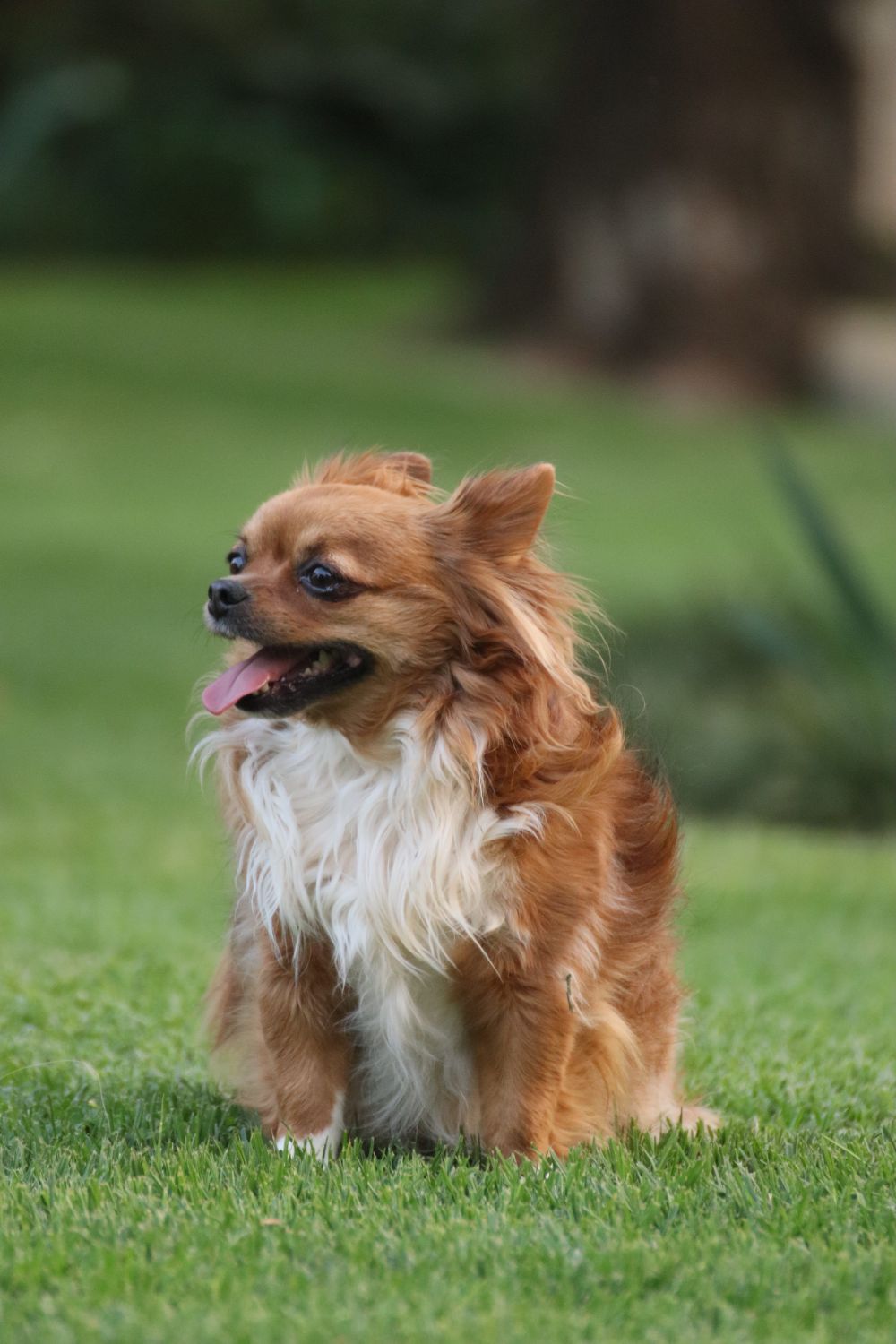
| Coat | Two varieties. The smooth coat is soft, close, and glossy. The long coat is soft, flat or slightly wavy, with feathering on the ears, legs, and tail, and an undercoat is preferred. Any color, in solid, marked, or splashed patterns. |
| Head | A well rounded apple dome skull, with or without a molera, the soft spot described in the health section below. Very large, erect ears are a breed hallmark. |
| Temperament | Charming, graceful, and sassy, in the AKC listing. Alert and self confident, with the terrier-like attitude the standard describes. |
| Energy and exercise | Active and playful indoors, with daily play and short walks. Size is the safety fact. Supervise around larger dogs, children who could drop the dog, and jumps from furniture, because the frame is tiny and the legs are fine. |
Two snapshot facts shape the insurance picture. The first is the weight ceiling. At not exceeding 6 pounds, every system is small. The jaw is small for the number of teeth it holds, the windpipe is narrow, the energy reserves are thin, and a modest weight gain is a large change on a frame this size. The second is the lifespan. A dog listed at 14 to 16 years spends a long time in the senior stage, where a wearing heart valve, a collapsing windpipe, and advanced dental disease can all be managed at once in the same small dog. Policies for this breed are long contracts, and the renewal and chronic wording matters more with every year.
The Chihuahua sits at No. 27 in the AKC 2024 registration rankings. One naming warning belongs in this snapshot, because it affects what owners are sold. The Chihuahua Club of America states that the breed standard does not categorize the Chihuahua by size, and that labels such as teacup, pocket size, tiny toy, miniature, and standard are incorrect and misleading. There is one breed, in two coats. A very small puppy in a litter is a small Chihuahua, not a separate type, and unusually small dogs are exactly the dogs in which the puppy risks in this guide, low blood sugar above all, deserve the closest attention.
Health tendencies in Chihuahuas
The breed health program, run with the Chihuahua Club of America through the OFA Canine Health Information Center, known as CHIC, requires three things for the breed: a cardiac evaluation, a patella evaluation, and an eye examination by a board certified veterinary ophthalmologist, the CAER exam. That trio is a useful map of this section. Knees, heart, and eyes are the screened systems. Teeth, windpipe, brain, and blood sugar complete the list that owners actually live with. These are tendencies, not predictions. The point of knowing the list is to know which clauses to read before you need them, and which records to keep.
This section is general information about conditions a breed can be prone to. It is not veterinary advice and it is not a diagnosis of any dog. Signs listed here are possible signs owners may notice, and many of them have several causes. Only a veterinarian who examines your dog can say what a sign means.
Luxating patella (slipping kneecap), and its grades
What it is
A developmental condition in which the kneecap, the patella, slips out of the groove at the front of the knee that it should ride in. The Merck Veterinary Manual describes patellar luxation as displacement of the patella from its trochlear groove, and grades it by severity. In plain terms, the grades run from a kneecap that can be pushed out by hand but returns on its own, through a kneecap that slips on its own and can stay out until the leg is straightened, to a kneecap that is out most of the time, and finally to a kneecap that stays out and cannot be put back. Merck notes that signs generally start before a dog is a year old. The breed club requires an OFA patella evaluation for CHIC, which reflects how central this joint is in a breed built on very fine legs.
Signs owners may notice
- A sudden skip or hop on a back leg for a few steps, then normal walking again. Merck calls this intermittent, short lived lameness the characteristic sign.
- Holding a back leg up briefly, kicking it out behind, or stretching it before continuing.
- In more advanced cases, lameness that stops resolving, or back legs that look bowed or crouched.
When it can be urgent
A skipping gait is a book an appointment sign, not an emergency. A knee problem combined with a fall, a drop from someone's arms, a cry of pain, swelling, or a leg that will not bear weight could be a ligament injury or a fracture. In a dog this small, a short fall is a long one, and that combination needs prompt care the same day.
How vets usually evaluate and treat it
Vets usually diagnose and grade the kneecap by hand at an exam, sometimes with X-rays to look at leg alignment and joint change. Merck describes conservative care, meaning weight management, controlled exercise, physical therapy, and pain medication, as the path for mild cases, and surgery as the usual discussion for moderate to severe grades, persistent lameness, or a condition that is getting worse. Keeping a Chihuahua lean is a genuine part of knee care. On a frame capped at 6 pounds, a small amount of extra weight is a large load on a loose knee.
Dental crowding, periodontal disease, and retained baby teeth
What it is
A Chihuahua carries a full set of adult teeth in one of the smallest jaws in the dog world, and crowding is the predictable result. Crowded and sometimes rotated teeth trap plaque in tight spaces. Plaque is the main culprit in periodontal disease, the inflammation and damage in the tissues that hold the teeth in place, and Cornell's Riney Canine Health Center calls periodontal disease one of the most common health issues in veterinary medicine, notes that it is worse in smaller breeds, and warns that it is usually not recognized until advanced, because much of the damage sits below the gum line where a visual check cannot see it. A second, earlier problem belongs to puppies. Baby teeth that do not fall out when the adult teeth come in, called retained or persistent deciduous teeth, add a second tooth where one belongs, trap more plaque in the gap, and can push the adult tooth into the wrong position while the bite is still forming. Veterinary studies of the breed in primary care records list dental disease and retained baby teeth among the breed's most recorded problems, which matches what the anatomy predicts.
Signs owners may notice
- Bad breath that goes beyond ordinary dog breath, often the first sign an owner can detect.
- Tartar along the gum line, red or bleeding gums, pawing at the mouth, drooling, or taking longer to finish meals.
- Dropping food, carrying food away from the bowl and dropping it before eating, chewing on one side, or new reluctance to chew a favorite toy.
- In a puppy, two teeth in the same spot, a baby fang sitting alongside the adult fang, or adult teeth coming in at an angle.
When it can be urgent
Most dental disease is a prompt routine visit, and its quiet progress below the gum line is why it should not wait for pain to announce it. A swollen face or jaw, a dog that cannot close its mouth, drooling with blood, or a broken tooth needs same day care. A puppy whose retained baby teeth are pushing an adult tooth into the gum also needs a timely appointment, because the bite is still forming and the window to correct it is short.
How vets usually evaluate and treat it
Evaluation combines an awake mouth exam with, when disease is suspected, a full dental assessment under anesthesia. Cornell describes the professional cleaning sequence in detail: an awake oral exam and pre-anesthetic testing first, then under anesthesia a full visual exam, probing and measuring of the pockets around the teeth, full mouth dental X-rays, ultrasonic scaling above and below the gum line, and extraction of teeth that are too diseased to save, followed by polishing. Removal of retained baby teeth is often planned at the same anesthesia as a spay or neuter when timing lines up. Home care is the other half of treatment, and Cornell is direct about it: the mainstay of a successful home program is daily tooth brushing with a veterinary toothpaste, started gradually with positive reinforcement, because plaque begins forming again within days of a cleaning. In a mouth this small, home care decides how many teeth a senior Chihuahua still has.
Tracheal collapse (a weakening windpipe)
What it is
A chronic, progressive condition of the trachea, the windpipe, in which the C-shaped cartilage rings that hold the airway open weaken and flatten, narrowing the airway. The American College of Veterinary Surgeons names the Chihuahua directly, listing Chihuahuas among the small breeds most commonly affected, alongside Yorkshire Terriers, Pomeranians, and Poodles, and notes that affected dogs are often middle aged or older, though it can appear in younger dogs. Cornell adds that a genetic component may be involved, because small breed dogs are the ones most commonly affected, and that there is no cure. Stress, excitement, heat and humidity, inhaled irritants such as smoke, and pressure on the neck can make coughing worse, which is why a harness instead of a neck collar is standard advice for this breed. Excess weight makes the signs worse, and the ACVS notes that dogs that are overweight or live with smokers may be more likely to show signs.
Signs owners may notice
- A persistent, harsh, dry cough, sometimes described as a goose honking cough. Cornell and the ACVS both name this as the most common sign.
- Coughing when picked up, when a collar is pulled on, with excitement, or after eating and drinking, plus a wheezy noise when breathing in.
- Tiring quickly on walks that used to be easy.
- In severe cases, difficulty breathing, gums or tongue turning blue, or fainting.
How vets usually evaluate and treat it
Evaluation usually starts with an exam and bloodwork, and Cornell notes that a cough can often be set off by gently feeling the throat. Confirming the diagnosis can take more, because a plain X-ray is a snapshot and the trachea may only flatten during one phase of breathing. Moving X-rays, called fluoroscopy, show the trachea during breathing, and a camera passed into the airway under anesthesia, called bronchoscopy, lets the clinician see the collapse directly and collect samples. Treatment is usually medical first and continues for life, even after any procedure. The categories include cough suppressants, sedative or anti-anxiety medication, corticosteroids, bronchodilators, and antibiotics when infection is present, plus weight control and a harness. A stent placed inside the airway, or rings placed around the outside of the trachea in the neck, are considered by a board certified surgeon when medical management is not enough.
Heart disease at two ages: the puppy murmur and the older mitral valve
What it is
The heart appears twice in a Chihuahua's life, in two different forms, and the breed club's CHIC program requires a cardiac evaluation because of both. The puppy form is congenital, present from birth. The Merck Veterinary Manual lists patent ductus arteriosus, called PDA, among the most common congenital heart defects in dogs. The ductus is a vessel that connects the pulmonary artery to the aorta before birth and should close soon after. When it stays open, blood flows the wrong way through it, and the classic finding is a continuous, machinery-like murmur that a vet hears at a puppy visit, sometimes with a vibration that can be felt over the chest. Merck also gives the caution that keeps this honest: many puppies have a soft, low grade murmur that is innocent, is not a defect, and usually disappears by six months of age, while loud murmurs, continuous murmurs, and murmurs with signs of heart disease should prompt further investigation. The older dog form is different. Myxomatous degeneration of the mitral valve, the valve between the left chambers of the heart, is described by Merck as the most common cardiac disease in dogs, age and breed related, with older small breed dogs showing a much higher incidence. The valve leaflets thicken and stop sealing, blood leaks backward, and the first finding is usually a systolic murmur heard at a routine exam in a dog that seems well. Over time the leak can enlarge the heart and, in some dogs, lead to congestive heart failure, with fluid in the lungs.
Signs owners may notice
- For a puppy with a significant congenital defect: slower growth than littermates, tiring quickly, or in the reversed and advanced form of PDA, fatigue, exercise intolerance, and collapse.
- For an older dog with mitral valve disease: often nothing at first, which is why the murmur at a routine exam matters. Later signs can include a cough, faster or harder breathing, tiring on walks, and reduced appetite.
- At any age: fainting, pale or blue gums, or breathing difficulty is not a wait and see sign.
How vets usually evaluate and treat it
Evaluation of a murmur usually starts with listening carefully, then chest X-rays and an echocardiogram, an ultrasound of the heart, which can show the valve leaflets, measure the chambers, and document the leak or the open vessel. An electrocardiogram may be added. PDA with the usual left to right flow is treated by closing the vessel, either by surgery to tie it off or by a catheter procedure that places a device inside it. Merck describes closing the ductus in that pattern as usually curative, with heart failure medication used first when needed. A reversed PDA is not closed, and is managed differently, which is one more reason the echocardiogram comes before any decision. Mitral valve disease has no procedure that restores the valve in ordinary practice. Care is staged monitoring while the dog feels well, then medication categories that support the heart and clear fluid when failure develops, with recheck exams and repeat imaging over the years. That long monitoring tail is the insurance story of this condition.
Hydrocephalus, and the molera question
What it is
Two things share the top of a Chihuahua's head, and confusing them causes real worry, so this card keeps them apart. The first is the molera. It is a soft spot, a fontanelle, where the skull bones have not fully joined, the same structure human babies have. The Chihuahua Club of America's official molera statement says that many Chihuahua puppies are born with one and many are born without one, that its presence is nothing to become alarmed over, and that a domed head with a molera does not predispose the Chihuahua to hydrocephalus. The club cites veterinary neurology sources for that position, including the conclusion of University of Minnesota veterinarians that there did not appear to be any relationship between the presence or size of a fontanelle and hydrocephalus, and Cornell neurologist Alexander de Lahunta's statement that it would be wrong to conclude that any opening is abnormal. The AKC breed standard itself describes the skull as a well rounded apple dome, with or without molera. A molera is a breed trait, not a diagnosis. The second thing is hydrocephalus itself, a separate condition in which cerebrospinal fluid, the fluid that cushions the brain, builds up inside the skull and presses on the brain. VCA Animal Hospitals lists the Chihuahua among the small, miniature, and toy breeds that seem to be more affected, and describes the congenital form as a birth defect that is most often associated with a dome shaped skull, a large fontanelle, and eyes that appear to gaze downward. Note the wording carefully. A large fontanelle can be one feature in a puppy that also has the condition. That is not the same as a fontanelle causing it, and VCA states plainly that not all puppies with large fontanelles will develop hydrocephalus.
Signs owners may notice
- In a puppy with hydrocephalus: a notably domed head, eyes that seem to gaze downward, abnormal walking, changes in behavior, circling or falling to one side, or head pressing against the floor or a wall.
- Slower learning than expected, including failure to become house trained or to learn basic commands, or loss of vision.
- Seizures at any point in a young puppy with those features.
- By contrast, a bright, thriving puppy that eats, plays, learns, and walks normally, with a small soft spot and no other signs, is showing the molera as a trait. That puppy needs routine care and a vet who knows the breed, not alarm.
When it can be urgent
A seizure, a puppy that becomes dull or hard to rouse, repeated head pressing or circling, a rapid change in walking or vision, or a soft spot that bulges or swells needs same day care. A stable soft spot in a puppy that is developing normally is a conversation for the next routine visit, where the vet can measure, record, and follow it.
How vets usually evaluate and treat it
Evaluation starts with a physical and neurologic exam. In a young puppy, an open fontanelle is also a diagnostic window: VCA notes that ultrasound through the fontanelle can reveal dilated brain ventricles, the fluid spaces inside the brain, and that CT or MRI imaging can also be used to make the diagnosis. Treatment in the early phases is directed at reducing fluid production and inflammation, with corticosteroids among the medication categories, and anti-seizure medication when seizures occur. At veterinary teaching and specialty hospitals, surgery can place a shunt, a tube that drains fluid from the brain to the abdomen. The Merck Veterinary Manual describes the same shape of care: imaging to confirm, medication such as corticosteroids, and surgery in severe cases. Outcomes depend on severity and on how much damage pressure has done before treatment, which is why the signs above deserve prompt attention when they appear together.
The molera and hydrocephalus, side by side
The card above keeps the two apart in prose. This table is the same separation in the form an owner needs at night, with a puppy in their hands and one question: is this the normal trait, or is this a sign?
| What you are looking at | A molera on its own | Signs that point to hydrocephalus |
|---|---|---|
| The head | A small soft spot on top of a rounded head, stable in size, in a puppy that is developing normally. | A notably domed head with a large soft spot, sometimes with a bulge or swelling, paired with the signs in the next rows. |
| The eyes | Eyes that look and move normally, and a puppy that follows movement and learns its surroundings. | Eyes that appear to gaze downward, or vision problems such as bumping into things. |
| Movement and learning | Walking, playing, and learning at a normal puppy pace, including steady progress with house training. | Abnormal walking, circling or falling to one side, head pressing, dullness, slow learning, or seizures. |
| The next step | Routine care. Ask the vet to record the molera and the normal exam beside it, and follow it at regular visits. | A prompt veterinary workup, with imaging. Ultrasound can be done through the open fontanelle in a young puppy, and CT or MRI can confirm. |
Low blood sugar (hypoglycemia) in puppies and tiny adults
What it is
Very small dogs run on very small fuel reserves. The brain can only use glucose, blood sugar, for energy, and a Chihuahua puppy that misses meals, is chilled, is stressed by a move to a new home, or is fighting illness or parasites can use up its blood sugar faster than its small body replaces it. Veterinary sources on juvenile hypoglycemia in toy breeds explain that young puppies have not fully developed the ability to regulate blood glucose and have a high requirement for it, which is why the risk concentrates in the youngest and smallest puppies, and why breeders of toy puppies are advised to keep puppies until they are eating reliably before they go to new homes. The risk falls as the puppy grows, but a very small adult that stops eating because of illness can still drop its blood sugar. Low blood sugar is not inherited the way a kneecap or a heart defect can be. It is a size and age risk, and it is on this list because it is the emergency owners of this breed are most likely to meet in the first weeks at home.
Signs owners may notice
- Loss of appetite, unusual sleepiness or lethargy, or a puppy that is hard to wake.
- Lack of coordination, wobbliness, trembling, muscle twitching, weakness, or a dazed and disoriented look.
- Pale or discolored gums.
- In severe cases, seizures, a puppy that slips into a stupor, or collapse.
How vets usually evaluate and treat it
Evaluation is fast. The team will usually measure blood glucose early, warm the dog, and give glucose by mouth if the dog can swallow safely or into a vein when it cannot. Then the work turns to the cause, with a medical history, a physical exam, and tests that can include a blood count, biochemistry, and a urine test, because a puppy that keeps dropping its sugar may have an underlying illness, parasites, or a liver problem behind the episodes. Ongoing care is a feeding plan with regular small meals, clear instructions on which signs mean come back now, and a record of any episode, when it happened, when the puppy last ate, and how recovery went. That home record is the tool in the checklist section below, and it is built for exactly this condition.
Policy decisions that matter for a Chihuahua
For a large breed, the policy table is often about one big surgery. For a Chihuahua it is about breadth. Six conditions spread across knees, mouth, airway, heart, brain, and blood sugar, and the policy has to treat all six fairly at once. Two turn on classification, hereditary for the knees and congenital for the heart defect and the brain condition. Two turn on time, the chronic renewal wording for the windpipe and the mitral valve. One turns on dental wording, and one turns on emergency terms. Read these rows before the price.
| Policy feature | Why it matters for a Chihuahua | Stronger wording looks like | Watch out for |
|---|---|---|---|
| Hereditary condition coverage | Kneecaps are graded by the breed screening program, and tracheal collapse may involve a genetic component in small breeds. | Hereditary conditions covered on the same terms as other illnesses. | Hereditary exclusions, or a named list that includes the conditions this breed is screened for. |
| Congenital condition coverage | A PDA and congenital hydrocephalus are both present from birth and are usually found at puppy visits, after enrollment decisions are made. | Congenital conditions covered when signs come after enrollment and the waiting period. | Wording that excludes anything present at birth, which removes two puppy conditions in one line. |
| Orthopedic waiting period and bilateral rule | Kneecaps come in pairs, and a grade on one side raises the question of the same grade on the other. | Each knee judged on its own record, with clear terms for the second side. | A long special waiting period, or wording that treats the second knee as pre-existing after the first is graded. |
| Dental wording | A full set of teeth in a tiny jaw makes periodontal disease a core risk, and retained baby teeth are a puppy decision with a deadline. | Dental disease treatment and extractions covered as illness, with cleaning and retained teeth described plainly. | Dental illness excluded, extractions classed as routine, or retained teeth denied as congenital without that being stated up front. |
| Chronic condition renewal terms | Tracheal collapse and mitral valve disease are both managed for years once they appear, in a breed that lives into its mid teens. | A covered condition stays covered in later terms while enrollment continues. | Wording that caps a condition per year, ends its coverage at renewal, or reclassifies it as pre-existing. |
| Cardiac diagnostics and referral coverage | A murmur is only a sound until an echocardiogram answers it, at puppy age and again in the senior years. | Echocardiography, chest imaging, and cardiology referral are covered categories for a covered condition. | Policies that cover treatment but exclude or separately cap the imaging that establishes the diagnosis. |
| Pre-existing sign definitions | Puppy records in this breed hold a murmur note, a kneecap grade, a molera note, and a blood sugar episode. Each can be read later as an early sign. | Clear definitions that separate a recorded trait or a resolved symptom from a diagnosed condition. | Definitions so broad that a normal molera note, or one resolved low blood sugar episode, is used against unrelated later claims. |
| Emergency care terms | A low blood sugar puppy, a dog in respiratory distress, and a dog in heart failure all go to whichever clinic is open. | Emergency care covered on the same terms, with approval steps waived for true emergencies. | Lower reimbursement at emergency clinics, or approval steps that cannot be completed during a breathing or blood sugar emergency. |
Life stages: puppy, adult, and senior
Puppy
The puppy stage carries an unusual share of this breed's story. The heart is listened to for a murmur that needs an answer. The kneecaps are checked and, at the screening age, formally evaluated under the breed program. The mouth is watched tooth by tooth, because retained baby teeth need a removal decision while the adult bite is forming. The head is checked, and a molera, if present, is recorded for what it is, a normal trait to follow, not a diagnosis. And the feeding rhythm matters every day, because low blood sugar risk is highest in the smallest puppies, especially around the stress of a move to a new home. Enrolling before those notes accumulate, and keeping the complete record of every puppy visit, including the normal findings, is the most valuable move a Chihuahua owner makes. A record showing a heart that was checked, knees that tracked normally, and a mouth with a clean baseline is evidence in the owner's favor.
Adult
Adulthood is when the mouth and the windpipe set the schedule. Periodontal disease builds quietly below the gum line, and a daily brushing routine plus professional cleanings decide how much of it arrives. Tracheal collapse most often appears in middle aged dogs, starting as a honking cough that owners may first blame on a collar or on excitement. Knees graded mild in youth are rechecked. Weight is watched with unusual care, because extra weight loads the knees, worsens the cough, and is a large change on a frame this size. The insurance work of this stage is steady. File claims as they happen, keep dental charts and dated cough notes, walk the dog on a harness, and check at each renewal that any condition the dog now has is still described as covered.
Senior
A senior Chihuahua can be a senior for a long time, and the senior list is a combination. A wearing mitral valve needing staged monitoring and, in time, medication. A collapsing trachea managed daily. Advanced dental disease. Knees that have carried a small body for many years. Vision changes that the breed's eye screening habit helps catch early. Anesthesia decisions get more careful with age, which is one more reason earlier dental work serves the dog better. Review the policy for age based changes and any reduction in coverage at advanced ages. A plan that thins out when a long lived breed needs steady care fails the purpose it was bought for. The murmur log matters here too. A heart that was documented as quiet for years, then changed, tells a cleaner story than a heart with no record at all.
A claim, step by step: a low blood sugar emergency in a new puppy
The example below is hypothetical. It is not a real dog, a real claim, or a guarantee of how any insurer will decide. It follows a very small puppy through a first low blood sugar episode, an emergency visit, the workup that looks for a cause, and a feeding plan, because that sequence is what emergency coverage for this breed has to handle. Pet insurance generally reimburses after you pay the vet, as explained in how pet insurance works.
The evening the puppy goes quiet, and the notes that start the file
The puppy has been home a short time. After a busy day of visitors and a meal that was only partly eaten, the puppy becomes unusually sleepy, then wobbly and trembling, and is hard to rouse. The owner notes the time, when the puppy last ate and how much, and what the day held. That short record, written while it is fresh, becomes the first page of the claim file and the history the emergency team asks for on arrival.
The emergency visit, and paying as you go
At the emergency clinic the team measures blood glucose early and finds it low. The puppy is warmed and given glucose, and perks up as the level recovers. The owner pays the clinic directly and collects the two documents every claim needs: the itemized invoice and the complete record, including the glucose readings and the times they were taken. Because the policy was started soon after the puppy came home and the waiting period for illness had passed before this evening, the timing of the claim is straightforward on its face.
The cause workup, and why it is part of the same claim story
A single episode in a stressed, underfed puppy may need no more than a feeding plan. The vet still works through the causes, because repeated episodes would point somewhere else. The history covers feeding, the exam checks the puppy over, and bloodwork and a urine test look for illness, parasites, and liver questions. Everything comes back reassuring, and the working conclusion is a puppy that ran through its reserves on a disrupted day. That documented workup matters to the insurer as much as to the puppy. It separates a one off episode with a clear trigger from an undiagnosed condition.
The feeding plan, and the home record that goes with it
The discharge instructions set regular small meals, a note to offer food before long active periods, and a short list of signs that mean come back now: unusual sleepiness, wobbliness, trembling, or a puppy that will not eat. The owner starts the home record described in the checklist below, logging meals, weight, and any episode with its timing. Over the following weeks the log shows steady eating, steady weight gain, and no further episodes. A log like that is evidence, for the vet and for any later claim review, that the episode was an event, not the start of a pattern.
Submitting the claim
The claim is filed with the emergency invoice and record, the glucose readings, the workup results, and the discharge feeding plan. The diagnosis recorded is hypoglycemia, with the trigger and the negative workup both in the notes. Under a policy that covers emergency care on the same terms as regular care, the episode is assessed as an illness claim. The friction points in claims like this are rarely the medicine. They are timing, whether the episode fell inside a waiting period, and wording, whether the insurer reads a symptom as a condition.
How reimbursement works
Each eligible bill moves through the same mechanics described in what pet insurance costs and why. Charges count against the deductible first, the policy's reimbursement rate applies to eligible charges after that, and totals are tracked against the annual limit. If a follow up visit or a repeat glucose check is recommended, it belongs to the same episode story and should be filed with the same care, referencing the original date.
Renewal, and where claims like this get argued later
At renewal, the question is whether one resolved puppy episode follows the dog. Denial pressure points in later claims are usually about reading that episode backward. An insurer might try to treat it as an early sign of a liver or metabolic condition diagnosed years later. The defense is the file built at the time: a clear trigger, a complete workup with normal results, a feeding plan that was followed, and a home log showing no recurrence. Each of those documents exists only if someone kept it, which is why this guide treats record keeping as part of the insurance itself.
What drives a Chihuahua premium
No responsible guide will name a price for your dog, because the quote depends on the dog, the address, and the settings chosen. What can be explained is the shape of Chihuahua pricing. The full mechanics are in what pet insurance costs and why.
Breed risk profile. Insurers see a toy breed whose claims spread across many small systems rather than one large one. Knees, teeth, airway, heart at two ages, and a puppy emergency risk. Two of those can involve referral centers, specialist imaging, and surgery, even though the dog itself is tiny. Pricing reflects breadth, not body size.
Size. A dog under 6 pounds costs less to anesthetize and medicate than a large breed, and drug doses are small. That economy is incomplete, because an echocardiogram, a dental procedure under anesthesia, and specialist time do not shrink in proportion to the dog. For this breed, the value question is less about the size of a single bill and more about whether the classification, dental, and emergency clauses let the breed's actual claims through at all.
Age curve and lifespan. Premiums generally rise with age, and a breed listed at 14 to 16 years spends a long time in the higher priced years. The puppy year carries the murmur, the retained teeth, and the blood sugar questions. The middle years carry the teeth and the windpipe. The senior years combine the heart, the airway, and the mouth. A policy chosen only on its puppy price is being judged on the one year when the least is known about it.
Location and plan settings. Vet prices in your area set the bill sizes the insurer expects, and referral centers and emergency clinics are not priced like general practices. Your deductible, reimbursement rate, and annual limit choices trade premium against claim returns. An owner of a breed with a real emergency pattern should weigh the emergency wording and the annual limit with that scenario in mind, and the comparison method in how to compare plans shows how to hold those settings steady across quotes.
Pre-purchase checklist for a Chihuahua policy
- Confirm hereditary conditions are covered, including luxating patella, and ask how tracheal collapse is classified for this breed.
- Confirm congenital conditions are covered, because a PDA and congenital hydrocephalus are present from birth even when they are found later.
- Read the orthopedic waiting period and the bilateral clause for knees, and ask how a mild puppy knee grade is treated later.
- Separate the dental wording into cleaning, treatment of dental disease and extractions, and removal of retained baby teeth.
- Confirm a condition covered in one term, such as tracheal collapse or mitral valve disease, stays covered at renewal for as long as you stay enrolled.
- Check that echocardiography, chest imaging, fluoroscopy, neurologic imaging, and specialist exams are covered categories for a covered condition.
- Ask what counts as a pre-existing sign, and specifically how a molera note, a resolved innocent murmur, and one resolved low blood sugar episode are each treated.
- Confirm emergency clinic care is covered on the same terms, for a low blood sugar puppy, a breathing emergency, or a heart emergency.
- Enroll as a young puppy, before a murmur workup, a knee grade, or a dental finding enters the record.
The Chihuahua home record: teeth, weight, and low blood sugar episodes
This breed's claims turn on small facts recorded at home and at early visits: how the teeth are coming in, whether the weight is steady, and exactly what happened on the one bad evening. Use this record from the first week. It has two parts. The first is a standing log you update at each vet visit. The second is an episode log you only open when something happens. Together they replace memory with dates, which is what vets and insurers both work from.
| Record part | What to write down | Why it belongs in the file |
|---|---|---|
| Teeth map | At each puppy visit, which baby teeth have fallen out, which are still in place beside an adult tooth, and the vet's note on gums and tartar. Keep the dental chart from every cleaning. | Retained teeth have a removal window, and a dated teeth map separates a puppy finding from disease that develops later. |
| Weight line | A weight at every visit, plus a home weight on the same day each month, written next to what the dog is fed and how much. | Steady weight is evidence of a thriving puppy. Gradual gain in an adult loads the knees and worsens a cough, and the line shows when it started. |
| Heart notes | Every murmur note exactly as recorded, with its grade, the date, and the result of any follow up listening or echocardiogram, including a note that a puppy murmur resolved. | A murmur is the opening page of both heart stories in this breed. The follow up result is what decides what the note means. |
| Head note | The vet's description of the molera at the first visits, its size in plain words, and a line confirming the puppy's walking, learning, and vision were normal at that visit. | It fixes the molera in the record as a trait in a normal puppy, which is the fact an insurer should read years later. |
| Episode log: before | For any low blood sugar or collapse episode: the date and time, when the dog last ate and how much, and what the day held, such as travel, visitors, missed meals, or illness. | Episodes with a clear trigger read differently from episodes with none. The before column is where that difference is proven. |
| Episode log: during and after | The signs in order, how long they lasted, what first aid was given and whether the dog could swallow safely, the clinic's glucose reading if one was taken, and how recovery went over the next day. | It gives the emergency team a history, gives the claim a timeline, and shows whether an episode was a single event or part of a pattern. |
Read a sample entry the way an insurer would. An episode row that says the puppy missed a meal on a travel day, became wobbly in the evening, recovered after glucose at the clinic, ate normally the next morning, and has a vet workup with normal results filed beside it, argues for itself. A row that says only that the puppy seemed unwell invites every question the first version answers. Bring the record to every vet visit, and file a copy with any claim that involves blood sugar, the liver, the heart, or collapse.
Questions to ask an insurer, in writing
- Are congenital conditions covered, including a patent ductus arteriosus and congenital hydrocephalus diagnosed after enrollment in a puppy enrolled young?
- How is luxating patella classified, what orthopedic waiting period applies, and how is the second knee treated under your bilateral rule?
- A molera is a normal breed trait in the Chihuahua, confirmed by the breed club. Will a molera noted in a puppy record, with no signs and no diagnosis, ever be treated as a pre-existing condition under your definitions?
- How is tracheal collapse classified for a Chihuahua, and will its management, and the management of mitral valve disease, stay covered at every renewal?
- How do you handle dental care in three parts: routine cleaning, treatment of dental disease including extractions, and removal of retained baby teeth?
- If a puppy has one low blood sugar episode that is fully worked up and never recurs, how is that episode treated if a different condition is claimed later?
Questions Chihuahua owners ask
Does a soft spot on my Chihuahua puppy's head mean hydrocephalus?
No. The soft spot is called a molera, and it is a normal breed trait. The Chihuahua Club of America states that many puppies are born with one and many without, that its presence is nothing to become alarmed over, and that a domed head with a molera does not predispose the dog to hydrocephalus. Hydrocephalus is a separate condition in which fluid builds up inside the skull. It is judged on signs and imaging, not on the soft spot alone. A bright puppy that walks, eats, and learns normally needs routine care. A puppy with circling, head pressing, vision changes, or seizures needs a prompt workup.
Is a heart murmur in a Chihuahua always serious?
No, and the answer depends on the dog's age and on the workup. Merck notes that many puppies have a soft murmur that is innocent and usually disappears by six months of age, while loud or continuous murmurs should prompt further investigation. A continuous machinery-like murmur is the classic finding of a patent ductus arteriosus, a congenital vessel that stayed open and that can usually be closed. In an older dog, a new murmur is usually the first sign of mitral valve degeneration, the wearing valve of older small breed dogs, which is managed with staged monitoring and medication when needed. In every case, the echocardiogram is what turns a sound into an answer.
Does insurance cover kneecap surgery for a Chihuahua?
An accident and illness policy can cover surgery for a luxating patella when hereditary conditions are included, the orthopedic waiting period has passed, and the knee was not noted as loose before enrollment. Mild grades are often managed without surgery, with weight control, controlled exercise, and pain medication, and surgery is usually discussed for moderate to severe grades, persistent lameness, or a knee that keeps slipping. Read the bilateral clause too, because the other knee is often graded once one side is diagnosed.
Will pet insurance pay for dental work in a Chihuahua?
Routine cleaning is usually treated as preventive care, which standard accident and illness policies generally do not cover unless a wellness add-on includes it. Treatment of dental disease itself is a separate question. Some policies cover extractions and treatment of diseased teeth as illness, and some exclude dental illness or limit it. Removal of retained baby teeth is handled differently again, and some policies class it as congenital or developmental. Because crowding in a tiny jaw makes dental disease a core risk in this breed, ask in writing how dental disease, retained baby teeth, and extractions are each handled.
What should I do if my tiny puppy suddenly goes weak and trembling?
Treat it as an emergency and go to a veterinarian the same day. Those signs fit low blood sugar, the classic tiny puppy emergency, in which a small puppy that missed meals, was chilled, or was stressed uses up its blood sugar faster than its body replaces it, and the brain feels the shortage first. Veterinary guidance describes a small amount of a glucose source such as corn syrup rubbed on the gums as a first aid step for a conscious dog that can swallow safely, on the way to care. A dog that cannot swallow safely should be given nothing by mouth. At the clinic, glucose is measured early and given by mouth or into a vein, and the team looks for the cause.
When should I enroll a Chihuahua puppy?
As early as the policy allows, before a murmur workup, a knee grade, or a dental finding enters the record, and before the first low blood sugar episode if one is coming. The first puppy visits create the baseline an insurer will read later, so keep the full records, including the heart notes, the knee findings, the teeth map, and the head note that records a molera as the normal trait it is. Enrolling early also lets the waiting periods run while the puppy is least likely to need treatment.
Sources and further reading
- American Kennel Club, Chihuahua breed page for size, weight, lifespan, coat varieties, temperament, and the breed's history as a national symbol of Mexico.
- American Kennel Club, Most Popular Dog Breeds of 2024 for the breed's registration ranking.
- Chihuahua Club of America, Official Molera Statement for the molera as a normal breed trait, and the evidence the club cites separating it from hydrocephalus.
- Chihuahua Club of America, Teacup Statement, for the position that the breed standard does not categorize the Chihuahua by size and that size labels such as teacup are incorrect and misleading.
- Orthopedic Foundation for Animals, Canine Health Information Center (CHIC) breed requirements for the Chihuahua, for the cardiac evaluation, patella evaluation, and ACVO eye examination that make up the breed screening program.
- Merck Veterinary Manual, Patellar luxation in dogs and cats for the slipping kneecap, its grades, and conservative versus surgical care.
- Cornell Riney Canine Health Center, Periodontal disease for dental disease in dogs, its greater severity in smaller breeds, the professional cleaning sequence, and daily home brushing.
- Cornell Riney Canine Health Center, Tracheal collapse for weakened cartilage rings, the goose honking cough, diagnosis, and medical and surgical management.
- American College of Veterinary Surgeons, Tracheal collapse for the condition in Chihuahuas and the other small breeds named, its chronic and progressive course, and rings and stent options.
- Merck Veterinary Manual, Congenital and inherited disorders of the cardiovascular system in dogs for patent ductus arteriosus, its machinery-like murmur, its closure, and the innocent puppy murmur.
- Merck Veterinary Manual, Myxomatous atrioventricular valve degeneration in dogs and cats for mitral valve degeneration as the most common cardiac disease of older small breed dogs, its murmur, and echocardiography.
- VCA Animal Hospitals, Hydrocephalus in toy breed puppies for the condition in Chihuahuas and other toy breeds, its signs, ultrasound through the fontanelle, and medical and shunt treatment.
- Merck Veterinary Manual, Congenital and inherited disorders of the nervous system in dogs for hydrocephalus in puppies of toy breeds, imaging, and treatment categories.
- American Shih Tzu Club, Hypoglycemia in toy and small breeds, reporting University of Pennsylvania veterinary guidance, for juvenile hypoglycemia, its signs, and glucose treatment in toy puppies.
Sources checked on November 6, 2026.