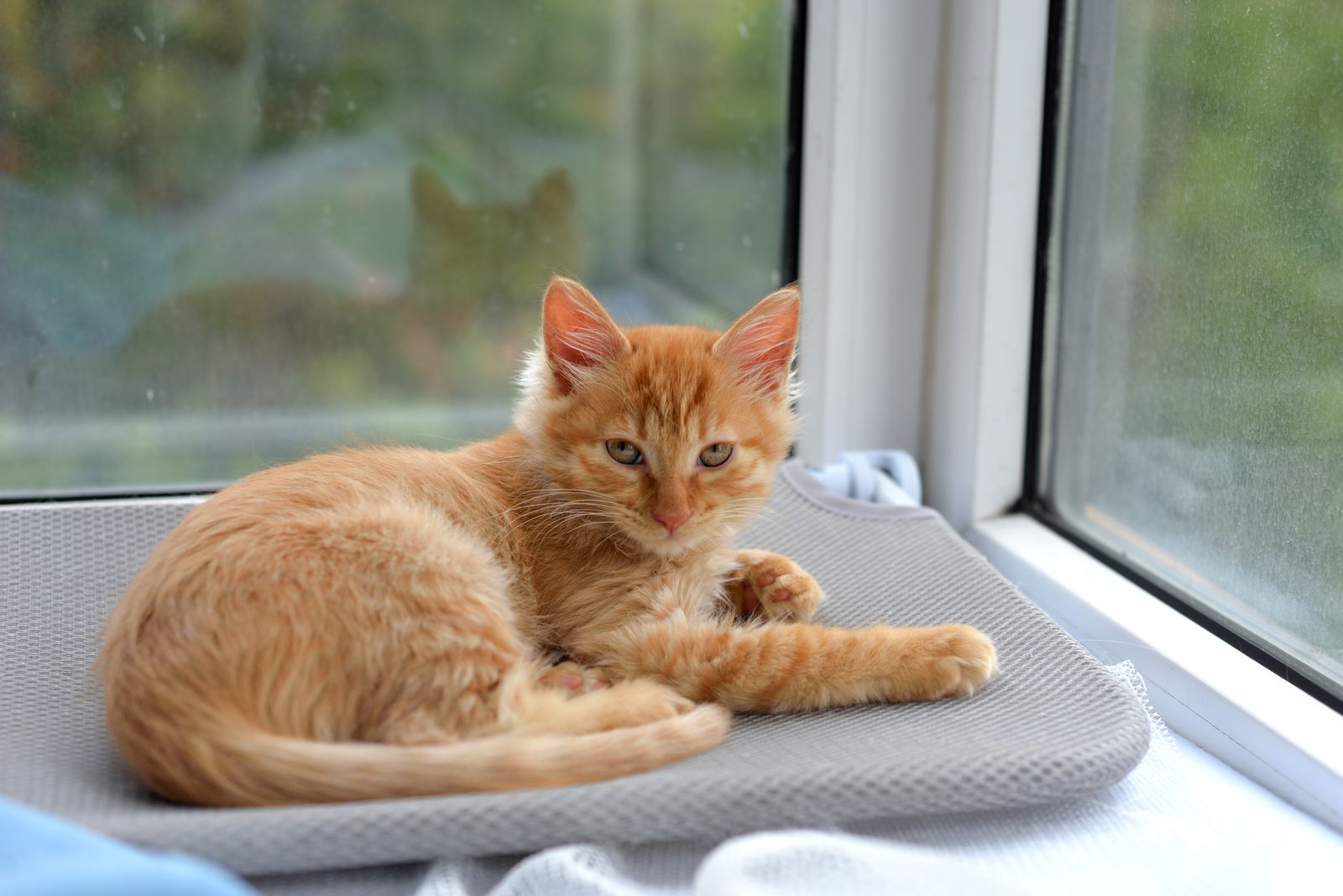
Kittens at a glance
Two definitions carry this whole guide, so they come first. A waiting period is the stretch of time after a policy starts during which some or all coverage has not yet begun. A pre-existing condition is a condition whose signs appeared before the policy started or during a waiting period, whether or not anyone had formally diagnosed it at the time. Applied to a young animal whose health history is being written, those two ideas are what kitten insurance is really about.
Two more definitions belong here because pedigree kittens raise them immediately. A congenital condition is one present from birth, whether inherited or caused by something in the kitten's environment before birth. A hereditary condition is an abnormality passed genetically from parent to offspring. The two overlap without being identical, and policies treat them separately.
| What the first year is | The kitten life stage, which the AAHA and AAFP feline life stage guidelines define as birth to one year, holds the first examinations, first vaccinations, parasite control, and usually the spay or neuter decision, alongside the highest exposure to infectious kittenhood illness |
|---|---|
| The record window | A newly homed kitten has a short or empty medical record. What the first examinations document becomes the baseline everything is compared against for the rest of the cat's life |
| Common first year illnesses | Upper respiratory infections, panleukopenia, and ringworm are the kitten illnesses Cornell and Merck return to most often. All three can show their first signs very early in a kitten's time in a new home |
| The enrollment question | Whether the policy is in force, with waiting periods running or completed, before the first illness note, murmur note, or skin note is written into the record |
| The pedigree question | Whether the policy covers congenital and hereditary conditions, and what the breeder's health testing does and does not establish about a specific kitten's risks |
| The routine care question | Whether planned first year care, the vaccine series, examinations, and spay or neuter, is excluded as routine, or partly paid by a wellness add-on with its own list and limits |
| The insurance question | Whether the policy you pick, read in its full sample wording, protects the clean record the kitten starts with, across the illnesses, emergencies, and inherited conditions the first year can surface |
Why the first year is different for a cat
Every cat was once a kitten with an empty file. Insurers judge claims from the medical record, and the first year is when that record is thinnest, cleanest, and most within your control. An adult cat adopted at five years old arrives with years of notes you did not witness and cannot change. A kitten's record begins the week it comes home, and whoever takes it to its first examinations is writing page one.
Three money terms frame everything that follows. The premium is the amount you pay the insurer, usually monthly, to keep the policy in force. The deductible is the amount of covered costs you pay yourself in a policy year before the insurer's share begins. Reimbursement is the share of a covered cost the insurer pays back to you after the deductible is met, because most pet insurance works on a pay the vet first, claim back later basis. The annual limit is the maximum the insurer will pay out across the policy year. Our foundation guide to how pet insurance works walks through that arithmetic in full. First year vet bills are usually modest and mostly routine. What first year enrollment really buys is the starting position every future year is judged from.
The second reason is feline, not financial. Cats hide illness. Cornell's guidance on choosing and caring for a new cat stresses that any new cat should be checked by a veterinarian as soon as possible after coming home, and that a newcomer should be kept separate from resident cats until examined. A kitten eating a little less or growing a little slower may be showing the only signs an early problem will offer. Baseline examinations catch those signs while they are small, and they record what normal looked like for this specific cat: its weight curve, its heart sounds, its mouth, its skin. A change is only visible against a baseline.
The third reason is timing density. The first year concentrates more veterinary events than any later year: the first examination, a vaccine series rather than a single vaccine, parasite screening and control, testing for feline leukemia virus and feline immunodeficiency virus where the history calls for it, and the spay or neuter decision. Enroll early, examine early, and document everything, because dates are evidence.
Enroll before the first symptom
The most common kitten insurance mistake is waiting to see whether the kitten seems healthy before enrolling. A waiting period means coverage does not begin the day you pay; it begins after the waiting period for that category of care has run. And under the definition used in the sample policy examined for this guide, a condition can be treated as pre-existing based on signs that appeared during a waiting period, not only signs from before the policy existed. It moves the window during which an early illness can attach itself to the record.
A named example shows how concrete this gets. In the Washington sample policy published by Pumpkin, underwritten by United States Fire Insurance Company and dated March 2026, the waiting period for illness is stated as fourteen days, beginning on the policy's first effective date, and the same period is stated to apply to congenital, hereditary, and orthopedic illness. Other insurers set different periods, and many run accidents, illness, and specific categories on different clocks. Everything a vet writes down while that clock runs is written on the wrong side of it. Our guide to waiting periods explains the mechanics in full. The same sample policy describes a waiting period health assessment option, under which a qualifying veterinary examination within a stated window can modify how the waiting period applies. In some policy designs, that first examination can modify the wait itself.
The illnesses that test the calendar
Three kitten illnesses come up in the Cornell and Merck sources again and again, and all three commonly show first signs right around the time a kitten changes homes, while a new policy's waiting period is running.
Upper respiratory infections. The Merck Veterinary Manual's account of the feline respiratory disease complex names the principal causes as feline herpesvirus, feline calicivirus, and bacteria such as Chlamydia felis and Mycoplasma felis. The signs are the ones every kitten owner learns fast: sneezing, runny eyes, nasal discharge, fever, and sometimes mouth ulcers. Merck notes that young and very old cats are the most susceptible, that the infections are usually self limiting, and that treatment is largely supportive, with prevention resting on vaccination. It is also, read as an insurance file, a dated respiratory sign, and which side of the waiting period boundary it lands on can follow the cat for years.
Panleukopenia. Cornell describes feline panleukopenia as a highly contagious and potentially deadly viral disease, and states that young kittens, sick cats, and unvaccinated cats are the most likely to become ill. Its signs include diarrhea, vomiting, fever, lethargy, loss of appetite, and dehydration. There is no specific treatment; care is supportive, and Cornell calls vaccination the cornerstone of prevention. For the insurance file, panleukopenia is the severe end of the same calendar problem: a kitten exposed before it came home may show signs after it arrives, and the dates of exposure, arrival, enrollment, and first signs will be reconstructed by whoever reviews the claim.
Ringworm. Despite its name, ringworm is not a worm. Merck's owner guidance describes dermatophytosis as a fungal infection of the skin, hair, and claws, notes that it spreads easily and can infect people, and states that kittens are the age group most likely to be infected. The signs are bald, scaly, crusted patches with broken hairs, most often on the face, ear tips, tail, and feet, and some cats develop itchy small bumps. A bald patch noted at a first examination, weeks before anyone cultures it, becomes the recorded start of a skin history. Our guide to pet insurance for skin allergies covers how itch and skin notes are read later.
Congenital conditions in pedigree kittens
A pedigree kitten comes with something a shelter kitten usually does not: named risks. Breeders and genetics laboratories have mapped certain inherited conditions to certain breeds, and the tests for several of them are worth collecting paperwork for. The breed picture lives in our cat breed guides. Three breeds here have their own guides: Persians, Maine Coons, and Ragdolls.
Start with the sorting problem. Congenital means present from birth, inherited or not. Hereditary means passed genetically from parent to offspring. Policies handle the two categories in a single clause, in separate waiting periods, or in named exclusion lists. The Pumpkin sample policy examined for this guide groups congenital, hereditary, and orthopedic illness under the same stated illness waiting period. For a pedigree kitten, this clause is not fine print. It is the main text.
PKD in Persians
Polycystic kidney disease, shortened to PKD, is the documented inherited condition of the Persian family. The UC Davis Veterinary Genetics Laboratory describes the PKD1 form as heritable and commonly seen in Persians and in cats with Persian ancestry. Affected cats develop cysts in the kidneys, and the condition often leads to kidney failure later in life. It is inherited as an autosomal dominant trait, meaning a kitten needs only one copy of the variant, from either parent, to be affected. A kitten tested clear of the variant, written as N/N, will not have this heritable form and cannot pass it on. For a kitten with the variant, severity cannot be predicted from the test. One clear parent is therefore not the same fact as two clear parents, and the breeder's paperwork should show which animals were actually tested. Our guide to pet insurance for Persians covers the kidney wording this condition turns on.
HCM in Maine Coons and Ragdolls
Hypertrophic cardiomyopathy, shortened to HCM, is the heart condition that runs through the pedigree cat conversation, and Cornell calls it the most common heart disease of cats. Cornell lists the Maine Coon, the Ragdoll, and the Persian among the breeds where HCM is more prevalent, and is clear on the diagnostic standard: the disease is diagnosed by echocardiography, an ultrasound examination of the heart that measures the thickened walls directly. For Maine Coons, it describes a mutation called A31P in the heart muscle gene MYBPC3, associated with increased risk in the breed. For Ragdolls, it describes a different mutation in the same gene, called R820W, also associated with increased risk, inherited with incomplete penetrance, meaning not every cat carrying the variant develops the disease.
The limits of those tests are stated by the laboratory itself. The Maine Coon test detects the A31P mutation. It does not detect every cause of HCM. The laboratory notes that HCM also occurs in cats without the mutation, and that the mutation is not the sole cause of the disease. Cornell adds that results should be interpreted carefully with a veterinarian. So a breeder's clear result is a real and useful fact about one named risk. It is not a coverage guarantee. Insurers decide claims from policy wording and medical records. A DNA result is evidence about risk, not a term of the contract.
What to collect from a breeder
International Cat Care's guidance on choosing a kitten advises asking, for pedigree kittens, about the tests for inherited diseases, and asking whether the kitten is insured. TICA's breeder guidance describes a knowledgeable breeder guaranteeing the kitten's health while recommending the buyer's own vet examine the kitten within a few days of purchase, and providing a health and vaccination record and a written sales agreement with health guarantee terms. Collect, at minimum: the vaccination record, the written agreement, the parents' actual test results for the breed's documented conditions rather than a summary, and the name of the vet who has seen the litter. Paperwork filed with the kitten's medical record becomes part of the baseline.
Three conditions to understand before the first birthday
Most kitten claims are small and ordinary. These three are the exceptions worth understanding early, each for a different reason.
Urinary blockage in male cats
What it is
A urinary blockage is the complete form of feline lower urinary tract disease, the group of conditions Cornell gathers under that name. A plug or stone obstructs the urethra, the tube urine leaves through, and the cat cannot pass urine. Cornell states that male and neutered male cats are at greater risk than females, because the male urethra is longer and narrower, and keeps the age framing honest: the disease is most frequently seen in middle aged cats. Young males are not exempt, and it is an emergency at any age.
Signs owners may notice
- Straining to urinate, frequent litter box trips, and crying out while trying, which Cornell lists among the core signs.
- Passing little or no urine despite the effort. Cornell describes obstructed cats this way, growing increasingly distressed as the bladder fills.
- Blood in the urine, urinating outside the box, and frequent licking of the genital area, all named by Cornell in the wider disease group.
How vets usually evaluate and treat it
Cornell describes diagnosis starting with a physical examination and a urinalysis, the laboratory examination of a urine sample. For an obstructed cat, treatment usually involves catheterization, passing a fine tube to relieve the obstruction, under sedation or anesthesia, followed by monitoring. Our guide to pet insurance for urinary blockage in cats covers the full condition.
Hypertrophic cardiomyopathy (HCM) screening in pedigree kittens
What it is
HCM is a disease of the heart muscle in which the walls of the left ventricle, the heart's main pumping chamber, thicken. Cornell calls it the most common heart disease of cats, notes it is more prevalent in certain breeds including the Maine Coon, the Ragdoll, and the Persian, and explains that the thickened wall leaves less room for blood and relaxes poorly. That is why screening, rather than symptoms, is the usual door into this diagnosis.
Signs owners may notice
- Often, nothing at all. Cornell is direct that many affected cats show no outward illness, which is the case for baseline examinations and screening in at risk breeds.
- A heart murmur or irregular rhythm heard by the vet at a routine kitten visit, an examination finding rather than a home sign.
- Labored or rapid breathing, open mouth breathing, or unusual tiredness, which Cornell lists as signs of congestive heart failure, where fluid builds up in or around the lungs.
How vets usually evaluate and treat it
Cornell states that HCM is diagnosed by echocardiography, an ultrasound examination of the heart, and that similar thickening caused by other conditions, including high blood pressure and an overactive thyroid, must be ruled out. A murmur alone does not make the diagnosis. DNA tests, covered in the congenital section above, estimate one named genetic risk; they do not image the heart. Cornell notes there is no known cure. Our guide to pet insurance for HCM in cats covers the condition in full.
Skin allergies and the ringworm era itch notes
What it is
Two different stories get written into a kitten's skin record, and adult cat insurers read that record very carefully. The first is ringworm, the fungal infection covered earlier in this guide: Merck describes bald, scaly, crusted patches with broken hairs, notes that kittens are the most likely age group to be infected, and names fungal culture as the most accurate diagnosis. The second story is allergy, an immune overreaction showing up as itch, overgrooming, and recurrent skin or ear irritation, usually later than kittenhood. Every itch and patch noted in the first year becomes a dated skin sign that later allergy claims are judged against.
Signs owners may notice
- Bald, scaly, or crusted patches with broken hairs, most often on the face, ear tips, tail, and feet, which Merck lists as the typical ringworm picture.
- Itchy small bumps, a pattern Merck names as one way ringworm can present.
- Any patch that spreads, or skin changes in the people in the house. Merck notes ringworm can infect people, a reason to book the visit promptly.
When it can be urgent
Skin problems are rarely emergencies. Prompt care matters because ringworm spreads to other pets and to people, and an undiagnosed patch cannot be treated correctly. A kitten that stops eating, seems unwell beyond the skin, or develops rapidly worsening sores should be seen the same day.
How vets usually evaluate and treat it
For suspected ringworm, Merck describes diagnosis by fungal culture as the most accurate route, and treatment that can speed healing and reduce spread, including oral antifungal medication for widespread cases. For ongoing itch without a fungal answer, evaluation becomes a longer process of ruling causes in and out, which our guide to pet insurance for skin allergies walks through in full.
Wellness add-ons: routine care is a different bucket
The first year is full of veterinary care that is planned, scheduled, and valuable, and that a standard accident and illness policy usually does not pay for. That gap causes more disappointed first claims than any other. A wellness add-on is an optional extra layer, bought alongside the main policy for an additional premium, that pays toward a listed set of routine services, typically each up to its own stated limit. It does not change what the main policy covers. It is a separate bucket with its own list.
The items in the routine bucket are the backbone of the first year. Cornell describes the FVRCP vaccine, which protects against panleukopenia, viral rhinotracheitis, and calicivirus, as a core vaccine, with a first dose early in kittenhood and boosters at intervals of a few weeks until the kitten is about four to five months old, and treats rabies and feline leukemia vaccination as part of the kitten conversation, with the feline leukemia vaccine considered core for cats under one year of age. The baseline exam is routine care in the insurer's classification, however valuable it is as a record.
Spay and neuter framing confuses more owners than any other line, so here it is plainly. Spaying and neutering are surgeries, and they are also planned, elective procedures performed on a healthy animal. Where spay or neuter appears in coverage at all, it is usually as a listed item inside a wellness add-on, up to that item's own limit. Dental wording hides a similar split between routine cleaning and treatment of dental disease, and the early mouth notes become the baseline the adult wording is read against.
How should a kitten owner value an add-on? Which of this year's actual appointments appear on it, what limit sits beside each one, and whether the year's realistic total comes near the additional premium. What can be said is that the add-on decision is a budgeting decision about predictable costs, while the main policy decision is a risk decision about unpredictable ones. Do not let an attractive routine list distract from weak illness wording.
Breeder, rescue, and shelter starts
Kittens arrive from three kinds of places, and each start writes a different first page. The breeder start offers the most paperwork and the most named risk. TICA's guidance adds a timing point that matters for insurance: the buyer should have the kitten examined by their own vet within a few days of purchase.
The shelter and rescue start offers a partial record and an honest unknown. The kitten may arrive already vaccinated, tested, and treated for parasites, with a record sheet listing what was done. Cornell covers this case directly: a cat whose health history is unknown should be tested for feline leukemia virus and feline immunodeficiency virus, and kept separate from resident cats until examined. The shelter record, the intake date, and your vet's first findings together draw the line between what was knowable and what was not.
The trial policy trap sits across all three starts. International Cat Care notes that many breeders and rescue centres provide insurance cover for the kitten that lasts for the first weeks in the new home, after which the insurer contacts the owner about continuing it. Is the trial a full policy or a narrow starter cover with low limits and named conditions only? When it converts to a paid policy, does coverage continue seamlessly, or does a new waiting period start, and does anything recorded during the trial count as pre-existing under the converted policy? And if you choose a different insurer, does the trial count for anything? Get those answers in writing while the trial is still running. The trap is assuming continuity the documents do not promise.
Whatever the start, the closing move is the same: gather every piece of paper that exists and bring the complete set to the first vet visit. A record assembled on day one is a record. The same record reconstructed a year later from memory is an argument.
The first vet visit sets the record
Cornell's advice on a new cat is unambiguous: have the cat checked by a veterinarian as soon as possible after it comes home. For a kitten, that first visit does three jobs at once. It starts the vaccine, parasite, and testing schedule the first year runs on. And it is the drafting session for the baseline record, the document every future vet and every future claim reviewer will treat as the description of the kitten before anything went wrong.
The baseline examination covers the kitten head to tail: weight and body condition, eyes, ears, mouth and teeth, heart and lungs, abdomen, skin and coat, limbs and gait, and temperature.
Testing belongs in this visit's conversation, framed correctly. Cornell advises that cats with an unknown health history be tested for feline leukemia virus and feline immunodeficiency virus. The AAHA and AAFP life stage guidance treats retrovirus testing and fecal examination as strongly recommended baseline work for kittens. The same logic applies to the parents' test results for pedigree kittens.
What to ask the vet to document
Vets write for other vets, in shorthand, under time pressure. These requests take seconds each and change what the record can prove.
- Write down the normal findings as findings, not only the problems. A note that the heart sounded normal, the skin was normal, and breathing was clear is evidence. Silence about an organ is not.
- If a murmur is heard, document its character and the follow-up plan, including whether an echocardiogram is recommended. An unexplained murmur note is the hardest kind to argue with later.
- Record the kitten's weight precisely, and body condition alongside it. The earliest point on the growth curve cannot be recreated.
- Note the state of the mouth: baby teeth present, any retained teeth, gum condition. Dental baselines matter earlier than most owners expect.
- Write the test results into the record with dates, including the feline leukemia and feline immunodeficiency results and the fecal result, even when all of them are negative. Especially when all of them are negative.
- If the kitten arrived with any sign at all, a sneeze, a soft stool, a patch of thin hair, document it with its date and the working explanation. An honestly dated minor sign, explained and resolved, is far less dangerous than the same sign discovered later in a shelter sheet without your framing.
Keep your own copy of everything. Ask for the visit record and test results before you leave, and file them with the breeder or shelter papers and the policy documents. That folder is the day one file: the whole strategy, made physical.
The first year, in order
Every kitten's first year follows the same broad shape, and the shape matters more than any single date in it. Exact ages for each step belong to your vet, who will set the schedule for the kitten in front of them. What follows is the order of events, and the paperwork each should leave behind.
Coming home and the first days. The kitten arrives, ideally into a quiet space separate from resident pets. Cornell supports the separation for medical reasons: a newcomer with an unknown history should be examined before it shares air and bowls with resident cats. Your jobs in these days are observation and paper. Watch eating, drinking, litter use, breathing, eyes, and energy, and note anything unusual with its date. Assemble the day one file: every document the breeder, shelter, or rescue provided, in one place.
The first examination. Booked as soon as possible after arrival, this is the visit the previous section describes. It establishes the baseline, starts or continues the vaccine series, sets parasite control, arranges the testing the history calls for, and produces the first full record under your name. A policy started after it inherits whatever the examination found. A policy started before it stands behind the findings.
The vaccine series and the booster rhythm. Kitten vaccination is a series rather than an event, because, as Cornell explains, the antibodies a kitten receives from its mother interfere with vaccines early in life and then wane, leaving a window a single dose cannot cover. Cornell describes the FVRCP series starting early in kittenhood and boosting at intervals of a few weeks until the kitten is about four to five months old, with rabies vaccination given according to age and local requirements, and feline leukemia vaccination considered core in the first year. Each booster visit is also a growth check and a dated, normal record entry.
The middle months. Between the early series and the first birthday, the rhythm slows. The spay or neuter conversation happens in this stretch for most kittens, on timing your vet advises. Breed screening your vet recommends belongs here too, while findings can still be framed as screening rather than symptoms. Growth, weight, and teeth changing from baby to adult get their mid year notes.
Approaching the first birthday. The AAHA and AAFP life stage guidelines draw the kitten boundary at one year, and the adult stage brings a different examination rhythm, with a minimum of annual examinations for all cats. Check that every test result is in it, that early signs which resolved are recorded as resolved, and that the policy documents and written insurer answers are filed with it. A cat entering adulthood with a complete, dated, mostly normal record carries the strongest insurance position it will ever have.
The policy clauses that decide a kitten claim
Kitten claims are rarely argued about the size of a bill. They are argued about dates, categories, and definitions, applied to a record written before anyone knew which entries would matter. The table below names each clause to check, explains it in plain language, and states the kitten question to settle. Every answer lives in the insurer's sample policy. Keep the answers in writing.
| Clause to check | What it means | The kitten question to settle |
|---|---|---|
| Minimum enrollment age | Each insurer sets the youngest age at which a new policy can start, in its own documents, and those minimums differ across the market | What is the earliest this plan will enroll a kitten, and can enrollment be completed before the first vet visit, or at least before any illness note exists? |
| Waiting periods, by category | The time after the policy starts before coverage for a category begins. Accidents, illness, and categories such as congenital, hereditary, or orthopedic conditions may run on different clocks | How long is each waiting period for a kitten, which clock do congenital and hereditary conditions sit on, and does the plan offer any examination based step that modifies the wait? |
| Pre-existing condition definition | A pre-existing condition is one whose signs appeared before the policy started or during a waiting period, whether or not it was diagnosed at the time | Would a sign noted in the shelter record, the breeder file, or a first examination, such as sneezing, a murmur, or a bald patch, be used to treat later care for that body system as pre-existing? |
| Congenital and hereditary coverage | Policies sort conditions present from birth and conditions inherited from the parents into named categories that may be covered, covered after a longer wait, or excluded | Are congenital and hereditary conditions covered for this kitten's breed, are any conditions named as excluded for the breed, and what waiting period applies to this category specifically? |
| Routine care exclusion and wellness add-on | Planned care such as examinations, vaccines, and spay or neuter is commonly excluded from the base illness policy. A wellness add-on pays toward a listed set of routine services, each to its own limit | Which first year services appear on the add-on's list, what limit sits beside each one, and is spay or neuter a listed item or excluded from the add-on as well? |
| Deductible and reimbursement structure | The deductible is what you pay first in a policy year. Reimbursement is the share of covered costs paid back after that. The annual limit is the most the plan pays in the year | Is the deductible charged per year or per condition, and at a kitten's likely claim sizes, how much of a typical first year illness claim would the structure return? |
| Emergency care terms | The contract decides whether emergency treatment is covered on the same terms as scheduled care, and whether any approval must be obtained before treatment | Is emergency care, including at referral emergency hospitals, covered without prior approval, and how are urinary conditions classified if a young male cat blocks? |
| Cured condition provisions | Some policies allow a resolved condition to become coverable again after a stated clear period. Others treat any past condition as permanently pre-existing | If a kittenhood respiratory infection or ringworm episode resolves completely, can later claims for the same body system be covered, and what clear interval does the wording require? |
Two rows decide more kitten outcomes than the other six combined. The pre-existing definition is the first, because a kitten's record is short enough that a single early note can dominate it. Read it for the word signs. The cured condition provision is the second, because kittenhood illnesses are common and usually resolve.
A claim, step by step
This walkthrough is hypothetical and uses no dollar figures. It follows the most ordinary kitten claim there is, a respiratory illness that lands close to a waiting period boundary, so you can see where the dates and notes decide the outcome.
- The kitten comes home. A kitten arrives from a rescue on a Saturday, with a shelter sheet showing vaccinations started and no illnesses recorded. The owner enrolls in a policy that evening, and the illness waiting period begins to run from the policy's effective date.
- The first examination. On the following Tuesday, inside the waiting period, the kitten has its first examination. The vet records a healthy kitten: clear eyes, clear breathing, normal heart, normal skin. That clean baseline, dated, is now part of the file.
- The sneezing starts. Several days later, still inside the waiting period, the kitten begins sneezing, with watery eyes and a reduced appetite. The kitten is not yet past the waiting period boundary, and that fact, not the illness, is what this claim will turn on.
- The illness visit. The vet diagnoses an upper respiratory infection caused by one of the usual viral or bacterial agents, and prescribes supportive care. The owner keeps the invoice and the visit note, which records the first date of signs from the owner's report.
- Filing the claim. The owner submits the claim form, the invoice, the visit note, and, as most insurers request, the kitten's history, which at this age is short: the shelter sheet, the clean examination, and this visit.
- The assessment. The reviewer lines the dates up. Policy effective date. Waiting period end. First examination, clean. First signs, recorded as beginning before the waiting period ended. On those dates, the claim for this illness is declined, because the care fell inside the waiting period.
- The durable consequence. The reviewer also records the episode in the kitten's file as a respiratory condition with signs during the waiting period. Under a pre-existing definition written like the sample policy's, that classification can be applied to later respiratory claims, long after the waiting period ended. The declined claim was small. The classification is the real cost of the timing.
- The counterfactual. Run the same story with enrollment completed before the kitten came home, where the plan allows it, or with the first signs falling after the waiting period, and both halves change. The illness visit becomes an ordinary reimbursable claim once the deductible is met, and no pre-existing classification attaches.
- The follow through. The owner asks the insurer, in writing, how the episode will be treated if respiratory signs return, and whether the plan's cured condition wording restores coverage after a clear interval. The answer goes into the day one file.
The lesson is not that insurers are hostile. It is that the review is a document review, conducted on dates and notes, by someone who never met the kitten. Everything in this guide exists to make that review come out the way the medicine deserves.
Before you enroll
- Enroll as early as the plan allows, and before the first illness note exists anywhere in the kitten's record.
- Book the first veterinary examination as soon as possible after the kitten comes home, and bring the breeder, shelter, or rescue paperwork.
- Read the waiting periods by category in the sample policy, including the clock for congenital and hereditary conditions.
- Read the pre-existing condition definition for the word signs, and check whether shelter and breeder records count as part of the history it reaches.
- For a pedigree kitten, confirm congenital and hereditary conditions are covered, and file the parents' actual test results with the kitten's record at the first visit.
- Ask the vet to document normal findings as findings, and to record any murmur with its character and a follow-up plan.
- Get the feline leukemia and feline immunodeficiency test results, and the fecal result, into the record with dates, whatever they show.
- Decide the wellness add-on question with its list and limits in front of you, as a separate budgeting decision from the illness policy.
- If the kitten arrives with trial cover, get the conversion terms in writing before it expires: continuity, new waiting periods, and how trial findings are classified.
- Ask whether the plan has a cured condition provision for kittenhood illnesses such as respiratory infections and ringworm.
- Start the day one file: policy documents, written insurer answers, breeder or shelter papers, and every visit record and test result.
Questions to ask an insurer, in writing
- What is the youngest enrollment age under this plan, and when does the policy take effect?
- What are the waiting periods for accidents, illness, and congenital and hereditary conditions, and does any examination based step modify them?
- My kitten's shelter record notes a resolved bout of sneezing before adoption. How is that classified under this plan's pre-existing condition definition?
- Does this plan have a cured condition provision, and after what clear interval could a resolved kittenhood respiratory infection or ringworm episode stop counting against later claims?
- For my kitten's breed, are congenital and hereditary conditions covered, and are any conditions excluded by name for the breed?
- A vet heard a soft murmur at my kitten's first examination and recorded no diagnosis. How is that note treated if heart testing is recommended later?
- Which first year services appear on the wellness add-on list, and what limit applies to each: examinations, the vaccine series, retrovirus testing, and spay or neuter?
- Is emergency care covered without prior approval, and how are urinary conditions classified for a male cat?
For the wider method behind these questions, see how to compare plans and what pet insurance covers.
Frequently asked questions
When can a kitten first be enrolled in pet insurance?
It depends on the insurer. Each company sets its own minimum enrollment age in its policy documents, and those minimums differ across the market. The logic underneath does not vary: enrollment only protects against what has not happened yet, and a kitten's record starts filling in at the first vet visit. Read the minimum age and the waiting period in the sample policy, and enroll as early as the plan allows.
Does a breeder's negative DNA test guarantee that a condition will be covered?
No. A DNA test result and an insurance decision answer different questions. The UC Davis Veterinary Genetics Laboratory is explicit that its Maine Coon heart test detects one named mutation, and that the disease also occurs in cats without that mutation, so a clear result lowers a known risk without ruling the condition out. An insurer decides coverage from the policy wording and the medical record, including whether signs predated enrollment or fell in a waiting period. It is not a coverage promise.
Are kitten vaccines and spaying or neutering covered?
Under a standard accident and illness policy, usually not. Vaccinations and spay or neuter surgery are planned routine care, not treatment of an illness or injury, and routine care is commonly excluded from the base plan. Some insurers sell a wellness add-on, an optional layer that pays toward a listed set of routine services, which may include exams, vaccines, and sometimes spay or neuter, each up to its own stated limit.
What if the shelter record shows my kitten had a respiratory infection before I adopted her?
That note becomes part of the record an insurer reads, so do not hide it and do not panic about it. Upper respiratory infections are common in kittens, and how a past episode is treated varies by policy. Some policies treat a condition as pre-existing only while it is recent or unresolved. Some have cured condition provisions that can restore coverage after a period with no signs and no treatment. Others are stricter. Get the shelter record in full, have your vet document how the kitten looks now, and ask insurers, in writing, how a resolved kittenhood infection is classified.
A vet heard a heart murmur in my kitten. Does that end heart coverage?
Not automatically. A murmur is a finding, not a diagnosis. Cornell notes that hypertrophic cardiomyopathy is diagnosed by echocardiography, an ultrasound examination of the heart, because a murmur alone cannot say what is happening inside the heart, and some murmurs in young animals are innocent flow sounds that resolve as the kitten grows. A murmur noted before enrollment can lead an insurer to treat later heart work as connected to a pre-existing sign. A murmur first heard after the waiting period, followed promptly by the recommended workup, sits in a stronger position.
What happens if my kitten shows signs of illness during the waiting period?
Care given during the waiting period is generally not reimbursed, and the more durable problem is the record. Under the definition used in the Pumpkin sample policy, a pre-existing condition includes any condition for which the pet had signs or symptoms during any waiting period that are directly related to the condition later claimed. Sneezing documented inside the waiting period can therefore be used to treat later respiratory claims as pre-existing, even after the waiting period ends. Treat the kitten promptly regardless, keep the notes, and ask the insurer in writing how waiting period signs affect later claims.
Sources and further reading
- Cornell Feline Health Center, Choosing and Caring for Your New Cat
- Cornell Feline Health Center, Feline Vaccines: Benefits and Risks
- Cornell Feline Health Center, Feline Panleukopenia Virus
- Cornell Feline Health Center, Hypertrophic Cardiomyopathy
- Cornell Feline Health Center, Feline Lower Urinary Tract Disease
- Merck Veterinary Manual, Feline Respiratory Disease Complex (professional edition)
- Merck Veterinary Manual, Ringworm (Dermatophytosis) in Cats (owner edition)
- AAHA, 2021 AAHA and AAFP Feline Life Stage Guidelines, Life Stage Definitions
- International Cat Care (iCatCare), Choosing a kitten
- UC Davis Veterinary Genetics Laboratory, Polycystic Kidney Disease (PKD1) test for cats
- UC Davis Veterinary Genetics Laboratory, Hypertrophic Cardiomyopathy (HCM) test for Maine Coons
- UC Davis Veterinary Genetics Laboratory, Hypertrophic Cardiomyopathy (HCM) test for Ragdolls
- TICA, Find a Cat: breeder and kitten guidance
- Pumpkin Pet Insurance, Washington Sample Policy (March 2026), underwritten by United States Fire Insurance Company
Sources checked on November 6, 2026. CoverageForPets is operated by its publisher and researched from the primary sources listed above. This guide is general information only. It is not veterinary advice and not a recommendation to buy any specific policy.