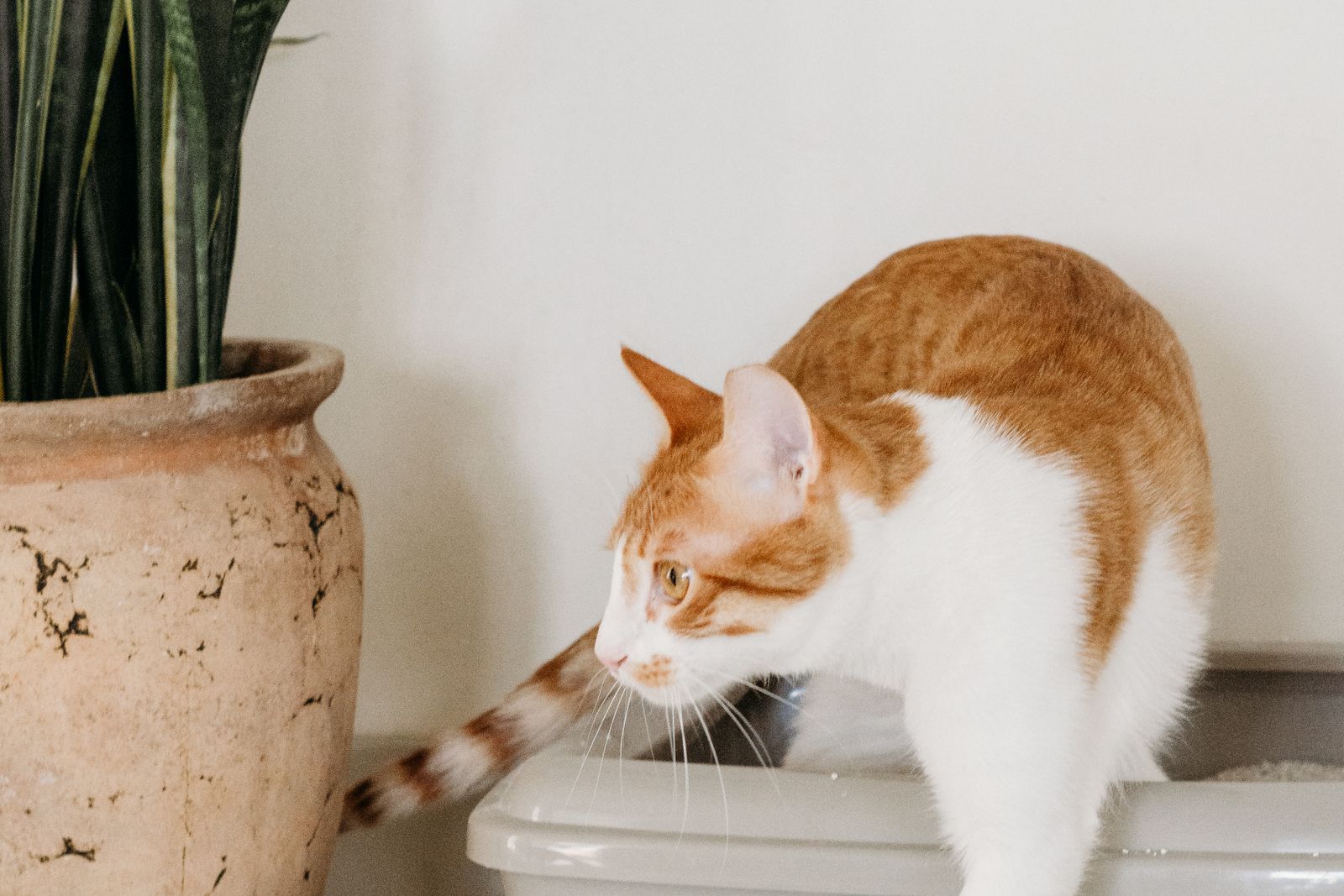
Urinary blockage and FLUTD at a glance
Feline lower urinary tract disease, shortened to FLUTD, is a group of problems affecting the bladder and the urethra, the tube that carries urine out of the body. Its dangerous end is urethral obstruction, a blockage of that tube. A cat with a complete blockage cannot pass urine at all. This guide explains the umbrella first, then the emergency inside it, then the insurance questions that decide whether a policy helps on the first episode and on any episode that follows.
| What FLUTD is | An umbrella term for disorders of the bladder and urethra. The Merck Veterinary Manual lists bladder stones, urinary tract infections, and urethral plugs among the causes of the same signs, and notes that most cats with these signs have feline idiopathic cystitis |
|---|---|
| The dangerous end | Urethral obstruction, a blockage of the urethra. Cornell calls it an absolute emergency and a potentially life threatening condition |
| Who is at risk of blocking | Male and neutered male cats most, because the male urethra is longer and narrower. The AVMA notes obstruction is most often found in male cats from one to ten years of age |
| Typical first signs | Straining in the litter box, frequent attempts, small amounts of urine, crying while urinating, blood in the urine, urinating outside the box, frequent licking of the genital area |
| The emergency sign | Straining while passing little or no urine, with growing distress. That pattern can mean the tract is blocked |
| How it is diagnosed | A physical examination and a urinalysis, which is a microscopic analysis of a urine sample, first. Blood work, X-rays, abdominal ultrasound, and a urine culture may follow |
| How a blockage is treated | The blockage is relieved, usually by catheterization under sedation or anesthesia. Fluids, monitoring, and medication follow in hospital, based on the cat's condition |
| The insurance question | Whether emergency urinary care is covered without an approval step at night, and how the policy treats a second episode after the first one is in the record |
What FLUTD covers as an umbrella, in plain language
Start with the plumbing, because every term in this guide hangs on it. The kidneys make urine. Urine collects in the bladder, a stretchy storage sac. When a cat urinates, urine leaves through the urethra, the narrow tube that runs from the bladder to outside the body. The lower urinary tract means the bladder and the urethra together. Cornell explains that lower urinary tract disease covers abnormalities in the structure and function of those two parts, and that surveys suggest it is the number one reason cats visit veterinary practices.
FLUTD is not one illness. It is the umbrella vets use while the cause is still being found, and sometimes after the search ends. The Merck Veterinary Manual makes the same point from the clinic side. It lists the characteristic signs, then notes that cats can develop those signs from a variety of causes, including urinary stones, urinary tract infections, and urethral plugs, and that most cats with lower urinary tract signs have feline idiopathic cystitis. One set of signs, several possible causes. That is the single most useful fact in this guide, because it explains both the medicine and the paperwork that follows.
Bladder inflammation, including feline idiopathic cystitis. Cystitis means inflammation of the bladder. Feline idiopathic cystitis, shortened to FIC, is the most common diagnosis in cats with lower urinary tract signs, per Cornell. Idiopathic means of unknown cause. Cornell describes it as the diagnosis used when testing does not confirm another disease, and notes that stress seems to be an important factor. A cat with FIC makes frequent attempts to urinate, probably because the bladder is uncomfortable, and often has blood in the urine. Cornell also notes that signs in cats with FIC often resolve within a couple of weeks regardless of treatment, so much of the care aims at preventing the signs from returning.
Crystals. Crystals are tiny mineral particles that can appear in urine. A veterinarian testing a urine sample checks for their presence, along with blood and signs of inflammation and infection, per the AVMA. Crystals matter because mineral material is also what stones are built from and part of what plugs contain. Finding crystals in a sample is a clue for the record, not a complete diagnosis by itself.
Stones. Urinary stones, called uroliths, are rock hard collections of minerals that form in the urinary tract. Cornell names the two most common stone types in cats as struvite, composed of magnesium, phosphorus, and ammonia, and calcium oxalate. A stone can irritate the bladder or the urethra, and it can obstruct either one. The type matters. Cornell explains that a veterinarian may prescribe a special stone dissolving diet for struvite stones, while calcium oxalate stones cannot be dissolved with special diets and often need a more direct removal approach, such as flushing or surgery.
Plugs. A urethral plug is different from a stone. Cornell describes plugs as a soft, compressible material that contains variable quantities of minerals, cells, and mucus-like protein. A plug can lodge in the narrow male urethra the way a cork sits in a bottle neck. It is one of the common causes of a complete blockage, alongside stones.
Infection. Bacteria can infect the urinary tract and produce the same signs. The AVMA notes that bacterial infections are the more common kind of urinary tract infection in cats, that they are still relatively uncommon in cats overall, and that urinary tract infection is a common cause of FLUTD in cats older than ten years of age, especially females. A urine culture, which grows and identifies bacteria, is the test that separates this cause from the others.
Blockage. Urethral obstruction is where the umbrella turns dangerous. Cornell calls it the most dangerous problem seen in cats with lower urinary tract signs, and a potentially life threatening condition. When the urethra is completely blocked, urine cannot be voided. The kidneys lose their ability to remove toxins from the blood and to keep fluids and electrolytes, the salts in the body, in balance. Cornell states that, if the obstruction is not relieved, the cat's condition deteriorates rapidly, life threatening electrolyte imbalances can develop, and the time from complete urinary obstruction until death may be less than twenty-four to forty-eight hours. Less common causes sit under the umbrella too. The AVMA notes that FLUTD may less commonly be caused by tumors of the urinary tract, anatomical abnormalities, or injury to the urinary tract or spinal cord.
Insurance terms in this guide are defined where they first appear. A deductible is the amount you pay out of pocket for covered care before reimbursement begins. Reimbursement is the share of an eligible bill the insurer pays back after the deductible. A pre-existing condition is a condition, or a sign of one, that was present before enrollment or during a waiting period. A waiting period is the set time after enrollment before illness cover begins. Those definitions matter here because a urinary claim turns on dates and records: when the first litter box sign was written down, and what the clinic found when it looked.
Signs, sorted by what to do next
Owners usually meet FLUTD as a pattern, not a single dramatic moment. The box is visited again and again. The clumps get smaller. The cat cries, or goes quiet, or urinates on the bath mat instead. The table below sorts the common signs by the response they call for. It is the litter-box warning signs tool for this guide, and the checklist section near the end turns it into a card you can keep. This is general information, not a diagnosis. These signs can have other causes, and only a veterinarian who examines your cat can say what is going on. One confusion is worth naming first. The AVMA notes that a straining cat may look constipated, as if it is trying to pass stool, but that straining in the litter box is more often a sign the urethra is blocked. Read litter box straining as a urinary sign until a veterinarian tells you otherwise.
| What you see | What it can mean | What to do next | Write this down |
|---|---|---|---|
| More trips to the litter box than usual, with normal amounts of urine still being passed. Urinating outside the box once or twice | Early lower urinary tract irritation. Cornell lists urinating outside the box and increased frequency among the most common signs | Watch closely and call the vet. Book a prompt visit and describe the change. Keep the box clean and easy to reach, and note whether the pattern settles or builds | The date the pattern changed, how many trips you saw, and anything new at home, such as a move, a new pet, or a changed routine |
| Frequent small urinations, many small clumps instead of a normal amount. Blood in the urine. Crying while urinating, or frequent licking of the genital area | Bladder inflammation, stones, infection, or another cause under the FLUTD umbrella. Cornell and the AVMA both list these among the major signs | Call the vet today. These signs need a diagnosis, not a wait at home. In a male cat, treat any slide toward passing less urine as a step up in urgency | When you first saw blood or crying, how much urine is still being passed, and whether the cat is eating and drinking as usual |
| Straining in the box, repeated attempts, and only drops of urine, or nothing at all, coming out | A possible urethral obstruction. Cornell notes that obstructed cats often show the usual signs but pass little or no urine | Emergency, now. Go to a veterinarian or an emergency clinic immediately, day or night. Call ahead while you travel if you can do so safely. Do not press on the belly, and do not try to unblock the cat at home | The time you last saw a normal amount of urine. That single fact helps the clinic judge how long the cat may have been blocked |
| Straining with no urine, plus growing distress, crying out in pain, hiding, vomiting, weakness, or a cat that will not settle | An obstruction that has had time to affect the whole body. Cornell describes obstructed cats becoming increasingly distressed and often crying out in pain as time passes | Emergency, now. This is the stage where Cornell's warning applies in full: a completely blocked cat can deteriorate rapidly, and immediate treatment is essential. Keep the cat warm and as calm as you can, and go | Arrival time at the clinic, and the name of the clinician who examined the cat. These details anchor the claim record later |
The last column is not paperwork for its own sake. The note you make tonight becomes part of the story an insurer reads later. A dated line that says when the pattern changed, how much urine was still being passed, and where the cat was treated is worth more than a memory rebuilt weeks afterward. It also helps your veterinarian, because how the signs changed over hours is part of how the clinic judges urgency.
Which cats are at risk, and why
Any cat can develop lower urinary tract signs. Cornell is clear that cats of any age can show them. But the risk is not spread evenly, and the blockage risk is not spread evenly at all.
Anatomy comes first. Male and neutered male cats are at greater risk of obstruction than females because the male urethra is longer and narrower, per Cornell. A plug or a small stone that a wider tube might pass can lodge in a narrow one. The AVMA puts the age pattern beside the anatomy: urethral obstruction is most often found in male cats from one to ten years of age, and male cats, neutered or intact, are at greater risk than females. This is why this guide keeps returning to the male cat. It is not that female cats are safe from FLUTD. It is that the complete blockage, the version that kills, is mostly a male cat event.
The everyday risk picture is broader. Cornell notes that lower urinary tract signs are most frequently seen in middle-aged, overweight cats that get little exercise, use an indoor litter box, have restricted access to outdoor environments, and drink less water. The AVMA describes the same profile: the problems are usually seen in middle-aged, overweight cats that get little exercise and have little or no outdoor access. Weight, water, and movement are therefore part of the risk story an owner can actually influence, even though none of them decides a claim.
Stress is the third strand, and it is specific to the inflammation end of the umbrella. Cornell notes that stressful environmental factors, including living in a multi-cat household and changes in routine such as a move to a new home, may increase the risk that a cat will develop lower urinary tract signs, and that stress seems to be an important factor in feline idiopathic cystitis in particular. The AVMA makes the same point about FIC: stress or anxiety can make episodes worse, and chronic anxiety from perceived threats, such as conflict with another cat in the household, is believed to play a major role. A cat does not need to look frightened for this strand to matter. A changed feeding schedule or a changed household can be part of the history a veterinarian needs.
Breed does not headline this condition the way it headlines some others on this site, and this guide does not present FLUTD as a breed condition. It is a general cat risk. It still earns a full section in several of our breed guides, because the emergency lands the same way in any breed's home. Our guides to pet insurance for Ragdolls, pet insurance for Siberian cats, pet insurance for Russian Blue cats, and pet insurance for Persians each carry the litter box emergency in their own breed's terms. The full list of breed guides is on the breed guides hub, and every condition guide on this site is collected on the condition guides hub.
What happens at the clinic, in general terms
What the clinic does depends on which cat walks in: a cat still passing urine, or a cat that is blocked. The diagnostic start is shared. Cornell describes a physical examination and a urinalysis, a microscopic analysis of a urine sample, as the likely first steps. The AVMA adds the conversation around them: the veterinarian will ask questions about the cat and its environment, perform a thorough physical examination, and likely test a urine sample for acidity, concentration, and the presence of crystals, blood, and indicators of inflammation and infection. If the cause is still not identified, Cornell notes that blood work, X-rays, abdominal ultrasound, and a urine culture may follow. X-rays or ultrasound are usually how stones are confirmed, per both Cornell and the AVMA.
For a cat that is not blocked, care follows the cause found. That can include fluid or electrolyte therapy and medication for pain, nausea, and anxiety, per the AVMA. A stone dissolving diet may be prescribed for struvite stones. Treatment for infection follows the culture result. For feline idiopathic cystitis, where no cause is confirmed, the AVMA is plain that there is no specific treatment or cure, and that the current goal is to decrease the severity and frequency of episodes, with environmental change at the center. The sections below on recurrence pick up that long game.
For a blocked cat, the order changes. Relief of the blockage comes first. Cornell describes treatment that usually involves catheterization, the passage of a narrow tube up the urethra to relieve the blockage, usually under sedation or anesthesia. The AVMA describes the same step from the owner's side: the veterinarian likely will try to dislodge the obstruction by flushing sterile solution through a narrow catheter placed into the urethra, and the catheter may be left in place for a few days to allow swelling to go down. Other procedures are sometimes necessary, per Cornell, and a blocked cat is not a candidate for home attempts. Pressure on a full bladder can injure it, and the blockage itself needs clinic equipment and sedation.
After the blockage is relieved, the body has to be steadied. Cornell explains that dehydration and electrolyte imbalance are treated with intravenous fluid therapy, that antibiotics may be given for bacterial infection when present, and that drugs to help restore bladder function are sometimes required. Hospital time depends on severity and duration. Cornell puts it plainly: hospitalization times may range from a few days to several weeks. The discharge conversation matters as much as the procedure. Ask what was found, a plug, stones, inflammation with no cause confirmed, or infection, because that finding is the diagnosis the claim will be judged on, and it is the starting point for the recurrence plan.
One surgical name belongs in this guide because owners meet it in the recurrence conversation, not the first emergency. A perineal urethrostomy removes the narrow portion of the urethra and leaves a wider opening through which stones can pass. Cornell describes it as a surgery suggested for cats that continue to experience urethral obstruction despite proper medical management, and is clear that it is usually considered a last resort, because its side effects can include bleeding for up to ten days after the operation, narrowing at the surgical site, urinary incontinence, and a greater incidence of other kinds of bladder disease. The AVMA describes the same procedure in the same position: it may be recommended if a male cat continues to experience obstruction despite treatment, to widen the urethra and decrease the chance of future obstructions.
Recurrence and long-term management, in general categories
No sibling condition guide on this site turns on recurrence the way this one does. The first episode is frightening. The pattern after it is what shapes the cat's life and the policy's value. Cornell frames the range honestly. A few cats that have suffered lower urinary tract signs will experience frequent recurrences of bladder inflammation, re-obstruction, or formation of stones. Most cats, Cornell notes, rarely experience the problem again or will have only occasional recurrences. Both ends of that range are real, and nobody at the first discharge can promise which end a given cat will live at.
The cause found in episode one shapes the recurrence plan. Cats that have formed stones are at increased risk for recurrence, per Cornell, and a veterinarian may recommend medication or dietary changes to help prevent a return. For feline idiopathic cystitis, the AVMA notes that in most cases episodes are short lasting and cats without obstruction often improve within a week without treatment, but that a large proportion of these cats will have at least one other episode within one or two years. The AVMA also notes that episodes of FLUTD can differ from each other: a cat can have multiple episodes, and the specific cause underlying each episode may be different. A thorough evaluation is recommended for each episode, per the AVMA, rather than assuming the second episode is the first one repeating.
Long-term management falls into general categories, all directed by the veterinarian who knows the cat. Diet consistency and prescribed diets. Cornell advises that a cat's diet and feeding schedule should remain consistent, because changes in food can result in recurrence of FIC in some cats, and a veterinarian may prescribe a stone dissolving diet for struvite stones or diet changes after stones form. Water. The AVMA lists access to clean, fresh water at all times among its steps to support urinary health. The litter box itself. The AVMA advises an adequate number of litter boxes, usually one more than the number of cats in the household, in the type and place the cat prefers, in quiet areas with safe access, cleaned regularly. Cornell adds that cats should be provided a safe, clean area in which to urinate. Environment and stress. Cornell describes environmental enrichment and modification reducing the severity and frequency of FIC episodes, including opportunities to climb, chase, and play. The AVMA gives the strategy a name, multimodal environmental modification, and describes it as changes that increase a cat's sense of control and reduce its sense of threat, with separate areas for sleeping, eating, water, litter box use, scratching, climbing, and play in multi-cat homes. Weight. The AVMA lists a healthy weight among its urinary health steps, and both Cornell and the AVMA name overweight, low exercise cats as the typical profile for these signs. Monitoring. Follow-up visits and repeat urine testing, as the veterinarian directs, catch a returning pattern while it is still at the call today stage of the signs table rather than the go now stage.
Read that list again with insurance eyes, because it is also a list of future paperwork. Prescribed diets raise the food question in the policy table below. Repeat urine tests raise the follow-up testing question. A second episode, whatever its cause, raises the repeat episode question. The home plan and the policy plan are the same plan, seen from two sides.
The policy clauses that decide a urinary claim
Most pet insurance disputes about urinary disease are not arguments about what happened at the clinic. They are arguments about what the policy said before anything happened. Eight clauses do nearly all of that deciding. The table below names each clause, explains what it does in plain language, and states the question to settle for urinary conditions specifically. Every answer lives in the insurer's sample policy, which is the full contract wording, not the marketing summary. Read it before you enroll, and keep the answers in writing. Our guide to what pet insurance covers explains the general shape of covered and excluded care behind these rows.
| Clause to check | What it means | The urinary question to settle |
|---|---|---|
| Emergency care and approval steps | Some plans ask for approval before certain care. Others cover emergency care first and review the claim afterward | Is emergency unblocking at night covered without a preapproval step you cannot complete outside office hours? A blockage does not wait for an approval desk to open |
| Urinary conditions as covered illness | FLUTD is a group of causes, and a plan can treat parts of the group differently | Are bladder inflammation, feline idiopathic cystitis where no cause is found, urinary stones, urethral plugs, urinary infection, and obstruction each covered as illness, or does the wording carve any of them out? |
| Pre-existing classification after episode one | A pre-existing condition is one whose signs appeared before the policy started or during a waiting period. Policies also differ on what a first covered episode does to later classification | After a first urinary episode is in the record, is later urinary care treated as a new problem when it returns, or does the first episode mark the whole urinary tract from then on? |
| Repeat episode handling | Policies differ on whether a returning problem is a new claim, a continuation of the first condition, or excluded after the first episode | If the cat blocks again in a later policy year, is it a fresh claim, a continuation under any per condition limit already used, or not covered at all? This is the central question of this guide |
| Curable versus chronic classification | Some plans treat a condition as curable and restore coverage after a symptom-free period. Others treat a diagnosis as permanent | Is a bladder inflammation episode treated as finished after a symptom-free stretch, or does FLUTD stay classified as chronic for the life of the policy? |
| Illness waiting period | Coverage for illness begins after a set delay stated in the sample policy. Signs inside that window are usually treated as pre-existing | How long is the illness waiting period in this plan? A male cat enrolled today is not covered for a blockage that arrives inside the window, however urgent it is. Our guide to waiting periods explains how these delays work |
| Covered services list | The contract lists which services count: examinations, testing, procedures, hospitalisation, medication, surgery | Are the emergency examination, urinalysis, urine culture, blood work, imaging, catheterization, anesthesia, intravenous fluids, hospital monitoring, stone surgery, and a perineal urethrostomy each covered, and does any carry a sublimit, a smaller cap inside the main limit? |
| Prescription food and follow-up testing | Plans draw the line between treatment and food, and between diagnostics and routine care, in different places | Is a prescribed urinary diet covered, covered only for a limited purpose or period, or excluded as food? Are follow-up urine tests for a covered episode reimbursable, or classed as routine? |
Two rows deserve emphasis because they catch owners out most often. The repeat episode row is the value of the whole policy for this condition group. A plan that pays episode one and then treats every later urinary problem as the same pre-existing condition has insured the scare, not the pattern. The pre-existing row is a records trap that starts earlier than owners expect. Insurers read the medical record, not your memory of it. A routine visit note that mentions straining, small clumps, blood in the urine, or crystals in a urine sample, written before you thought about insurance, can be the document that decides a blockage claim years later. The strongest urinary advice in this guide is also the simplest. Enroll while the record is clean if you can, and never hide a litter box sign from your veterinarian to protect a future claim. The cat's care comes first, and a hidden sign helps no one at claim time either.
A claim for an emergency episode, step by step
This walkthrough is hypothetical. It uses no dollar figures, because treatment prices vary by region, clinic, and severity, and invented figures would not help you judge a real policy. It follows the sequence of a typical emergency claim so you can see where the paperwork is created.
- The signs begin. Your cat shows signs from the table above. You note the date, the time, and the last time you saw a normal amount of urine. If the pattern is straining with little or no urine, you go to emergency care first and let the claim follow the cat, not the other way round. When you call ahead, say it in one line: a male cat, straining, with no urine since the time you noted. That sentence gives the clinic the three facts it needs first.
- The emergency examination. The clinic examines the cat and records the findings, including whether the cat is obstructed. This record is the foundation of the claim. Keep the invoice and the visit notes.
- Relief and stabilisation. If the cat is blocked, the blockage is relieved, usually by catheterization, and fluids and monitoring follow. Each service is documented as it happens. The itemized record from this night is the document that connects the treatment to the diagnosis.
- The cause, as far as it is found. Testing during or after the emergency names the cause where it can: a plug, stones and their type, infection on a culture, or inflammation with no cause confirmed. Keep the urinalysis, culture, blood work, and imaging reports themselves, not only the bills.
- Filing the claim. You submit the claim form with the invoices, the medical record, and the test reports. Most insurers also ask for the cat's full history from every veterinarian the cat has seen, because the pre-existing check runs on the whole record, not only this episode.
- The assessment. The insurer matches the episode against the clauses in the table above. Was the condition inside its waiting period? Did any earlier note describe urinary signs? How does this plan treat idiopathic cystitis, where no cause was found? The answers, not the size of the bill, decide the outcome.
- Reimbursement and the deductible. If the claim is accepted, the plan applies the deductible, which is the amount you pay first, and the reimbursement percentage stated in the policy, up to the remaining annual limit. Our guide to how pet insurance works walks through that arithmetic with a labelled hypothetical example.
- Follow-up and the second episode file. Recheck visits, repeat urine tests, medication, and any prescribed diet may follow. File them as they happen, under the same episode, and keep the whole folder together after discharge. If a second episode ever arrives, this folder is what it will be judged against.
If a claim is denied, ask for the denial in writing with the exact clause cited. A denial that names a clause can be checked against the sample policy you read at purchase. A denial based on an earlier record note can be answered with the timeline you kept from the first night. Neither guarantees a reversal. Both turn an argument into a document review, which is the ground where owners do best.
Before you enroll a cat at risk of urinary blockage
- Get a written answer on whether urinary blockage, bladder stones, urethral plugs, urinary infection, and feline idiopathic cystitis are each covered as illness under the exact plan you are considering.
- Confirm emergency urinary care is covered without a preapproval step that has to be completed before treatment starts at night.
- Ask, in writing, how a second urinary episode is treated: a new claim, a continuation of the first condition, or excluded after episode one.
- Ask what earlier signs count as pre-existing for the urinary tract: straining, blood in the urine, small frequent urinations, crystals noted on a past urine test, or a diet suggestion that was never followed up.
- Ask whether FLUTD is classified as curable, with coverage restored after a symptom-free period, or as a chronic pattern that follows the cat at renewal.
- Check that the emergency examination, urinalysis, urine culture, blood work, imaging, catheterization, anesthesia, fluids, hospital monitoring, and stone surgery are covered services, and note any sublimits.
- Ask whether a prescribed urinary diet and follow-up urine tests after a covered episode are reimbursable, and for how long.
- Find the illness waiting period in the sample policy, and enroll while the medical record shows no urinary signs if you can.
- At home, learn your cat's normal litter box pattern now, while it is a baseline rather than a memory you need on the worst night.
Questions to ask an insurer, in writing
Copy these into an email or the insurer's contact form, and keep the reply with your policy. Written answers are the ones that can be quoted back at claim time.
- Are urinary blockage, bladder stones, urethral plugs, urinary tract infection, and feline idiopathic cystitis covered as illnesses under this plan?
- Is emergency care for a blocked cat covered without preapproval, including care at an emergency clinic at night?
- If my cat has one urinary episode, how exactly is a second episode treated: new claim, continuation, or excluded?
- Does this plan have a per condition limit that a first urinary episode could partly or fully use up?
- Is FLUTD treated as curable after a symptom-free period, or as a chronic condition at renewal?
- Are urinalysis, urine culture, blood work, imaging, catheterization, anesthesia, intravenous fluids, hospital monitoring, stone surgery, and perineal urethrostomy covered, and are there sublimits on any of them?
- Is a veterinarian prescribed urinary diet reimbursable, and are follow-up urine tests after a covered episode reimbursable?
For the wider comparison method behind these questions, see how to compare plans and what pet insurance covers. For the money side in general terms, see what shapes the cost of pet insurance.
The litter-box warning signs card, for the fridge door
The signs table above is the full version. This card is the short version, built to be copied onto paper and kept where you will see it at night. Fill in the three lines while your cat is well. A baseline written down in a calm week is the fact you will wish you had in a bad one.
| Level | The sign | The action |
|---|---|---|
| Normal, for my cat | Write your cat's usual pattern here: how many litter box visits and roughly how many urine clumps a normal day holds | Baseline filled in: ____________________ |
| Call today | More trips than the baseline, smaller clumps, blood in the urine, crying while urinating, or urinating outside the box | Call the veterinarian today and describe the change from the baseline |
| Go now | Straining with little or no urine coming out, growing distress, crying out, hiding, vomiting, or weakness | Emergency clinic now, day or night. Do not wait for morning |
| My details | Regular veterinarian: ____________________ | Nearest emergency clinic: ____________________ |
Two habits keep the card honest. Look at the box when you clean it, so a shrinking clump size registers as a change and not as a mystery. And when the pattern changes, write the date on the card before you call. That date, the baseline, and the clinic names are the whole first page of both the medical story and the claim story.
Frequently asked questions
Is a urinary blockage covered by pet insurance?
It can be, as emergency care for a covered illness, when the illness waiting period has passed and no urinary signs were recorded before the policy started. Policies differ on the details that matter most here, including whether emergency care needs any approval step, which services count as covered, and how a repeat episode is treated. Get care first, because a blockage is an emergency, and settle the wording questions in the sample policy before you enroll.
My cat is straining in the litter box but still passing some urine. Is that an emergency?
Treat it as urgent and call a veterinarian today, and treat straining with little or no urine as a go now emergency. Cornell explains that obstructed cats often show the same signs as other lower urinary tract problems but pass little or no urine and become increasingly distressed. A partly passing cat can become a fully blocked cat, and only an examination can tell where your cat stands. In a male cat, do not wait overnight to see if it clears.
Is FLUTD pre-existing after one episode?
For a cat enrolled after the episode, later urinary care is commonly at risk of being treated as pre-existing, because the signs and the diagnosis are already in the medical record. For a cat who was already insured, the sharper question is how the policy classifies the condition after episode one, as finished and curable, as one continuing condition, or as a pattern that follows the cat at renewal. That classification is policy wording, so ask for it in writing.
Will a second blockage be covered?
Policies handle repeat episodes differently, and recurrence is a known feature of this group of conditions. Cornell notes that some cats experience frequent recurrences of bladder inflammation, re-obstruction, or stone formation. Ask the insurer, in writing, whether a second blockage is treated as a new claim, as a continuation of the first condition under any per condition limit, or as pre-existing once the first episode is on the record. The answer decides much of this policy's value.
Does insurance pay for prescription urinary food and follow-up urine tests?
It varies, and the wording is often different for each item. Follow-up urine testing ordered to monitor a covered episode is a diagnostic service in some plans and routine care in others. Prescription food is covered by some plans for a stated purpose or period, and treated as ordinary food and excluded by others. Ask about both by name before you enroll, because diet and monitoring are the long tail of almost every urinary episode.
Can I prevent a blockage in my cat?
The risk can be lowered, not removed. Cornell and the AVMA point to the same home ground: a healthy weight, constant access to clean fresh water, a safe and clean place to urinate, a consistent diet and feeding schedule, and lower stress, including chances to climb, chase, and play. A veterinarian may also recommend diet or medication changes for a cat who has formed stones. None of it guarantees a blockage will never happen, which is why knowing the emergency sign still matters.
Sources and further reading
- Cornell Feline Health Center, Feline lower urinary tract disease
- American Veterinary Medical Association, Feline lower urinary tract disease (client brochure, 2024)
- Merck Veterinary Manual, Lower urinary tract disease in cats
Sources checked on November 6, 2026. CoverageForPets is operated by its publisher and researched from the primary sources listed above. This guide is general information only. It is not veterinary advice and not a recommendation to buy any specific policy.