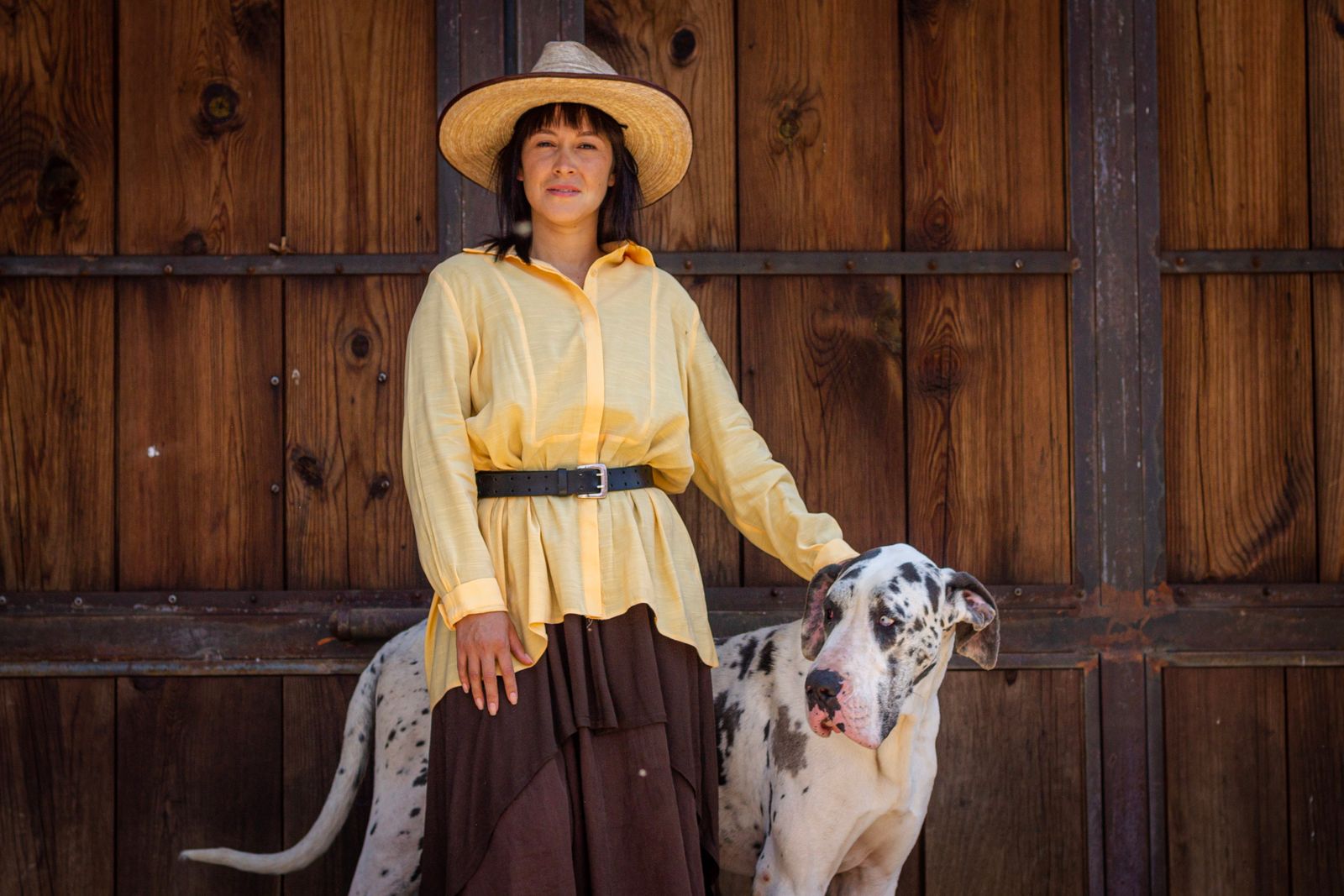
Great Dane snapshot
The American Kennel Club describes the Great Dane as friendly, patient, and dependable, and the breed standard calls it the Apollo of dogs, spirited and courageous, and never timid or aggressive. The dog behind those words is a giant working breed from Germany, elegant and smoothly muscled rather than bulky, with a long head, a deep chest, and a frame that stands taller at the shoulder than most dogs stand anywhere. The breed ranked No. 21 in AKC registrations for 2024, which makes it a common dog as well as a huge one, and a great many households learn its medical calendar the hard way.
| Height | Males 30 to 32 inches at the shoulder. Females 28 to 30 inches. |
|---|---|
| Weight | Males 140 to 175 pounds. Females 110 to 140 pounds. |
| Lifespan | 7 to 10 years, as listed by the AKC. |
| Coat | A short, smooth, thick coat. Colours in the breed standard include fawn, brindle, blue, black, harlequin, and mantle. |
| Temperament | Friendly, patient, and dependable, spirited and courageous, and described by the standard as never timid or aggressive. |
| Energy and exercise | A working breed that needs daily exercise and training, and that matures slowly for a dog, so growth, joints, and body weight need watching well past the first birthday. |
Two snapshot facts shape the insurance picture. The first is the chest. The Dane is deep chested as well as tall, and that shape carries the bloat risk that leads the health section below. The second is the lifespan. Seven to ten years is a short runway for a policy. Waiting periods that would be a footnote in a long lived breed consume a real share of a Dane's life, conditions that arrive in the middle years arrive in what is already the second half of this dog's story, and screening that is put off for a year is screening done on a dog with fewer years left to protect. Height explains the emergency half of this guide. The calendar explains the rest of it.
Health tendencies in Great Danes
The Great Dane Club of America, the breed's parent club, runs its screening program through the Canine Health Information Center, or CHIC, program at the Orthopedic Foundation for Animals. That program names four evaluations for breeding dogs: a hip evaluation, a cardiac evaluation, an autoimmune thyroid evaluation, and an eye examination. The six cards below cover the conditions that most shape an insurance decision for this breed, drawn from that screening program and from the veterinary sources listed at the end of this guide. They are tendencies, not predictions about an individual dog, and a well screened line lowers some of the risk without erasing any of it.
One part of the breed's screening program does not get its own card below: the eye examination. A board certified veterinary ophthalmologist examines breeding Danes for inherited eye conditions, and eyelid problems such as entropion, an inward rolling of the lid, are seen in the breed. Eye findings matter to a policy through the hereditary condition wording, and the screening section below tells you what to ask for. The six cards concentrate on the conditions that drive the large claims in this breed: one emergency, one heart, one joint, one hormone, one cancer, and one neck.
This section is general information about conditions a breed can be prone to. It is not veterinary advice and it is not a diagnosis of any dog. Signs listed here are possible signs owners may notice, and many of them have several causes. Only a veterinarian who examines your dog can say what a sign means.
Bloat (gastric dilatation and volvulus, GDV)
What it is
A life threatening emergency in which the stomach fills with gas and can twist on itself, trapping its contents and cutting off blood flow. The American College of Veterinary Surgeons describes GDV as rapidly progressive and requiring immediate medical attention, and lists the associations studies have found: a deep chest, being fed a single large meal once a day, being older, and being related to other dogs that have had the condition. The Dane's deep chest puts this breed at the front of the shape category, and the research number is stark. In a prospective study of large and giant breed dogs led by researchers at Purdue University and published in the Journal of the American Veterinary Medical Association in 2000, the estimated lifetime risk of GDV in the Great Dane was 42%, the highest figure the study reported for the breeds it followed. There is no home treatment and no watchful waiting with this condition.
Signs owners may notice
- Repeated retching that produces nothing, or only foam and saliva.
- A belly that looks swollen or feels tight, often high behind the ribs.
- Restlessness, pacing, drooling, standing and stretching, and an inability to settle.
- Rapid breathing, pale gums, weakness, or collapse as shock develops.
How vets usually evaluate and treat it
Emergency teams usually stabilise the dog first, with intravenous fluids and oxygen, decompress the stomach, and confirm the twist with an abdominal X-ray. An electrocardiogram is commonly run because abnormal heart rhythms are a frequent complication. Treatment is surgery to untwist and inspect the stomach, remove any tissue that has died, and tack the stomach to the body wall, a procedure called gastropexy, so it cannot twist again. The spleen is sometimes damaged and may need to be removed. Some owners discuss a preventive gastropexy with their vet before any emergency, often at the time of a spay or neuter. The ACVS notes that many veterinary surgeons recommend prophylactic gastropexy for breeds at risk. That preventive version is an elective surgery decision, and it is separate from the emergency operation.
Dilated cardiomyopathy (DCM)
What it is
A serious disease of the heart muscle in which the heart enlarges and pumps blood less effectively. Cornell's Riney Canine Health Center describes dilated cardiomyopathy as one of the most common heart diseases in large and giant breed dogs, and names the Great Dane among the breeds predisposed to it, with genetics likely playing a large role in large breed dogs. Cornell is direct about the trap inside this condition: in the early stages, dogs may not show obvious signs, which makes the disease harder to detect until it has progressed into heart failure, when fluid backs up into the lungs or the belly. That is why the breed's screening program specifies the form of the cardiac evaluation. The test that answers for this condition is an echocardiogram, an ultrasound examination of the heart performed by a cardiologist, which measures the heart's enlargement and directly assesses its pumping function. A listening examination alone can miss a heart that is quietly changing shape.
Signs owners may notice
- No signs at all in the early stages, which is the normal presentation and the reason screening exists.
- Episodes of collapse or fainting, which Cornell links to the irregular heart rhythms that can accompany the disease.
- Increased breathing rate or effort, and coughing, as heart failure develops.
- Weakness, lethargy, weight loss, or a belly that looks distended with fluid.
When it can be urgent
A collapse episode in a Dane is a same day problem even if the dog recovers in front of you, because an irregular rhythm that causes one collapse can cause a worse one. Laboured breathing, a dog that cannot settle and breathe comfortably, or a sudden distended belly alongside weakness is an emergency presentation of heart failure and needs an emergency hospital, not a routine appointment.
How vets usually evaluate and treat it
Cornell lists the evaluation as a physical examination plus tests chosen for what each one shows: chest X-rays for heart enlargement and lung changes, an echocardiogram to measure enlargement and pumping function, an ECG for irregular rhythms, blood work for coexisting disease, and in some dogs a Holter monitor, a device the dog wears that records the heart rhythm continuously for a full day rather than at a single moment. There is no cure. Treatment is medication that helps the heart muscle contract more efficiently, medication that relaxes the blood vessels, medication to control irregular rhythms, and, when heart failure is present, medication to keep fluid from building up. Cornell notes that screening of predisposed breeds can detect the disease sooner, when treatment is most effective, which is the entire logic of the screening calendar in the records section below.
Hip dysplasia
What it is
An inherited looseness of the hip joint. The ball and socket fit poorly, the joint wears unevenly, and arthritis follows over time. Cornell's Riney Canine Health Center describes hip dysplasia as a common inherited orthopedic condition in which laxity leads to arthritis, pain, and discomfort, and notes that it can be made worse by overfeeding and rapid growth in puppies. Hip evaluation is the first item on the breed club's screening list for the Dane, done as an OFA radiographic evaluation or a PennHIP evaluation. In this breed the joint in question carries the weight of one of the heaviest dogs in the catalog, and it starts carrying that weight while the skeleton is still growing, which is why the growth record in the tool below is a health record and not a keepsake.
Signs owners may notice
- Stiffness after rest, trouble rising, or reluctance on stairs and jumps.
- A swaying gait, or bunny hopping with both back legs moving together at a run.
- Slowing down on exercise the dog used to enjoy, or shifting weight onto the front legs.
- Loss of muscle over the hips and thighs in a dog that is moving less.
When it can be urgent
Hip dysplasia is a slow condition and a routine appointment problem. A dog that suddenly cannot bear weight on a back leg, or cries out during movement, may have an injury rather than arthritis, and that change deserves prompt care. In a young Dane, a new gait change also belongs in the Wobbler conversation below until a vet separates the two, because both can present as a dog that walks oddly on its back legs.
How vets usually evaluate and treat it
Evaluation combines a hands on joint exam, including a palpation test for looseness, with hip X-rays taken under sedation or anesthesia so the joint can be positioned correctly. The screening evaluations used for breeding dogs grade or measure the joint itself. Cornell notes that OFA grades hips from radiographs taken after a dog is two years old, while the PennHIP method measures laxity directly and can be used in younger dogs. In a pet dog with signs, treatment usually starts with weight control, controlled low impact exercise, pain and anti-inflammatory medication, and physical therapy. Surgery is a category for dogs whose pain does not respond to medical management. Cornell describes total hip replacement as the more common surgical route in large breed dogs, which is the size class this breed sits at the top of.
Hypothyroidism
What it is
A hormone disorder in which the thyroid gland, a small gland in the neck, produces too little thyroid hormone, and the body's metabolism slows down. The Merck Veterinary Manual describes how the diagnosis is usually made and why it takes care: the signs are not specific to this disease, many other illnesses can imitate them, and a dog can even seem to improve on thyroid medication without having the disease at all. The breed club screening item is aimed one step earlier, at autoimmune thyroiditis, an immune system attack on the thyroid gland that is a common route into hypothyroidism, tested with a blood panel from an approved laboratory. A breeding dog can carry the autoimmune process before its hormone levels fall, which is why the screening test and the diagnostic test are related but not the same thing.
Signs owners may notice
- Weight gain without an increase in food, and a dog that seems to gain on ordinary portions.
- Lethargy, mental dullness, and a low tolerance for exercise or cold weather.
- Coat and skin changes: increased shedding, hair thinning or loss, dry flaky skin, and slow hair regrowth.
- Recurring skin or ear infections, and darkened skin in the armpits and groin in some dogs.
When it can be urgent
Hypothyroidism develops slowly and is a routine appointment problem. It is almost never the emergency in the room. The urgency in this condition is diagnostic rather than dramatic: because its signs imitate ordinary slowing down, and because a giant breed is expected to slow as it ages, the condition can sit unrecorded for a long time, and the first blood panel that names it can land later in the policy story than it should have. A Dane that is gaining weight, losing coat, and losing interest deserves the blood test while the policy is young, not after the signs have been in the record for years.
How vets usually evaluate and treat it
Evaluation is blood work, and the Merck Veterinary Manual is clear that one number alone does not settle it. A total T4 measurement, the main thyroid hormone in the blood, is a useful screen, but its level can also fall in dogs that are ill for other reasons, so a careful diagnosis adds further tests such as free T4 and TSH, and reads the panel against the dog's signs and general blood results, which often show raised cholesterol. The autoimmune screening panel used in breeding programs tests for antibodies connected to the thyroiditis process. Treatment, once the diagnosis is properly made, is a thyroid hormone supplement given by mouth, usually once or twice daily, for the rest of the dog's life, with follow up blood tests to set the dose and then to check it over time. The medication is ordinary. The record keeping is the point: a lifelong daily medication with scheduled monitoring is a chronic condition claim pattern, repeated at every renewal.
Osteosarcoma
What it is
A cancer that begins in bone. Cornell's Riney Canine Health Center describes osteosarcoma as one of the most common types of bone cancer in dogs, often diagnosed in large and giant breed dogs, and names the Great Dane among them, alongside the Rottweiler, the Saint Bernard, and the Golden Retriever. The tumor commonly grows on the long bones of the front or back legs, and it is painful by nature: it grows inside a structure that has to bear the dog's weight with every step. Cornell's oncology service adds the pattern owners should hold in mind: pain is the most common sign, dogs are usually progressively lame, and swelling can appear at the site. This is not a condition with a screening test on the breed club's list. No blood panel or X-ray program rules it out in advance. What an owner controls is how fast a persistent limp in a giant dog gets worked up, and whether the policy in force covers the workup when it happens.
Signs owners may notice
- Lameness or reluctance to walk that does not resolve the way a strain should.
- A firm, localised swelling on a leg, most commonly on a long bone of the front or back limb.
- Loss of muscle mass in the affected limb as the dog uses it less.
- Pain signs around the limb: guarding it, reacting when it is handled, or a change in willingness to exercise or climb.
When it can be urgent
A persistent limp in a Dane deserves a prompt appointment rather than weeks of rest and reassessment, and a leg that gives way, swells quickly, or becomes suddenly much more painful needs same day care, because a bone weakened by a tumor can fracture under ordinary load. The general rule this breed teaches in several conditions applies here with force: in a giant dog, a limp that stays is a workup, not a waiting game.
How vets usually evaluate and treat it
Cornell describes the evaluation as a combination of the history, the physical examination, and X-rays of the affected limb or swelling, which often show a characteristic appearance, plus in some cases a fine needle aspirate or a biopsy, a tissue sample, which is the only way to diagnose the cancer definitively. Because this cancer commonly spreads to the lungs, staging usually includes chest imaging before treatment decisions are made. There is no cure, and Cornell frames treatment honestly as options that delay progression and relieve pain. When the tumor affects a limb, surgery to remove the limb, amputation, is often recommended as the way to remove the tumor, manage its pain, and remove the risk of a fracture through weakened bone. Chemotherapy after surgery aims to delay the spread of the disease. Palliative care, centred on pain control, is the other honest path, and families weigh it seriously in a dog of this size, where amputation recovery means a giant three legged dog learning to move again with help. Either way, the decisions arrive together and quickly, and they run through oncology and surgery, not through a single routine visit.
Wobbler syndrome (cervical spondylomyelopathy)
What it is
A condition of the neck in which abnormal cervical vertebrae compress the spinal cord, and the signals between the brain and the legs are squeezed. The Merck Veterinary Manual describes two forms. The disc associated form affects middle aged large breed dogs, especially Doberman Pinschers. The bony form is the Dane's form: the Merck manual states that bony associated cervical spondylomyelopathy affects young giant breed dogs, including Great Danes, Mastiffs, and Rottweilers, typically from several months to 4 years of age, with spinal cord compression caused by bony proliferation around the vertebrae in the lower neck. Genetic factors and possibly nutrition may be involved, which is one more reason the growth and feeding record below belongs in a health file: this is a condition of the growth years as much as of the genes.
Signs owners may notice
- An uncoordinated, wobbly gait, most visible in the back legs, with steps that cross or scuff.
- Dragging toes or worn nails on the back feet, and stumbling on turns or uneven ground.
- A stiff or awkward way of holding the neck, reluctance to lower the head to a bowl, or signs of neck pain.
- Weakness that progresses, in worse cases toward difficulty standing or walking at all.
When it can be urgent
A young Dane whose gait changes over days to weeks needs a prompt appointment and a neurological examination, not a watch and wait month, because spinal cord compression can progress. A dog that suddenly cannot stand, loses the ability to walk, or deteriorates quickly over hours is an emergency, and in a giant breed that emergency again needs a transport plan: a dog that cannot walk and cannot be carried needs a stretcher plan and a second adult, decided in advance.
How vets usually evaluate and treat it
The Merck Veterinary Manual is clear about the diagnostic ladder. A hands on neurological examination localises the problem to the neck. Survey X-rays cannot confirm this diagnosis, although they are useful for showing vertebral abnormalities and ruling out other problems such as infection or a bone tumor. A definitive diagnosis requires advanced imaging: myelography, CT, or MRI. Treatment categories run in two directions. Medical management uses anti-inflammatory medication, strict rest, and a neck support approach in selected dogs whose signs are mild and stable. Surgical treatment aims to relieve the pressure on the spinal cord and, in some techniques, to stabilise the vertebrae involved. Which direction fits a given dog depends on the imaging, the number of compression sites, and how the signs are progressing, and the conversation belongs with a neurology or surgery specialist. In a Dane, every step of either path is scaled by size: the imaging needs anesthesia in a giant patient, and the rest period in medical management means controlling the movement of a dog that outweighs its owner.
The Dane record: bloat action card, growth log, and screening calendar
No other guide on this site carries this exact record, because no other breed needs all three of its parts at once. The Dane needs a night plan for the emergency with the highest documented breed risk in the research, a growth record for the giant puppy whose neck and hips are forming under record speed growth, and a screening calendar for a heart and a thyroid whose test results expire while the dog still looks perfectly well. The full condition guides explain each disease. This record is the layer that lives in the household: what to do at night, what to write down while the puppy grows, and which test is due when. Build all three parts before you need any of them.
Part one: the bloat emergency action card
Copy this card to the fridge door and to every phone in the house. Fill in the blanks on a calm day. The GDV condition guide explains the disease in full; this card is only the Dane specific action layer, sized for a dog most households cannot lift.
| Act on these signs | Repeated retching that produces nothing or only foam. A belly swelling or tightening high behind the ribs. Restlessness, pacing, drooling, and stretching without settling. Do not wait to see whether it passes. |
|---|---|
| Our emergency hospital | Name and address: __________. Drive time at night: __________. Phone: __________. Saved in every driver's phone. |
| Second adult on call | Name: __________. Phone: __________. This person helps lift and travels with us, or meets us at the hospital. |
| How this dog moves | Ramp kept at: __________. Blanket stretcher kept at: __________. Vehicle that fits this dog: __________. Practised once on a calm day, with the dog well. |
| On the way | Call the hospital from the car if it can be done safely. Say: giant breed, suspected GDV, arrival time. Nothing by mouth. No home remedies. |
| Papers in the glove box | A copy of the insurance policy summary, the regular vet's details, and this dog's medication list. The claim story starts with the records made in the first hour at the hospital. |
Read the full GDV (bloat) condition guide →
Part two: the giant breed growth and feeding record
A Dane puppy's growth chart is a medical document in this breed. Overfeeding and rapid growth make hip dysplasia worse, per Cornell, and nutrition may be involved in the bony neck condition described above, per the Merck Veterinary Manual. Feeding choices also sit inside the bloat picture, because the ACVS lists being fed a single large meal once a day among the associations studies have found for GDV. Keep one page per month while the dog is growing, and keep the finished record with the policy papers for the life of the dog. If a gait, hip, or neck question ever reaches a claim, this page is the timeline the rest of the record is read against.
| Date | Age | Weight | Food and meals per day | Gait and vet notes |
|---|---|---|---|---|
| __________ | __________ | __________ | __________ | __________ |
| __________ | __________ | __________ | __________ | __________ |
| __________ | __________ | __________ | __________ | __________ |
- Feed for steady growth, not maximum size, and follow your vet's guidance on food choice and portions for a giant breed puppy. The goal is a lean, slowly built frame, not the heaviest puppy in the litter.
- Split the day's food into more than one meal rather than a single large meal, and keep that pattern into adult life, because meal pattern is one of the associations the bloat research records.
- Note every gait observation with a date, even the ones that resolve: a week of bunny hopping, a scuffed back nail, a reluctance on stairs. A dated note made while nothing seemed wrong is worth more later than a memory reconstructed after a diagnosis.
- Record every food change, appetite change, and weight trend alongside the weights themselves. Thyroid signs, growth problems, and heart signs are all read against this kind of timeline.
Part three: the cardiac and screening calendar
A CHIC number on a parent is a snapshot, and a pet Dane's own screening is a calendar, not an event. The heart result goes out of date because dilated cardiomyopathy develops in adulthood and hides while it does. The thyroid result goes out of date because the autoimmune process can begin after a clean panel. Use this calendar with your own vet, who sets the actual intervals for your dog, and file every result with its date.
| Check | What it answers | Last done | Next due |
|---|---|---|---|
| Cardiac echocardiogram by a cardiologist | Heart size and pumping function, the screening test for dilated cardiomyopathy in this breed. | __________ | __________ |
| Holter monitor recording, if your vet advises it | Heart rhythm across a full day, including rhythms a short examination can miss. | __________ | __________ |
| Thyroid blood panel | Thyroid hormone levels and, in a screening panel, antibodies tied to autoimmune thyroiditis. | __________ | __________ |
| Hip evaluation, if gait or breeding questions arise | Joint structure graded or measured from properly positioned X-rays. | __________ | __________ |
| Eye examination by a veterinary ophthalmologist | Inherited eye conditions and eyelid problems, the fourth item on the breed screening list. | __________ | __________ |
How to read a parent's cardiac result before you rely on it
Not every cardiac result answers the same question, and in this breed the difference is the whole screening story. Read any breeder's cardiac evidence in three checks. First, the form: an echocardiogram performed by a cardiologist measures the heart's size and pumping function, and it is the form this breed's risk calls for, because Cornell notes that early dilated cardiomyopathy often shows no outward signs for a listening examination to catch. A result that says only that the heart was listened to and sounded normal is weaker evidence, and it should be priced that way in your decision. Second, the date: dilated cardiomyopathy develops in adulthood, so a clear result on a young dog is a photograph of that year, not a verdict on the dog's heart for life. Ask when the test was done and whether it has been repeated. Third, the record: the result should be findable in the OFA database under the dog's name, alongside the hip, thyroid, and eye results that make up the CHIC file. A result you cannot verify is a claim, not a screening record. Those three checks, form, date, and record, take minutes, and they separate a screening program from a screening story.
Read the three parts together and the breed's logic appears. The action card exists because the emergency gives you minutes and a dog you cannot carry. The growth log exists because two of the six conditions are shaped during the growth months, and the record of those months cannot be rebuilt afterwards. The calendar exists because the two screening answers this breed most depends on, the heart and the thyroid, are the two that expire. A Dane household that keeps all three has done the part of insurance that no policy can do for it.
Policy decisions that matter for a Great Dane
For a Great Dane, the policy table is about one emergency, one silent heart, and a short calendar. Most of the breed list is hereditary or developmental, two of its conditions are found by tests that have to be repeated, and one condition gives you no time to think at all. The clauses below are the ones that decide whether the policy holds up across a compressed life.
| Policy feature | Why it matters for a Great Dane | Stronger wording looks like | Watch out for |
|---|---|---|---|
| Hereditary and developmental condition coverage | Hip dysplasia, dilated cardiomyopathy, autoimmune thyroid disease, and Wobbler syndrome are hereditary or developmental in kind, and they make up most of this breed's list. | Hereditary, congenital, and developmental conditions are covered on the same terms as other illnesses. | Hereditary exclusions, congenital exclusions that reach Wobbler syndrome, or breed specific exclusions aimed at conditions like these. |
| Emergency surgery terms | Bloat surgery happens at night, in a dog that may need two people and a ramp to reach the hospital at all, in the breed with the highest documented GDV risk in the Purdue research. | Emergency care is covered on the policy's normal terms, with any notice requirement set after the dog is stable. | Pre-approval requirements that an emergency cannot meet, or emergency care carved out by breed or by chest shape. |
| Screening and diagnostics coverage | This breed's two quiet conditions are found by tests: echocardiograms and Holter recordings for the heart, multi test blood panels for the thyroid, advanced imaging for the neck. | The policy states plainly which diagnostic tests are covered for a covered condition, and where it draws the line on screening a dog with no signs. | Assuming a screening echocardiogram is covered because heart treatment is covered. The two are different categories in many policies. |
| Orthopedic waiting periods | Hip signs and the bony form of Wobbler syndrome both belong to the growth and young adult period. A long orthopedic waiting period is a real exposure window in a breed with a short life. | The policy states each waiting period plainly, illness and orthopedic, so the uncovered window is known on day one. | A separate, longer orthopedic waiting period buried in definitions, discovered after a gait change appears. |
| Bilateral condition rule | Hips come in pairs, and hip wording decides what happens when the second joint of a giant dog declares itself after the first. | Each side is judged on its own record, with clear terms for the second side. | Wording that treats the second hip as pre-existing after the first is diagnosed. |
| Pre-existing condition definitions | A growing puppy's gait note, a borderline thyroid value, or a murmur heard once can each be read later as the first sign of a lifelong condition. | A clear definition tied to signs a vet recorded, with a stated route for conditions that were treated and resolved. | Broad wording that lets any early note anchor a denial for a diagnosis made years later, which in this breed can mean most of the dog's remaining life. |
| Specialist, surgical, and oncology coverage | Cardiology, neurology, orthopedic surgery, and oncology are routine stops in this breed, and its cancer treatment runs through surgery and chemotherapy categories. | Referral visits, specialist examinations, surgery, and chemotherapy are covered without a separate penalty. | Policies that limit specialist care, exclude chemotherapy, or require approval steps that are hard to complete before a needed visit. |
| Chronic condition and renewal terms | Thyroid medication is daily and lifelong, heart medication and monitoring continue once DCM is found, and both conditions renew with the dog every year. | The policy states that a covered chronic condition stays covered at renewal while enrollment continues. | Terms that reset a chronic condition at each renewal, or cap a single condition so tightly that a lifelong medication and monitoring pattern outgrows it early. |
Waiting periods only protect you if you know the dates yours end. When you enroll, copy the periods from your own policy documents into a record like this one and keep it with the Dane record above. In this breed, also write down the screening line while you are reading the policy, because you will ask about it again at every heart check.
| Item | Applies to | Your answer or date |
|---|---|---|
| General illness waiting period | Illness claims, including thyroid and heart conditions when they are covered illnesses. | __________ |
| Orthopedic waiting period | Joint conditions, including hip dysplasia when the policy sets a separate orthopedic period. | __________ |
| Screening line for the heart | Whether an echocardiogram or Holter recording for a dog with no signs is covered, excluded, or covered only after signs. | __________ |
| Emergency notice deadline, if any | How soon the insurer must be told about an emergency such as GDV surgery, counted from the event. | __________ |
Life stages: puppy, adult, and senior
Puppy
The puppy stage is when this breed does most of its growing and all of its fastest growing. A Dane puppy builds a giant skeleton in a span of months, and the conditions shaped in that window, hip dysplasia and the bony form of Wobbler syndrome, are the ones the growth and feeding record exists for. Collect the screening evidence for both parents before or when the puppy comes home, using the checklist below, and verify the CHIC numbers yourself, checking the dates on the cardiac and thyroid results rather than only their existence. Feed for steady growth, split meals rather than feeding one large meal a day, and start the growth log in the first week. Enroll in this stage, while the record is a growth chart and not a list of symptoms, and let the general and orthopedic waiting periods run while the puppy is well.
Adult
Adulthood in a Dane arrives early relative to the dog's own calendar, and it is when the quiet conditions declare themselves. Dilated cardiomyopathy develops in adult dogs and is the reason the screening calendar repeats the echocardiogram instead of filing one young result forever. Thyroid disease settles in as a daily medication with monitoring blood tests. Bloat risk runs through the whole adult span and rises with age in the associations the ACVS records, so the action card stays on the fridge for the life of the dog. The insurance work of this stage is discipline: keep the screening appointments, file claims as they happen, keep every imaging and cardiology report, and watch the renewal documents each year for changes to conditions your dog now has.
Senior
A senior Dane is a dog in the final portion of a 7 to 10 year span, and the stage is defined by arthritis, heart monitoring, and vigilance about a persistent limp. Osteosarcoma belongs mostly to this stage's conversation, and the rule from its card applies: a limp that stays is a workup, promptly. Weight control, ramps instead of stairs and jumps, non slip footing at home, and a stretcher plan that still works for an older, heavier dog are the daily practicalities. Review the policy for age based changes and premium increases. A plan that thins out exactly when a giant, arthritic, heart monitored dog needs it most fails the purpose it was bought for, and in this breed there is no later stage in which to correct that mistake.
A claim, step by step: a heart that fails its screening
The example below is hypothetical. It is not a real dog, a real claim, or a guarantee of how any insurer will decide. It follows an adult Great Dane through a routine screening echocardiogram that does not come back clean, because this breed's most consequential claim often begins on a calm day in a cardiology room rather than in an emergency, and the questions it raises about screening coverage are the ones owners least expect. Pet insurance generally reimburses after you pay the vet, as explained in how pet insurance works.
The screening appointment, and the finding
The dog is a healthy seeming adult Dane, brought in for the repeat echocardiogram on the household's screening calendar. The dog runs, eats, and greets people the way it always has. The ultrasound tells a different story: the heart is enlarged and its pumping function is reduced, the pattern of dilated cardiomyopathy, caught in the stage Cornell describes, before obvious signs and before heart failure. The cardiologist recommends medication and a Holter monitor recording to check the rhythm across a full day. Nothing about the dog's behaviour that morning would have told the family any of this.
The first coverage question, asked immediately
Before the treatment questions come the screening question. Was the echocardiogram itself a covered charge. The dog had no signs when it was booked, which is the whole point of screening in this breed, and many policies treat tests on a dog that is not ill as preventive care outside the claim. The family checks the answer they wrote into their policy record at enrollment, the screening line from the table above. Whatever that answer is, it was fixed on the day the policy was bought, and this is the moment it was bought for. The Holter recording, ordered because a disease has now been found, sits in a different position: it is part of the diagnostic workup of a diagnosed condition, and the family files it that way, with the cardiologist's report attached.
Medication, monitoring, and the record that builds
Treatment begins: medication to help the heart contract and to ease its workload, a rhythm check schedule, and repeat echocardiograms to follow the heart's size and function over time. Each visit adds pages to one continuous record: the screening ultrasound, the cardiology reports, the rhythm recordings, the blood work. Filed together, those pages tell one story with a clear beginning, a screening finding on a stated date inside the policy period, in a dog whose earlier record shows no cardiac signs. That clean beginning is not an accident. It is what early enrollment and a puppyhood record with no heart notes were protecting.
Checking the policy against the story
On paper, the insurer lines the condition up against the policy. The dog was enrolled as a puppy, the waiting periods ended years ago, and the first cardiac finding sits inside the policy period. The questions an insurer can still ask are the clause questions from the policy table: whether heart disease is a covered hereditary condition in this breed, whether cardiology referral care is a covered category, and whether the condition stays covered at renewal now that it will be managed for the rest of the dog's life. Each of those questions has an answer written in the policy, and each could have been asked in writing before enrollment.
Submitting the claim, and how reimbursement works
The claim is filed with the cardiology report, the echocardiogram images and measurements, the Holter report, the medication invoices, and the follow up visit notes, filed as one story rather than as fragments. Each eligible charge then moves through the same mechanics described in what pet insurance costs and why. Charges count against the deductible first, the policy's reimbursement rate applies to eligible charges after that, and totals are tracked against the annual limit. For a condition managed across years, the renewal terms matter as much as any single claim: the medication, the monitoring, and the repeat imaging continue for the rest of this dog's life, and the policy has to keep recognising them as the same covered story.
Where claims like this get denied
Denial pressure points in a heart claim are a murmur or rhythm note recorded before enrollment being read as the condition's start, screening charges submitted as treatment charges and rejected as preventive, and renewal terms that quietly reclassify a chronic condition. Each is a clause or record question, and each can be addressed before it is urgent: enroll before any cardiac note exists, write the screening line into your policy record on day one, and ask the renewal question in writing while the dog is still a puppy with a clean heart.
What drives a Great Dane premium
No responsible guide will name a price for your dog, because the quote depends on the dog, the address, and the settings chosen. What can be explained is the shape of Dane pricing and the choices that move it. The full mechanics are in what pet insurance costs and why.
Breed risk profile. Insurers see a giant breed whose likely claims are one life threatening abdominal emergency, a progressive heart disease with lifelong medication and repeat imaging, orthopedic disease, a lifelong hormone condition, and a bone cancer whose treatment runs through surgery and oncology. That is an emergency profile, a chronic profile, and a cancer profile in the same dog, and it prices differently from a breed with one dominant risk.
Size. Size is the multiplier on almost every line of care. Medication doses, anesthesia, imaging, and surgery all scale with weight, and a Dane sits at the top of the weight range insurers see. Handling itself costs more at this scale: examinations, imaging positioning, hospital care, and recovery support for a dog that cannot be lifted all take more staff, more equipment, and more time than the same care for a small breed.
Age curve. Premiums generally rise with age, and this breed compresses the curve. Wobbler syndrome and hip disease can bill in the growth and young adult period, heart and thyroid disease in the middle years, and cancer and arthritis care toward the end of a 7 to 10 year life. A policy bought for a puppy has to hold its shape across every one of those stages in less than a decade, which is why chronic, screening, and bilateral wording matters more here than a low starting premium.
Location and plan settings. Vet prices in your area set the bill sizes the insurer expects, and your deductible, reimbursement rate, and annual limit choices trade premium against claim returns. One honest note for this breed. A strong screening file from your breeder is valuable evidence and good breeding practice, but do not expect it to lower a quote. Insurers price the breed and the dog's own record, not the parents' test results.
Pre-purchase checklist for a Great Dane policy
- Collect the breeder screening evidence first: hip evaluation by OFA or PennHIP, cardiac evaluation, autoimmune thyroid evaluation, and eye examination for both parents, all recorded through OFA.
- Check the form and the date of the cardiac result. In this breed the cardiac evaluation should be an echocardiogram, and a result from years ago is a snapshot, not a current answer. Ask when each parent was last tested.
- Check the date of the thyroid result for the same reason. Autoimmune thyroid disease can begin after a clean panel, so a recent result carries more information than an old one.
- Verify both parents' CHIC numbers in the OFA database yourself. A CHIC number means the tests were done and published, not that every result was normal.
- Confirm hereditary and developmental conditions are covered, including hip dysplasia, dilated cardiomyopathy, thyroid disease, and Wobbler syndrome, and ask the congenital wording question with Wobbler syndrome named.
- Ask the screening question in writing: are an echocardiogram and a Holter recording covered for a dog with no signs, or only after signs appear. Write the answer into your policy record.
- Write down every waiting period that applies to this dog: general illness and orthopedic, and note the date each one ends.
- Read the bilateral clause for hips, and confirm the diagnostic routes are covered as a group: echocardiogram and Holter recording, multi test thyroid panels, hip imaging, MRI or CT of the neck, and biopsy and chest imaging for a bone tumor.
- Confirm cardiology, neurology, orthopedic, and oncology referral visits are covered categories, and that cancer treatment categories include surgery and chemotherapy.
- Ask how emergency GDV surgery is handled, including any notice deadline, and separately how a preventive gastropexy is classified.
- Build the Dane record before the puppy settles in: the bloat action card filled in, the growth log started, and the screening calendar opened with the first heart check pencilled in.
- Enroll as a puppy, after the screening file is collected and before any gait, heart, thyroid, or stomach note enters the medical record.
Questions to ask an insurer, in writing
- Are hereditary and developmental conditions covered for a Great Dane, including hip dysplasia, dilated cardiomyopathy, autoimmune thyroid disease, and Wobbler syndrome, or does a congenital condition exclusion reach any of them?
- Is an echocardiogram, or a Holter monitor recording, covered for a Great Dane with no signs of heart disease, as screening, or is cardiac testing covered only after signs are recorded?
- What waiting periods apply to hip dysplasia and other orthopedic conditions in this breed, and are they different from the general illness waiting period?
- If one hip is treated, how is the same condition in the other hip handled when it appears later?
- Are MRI and CT imaging of the neck, a biopsy and chest imaging for a bone tumor, and chemotherapy covered categories, and are cardiology, neurology, and oncology referral visits covered?
- How is emergency GDV surgery handled, is there a notice deadline during an emergency, and how is a preventive gastropexy classified?
- Once dilated cardiomyopathy or hypothyroidism is diagnosed and covered, will the medication, the monitoring tests, and the repeat imaging remain covered at every renewal while I stay enrolled?
Questions Great Dane owners ask
Does pet insurance cover bloat surgery for a Great Dane, and a preventive stomach tack?
Emergency surgery for gastric dilatation and volvulus is the kind of sudden, life threatening event accident and illness policies are built around, provided the signs did not predate the policy. A preventive gastropexy, the stomach tack done before any emergency, is treated differently by many policies and may be classed as preventive care that a standard policy does not pay for. Ask in writing how each is handled. In this breed the question matters more than in most, because a prospective Purdue University study estimated the lifetime risk of GDV in the Great Dane at 42%, the highest figure the study reported for the breeds it followed.
What health testing should a Great Dane breeder show me?
The breed screening program for a CHIC number covers four evaluations recorded through OFA: a hip evaluation by OFA or PennHIP, a cardiac evaluation, an autoimmune thyroid evaluation, and an eye examination. For this breed the cardiac evaluation matters in its specific form, an echocardiogram performed by a cardiologist, because dilated cardiomyopathy can be present before any sign shows and a listening examination alone can miss it. Ask for the actual results and each parent's CHIC number, and verify them in the OFA database yourself. A CHIC number means the tests were done and published. It does not mean every result was normal, and a cardiac or thyroid result is a snapshot that goes out of date as the dog ages.
Does pet insurance cover heart screening for dilated cardiomyopathy in Great Danes?
Treatment for dilated cardiomyopathy can be covered as an illness when the condition is not excluded, no signs were recorded before enrollment, and any waiting period has passed. Screening is a separate question. An echocardiogram or a Holter monitor recording done on a healthy dog with no signs is preventive or diagnostic screening, and many standard policies do not pay for screening of a dog that is not ill. Ask in writing where your policy draws that line, because in this breed the screening itself, repeated over the dog's life, is a real and recurring part of care, and a policy that covers treatment but never the tests that find the disease early leaves a gap you should know about before you buy.
Does pet insurance cover hip dysplasia in Great Danes?
An accident and illness policy can cover hip dysplasia when hereditary conditions are included, the orthopedic waiting period has passed, and no signs were recorded before enrollment. Hip evaluation is one of the four items on this breed's own screening program, so insurers expect the condition in this breed. Read the bilateral clause as well, because hips come in pairs, and wording that treats the second hip as pre-existing after the first is diagnosed changes what the policy is worth in a dog whose joints carry this much weight.
Are osteosarcoma and Wobbler syndrome covered for Great Danes?
Both can be covered as illnesses when they are not excluded and the first signs were not recorded before enrollment or during a waiting period. The practical questions are about the workup and the treatment categories. Osteosarcoma is usually confirmed with imaging and a tissue sample, staged with chest imaging, and treated with surgery and chemotherapy categories. Wobbler syndrome needs advanced imaging of the neck, usually MRI or CT, before anyone can say where the spinal cord is compressed. Confirm that advanced imaging, oncology, surgery, and neurology referral care are covered categories, because a policy that pays for medication but not for the imaging and specialist steps leaves the defining parts of both conditions outside the claim.
When is the best time to enroll a Great Dane?
As a puppy, and in this breed the reason is the calendar. The AKC lists a lifespan of 7 to 10 years, Wobbler syndrome can appear in a young, still growing dog, hip signs can be recorded early, and bloat and heart disease can arrive in the middle years that make up most of this breed's adult life. Enrolling early clears the general and orthopedic waiting periods while the dog is well, and it keeps the first recorded sign of a lifelong condition inside the policy period instead of before it. In a breed with a short life, a year spent uninsured is a larger share of the dog's whole life than it would be in a longer lived breed.
Sources and further reading
- American Kennel Club, Great Dane breed page for size, lifespan, coat, temperament, breed character, and the Apollo of dogs description in the breed standard.
- American Kennel Club, Most Popular Dog Breeds of 2024 for the breed's No. 21 ranking in AKC registrations for 2024.
- Orthopedic Foundation for Animals, CHIC program requirements for the Great Dane for the breed's screening list: hip evaluation, cardiac evaluation, autoimmune thyroid evaluation, and eye examination, and how the results are recorded and made public.
- Cornell Riney Canine Health Center, Dilated cardiomyopathy for the Great Dane's predisposition, the absence of early signs, screening, diagnosis by echocardiogram, ECG, and Holter monitor, and medication based management.
- Cornell Riney Canine Health Center, Canine hip dysplasia for joint looseness leading to arthritis, the roles of growth and feeding, OFA and PennHIP evaluation, and treatment categories including total hip replacement in large breed dogs.
- American College of Veterinary Surgeons, Gastric dilatation volvulus for the deep chest and feeding associations, signs, stabilisation and surgery, and prophylactic gastropexy in at risk breeds.
- Merck Veterinary Manual, Disorders of the stomach and intestines in dogs for gastric dilatation and volvulus, its signs, and why it is an emergency.
- Glickman LT, Glickman NW, Schellenberg DB, Raghavan M, Lee TL. Non-dietary risk factors for gastric dilatation-volvulus in large and giant breed dogs. Journal of the American Veterinary Medical Association, 2000; 217: 1492 to 1499 (Purdue University prospective study) for the estimated lifetime GDV risk of 42% in the Great Dane, the highest figure the study reported for the breeds it followed.
- Merck Veterinary Manual, Hypothyroidism in animals for the non specific signs of hypothyroidism, why a single T4 value does not settle the diagnosis, the fuller blood panel, and lifelong thyroid hormone replacement with monitoring.
- Cornell Riney Canine Health Center, Osteosarcoma in dogs for the Great Dane among the breeds this bone cancer is often diagnosed in, its signs, diagnosis by imaging and tissue sample, and treatment categories including amputation and chemotherapy.
- Merck Veterinary Manual, Degenerative diseases of the spinal column and cord in animals for cervical spondylomyelopathy, its bony form in young giant breed dogs including Great Danes, and why a definitive diagnosis requires myelography, CT, or MRI.
Sources checked on November 6, 2026.