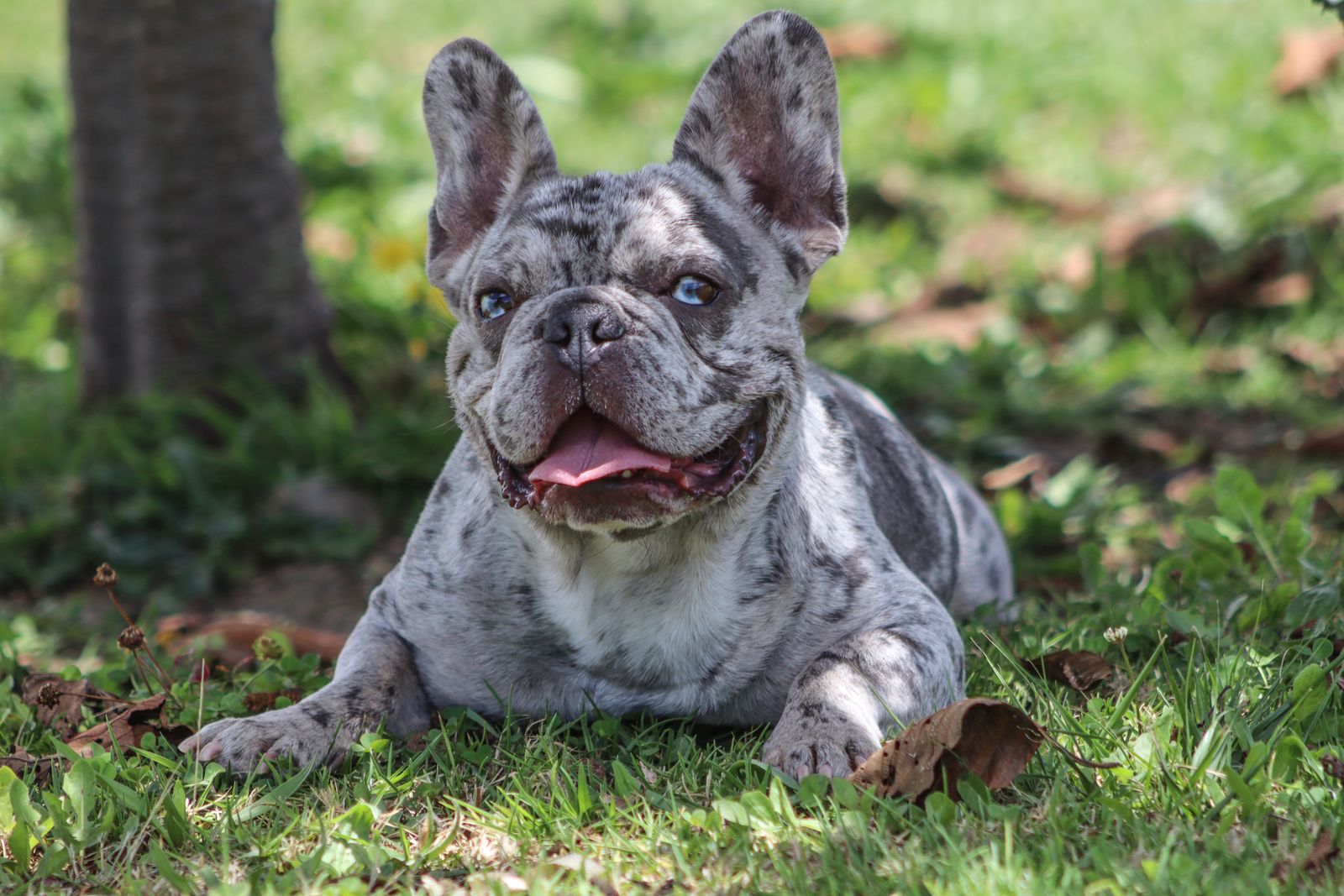
BOAS at a glance
Brachycephalic obstructive airway syndrome is a group of upper airway problems that travel together in short-headed dogs. The skull is shortened, but the soft tissues inside the nose and throat are often not reduced by the same amount. The crowded result narrows the airway at more than one point at once. This guide explains the condition in plain language first. It then turns to the insurance questions that decide whether a policy actually helps when breathing care is needed.
| What it is | A combination of upper airway abnormalities in short-headed dogs that obstruct breathing, described by the American College of Veterinary Surgeons as elongated soft palate, stenotic nares, and everted laryngeal saccules commonly seen together |
|---|---|
| Key anatomy | Stenotic nares are narrowed nostrils. An elongated and sometimes thickened soft palate extends into the airway opening. Tissue in front of the vocal cords can be pulled into the windpipe. Some dogs also have a narrow windpipe or crowded nasal tissues |
| Who is at risk | Brachycephalic breeds. Cambridge lists the French Bulldog, Bulldog, Pug, Pekingese, Shih Tzu, Japanese Chin, Boxer, and Boston Terrier as examples. Not every brachycephalic dog shows clinical signs |
| Typical first signs | Noisy breathing such as snoring and snorting, breathing noise on excitement or exercise, narrowed nostrils, disturbed sleep, and trouble coping with heat |
| Emergency signs | Blue or grey tongue or gums, which vets call cyanosis, collapse or loss of consciousness, severe difficulty breathing, and overheating that does not settle |
| How it is graded | The Cambridge functional grading system listens to breathing before and after a 3-minute trotting exercise test and assigns Grade 0, I, II, or III. Grades II and III are considered clinically BOAS affected |
| How it is treated | Management with weight control and avoidance of heat, excessive exercise, excitement, and stress. Surgery in general terms can widen nostrils, shorten and thin the soft palate, and address other obstructing tissues, followed by close hospital monitoring |
| The insurance question | Whether the policy covers airway conditions for your dog's breed at all, whether corrective surgery is treated as covered treatment or as elective, and whether an earlier note about noisy breathing makes later airway care pre-existing |
What BOAS is, in plain language
Brachycephalic means short-headed. The American College of Veterinary Surgeons, shortened to ACVS, explains that these dogs have been bred to have relatively short muzzles and noses, and because of this the throat and breathing passages are frequently undersized or flattened. Cambridge puts the core problem plainly. While the length of the skeletal muzzle is reduced, there is often no corresponding decrease in the size of the soft tissue contained in the skull. The result is a constricted nasal cavity and partial obstruction of the pharynx, which is the throat, and the larynx, which is the voice box and the entrance to the windpipe.
Three findings give the syndrome its classic shape, and ACVS names them together. The first is stenotic nares. Stenotic means narrowed, and nares are the nostrils. Narrowed nostrils are malformed nostrils that are narrow or collapse inward during inhalation, which makes it difficult for the dog to breathe through its nose. Cambridge grades nostril narrowing from open, through mild and moderate, to severe, where the nostrils are almost closed and the dog may switch to mouth breathing with very gentle exercise or stress. Cambridge also reports that stenotic nares are a risk factor for BOAS, particularly in French Bulldogs, and that French Bulldogs with moderate to severe stenosis of the nostrils are about 20 times more likely to develop BOAS. That figure is from the Cambridge BOAS Research Group, checked on the date at the end of this guide.
The second finding is an elongated soft palate. The soft palate is the soft back part of the roof of the mouth. In an affected dog it is too long, so its tip protrudes into the airway and interferes with the movement of air into the lungs. Cambridge adds that the palate can also be thickened, which narrows the throat further. The low-pitched snoring and snorting noise owners hear, called stertor, is caused by this tissue vibrating as air is forced past it. The third finding is everted laryngeal saccules. Saccules are small pouches of tissue just in front of the vocal cords. The effort of breathing against an obstruction creates strong negative pressure, and that pressure pulls the saccules into the windpipe, where they partly obstruct airflow.
That pressure cycle is why BOAS can get worse over time. Cambridge describes how increased inspiratory effort generates high negative pressure that sucks soft tissues into the airway passage. Over time those tissues can swell and thicken, and the cartilages of the larynx can lose rigidity and collapse, which narrows the airway further. ACVS makes the same point from the surgical side. In chronic cases the cartilages of the larynx become inflexible and begin to collapse. Cambridge is direct that BOAS is not curable. Corrective surgery can provide a better quality of life, but it does not turn a brachycephalic airway into a long-nosed airway.
BOAS also reaches beyond breathing noise. Cambridge lists eating difficulties and regurgitation as common in affected dogs, because the crowded throat tissues can impede swallowing and chronic pressure changes can draw the stomach upward and promote reflux. Sleep can be disturbed in the same way. Thickened tissue at the base of the tongue, a long or thickened soft palate, and crowded nasal tissues can obstruct the airway during sleep, leading to periods of difficult breathing and periods of no breathing. And because the nasal cavity plays a central role in how a dog regulates temperature, an obstructed nose undermines cooling. A dog that cannot move air well cannot pant effectively, and panting is how dogs lose heat.
One distinction matters for everything that follows. BOAS is not a single accident or a single bad day. It is anatomy the dog was born with, whose effects build as tissues respond to years of hard breathing. That is exactly why insurers argue about this condition more than almost any other, and why the breed condition clauses in the second half of this guide matter so much.
Signs at home, sorted by what to do next
Owners usually meet BOAS as sound before they meet it as a diagnosis. Snoring that happens while the dog is awake, snorting on a walk, or a dog that cannot settle in warm weather is information about an airway. The table below sorts the common signs by the response they call for, using the sign lists published by Cambridge and ACVS. It is general information, not a diagnosis. Signs like these can have other causes, and only a veterinarian who examines your dog can say what is going on. When in doubt, treat the sign as one level more urgent than the table suggests, and call your vet.
| What you see | What it can mean | What to do next | Write this down |
|---|---|---|---|
| Snoring or snorting at rest, noisy breathing when excited, playing, exercising, or eating and drinking. Narrowed nostrils that seem pinched | An indicator of airway obstruction. Cambridge notes that dogs with a normal upper airway breathe quietly, and that some affected dogs only make noise under excitement, exercise, or stress | Watch closely and book a vet visit. Say the words noisy breathing when you call. Keep exercise gentle and conditions cool while you wait, and note whether the noise is getting louder over weeks | When the noise happens, at rest or after effort, and a short phone video with sound if you can take one safely |
| Breathing that looks like hard work. Excessive panting, reluctance to exercise, tiring quickly, disturbed sleep, gagging or retching, or regurgitation around meals | The airway is limiting daily life, not only making noise. ACVS lists exercise intolerance, retching, and gagging among the common signs, and Cambridge lists eating difficulties and sleep-disordered breathing | Call the vet promptly, within days. Stop exercise in heat or humidity. Feed and walk in the coolest part of the day. Ask directly for an airway assessment and whether functional grading fits your dog | How long the dog can walk comfortably, how sleep looks and sounds, and when gagging or regurgitation happens |
| High-pitched breathing noise, heavy panting that does not settle after rest, drooling, a dark red tongue, staggering, or a dog that cannot cool down after heat or excitement | A warning stage. Cambridge describes the high-pitched noise called stridor as a sign of a narrowed or collapsed larynx, and lists heavy panting, drooling, and staggering among signs of overheating | Same-day urgent care. Move the dog to a cool place with air conditioning, offer small amounts of water, and cool the dog with cool water as Cambridge advises for overheating. Then contact a vet for treatment and evaluation rather than waiting it out | The time signs started, the temperature of the day and the activity before it, and what cooling you did |
| Blue or grey tongue or gums. Collapse or loss of consciousness. Severe difficulty breathing, gasping, or a dog panicking to breathe | The blood is not getting enough oxygen. Cambridge calls the blue discolouration cyanosis and describes collapse when oxygen levels are not stabilised | Emergency, now. Go to an emergency hospital. Call ahead and tell them a flat-faced dog is in breathing distress so they can prepare. Keep the dog calm and cool on the way, with air moving. Do not muzzle the dog and do not delay to film or to feed | Arrival time at the hospital, and the name of the clinician who examined the dog. These details anchor the claim record later |
The last column is not an afterthought. The notes you make at home become part of the story an insurer reads later. A dated note that says when noisy breathing started, what triggered it, and where the dog was treated is worth more than a memory reconstructed weeks afterward. It also helps your vet. Airway signs are graded partly on how they sound at rest and after effort, and your timeline is evidence.
Which dogs are at risk, and why
Not every brachycephalic dog shows clinical signs. Cambridge says so directly, and it is the sentence that keeps this guide honest. Risk follows the head shape, but severity varies from dog to dog within the same breed, and even within the same litter.
The breeds Cambridge names as brachycephalic examples are the French Bulldog, Bulldog, Pug, Pekingese, Shih Tzu, Japanese Chin, Boxer, and Boston Terrier. ACVS names the same core family, listing the English Bulldog, French Bulldog, Pug, Pekingese, and Boston Terrier as the most common dogs affected, and notes that Persian cats also have a brachycephalic conformation. This guide is about dogs. The greater the shortening of the skull and the crowding of the tissues inside it, the greater the chance that the airway findings described above appear together.
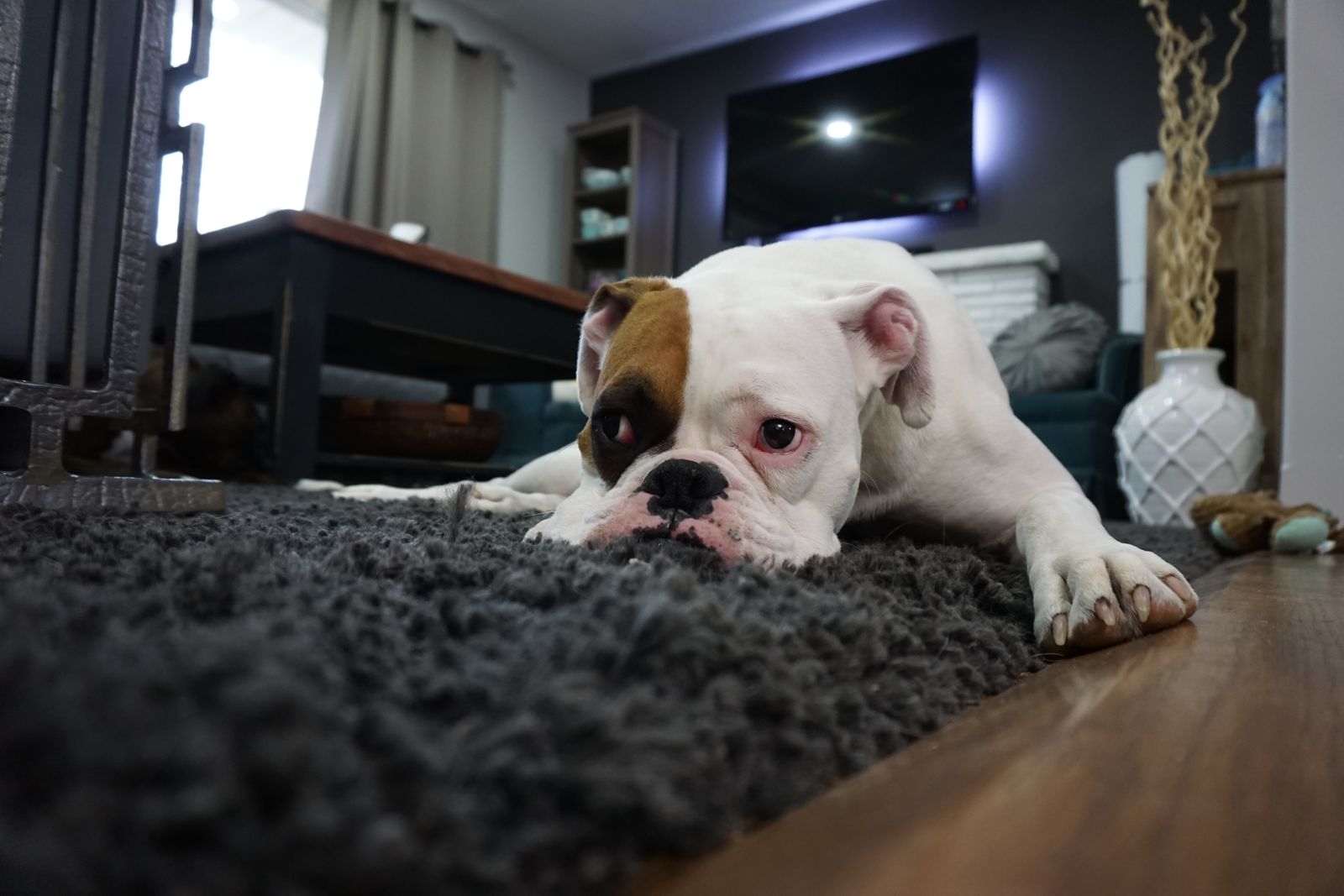
Three risk factors sharpen the picture for an individual dog. The first is the nostrils. Cambridge reports that stenotic nares are a risk factor for BOAS, particularly in French Bulldogs, with the moderate to severe figure given in the section above. Pinched nostrils are visible at home and on a routine exam, which makes them the one risk factor an owner can literally see. The second factor is weight. Cambridge research found that obesity is significantly associated with BOAS, because fat tissue within the airway tract can further narrow the passage. Cambridge advises that comparing body weight to a breed average is not a reliable way to judge an individual dog, and that body condition scoring is the more useful tool. Ask your vet to score your dog and to write the score in the record. The third factor is time and load. Heat, humidity, excitement, stress, and hard exercise all raise the demand on an airway that is already narrow, and years of breathing against obstruction can pull secondary changes, such as everted saccules and laryngeal collapse, into the picture.
Breeding is part of the risk story, and part of the record an owner can ask for. The functional grading scheme described below was built so breeders can select toward dogs that breathe well. In the United States, the Orthopedic Foundation for Animals runs the scheme, and the French Bull Dog Club of America lists Respiratory Function Grading among its recommended health tests and points owners to the Cambridge BOAS pages and the OFA grading program from its veterinary health information page. A puppy buyer can ask whether the parents were graded, and what grades they received. A grade is not a guarantee about a puppy. It is dated evidence about the parents' breathing, and it belongs in the same folder as the health records.
For the breed-by-breed detail, see our guides to pet insurance for French Bulldogs and pet insurance for Bulldogs, the two breeds where airway wording shapes the whole policy decision. The full list of breed guides is on the breed guides hub, and every condition guide on this site is collected on the condition guides hub.
How BOAS is graded and diagnosed
BOAS assessment has two layers. The first is functional grading, which measures how the dog actually breathes. The second is diagnostic workup, which looks at the anatomy itself. Owners meet the first layer most often, because it needs no anaesthesia and produces the grade that breeders, clubs, and vets quote.
Functional grading, step by step
The Cambridge functional grading system exists because signs may not be present at rest in some moderately affected dogs. A trained assessor listens to the dog's breathing, including with a stethoscope, before exercise. The dog then completes a 3-minute trotting exercise tolerance test. The assessor listens again after exercise. The sounds at rest and after effort, together with breathing effort and any distress, decide the grade.
| Grade | What it means | What Cambridge advises |
|---|---|---|
| Grade 0 | BOAS free, clinically unaffected with no respiratory signs | Annual health check is suggested if the dog is under 2 years old |
| Grade I | Clinically unaffected, but with mild respiratory signs | Annual health check is suggested if the dog is under 3 years old |
| Grade II | BOAS affected, with moderate respiratory signs and clinically relevant disease | Management is required, including weight loss and or surgical intervention |
| Grade III | BOAS affected, with severe respiratory signs | A thorough veterinary examination, with surgical intervention |
Two points about grading matter for insurance. First, a grade is a dated health record, not a coverage promise. It proves how the dog breathed on that day, assessed in a standard way. Keep the certificate and the vet notes with your policy file. Second, timing cuts both ways. A good early grade documents a clean starting point. A grade recorded before enrollment that already shows clinically affected breathing also documents signs, and an insurer can read it that way. Grade because it helps the dog and the breeding record, and understand what the document will say before you file it anywhere.
Questions to ask the vet at a grading or airway visit
Copy these into the appointment notes on your phone, and write the answers into the breathing log described at the end of this guide.
- What functional grade did my dog receive today, and what sounds at rest and after exercise decided it?
- How open are the nostrils, in the open, mild, moderate, or severe wording Cambridge uses?
- What is my dog's body condition score today, and what weight range should we aim for?
- Which findings, if any, would make you discuss referral or surgery, and what change should trigger that call sooner?
- Please write the grade, the nostril finding, and the body condition score in the record today, so the file shows the full picture with a date.
Cambridge also uses a non-invasive respiratory function test called whole-body barometric plethysmography, shortened to WBBP, at its research centre. The dog rests in a clear chamber while airflow is measured, with no sedation or anaesthetic, and the team calculates a BOAS Index to indicate relative severity. Most owners will never meet this test outside a research or referral setting. It matters here because it is the objective measurement the functional grading scheme was built to reflect in ordinary clinics.
The diagnostic workup
When signs are more than mild, or surgery is being considered, vets look at the anatomy directly. ACVS explains that stenotic nares can be easily diagnosed on physical examination. Definitive diagnosis of an elongated soft palate and everted laryngeal saccules can only be made with the dog under anaesthesia, because a thick tongue makes it very difficult to see the larynx in an awake brachycephalic dog. Under anaesthesia, an elongated palate is seen to extend past the tip of the epiglottis, which is the flap at the entrance to the airway, and in severe cases directly into the laryngeal opening.
Cambridge lists the imaging that supports that work. Head, neck, and chest radiography or CT scans are part of the diagnostic workup for BOAS. Chest imaging can help assess a narrow or collapsed windpipe, pouches of the oesophagus, hiatal hernia, and aspiration pneumonia. Head and neck CT can show a thickened soft palate and the crowded nasal tissues, and can guide planning for surgical techniques. Laryngoscopy and endoscopy under sedation or general anaesthesia let the team assess the throat, the larynx, and the nasal cavity directly, including everted saccules and any collapse of the laryngeal cartilages.
For insurance, the diagnostic path matters as much as the diagnosis. Policies treat the components differently. One plan may cover the consultation and the grading assessment but classify CT as a separate service with its own limit. Another may require specialist referral for imaging to count as covered. A third may treat a grading assessment done for breeding purposes differently from diagnostic work done because a dog is ill. None of that is visible in a headline that says breathing problems are covered. It is visible in the sample policy's definitions of diagnostic services, which is where the policy table below sends you.
Treatment paths, in general terms
Treatment follows severity, and both Cambridge and ACVS draw the same broad map. Management comes first for every affected dog. Surgery is discussed when signs are clinically relevant or severe, or when management is not enough. Only the veterinarian examining your dog can say which path fits that dog.
Management without surgery
Management is active, not a suggestion to wait. Weight control is the first item. Cambridge suggests weight loss before surgical intervention for overweight dogs with mild to moderate signs, and its pathophysiology work explains why. Excess weight places fat tissue around and inside the airway tract, which narrows a passage that is already narrow. The second item is load control. Cambridge advises avoiding excessive exercise and exercise on hot summer days, and keeping affected dogs away from hot environments and situations that cause too much excitement or stress. Regular, gentle exercise still matters for fitness. The skill is choosing cool times, short sessions, and calm settings. Cambridge also notes that medication has a place in management for some dogs, decided by the treating vet. Gastro-protectants are given to Cambridge's surgical patients, which reflects how closely the airway and the gut are linked in this condition.
Surgery, in general categories
Airway surgery is not one operation. It is a set of corrections matched to the findings in the individual dog, often combined in a single anaesthetic. In general categories, the sources describe these components. Widening the nostrils, by wedge resection of the nostril tissue or related techniques, opens the entrance to the nose, and Cambridge adds that a second narrowing behind the nostril wings, at the nasal vestibule, can be addressed by alar fold resection. Shortening the soft palate, and thinning it when it is thickened, removes the tissue that protrudes into the airway opening. ACVS describes soft palate resection performed with a scalpel blade, scissors, or a laser, with the excess tissue removed. Removing everted laryngeal saccules takes the pulled-in tissue out of the windpipe opening, and ACVS notes the saccules may be removed at the same time as palate surgery or left to settle back once pressure falls. Addressing enlarged tonsils and, in selected referral cases, crowded nasal turbinates completes the category list Cambridge describes.
Two limits deserve plain words. A narrow windpipe itself is not corrected by these procedures, and advanced laryngeal collapse changes the outlook. ACVS advises that in chronic cases where the laryngeal cartilages have become inflexible, removing the palate and saccules may not provide enough relief, and a permanent opening into the windpipe in the neck, called a permanent tracheostomy, may be the only solution, with complications of its own. Cambridge gives the matching prognosis note. Dogs with advanced laryngeal collapse usually have a poorer prognosis, and revision surgery might be required in some severely affected dogs.
Aftercare and risk
The hours after airway surgery are the risky part, and both sources say so. ACVS advises that pets must be monitored very closely immediately after surgery, because significant inflammation or bleeding can obstruct the airway, and that pets are usually observed in hospital for at least 24 hours. Occasionally a tube is placed through an incision in the neck into the windpipe, a temporary tracheostomy, until swelling subsides enough for the dog to breathe normally. Cambridge names the same major risk, post-operative recovery from anaesthetic with inflammation and swelling of the airway, and adds aspiration pneumonia caused by regurgitation as a risk after surgery. Post-operative coughing and gagging are common, per ACVS. The outcome note is genuinely hopeful within those limits. ACVS says the prognosis is good for young animals, who generally breathe much easier with significantly reduced respiratory distress and a markedly improved activity level, while older animals may have a less favourable prognosis, especially if laryngeal collapse has already started.
For the insurance reader, aftercare is also a coverage category. Hospital observation, a possible temporary tracheostomy, medication, and recheck visits are services a policy either includes or does not. A plan that covers the operation but limits hospital care or specialist aftercare covers only part of the episode the sources describe.
The policy clauses that decide a BOAS claim
Most pet insurance disputes about BOAS are not arguments about what happened at the hospital. They are arguments about what the policy said before anything happened. Eight clauses do nearly all of that deciding. The table below names each clause, explains what it does in plain language, and states the question to settle for BOAS specifically. Every answer lives in the insurer's sample policy, which is the full contract wording, not the marketing summary. Read it before you enroll, and keep the answers in writing. Our guides to what pet insurance covers and waiting periods explain these mechanics across conditions.
| Clause to check | What it means | The BOAS question to settle |
|---|---|---|
| Breed condition exclusion | A plan may name conditions associated with certain breeds and exclude or limit them for those breeds | Does the wording name brachycephalic breeds, flat-faced breeds, airway conditions, or your dog's exact breed anywhere in connection with breathing? This is the clause owners meet most often at BOAS claim time |
| Hereditary and congenital coverage | Some plans exclude conditions passed down through a breed's bloodlines or present from birth, or cover them only under a hereditary section with its own rules | Is BOAS covered for a brachycephalic breed at all, or does the hereditary or congenital wording remove the very condition the head shape produces? |
| Elective or cosmetic surgery wording | Plans commonly exclude surgery they classify as elective, cosmetic, or not medically necessary | Is corrective airway surgery, including nostril widening and soft palate resection, treated as covered treatment when a vet recommends it for breathing, or is any part of it classified as elective? |
| Pre-existing condition definition | A pre-existing condition is one whose signs appeared before the policy started or during a waiting period, whether or not it was formally diagnosed | Would a single earlier note about snoring, noisy breathing, exercise intolerance, or narrowed nostrils make all later airway care pre-existing? For BOAS this is the most consequential definition in the contract |
| Waiting periods, including any airway or breed specific period | Many plans delay coverage beyond the standard illness waiting period for named categories. The delay is stated in the sample policy | How long is the standard illness waiting period in this plan, and is there an additional waiting period that touches airway, hereditary, or breed conditions? An episode inside the window is not covered, however urgent it is |
| Grading and diagnostic handling | Policies differ on whether assessments, imaging, and specialist work count as covered diagnostics, screening, or breeding related services | Are a functional grading assessment, CT, endoscopy, and specialist consultation covered when a vet orders them for breathing signs, and is grading for breeding purposes treated differently? |
| Annual limit and per condition limits | The annual limit caps what a plan pays in a policy year. Some plans also cap a single condition across its lifetime | Picture one year containing specialist assessment, imaging, combined airway surgery, hospital monitoring, and rechecks. Does the limit survive that year with room for ordinary illness care as well? |
| Covered services list, including anaesthesia and aftercare | The contract lists which services count: consultations, imaging, surgery, anaesthesia, hospitalisation, medication, aftercare | Are specialist surgery, anaesthesia in a brachycephalic dog, hospital observation after airway surgery, a possible temporary tracheostomy, medication, and rechecks each covered, and does any of them carry a sublimit, a smaller cap inside the main limit? |
Two of these rows deserve emphasis because they catch owners out most often. The breed condition row is the headline trap. A policy can sound broad on illness while its breed wording quietly removes the airway from cover for the breeds most likely to need it. Read the breed name, including any flat-faced or brachycephalic category wording, with your own dog in mind. The pre-existing row is the records trap. Insurers read the medical record, not your memory of it. A casual note from a routine visit, written before you thought about insurance, can be the document that decides the claim. That is why the strongest BOAS advice in this guide is also the simplest. Enroll while the record is clean if you can, and never hide a breathing sign from your vet to protect a future claim. The dog's care comes first, and a hidden sign helps no one at claim time either.
A BOAS claim, step by step
This walkthrough is hypothetical and uses no dollar figures, because treatment prices vary by region, hospital, and severity, and invented figures would not help you judge a real policy. It follows the sequence of a typical claim so you can see where the paperwork is created.
- Signs are noticed. Your dog's breathing noise increases, exercise tolerance falls, or a hot day goes badly. You restrict activity, keep the dog cool, and call the vet. Note the date and time. If the policy has an advice line, a call now also creates a timestamped record that you acted promptly.
- The first assessment. The vet examines the dog, looks at the nostrils, listens to the breathing, and writes the findings in the medical record. A functional grade may be assigned or arranged. This record is the foundation of the claim. Keep the invoice, the visit notes, and any grading certificate.
- Referral and workup. If signs are more than mild, the dog is referred to a specialist. Anaesthetic examination of the throat, and CT or other imaging where used, document the exact findings. Keep the reports themselves, not only the bills. They are the documents that connect the treatment to the diagnosis.
- The treatment decision. The team recommends management, surgery, or management first with surgery later. If surgery proceeds, the components performed, the anaesthesia, and the hospital monitoring are each documented. Discharge instructions set the rest, cooling, and recheck plan in writing.
- Filing the claim. You submit the claim form with the invoices, the medical record, and the specialist reports. Most insurers also ask for the dog's full history from every vet the dog has seen, because the pre-existing check runs on the whole record, not only this episode.
- The assessment. The insurer matches the episode against the clauses in the table above. Did breed condition wording apply to this dog? Did any earlier note describe breathing signs? Was corrective surgery classified as treatment or as elective in this plan? The answers, not the size of the bill, decide the outcome.
- Reimbursement and the deductible. If the claim is accepted, the plan applies the deductible, which is the amount you pay first, and the reimbursement percentage stated in the policy, up to the remaining annual limit. Our guide to how pet insurance works walks through that arithmetic with a labelled hypothetical example.
- Aftercare claims. Recheck visits, medication, and any follow-up assessment may follow for weeks. File them as they happen, under the same episode, and keep the folder complete until the vet discharges the dog.
If a claim is denied, ask for the denial in writing with the exact clause cited. A denial that names a clause can be checked against the sample policy you read at purchase. A denial based on breed wording can be answered by producing the insurer's own written answer from before enrollment, if you asked the questions in the next section. Neither guarantees a reversal. Both turn an argument into a document review, which is the ground where owners do best.
Before you enroll a dog at risk of BOAS
- Get a written answer on whether brachycephalic obstructive airway syndrome is covered for your dog's exact breed under the exact plan you are considering.
- Search the sample policy for breed condition wording, and for the words brachycephalic, flat-faced, airway, nostrils, and soft palate.
- Ask whether corrective airway surgery is covered treatment when a vet recommends it, or whether any part of it is classified as elective or cosmetic.
- Confirm hereditary and congenital conditions are covered, because BOAS follows from an inherited head shape.
- Ask what earlier signs count as pre-existing for the airway: snoring, noisy breathing, exercise intolerance, narrowed nostrils, or a breathing grade on file.
- Find every waiting period that could touch airway care in the sample policy, including any breed or hereditary extension.
- Check that specialist consultation, functional grading, CT and endoscopy, airway surgery, anaesthesia, hospital monitoring, and aftercare are covered services, and note any sublimits.
- Choose the annual limit by picturing assessment, imaging, combined surgery, hospital days, and rechecks in a single policy year.
- Enroll young, while the medical record shows no breathing signs, and keep breeder or rescue paperwork, including any parental grading results, that shows the dog's history.
- At home, set up the weight plan, the harness, and the cool resting place now, while they are prevention rather than recovery.
Questions to ask an insurer, in writing
Copy these into an email or the insurer's contact form. Replace the bracketed breed with your dog's exact breed, and keep the reply with your policy. Written answers are the ones that can be quoted back at claim time.
- Is brachycephalic obstructive airway syndrome (BOAS) covered for my [breed] under this plan, and is it classified as a hereditary or congenital condition?
- Does this plan have a breed condition exclusion or limitation that applies to brachycephalic or flat-faced breeds, to airway conditions, or to my dog's breed by name?
- Is corrective airway surgery covered when a veterinarian recommends it for breathing, including widening stenotic nares, soft palate surgery, and removal of everted laryngeal saccules, or is any of it treated as elective or cosmetic?
- What waiting periods apply to airway or hereditary conditions in this plan, beyond the standard illness waiting period?
- My dog's record contains a note about snoring or noisy breathing on a past visit. Would that make later BOAS treatment pre-existing under this plan?
- Are specialist consultations, respiratory function grading, CT, endoscopy, anaesthesia, hospital observation after airway surgery, and recheck visits covered services, and are there sublimits on any of them?
- Does this plan have a per condition limit that a first BOAS episode, including surgery and aftercare, could exhaust?
- If my dog has airway surgery this year and needs revision surgery or further airway care in a later year, how is the later care treated?
For the wider comparison method behind these questions, see how to compare plans and what pet insurance covers. For the timing mechanics, see waiting periods explained.
The at-home breathing log for a flat-faced dog
No sibling guide on this site has this tool in this form, because no other condition is judged so much by sound over time. Once a week, in the same cool room, note how your dog breathes at rest for one quiet minute. Is breathing silent, snoring, or snorting? Note sleep sounds, how long a normal walk lasted before panting increased, and any gagging or regurgitation that day. Add the date, the weather, and the dog's weight when you have it. This log helps a vet see change that a single visit can miss, it supports a grading conversation, and it creates the dated timeline that both good care and a fair claim review rely on. It is a record, not a diagnosis. Any entry that shows hard breathing at rest, stridor, or trouble cooling belongs in a vet call, not only in the log.
Frequently asked questions
Is BOAS covered by pet insurance?
It depends on the exact policy. Some plans cover brachycephalic obstructive airway syndrome as a standard illness or as a hereditary condition. Others apply breed condition wording, exclude airway problems in flat-faced breeds, treat corrective surgery as elective, or attach a special waiting period. The only reliable answer comes from the sample policy for the plan you are considering, confirmed in writing for your dog's breed.
My dog snores and snorts. Does that mean BOAS is already pre-existing?
It can be treated that way. Insurers read the medical record for signs such as noisy breathing, snoring, exercise intolerance, or narrowed nostrils, even when no formal BOAS diagnosis was made. A note like that, dated before the policy started or during a waiting period, can be used to treat later airway care as pre-existing. This is the main reason owners of flat-faced breeds are advised to enroll before breathing signs reach the record.
What is a BOAS grade, and should I keep the result?
A BOAS grade comes from the functional grading system developed by the University of Cambridge BOAS Research Group. A trained assessor listens to the dog's breathing before and after a short trotting exercise test and assigns a grade from 0 to III. Grades 0 and I are considered clinically unaffected. Grades II and III are considered BOAS affected and need management or treatment. Keep the dated result with your policy file. It is a health record, not a coverage promise.
Does my dog need airway surgery, or can BOAS be managed without it?
Both paths are real, and severity decides. Cambridge advises weight loss for overweight dogs with mild to moderate signs, and avoiding heat, excessive exercise, excitement, and stress for affected dogs. Surgery is the path the sources describe for dogs with clinically relevant or severe signs, and it can involve widening the nostrils, shortening and thinning the soft palate, and addressing other obstructing tissues. Only the veterinarian examining your dog can say which path fits.
Does insurance pay for grading, imaging, and airway surgery for BOAS?
Only if those services are in the plan's covered services list and no breed condition wording removes them. Some policies include consultations, imaging, and surgery as standard services. Others limit specialist care, require referral, or exclude corrective airway surgery for flat-faced breeds. Check grading assessments, CT, specialist surgery, anaesthesia, hospital care, and aftercare by name before enrolling a dog at risk.
Can I prevent BOAS in my dog?
The inherited head shape cannot be changed, but the load on the airway can be reduced. Cambridge links excess weight to worse breathing, because fat tissue in the airway tract can narrow it further, and advises keeping affected dogs away from heat and excessive exercise. A harness rather than pressure on the neck, calm and cool conditions, weight control, and a vet visit at the first sign of breathing difficulty all help daily life. None of it guarantees a dog will never need airway care. It improves the starting position if signs develop.
Sources and further reading
- University of Cambridge BOAS Research Group, About BOAS
- University of Cambridge BOAS Research Group, Recognition and diagnosis of BOAS
- University of Cambridge BOAS Research Group, Management and treatment of BOAS
- University of Cambridge BOAS Research Group, Pathophysiology of BOAS
- American College of Veterinary Surgeons, Brachycephalic syndrome
- Orthopedic Foundation for Animals, Respiratory Function Grading Scheme
- French Bull Dog Club of America, Veterinary health information (BOAS and Respiratory Function Grading links)
- French Bull Dog Club of America, Health registries and CHIC testing, including recommended Respiratory Function Grading
Sources checked on November 6, 2026. CoverageForPets is operated by its publisher and researched from the primary sources listed above. This guide is general information only. It is not veterinary advice and not a recommendation to buy any specific policy.