Senior dogs at a glance
Senior is a life stage, not a birthday. The American Animal Hospital Association, known as AAHA, describes senior dogs in its senior care guidelines as dogs in the last part of their estimated lifespan, which is why a giant breed can be a senior years before a small breed is. The American Veterinary Medical Association, known as AVMA, makes the same point in its senior pet guidance. Dogs do not share one universal age of seniority because their sizes and lifespans differ so widely, and larger breeds tend to live shorter lives than smaller breeds. This guide therefore does not tell you the age at which your dog became a senior. Your veterinarian, who knows the breed, the size, and the dog, places your dog on that curve. What this guide does is take the situation that follows from it. A dog in the last part of life, with no insurance history, and an owner deciding whether a policy started now can still do useful work.
Three definitions carry the whole page, so they are stated here and used consistently afterward. A waiting period is the time after a policy starts during which a new condition is not yet covered, and signs that appear inside it can be treated as pre-existing afterward. A deductible is the amount you pay first on covered care in a policy period before the insurer pays anything. Reimbursement is the share of covered costs the insurer pays back to you after the deductible, because pet insurance normally pays you rather than paying the clinic directly. An annual limit is the maximum the insurer will pay across covered care in one policy period. Our guide to how pet insurance works explains those mechanics in full. Everything specific to senior dogs builds on them.
| What senior means | The last part of a dog's estimated lifespan, in the AAHA framing. Size and breed move the boundary by years, so there is no single senior birthday for dogs as a group |
|---|---|
| The honest starting point | Most senior dogs have never been insured and already have a medical record. That record, more than the dog's age, decides what a new policy can cover |
| New enrollment age limits | Many insurers set an upper age for new enrollment. The ages and rules vary by insurer and plan, and some policy wording states no upper age. The specific plan's documents settle it |
| Dogs already enrolled | A separate question from new enrollment. Renewal wording decides whether coverage continues as the dog ages and whether its terms change. Read it directly |
| The pre-existing centre | Signs recorded before enrollment or during a waiting period can make later care for that condition pre-existing, including notes that never became a diagnosis |
| The conditions that dominate | Arthritis and joint disease, cancer, kidney disease, cruciate ligament injuries, diabetes, dental disease, and cognitive changes, with heart and hormone conditions alongside |
| The clause that decides value | Chronic condition renewal wording: whether a condition covered in one year stays covered, on workable terms, in the next |
| The move to make first | A senior baseline visit with a full panel before enrollment, so the starting record is current, complete, and dated |
The rest of this guide follows the order an owner actually faces it. First the economics, stated honestly and without figures. Then the age limit question, separated into its two halves. Then the record, the renewals, and the conditions themselves. Then the baseline visit, the decision framework, the clause table, a worked claim, and the checklist. Nothing in this guide is a recommendation to buy or to skip a policy. It is the material a decision should be made from.
The honest senior picture, and why premiums rise with age
The American Veterinary Medical Association's senior pet guidance defines the terms the way this guide uses them. Pet life stages divide a pet's life into periods, and a pet is considered a senior when it has reached the last part of its estimated life span for its species and breed. There is no single senior age for dogs, because larger breeds generally have shorter lives than smaller ones, so a large breed dog can be a senior years before a small breed dog of the same age. The 2023 AAHA Senior Care Guidelines use the same last portion of estimated life span framing for senior dogs. What changes clinically in this stage, across both sources, is the density of conditions. Kidney disease, heart failure, cancer, cognitive dysfunction, mobility problems, and chronic pain are the common senior conditions the AAHA senior care material names, and they tend to arrive together rather than one at a time.
Veterinary care in this stage is also structured differently. AAHA's senior care material describes implementing more frequent visits for senior patients, because change happens faster and earlier findings change outcomes. The AVMA brochure describes senior checkups as more in depth than routine ones, often including bloodwork and screening for age related conditions, and a dental examination as a standard part of the visit. The point for an insurance reader is simple. A senior dog generates more veterinary events per year than a young dog did, and more of those events are diagnostic workups and long running treatments rather than single fixes.
Premiums follow from that arithmetic, and the mechanism is worth understanding because it explains both the price of a new senior policy and the rises an enrolled owner sees. An insurer prices a policy from the expected cost of claims for dogs like yours, and both sides of that expectation move with age. The chance that any given year contains a claim rises, and the claims that occur are more likely to be the expensive chronic kind, medication and monitoring repeated indefinitely, than the one time kind. Insurers do not absorb that by charging a young dog's price forever. In the Spot sample policy we read, rates are subject to change at renewal, which is the contractual home of this repricing. A premium quoted for a senior dog today is a price for the coming policy period, not a lifetime rate, and a reader comparing a new enrollment against staying uninsured should compare it on that basis.
The second senior fact lives on the coverage side rather than the price side. Every year a dog spends uninsured, its medical record grows, and the record is what a new policy's pre-existing exclusions are built from. Enrolling late does not fail because of age alone. It narrows because the uncovered past gets longer. That narrowing is the subject of the next sections, and it is why the honest question for a senior dog is never simply whether a policy can be bought. It is what a policy bought now would still do.
Upper age limits for new policies, stated plainly
Many insurers set an upper age for new enrollment of dogs, and the ages and rules vary by insurer and by plan. Some plans apply the limit to illness cover only. Some apply it by breed or size. Some state no upper age in their wording at all. Because of that variation, this guide publishes no market age figure, and any source that gives you one number for senior dog enrollment without naming a specific insurer and plan is not describing reality. The rule for the reader is the whole answer. Check the specific plan's documents, or ask the insurer in writing, for your dog's exact age and breed, before assuming enrollment is either open or closed.
Keep two different questions separate, because owners routinely merge them and insurers treat them very differently. The first is the enrollment question. Will this insurer start a new policy on a dog of this age at all? The second is the continuation question. For a dog who is already enrolled and then grows older inside the policy, does the coverage continue at renewal, and on what terms? A strict answer to the first question says nothing about the second. The continuation answer lives in the renewal clause, covered in its own section below, and in the Spot sample policy we read it is genuinely continuing. The policy is reissued at the end of each policy period unless the owner cancels or the insurer advises non-renewal, and there is no age in that document at which a covered dog ages out.
The same Spot document illustrates the enrollment side in the opposite direction. Its policy text contains no upper age limit for new enrollment. Read carefully, that means the limit, if that insurer applies one anywhere, would live in its enrollment rules or declarations material rather than in the policy form itself, which is one more reason the question has to be asked about the specific plan rather than inferred from a policy PDF. One insurer's document is an illustration of where the answer hides, never a market answer. For every insurer on your shortlist, get the new enrollment age answer in writing, and file it with the quotes.
The pre-existing reality of a senior dog
A senior dog being enrolled for the first time arrives with a record. That is not a criticism of the dog or the owner. It is the normal shape of a long life of veterinary care. Old examination notes. A limp recorded years ago and never mentioned again. Dental findings written down at a cleaning, including teeth described as diseased or recommended for extraction. A blood value flagged as slightly high with a note to recheck it, where the recheck never quite happened. An ear infection each summer. A lump described as probably fatty and worth monitoring. None of this felt like a diagnosis at the time. All of it is material to an insurer reading the file after a claim, because a pre-existing condition is defined by when signs first appeared, rather than by when anyone used a condition's name.
Insurers read the whole history, not the last visit. When a claim is submitted, the insurer can request the medical records behind it, and the definitions in the policy decide how far back and how broadly those records are read. In the Spot sample policy we read, an occurrence of a condition is defined around when its signs or symptoms were first observed by any individual, recorded in the medical record, or would have been detectable by a routine physical examination, and the pre-existing definition expressly includes conditions related to, secondary to, or resulting from a pre-existing condition. That related to wording matters enormously in a senior dog. A recorded limp is not only about the limp. It can be argued into the file of a later arthritis claim. A slightly high kidney value is not only about that value. It can sit behind a later kidney claim. A monitored lump is not only about the lump. It can be raised when a cancer claim arrives, at that site or, depending on wording, beyond it.
Curable and chronic, the classification that decides second chances
Many policies draw a line inside the pre-existing category, and a senior owner should look for it by name. On one side are conditions the policy treats as curable. A past ear infection, a past episode of vomiting or diarrhea that resolved, a healed minor injury. Some policies allow a curable pre-existing condition to become coverable again after the dog has been free of its treatment and symptoms for a stated symptom free period. The condition is then treated as a new occurrence if it returns. In the Spot sample policy we read, that restored eligibility exists and is called cured condition eligibility, and the same clause withdraws it from two categories entirely. It does not apply to chronic conditions, and it does not apply to ligament and knee conditions.
On the other side of the line are chronic conditions, meaning conditions that can be treated or managed but not cured, which is how the Spot document defines the term. Arthritis is the senior example. Once arthritis signs are in the record, no symptom free period makes a later arthritis claim new, because management is not a cure under the definition. The same logic applies to chronic kidney disease, to diabetes, and to cognitive dysfunction once it is recorded. For a senior dog, this classification quietly decides more money than the enrollment question does. Most of what is already wrong with a senior dog is chronic in shape, which is why this guide keeps returning to the same conclusion. A new policy for a senior dog is mostly protection against what has not happened yet and what is not connected to what has, and it should be priced and judged on exactly that basis.
Chronic conditions and renewals: the clause that decides senior value
If the pre-existing definition decides what a senior policy starts with, the chronic renewal clause decides what it becomes. Senior dogs do not mostly need insurance for single dramatic days. They need it for conditions that are diagnosed once and then managed at every recheck, with medication refilled, blood values remeasured, imaging repeated, and comfort assessed, for the rest of the dog's life. A policy that handles the diagnosis generously and then thins out at renewal has helped with the cheapest part of a chronic condition and left the owner alone with the expensive shape of it, which is its duration.
Read for four things. First, continuation itself. Does a condition covered in one policy period remain a covered condition in the next, while you stay enrolled and pay the premium? Second, per condition limits. A per condition limit is a cap on what the policy will pay for one named condition, separate from the annual limit. A modest per condition cap can be consumed quietly by a chronic condition's monitoring before any crisis arrives. Third, reclassification. Some wording lets a known condition be treated less generously over time, or counts a chronic condition's ongoing care under different terms than its diagnosis. Fourth, the bilateral rule. A bilateral condition is a condition that affects both sides of the body. A bilateral rule is policy wording that treats the second side of a paired structure, the second knee, hip, or eye, in relation to the first. In the Spot sample policy we read, ligament and knee conditions are defined as bilateral conditions regardless of cause, an occurrence on one side is treated as related to the other, bilateral conditions that are pre-existing are excluded, and ligament and knee conditions are excluded if any such condition occurred before coverage or during a waiting period. Whether or not the plan you are considering is written that way, every senior owner with a dog who has one repaired knee or one arthritic hip needs the answer for the other side, in writing, before enrollment.
The monitoring question sits inside the renewal question and deserves its own sentence. Recheck blood panels, repeat imaging, blood pressure measurement, and medication reviews for a covered chronic condition are either covered treatment of that condition or they are not, and the answer decides whether a chronic claim is a rhythm the policy shares or a first payment followed by years of full price monitoring. Ask it by name for the conditions your dog is most likely to develop, not in general. Arthritis monitoring, kidney monitoring, diabetes monitoring, and post treatment cancer checks are four different conversations in a claims department, and a senior owner is entitled to have each one in writing before choosing where the premium goes.
The senior condition core
Four conditions below have their own full guides on this site, each card ending with the clause question the condition turns on. Kidney disease and cognitive change follow in prose, because their senior insurance story is mostly a monitoring and classification story. Breed notes and end of life wording close the section. This is general information, not veterinary advice. A new lump, a new limp, a change in drinking, or a change in behaviour in an older dog is a veterinary visit, not a watch and wait, because the treatable causes are time sensitive and the record of when a sign was first seen matters later.
Cancer in dogs
What it is
Cancer is a group of diseases in which abnormal cells grow without the normal controls, and in senior dogs it is one of the central conditions of the life stage. The AVMA's senior pet guidance lists cancer among the common health problems of senior pets and among the common causes of sudden weight loss in a senior pet. Some cancers grow on the surface where an owner can feel them. Others, including cancers of the spleen, liver, and blood vessels, can stay hidden until they cause a crisis.
Signs owners may notice
- A new lump or bump, or an existing lump that changes in size, shape, or feel.
- Weight loss or a falling appetite with no simple explanation.
- A sore that does not heal, or unexplained swelling, heat, pain, or lameness, all named in the AVMA senior guidance.
- Tiredness or a dog quietly doing less, which can be the only early sign of an internal cancer.
How vets usually evaluate and treat it
Evaluation usually starts with examination of any lump, followed by some combination of bloodwork, imaging such as X-rays or ultrasound, and a sample of the lump or tissue so the cancer can be named rather than guessed at. Naming the type matters, because treatment paths differ widely. They include surgery to remove a tumor, chemotherapy, meaning drug treatment aimed at cancer cells, radiation at referral facilities, and palliative care, meaning care aimed at comfort when cure is not a realistic goal.
Hip dysplasia and arthritis
What it is
Hip dysplasia is a developmental problem of the hip joint, the ball and socket joint between the thigh bone and the pelvis, in which the ball and socket do not fit snugly. Arthritis, also called osteoarthritis or degenerative joint disease, is what years of abnormal joint wear produce. The Cornell Riney Canine Health Center describes osteoarthritis as a chronic and progressive joint disease in which dogs lose joint cartilage, leading to further changes in the bones and causing pain, inflammation, and difficulty using the affected limb. The Merck Veterinary Manual describes the same process as thinning of cartilage, fluid buildup within the joint, and the formation of bony outgrowths around it. Cornell lists hip dysplasia, elbow dysplasia, kneecap luxation, and cruciate ligament damage among the diseases that can lead to osteoarthritis, and states that obesity contributes significantly, through the added force on joints and the inflammatory substances fat tissue produces.
Signs owners may notice
- Stiffness, pain, and lameness or a change in gait, which Cornell lists among the signs of osteoarthritis.
- Reluctance to walk, run, or exercise, and difficulty with stairs, jumping up, and getting up from lying down.
- Muscle wasting over the back end, and behaviour changes such as irritability, which Cornell also names.
When it can be urgent
Arthritis itself develops gradually. A dog that suddenly cannot bear weight, cries out when a joint is touched, or cannot get up at all may have an injury or a different problem on top of the arthritis, and that change needs prompt care.
How vets usually evaluate and treat it
Cornell describes diagnosis as a physical examination in which the veterinarian observes gait and posture and feels the joints for abnormal changes and signs of pain, with X-rays used to assess the joint. Treatment is management, not cure, and Cornell frames its goal as minimizing pain, slowing progression, and maintaining muscle. The categories are weight control, low impact activity such as leash walks and swimming, home changes including non-slip rugs and ramps, physical rehabilitation, pain medication, which commonly means nonsteroidal anti-inflammatory drugs with routine blood monitoring when used long term, and surgery for some underlying causes. Merck adds that long term anti-inflammatory use can sometimes cause gastrointestinal problems, which is why the monitoring bloodwork is part of the plan.
Cruciate ligament injuries
What it is
The cruciate ligaments sit inside the knee, which veterinarians call the stifle, and they keep the joint stable as the dog moves. A cruciate ligament can weaken gradually and then tear, or tear in a single awkward movement, and in senior dogs the gradual weakening story is common. The knee becomes unstable and the abnormal movement damages the joint further. Cornell lists cruciate ligament damage among the diseases that lead to osteoarthritis, which is why a cruciate claim in a senior dog is also about the arthritis that follows in that knee.
Signs owners may notice
- Sudden or gradually worsening lameness in a back leg, with the dog putting little or no weight on it.
- A dog that holds the leg up, sits with the leg out to the side, or struggles to rise.
- Swelling or thickening around the knee in a longer standing problem.
When it can be urgent
A back leg that suddenly bears no weight at all, especially with pain when the knee is handled, deserves prompt assessment. Fractures and dislocations can look similar at home, and the examination is what separates them.
How vets usually evaluate and treat it
Evaluation is a hands-on orthopedic examination testing the stability of the knee, often with X-rays to assess the joint and rule out other causes. Treatment paths include surgery to stabilise the knee, and conservative management built on rest, weight control, pain medication, and rehabilitation, which some senior dogs follow because of their overall health or anaesthetic considerations. Either path is followed by rehabilitation and by arthritis management in that knee over time.
Diabetes
What it is
Diabetes mellitus is a condition in which the body cannot regulate blood sugar properly, because it does not produce enough insulin, a hormone that moves sugar from the blood into the cells, or does not respond to insulin normally. Sugar builds up in the blood and spills into the urine, pulling water with it. The AVMA senior guidance names diabetes among the common causes of sudden weight loss in a senior pet, and increased drinking and urination are the signs owners most often notice first. Diabetes in a senior dog is a chronic condition in shape. It is managed every day, for the rest of the dog's life.
Signs owners may notice
- Drinking noticeably more and urinating more, including accidents in a house trained dog.
- Weight loss, sometimes while appetite stays normal or increases.
- Cloudy eyes, because diabetes in dogs commonly affects the lenses and can lead to cataracts.
When it can be urgent
A diabetic dog that stops eating, vomits, or becomes very lethargic needs prompt care. A dog showing increased drinking and urination who has not yet been diagnosed also needs a timely visit, because diabetes shares those signs with kidney disease and other conditions that the same blood and urine panel helps to separate.
How vets usually evaluate and treat it
Diagnosis rests on blood and urine testing that shows persistently high blood sugar and sugar in the urine, read alongside the signs and an examination. Treatment for most dogs means insulin injections given by the owner at home on a regular daily rhythm, with a controlled diet and repeat blood testing, including monitoring curves in which blood sugar is measured across a day. Cataracts and urinary infections are part of the follow-up picture, because both are more common in diabetic dogs.
Kidney disease in dogs, in prose
Chronic kidney disease is the gradual loss of kidney function over time. The kidneys filter waste from the blood and regulate water, minerals, and blood pressure, so failing kidneys affect the whole dog slowly. The Merck Veterinary Manual's urinary system guidance explains how kidney function is assessed. Blood values including urea and creatinine are measured, and creatinine rises as filtration falls, although the relationship is not a straight line and early losses of function can move the familiar values only a little. Merck notes that SDMA, a blood marker whose full name is symmetric dimethylarginine, can detect changes in kidney function earlier than creatinine can. Urine concentration, urine protein, and blood pressure complete the working picture, and the staging system Merck reproduces from the International Renal Interest Society classifies the disease by those values. The signs owners notice, increased drinking and urination, weight loss, a falling appetite, and tiredness, develop gradually and are shared with diabetes and other conditions, which is why the baseline panel in the next main section matters. A kidney value flagged as worth rechecking in an earlier record can become the centre of a pre-existing argument when kidney care is claimed later. Once kidney disease is diagnosed inside a policy, the claim rhythm is rechecks, repeat panels, blood pressure measurement, fluids, diet decisions, and medication, repeated for years. The clauses that decide whether that rhythm is shared are the chronic renewal clause, the monitoring wording, and the prescription food classification, because many policies classify a veterinarian prescribed kidney diet strictly as food. One linking note, made plainly. This site's full kidney guide is about cats. It shares the clause questions while differing in the medicine. The clause questions here apply to dogs.
Cognitive changes in senior dogs, in prose
Cognitive dysfunction syndrome is an age related disease of the brain. The Cornell Riney Canine Health Center describes it as causing deterioration similar to Alzheimer's disease in people, caused by gradual degenerative changes in the brain, including a buildup of a protein called beta-amyloid that harms the brain cells called neurons. Cornell lists the signs by category. Disorientation, such as getting lost in familiar places or staring into space. Changes in interaction, such as becoming clingy or avoidant. Sleep pattern changes, such as wandering at night. House soiling in a previously house trained dog. Activity changes, including restlessness and pacing. Increased anxiety, and learning changes, such as no longer responding to known commands. Cornell is equally clear about diagnosis. There is no single test. The diagnosis is made from the signs, after a thorough examination and blood and urine testing rule out other conditions with similar signs, including pain, arthritis, seizure disorders, systemic illnesses, and vision or hearing loss. That rule out step is the insurance point. A senior dog whose behaviour changes will be worked up for those other causes before cognition is named, and that workup is ordinary diagnostics for real symptoms. Treatment, in Cornell's summary, has no single cure. It combines management of other conditions, dietary support, enrichment, and medication, including a drug approved for this condition in North America. For claims, ask whether behavioural conditions are covered at all, because some policies limit or exclude them, whether the rule out diagnostics are covered, and whether prescription diets for cognitive support are classified as treatment or as food. Keep a dated home log of the changes. With a condition diagnosed from demonstrated signs, the dated log is clinical evidence, not a diary.
Breed notes that genuinely change the senior picture
Most senior medicine is shared across breeds. A few breed links are specific enough to belong here. In German Shepherds, degenerative myelopathy, a progressive disease of the spinal cord that causes hind end weakness and loss of coordination, is a named senior concern, and Cornell lists German Shepherds among the breeds in which it is seen. Its insurance difficulty is diagnostic. It is reached after other causes of hind end weakness are ruled out, so the workup record matters as much as the label. In Golden Retrievers and Bernese Mountain Dogs, cancer sits at the centre of the senior picture in a way it does not for every breed. A senior Golden or Bernese with a clean lump history is a different late enrollment file from one with monitored lumps already recorded. In Dachshunds, intervertebral disc disease, in which a disc between the vertebrae bulges or ruptures against the spinal cord, remains a senior risk in a long backed breed, and an old back note follows the dog into any new policy's spinal wording. Our guide to pet insurance for IVDD covers that condition in full. The full breed list is in the dog breed guides.
End of life wording, read carefully
This subject belongs in a guide about senior dogs, and it is handled here the way the rest of the guide is handled, from documents. Policies differ in this area more than owners expect, and the differences live in the definitions. In the Spot sample policy we read, end of life expenses are defined as expenses for euthanasia, burial and cremation only, and the definition states that it does not include funeral expenses, memorial items, urns, caskets, burial plots, or burial plot maintenance fees. End of life expenses appear in that policy's list of eligible expenses. The exclusions list in the same document separately names funeral services, necropsy, memorial items, urns, caskets, and burial plots and fees as not covered. Read together, that wording covers a defined, narrow set of end of life costs and leaves the memorial side of saying goodbye outside the policy. Other insurers word this area differently, and some link any end of life cover to a covered condition. The AVMA's senior guidance frames the underlying decision itself. Euthanasia can be the most difficult and, at the right time, a kind decision, its timing is personal, and the veterinarian can help evaluate quality of life honestly. Ask the end of life question in writing while it is still abstract, using the checklist below.
The senior baseline: a vet visit that becomes evidence
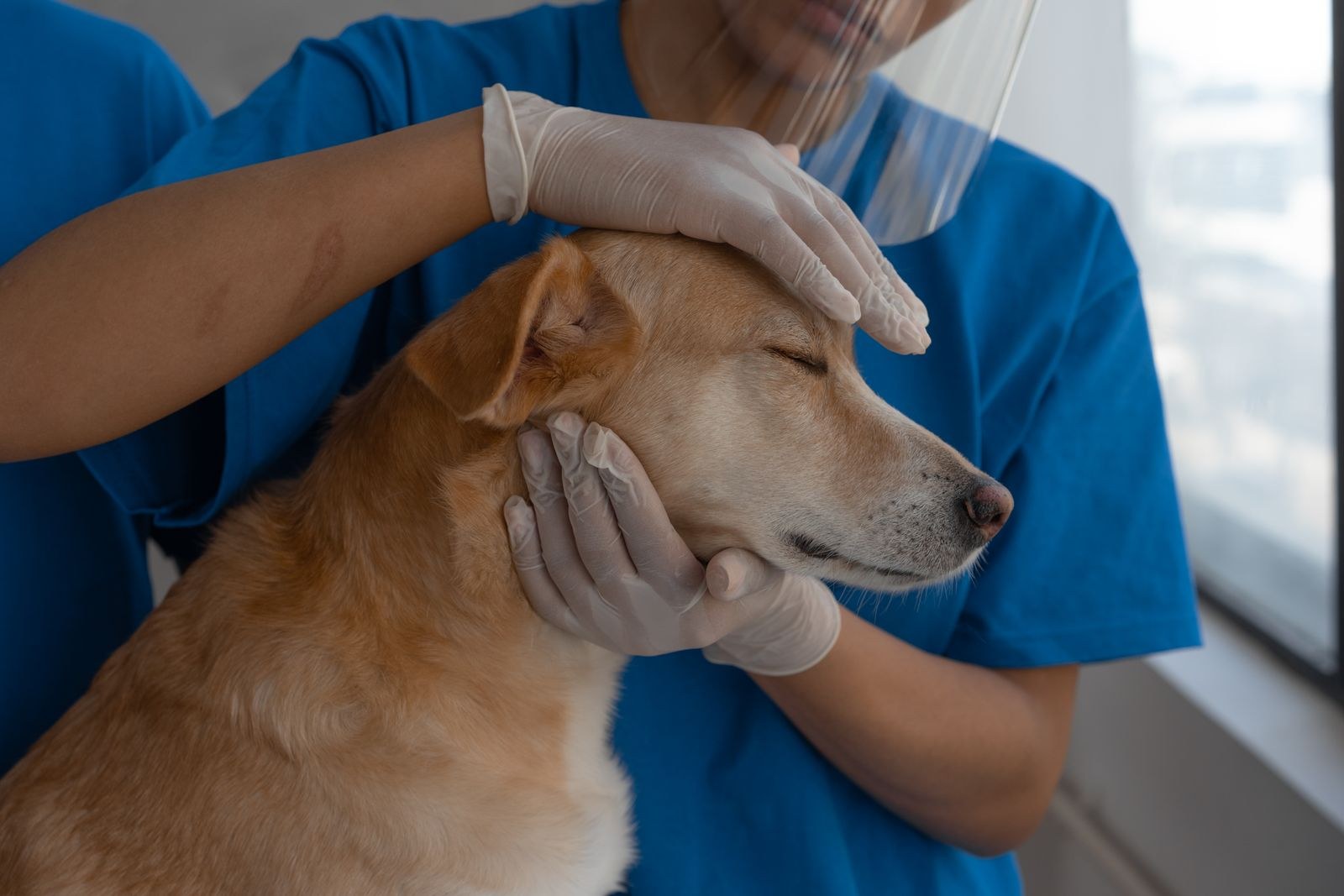
This section is unique to this guide, because it does not apply to a puppy or a young adult. Before enrolling a senior dog, book a senior wellness visit and ask for the full panel, and understand what you are really buying with it. You are buying evidence. A current, complete, professionally recorded picture of the dog's health, dated before the policy starts, is the single most useful document in any later dispute about what was already there. If a claim is questioned two years from now, the argument will be about what the record showed before enrollment. A baseline makes that argument factual instead of impressionistic.
The visit itself follows the shape the senior care sources describe. AAHA's senior care material describes more frequent and more complete senior visits, and the AVMA brochure describes senior checkups as more in depth than routine ones, often including bloodwork and screening for age related conditions, with a dental examination as a standard part. Ask the veterinarian to work through the systems a senior claim is most likely to touch. A full physical examination including joints, gait, and body condition. Bloodwork covering the values kidney, liver, and diabetes claims turn on. A urinalysis, meaning examination of a urine sample, which supports kidney and diabetes assessment. Blood pressure where the practice offers it. A careful dental examination with the findings written per tooth or per area, not summarised. A lump check, with every lump's location and size recorded, including the ones everyone believes are fatty and harmless. Weight and a body condition score, recorded as numbers.
Then ask for the documentation habits that make the baseline usable later. Findings written as findings, with normal results recorded as normal rather than left blank, because a blank is ambiguous and a recorded normal is evidence. Dates on everything. The veterinarian's own words on any monitored item, stating what it is believed to be and what would change the assessment. And a copy of the complete record for your own file, held alongside the policy documents. If a lump is believed benign, that belief, written by the veterinarian who felt it, is worth a great deal more than the same belief remembered by an owner after a cancer claim.
The honest tension has to be stated, because this guide does not hide it. A thorough pre-enrollment visit can also create notes. The examination may find the early kidney change, the heart murmur, the dental disease, or the arthritic joint that nobody had written down before. Those findings enter the record, and findings in the record are exactly what pre-existing exclusions are built from. An owner who skips the visit does not avoid those conditions. The dog still has them. The owner avoids knowing about them, and keeps a thinner record, which helps nothing if the signs were, in the policy's words, detectable by a routine examination anyway. The baseline strategy is not a trick for hiding a dog's health. It is the opposite. It establishes, in writing, what was normal, what was found, and when, so that the genuinely new conditions of the coming years, which are the ones a senior policy can actually pay for, are provable as new. Enroll after the visit, with the record complete, and let the policy start on a known dog.
Can enrolling late still make sense?
This guide does not answer that question for your dog, because the answer depends on your dog's record, the clauses of the specific plan in front of you, and your own finances. What it can do is give you the questions in the order a clear decision needs them, with the trade-offs stated honestly on both sides.
First, what is still uncovered in the record? List your dog's recorded conditions and notes, and mark each one curable in shape or chronic in shape, using the classification questions from the pre-existing section. The shorter and more curable that list is, the more territory a new policy still covers. A senior dog with a thin record, ordinary vaccination visits, and one resolved infection years ago is a genuinely different enrollment from a senior dog carrying arthritis, kidney, and dental notes, even at the same age and premium.
Second, what starts regardless of the record? Accident cover applies to new injuries on its own timing, after its waiting period, and new illnesses in systems with no recorded signs are judged on their own timing too. Ask yourself what that remainder is worth in your dog's actual life. An active senior dog who still hikes, swims, and travels carries a different accident picture from a frail dog who rarely leaves the garden, and neither answer is the respectable one. Both are inputs.
Third, what is the remaining years horizon? A policy is bought a year at a time and repriced at renewal. Weigh it as a series of annual decisions, not as a single lifetime commitment. The relevant comparison is not the premium against a hypothetical catastrophe. It is the premium, year by year, against the covered remainder, year by year, as both change. A plan can be worth holding for the next year and worth releasing later, and deciding annually is a legitimate way to hold senior insurance rather than a failure to commit.
Fourth, what are the alternatives, named honestly? The main alternative is a savings fund. Money you set aside regularly, in an account you do not raid, for this dog's veterinary care. Its strengths are real. It has no exclusions, no waiting periods, no definitions, and unspent money stays yours. Its weakness is equally real. It grows at the speed you save, so it is thinnest exactly at the start, when a senior dog's first large bill is most likely to arrive before the fund has had years to build, and one referral workup can exceed several years of saving. Some owners combine the two, holding a policy for the covered remainder while saving against the excluded record. Some owners look at accident only cover, which is narrower and cheaper in structure, and accept illness risk themselves. None of these is the correct answer in general. Each is a coherent answer for a particular dog, record, and household, and this guide's position is only that the choice should be made from the clauses and the record, not from a birthday.
Policy decision table
Every answer in this table lives in the insurer's sample policy, the full contract wording, not the marketing summary. The examples drawn from the Spot sample policy read for this guide are named where they appear, and they illustrate how wording looks in a real document. They do not describe the plan you are considering. Settle each row for that plan, in writing.
| Clause to check | What it means | The senior dog question to settle |
|---|---|---|
| Upper age for new enrollment | Many insurers set an oldest age at which a new policy may be started. The rule can differ between plans sold by the same insurer | For this exact plan, at my dog's exact age, breed, and size, is new enrollment open, and on which plan options? Get the answer in writing before assuming either way |
| Continuation and renewal as the dog ages | The renewal wording decides whether an enrolled dog's coverage continues period to period, and whether terms or rates change as the dog gets older | Once enrolled, is there any age at which coverage ends or changes, can the insurer decline to renew, and can a covered condition be treated differently at renewal? The Spot sample policy we read reissues automatically unless you cancel or the insurer advises non-renewal, with rates subject to change |
| Pre-existing condition definition | A pre-existing condition is one whose signs appeared before the policy started or during a waiting period, whether or not it was diagnosed, and related conditions can be included | Walk the insurer through your dog's actual recorded notes, the limp, the dental finding, the flagged blood value, and ask which of them make later care pre-existing, and for which body systems |
| Curable versus chronic classification | Some policies let a cured curable condition become coverable again after a symptom and treatment free period. Chronic conditions, which can be managed but not cured, usually have no such route | For each condition in my dog's record, which side of the line does it fall on, and if it is curable in shape, what free period applies and what evidence of resolution does the insurer need? |
| Chronic condition limits and per condition caps | A per condition cap limits what the policy pays for one named condition across a period or a lifetime, separate from the annual limit | Is there any per condition cap on arthritis, kidney disease, diabetes, or cancer care, and do monitoring visits and repeat testing count against it in every year? |
| Bilateral rules | Policy wording for paired structures that can treat a condition on the second side as related to the first, including knees, hips, eyes, and ears | If one knee, hip, or eye has any history at all, what happens to a claim for the other side? In the Spot sample policy we read, ligament and knee conditions are bilateral regardless of cause and are excluded if any occurred before coverage or in a waiting period |
| Waiting periods | A waiting period is the time after enrollment during which a new condition is not covered. Illness, accident, and orthopedic waiting periods can all differ inside one policy | How long is each waiting period on this plan, are ligament and knee conditions on a separate clock, and what happens to a senior dog whose first sign of a new condition lands inside one? |
| End of life wording | The definitions decide whether euthanasia and any related costs are covered expenses, and what is expressly left out | What exactly does this policy's end of life definition include and exclude? The Spot sample policy we read defines end of life expenses as euthanasia, burial and cremation only, and excludes funeral expenses, memorial items, urns, and caskets |
Two rows carry this whole guide. The pre-existing row decides the starting territory, and the renewal row decides whether the territory survives. A plan that answers both generously for your dog's actual record is a different product from a plan with the same headline limit that answers both narrowly, and no summary page will show you the difference. The sample policy will.
Worked example: the previously good leg
This walkthrough is hypothetical and contains no cost figures. It follows one claim through the senior specific clause that decides it. Meet a senior dog enrolled as a first time policyholder after the baseline visit described above. The record at enrollment shows mild stiffness noted once, no joint diagnosis, and no ligament history on either leg. Well into the policy, after every waiting period including any separate ligament waiting period has passed, the dog comes up lame on the left leg after a slip on wet grass, and the examination points to a torn cruciate ligament.
- Stabilise and record. The dog is seen promptly. The veterinarian records the presenting signs, the date, the mechanism as reported, and the examination findings, including the knee stability tests. That first note fixes when the signs were observed, which is the date every later definition is applied to.
- Rule out and image. X-rays are taken to assess the joint and rule out fracture and other causes. The suspected diagnosis is recorded as cruciate disease of the left stifle. The images and the stability findings together are the diagnostic core of the claim.
- The senior question is asked early. The owner asks, in writing, before treatment, whether a cruciate tear on this leg is affected by anything in the dog's record or by the plan's bilateral wording, given that the other leg has no ligament history. The bilateral rule only bites where the wording and a prior occurrence give it something to attach to.
- Treatment path is chosen on the whole dog. The veterinarian discusses surgery and conservative management in light of the dog's age, other conditions, and anaesthetic picture. The choice is recorded with its clinical reasoning. Insurers review medical necessity from the record, so the reasoning belongs in the notes, not only in the conversation.
- The claim is filed with the full file. The owner submits the itemised invoices, the examination notes, the imaging report, and the records the insurer requests. In the Spot sample policy pattern, the owner authorises the insurer to obtain medical records and provides the names of veterinarians who have treated the pet. In a senior claim, expect the whole history to be read.
- The pre-existing review happens. The insurer checks the record for earlier cruciate or ligament signs on either leg, earlier lameness notes, and anything recorded during the waiting periods. In this story, the file holds one mild stiffness note with no joint diagnosis and no ligament mention. Whether that note is argued to be related is the genuinely contestable point in the claim, and it is why the baseline documentation mattered.
- The bilateral review happens separately. Because the condition is a knee ligament condition, the insurer applies its bilateral wording on its own track. In this story there is no prior ligament occurrence on the other side, so the bilateral exclusion has nothing to attach to, and the claim is assessed as a first occurrence on its own facts.
- The arithmetic clauses apply. The remaining eligible amount after the annual deductible is reimbursed at the plan's chosen percentage, subject to the annual limit. No figures are shown here, deliberately. The senior lesson is the order of operations, deductible first, then the percentage, then the limit, and that the same order will apply to the rehabilitation and monitoring claims that follow.
- Rehabilitation and the arthritis tail are claimed as one condition. The follow up rehabilitation visits and the arthritis management that develops in that knee are submitted as continuation of the same condition, which keeps the file coherent and sets up the renewal question correctly.
- The renewal test arrives. At the next renewal, the owner checks that the cruciate condition, now firmly in the record, remains covered as an ongoing condition under the continuation wording, and confirms the other knee's position under the bilateral wording in writing, because a first tear changes what a second tear will be called.
Now change one fact and watch the claim change. Give the same dog a cruciate tear on the right leg two years before enrollment. Under the Spot sample policy pattern, ligament and knee conditions are bilateral regardless of cause, and a bilateral condition that is pre-existing is excluded. The left leg claim now runs into the bilateral rule at the door, before anyone reaches the merits of the new injury. Same dog, same slip, same surgery. The difference is entirely in the record and the wording, which is why the bilateral clause is the senior clause to settle before enrolling, not after a claim.
Before you enroll a senior dog
- Get the new enrollment age rule for the exact plan, at your dog's exact age, breed, and size, in writing, and keep it with the policy.
- Ask what happens as an enrolled dog ages. Does coverage end, reduce, or change terms at any age, and can the insurer decline to renew?
- Walk the insurer through your dog's real recorded notes, item by item, and ask which ones make later care pre-existing, and in which body systems.
- For each recorded condition, ask whether it is classified as curable or chronic, and if curable, what symptom and treatment free period restores coverability and what evidence is needed.
- Read the bilateral wording for knees, hips, and eyes, and ask what a history on one side does to a claim on the other side.
- Ask for every waiting period by name, accident, illness, and any separate ligament or orthopedic period, and what a first sign inside one would mean.
- Confirm chronic conditions stay covered at renewal, with no per condition cap quietly consuming the monitoring years, and get that answer in writing.
- Ask whether monitoring for a covered chronic condition is reimbursable by name, repeat blood panels, imaging, blood pressure checks, and medication reviews.
- Ask how prescription diets and pain medication for a covered condition are classified, as treatment, as partly covered, or as excluded food and supplies.
- Book the senior baseline visit before enrollment, with the full panel, and ask the veterinarian to document normal findings, early changes, follow-up plans, and genuine resolutions.
- Ask the end of life question in writing now, while it is abstract, including exactly what the definition includes and excludes.
- Start a dated home log of mobility, appetite, drinking, sleep, and behaviour, so the first signs of any new condition carry a date you can prove.
Questions to ask an insurer, in writing
Copy these into an email or the insurer's contact form, and keep the reply with your policy.
- What is the upper age, if any, for new enrollment on this exact plan for a dog of my dog's age, breed, and size?
- Once my dog is enrolled, does coverage end, reduce, or change terms at any later age, and under what circumstances can you decline to renew?
- My dog's record includes the specific notes I have listed with this message. Which of them would make later treatment pre-existing, and for which conditions or body systems?
- For each of those conditions, do you classify it as curable or chronic, and if curable, what symptom and treatment free period applies before it can be covered again?
- Does a covered chronic condition stay covered at every renewal, and is there any per condition limit that applies to its treatment or its monitoring?
- How does this policy treat the second side of a paired structure? If one knee, hip, or eye has a history, what happens to a claim for the other?
- What are the waiting periods for accidents, for illnesses, and for ligament or knee conditions, and what happens if a first sign appears inside one of them?
- How are end of life expenses defined in this policy, what do they include, and what do they expressly exclude?
For the wider method behind these questions, see how to compare plans and what pet insurance covers.
Frequently asked questions
Is there an age limit for enrolling a senior dog?
Many insurers set an upper age for new enrollment, and those ages and rules vary by insurer and plan, so check the specific plan's documents before assuming either way. In the Spot sample policy we read for this guide, issued by Independence American Insurance Company, the policy text contains no upper age limit for new enrollment. That is one insurer's document, not the market, and policy forms change. Get the answer for the insurer and plan you are considering in writing.
My dog already has arthritis. Is anything still covered?
The arthritis itself, and treatment related to it, would be expected to be treated as pre-existing by a new policy, because insurers read the whole medical history and arthritis signs tend to be recorded somewhere in it. That does not remove everything else. Conditions with no connection to the arthritis and accidents are decided on their own facts under accident and illness plans. Read the renewal and bilateral wording for the other joints carefully. If the good leg becomes the problem later, the clause that matters was printed before any of it happened.
Does coverage end at a certain age for a dog who is already enrolled?
In the Spot sample policy we read, no. The policy is reissued at the end of each policy period unless the owner cancels or the insurer advises non-renewal, coverage and rates are subject to change at renewal, and there is no age at which an enrolled dog's coverage stops. Other insurers write renewal differently, and a policy year that quietly resets condition history would change the value of the cover completely. Read the renewal clause of the plan you are considering, and ask the insurer directly whether a condition covered this year remains covered next year.
Can a senior dog's accidents be covered even if most illnesses are already pre-existing?
Yes, in the structure most accident and illness plans use. Accident cover begins after its waiting period without reference to the illness history. A fall, a cut pad, a swallowed object, or an eye injury is an accident claim if it happens after the waiting period and is not excluded on its own facts. Illness cover in a senior dog with a long record mainly protects against conditions with no earlier record behind them. Judge a senior policy on that basis, not on the hope that old conditions will be picked up.
Is euthanasia covered for a senior dog?
It depends on the policy's definitions, which vary. In the Spot sample policy we read, end of life expenses are defined as expenses for euthanasia, burial and cremation only, and the definition states that it does not include funeral expenses, memorial items, urns, caskets, burial plots, or burial plot maintenance fees, while the exclusions list separately names funeral services, memorial items, urns, caskets, and burial plots and fees as not covered. Other insurers differ. Ask how the plan you are reading defines this area, and whether any end of life cover is tied to a covered condition, in writing, while the question is still abstract.
One of my dog's cruciate ligaments tore years ago. Can the other leg be covered?
Under many policies, no, and this is the bilateral rule at work. In the Spot sample policy we read, ligament and knee conditions are treated as bilateral regardless of cause, and a bilateral condition that is pre-existing is excluded, so a tear on one side before enrollment can exclude the other side as well. Some insurers word bilateral exclusions more narrowly, which is why this is a written question, not an assumption. If the answer is exclusion, the honest comparison for your dog is the plan without cruciate value on either leg against the self-funding alternative.
Sources and further reading
- Cornell Riney Canine Health Center, Osteoarthritis in Dogs
- Cornell Riney Canine Health Center, Cognitive Dysfunction Syndrome in Dogs
- Cornell Riney Canine Health Center, Senior Dog Dementia
- Merck Veterinary Manual, Osteoarthritis (Degenerative Joint Disease) in Dogs (owner edition)
- Merck Veterinary Manual, The Urinary System in Animals (professional edition)
- American Animal Hospital Association, 2023 AAHA Senior Care Guidelines for Dogs and Cats (guideline summary and senior care resources)
- American Veterinary Medical Association, Senior Pets (owner brochure, 2023)
- Spot Pet Insurance, Sample Accident and Illness Policy, underwritten by Independence American Insurance Company (policy form PET-P-20000-1024), read in full for this guide
Sources checked on November 6, 2026. CoverageForPets is operated by its publisher and researched from the primary sources listed above. This guide is general information only. It is not veterinary advice and not a recommendation to buy any specific policy.