Senior cats at a glance
The plain language has to come first, because senior claims turn on words owners rarely see defined in one place. A pre-existing condition is a condition whose signs, symptoms, diagnosis, or related findings were present before your coverage started or during a waiting period. A chronic condition is a long lasting condition that is usually managed rather than cured, which describes most of senior cat medicine. A deductible is the amount of covered costs you pay yourself each policy year before the plan starts sharing costs. Reimbursement is the share of a covered cost the plan pays back after the deductible is met. An annual limit is the most the plan will pay in one policy year. A waiting period is the time after enrollment during which specified conditions are not yet covered. Staging is a system for describing how advanced a disease is; the kidney version used in this guide is the system from the International Renal Interest Society, called IRIS staging, defined properly in the kidney card below.
| Senior reality | What it looks like | The wording that decides it |
|---|---|---|
| The senior stage is long | Cats are living longer, so a policy bought now may be used for years of ordinary care. | Whether enrollment is open at your cat's age at all, and what kind of coverage an older cat can start. |
| Conditions are managed, not cured | Kidney disease, diabetes, thyroid disease, and dental disease are handled with medication, monitoring, and repeat visits rather than a single fix. | Chronic condition wording, and whether a covered chronic condition stays covered when the policy renews. |
| Monitoring is the main event | Recheck bloodwork, urinalysis, blood pressure, and weight trends are how vets know whether management is working. | Whether monitoring tests for a covered condition count as treatment, or are classed as routine care the owner carries. |
| Cats hide illness | Early kidney disease commonly shows no obvious signs, so the written record can look clean while values have quietly drifted. | The pre-existing definition, and whether it reaches back to signs and notes as well as named diagnoses. |
| The first senior panel cuts both ways | A complete panel creates a dated baseline if it is normal, or names a condition with a date if it is not. | Waiting period wording, and how findings dated inside it are treated. |
Breed can colour the picture without changing its shape. A Persian brings a kidney monitoring story, a British Shorthair a long senior stage where diabetes and kidney monitoring both matter, a Siamese a senior kidney focus, and an American Shorthair the reminder that sturdy cats still need a senior panel. The cat breeds hub collects those guides.
Why cats spend so long being senior
The first surprise for many owners is how long the senior stage lasts. International Cat Care explains that cats are living much longer and it separates the later stages into mature, senior, and super senior stretches.
The second senior fact is the kind of medicine involved: the conditions that dominate this stage are usually managed rather than cured. Cornell says chronic kidney disease is progressive with no definitive cure, and that treatment aims to slow progression and maintain a good quality of life.
Management medicine makes monitoring the main event. Cornell's kidney guidance returns again and again to regular monitoring, to interpretation based on at least two blood and urine samples in a stable, well hydrated cat, and to blood pressure measurement. A policy that treats monitoring as an optional extra has misunderstood the medicine it is insuring.
One warning runs through the senior sources: never assume a change in an older cat is simply due to old age and therefore untreatable, in Cornell's framing. A change taken to the vet becomes dated evidence, and the starting point for any claim that follows.
Upper age limits for new enrollment
This section follows a strict rule, stated here so a reader can hold this guide to it. Many insurers set an upper age for new enrollment. The ages and rules vary by insurer, by plan, and sometimes by state. This guide does not publish a general age limit, because no such general limit exists. It gives one named example, quoted with attribution from an official enrollment document opened for this guide, and treats every other age question as one to settle in the documents of the specific plan you are considering.
Here is that one example, and its limits matter as much as its content. Embrace, on its official help page explaining its accident only plan, states: while not eligible for full accident and illness coverage, dogs and cats aged 15 years and over can be enrolled in the accident-only pet insurance plan. A cat at or above that stated age is not eligible for that insurer's full accident and illness coverage as a new enrollment. The same cat can be enrolled in that insurer's accident only plan, which, by the same page, does not cover illnesses, chronic conditions, cancer, or dental illness. Source: Embrace Pet Insurance, official help article, What Is Embrace's Accident-Only Pet Insurance Plan, opened for this guide and listed in the sources.
That distinction is the real lesson. New enrollment is the moment an insurer decides whether to start covering a cat it does not yet cover, and at what scope: fully, partly through a narrower kind of plan for older applicants, or not above a stated age. Continuation is different. A cat who enrolled younger and stayed enrolled has an existing policy that renews on its own terms, covered in the renewal section below. It lives in the sample policy and in written answers about your cat.
Timing connects age to the waiting period. Illness coverage begins after the plan's waiting period, and signs or diagnoses dated inside that period are commonly treated under the pre-existing definition. The honest move is to understand which file each order creates before you choose it.
The pre-existing reality for cats who hide illness
Every insurance guide has to explain pre-existing conditions. This one has to explain them for the animal least likely to announce that anything is wrong. Cornell notes that in the early stages of chronic kidney disease it is very common for cats to show no obvious signs, because the body compensates for decreasing kidney function. Merck says chronic kidney disease often continues for many months or years before a cat has any signs.
That biology creates a record problem. An insurer reading a senior cat's file sees the record, not the cat. If the record holds years of brief, normal visits and then a senior panel with changed kidney values, a thyroid finding, raised glucose, or advanced dental disease, two honest readings are possible. In one, the cat was healthy until the panel and the condition is new. In the other, the condition developed quietly while the cat hid it, and the panel is the moment it was discovered rather than the moment it began. Policies are often written for the second reading, because the pre-existing definition usually turns on when signs or related findings appeared, and insurers look for earlier notes that can be connected to the later diagnosis: a note about drinking more, a small weight loss at a vaccine visit.
A first senior panel therefore cuts both ways, and this guide handles it factually in both directions. In the helpful direction, a complete panel creates a dated baseline. A panel showing kidney values, urine concentration, thyroid level, glucose, and blood pressure in a normal picture, filed with an examination note, is strong evidence that those systems were checked and were not showing disease on that date.
In the other direction, the same panel can name something. If kidney values stay raised on the recheck Cornell and IRIS describe, or a thyroid level confirms hyperthyroidism, or glucose is persistently raised in blood and urine of the kind Cornell and the AAHA diabetes guidelines require for a diagnosis, then from that date the condition is in the record with a name and a date. If that date falls before enrollment or inside a waiting period, later care for that condition will usually be treated as pre-existing. A cat who needs a diagnosis needs it regardless of insurance, and untreated kidney, thyroid, diabetic, and dental disease all carry real welfare costs. It is a reason to ask the insurer's timing questions before the panel date rather than after it, when the options have narrowed.
The habits that protect a senior file are unglamorous. When a vet finds a borderline value and plans a recheck, make sure the recheck happens and is filed beside the first result, because a value that returns to normal with an explanation is a closed question, while a value left standing alone is an open one an insurer may answer for you. It makes the real record legible, which is the most any honest file can be.
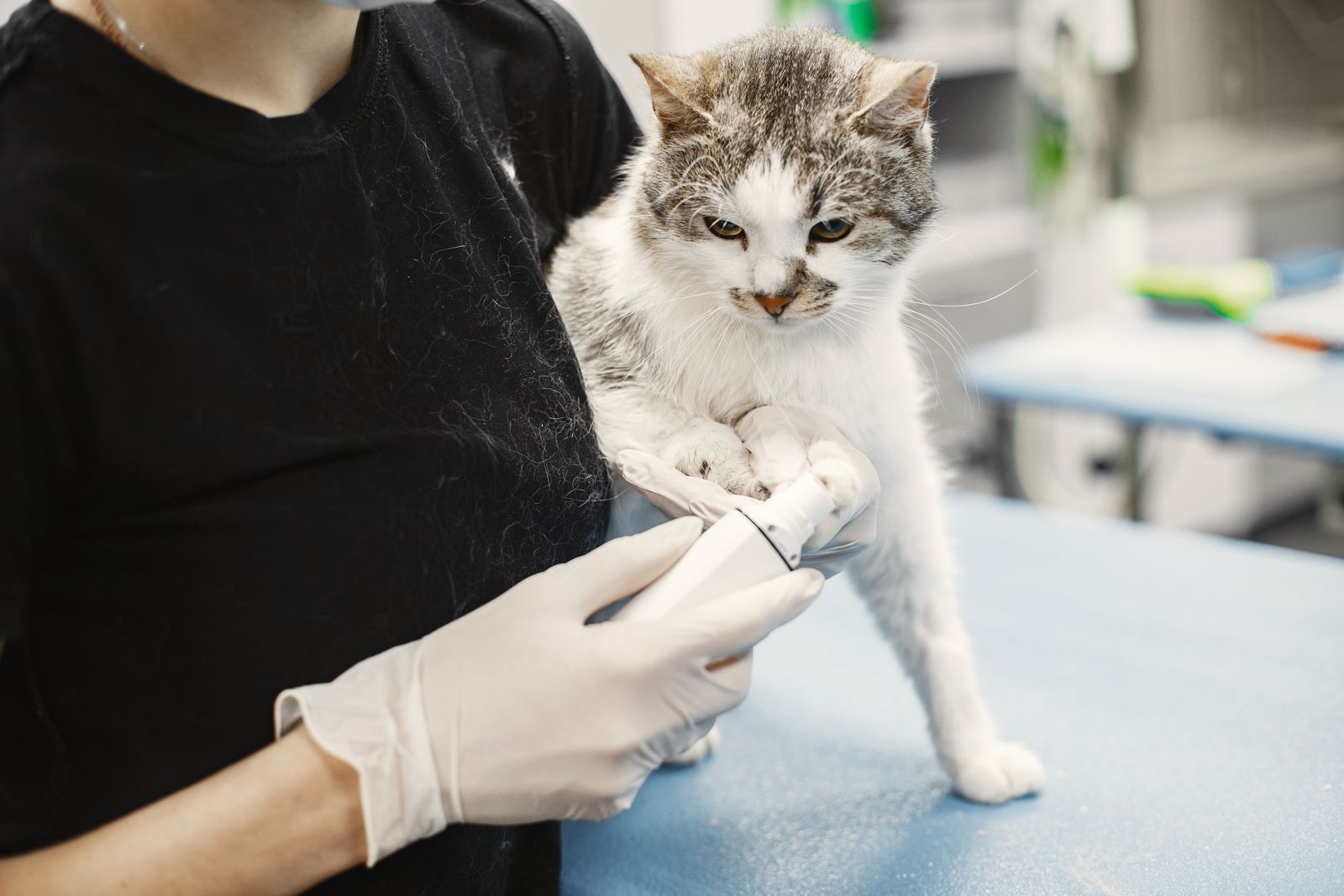
Arthritis and joint pain matter greatly to senior cats, and International Cat Care names decreased grooming and difficulty jumping among the changes that can point to chronic pain. This guide does not give arthritis its own card, because its four cards are the conditions that most directly decide senior claims. Joint pain still belongs in the senior log, in the vet visit, and in any question about pain medication wording.
The senior cat core: four conditions that shape the claim
The four cards below follow the pattern used across this site: what it is, signs owners may notice, when it can be urgent, how vets usually evaluate and treat it, and the policy wording that decides the claim.
Chronic kidney disease
What it is
A long term, progressive loss of kidney function over time, in Cornell's summary. Treatment aims to slow progression and protect quality of life.
Signs owners may notice
- Increased thirst and larger volumes of urine
- Weight loss and, later, decreased grooming
- In later stages: poor appetite, vomiting, bad breath, mouth ulcers, weakness, and dehydration
When it can be urgent
Kidney disease itself usually moves slowly. A senior cat who stops eating or drinking, becomes weak or disoriented, vomits repeatedly, or cannot pass urine needs prompt care.
How vets usually evaluate and treat it
Evaluation centres on blood tests and urinalysis. Cornell names blood urea nitrogen, creatinine, and SDMA, short for symmetric dimethylarginine, as the waste products vets track: creatinine does not generally rise until substantial function is lost and is affected by muscle mass, while SDMA rises earlier. Staging then describes the disease. IRIS staging, from the International Renal Interest Society, is based initially on fasting blood creatinine or SDMA, or preferably both, on at least two occasions in a hydrated, stable patient, with substages for protein in the urine and for blood pressure. Staging is a clinical tool for treatment and monitoring. It does not set what an insurer pays. Treatment categories from Cornell and Merck include a therapeutic kidney diet, hydration support, control of blood pressure and protein loss, and regular monitoring for the rest of the cat's life. A Persian owner should also read the kidney monitoring discussion in that breed guide.
Hyperthyroidism
What it is
An overproduction of thyroid hormones, T3 and T4, by an enlarged thyroid gland in the neck, in Cornell's account. Cornell calls it a common disease of middle aged and older cats and says an adenoma, a benign tumour change in the gland, accounts for most cases.
Signs owners may notice
- Weight loss, often with an increased appetite
- Increased thirst and urination
- Restlessness, more activity, or behaviour change
When it can be urgent
Most hyperthyroidism is a prompt appointment rather than an emergency. Sudden blindness, disorientation, collapse, or breathing difficulty in a cat with thyroid disease can signal a blood pressure or heart crisis and needs same day care.
How vets usually evaluate and treat it
A vet examines the cat, feels the neck for an enlarged gland, and checks heart rate and blood pressure. A blood test for total T4 usually confirms the picture, and Cornell cautions that a small share of hyperthyroid cats have T4 levels inside the normal range, so further testing may follow when the cat and the result disagree. Cornell lists four treatment options: medication that reduces hormone production, radioactive iodine therapy at a licensed facility, surgery to remove the gland, and a diet that limits iodine. Cornell notes that blood tests should be conducted periodically on medication to check effectiveness and to monitor kidney function.
Diabetes
What it is
A condition in which the body cannot properly produce or respond to insulin, the hormone that lets body tissues use glucose, in Cornell's account. Most diabetic cats have a form resembling Type II diabetes in people, where tissues have become resistant to insulin. There is no cure, but Cornell gives a good prognosis for quality of life with adequate management at home, and some cats enter remission with early, close management.
Signs owners may notice
- Weight loss despite a good appetite
- Increased thirst and increased volumes of urine
- Lethargy and a thinning or unkempt coat over time
When it can be urgent
A diabetic cat who is weak, lethargic, vomiting, off food, or breathing oddly needs urgent care. Cornell is direct: too little insulin can lead to diabetic ketoacidosis, a medical emergency, and too much insulin can cause hypoglycemia, low blood sugar, which can be fatal.
How vets usually evaluate and treat it
Diagnosis requires evidence of sustained raised glucose, not one stressed reading: Cornell explains that a vet demonstrates persistently elevated glucose in blood and urine together with consistent clinical signs, and a fructosamine test, which averages blood glucose over a recent period, can help in uncertain cases. The 2026 AAHA Diabetes Management Guidelines for Cats agree that diagnosis requires evidence of sustained hyperglycemia, do not recommend in hospital glucose curves for cats, and build monitoring on clinical signs and the caregiver's observations at home. Treatment goals, in Cornell's list, are restoring normal blood glucose, stopping weight loss, minimising increased thirst and urination, and avoiding dangerously low blood sugar. The tools are traditionally insulin and dietary therapy. Cornell notes that newer oral medications, a class called SGLT2 inhibitors, may suit some cats, are not appropriate for every patient, and should be discussed with a veterinarian. Monitoring continues for life: weight, water intake, and appetite at home, and blood glucose checks where a vet advises them.
Dental disease and tooth resorption
What it is
Disease of the teeth and gums, which Cornell calls common in cats and gives three main forms. Periodontitis is inflammation of the deeper supporting structures, and Cornell is clear that it is not reversible, so its aim is control rather than cure. Tooth resorption is different again: the tooth's own structure breaks down, Cornell says it is the most common cause of tooth loss in cats and that its cause is unknown, and the first visible sign may be no more than a pinkish defect where the tooth meets the gum.
Signs owners may notice
- Bad breath, drooling, or pawing at the mouth
- Dropping food, chewing on one side, or a chattering jaw
- Reduced appetite or avoiding hard food
When it can be urgent
A cat who cannot eat because of mouth pain needs prompt care, not a long wait. Bleeding from the mouth, a swollen face, or a cat guarding its jaw also belongs in the prompt category.
How vets usually evaluate and treat it
A conscious look in the mouth is only the start, because Cornell and Merck both describe disease below the gumline that cannot be assessed in an awake cat. A complete evaluation involves probing the gums and examining X-rays, which require anesthesia, and resorption is usually diagnosed the same way. Treatment follows what that examination finds: Cornell describes scaling and polishing while trying to save teeth where possible, extraction in extreme periodontitis and for painful resorption lesions, crown amputation in some resorption cases, and careful follow up. Prevention still matters: Cornell calls regular tooth brushing with a cat specific tooth gel or paste the most effective prevention for gingivitis, while noting that a cat with severe gingivitis should see a vet before brushing, because brushing a painful mouth can hurt.
Chronic medication and monitoring claims: the senior claim shape
Picture a year of senior claims honestly and it will not look like a single dramatic invoice. It will look like a rhythm: a recheck visit for a kidney cat with a blood panel and a urine test, a prescription refilled month after month because the condition it treats does not end. This is the senior claim shape: many modest, recurring claims, each small enough to seem minor and together large enough to be the whole point of having the policy.
Prescription medication wording decides the first half of that shape. Ask whether medication for a covered chronic condition stays covered for as long as the condition is covered, whether clinic administered and take home medication are treated the same, whether any frequency limit applies, and whether any condition has its own medication sublimit, a smaller cap inside the larger annual limit.
Monitoring wording decides the second half, and it is the half most likely to be argued. The same blood panel can be described three ways. Read as treatment, it is a recheck a vet ordered to manage a covered chronic condition, to stage it under the IRIS system, or to adjust a dose. Read as routine, it is a scheduled senior screen in a cat with no covered condition being managed, the kind of preventive testing a wellness add-on or the owner is expected to carry. The line that matters is the one in your plan's sample policy, applied to the reason the vet ordered the test as written in the record. A note that says a panel was ordered to monitor a named, covered condition reads as treatment. The owner can ask that the medical reason for the test be recorded accurately, because accuracy is what the claim will later be read from.
Finally, the deductible resetting each year, in plain words. On a plan with an annual deductible, the owner pays the first covered costs of each policy year out of pocket until that year's deductible is met. Only covered costs after that point are shared under the reimbursement share, up to the annual limit. When the policy renews, the deductible starts again from zero, even though the cat, the condition, and the medication have not changed at all.
Renewal protections and switching insurers late in life
A chronic condition is only truly covered if it stays covered. In protective wording, a condition covered in one term remains covered in the next while enrollment continues, and its medication and monitoring are filed the same way, with only the deductible and annual limit starting fresh. Those are different products wearing similar covers. The question to settle, in writing, before enrollment and again at each renewal is simple: does a covered chronic condition stay covered at renewal, on what terms, and is there any point at which this plan stops sharing the cost of a condition it has already accepted?
Make renewal a checkpoint rather than a date that passes. Each year, confirm in writing that each named condition on the file is still described as covered, that its medication is still a covered category, that monitoring for it is still reimbursable, and that no new exclusion, sublimit, or frequency limit has been applied to it.
Switching insurers late in life needs to be handled factually. A new insurer does not inherit the old insurer's file as covered history. It starts a new record, applies its own pre-existing definition to the signs and findings already in the history, which in a senior cat can mean essentially the whole known medical history, and runs new waiting periods. A senior cat with a diagnosed chronic condition can therefore be well covered where it is and largely uncovered for that same condition somewhere new, even when the new plan looks attractive on price or on a headline limit. It does mean the comparison is never premium against premium. It is existing covered history against a restarted record, and that restart cost should be written down, condition by condition, before any switch. Ask a prospective insurer, in writing, how each named condition in your cat's record would be classified under its plan. If the answer is vague, treat the vagueness as the answer.
Hypertension and the shared signs workup
High blood pressure, called hypertension, runs through this guide like a connecting thread. Cornell says cats with chronic kidney disease are at risk for hypertension, that the kidneys help maintain appropriate blood pressure, and that hypertension can lead to sudden changes in vision, neurologic abnormalities such as disorientation and weakness, or heart issues. Cornell's hyperthyroidism guidance names hypertension as a potential complication of that condition too, able to damage the eyes, kidneys, heart, and brain. A blood pressure reading is therefore not an optional extra on a senior visit. It is evidence about the kidneys, the thyroid, the eyes, and the heart at once.
Hypertension also helps explain why the senior workup is a panel and not a single test, because the presenting signs refuse to point at one condition. Cornell lists weight loss with a good appetite among the most common signs of hyperthyroidism, weight loss despite a good appetite as one of the two most common signs of diabetes, and losing weight among the later signs of kidney disease. Increased drinking and urination are shared the same way: a kidney cat drinks more as the kidneys lose concentrating ability, a diabetic cat drinks more as glucose spills into the urine and pulls water with it, and a hyperthyroid cat shows increased thirst as part of a body running too fast. A vet faced with a thinner senior cat who is drinking more is running one workup that reads kidney values, urine concentration and protein, glucose, a thyroid level, and blood pressure together, because only the pattern across the panel separates conditions that share their opening signs. The kidney disease, hyperthyroidism, and diabetes guides each read that same panel from their own condition's side.
For insurance, the consequence is this. One panel can be a single claim moment, while the coverage answer splits by condition afterward, as medication, monitoring, and diet are claimed under whichever condition the panel names. Keep the panel, the examination note recording the shared signs, and the vet's reasoning together in one folder.
Whether enrolling late can still make sense
This section offers decision questions and trade-offs only. It does not tell any reader what to do, because the right answer depends on a specific cat, a specific record, and a specific plan's documents.
First, what is actually in the record today? List every named diagnosis, every borderline value with its recheck status, every note about weight, drinking, appetite, grooming, and mouth, and the date of the most recent bloodwork. That list, not a general feeling that the cat has always been healthy, is the starting point, because cats hide illness too well for a feeling to be evidence.
Second, which future costs is the policy realistically being bought for? If the honest answer is chronic conditions not yet diagnosed, then the chronic, monitoring, medication, and renewal clauses carry the value, and they should be read first and hardest. A policy bought for one purpose and judged by another will always disappoint.
Third, what does the trade-off look like across a full policy year rather than a single visit? Write down the predictable owner costs outside reimbursement: the premium, the deductible that resets at renewal, the share of each covered bill the plan does not pay, any monitoring or medication the plan classifies as routine or capped, and care for conditions already in the record. Set that picture beside the same year with no policy, where the owner carries every bill in full but pays no premium and no deductible.
Fourth, how long is the runway? A cat at the start of a long senior stage has more policy years in which monitoring, medication, dental, and second condition clauses can matter, and more renewals across which the deductible reset repeats. Neither fact argues for or against enrolling on its own. Others will decide the clauses covering what is not yet known are worth the premium. Both are legitimate outcomes of the same questions. What is not legitimate, on this guide's rules, is anyone deciding for you.
A senior monitoring log for cats
The unique tool on this page is a home log matched to senior cats specifically, not copied from any dog page, because a cat's senior changes show up in quieter places: in the bowl, in the litter, in the coat, and in which favourite places get quietly abandoned.
| Log line | How to record it for a cat | Why it matters |
|---|---|---|
| Weight | Weigh weekly, always the same way, and record the number rather than an impression. | A dated series turns "he seems thinner" into a trend a vet can act on. |
| Appetite and food | Note what was offered, how much was eaten, and any change in enthusiasm, plus food changes and when they started. | Appetite is a shared sign: decreased in kidney disease, increased in early thyroid disease and diabetes, and reduced by dental pain. A dated note helps a vet decide what to test first. |
| Water | Note how often the bowl is filled and whether the cat drinks from new places. | Water intake at home is one of the monitoring measures Cornell's diabetes guidance names, and senior cats face a greater dehydration risk, especially kidney cats. |
| Litter | Note clump size and number if practical, straining, and accidents outside the tray. | Litter changes corroborate thirst changes from the other end of the same pathway, turning a vague report into a timeline that supports a workup. |
| Mobility and favourite places | Note which jumps the cat still makes, which have been abandoned, and any stiffness after rest. Cats show pain by withdrawing from height long before they cry out. | Mobility notes give the vet a pain and quality of life picture a short examination cannot. |
| Grooming and coat | Note grooming frequency, mats appearing, and coat condition. | Coat notes sit at the crossing point of pain, dental disease, thyroid disease, and kidney disease, and a dated change is a legitimate prompt for the visit that investigates it. |
| Rest, behaviour, and breathing | Note sleep pattern changes, hiding, night vocalising, disorientation, and resting breathing effort. | Behaviour notes are often the earliest evidence of hypertension effects, pain, or a condition shifting stage. |
| Mouth notes | Note bad breath, drooling, dropping food, chewing on one side, chattering teeth, and pawing at the mouth, the dental signs International Cat Care lists for senior cats. | Mouth notes date the dental story. |
Two rules keep the log honest. Record what you observed, not what you think it means, because a log that says a water bowl was filled twice on a dated Tuesday is evidence, while a log that diagnoses is an opinion a reviewer can discount. Most senior cat insurance disputes are not arguments about what happened. They are arguments about when something was first noticeable, and this log is how an owner answers that question with dates instead of memory.
Policy decision table
Most senior cat insurance disputes are arguments about what the policy said before anything happened. The table below names each clause, explains what it does in plain language, and states the question to settle in the plan's own documents before enrolling a senior cat.
| Clause to check | What it means | The senior cat question to settle |
|---|---|---|
| Upper age for new enrollment | Some plans set the oldest age at which a cat can start a policy, or offer older cats a narrower kind of coverage. The rule governs starting, and it is separate from what happens to a cat already enrolled. | At my cat's age, what coverage can this cat start, in full or in part, according to the plan documents rather than a summary page? |
| Pre-existing condition definition | A pre-existing condition is one whose signs, symptoms, or related findings appear before coverage starts or during a waiting period. | Which items already in my cat's record would this plan treat as pre-existing or related: named conditions, borderline values, weight and drinking notes, tartar? Ask condition by condition, not in general. |
| Chronic condition classification and renewal | Some plans cover a condition that lasts for years on the same terms at every renewal while enrollment continues. Others cap a condition, pay a smaller share for long standing conditions, or reclassify a known condition at renewal. | If my cat develops kidney disease, thyroid disease, or diabetes and it is covered this year, is it covered on the same terms next year, and is there any point where this plan stops sharing its cost? |
| Monitoring and diagnostic testing | The contract decides which tests count as covered services, and whether recheck bloodwork, urinalysis, blood pressure measurement, and imaging for a covered condition are reimbursed as treatment or classed as routine care. | For a covered chronic condition, which monitoring tests are reimbursable, how often, and is there a frequency limit or sublimit? |
| Prescription medication and supplies | The contract decides whether medication for a covered condition is included for as long as the condition is covered, and whether administration and monitoring supplies sit inside the same promise or outside it. | Is daily medication for a covered chronic condition covered for the life of the condition, and are the supplies that go with it included? |
| Dental illness and anesthesia | Many policies exclude dental disease, cover only dental injury, or treat cleaning as routine. Where dental illness is included, the wording decides whether the anesthetized examination, dental X-rays, scaling, and extractions for covered disease are inside the promise. | Is dental illness, including tooth resorption, covered as illness, as injury only, or only through a wellness add-on, and is anesthesia for a covered dental procedure covered with it? |
| Prescription food classification | In many policies, food is food, even when a vet prescribes it as part of managing a condition. In some, a vet prescribed therapeutic diet for a covered condition is partly included. | If a therapeutic kidney or diabetic diet is prescribed for a covered condition, is any of its cost included, or is food excluded in all cases? |
| Waiting periods and the first senior panel | A waiting period is the time after enrollment during which a condition is not yet covered. | How long is the illness waiting period, and how are findings from a senior panel dated inside it treated? Would a longer waiting period change when I book a first panel? |
Two rows deserve emphasis. The monitoring row is the centre of the comparison, because senior care is monitoring care, and a plan generous on emergencies but restrictive on rechecks has the senior shape exactly backwards. For the wider method, see how to compare plans, what shapes the cost of pet insurance, and how pet insurance works. What changes for a senior cat is only the weighting: chronic, monitoring, dental, and renewal wording first, headline limits second.
A claim, step by step
This walkthrough is hypothetical and uses no dollar figures.
- Before enrolling, the owner asks the insurer the senior questions from this guide in writing: the new enrollment age rule, how each item in the record would be classified, and the chronic and renewal wording, and keeps the replies.
- The senior log starts now, while it is still a baseline, with weight, appetite, water, litter, mobility, grooming, and mouth notes, dated from the first week.
- After the waiting period ends, the owner books a senior wellness visit, mentioning the log observations: a little weight loss, the water bowl emptying faster.
- The vet examines the cat and runs the shared signs panel: kidney values and SDMA, a thyroid level, glucose, urinalysis with urine concentration and protein, and a blood pressure reading.
- The panel shows raised kidney values with dilute urine. Following the approach Cornell and IRIS describe, the vet repeats blood and urine testing in a stable, well hydrated cat, and the values stay raised. Kidney disease is named, staged under the IRIS system, and a management plan begins: a therapeutic diet, hydration support, and a recheck rhythm.
- The owner submits the claim with the invoices, the examination notes, both lab panels, the urine results, the staging note, and the log pages covering the weeks before the visit.
- The insurer reviews timing first: enrollment date, waiting period end, first recorded signs, and first abnormal values. If the claim is accepted, the plan applies the deductible for that policy year first, then pays its reimbursement share of the covered costs, subject to the annual limit.
- Monitoring claims then follow the rhythm the vet sets for the stage: rechecks with weight, blood and urine tests, and blood pressure, each filed as it happens, with a note recording that the tests were ordered to monitor the named kidney condition. If the policy renews mid year, the deductible starts again, which the owner already expects, because the renewal wording was confirmed in writing before the first claim of the new year.
If a claim is denied, ask for the denial in writing with the exact clause relied on, and answer from the file rather than from memory.
Before you enroll a senior cat
- Ask for the plan's new enrollment age rule in writing, and what kind of coverage a cat of your cat's age can start.
- Read the pre-existing definition in the sample policy, including whether it reaches signs, notes, and related conditions.
- List everything already in your cat's record and ask, condition by condition, how each item would be classified.
- Confirm that a covered chronic condition stays covered at renewal, on what terms, with no time based cut off.
- Ask whether monitoring bloodwork, urinalysis, and blood pressure checks for a covered condition are reimbursable as treatment.
- Ask about frequency limits and sublimits on diagnostics, monitoring, and medication.
- Confirm daily medication for a covered chronic condition stays covered for the life of the condition.
- Read the dental wording word by word: illness, injury only, or wellness add-on, and whether resorption and anesthesia are named.
- Ask whether a prescribed therapeutic diet for a covered condition is ever included.
- Note the illness waiting period end date, and plan the first senior panel with that date in mind.
- Start the senior monitoring log before you enroll, while it is still a clean baseline.
- Put every insurer answer that matters in writing, and file it with the policy documents.
Questions to ask an insurer, in writing
Copy these into an email or the insurer's contact form, and keep the reply with your policy documents.
- What is the oldest age at which a cat can newly enroll in this plan, and what coverage can a cat of my cat's age start?
- How would each condition and finding already in my cat's record be classified under this plan?
- If a chronic condition is covered in its first policy year, is it covered on the same terms at every renewal?
- Are recheck blood tests, urinalysis, and blood pressure measurement for a covered chronic condition reimbursable, and is there a frequency limit or sublimit?
- Is medication for a covered chronic condition covered for as long as the condition is covered?
- Is dental illness covered, including tooth resorption, and is anesthesia for a covered dental procedure covered with it?
- How are findings from a senior panel dated during the waiting period treated?
- If I later switch to another insurer, which parts of this cat's record would restart as pre-existing under a new plan?
Frequently asked questions
Is there an age limit for insuring a senior cat for the first time?
Many insurers set an upper age for new enrollment, and the ages and rules vary by insurer and by plan, so there is no single age limit this guide can honestly publish. One named example, quoted from an official enrollment document opened for this guide, shows how one insurer draws the line: Embrace states on its official help page for its accident only plan that while not eligible for full accident and illness coverage, dogs and cats aged 15 years and over can be enrolled in the accident-only pet insurance plan.
My cat already has kidney disease. Will a new policy cover it?
For the kidney disease itself, a new policy will usually treat it as pre-existing, because its signs or findings appear in the record before a new policy starts. What remains possible is narrower and still real: coverage for unrelated new problems, and written clarification of how related findings such as high blood pressure would be classified.
My cat already has a condition. Is anything still covered by a new policy?
A pre-existing classification attaches to a condition and to care related to it. It does not erase the whole cat. A new policy can still respond to accidents and to new illnesses that are not related to the known condition, subject to its own waiting periods, age rules, and definitions.
Are monitoring blood tests for a covered condition covered, or classed as routine?
A blood panel a veterinarian orders to monitor a covered chronic condition, to stage kidney disease, to adjust a thyroid or insulin dose, or to check blood pressure as part of managing that condition is treatment of a covered condition in the stronger reading, and many plans reimburse it on that basis. The same kind of panel ordered as a scheduled senior screen in a cat with no covered condition being managed is more likely to be classed as routine or preventive care, which illness coverage often excludes and a wellness add-on may partly carry. Because monitoring is most of what senior chronic care consists of, settle this question by name, test by test, in writing before you enroll.
Does dental work under anesthesia count as illness or routine?
It depends entirely on the dental wording, which is why this guide treats dental as its own clause. Where dental illness is included, the covered services list decides whether anesthesia, dental X-rays, scaling, and extractions for covered disease are inside it, and some plans require documented dental examinations or home care as a condition of cover.
Can I switch insurers with a senior cat?
You can apply, but understand what restarts when you do. A new insurer starts a new record, applies its own pre-existing definition to the signs and findings already in the history, which in a senior cat can mean most of the known medical history, and runs new waiting periods. A chronic condition that your current plan covers can therefore be treated as pre-existing under a new plan, even one that looks better on price or headline limits. The renewal section above works through the comparison in full.
Sources and further reading
- Cornell Feline Health Center, Chronic Kidney Disease
- Cornell Feline Health Center, Hyperthyroidism in Cats
- Cornell Feline Health Center, Feline Diabetes
- Cornell Feline Health Center, Feline Dental Disease
- Merck Veterinary Manual, Noninfectious Diseases of the Urinary System of Cats (owner edition)
- Merck Veterinary Manual, Disorders of the Thyroid Gland in Cats (owner edition)
- Merck Veterinary Manual, Periodontal Disease in Small Animals (professional edition)
- International Renal Interest Society (IRIS), IRIS Staging of CKD (modified 2026) and treatment recommendations
- American Animal Hospital Association, 2023 AAHA Senior Care Guidelines for Dogs and Cats
- American Animal Hospital Association, 2026 AAHA Diabetes Management Guidelines for Cats
- International Cat Care (iCatCare), Special considerations for senior cats (updated September 26, 2025)
- Embrace Pet Insurance, What Is Embrace's Accident-Only Pet Insurance Plan (official help article, age rule for new enrollment)
Sources checked on November 6, 2026. CoverageForPets is operated by its publisher and researched from the primary sources listed above. This guide is general information only. It is not veterinary advice and not a recommendation to buy any specific policy.