Hyperthyroidism at a glance
Hyperthyroidism is the overproduction of thyroid hormones by an enlarged thyroid gland in the neck. The Merck Veterinary Manual describes the thyroid as a two lobed gland producing two iodine containing hormones, T3 and T4, and explains that thyroid hormones regulate metabolic rate, the speed at which body processes run. Too much hormone makes those processes run too fast. Cornell Feline Health Center describes hyperthyroidism, also called thyrotoxicosis, as a common disease of middle aged and older cats. This guide explains the condition in plain language first, including the kidney interaction that makes it unlike any other senior cat diagnosis. It then turns to the treatment paths and the insurance clauses that decide whether a policy helps across all of them.
| What it is | An overactive thyroid gland producing too much T3 and T4, which speeds up metabolism and affects nearly every organ. In most cats the cause is a benign growth in the gland |
|---|---|
| Who is at risk | Middle aged and older cats above all. International Cat Care notes it is rare in cats under the age of 7, in its guidance. Males and females are affected equally |
| Typical first signs | Weight loss despite a good or increased appetite, increased thirst and urination, restlessness, and a coat that turns unkempt or greasy |
| Later signs | Vomiting, diarrhea, a fast heart rate, and in some cats the effects of high blood pressure or heart thickening. A smaller group goes the other way, with reduced appetite and lethargy |
| How it is diagnosed | History, examination, and a blood test for total T4, with free T4, TSH, repeat testing, or imaging added when the first result does not match the cat |
| How it is treated | Four paths: radioactive iodine, surgery, a prescription diet that restricts iodine, and daily anti-thyroid medication. The right choice depends on the cat, on other conditions, and on what the owner can sustain |
| The hidden complication | The overactive thyroid increases blood flow through the kidneys and can mask underlying kidney disease. Restoring normal thyroid levels can reveal it, whatever treatment path is used |
| The insurance question | Whether the plan covers the diagnostics, the treatment path, and the years of monitoring, and whether kidney care appearing after thyroid treatment is treated as its own covered condition or argued into the thyroid file |
What hyperthyroidism is, in plain language
Start with the gland itself. The thyroid sits in the neck, in two lobes, one on each side of the windpipe. Its hormones, T3 and T4, act like a throttle for the body. Merck explains that thyroid hormones regulate metabolic rate, work alongside other hormones to build tissues in normal amounts, and can contribute to the breakdown of proteins and tissues when secreted in excess. Cornell adds the consequence that shapes this guide. Thyroid hormones affect nearly all organs, so thyroid disease often causes secondary problems in organs that seem unrelated to the neck.
Hyperthyroidism is what happens when the gland produces too much of those hormones. Cornell states that in most cases the enlargement is caused by a non cancerous tumor called an adenoma. Merck uses the same framing, describing a hormone producing benign thyroid tumor as the most common cause, and its professional edition adds that both lobes are affected in most cases. International Cat Care, also known as iCatCare, agrees, and notes a malignant tumor is the cause in only a small minority of cases. The exact reason the gland changes is not known. Cornell lists possible contributing factors including dietary compounds and thyroid disrupting chemicals, and UC Davis is direct that there are currently no preventive measures an owner can take.
The excess hormone explains the cat owners actually meet. A body running too fast burns energy too quickly, in the words International Cat Care uses, so the cat loses weight while asking for more food. The heart beats faster and contracts harder. The gut moves faster, which is part of why vomiting and diarrhea appear. The kidneys receive more blood flow than they normally would, a detail that sounds like a footnote and turns out to be the centre of the condition, covered in its own section below. None of this is the cat misbehaving, being greedy, or simply getting old. It is a hormone signal turned up too high, applied to every system at once.
One framing point matters for everything that follows about insurance. Hyperthyroidism is a chronic condition with, in most cases, a genuinely treatable cause. Two of its four treatment paths can end the overproduction itself rather than only controlling it. The claim story therefore often has three acts: a diagnostic act, a treatment decision act in which the four paths are weighed once and carefully, and a long monitoring act that runs for the rest of the cat's life. A policy can be generous in one act and thin in the next. This guide reads the policy that way, act by act.
Signs at home, sorted by what to do next
Owners usually meet hyperthyroidism as a contradiction. The cat eats like a kitten and looks thinner every month. Cornell notes that signs may be subtle early and become more severe as the disease progresses, and International Cat Care adds that other diseases in an older cat can complicate or even mask some signs. The table below sorts the common signs by the response they call for. It is general information, not a diagnosis. The same signs, especially increased thirst, urination, and weight loss, are shared with chronic kidney disease and with diabetes. Our guide to pet insurance for diabetes covers that overlap from the diabetes side. Only a veterinarian who examines your cat and runs the tests can say which condition, or which combination, is present. When in doubt, treat the sign as one level more urgent than the table suggests, and call your vet.
| What you see | What it can mean | What to do next | Write this down |
|---|---|---|---|
| Weight loss over weeks or months while the cat eats the same or more, sometimes much more | The classic pairing. Excess thyroid hormone speeds metabolism, so the cat burns energy faster than food replaces it. Cornell, Merck, and International Cat Care all place weight loss with a good appetite at the top of the sign list | Book a vet visit and start the log. This pairing deserves bloodwork that includes a thyroid level, not a wait and see approach, because several treatable conditions share it | Each weekly weight, taken the same way, and a note of how much the cat is eating |
| Drinking more and urinating more, with larger clumps in the litter box | A shared sign with kidney disease and diabetes, and part of the hyperthyroid picture in its own right. The senior workup is therefore a panel of tests, not a single one. | Mention it at the same visit. Vets act on the pattern of drinking, urination, appetite, and weight together | The date you first noticed it, and how often the bowl is now filled |
| Restlessness, hyperactivity, irritability, more vocalizing, or seeking cool places to sit | A body running too fast rarely rests well. International Cat Care lists increased activity, restlessness, and irritability among the classic signs, and notes some cats become intolerant of heat | Mention it at the visit. Behaviour change in a senior cat is clinical information, and it helps the vet weigh a borderline thyroid result | What changed, when it started, and whether nights are affected |
| A coat that turns unkempt, matted, or greasy, with occasional vomiting or diarrhea | Cornell lists an unkempt, matted, or greasy coat among the common signs, and vomiting and diarrhea are named by Cornell, Merck, and International Cat Care | Vet visit promptly, within days. Take a clear photo of the coat in daylight. Coat change is hard to describe from memory and easy to show | When vomiting or diarrhea happens, and how often |
| A racing or pounding heartbeat you can feel when the cat rests on you, or panting when stressed in a cat that never used to pant | Possible heart effects of excess thyroid hormone. Cornell explains that elevated thyroid hormones stimulate an increased heart rate and stronger contractions, and can thicken the heart wall over time. International Cat Care notes panting under stress is very unusual in a healthy cat | Call the vet today. Heart signs move this from a routine booking to a prompt one. Tell the clinic exactly what you felt or heard | The date, what the cat was doing, and whether it repeated |
| Sudden blindness, bumping into furniture, wide pupils that stay wide in bright light, disorientation, or sudden weakness | Possible effects of high blood pressure, a named complication of hyperthyroidism in the Cornell, Merck, and International Cat Care sources, which can damage the eyes, including the retina, along with the kidneys, heart, and brain | Same-day urgent care, now. Blood pressure damage to the eyes is time sensitive. Tell the clinic the cat may have thyroid disease and describe the vision change exactly | The time the change was noticed, and whether the cat is eating and drinking |
Dated home notes matter. With a condition that develops over months, they become the timeline both the vet and an insurer read later.
Diagnosis: total T4 and the normal result problem
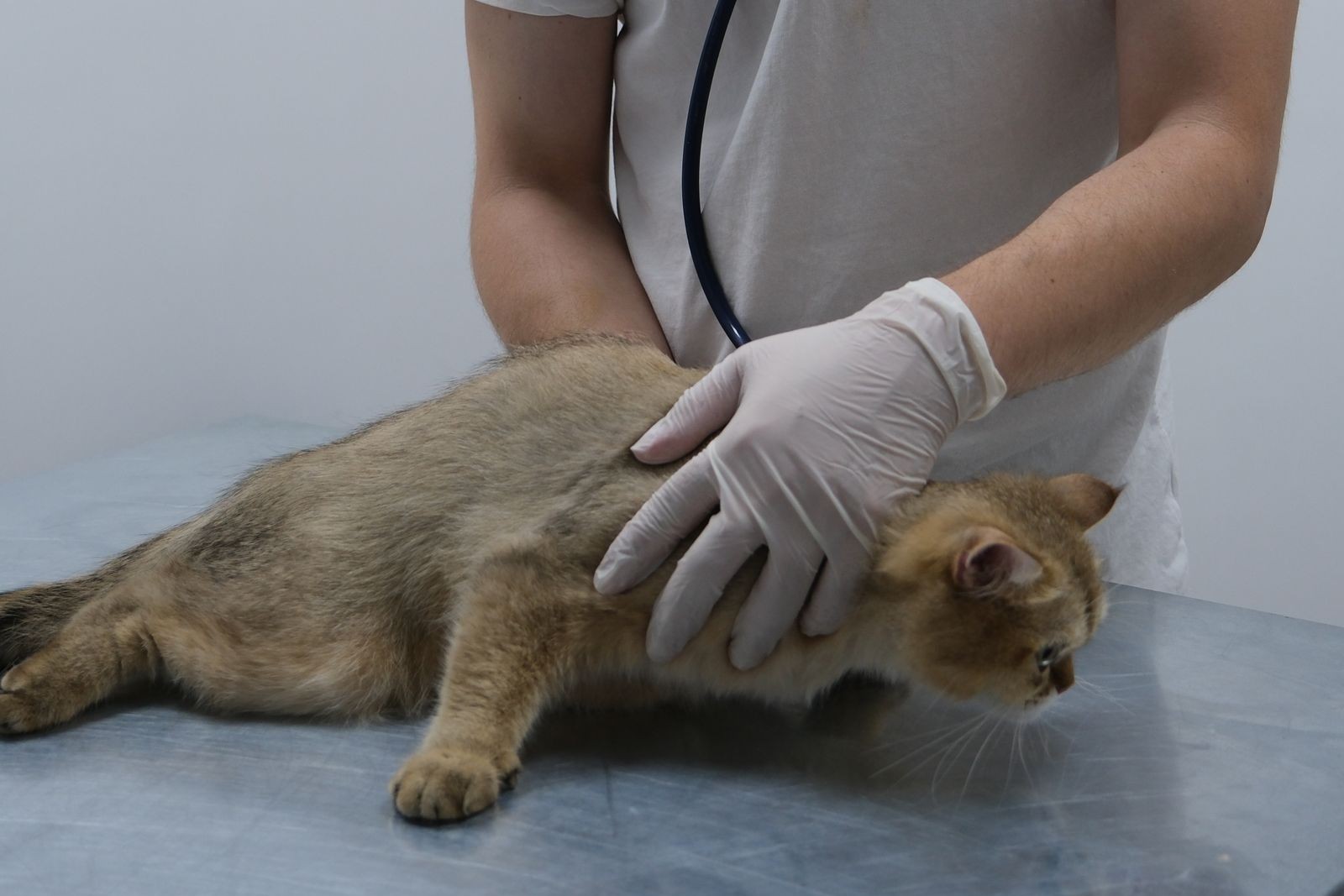
Diagnosis starts with the cat, not the lab slip. Cornell describes a veterinarian who suspects a thyroid problem examining the cat and feeling the neck for an enlarged thyroid gland, then checking heart rate and blood pressure. Merck's professional edition adds that a thyroid nodule is often palpable, while noting a gland can sometimes be felt in a cat whose thyroid is normal, so the finding points the workup rather than settling it. The blood test that usually settles it is total T4, the measure of the main thyroid hormone in the bloodstream. Merck calls a high serum total T4 concentration the hallmark of hyperthyroidism, confirming the diagnosis in a clinically affected cat. International Cat Care gives the owner version of the same point. Measuring the T4 concentration is usually all that is required, and sometimes additional tests are needed.
The problem this section is named for comes next. A normal total T4 does not always close the case. Cornell states that most cats with hyperthyroidism have elevated T4 levels, but a small percentage have T4 levels within the normal range. Merck's professional edition gives the same warning and adds that additional testing is warranted in those cats. There are two main reasons. The disease may be early, with hormone levels near the top of the range before they cross it. Or another illness may be pulling the T4 down. Merck notes that nonthyroidal illness can decrease T4 concentration, and that a senior cat with signs and a T4 at the high end of the reference interval may actually be hyperthyroid, because T4 concentrations naturally decrease with age. A result has to be read against the cat, the age, and the other findings.
When the first result and the cat disagree, the 2023 AAHA Selected Endocrinopathies of Dogs and Cats Guidelines, which carry forward the categorical approach from the 2016 AAFP Guidelines for the Management of Feline Hyperthyroidism, describe the next steps in plain order. For a cat with signs and a normal T4, further testing consists of total T4 and free T4 measured again after a short interval, and a T4 value in the upper half of the reference interval combined with an elevated free T4 supports a diagnosis of hyperthyroidism. Free T4 is the unbound, active share of the hormone. Merck adds that free T4 is not used as a screening test on its own, because nonthyroidal illness can move it too, and that it should be interpreted together with total T4. TSH, which is short for thyroid stimulating hormone, plays a supporting role. Merck notes it is not sensitive for the diagnosis and should be interpreted with T4 and free T4. The AAHA guidance adds a specific TSH use before radioactive iodine treatment in some categories of cat, to help avoid creating an underactive thyroid afterward. Where blood tests still leave doubt, thyroid scintigraphy, an imaging study UC Davis describes as showing the sites of abnormal tissue, including tissue in the chest, can clarify the picture and change treatment recommendations.
The workup around the thyroid tests is not padding. Cornell advises evaluating general health with particular focus on the heart and kidneys, because hyperthyroidism can predispose a cat to other conditions, and notes that a blood chemistry panel and urinalysis provide information about other organs. Merck's professional edition advises assessing renal function markers because they may affect treatment decisions, and notes that liver enzymes are commonly raised in hyperthyroid cats. Blood pressure belongs in the same visit, for reasons the linked conditions section covers. Read as an insurance file, this workup is the diagnosis. A claim file that contains only a single T4 slip tells a thinner story than one that contains the examination findings, the full panel, the urine result, the blood pressure reading, and, where the first T4 was normal, the follow-up testing that settled the question. Build the file the second way from the start.
Questions to ask your vet at the diagnosis visit
The diagnosis visit produces the documents everything else depends on. Ask these questions while you are in the room, and file the answers with the lab reports.
- Was the total T4 clearly raised, at the high end of normal, or in the middle of the range, and how does that sit with the signs you found on examination?
- If the T4 was not clearly raised, what is the follow-up plan: repeat total T4, free T4, TSH, or imaging, and when?
- What did the kidney values, the urine concentration, and the blood pressure show today, before any treatment starts?
- Did you feel an enlarged gland, and does the picture suggest one lobe or both?
- What change at home should make me call before the next scheduled recheck?
The kidney question: treatment can reveal hidden kidney disease
This is the section that makes hyperthyroidism different from every other condition in this guide series, and it deserves its length. Many senior cats carry two slow conditions at once, because both are common in the same years of life. International Cat Care puts the relationship carefully. Kidney disease does not tend to be a direct result of hyperthyroidism, but the two diseases often occur together because both are common in older cats, and untreated hyperthyroidism can cause or worsen kidney damage.
An overactive thyroid pushes more blood through the kidneys. UC Davis explains the consequence directly. Some cats with hyperthyroidism also have kidney disease, but their thyroid condition increases blood flow to the kidney, so it masks, but does not improve, the underlying kidney problem. Kidney blood values, creatinine among them, can therefore look better than the kidneys deserve while the thyroid is overactive. Muscle loss plays a supporting part, because a cat that has lost muscle makes less creatinine. Merck's professional edition states the outcome in one sentence that this guide treats as its anchor. Regardless of the treatment method used to treat feline hyperthyroidism, establishing a normal thyroid state can unmask renal disease, even in patients whose renal markers and SDMA were normal before treatment. Renal parameters, urine concentration, and blood pressure should be monitored.
Three implications follow, and each one is practical. First, a normal kidney panel before treatment is good news with an asterisk. It does not prove the kidneys are sound. It proves they looked sound under thyroid driven blood flow. The AAHA guidelines carry the same caution, noting that cats with normal renal values and normal SDMA may develop abnormalities after the hyperthyroidism is corrected, and that a normal SDMA cannot be used to predict renal function after thyroid treatment resolves. Second, a rise in kidney values after treatment is not, by itself, evidence that treatment damaged the kidneys. UC Davis frames the standard precaution. Before a permanent treatment that might cure the hyperthyroidism but unmask kidney disease, evaluate what happens to kidney function when the hyperthyroidism is treated with a reversible treatment, such as daily medication. If kidney function holds, a permanent treatment is typically viable. If it deteriorates, it might be preferable to avoid permanent treatment. That reversible trial is one of the most consequential ideas in this guide, for the medicine and the paperwork alike. Third, the thyroid still needs treating. Leaving a cat hyperthyroid to protect a kidney number is not a safe trade, because uncontrolled hyperthyroidism strains the heart, raises blood pressure, and can itself worsen kidney damage. The goal is a cat that is normal thyroid and monitored renal, with both conditions managed openly.
Now the insurance translation, because this interaction creates a paperwork pattern no other senior condition produces. After treatment, a second condition may be diagnosed that was not diagnosable before. How an insurer files that moment matters. Read generously, the kidney disease is a new diagnosis, made after enrollment, in a cat whose pre-treatment panels were on record, and it should be assessed like any other newly diagnosed illness. Read narrowly, an insurer may argue the kidney disease was present all along and reach toward pre-existing arguments, or fold the kidney care into the thyroid condition and its limits. The documents that decide between those readings are created before anyone is arguing: the pre-treatment kidney panel and urine result, the treatment plan note that names the masking possibility, the reversible trial results where one was done, and the post-treatment recheck panel that shows when the values actually changed. Our guide to pet insurance for chronic kidney disease in cats covers the kidney side in full, including IRIS staging and the chronic clauses a kidney claim turns on. Read the two guides together if your cat is anywhere near this border, because in real cats the two conditions share one file.
The before and after treatment record
One simple record makes the reveal readable instead of arguable. Keep a single page with two panels of results side by side: the panel taken before treatment begins, and the first panel taken after thyroid levels return to the normal range. Write the dates, the total T4, the kidney values your vet tracks, the urine concentration, the blood pressure, and the weight at each point. Add one line naming the treatment path, and one for any change the vet made after seeing the second panel. Bring it to every recheck. A vet reads it as a trend. An insurer reads it as a timeline with the masking step documented rather than asserted.
The four treatment paths, compared
Cornell, Merck, International Cat Care, and UC Davis all describe the same four paths: radioactive iodine therapy, surgery, dietary therapy with a prescription diet that restricts iodine, and daily anti-thyroid medication. Cornell is explicit that the treatment a cat receives depends on specific circumstances, including the cat's overall health, the owner's ability to medicate the cat regularly, and financial considerations. The descriptions below stay in general categories on purpose. Doses and suitability belong to your vet. What this guide adds is the comparison that matters here: what each path involves over time, and which policy clause each path turns on.
| Treatment path | What it involves | One-time or ongoing | Monitoring it needs | The policy clause it turns on |
|---|---|---|---|---|
| Radioactive iodine therapy | A single injection of radioactive iodine at a specially licensed facility. The iodine is taken up by the thyroid, and the radiation destroys the abnormal tissue without damaging surrounding tissues or the parathyroid glands, in Cornell's description. The cat stays at the facility until its radiation level falls to within acceptable limits, a stay Cornell puts at between three and five days, with no visitors | One-time in intent. Cornell describes the therapy as curative in most cases within three months, and notes it can be repeated if it is not successful. Follow-up blood tests confirm the thyroid level afterward | Thyroid levels after treatment, kidney values and blood pressure as levels normalise, and watch for an underactive thyroid afterward, which Cornell notes can develop in some cats and may need hormone supplementation when it comes with signs | Specialist and referral coverage. This path turns on whether referral to a licensed facility, and the hospital stay with it, are covered services |
| Daily anti-thyroid medication | Medication that reduces the production and release of thyroid hormone. Cornell notes it does not cure the disease, but allows short term or long term control, that lifelong treatment is usually given twice daily by mouth, and that a gel applied to the skin is an acceptable alternative in most cases. Merck names the standard drug, methimazole | Ongoing, every day, for as long as it is the chosen path. It is also the reversible path, often used first when kidney function needs testing before a permanent choice | The heaviest monitoring of the four paths. Merck's owner guidance describes blood counts and thyroid measurements checked every two to four weeks during the first three months, when most adverse effects develop, with dose adjustments to keep levels in range. After that, thyroid levels are usually measured every three to six months | Chronic condition coverage, plus medication and monitoring wording: whether the condition stays covered for years, medication is included, and repeat labs are reimbursable |
| Surgery (thyroidectomy) | An operation under general anesthesia to remove the affected thyroid tissue. Cornell describes a good success rate and a likely long term or permanent cure in most cats, and notes surgery is now rarely chosen because medication and radioactive iodine are just as effective and less invasive. Merck notes that if both sides are removed, thyroid hormone treatment will be needed afterward | One-time in intent, with a hospital stay and recovery. Cornell names the main specific risk: damage to the parathyroid glands, which sit close to the thyroid and keep blood calcium stable. International Cat Care adds that cats are often hospitalised for a few days after surgery so calcium can be monitored | Thyroid levels after surgery, calcium monitoring early on, kidney values and blood pressure as levels normalise, and watch for recurrence | Procedure and hospital coverage, plus anesthesia wording: whether surgery, anesthesia, and the post operative stay and testing are covered services |
| Prescription diet that restricts iodine | A therapeutic food with strictly controlled iodine. Iodine is an essential component of T3 and T4, so limiting it limits how much hormone the gland can make, in Merck's explanation. The diet only works if it is the only food. Merck's owner guidance is blunt that other foods or treats make the therapy ineffective, and the cat must eat only this food for life | Ongoing, every meal, for life. No procedure and no daily dosing, but total dietary control, which in a multi-cat home can be the hardest condition of any path to sustain | Thyroid levels on the diet, weight, and the same kidney and blood pressure watch. Merck notes dietary therapy appears most effective in mild cases and may not work in severe disease, and that most cats fed only this diet reach normal levels in eight to twelve weeks | Prescription food classification: does the plan treat a vet prescribed therapeutic diet as treatment, as partly covered, or as food that is never covered? |
Two honest notes complete the comparison. First, the paths are not sealed boxes. Drug therapy is often used initially when surgery or radioactive iodine is being considered, as International Cat Care notes, both to stabilise the cat and, as UC Davis explains, to run the reversible kidney test before a permanent step. A cat may therefore legitimately claim under two paths in sequence, and the file should show why the sequence made sense. Second, every path carries the same two follow-on risks, and neither is a reason to avoid treatment. Thyroid levels can overshoot downward into hypothyroidism, an underactive thyroid, which Merck's owner guidance describes as most commonly caused in cats by the treatment of hyperthyroidism itself. And kidney disease can be unmasked, as the previous section covered. Both risks are managed by the monitoring rhythm. Monitoring is not the paperwork after the treatment. For this condition, monitoring is half of the treatment.
Linked conditions: blood pressure, eyes, and heart
Because thyroid hormones reach nearly every organ, a hyperthyroidism file is rarely only a thyroid file. Three linked problems recur across the sources.
High blood pressure and the eyes
Hypertension, which means high blood pressure, is a named complication of hyperthyroidism in Cornell, Merck, and International Cat Care. Cornell explains that it can damage the eyes, kidneys, heart, and brain, that medication may be needed to control it alongside the thyroid treatment, and that after the hyperthyroidism is treated, high blood pressure will often resolve and permanent treatment may not be required. The eye risk is the urgent one. Pressure damage to the retina can present as sudden blindness, which is why the signs table treats a sudden vision change as a same day emergency. Merck's professional edition names hypertensive retinopathy among the complications. For a claim file, keep the blood pressure readings with the thyroid results from the first visit onward. A pressure reading taken before treatment is evidence about the whole case, not a side note.
Heart thickening, and the HCM border
Excess thyroid hormone drives the heart directly. Cornell explains that elevated thyroid hormones stimulate an increased heart rate and a stronger contraction of the heart muscle, and can cause thickening of the left ventricle over time. If left untreated, those changes may compromise heart function and can lead to heart failure. Cornell adds the hopeful half. Once the underlying hyperthyroidism is controlled, the cardiac changes will often improve or may even resolve completely. Merck lists thyrotoxic heart disease among the complications, using the name vets give to heart disease driven by the thyroid state. This creates a genuine border with primary heart disease. Thickening caused by the thyroid is expected to ease when the thyroid is controlled. Thickening that persists needs its own workup. Our guide to pet insurance for HCM in cats covers that condition, and notes the same border from the other side: thyroid testing belongs in an HCM workup because an overactive thyroid can produce similar thickening and must be ruled out. Keep the thyroid result and any heart imaging in the same folder, dated. Which condition was named first, and what the follow-up showed, is exactly what a reviewer will reconstruct.
The kidney link, restated briefly
The third linked condition is kidney disease, covered in full above because it changes how treatment is chosen. The two conditions share signs, share years of life, and interact through blood flow. A complete hyperthyroidism workup therefore always contains kidney values and a urine result, and a complete kidney workup in a senior cat should contain a thyroid level.
The policy clauses that decide a hyperthyroidism claim
Most pet insurance disputes about hyperthyroidism are not arguments about what happened at the clinic. They are arguments about what the policy said before anything happened, applied to a condition with a slow onset, four different treatment paths, and a complication that appears only after treatment works. The table below names each clause, explains what it does in plain language, and states the question to settle for hyperthyroidism specifically. Every answer lives in the insurer's sample policy, the full contract wording, not the marketing summary. Read it before you enroll, and keep the answers in writing.
| Clause to check | What it means | The hyperthyroidism question to settle |
|---|---|---|
| Chronic condition classification and renewal | Some plans cover a condition that lasts for years on the same terms while the policy continues. Others cap a condition, treat long term conditions less generously, or reclassify a known condition at renewal | Is hyperthyroidism covered as a chronic condition for the life of the policy while you stay enrolled, at every renewal, with no per condition cap that the first years of medication and monitoring would quietly consume? |
| Pre-existing condition definition | A pre-existing condition is one whose signs appeared before the policy started or during a waiting period, whether or not it was formally diagnosed | Would an earlier note about weight loss, a racing heart, restlessness, or a single raised T4 make all later thyroid care pre-existing? And if kidney values rise only after thyroid treatment, would the kidney disease be treated as pre-existing too, on the argument that it was present but masked? Settle both halves in writing |
| Bilateral style rules, as they apply here | Some policies carry rules for paired structures, treating a condition on the second side differently from the first. A thyroid has two lobes, and in most cats both are involved, so the pairing question is real | If one lobe is treated first and the other becomes overactive later, is that the same covered condition continuing, a recurrence, or a new condition? |
| Diagnostics coverage | The contract decides which tests count as covered services, and whether follow-up testing is treated the same as the test that confirmed the diagnosis | Are total T4, repeat total T4, free T4, TSH, blood panels, urinalysis, blood pressure measurement, and imaging such as scintigraphy covered when they diagnose this condition, including when the first T4 is normal and the guidelines call for more testing? |
| Prescription food classification | In many policies, food is food, even when a vet prescribes it as the treatment itself. In some, vet prescribed diets for a covered condition are partly included | If the iodine restricted prescription diet is the chosen treatment path, is it covered, excluded, or partly covered? For this condition the diet is not a supplement to treatment. On this path, it is the treatment, so the classification decides the claim |
| Specialist and referral coverage for radioactive iodine | The contract lists where covered care may be given, and whether referral care needs approval in advance. Radioactive iodine is only available at specially licensed facilities | Is radioactive iodine at a licensed referral facility a covered service, is prior approval required, and are the hospital stay and follow-up testing included? Ask before the referral is made |
| Monitoring labs at renewal and over years | The contract decides whether recheck testing counts as treatment of the condition, as excluded routine care, or as wellness, and whether that answer changes at renewal | Are the repeat thyroid levels, kidney panels, urine tests, and blood pressure checks reimbursable in each policy year, with any frequency limit or sublimit stated? This condition is monitored for life on every path |
| Waiting periods | A waiting period is the time after enrollment during which a new condition is not yet covered. Signs recorded inside it can be treated as pre-existing afterward | How long is the illness waiting period, and what happens to a cat whose first raised T4 lands inside it? Our guide to waiting periods explains how these definitions work. For a senior cat, the waiting period is a reason to enroll before the annual panel, not after it |
Two rows deserve emphasis. The pre-existing row has a second half no other guide on this site needs. The kidney reveal after successful thyroid treatment is a predictable, source documented event, and the time to learn how an insurer files it is before enrollment, while the answer is still a product question rather than a dispute. The prescription food row is the other trap. Owners compare policies on procedures and medication, and then choose the one path that is neither. If the diet path is a real possibility for your cat, the food classification is not a footnote in your comparison. It is the comparison.
The senior cat picture: life stage and monitoring over years
Hyperthyroidism is a condition of the second half of a cat's life. International Cat Care notes it is usually seen in middle aged and older cats, and Cornell's hospital guidance adds that it occurs without sex or breed predilection. There is no breed story to tell here. The risk factor is birthdays. That has a direct insurance consequence. The cats most likely to need this coverage are closest to any senior enrollment limits a plan may set, and their medical records are the longest. Enrolling a healthy middle aged cat, before the first thyroid note exists, is worth more for this condition than for almost any other, because the onset is gradual, signposted, and dated in the record as it happens.
The monitoring burden is the other life stage fact, and it runs on every path. On medication, Merck describes frequent checks early, then thyroid levels every three to six months once the dose is stable. After radioactive iodine or surgery, Cornell and International Cat Care both describe occasional blood tests to confirm normal thyroid levels are being maintained, with kidney function and blood pressure part of the follow-up. On the diet path, thyroid levels and weight are the rhythm. Layered over all of it is the kidney watch from the unmasking section, and the senior watch that applies to every older cat: weight, appetite, drinking, and urination, noticed at home between visits. None of this is intensive in any single week. It is steady, predictable, and measured in years. Choose a policy the way you would choose for a marathon: on whether its chronic, monitoring, and renewal wording holds up in year three, not on how it handles a single dramatic day.
Premium drivers for this condition follow from that shape, and this guide names them without prices, because prices vary by insurer, region, and cat, and invented figures would not help you judge a real quote. Premiums generally reflect the cat's age at enrollment, the plan's annual limit, deductible, and reimbursement structure, which matter more for a condition that produces many modest claims than for one that produces a single large one, where you live, because referral care such as radioactive iodine is priced by its market, and whether monitoring and prescription food sit inside the base plan or behind add-ons. The comparison method in our guide to how to compare plans, and the general cost picture in what shapes the cost of pet insurance, apply here without change. What changes is only the weighting. For hyperthyroidism, weight the chronic and monitoring clauses first, and the headline limit second.
A hyperthyroidism claim, step by step
This walkthrough uses no dollar figures, because prices vary by region and clinic. It follows a typical first claim for a senior cat, through treatment and into the kidney reveal, so you can see where the paperwork is created.
- The pattern at home. Over several weeks the cat eats more and weighs less. You start the home log and note the date the change began. That date later helps place the first sign inside the policy period.
- The senior visit. The vet examines the cat, feels the neck, checks heart rate and blood pressure, and runs blood tests including total T4 and a urinalysis. Keep the invoice and the full record, including the lab values.
- The confirmation step, if it is needed. If the first total T4 is normal or borderline while the signs point at the thyroid, the vet follows the guideline path: repeat testing, free T4, and supporting tests until the picture settles. Keep every result in sequence. That sequence is the evidence a normal first result was handled properly rather than ignored.
- The baseline page. Before treatment starts, you and the vet have one panel that records thyroid, kidney values, urine concentration, blood pressure, and weight together. File it as the before page of the before and after record described earlier in this guide.
- The treatment decision. The four paths are weighed, including, where kidney function is uncertain, a reversible medication trial first to see how the kidneys respond as thyroid levels normalise. Keep the note recording why the chosen path was chosen. It explains later claims under a second path if the sequence changes.
- Filing the claim. You submit the claim form with the invoices, the record, and the lab reports. Most insurers also ask for the cat's full history from every vet the cat has seen, because the pre-existing check runs on the whole record.
- The assessment. The insurer matches the file against the clauses in the table above. Were there earlier notes about weight loss or a raised T4? Was the referral approved as required? Is the diet classified as treatment or as food? Is monitoring covered? The answers, not the size of any single bill, decide the outcome.
- Reimbursement and the deductible. If the claim is accepted, the plan applies the deductible, which is the amount you pay first, and the reimbursement percentage stated in the policy, up to the remaining annual limit. Our guide to how pet insurance works walks through that arithmetic with a labelled hypothetical example.
- The reveal, and the second file. The first panel after thyroid levels normalise shows kidney values higher than the baseline. You file the after page next to the before page, with the vet's note naming the unmasking pattern. If kidney care is claimed, it goes in with that timeline attached, so the reviewer sees a documented sequence rather than a sudden new condition.
- The ongoing claims. Rechecks follow on the monitoring rhythm for the rest of the cat's life. File as you go, keep the home log current, and treat each renewal as a checkpoint where you confirm both conditions are still described as covered.
If a claim is denied, ask for the denial in writing with the exact clause cited. A denial based on timing can be answered with the timeline you kept: the log, the clean panel from before enrollment, and the before and after record. None of that guarantees a reversal. It turns an argument into a document review, which is the ground where owners do best.
Before you enroll a cat at risk of hyperthyroidism
- Get a written answer on whether hyperthyroidism is covered as a chronic condition for the life of the policy, with no per condition cap, at every renewal.
- Ask what earlier signs count as pre-existing for the thyroid: weight loss with a good appetite, a racing heart, restlessness, or a single raised total T4.
- Ask the kidney reveal question in writing. If kidney values rise after thyroid treatment, is the kidney disease a new diagnosis, or pre-existing because it may have been masked?
- Confirm diagnostics are covered by name: total T4, repeat total T4, free T4, TSH, blood panels, urinalysis, blood pressure measurement, and imaging.
- If radioactive iodine is a path you would choose, confirm referral coverage, any prior approval requirement, and whether the facility stay and follow-up testing are included.
- Ask how the plan treats the two lobes. If one lobe is treated and the other becomes overactive later, is that the same condition, a recurrence, or a new condition?
- Confirm monitoring is reimbursable by name, in every policy year: thyroid levels, kidney panels, urine tests, and blood pressure checks.
- Ask whether the iodine restricted prescription diet is covered, excluded, or partly covered, in writing, before the first bag is bought.
- Ask the senior question directly. At your cat's age, which plans are open for new enrollment, and does coverage change at later ages while enrolled?
- If you can, get a clean senior panel including a thyroid level and kidney values before you enroll, and keep it. A normal baseline is the strongest answer to a later pre-existing argument.
- Start the home log now, while it is a baseline, and start the before and after record the day treatment begins.
Questions to ask an insurer, in writing
Copy these into an email or the insurer's contact form, and keep the reply with your policy.
- Is hyperthyroidism covered for the life of the policy once diagnosed, and is there any per condition limit that would apply to its medication and monitoring?
- Does a covered chronic condition stay covered at renewal, or can it be reclassified as pre-existing in a new policy term?
- My cat's record contains a note about weight loss and one raised thyroid value from a past visit. Would that make later thyroid treatment pre-existing under this plan?
- If my cat's kidney values rise after thyroid treatment, as the veterinary literature describes happening when hyperthyroidism stops masking kidney disease, how is that kidney diagnosis classified under this plan?
- Are the follow-up tests the guidelines call for covered when a first total T4 is normal: repeat total T4, free T4, and TSH?
- Is radioactive iodine therapy at a licensed referral facility covered, is prior approval required, and is the hospital stay during treatment included?
- Is a veterinarian prescribed iodine restricted diet for hyperthyroidism covered, excluded, or partly covered?
- If one thyroid lobe is treated and the other becomes overactive later, is that treated as the same condition, a recurrence, or a new condition?
For the wider method behind these questions, see how to compare plans and what pet insurance covers.
The home log for a fast body
The home tool for this condition is a one page record matched to the changes hyperthyroidism shows first. Once a week, write down four things, plus anything unusual. First, weight, taken the same way each time, because weight loss with a good appetite starts most of these stories, and a dated trend proves it better than an impression. Second, appetite, including food left uneaten and any new food seeking, because appetite here can be misleadingly strong. Third, water intake and litter output in rough form, because drinking and urination are shared signs with kidney disease and diabetes. Fourth, rest and behaviour: sleep, restlessness, vocalizing at night, and any panting or racing heartbeat you notice. Date every entry.
A record like this does not diagnose anything and does not replace bloodwork. It turns a fast, confusing set of changes into dated evidence. Your vet reads the trend between panels. Your claim file reads as one continuous, honest story. And on the day treatment starts, this log becomes the home half of the before and after record.
Frequently asked questions
Is hyperthyroidism in cats covered by pet insurance?
It depends on the exact policy and on timing. Hyperthyroidism is an illness, so an accident and illness plan can cover its diagnosis and treatment when the condition first showed signs after the policy started and after any waiting period, and when the plan's chronic condition wording keeps it covered over time. If weight loss, a racing heart, or a raised thyroid value were recorded before enrollment or during a waiting period, an insurer may treat the condition as pre-existing. Which treatment path you choose also matters, because radioactive iodine, daily medication, surgery, and the prescription diet each turn on different policy wording. The sample policy, confirmed in writing, is the only reliable answer for your cat.
My cat's total T4 came back normal, but the signs have not gone away. Can it still be hyperthyroidism?
Yes, it can, and the sources are consistent on this point. Cornell notes that a small percentage of cats with hyperthyroidism have T4 levels within the normal range, and the Merck Veterinary Manual adds that another illness can pull a T4 down and that a high normal result in a senior cat with signs may still mean hyperthyroidism. The 2023 AAHA guidelines describe the follow-up path: repeat total T4 and free T4 testing, where a total T4 in the upper half of the range combined with an elevated free T4 supports the diagnosis. Keep every result in sequence, and ask your vet what the follow-up plan is rather than treating one normal result as the end of the question.
Will treating hyperthyroidism reveal kidney disease, and what does that mean for coverage?
It can reveal kidney disease, and that is a documented pattern rather than a complication anyone caused. UC Davis explains that the overactive thyroid increases blood flow to the kidneys, which masks, but does not improve, an underlying kidney problem, and Merck states that restoring normal thyroid levels can unmask renal disease even when kidney markers were normal before treatment. For coverage, the honest answer is that it depends on how the insurer classifies a diagnosis that only becomes visible after treatment. Ask that question in writing before you enroll, and keep the before and after treatment panels together, because that timeline is the document the classification will be argued from.
Does pet insurance pay for radioactive iodine treatment?
Only if the policy wording says so. Radioactive iodine is given at specially licensed referral facilities, so the claim turns on specialist and referral coverage, on any prior approval the plan requires, and on whether the hospital stay while the cat's radiation level falls and the follow-up testing are included as covered services. Cornell describes the therapy as curative in most cases, which makes it attractive medicine, but a policy that covers care only at a primary practice, or that excludes referral treatment, can still leave this path outside the claim. Settle the referral wording in writing before the appointment is booked.
Is the prescription diet for hyperthyroidism covered?
It depends entirely on how the plan classifies food. On the diet path, a veterinarian prescribed food with strictly controlled iodine is not a supplement. It is the treatment itself, and it works only if the cat eats nothing else, as Merck's guidance makes clear. Some policies exclude all food, including prescribed diets. Some partly cover a therapeutic diet for a covered condition. Others treat it as treatment. Because the classification decides the whole claim on this path, get the answer in writing before you rely on the diet as your cat's treatment plan.
Can I enroll a senior cat, or is it too late for thyroid coverage?
It depends on the insurer and on the record. Some plans set an upper age for new enrollment, or offer older cats fewer plan choices, so ask for the senior rules in writing. The harder limit is usually the medical record rather than the birthday. A senior cat with a clean recent panel, including a normal thyroid level and kidney values, may enroll with hyperthyroidism still coverable in the future. A senior cat whose record already shows weight loss notes, a racing heart, or a raised T4 will usually find thyroid care treated as pre-existing, whatever the cat's age. Enrolling in the middle years, before the first thyroid note exists, avoids that argument entirely.
Sources and further reading
- Cornell Feline Health Center, Hyperthyroidism in Cats
- Cornell University Hospital for Animals, Internal Medicine Service, Feline Hyperthyroidism and treatment options
- Merck Veterinary Manual, Disorders of the Thyroid Gland in Cats (owner edition)
- Merck Veterinary Manual, Hyperthyroidism in Animals (professional edition)
- American Animal Hospital Association, 2023 AAHA Selected Endocrinopathies of Dogs and Cats Guidelines, Feline Hyperthyroidism Categorical Approach to Diagnosis
- International Cat Care (iCatCare), Hyperthyroidism in cats (updated September 26, 2025)
- UC Davis School of Veterinary Medicine, Hyperthyroidism in Cats
Sources checked on November 6, 2026. CoverageForPets is operated by its publisher and researched from the primary sources listed above. This guide is general information only. It is not veterinary advice and not a recommendation to buy any specific policy.