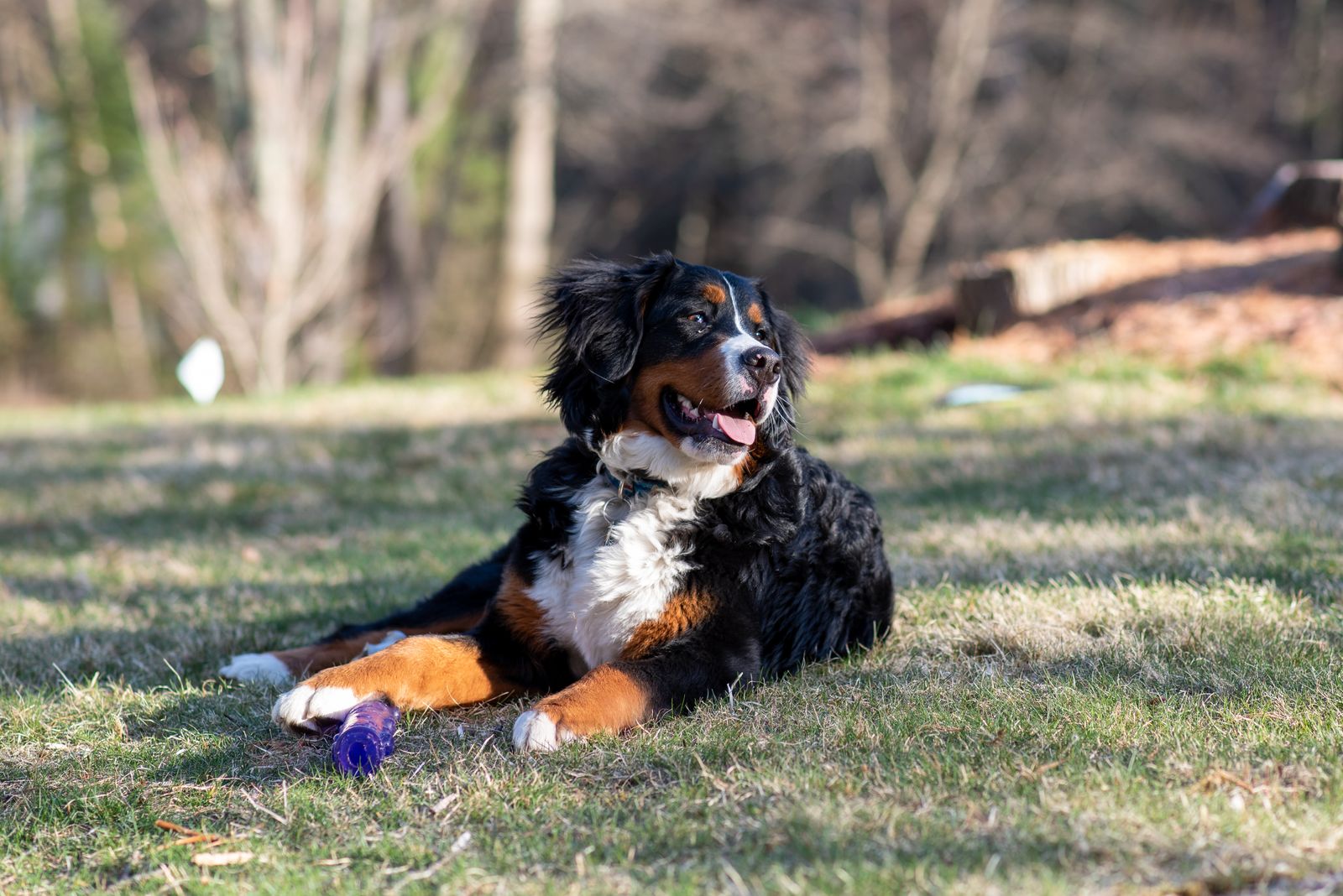
Breed snapshot
The American Kennel Club describes the Bernese Mountain Dog as big, powerful, and built for hard work, and also strikingly beautiful, with a sweet and affectionate nature. The AKC summary calls Berners generally placid, but always up for a romp with the owner they live to please. This is a Working Group breed from the canton of Bern in Switzerland, one of the Swiss farm dog types, developed for guarding, herding cattle, and pulling carts. The breed ranked No. 19 in AKC registrations for 2024.
| Height | 25 to 27.5 inches for males. 23 to 26 inches for females, measured at the withers, the ridge between the shoulder blades. |
|---|---|
| Weight | 80 to 115 pounds for males. 70 to 95 pounds for females. |
| Lifespan | 7 to 10 years, as listed by the AKC. |
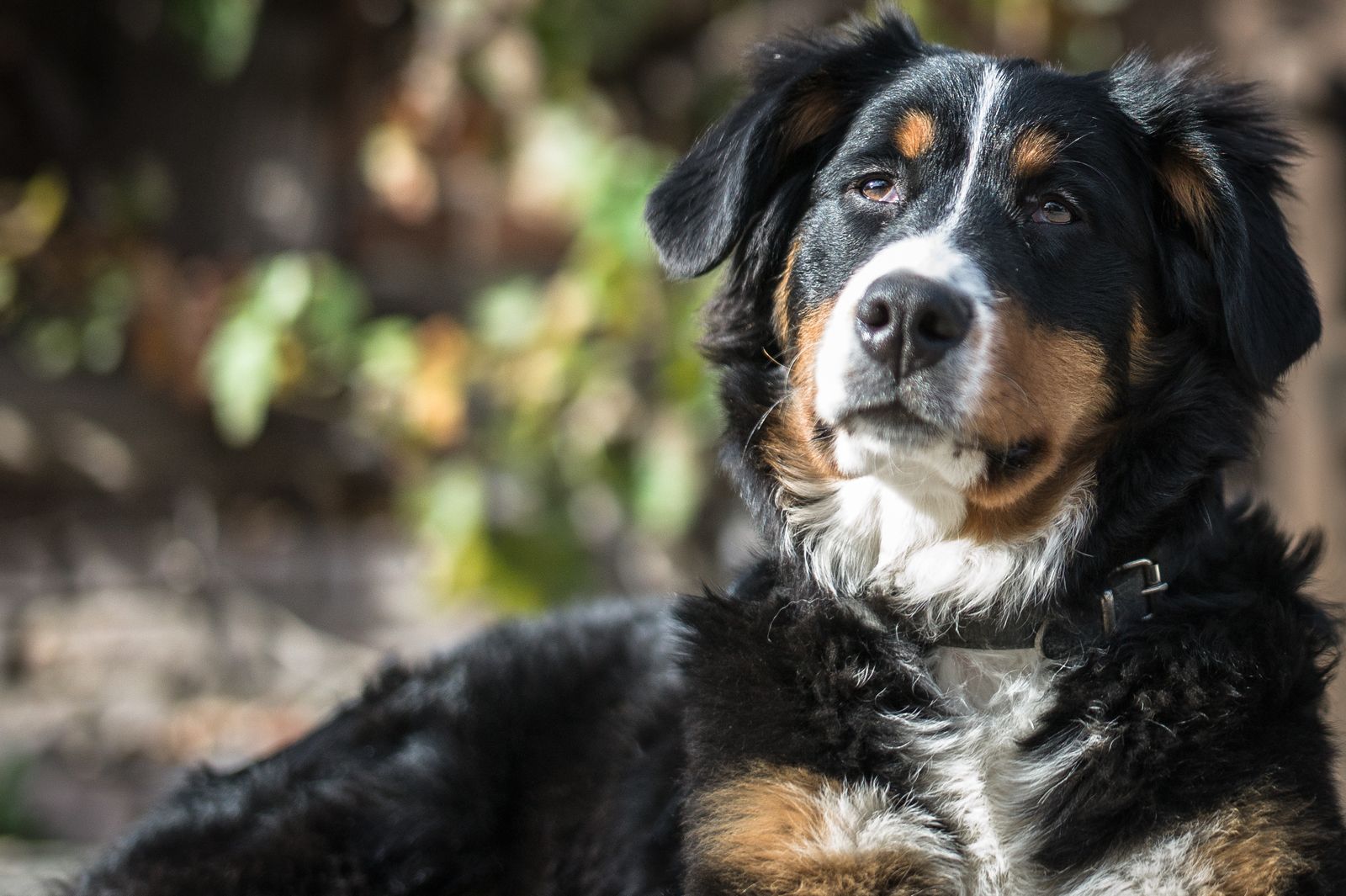
| Coat | A thick, long, silky double coat in a clear tricolour pattern. Jet black ground colour with rich rust markings and clear white markings, including a white blaze on the face and a white chest. |
| Temperament | Good natured, calm, and strong, in the AKC summary words. Affectionate with family and eager to please, with the patience of a farm dog bred to work beside people. |
| Energy and exercise | Moderate to high for a dog of this size. A working breed that needs daily exercise and a task for its mind, and a heavy coated breed that handles cold far better than heat. |
Two snapshot facts shape the insurance picture. The first is size. A dog that can weigh as much as a person loads its hips and elbows with every stair and jump, needs medication and anesthesia dosed for a large body, and has the deep chest that puts bloat on the emergency list. The second is the lifespan. Seven to ten years is short for any breed, and it compresses this breed's story. The puppy year, the screening decisions, and the enrollment decision all happen fast, and the conditions in the next section tend to arrive in a middle aged dog, not a very old one. A Berner owner does not have a long runway. The policy, and the record that supports it, have to be built in the first year.
Health tendencies in Bernese Mountain Dogs
The Bernese Mountain Dog Club of America, the breed's parent club, sets a minimum recommended testing list for genetic diseases: hips, elbows, eyes, heart, and degenerative myelopathy, plus one elective test chosen from von Willebrand disease, thyroid, or the histiocytic sarcoma risk test. That list is a map of this breed's real risks, and the six cards below follow it, adding bloat, the emergency that no screening test predicts. They are tendencies, not predictions about an individual dog. A well screened line lowers some of the risk without erasing any of it, and this breed's own club warns buyers not to read a completed test list as a clean bill of health.
This section is general information about conditions a breed can be prone to. It is not veterinary advice and it is not a diagnosis of any dog. Signs listed here are possible signs owners may notice, and many of them have several causes. Only a veterinarian who examines your dog can say what a sign means.
Histiocytic sarcoma
What it is
An aggressive cancer of histiocytes, cells that form part of the immune system and are present in the lymph nodes and in a number of organs. The Bernese Mountain Dog Club of America states that Bernese Mountain Dogs are one of the more commonly affected breeds, and it describes the disease plainly: no treatment is effective to date, and the disease is fatal. The club lists three forms. Localized histiocytic sarcoma occurs most often in bones, joints, skin, and lungs. Disseminated histiocytic sarcoma affects multiple organs and tissues at the same time. Hemophagocytic histiocytic sarcoma starts within the spleen and progresses rapidly. Because the cells involved live throughout the body, this cancer can appear in very different places in different dogs, which is why its signs are so varied and so easy to mistake for something else at first.
Signs owners may notice
- Lower energy, lower appetite, or weight loss that does not resolve, which can be the only signs when the disease is internal.
- A lump in or under the skin, or a swelling around a joint, in the localized form.
- A swollen belly, pale gums, or weakness, which can appear when the spleen is involved.
- Coughing, harder breathing, or tiring very quickly, which can appear when the lungs are involved.
- Enlarged lymph nodes felt under the jaw, in front of the shoulders, or behind the knees.
When it can be urgent
Collapse, pale or white gums, a belly that swells suddenly, or breathing that becomes hard work is same day emergency care, whatever the cause turns out to be. Slower changes, such as appetite loss, weight loss, or a new lump, are a prompt routine appointment, measured in days. In this breed, prompt matters. A cancer described by its own breed club as aggressive does not reward waiting to see whether vague signs pass.
How vets usually evaluate and treat it
Evaluation starts with an examination, bloodwork, and imaging such as X-rays or ultrasound to look for internal masses or an enlarged spleen or liver. The diagnosis itself needs cells or tissue. A fine needle aspirate draws cells out with a needle for examination, and a biopsy or surgical sample sends tissue to a pathologist, a specialist who examines tissue under a microscope and names the disease. Staging is the step that checks how far a cancer has spread, and it can include imaging of the chest and abdomen and sampling of lymph nodes. Treatment categories are honest to state and hard to read. Surgery can be part of care for a localized tumor. Chemotherapy is used in some cases under a veterinary oncologist, a cancer specialist. For many dogs the plan becomes palliative care, which means care aimed at comfort and quality of life rather than cure. The breed club's own words, that no treatment is effective to date, are the reason the insurance value in this card sits in the workup, the specialist time, and comfort care, and not in a promised cure.
Cancer more broadly, including mast cell tumors and lymphoma
What it is
Histiocytic sarcoma is the signature cancer of this breed, but it is not the only one a Berner owner may meet. Mast cell tumors are skin tumors that grow from mast cells, a type of immune cell, and Cornell's oncology service describes the mast cell tumor as the most common malignant skin tumor in dogs, one that can look like a harmless lump. Lymphoma is a cancer of white blood cells that often first appears as enlarged lymph nodes. Bone cancer, called osteosarcoma, is a cancer of the bone that large and heavy breeds carry on their list, and it most often announces itself as lameness and pain in a leg. The shared lesson across all of them is the same. In a breed with this cancer profile, a new lump, a new limp, or a quiet change in appetite is a test, not a wait.
Signs owners may notice
- A new lump on or under the skin, or an existing lump that grows, changes shape, or changes feel.
- A skin lump that swells, reddens, or shrinks and returns, which mast cell tumors can do as they release histamine, a chemical involved in allergic reactions.
- Firm, enlarged lymph nodes under the jaw, in front of the shoulders, or behind the knees.
- Lameness or pain in one leg that does not settle with rest, especially in a heavy dog.
- Weight loss, lower appetite, or lower energy that does not resolve.
When it can be urgent
Most lumps are a prompt routine appointment. Same day care is for a dog that collapses, has pale gums or a suddenly swollen belly, bleeds and does not stop, or struggles to breathe. A leg that a large dog suddenly will not bear weight on also deserves prompt care, because a painful bone and a broken bone can look alike at home.
How vets usually evaluate and treat it
The first test for a lump is usually a fine needle aspirate, in which a needle draws out cells for examination under a microscope. Cornell notes that mast cell tumors are usually diagnosed this way, and that appearance alone cannot tell a malignant tumor from a harmless one. A biopsy or surgical removal sends tissue to a pathologist, who names the tumor type and grade and reports whether the edges of the removed tissue are clear. For a painful leg, X-rays of the bone are the first step, and a biopsy can follow. Staging can include lymph node sampling, bloodwork, and imaging of the chest and abdomen. Treatment is specific to the cancer and its stage, and the general categories are surgery, chemotherapy, radiation in some cases, and comfort care. A veterinary oncologist usually directs a plan that runs longer than a single visit, and often across a policy renewal.
Hip and elbow dysplasia
What it is
Dysplasia means a joint that formed incorrectly. In hip dysplasia, the ball and socket of the hip fit poorly, the joint is loose, and arthritis follows over time. Cornell's Riney Canine Health Center describes that looseness, called laxity, leading to loss of cartilage, bony change, and osteoarthritis, the arthritis that develops in a worn joint. Elbow dysplasia is the matching problem in the front leg, a group of growth faults inside the elbow joint that also lead to arthritis. Both evaluations sit at the top of the breed club's minimum testing list, and both matter more in a dog of this weight. A Berner carries a person sized load on those joints, up stairs, into cars, and across every walk of its life.
Signs owners may notice
- Stiffness after rest, trouble rising, or reluctance on stairs, jumps, and getting into the car.
- Bunny hopping, running with both back legs moving together, or a swaying walk.
- A front leg limp, a stiff front gait after rest, or a dog that turns its front paws outward.
- Lagging on walks, sitting down mid play, or losing interest in games the dog used to start.
- Loss of muscle over the hips and thighs, with weight shifting forward onto the front legs.
When it can be urgent
Dysplasia is a slow condition and a routine appointment problem. A dog that suddenly cannot bear weight, cries out, or drags a back foot may have a different problem, including a spinal one, and that change deserves prompt care. In an older Berner, hind leg weakness is a reason to ask about the spine as well as the hips, because the spinal condition in this guide can look similar at first and is not painful in the way arthritis is.
How vets usually evaluate and treat it
Cornell describes diagnosis by X-rays taken in a specific position, which requires the dog to be sedated or anesthetized, combined with a hands on examination and palpation of the joint. The two common evaluation methods are the OFA method, which grades hips from radiographs taken after the dog is two years old, and the PennHIP method, which measures the amount of laxity directly and can be used in puppies. Elbow evaluation is also by radiograph, graded through OFA. In a pet dog with signs, treatment usually starts with weight control, regular low impact exercise such as walking and swimming, pain and anti-inflammatory medication, and physical therapy. Cornell lists surgery as the route for severe cases that respond poorly to medical management. For hips in large dogs that usually means total hip replacement, and for elbows it can mean arthroscopy, a keyhole procedure inside the joint, or other joint surgery a specialist recommends.
Bloat (gastric dilatation and volvulus, GDV)
What it is
Bloat is the everyday name for a stomach emergency. In its dangerous form, called gastric dilatation and volvulus or GDV, the stomach fills with gas and fluid and then twists on its axis, trapping its contents and cutting off blood flow to the stomach and the spleen. The Merck Veterinary Manual treats GDV as a life threatening emergency that moves toward shock, a collapse in circulating blood volume. Large, deep chested breeds carry the highest risk, and a Bernese Mountain Dog is exactly that shape: a big dog with a deep chest under a heavy coat. Unlike the other cards in this guide, bloat is not inherited in a simple way and no parent test predicts it. It is the risk you prepare for by knowing the signs and by deciding the gastropexy question in advance, while the dog is calm and well.
Signs owners may notice
- Retching or heaving that produces nothing, or only foam and saliva. This is the sign owners name most often afterward.
- A belly that swells, feels tight, and can sound hollow or drum like when tapped, usually behind the ribs.
- Restlessness, pacing, stretching, or a dog that cannot settle or lie down comfortably.
- Heavy drooling, rapid or labored breathing, and obvious abdominal pain.
- Pale gums, a rapid weak pulse, weakness, or collapse, which are later signs of shock.
How vets usually evaluate and treat it
Emergency care starts with stabilization for shock, usually rapid intravenous fluids and oxygen, and an X-ray to confirm the twist. The team decompresses the stomach, releasing the trapped gas through a tube passed through the mouth, or through a large needle through the body wall when the twist blocks the tube. Surgery follows in almost every true GDV case. The surgeon untwists the stomach, checks the stomach wall and the spleen for dead tissue, removes damaged tissue where needed, and performs a gastropexy, tacking the stomach to the body wall so it cannot twist again. A preventive gastropexy is a separate, planned decision. It is often done at the same time as a spay or neuter in a high risk breed. A tacked stomach can still fill with gas, but it is far less likely to twist, and the twist is the part that kills.
Degenerative myelopathy
What it is
A disease of the spinal cord that causes progressive muscle weakness and loss of coordination. Cornell compares it to Lou Gehrig's disease, also called ALS, in humans. It is an inherited neurologic disease that typically affects dogs around eight years of age or older, which in a breed with a 7 to 10 year lifespan means it belongs to the last chapter of a Berner's life. Cornell describes gradual muscle wasting and incoordination in the hind limbs, progressing to an inability to walk, with weakness that can extend to the front limbs in late stages. There is no cure. The Berner detail that matters most is genetic. In most breeds the disease is linked to a variant in the SOD1 gene, called SOD1A. Cornell notes that a second variant, SOD1B, is found only in Bernese Mountain Dogs, and that Berners should be tested for both variants to assess their risk.
Signs owners may notice
- Scuffed or worn toenails on the hind feet, or hind paws that drag and knuckle under.
- Hind limb weakness and incoordination, often starting in one hind limb and then including both.
- Difficulty rising, swaying in the hindquarters, and loss of muscle over the hind legs.
- A weakness that does not look painful. Cornell's picture of this disease is a dog that is weak and uncoordinated rather than sore, which helps separate it from arthritis.
When it can be urgent
Degenerative myelopathy itself moves slowly, over months. A sudden inability to walk, sudden severe weakness, or clear pain is not its usual pattern and deserves prompt, sometimes same day, care, because disc disease and other spinal emergencies can look similar at the start and some of them are treatable when they are caught early.
How vets usually evaluate and treat it
Cornell is direct that there is no specific test to diagnose this disease in a living dog. Vets reach it by ruling other spinal cord diseases out, with a neurological examination, bloodwork, X-rays, MRI or CT imaging, and spinal fluid analysis. Genetic testing shows whether a dog has one or two copies of the variants associated with the disease. Two copies mean higher risk, not a guarantee of disease, and a carrier with one copy can still carry some risk, generally with slower progression. Treatment is management, not cure. Cornell lists physical therapy to slow progression and maintain muscle mass, maintaining a healthy weight, rugs or mats on slippery floors, ramps or steps, booties for scuffed paws, a sling or harness for walking and standing, and a wheelchair to support the hind limbs as mobility fades.
Von Willebrand disease and the eye screen
What it is
Von Willebrand disease, or vWD, is an inherited bleeding disorder that makes it difficult for blood to clot. Cornell calls it the most common inherited bleeding disorder in dogs. The missing piece is von Willebrand factor, a protein that helps platelets, the small blood cells that start a clot, stick together at a wound. The breed club lists vWD DNA testing as one of the elective tests in its minimum program, and the DNA result is the cleanest part of this card: a dog is reported as clear, carrier, or affected for the variant the test covers. There is no cure, and Cornell notes that affected dogs can have a normal lifespan with proper care. This card pairs vWD with the eye screen for a practical reason. Both sit on the breed club list, both are easy to overlook beside cancer and joints, and both change a real decision. vWD changes how a surgery is planned. The eye examination changes what a breeder can honestly claim.
Signs owners may notice
- Bruising of the skin that seems too easy, or a bruise with no injury you can remember.
- Bleeding from the gums or the nose that is slow to stop.
- Bleeding that runs longer than expected after a tooth loss, a nail trim accident, or a small cut.
- Excessive bleeding during or after a surgery, which is where Cornell notes the disorder often shows itself.
- For the eyes, often nothing at home. Heritable eye problems are usually found at the screening examination, not by the owner.
When it can be urgent
Bleeding that does not stop, a dog that becomes weak or pale after bleeding, or heavy bleeding after any surgery is same day emergency care. Tell the emergency team about the vWD result, or the family history, as soon as you arrive. It changes what they prepare.
How vets usually evaluate and treat it
Evaluation combines the DNA result, the bleeding history, and blood testing that can include a clotting panel and, where a vet needs it before a procedure, a test of von Willebrand factor levels. Before a planned surgery in an affected dog, the veterinary team can prepare blood products and adjust the plan, which is exactly why a DNA result filed as a puppy matters to a surgery done at five years old. Treatment of a bleeding episode is supportive and specific to the event, and can include pressure, wound care, and transfusion support in a hospital. The eye side of this card is an examination by a veterinary ophthalmologist, a specialist in animal eyes, with results recorded in the OFA Companion Animal Eye Registry, called CAER. The breed guidance is that the eye examination repeats, usually yearly in breeding dogs, because an eye result is a statement about the day it was done.
The cancer watch and breeder evidence file
No sibling guide in this series needs this section in quite this form, because no sibling breed pairs a signature aggressive cancer with a breeder risk test and an open health database in the same file. The Bernese Mountain Dog Club of America runs its health program through two recording systems: CHIC, the Canine Health Information Center run by OFA, and Berner Recommended Testing, recorded through the Berner-Garde Foundation, the breed's own health and pedigree database. The club's warning deserves repeating in full, in plain words. Neither program requires a dog to have normal results. Both require that the tests were completed and the results shared. A testing badge is proof of testing, not proof of health. The file below is built to be read with that warning in mind.
The breeder evidence checklist, test by test
| Test | What it checks | How the breed program uses it | Date done | Result, in the report's own words |
|---|---|---|---|---|
| Hip evaluation | Hip joint fit and looseness. | Required. As an OFA grade from films at two years, or a PennHIP measurement of laxity. | ||
| Elbow evaluation | Elbow joint shape and growth faults. | Required. As an OFA elbow result from radiographs. | ||
| Eye examination | Heritable eye problems. | Required. By a veterinary ophthalmologist, recorded in the CAER registry, and repeated, usually yearly in breeding dogs. | ||
| Cardiac evaluation | Heart structure and rhythm at an examination. | Required. A cardiac evaluation recorded with OFA. | ||
| Degenerative myelopathy DNA, SOD1A and SOD1B | Both gene variants linked to spinal cord disease risk, including the variant found only in this breed. | Required. Once. A risk result, not a diagnosis and not a clearance. | ||
| Elective test, one of three | Von Willebrand disease DNA, thyroid function, or histiocytic sarcoma risk. | One elective test completes the minimum list. Record which one was chosen, and what was not tested as a result. | ||
| Histiocytic sarcoma risk test | A genetic index built from a set of markers, used with the HSIMS mate selection tool to estimate risk in a planned litter. | Elective. Both parents must be tested for a litter estimate. The club and the test maker describe it as a selection tool. It is not a prediction that an individual dog will or will not develop the cancer. |
- Dated hip and elbow reports for both parents, read in full. Record the grade or measurement, not only the word normal.
- The most recent eye certificate for both parents, and its date. An eye result from years ago is a statement about that year, not this one.
- Cardiac evaluation reports for both parents, recorded as reported.
- Degenerative myelopathy DNA results for both parents that name both variants, SOD1A and SOD1B. A result that names only one variant is incomplete for this breed.
- Which elective test the breeder chose, and the result. If the elective was thyroid or von Willebrand, say plainly that no histiocytic sarcoma risk index exists for this litter, and the other way around.
- The breeder's own answers about cancer in the family, in writing where you can. Ask directly at what ages relatives developed cancer, what type it was, and what ages the grandparents reached. No laboratory test answers those questions, and in this breed they are the most informative questions on the page.
- Permission to look the dogs up yourself in the OFA and Berner-Garde records. A breeder working inside this breed's open reporting culture will expect the request.
| The file can show | The file cannot show |
|---|---|
| The joint structure of both parents, graded or measured on dated radiographs. | Whether your puppy's own joints will stay comfortable under a heavy adult body. |
| DNA risk results for degenerative myelopathy and, where tested, von Willebrand disease. | A diagnosis, or a guarantee. Risk results describe risk, and dogs are diagnosed by examination and testing. |
| A histiocytic sarcoma risk index for a planned litter when both parents were tested. | Any prediction about your individual dog. The index guides mating choices across a population. It does not clear a puppy. |
| Eye and cardiac results on stated dates. | What either system will look like years later. That is why parts of this program repeat. |
| The ages and causes of death the breeder reports for relatives. | A promise about longevity. It is the best honesty available in this breed, and it is still a record, not a forecast. |
The cancer signs and screening record log
The evidence file covers the parents. This log covers your dog, from the first year onward, and it is the tool this breed most needs because its leading risk has no screening test that rules it out. Use one row for every lump, appetite change, weight change, new limp, or episode of low energy that you notice or report. Photograph a lump beside a clean coin or a ruler so its size can be judged later. Write the vet's result down in the report's own words. Bring the log to every visit. In a short lived breed, this dated record does two jobs at once. It helps your vet see change over time, and it is the document an insurer reads when a cancer claim arrives and the first question is when anyone first noticed anything.
| Date noticed | What changed (lump, appetite, weight, limp, energy, breathing, belly) | Size or detail, with a photo beside a coin or ruler for a lump | What the vet did and the result, in the report's own words | Recheck date, and the change that sends you back sooner |
|---|---|---|---|---|
Two rules make the log work. First, a change is a new row. A lump that grows, a limp that returns, or an appetite that dips again gets dated again, even if an earlier check was reassuring, because the pattern across rows is often what prompts the test that matters. Second, vague is still worth writing down. The early signs of an internal cancer in this breed are low energy, lower appetite, and quiet weight loss. Owners often feel those changes before they can prove them. A dated note that says the dog left food and slept through a favourite walk is better evidence, for the vet and for a claim, than a memory reconstructed months later.
Policy decisions that matter for a Bernese Mountain Dog
For a Berner, the policy table is about cancer, paired joints, one stomach emergency, and a short clock. Most of the breed's conditions are hereditary, several are diagnosed by specialist testing and imaging, and the adult years in which they arrive are a large share of the dog's whole life. The clauses below are the ones that decide whether the screening work in the previous section is matched by coverage that holds up afterward.
| Policy feature | Why it matters for a Bernese Mountain Dog | Stronger wording looks like | Watch out for |
|---|---|---|---|
| Hereditary condition coverage | Hip and elbow dysplasia, degenerative myelopathy risk, von Willebrand disease, and much of the cancer risk sit on the hereditary side of the file. | Hereditary conditions are covered on the same terms as other illnesses. | Hereditary exclusions, or breed specific exclusions aimed at conditions like these. |
| Cancer coverage and annual limit terms | Histiocytic sarcoma and the wider cancer list can put staging, surgery, and a course of care inside one policy year. | Cancer care is covered on normal illness terms, with diagnostics, staging, chemotherapy, and radiation included, and an annual limit read against a full course of care. | Cancer exclusions, chemotherapy or radiation carve outs, or a per condition cap that a single cancer year can exhaust. |
| Pre-existing condition definitions | A lump, a limp, a bleeding note, or a spell of low appetite can each be recorded years before a condition is named. | A clear definition tied to signs a vet recorded, with a stated route for conditions that were treated and resolved. | Broad wording that lets any earlier vague note anchor a denial for a later diagnosis. |
| Diagnostics and specialist coverage | The breed's diagnoses are test driven: aspirates, biopsy and pathology, staging imaging, joint radiographs under sedation, spinal imaging, and clotting tests. | Lab work, pathology, imaging, and referral visits with specialists such as oncologists, surgeons, and neurologists are covered categories for a covered condition. | Medication only thinking, where the tests that establish the diagnosis are excluded or separately capped. |
| Bilateral condition rule | Hips and elbows come in pairs, and this breed is screened and often affected on both sides over time. | Each side is judged on its own record, with clear terms for the second side. | Wording that treats the second hip or elbow as pre-existing after the first is diagnosed. |
| Emergency and GDV terms | Bloat surgery is the largest single night this breed can produce, and it arrives without warning. | Emergency care and GDV surgery are covered on normal terms, with a clear written answer on preventive gastropexy. | Emergency visit caps, after hours exclusions, or silent wording on gastropexy that only gets explained after the surgery. |
| Chronic and end of life care terms | Arthritis management runs for years, spinal weakness is managed rather than cured, and cancer care often ends as comfort care in a short lived breed. | Covered chronic conditions stay covered at renewal, and rehabilitation, therapy, and palliative care are stated categories, not afterthoughts. | Wording that caps a condition per year, ends coverage at renewal, or excludes the supportive care these conditions mostly consist of. |
| DNA result treatment | Many Berner puppies arrive with SOD1A and SOD1B results, and sometimes a von Willebrand result, already on paper before enrollment. | A written answer on how a risk result with no signs is treated when the related condition is worked up later. | Silence. A risk result treated after the fact as if it were a diagnosis is a dispute you can prevent by asking early. |
Life stages: puppy, adult, and senior
Puppy
The puppy stage is when this breed's file is built, and it has to be built fast. Complete the breeder evidence file for both parents before or when the puppy comes home, and verify what you can in the OFA and Berner-Garde records yourself. Decide the gastropexy question in this stage, with your vet, because the planned moment for a preventive stomach tack is usually the spay or neuter surgery, and that appointment can arrive before the first birthday. Start the cancer signs log with a baseline row while the puppy is well, noting normal appetite, normal energy, and a normal weight trend as your vet records it. Enroll in this stage, while the record is a set of test results and not a list of symptoms, and let the waiting periods run while the puppy is well. Feed and grow a large breed puppy carefully. Cornell notes that overfeeding and rapid growth can worsen hip dysplasia in a predisposed puppy, so follow your vet's growth and weight guidance from the first visit.
Adult
Adulthood is the whole ballgame in this breed. The lifespan on the AKC listing is 7 to 10 years, so a three year old Berner is not a young dog with decades ahead. It is a dog entering the years in which cancer most often appears. Run your hands over the dog regularly, keep the log current, and have new lumps tested rather than watched without a record. Watch appetite, weight, and energy the way you would watch a limp, because in this breed those quiet changes can be the first page of the most serious file. Keep the joints comfortable with weight control and steady low impact exercise, and keep every pathology report, imaging study, and specialist letter with its date. Read the renewal documents each year for changes to the conditions your dog now has. A renewal change matters more in a breed with few renewals in total.
Senior
In a Berner, the senior stage can start earlier than owners expect. Cancer risk is at its highest, hips and elbows filmed in the parents a decade earlier may now ache in the dog in front of you, and degenerative myelopathy typically arrives at around eight years of age or older, starting in one hind limb. New hind leg weakness in a senior deserves a workup, not an assumption, because the disease is diagnosed by ruling out treatable lookalikes, and that workup is exactly what the diagnostics clause in the policy table is for. Plan mobility early: rugs on slippery floors, a ramp for the car, and a harness you have practised with before you need it at midnight. Review the policy for age based changes and premium increases. A plan that thins out exactly when this breed needs it most fails the purpose it was bought for, and in this breed the senior years are not a distant edge case. They are a third of the expected life.
A claim, step by step: a night of bloat and emergency GDV surgery
If you only take one thing from this guide tonight, take this. Save the address and phone number of your nearest emergency veterinary hospital in your phone now, before any emergency. In a GDV night you will not have spare minutes to search for it, and the call ahead from the car is part of good care.
The example below is hypothetical. It is not a real dog, a real claim, or a guarantee of how any insurer will decide. It follows an adult Bernese Mountain Dog through a night of retching that produces nothing, an emergency surgery, and the recovery claims that follow, because that single night is the sharpest test of emergency coverage in this breed. Pet insurance generally reimburses after you pay the vet, as explained in how pet insurance works.
The signs, and the drive
Late in the evening the dog paces, stretches, drools, and heaves without bringing anything up. Its belly looks bigger and feels tight. The owner does not wait, does not offer water, and does not search for a home remedy. They drive to the emergency hospital and call from the car. That call matters. The team is ready with fluids and an X-ray when the dog arrives, and the record shows the time the signs were first seen, which in an emergency like this is part of the medical story.
Stabilization and confirmation
The emergency team treats for shock first, with intravenous fluids, and takes an X-ray that confirms the stomach has twisted. The stomach is decompressed to release the trapped gas. The record now holds a clear diagnosis of gastric dilatation and volvulus, the imaging that proves it, and the times of each step. Keep all of it. An emergency claim is decided on paper after the night is over, and this paper is unusually complete when the hospital writes it in real time.
Surgery, and the stomach tack
In surgery the stomach is untwisted and examined, the spleen is checked for damage, and a gastropexy tacks the stomach to the body wall so it cannot twist again. That tack, done as part of emergency treatment, is a different billing question from the planned preventive gastropexy discussed in the bloat card. Note which one your dog had, in the surgeon's own words, because the policy may treat the two differently and the operative report is the document that separates them.
Checking the waiting period and the record
On paper, the insurer lines the emergency up against the policy dates. The policy was started when the dog was a puppy, the illness waiting period ended long ago, and the medical record holds no earlier note about a twisted stomach. The question an insurer can still ask is whether an earlier visit, for a gassy stomach or a mild dilatation that resolved, was the same condition showing itself. A record that shows an unrelated stomach upset, assessed and resolved, reads differently from a record of a prior GDV. Either way, the answer comes from dated notes, not from memory, which is why the log and the full record matter.
Submitting the claim
The claim is filed with the emergency invoices, the X-ray report, the surgery and anesthesia records, and the discharge instructions. Filing the whole night at once is better than filing fragments, because stabilization, decompression, surgery, and hospital monitoring are one event with one diagnosis. If recovery visits follow at the regular clinic, file them as part of the same story and reference the emergency date.
Recovery, and how reimbursement works
Recovery settles into rest, incision checks, small meals, and a gradual return to normal activity under the surgeon's instructions. Each eligible bill moves through the same mechanics described in what pet insurance costs and why. Charges count against the deductible first, the policy's reimbursement rate applies to eligible charges after that, and totals are tracked against the annual limit. An emergency night is a peak cost that lands inside one policy year, which is why the annual limit row of the policy table deserves its reading before the night, not after it.
Afterward, and where claims get denied
After a GDV, the follow up conversation with your vet covers feeding pattern, exercise around meals, and what the gastropexy does and does not prevent. A tacked stomach can still fill with gas, so the signs in the bloat card stay on the household list for life. Denial pressure points in this breed story are an insurer reading an earlier stomach note as a pre-existing GDV, emergency or after hours charges carved out of coverage, and confusion between the emergency gastropexy inside the surgery claim and a planned preventive gastropexy the policy treats as elective. Each of those is a clause question, and each can be asked in writing before you buy.
What drives a Bernese Mountain Dog premium
No responsible guide will name a price for your dog, because the quote depends on the dog, the address, and the settings chosen. What can be explained is the shape of Berner pricing and the choices that move it. The full mechanics are in what pet insurance costs and why.
Breed risk profile. Insurers see a breed whose leading risk is cancer, including an aggressive cancer with no effective treatment, alongside paired joint disease in a heavy body and a stomach emergency that needs surgery at any hour. The diagnostic pattern matters to pricing as well. This breed's conditions are found by pathology, staging imaging, specialist referral, and radiographs under sedation, and testing is a covered cost category the insurer expects to fund.
Size. A Bernese Mountain Dog is a person sized animal. Medication doses, anesthesia, imaging, surgery time, and hospital care all scale with weight. Size is built into breed pricing before any individual factor is considered, and it is one reason a policy for this breed should be compared on its clauses and limits, not only on its monthly figure.
Age curve and lifespan. Premiums generally rise with age, and the AKC lifespan range for this breed is 7 to 10 years. The breed's costly conditions concentrate in the adult and senior years inside that short span, which is also when premiums are at their highest. Read that pairing honestly. In a long lived breed, a thin policy can look adequate for years. In this breed, the years in which a cancer or joint claim is most likely are close behind the puppy year, and a policy with a cancer carve out or a low annual limit can fail in the first serious year it is tested.
Location and plan settings. Vet prices in your area set the bill sizes the insurer expects, and your deductible, reimbursement rate, and annual limit choices trade premium against claim returns. One honest note for this breed. A strong testing file from your breeder is valuable evidence and good breeding practice, and the open Berner health databases are a genuine strength of this breed's culture. Do not expect any of it to lower a quote. Insurers price the breed and the dog's own record, not the parents' test results.
Pre-purchase checklist for a Bernese Mountain Dog policy
- Complete the breeder evidence file for both parents first, and verify the public results in the OFA and Berner-Garde records.
- Confirm hereditary conditions are covered, including hip and elbow dysplasia and von Willebrand disease.
- Ask how cancer is handled in full, including biopsy and pathology, staging, chemotherapy, radiation, and palliative care, and read the annual limit against a full course of care in one year.
- Read the pre-existing definition against this breed's reality of lumps, limps, appetite changes, and DNA results recorded before a diagnosis.
- Check that the diagnostic tests are covered as a group: aspirate and biopsy, pathology, staging imaging, joint radiographs under sedation, spinal imaging, and clotting tests.
- Confirm oncology, surgery, and neurology referral visits are covered categories.
- Read the bilateral clause for hips and elbows, and the orthopedic waiting period that applies to them.
- Ask, in writing, whether emergency GDV surgery is covered, whether the gastropexy inside that surgery is part of the claim, and whether a planned preventive gastropexy is covered or treated as elective.
- Ask how a degenerative myelopathy DNA result for SOD1A or SOD1B, recorded before any sign, is treated if hind limb weakness is worked up later.
- Confirm a condition covered in one term stays covered at renewal, since arthritis and spinal weakness are managed for the rest of the dog's life.
- Enroll as a puppy, after the evidence file is collected and before any symptom note enters the medical record, and decide the preventive gastropexy question with your vet before the spay or neuter appointment.
Questions to ask an insurer, in writing
- Is histiocytic sarcoma covered as a cancer, and are biopsy, pathology, staging imaging, oncology referral, and palliative care covered categories for it?
- How do you treat signs recorded before a diagnosis, such as a lump that was noted but not tested, a limp, or a spell of low appetite and weight loss, when the later diagnosis is cancer?
- Is emergency surgery for gastric dilatation and volvulus covered, and is the gastropexy performed during that surgery part of the same claim?
- Is a planned preventive gastropexy in a healthy dog covered, excluded, or treated as elective surgery?
- How are the diagnostics for hind limb weakness handled, including neurology referral and spinal imaging used to rule out degenerative myelopathy, and how is a SOD1A or SOD1B DNA result recorded before any sign treated?
- Does the bilateral clause treat the second hip or elbow as pre-existing after the first is diagnosed, and what orthopedic waiting period applies to both?
Questions Bernese Mountain Dog owners ask
Does pet insurance cover histiocytic sarcoma in a Bernese Mountain Dog?
An accident and illness policy can cover histiocytic sarcoma as a cancer illness when cancer and hereditary conditions are included, the illness waiting period has passed, and no signs were recorded before enrollment. The breed club describes this cancer as aggressive and fatal, with no treatment effective to date, so the practical coverage questions are about the workup itself. Ask whether biopsy, staging imaging, oncology referral, and palliative care are covered categories, and keep a dated record of any lump, appetite change, or weight loss you reported, because an insurer will read that record against the enrollment date.
What health testing should the parents of a Bernese Mountain Dog puppy have had?
The Bernese Mountain Dog Club of America minimum list is hip evaluation, elbow evaluation, an eye examination, a cardiac evaluation, and degenerative myelopathy DNA testing for both SOD1 variants, plus one elective test chosen from von Willebrand disease DNA testing, a thyroid evaluation, or the histiocytic sarcoma risk test. The results should be dated reports you can read yourself, ideally recorded in the OFA or Berner-Garde databases. A CHIC or breed club testing record means the tests were done and shared. It does not mean every result was normal.
Is bloat covered for a Bernese Mountain Dog, and is it an emergency?
Yes, bloat is an emergency, and gastric dilatation and volvulus can be covered as an illness or emergency condition when it happens after the waiting period and is not excluded. The stomach fills with gas and can twist, cutting off blood flow, and treatment is emergency stabilization, decompression, and surgery, usually with a gastropexy that tacks the stomach to the body wall. Do not wait to see if it passes. Retching that produces nothing, a swelling tight belly, restlessness, and drooling in a large deep chested dog means an emergency hospital now, and you can call them from the car.
Are hip and elbow dysplasia covered for Bernese Mountain Dogs?
Hip and elbow dysplasia can be covered when hereditary and orthopedic conditions are included and the orthopedic waiting period has passed. Read the bilateral clause with care, because this breed is screened on both hips and both elbows, and wording that treats the second joint as pre-existing after the first is diagnosed changes the value of the policy. Also ask whether imaging under sedation, specialist surgery including total hip replacement, and rehabilitation after surgery are covered categories.
What does a degenerative myelopathy DNA result mean for insurance?
It is a risk result, not a diagnosis. Cornell notes that Bernese Mountain Dogs carry a second variant, called SOD1B, that is found only in this breed, so Berners should be tested for both SOD1A and SOD1B. Two copies of a variant mean higher risk, not a certain future, and there is no test that diagnoses the disease in a living dog. Ask the insurer in writing how a DNA risk result recorded before any sign is treated if hind limb weakness is worked up years later, and whether the neurology referral and spinal imaging used to rule other conditions out are covered.
When is the best time to enroll a Bernese Mountain Dog?
As a puppy, after you have collected the parents' testing reports and before any lump, limp, bleeding note, eye finding, or appetite change is in the medical record. This breed has a short lifespan of 7 to 10 years on the AKC listing, and its most serious risk, cancer, can arrive in middle age rather than old age. Enrolling early clears the waiting periods while the dog is well, keeps the first sign of a serious condition inside the policy period, and leaves the longest possible span of adult life covered.
Sources and further reading
- American Kennel Club, Bernese Mountain Dog breed page for size, weight, lifespan, coat, temperament, and the Working Group.
- American Kennel Club, Most Popular Dog Breeds of 2024 for this breed at No. 19 in AKC registrations for 2024.
- Bernese Mountain Dog Club of America, Recommended Testing for the minimum testing list: hips, elbows, eyes, heart, and degenerative myelopathy, plus one elective test from von Willebrand disease, thyroid, or the histiocytic sarcoma risk test, and for the CHIC and Berner Recommended Testing programs and their open sharing rule.
- Bernese Mountain Dog Club of America, Histiocytic Sarcoma Risk Test for histiocytic sarcoma as an aggressive and fatal cancer of histiocytes, its localized, disseminated, and hemophagocytic forms, and the risk test and HSIMS tool as breeder selection tools.
- Orthopedic Foundation for Animals, recommended tests for the Bernese Mountain Dog for how the breed's screening results are recorded through the CHIC program.
- Cornell Riney Canine Health Center, Canine hip dysplasia for joint looseness leading to arthritis, the OFA and PennHIP evaluation methods, diagnosis under sedation, and treatment categories including total hip replacement for large dogs.
- Cornell Riney Canine Health Center, Degenerative myelopathy for the Bernese Mountain Dog among affected breeds, diagnosis by ruling other diseases out, supportive care, and the SOD1B variant found only in this breed.
- Cornell Riney Canine Health Center, Genetic disease resources for von Willebrand disease as the most common inherited bleeding disorder in dogs, its bleeding signs, and management with proper care.
- Cornell University College of Veterinary Medicine, Oncology service for mast cell tumors as the most common malignant skin tumor in dogs, their diagnosis by fine needle aspirate, staging, and treatment categories.
- Merck Veterinary Manual, Gastric dilatation and volvulus in small animals for GDV as a life threatening emergency, its signs, stabilization, decompression, surgery, and gastropexy.
Sources checked on November 6, 2026. CoverageForPets is operated by its publisher and researched from the primary sources listed above. This guide is general information only. It is not veterinary advice and not a recommendation to buy any specific policy.