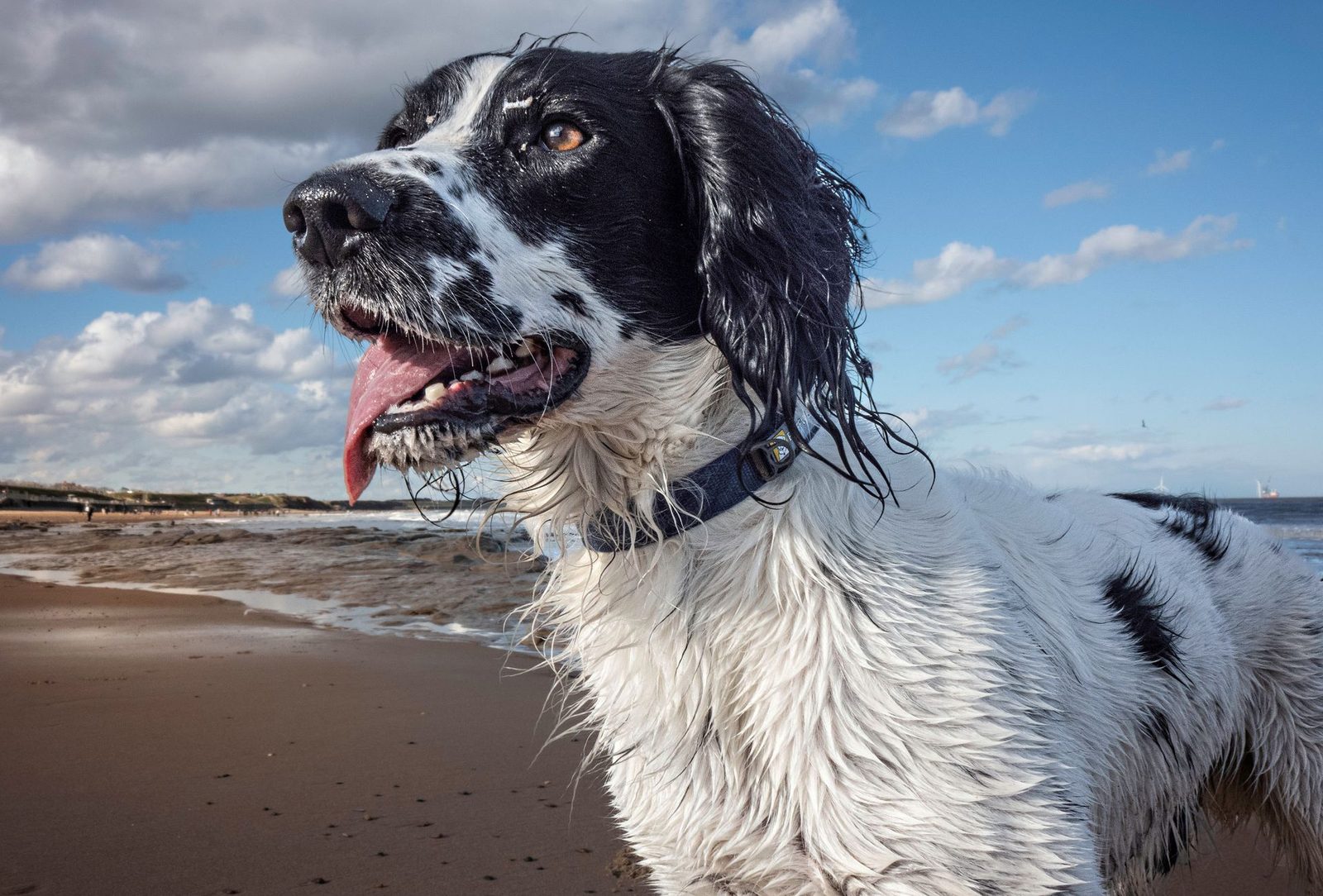
English Springer Spaniel snapshot
The American Kennel Club describes a medium sized sporting dog. The breed standard calls for a compact body, a coat of moderate length, and feathering on the legs, ears, chest, and underside. Feathering means longer hair that grows on those parts of the body. The standard sets the ideal height at the shoulder at 20 inches for a male and 19 inches for a female, and it faults a dog that is more than 1 inch over or under the ideal. A well proportioned male of 20 inches in good condition weighs about 50 pounds, and a female of 19 inches weighs about 40 pounds. The AKC breed page gives the life expectancy as 12 to 14 years, and the AKC counts the breed among the top 30 most popular breeds in the United States. The AKC recognised the breed in 1910.
The coat explains a lot of Springer daily life. The outer coat is medium length and flat or wavy. The undercoat is short, soft, and dense. The AKC standard says the two coats together are waterproof, weatherproof, and thornproof. Colours are black or liver with white markings, white with black or liver markings, blue or liver roan, or tricolour, which means black or white or liver and white with tan markings. The standard describes the typical Springer temperament in one sentence. The dog is friendly, eager to please, quick to learn, and willing to obey. Aggression toward people or other dogs is not acceptable in the standard, and excessive timidity is penalised in the same way.
One Springer fact matters for owners who meet two kinds of dog under one name. The AKC explains that there are bench Springers and field Springers. Bench means the show ring type, with a longer and thicker coat and more feathering. Field means the hunting type, with a lighter coat. The breed standard itself does not separate the two types, and no primary source used for this guide reports different disease rates for the two types. This guide therefore treats the breed as one breed, and it does not claim that a field dog or a bench dog carries a different health list.
| Height | 20 inches at the shoulder for males, and 19 inches for females. Those are the ideal heights in the breed standard. |
|---|---|
| Weight | About 50 pounds for a 20 inch male in good condition, and about 40 pounds for a 19 inch female, as stated in the breed standard. |
| Lifespan | 12 to 14 years, as listed on the AKC breed page. |
| Coat | A medium length flat or wavy outer coat over a short, soft, and dense undercoat. Together the coats are waterproof, weatherproof, and thornproof. Moderate feathering on the ears, chest, legs, and belly. |
| Temperament | Friendly, eager to please, quick to learn, and willing to obey, in the words of the breed standard. |
| Group | Sporting Group. A gundog bred to flush, or spring, game birds into flight and to retrieve game. |
The ears deserve a line of their own in the snapshot, because they return in the first health card. The standard requires ears that are long and fairly wide and that hang close to the cheeks. The ear leather is thin, and the ear is approximately long enough to reach the tip of the nose. The correct ear sits on a level with the eye. Read that description next to the parent club sentence in the ear card below. The feature the standard requires is the feature the parent club names as the cause of the breed's most common everyday health problem.
Health tendencies in English Springer Spaniels
The parent club, the English Springer Spaniel Field Trial Association, keeps a health page for this breed. It names conditions owners should know about, and it runs the breed's screening program with the Orthopedic Foundation for Animals, called OFA, through the Canine Health Information Center, called CHIC. CHIC is the health database the parent club uses to record a dog's screening results. The cards below follow the parent club's own list first, and then veterinary school and veterinary reference sources for how each condition shows, how it is diagnosed, and what kinds of care exist. Diagnosis means the tests and examinations a vet uses to name a condition. No card names a price. Treatment categories are named so a reader can recognise the same categories in a policy, not so a reader can price care.
Two habits run through every card. The first is the difference between a condition and a record. A Springer can carry a DNA result, an X-ray grade, or an eye exam form for years before any sign appears, and an insurer reads those records as part of the dog's history. The second is the word hereditary. Hereditary means passed from parent to puppy through the genes. Several Springer conditions are hereditary, and a policy that excludes hereditary conditions excludes them by name in effect, even when the breed is never mentioned.
1. Ear infections (otitis externa)
What it is. Otitis externa means inflammation of the external ear canal, the passage that runs from the ear flap to the eardrum. The parent club states the breed link in its own words. Ear infections are common in English Springer Spaniels due to their pendulous ear flap, which decreases air circulation within the ear canal, and the resulting environment contributes to bacterial and yeast infections. Pendulous means long and hanging down. The Merck Veterinary Manual lists the same anatomy among the factors that predispose a dog to this condition, naming a pendulous ear flap, narrow ear canals, and excessive hair in the canals. Merck also names excessive moisture in the ears, from the environment or from swimming, as a predisposing factor. For a water loving gundog, that second factor is part of ordinary life.
Signs to watch for. Merck lists head shaking, ear itching, pain, a bad smell from the ear, discharge, redness, and swelling. A Springer that shakes its head after a swim, scratches at one ear, tilts its head, or resists having an ear touched is showing the early version of this list. The parent club says most infections can be prevented with an ear care program that keeps the ears clean and dry, that all Springers should get regular ear care, and that acute and chronic infections should be treated by a veterinarian. Acute means new and short term. Chronic means returning or long lasting.
How it is diagnosed. Merck describes a history, an examination of the ear with an otoscope, which is a lighted instrument for looking inside the canal, and cytology. Cytology means taking a sample of the ear discharge on a swab, staining it, and examining it under a microscope for bacteria, yeast, and white blood cells. Samples should be taken before any cleaning, because cleaning first removes the evidence. In severe chronic cases, imaging of the ear structures can follow. The diagnosis also has a second layer. Merck separates primary causes, which create disease in a normal ear and include allergy, mites, foreign bodies, and fungal infection, from secondary causes, which are the bacterial and yeast infections that grow in an ear that is already abnormal. That split decides whether an ear claim is a one time infection or the visible end of an allergy workup.
Care categories. Merck describes management of the underlying cause, control of pain, inflammation, and itching, antimicrobial treatment directed by the cytology or culture results, and ear cleaning and hygiene. Cleaning usually starts at the clinic. Clipping excessive hair can be part of care when the hair contributes to chronic or recurrent disease. Successful treatment, in Merck's framing, requires owner compliance, control of inflammation, directed antimicrobial therapy, and a workup for the underlying cause. That last item is the one owners skip, and it is the one that decides whether the infection returns.
2. Hip dysplasia
What it is. Hip dysplasia is a developmental abnormality of the hip joint caused by laxity, which means looseness within the joint. The parent club explains that bone size, shape, and structure change as the hips compensate for the abnormal stress, and that affected dogs may show lameness at some time in their lives. Cornell's Riney Canine Health Center describes the same condition as a common inherited orthopedic condition in which the hip joint forms incorrectly. It is genetic, and it can be modified by environmental influences such as nutrition and growth rate. Overfeeding and rapid growth in puppies can worsen it in a predisposed dog. Cornell does not name the Springer on its hip page. The Springer link in this card rests on the parent club and on the CHIC screening program, and this guide says so rather than borrowing Cornell's breed list.
Signs to watch for. The parent club gives an age pattern. Young dogs from 3 to 12 months may have acute inflammatory joint pain, with a spontaneous temporary improvement usually between 6 and 12 months. Older dogs from 1.5 to 10 years may have a slow onset of painful arthritis. Cornell lists difficulty getting up, bunny hopping when running, limping or stiffness in the back legs, reduced activity or unwillingness to jump, decreased muscle mass in the hind legs, a swaying motion in the hips when walking, and shifting weight to the front legs. Signs may appear as early as a few months old or not until later in life, which is why a quiet year does not clear a Springer hip record.
How it is diagnosed. Cornell describes diagnosis by X-rays, also called radiographs, combined with a physical exam and palpation of the hip joint, including a test called the Ortolani sign. The specific positioning for hip X-rays requires sedation or anesthesia. The parent club adds the screening fact. By age 2 years the condition is detectable by X-raying the hips, and the breed's formal hip evaluation is made at 24 months of age or older, a timing rule that returns in the screening section below.
Care categories. Cornell lists medical management in the pattern used for arthritis of any major joint. That means maintaining a healthy body weight, anti-inflammatory and other pain medicines, cartilage protective supplements and omega 3 fatty acids, regenerative medicine therapy, regular low impact exercise such as walking and swimming, and physical therapy. Severe cases with a poor response to medical care may be referred to a board certified veterinary surgeon. Cornell names femoral head and neck ostectomy, total hip replacement, and, in young puppies before arthritis develops, joint preserving procedures. The parent club puts it more simply. Treatment for young dogs is often unnecessary, medications can reduce arthritic pain in the older dog, and surgical procedures are available to limit pain and reconstruct the hip joint.
3. Elbow dysplasia
What it is. Elbow dysplasia is a general term for an inherited disease of the elbow joint. The parent club calls it an inherited polygenic disease. Polygenic means several genes contribute, rather than one gene acting alone. The elbow joint is built from three bones, the humerus, the ulna, and the radius, and Cornell explains that those bones must work together for pain free movement. Cornell groups three specific defects under the elbow dysplasia term: a fragmented medial coronoid process, which Cornell calls the most common, osteochondrosis of the humeral condyle, and an ununited anconeal process. All three lead to secondary arthritis. Some dogs are affected on one side, and many are affected in both elbows. Cornell states that elbow dysplasia cannot be cured, but it can be well managed.
Signs to watch for. The parent club warns that lameness from elbow dysplasia may remain subtle for long periods, and that no one can predict at what age lameness will occur. Genetic and environmental factors, including severity, rate of weight gain, and amount of exercise, all play a part. Cornell lists lameness after exercise that does not fully recover with rest, refusal to exercise or decreased activity, a paw turned inward with the elbow held out from the body, a head bob when one side is worse, and a shortened stride with reduced range of motion when both elbows are equally affected. Swelling and abnormal warmth of the elbow, and pain when the leg is extended or flexed, are also on Cornell's list. In a young, eager Springer, a dog that is lame after exercise and bright again the next morning is easy to excuse. Cornell's list says to record it instead.
How it is diagnosed. Cornell states that most dogs are diagnosed by physical examination and a thorough lameness evaluation at 4 to 12 months of age, and that true elbow dysplasia will not be diagnosed before 4 to 6 months. Diagnosis requires radiographs, including flexed views of both elbows, which can show defective areas and early arthritic changes. A CT scan and arthroscopic surgery, which means looking inside the joint with a small camera, can be used to guide diagnosis and therapy. In mild cases, Cornell notes, lameness may not show until 7 or 8 years of age, when arthritis begins.
Care categories. Cornell describes surgery as the best choice for a dog with elbow dysplasia, with the elbow unable to correct itself, and medical management as the next best choice when surgery is impossible. For mild cases, surgery can mean removal of damaged tissue. Moderate to severe deformities may need extensive surgery to realign the joint. Cornell quotes the American College of Veterinary Surgeons that on average about 85% of cases show some degree of improvement in lameness and comfort after surgical treatment, even though arthritis progresses on X-rays. The non-surgical categories are weight management, moderate exercise with a warm up and cool down, physical therapy, anti-inflammatory pain medication, joint supplements, and injectable treatments.
4. Progressive retinal atrophy and other hereditary eye disorders
What it is. The parent club states that the eyes of English Springer Spaniels are susceptible to a number of genetic based disorders. Some are present at birth, and others develop at various times throughout life. Progressive retinal atrophy, called PRA, is the centre of this card. The retina is the layer at the back of the eye that is responsible for vision. PRA is a degeneration of those layers. The parent club describes the disease as progressive, with retinal changes over time, an age of onset and rate of progression that are highly variable, and severe cases that eventually result in blindness. Cornell adds that PRA is non-painful, that it tends to progress slowly, and that it often starts with a decreased ability to see well at night. In true degenerative PRA, the rod cells die before the cone cells, so night vision is affected first. Eventually, Cornell states, all genetic variations progress to complete blindness, and there is no cure available right now. Most dogs adapt well.
Two eye conditions sit beside PRA in this breed, and they are not PRA. Retinal dysplasia is a developmental malformation of the retina. Puppies are born with it. The parent club states that most cases are mild, with small folds and areas of retinal degeneration and no detectable loss of vision, that it should not affect a dog's ability to function as a pet, and that affected Springers should not be bred. It is diagnosed by a certified veterinary ophthalmologist when puppies are 7 to 12 weeks old. Entropion is an inward folding of the lower eyelid that results in chronic irritation of the surface of the eye. It is usually observed within the first year of life, and it is treated through surgery. The parent club names entropion only. It does not name ectropion, which is an outward rolling eyelid, for this breed, and no primary source used for this guide supports an ectropion or glaucoma claim for Springers. This guide does not make those claims.
Signs to watch for. Cornell lists dilated pupils, eyes that look abnormally reflective when light shines on them, reluctance to enter a dark room or go outside at night, hesitance to go down stairs, bumping into door frames, clumsiness in new surroundings, and cataract formation in both eyes. Signs may not be apparent until later, and they are more noticeable at night or in a new environment. A Springer that starts refusing evening walks or misjudging steps in dim light is showing this list in ordinary clothes.
How it is diagnosed, and the test limit that matters. Cornell describes diagnosis with an eye exam focusing on the retina. Both eyes are equally affected. A veterinary eye specialist may confirm the diagnosis with electroretinography, called ERG, which measures the electrical response of the retina, especially if cataracts block the view. Separately, a DNA test exists for the Cord1 form of PRA in this breed. The parent club explains that the genetic test identifies clear or normal dogs with no mutation, carrier dogs with one mutation, and affected dogs with two mutations, and that only affected dogs will develop the disease, for this recessive Cord1 form. Recessive means two copies of the changed gene are needed for that form of the disease to appear. Cornell then states the limit every Springer owner should hear plainly. DNA testing is available for all known variants, but researchers have not yet discovered all variants. Some forms of PRA have no known genetic variant, which means a dog could still develop the disease even if it tests negative for the known variants. A clear Cord1 result and a clear eye exam are therefore two different records, and the screening section below keeps them apart.
Care categories. Cornell states that there are no approved treatments for PRA. Management focuses on helping dogs avoid injury and feel safe as vision declines. That includes supplemental lighting in the early stages, keeping furniture in the same arrangement, safety gates at stairs, leash guidance in unknown areas, and training with verbal commands before vision loss. Gene therapy is described by Cornell as a prospective treatment for some specific types, used only in research settings and not widely available. For entropion, the parent club names surgery as the treatment.
5. Skin disorders, allergies, and seborrhea
What it is. The parent club gives skin disorders their own section on the breed health page, and it lists skin disease among the conditions that may affect daily quality of life in this breed. Typical signs of skin disease, in the parent club's account, are scaliness, greasiness, itching, pyoderma, which means a bacterial skin infection, and occasional hair loss. Genetic factors and other factors, including environment and allergies, are involved. Seborrhea is a named pattern inside this card, exactly as the parent club frames it. Seborrhea may be local or spread over large parts of the body. It usually results in scaly, thickened, and itchy skin with a greasy feel and an associated odor, and secondary skin infections are not unusual.
The allergy pattern. The parent club states plainly that allergies occur in all breeds of dogs. That sentence matters. This guide does not claim that Springers are predisposed to allergy beyond the parent club's own skin section. Canine allergies usually cause symptoms in the skin. The primary symptom is itching, and seborrhea, skin infections, and hair loss are also common. Inhaled pollens or house dust, certain foods, flea bites, and other materials can trigger allergic reactions in the skin, and symptoms may be seasonal. The Merck Veterinary Manual describes atopic dermatitis, which is the allergic skin disease driven by environmental allergens, as a hereditary, typically itchy, inflammatory skin disease. Merck lists the paws, face, ears, front legs, armpits, and abdomen as the areas most frequently affected, and it notes that secondary skin and ear infections are common, and that chronic or recurrent otitis may be the only clinical sign in a small number of patients. That sentence connects this card to the ear card. In some dogs, the returning ear infection is the skin disease showing itself. Merck's predisposed breed list for atopic dermatitis does not include the English Springer Spaniel, so the breed link in this card rests on the parent club, and Merck is used only for how allergic skin disease works.
How it is diagnosed. Merck states that the diagnosis of atopic dermatitis is based on the dog's background, clinical signs, and history, and on excluding other itchy skin diseases. It is not based on laboratory tests alone. Allergy testing, by skin testing or blood testing, is not diagnostic by itself. It is used to identify allergens for immunotherapy, which is a treatment that retrains the immune response over time. The parent club gives the same practical shape in shorter form. There is no cure for allergies, and treatment may involve eliminating contact with the offending allergen, for example by a diet change for a food allergy, treating the itching and symptoms, and allergy testing and injections.
Care categories. The parent club names medicated baths, topical medications, and antibiotics for seborrhea and its secondary infections. For atopic disease, Merck lists allergen avoidance, allergen specific immunotherapy, itch control, treatment of secondary infections, and control of flare factors. Merck describes immunotherapy as the only treatment that can change the immune response and induce remission, with a response time of 3 to 12 months, and it frames atopic dermatitis as a condition that cannot be cured but can usually be managed, with lifelong management and regular progress checks. Lifelong is the policy word in that sentence.
6. Phosphofructokinase deficiency (PFK)
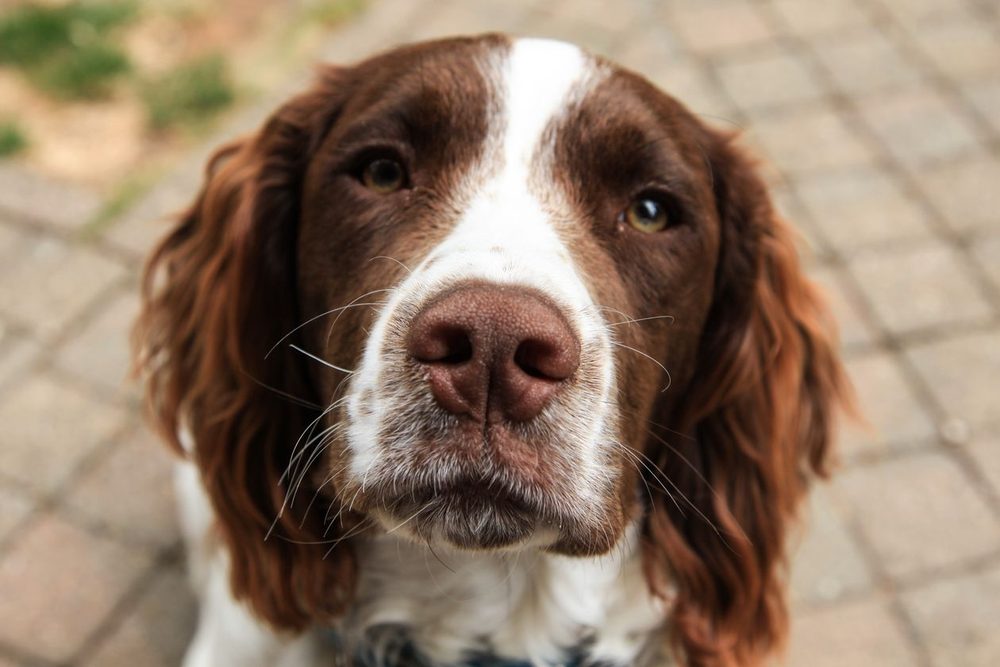
What it is. Phosphofructokinase, called PFK, is an enzyme. An enzyme is a protein that makes a chemical step in the body happen. PFK is required for the metabolism of glucose, which is the body's main sugar fuel, into usable energy. The Orthopedic Foundation for Animals keeps a PFK test page headed, in its own words, English Springer Spaniels ONLY. OFA describes PFK deficiency as an inherited glycogen storage disease that causes hemolytic anemia and exertional myopathy. Hemolytic anemia means red blood cells are being broken down faster than the body can replace them. Myopathy means muscle disease. Without the enzyme, red blood cells and muscle cells cannot produce adequate energy. The Canine Inherited Disorders Database at the University of Prince Edward Island explains the mechanism. The enzyme matters most in red blood cells and in skeletal muscle during intense exercise. Its deficiency causes premature breakdown of red blood cells and reduced tolerance for exercise.
Signs to watch for, and the trigger pattern. OFA lists intermittent signs: weakness, lethargy, exercise intolerance, poor performance, muscle cramps, anemia, jaundice, and dark colored urine. Jaundice means a yellow tint to the gums, skin, or whites of the eyes, caused by the breakdown products of red blood cells. The University of Prince Edward Island gives the crisis pattern, and it is the most Springer specific paragraph in this guide. Affected dogs have a chronic mild anemia, with intermittent bouts of acute hemolysis that are often associated with intense exercise, overheating, or prolonged barking. During an acute episode, dogs become lethargic and weak, usually after intense exercise or excessive barking or panting. The gums are pale or jaundiced. They usually run a high fever, which the university's veterinary section puts as high as 41 degrees Celsius. The urine is brown, due to excretion of blood breakdown products. Veterinary attention is required at these times. Read that trigger list against the breed in the snapshot. This is a dog bred for stamina, sold on energy, and worked hard in warm cover. The crisis can look, to an owner, like a dog that simply overdid it.
How it is diagnosed. The university database states that a vet will diagnose hemolytic anemia from the clinical examination and blood tests, and that further tests are required to diagnose this specific condition. A specific genetic test can identify carriers and affected animals at any age. Affected and carrier dogs can also be identified from PFK activity measured in blood samples. OFA describes the DNA test itself. It is an autosomal recessive disease. Autosomal recessive means the gene sits on a regular chromosome, not a sex chromosome, and two copies of the changed gene are needed for the disease. The test uses a cheek swab collected at home, and samples are processed by the University of Missouri College of Veterinary Medicine Small Animal Molecular Genetics Lab. OFA defines the results. Clear means the dog tested clear for the mutation and can only transmit a normal gene. Carrier means the dog carries the mutation, shows no evidence of developing clinical signs, and may transmit a normal or a mutated gene. Affected means the dog holds two copies of the mutation. The parent club adds the breed's history with the condition. Some Springers have been recognised to have an inherited PFK deficiency, and careful breeding practices have largely eliminated this disease from the breed.
Care categories. The university database states that there is no specific treatment for this disorder, other than supportive care during an episode, which may require a blood transfusion. Dogs with this condition can have a normal life span. Management requires avoidance of stress, strenuous exercise, overheating, and overexcitement, and avoidance of situations that cause a great deal of barking or high environmental temperatures. For a Springer, that management list is a lifestyle change, not a prescription. It changes how the dog is worked, housed, and exercised for life.
7. Fucosidosis
What it is. Fucosidosis is a lysosomal storage disease. Lysosomes are the parts of a cell that break down waste materials. The mutated gene is called FUCA1. It encodes an enzyme called alpha-L-fucosidase, which cuts a sugar molecule called fucose. The University of Pennsylvania School of Veterinary Medicine's PennGen laboratory explains that without the enzyme, fucose builds up in high concentrations in cells. The disease is autosomal recessive, like PFK. It is rare. It is also the most severe condition in this guide, and it is preventable by a single DNA test, which is why a rare disease earns a full card here.
Signs to watch for. PennGen lists motor, behavioural, and sensory dysfunction. The named signs are ataxia, which means incoordination, hypermetria, which means overreaching movements, dysmetria, which means poorly judged movements, a wide stance, dysphagia, which means difficulty swallowing, head tremors, hyperactive reflex responses, and loss of learned behaviour. Loss of learned behaviour means a trained dog that starts forgetting what it was trained to do. The disease occurs between the age of 18 months and 4 years, with a progressive course and an ultimately fatal outcome. A young adult Springer that becomes clumsy, starts swallowing badly, and loses trained responses is showing a neurological pattern, not a training problem.
How it is diagnosed, and what the record shows. Diagnosis rests on DNA testing for the FUCA1 mutation, which is the test PennGen itself lists for this disease. PennGen states the prognosis in plain terms. Dogs with this disease have dramatically shortened lifespans and are generally humanely euthanised before 36 months of age due to the severity of the condition. No curative treatment is stated in the primary sources used for this guide, and this guide does not invent one. Care is supportive. The parent club places the fucosidosis DNA test in its optional but recommended list, in addition to the CHIC minimum. That placement is the whole lesson of this card. Optional is a testing category. It is not a measure of how serious the disease is.
One more condition the parent club names: seizure disorders. The parent club gives seizure disorders their own section. It states that hereditary seizures are relatively rare in English Springer Spaniels, that a familial pattern exists in some pedigree lines, that seizures usually begin before the age of five years, that in many cases seizures can be controlled with medication, and that some cases of seizures in English Springers are not controlled with treatment. Buyers are advised to ask the breeder for full disclosure of any seizure disorders within the puppy's pedigree. A peer reviewed study published in Frontiers in Veterinary Science in October 2026, written in response to the recurring identification of medication resistant idiopathic epilepsy in this breed, studied 16 English Springer Spaniels and reported a median age at seizure onset of 2.5 years, a high proportion of dogs that had experienced cluster seizures or status epilepticus, and a comparatively poorer response to antiseizure drugs than the Cocker Spaniels in the same study. Cluster seizures means several seizures in a short period. Status epilepticus means a seizure that does not stop. Both are emergencies. That study is small, with 16 Springer dogs, and this guide reports it as a study finding, not as a breed rate. The policy questions are the neurology questions used elsewhere on this site: hereditary coverage, specialist referral, imaging, and long term medicine at renewal. Our full guide to pet insurance for epilepsy in dogs covers that wording.
The breeder screening file: required tests and recommended extras
A Springer breeder screening file is not one test. It is a dated set of records, made at different ages, by different methods, that answer different questions. The parent club's formal health statement, dated August 31, 2024 and approved by its board on June 26, 2024, sets the minimum. The Canine Health Information Center, CHIC, records the results. A buyer who asks only whether a puppy's parents were health tested has asked the weakest version of the question. Ask for each record by name.
| Record | What it is | Timing and method | What it settles, and what it does not |
|---|---|---|---|
| Hip evaluation | An X-ray evaluation of both hips, sent to OFA for interpretation and reporting. PennHIP, which is a hip laxity measurement method, may be used for hips instead. | At 24 months of age or older. | It grades the hips of that dog at that age. It does not guarantee a puppy's hips. Hip dysplasia is polygenic, and the parent club states that a puppy's chances are minimised if both parents have normal hips. |
| Elbow evaluation | An X-ray evaluation of both elbows, sent to OFA for interpretation and reporting. | At 24 months of age or older, under the same hips and elbows paragraph of the health statement. | It records the elbow status of an adult dog. It does not predict at what age lameness will occur, which the parent club says no one can predict. |
| Eye examination (CAER) | An eye examination by a Diplomate of the American College of Veterinary Ophthalmologists, called a DACVO, recorded through the Companion Animal Eye Registry, called CAER. | Within 12 months prior to breeding. The parent club further recommends that both parents be examined annually, and that all puppies be examined by a DACVO for the presence or absence of eye problems. | It describes how that dog's eyes actually are on that date, including conditions no DNA test covers. It expires as a current record, which is why the timing rule exists. |
| Cord1 PRA DNA test | A genetic test for the Cord1 form of progressive retinal atrophy. Parents of puppies should be genetically tested for Cord1 PRA, in the health statement's words. | A one time DNA test. It does not need repeating for the same dog. | It gives clear, carrier, or affected for that one variant. It does not clear the eyes. Cornell states that some forms of PRA have no known variant, so a DNA clear dog can still develop PRA. |
| DNA sample banked with OFA | Submission of a DNA sample to the OFA DNA bank, listed as a CHIC requirement in the parent club's Health and Genetics page. | A one time submission. | It banks material for future research and testing. It is not a test result, and it clears nothing by itself. |
The recommended extras are a separate list, and the difference is the point. The health statement states that, in addition to the minimum screening tests required by CHIC, the following tests are optional but recommended: fucosidosis, phosphofructokinase deficiency, degenerative myelopathy, autoimmune thyroiditis, and cardiac evaluation. Optional but recommended is the parent club's exact framing. Two of the most serious conditions in this guide, PFK deficiency and fucosidosis, sit in that second list. A breeder who meets the CHIC minimum has not necessarily run either DNA test. A buyer who wants those results has to ask for them by name, because the minimum does not include them.
Two reading rules for any screening file. First, the parent club warns that a genetic test that is positive for a disease trait does not mean the trait will express itself clinically. Genetic tests should be considered indicators of risk for a disease. A carrier result is a breeding fact, not a sick dog. Second, the health statement sets a clear by parentage limit. When both parents test normal on a genetic test, first generation puppies need not be tested for that condition unless OFA registration is desired. The exemption applies only to first generation puppies, because of possible new mutations and undiscovered disorders. A file that claims clear by parentage for a second generation puppy is using the rule past its own limit.
What to ask a breeder, in writing. Ask for the hip and elbow evaluations for both parents, with the age of the dog when each X-ray was taken. Ask for the most recent CAER eye exam form for both parents, with its date, and check the 12 month window yourself. Ask for the Cord1 PRA DNA results for both parents. Ask whether the PFK and fucosidosis DNA tests were run, and ask for those results separately, because they are recommended rather than required. Ask for full disclosure of any seizure disorders within the puppy's pedigree, which is the parent club's own advice to buyers. Keep every answer with the policy documents. The screening file is the record an insurer will ask to see when a hereditary claim arrives, and it is much easier to collect before the puppy comes home than after.
Pale gums and dark urine: PFK crisis or IMHA?
No other breed guide on this site needs this section, because no other breed on this site carries two different causes of the same emergency picture, one inherited and one autoimmune, both named in its own parent club's health materials. Hemolytic anemia means red blood cells are being destroyed. In an English Springer Spaniel, that picture can come from PFK deficiency, which is inherited, DNA testable, and triggered by exercise, heat, or barking. It can also come from immune-mediated hemolytic anemia, called IMHA, in which the body attacks its own red blood cells. The parent club gives IMHA its own section. It describes a disease that can lead to very low red blood cell counts that require multiple blood transfusions, and that can predispose dogs to forming blood clots, mostly in the lungs or in the brain. Treatment can require extended hospitalisation, drugs that suppress the immune system, and often blood thinners. Some dogs do quite well with minimal treatment. For many others, the parent club states, the disease is unfortunately fatal. IMHA can be triggered by different factors, including infectious organisms, tumours, and even drugs, and an unknown genetic component may play a role. A standard veterinary textbook, Small Animal Internal Medicine, 6th edition, lists the English Springer Spaniel in its box of dog breeds at increased risk of IMHA, and describes the typical patient signs as depression of acute onset, exercise intolerance, and pallor or jaundice.
| Question | PFK deficiency | IMHA |
|---|---|---|
| What kind of condition is it? | Inherited. An autosomal recessive glycogen storage disease. Two copies of the changed gene are needed. | Autoimmune. The body attacks its own red blood cells. The parent club states that triggers can include infections, tumours, and drugs, and that an unknown genetic component may play a role. |
| What brings an episode on? | A trigger pattern: intense exercise, overheating, prolonged barking, or excessive panting. Everyday signs can be mild and chronic between crises. | No exercise trigger pattern. Onset is described in the textbook source as acute, meaning sudden, with depression, exercise intolerance, and pallor or jaundice. |
| What does the owner see? | Weakness and lethargy after effort, pale or jaundiced gums, a high fever, muscle cramps, and brown urine from blood breakdown products. | Pale or jaundiced gums, weakness, depression, and exercise intolerance. Severe cases can involve blood clots in the lungs or brain. |
| How is the specific cause settled? | A DNA test for the PFK mutation, or PFK activity measured in a blood sample. The test can identify clear, carrier, and affected dogs at any age. | There is no DNA test. The ACVIM consensus statement on the diagnosis of IMHA, published in 2019, requires anemia plus evidence of immune mediated destruction, such as a saline agglutination test, a direct antiglobulin test, also called a Coombs test, or flow cytometry, plus at least one sign of hemolysis. |
| What care categories follow? | Supportive care during a crisis, which may include a blood transfusion, and lifelong avoidance of the triggers. There is no specific treatment. | Extended hospitalisation in many cases, immune suppressing drugs, blood thinners, and blood transfusions. |
| The policy question it raises | Is an inherited condition covered, and how is a DNA result in the file classified? | Is an autoimmune condition covered, and is hospital and transfusion care covered at the level a severe case needs? |
The practical lesson is a record lesson. A vet who finds hemolytic anemia in a Springer still has work to do before the cause is named, because the University of Prince Edward Island states that further tests are required to diagnose the specific condition after hemolytic anemia is found. If your dog has never had a PFK DNA test, ask for one to be part of that workup, and make sure the record names the test and its result. At claim time, the difference between an inherited cause and an autoimmune cause can decide which clause of the policy applies. A file that just says anemia, with no cause settled, leaves that decision to be argued later, with the dog's history already written.
Act on the picture, not on the label. Pale or white gums, yellow gums, brown or dark urine, sudden weakness, or collapse after exercise are same day emergency signs in any Springer, whichever cause turns out to be behind them. Do not wait to see whether rest fixes it, and do not exercise the dog again to test the pattern. Note the time, what the dog had been doing, the temperature conditions, and how long any barking or panting lasted, and take that note with you. That trigger note is exactly the evidence that separates the two columns of the table above.
Policy decisions that matter for an English Springer Spaniel
For a Springer, read a policy from the exclusions inward, not from the benefits outward. Does the wording that carves things out carve out this breed's ears, joints, eyes, skin, and blood? Work down this table in order, because the first rows can make the later rows irrelevant.
| Policy feature | Why it matters for a Springer | Stronger wording looks like | Watch out for |
|---|---|---|---|
| Hereditary condition coverage | Hip dysplasia, elbow dysplasia, PRA, PFK deficiency, and fucosidosis are inherited or developmental. This row decides more Springer claims than any other. | Hereditary conditions are covered on the same terms as other illnesses, with no breed carve out. | Hereditary exclusions, low separate limits, or coverage that starts only after a long special wait. |
| Ear infection counting rule | Ear infections are common in this breed for an anatomical reason that never changes, and they return. The counting rule decides whether the fifth infection is covered like the first. | Recurrent infections are counted under a clear rule, and care for the underlying cause is covered with the infection. | Each infection treated as a new condition with a new deductible, allergy workups excluded, or chronic ear disease excluded after a set number of episodes. |
| Orthopedic waiting period and the bilateral rule | Hips and elbows both come in pairs, both are screened at 24 months, and both can need care on the second side after the first. | Each side is judged on its own record, with clear terms for the second side and for evaluations recorded early. | An orthopedic waiting period that resets the clock, or wording that treats the second joint as pre-existing after the first is diagnosed. |
| Eye wording | The eye record is two records, a DNA result and a clinical exam, and PRA has no approved treatment, so the covered services are examinations, monitoring, and complication care. | Hereditary eye conditions, specialist eye examinations, ERG testing, and entropion surgery are covered services. | Eye exclusions for this breed, or wording that treats a DNA carrier result as a diagnosed eye condition. |
| Anemia classification: inherited and autoimmune | This breed carries an inherited hemolytic anemia and an autoimmune hemolytic anemia with overlapping signs. A policy can classify the two causes differently. | Both hereditary and autoimmune conditions are covered, and emergency hospital and transfusion care are covered services. | A hereditary exclusion that removes PFK, an autoimmune exclusion that removes IMHA, or transfusion care limited in a way a severe IMHA case would exceed. |
| Chronic condition renewal wording | Allergy and skin care, ear management, hip and elbow arthritis care, and seizure medicine in the lines that carry it all run across renewals. | A covered chronic condition stays covered at renewal, and repeat episodes are counted under a clear rule. | Cover that thins out after the first year, or a condition that is reclassified as pre-existing at renewal. |
| DNA result classification | A Springer file can hold Cord1 PRA, PFK, and fucosidosis results before any sign exists. Carrier results are breeding facts, not diseases. | The policy states how genetic results are classified, and a carrier result for a recessive condition is not treated as the disease. | Wording that treats any positive DNA result, including a carrier result, as a pre-existing condition. |
| Specialist and imaging wording | Elbow diagnosis can use CT and arthroscopy, eye diagnosis can use ERG and a specialist exam, and neurological signs use specialist referral and imaging. | Specialist referral, advanced imaging, and specialist examinations are covered services when a vet recommends them. | Imaging covered only after a diagnosis that the imaging itself is needed to reach, or specialist care covered only in emergencies. |
Life stages: puppy, adult, and senior
Puppy
The puppy stage builds the file. Ask the breeder for the screening records set out above, for both parents. A retinal dysplasia check happens in this stage, at 7 to 12 weeks, by a veterinary ophthalmologist. Entropion usually shows within the first year of life, so an eye that waters, squints, or looks irritated in a puppy is a vet visit, not a wait and see. DNA results can exist from the first weeks, because the PFK and Cord1 tests use a cheek swab or a blood sample. A final hip or elbow evaluation cannot exist yet, because the breed program sets those evaluations at 24 months of age or older. A puppy file with DNA results, an early eye exam, and no hip grade is therefore complete for its age, not missing a piece.
Ears start in this stage too. A Springer puppy that swims, bathes often, or plays in wet grass is already collecting the moisture the ear canal traps. Start the parent club's ear care program early: keep the ears clean and dry, dry them after water, and learn what a healthy Springer ear smells like, so the first change is obvious. Enrolling in the first weeks at home, before the puppy's own record adds an ear infection note, an eye finding, or a limp, is the single most valuable move a Springer owner makes. The waiting periods every policy carries then run while the puppy is at its healthiest. Our guide to pet insurance for puppies covers the first year in full.
Adult
Adulthood is when the breed's list usually declares itself, and when the Springer is working hardest. The hip and elbow evaluations fall at the start of this stage, at 24 months. The CAER eye exam runs annually for breeding dogs, and the habit is worth keeping for any Springer, because the eye conditions in this guide develop at various times throughout life. Fucosidosis onset sits at 18 months to 4 years, so a change in coordination, swallowing, or learned behaviour in a young adult is a neurological sign, not a training failure. Seizure disorders usually begin before the age of five years in the lines that carry them. PFK crises belong to this stage because they need a dog working at full adult intensity, in heat, before the trigger pattern is met. Do not let any episode become background noise. A head shake that settles, a limp that clears by morning, a weak spell after a hard retrieve: each one is a record. Get it examined and written down, and check at each renewal that the conditions the dog now carries are still described as covered. If you change insurers in adulthood, the new policy will judge the dog on the record that already exists.
Keep an ear log. It takes one line a week, and it turns the breed's most common problem from a memory into evidence, for the vet first and for any claim second. Note the swim and bath days, because moisture is a named predisposing factor, and a pattern of infections after water is a finding, not a coincidence.
| Week of | Water days (swim, bath, rain work) | Head shaking or scratching? (none, some, a lot) | Smell or discharge? (none, mild, strong) | Ears dried and checked? (yes or no) | Action taken |
|---|---|---|---|---|---|
| Write the Monday date | List the days | Circle one | Circle one | Mark it | None, home ear care, or vet visit, with the date |
Bring the log to every ear visit. A vet deciding whether an infection is a one off or a chronic pattern, and whether an allergy workup is warranted, is deciding from exactly this record. An insurer counting episodes is counting from it too.
Senior
A Springer senior is a dog managing a long middle list at once. Hips and elbows that were managed rather than operated on need weight and activity judged kindly and honestly, because Cornell's hip care categories start with maintaining a healthy body weight. Eyes still deserve prompt attention when vision changes, because PRA signs are more noticeable at night and in new surroundings, and a new sign in an old dog is a new sign, not just age. A dog with PFK deficiency still needs its trigger rules in old age, because the crisis pattern does not retire. Skin and ear care continue, and a returning ear infection in a senior can still be the allergy story, not a new disease. Keep the home logs going: ears, mobility, appetite, vision, sleep, and any episode of weakness. Change over time is what a vet, and any claim review, needs to see. Ask the vet at each senior visit which findings are new and which are continuations, and make sure the record says so. Our guide to pet insurance for senior dogs covers this stage across breeds.
A claim, step by step: an ear infection that keeps coming back
The example below is hypothetical. It is not a real dog, a real claim, or a guarantee of how any insurer will decide. It follows an adult English Springer Spaniel through a first ear infection and then a return of the same infection, because that arc is what Springer ear coverage has to handle. Pet insurance generally reimburses after you pay the vet, as explained in how pet insurance works. If a claim is accepted, the insurer applies the deductible and the reimbursement share described in the policy wording. Deductible means the part the owner pays first. This walkthrough names no amounts, on purpose. The steps and the records are the lesson.
The first infection, and the sample that starts the file
After a week of lake swims, a three year old Springer starts shaking its head and scratching its right ear. The ear smells, and there is a dark discharge. At the clinic, the vet examines the ear with an otoscope and takes a cytology sample before any cleaning, so the sample shows what is actually growing in the canal. The result names yeast and bacteria. The record names the ear, the date, the swim history from the owner's ear log, and the cytology finding. That first record matters out of proportion to its size, because every later episode will be compared with it.
Directed treatment, and the recheck
Treatment is directed by the cytology result, in Merck's pattern: control of inflammation and itching, antimicrobial treatment aimed at what the sample found, and ear cleaning that starts at the clinic and continues at home under instruction. The owner dries the ears after every swim during treatment and keeps the log. At the recheck, a second cytology sample shows whether the organisms are gone. The recheck record is the document that separates a cured infection from a lingering one, so keep it with the claim papers even when the news is good.
The return, and the underlying cause question
Two months later the head shaking returns, in the same ear. This is the moment the counting rule in the policy table decides money. Is this a new episode or the same condition continuing? The vet now raises the underlying cause question that Merck's framework requires. The primary causes of otitis include allergy, and recurrent otitis can be the visible sign of allergic skin disease. The workup widens from the ear to the skin: paws, face, and belly are examined, and the history is checked for seasonal patterns. The claim file now holds two kinds of document, infection records and cause records, and the policy has to cover both kinds for the arc to be paid as one story.
Checking the wording before the plan settles
Before a long term allergy plan begins, the owner checks three things in writing. Whether recurrent ear infections are counted as one ongoing condition or as separate episodes under this plan. Whether allergy testing and immunotherapy are covered services. And whether long term itch control and repeat ear care stay covered at renewal. A short written answer from the insurer at this stage is worth more than a long argument after a year of invoices exists.
Submitting the claim
The claim is filed with the itemised invoices, the full clinical records including both cytology results, the recheck note, and the ear log pages that show the swim days and the first signs. The owner keeps copies of everything, in date order, in one file with the policy. A Springer ear claim is usually several small documents across several months rather than one large one, and the file below is the whole job.
| Document | Why it matters |
|---|---|
| The breeder screening file (hip, elbow, eye, and DNA records for both parents) | It shows the hereditary record the dog started with, and it answers the pre-existing question before it is asked. |
| The dog's own DNA results (Cord1 PRA, PFK, fucosidosis, where run) | They settle the inherited side of any anemia or eye claim, and they show a carrier result is not a diagnosis. |
| The ear log, with swim days and first signs | It dates the first sign, which is the date a claim review will look for, and it shows the moisture pattern. |
| Cytology results and recheck notes for every ear episode | They prove what was treated, whether it cleared, and whether a return is a new infection or a continuing one. |
| Itemised invoices and full clinical records, in date order | A claim is paid from records, not from memory. Date order is what makes a multi month arc readable. |
| Written insurer answers to the checklist questions below | A written answer shows what you were told before you relied on it. A verbal answer on a sales call is not part of your contract. |
What drives a Springer premium
No responsible guide will name a price for your dog, because the quote depends on the dog, the address, and the settings chosen. What can be explained is why a Springer is priced the way it is, and which choices move the number. The full mechanics are in what pet insurance costs and why, and the comparison method is in how to compare plans.
Breed risk profile. Insurers see a breed whose everyday condition is anatomical. The ear flap that defines the breed's outline also defines its most common claim, and it never changes with age or training. Around that everyday claim sits an inherited list: two screened joints, an eye disease with two kinds of record, a skin pattern that can run for life, and two causes of anemia, one of which can need hospital and transfusion care. Judge any Springer quote against the policy table above, not against the headline benefit list.
Working dog, wet dog. A Springer is a medium dog, and medication doses follow its size. Its lifestyle is the multiplier. A dog that swims, retrieves from water, and works in wet cover collects moisture in the ear canal as part of its normal week, and moisture is a named predisposing factor for its most common condition. A breed whose hobby feeds its main claim prices differently from a breed whose claims are mostly accidents of chance.
Age curve and lifespan. Premiums generally rise with age. A breed that lives 12 to 14 years spends a long middle in the years when ear management, skin care, and joint arthritis run at once, and the screening calendar is front loaded, with joint evaluations at 24 months and eye exams that repeat. A policy that is weak on hereditary, chronic condition, and renewal wording is weak for most of this dog's life, not just at the end of it.
Location and plan settings. Vet prices in your area set the bill sizes the insurer expects, and specialist and emergency care vary widely by market. For this breed, picture a year with repeat ear care and an allergy workup in the same policy year when you size the limit, because that combination is a plausible Springer year, not a freak one.
Pre-purchase checklist for a Springer policy
- Read the breed condition exclusions first, and check the Springer core list against them one condition at a time.
- Confirm hereditary conditions are covered, including hip dysplasia, elbow dysplasia, PRA, PFK deficiency, and fucosidosis.
- Ask how recurrent ear infections are counted, and whether care for the underlying cause, including allergy, is covered with the infection.
- Ask how a Cord1 PRA DNA result, a PFK DNA result, and an eye examination form, each recorded before enrollment, would be treated at claim time, and ask the same question about a carrier result.
- Ask whether both causes of hemolytic anemia in this breed are covered: the inherited PFK deficiency and the autoimmune IMHA.
- Get a written answer on specialist eye examinations, ERG testing, entropion surgery, CT imaging and arthroscopy for elbows, and emergency hospital and transfusion care.
- Read the bilateral rule with hips and elbows in mind, and list every orthopedic waiting period that could touch this breed.
- Confirm skin allergy care, including testing, immunotherapy, and long term itch control, stays covered at renewal.
- Keep the breeder screening file, both DNA result sets, the ear log, and your written insurer answers together with the policy, and enroll as a puppy, before the record grows.
Questions to ask an insurer, in writing
Copy each question exactly as written, name the breed, and keep the written answers with your policy documents.
- Ears. How are recurrent ear infections counted for an English Springer Spaniel under this plan, and is care for an underlying cause, such as allergy, covered along with the infection itself?
- Hereditary list. Are hip dysplasia, elbow dysplasia, progressive retinal atrophy, PFK deficiency, and fucosidosis covered for an English Springer Spaniel under this plan?
- DNA classification. My Springer holds DNA results recorded before enrollment for Cord1 PRA, PFK deficiency, and fucosidosis, including carrier results. How is each kind of result classified under this plan, and is a carrier result for a recessive condition treated as a pre-existing condition?
- Anemia. Are both causes of hemolytic anemia in this breed covered, the inherited PFK deficiency and immune-mediated hemolytic anemia, and are emergency hospital care and blood transfusions covered services?
- Eyes. Are hereditary eye conditions covered for an English Springer Spaniel under this plan, are eye examinations by a board certified veterinary ophthalmologist and ERG testing covered, and is entropion surgery a covered service?
- Joints. Are hip and elbow dysplasia covered under this plan, does an orthopedic waiting period apply, how is the second joint treated after the first is diagnosed, and does an evaluation recorded before enrollment affect later claims?
Questions Springer owners ask
Are ear infections covered by pet insurance for an English Springer Spaniel?
It depends on the exact policy wording. The parent breed club states that ear infections are common in English Springer Spaniels because the pendulous ear flap decreases air circulation in the ear canal. Some accident and illness policies cover ear infections and the workup for an underlying cause, and some count each returning infection as a new episode or exclude chronic ear disease. Ask the insurer in writing how recurrent ear infections are counted for this breed, and whether allergy testing and allergy care are covered when allergy is the underlying cause, and keep the answer with the policy.
What is the difference between a PFK crisis and IMHA in a Springer?
Both cause hemolytic anemia, which means red blood cells are destroyed, and both can show pale or jaundiced gums, weakness, and dark urine. PFK deficiency is inherited, it is settled by a DNA test, and its crises are triggered by intense exercise, overheating, or prolonged barking. IMHA is autoimmune, there is no DNA test for it, and its diagnosis follows the ACVIM consensus standard, which requires evidence of immune mediated destruction plus a sign of hemolysis. The distinction matters because a policy can classify an inherited condition and an autoimmune condition differently.
Does a clear Cord1 PRA DNA result mean my Springer will not develop PRA?
No. The Cord1 DNA test gives a clear, carrier, or affected result for one known variant of progressive retinal atrophy. Cornell states that some forms of PRA have no known genetic variant, so a dog could still develop the disease even if it tests negative for the known variants. That is why the breed program also requires a clinical eye examination by a board certified veterinary ophthalmologist, repeated within 12 months prior to breeding. The DNA result and the eye exam answer different questions.
What breeder screening should I ask for before buying a Springer puppy?
Ask for the CHIC minimum records for both parents by name: a hip evaluation and an elbow evaluation at 24 months of age or older, an eye examination by a board certified veterinary ophthalmologist within 12 months prior to breeding, and the Cord1 PRA DNA results. Then ask separately for the parent club's recommended extras, including the PFK and fucosidosis DNA tests, because recommended tests are not part of the required minimum. Ask also for full disclosure of any seizure disorders within the puppy's pedigree, which is the parent club's own advice to buyers.
Is a carrier DNA result a pre-existing condition?
It should not be treated as one, and you should confirm that in writing before you enroll. For a recessive condition such as PFK deficiency, OFA states that a carrier holds one copy of the mutation and shows no evidence of developing clinical signs. A carrier is a breeding fact, not a sick dog. Policies differ in how they classify genetic results, so ask the insurer how a carrier result recorded before enrollment would be treated at claim time, and keep the written answer with the policy.
When should I enroll an English Springer Spaniel in pet insurance?
As a puppy, before an ear infection note, an eye finding, a limp, or a DNA classification question enters the file in a way that raises a pre-existing question. Springers can collect an ear record in their first year, entropion usually shows within the first year of life, and elbow signs can appear in the first year as well. Early enrollment also lets the waiting periods run while the dog is least likely to need the care those periods gate. Ask for the breeder screening file first, and keep it with the policy from the first day.
Sources and further reading
- American Kennel Club, English Springer Spaniel breed page for the breed snapshot: height of 20 inches for males and 19 inches for females, weight of 50 pounds for males and 40 pounds for females, life expectancy of 12 to 14 years, Sporting Group placement, and the national breed club's recommended health tests (hip evaluation, elbow evaluation, ophthalmologist evaluation, and the PRA Cord1 DNA test). Verified live on November 11, 2026.
- American Kennel Club, Official Standard of the English Springer Spaniel (approved August 8, 2023; effective November 1, 2023) for the general appearance, the ideal heights and approximate weights by sex, the coat and its waterproof, weatherproof, and thornproof qualities, the colours, the ear description, and the temperament wording used in this guide.
- American Kennel Club, Facts About the English Springer Spaniel for recognition in 1910, the breed among the top 30 most popular breeds in the United States, the name taken from flushing or springing game, and the bench and field types, with bench dogs carrying a longer and thicker coat and field dogs a lighter coat.
- English Springer Spaniel Field Trial Association, Health and Genetics for the breed health sections used in every condition card: ear infections and the pendulous ear flap, hip dysplasia and its age pattern, elbow dysplasia, hereditary eye disorders including PRA, retinal dysplasia, and entropion, skin disorders and seborrhea, PFK deficiency, IMHA, and seizure disorders, and the CHIC requirements including a DNA sample banked with OFA.
- English Springer Spaniel Field Trial Association, AKC Health Statement (dated August 31, 2024; approved June 26, 2024) for the CHIC minimum screening list, hip and elbow evaluation at 24 months of age or older, eye examination within 12 months prior to breeding, Cord1 PRA genetic testing for parents, the optional but recommended tests (fucosidosis, PFK, degenerative myelopathy, autoimmune thyroiditis, and cardiac evaluation), the clear by parentage limit, and the genetic tests as indicators of risk framing.
- Cornell University College of Veterinary Medicine, Riney Canine Health Center, Canine hip dysplasia for the definition, signs, diagnosis by radiographs and the Ortolani sign, and the medical and surgical care categories. Cornell does not name this breed on that page, and this guide does not claim that it does.
- Cornell University College of Veterinary Medicine, Riney Canine Health Center, Elbow dysplasia for the three component defects, signs, diagnosis at 4 to 12 months by lameness evaluation and radiographs with CT and arthroscopy in the diagnostic path, and surgical and non-surgical care categories, including the ACVS improvement figure Cornell quotes.
- Cornell University College of Veterinary Medicine, Riney Canine Health Center, Progressive retinal atrophy for PRA progression with night vision affected first, signs, diagnosis by retinal eye exam and ERG, the absence of approved treatments and the management categories, and the DNA test limit: some forms of PRA have no known variant, so a negative DNA result does not rule the disease out.
- Orthopedic Foundation for Animals, Phosphofructokinase Deficiency (PFK) for PFK as an inherited glycogen storage disease causing hemolytic anemia and exertional myopathy in English Springer Spaniels, the intermittent signs, the autosomal recessive inheritance, the cheek swab DNA test processed by the University of Missouri laboratory, and the clear, carrier, and affected result definitions.
- University of Prince Edward Island, Canine Inherited Disorders Database, Phosphofructokinase (PFK) deficiency for the crisis pattern after intense exercise, overheating, or prolonged barking, fever to 41 degrees Celsius in crisis, brown urine, diagnosis by further testing after hemolytic anemia is found, supportive care including transfusion, normal life span with trigger avoidance, and carriers holding about one half normal enzyme activity.
- University of Pennsylvania School of Veterinary Medicine, PennGen, Fucosidosis for the FUCA1 lysosomal storage disease, the motor, behavioural, and sensory signs including ataxia, dysphagia, head tremors, and loss of learned behaviour, and affected dogs generally humanely euthanised before 36 months of age.
- Merck Veterinary Manual, Otitis Externa in Animals for pendulous ear flap and excessive moisture as predisposing factors, primary and secondary causes, signs, diagnosis by otoscopy and cytology taken before cleaning, and treatment categories including management of the underlying cause.
- Merck Veterinary Manual, Atopic Dermatitis in Dogs for the definition of atopic dermatitis, the body areas most frequently affected, secondary skin and ear infections, recurrent otitis as the only sign in some patients, diagnosis by history and exclusion rather than laboratory tests alone, and management categories including immunotherapy with a response time of 3 to 12 months.
- ACVIM Consensus Statement on the Diagnosis of Immune-Mediated Hemolytic Anemia in Dogs and Cats (Garden et al., Journal of Veterinary Internal Medicine, 2019) for the IMHA diagnostic standard: anemia plus evidence of immune mediated destruction and at least one sign of hemolysis.
- Nelson and Couto, Small Animal Internal Medicine, 6th edition, Chapter 73 and Chapter 82, for the English Springer Spaniel listed among dog breeds at increased risk of IMHA, and the typical patient signs of acute onset depression, exercise intolerance, and pallor or jaundice.
- Dose et al., Phenotypic comparison of idiopathic epilepsy in English Springer Spaniels and Cocker Spaniels, Frontiers in Veterinary Science, 2026 for the study of 16 English Springer Spaniels with idiopathic epilepsy: median age at seizure onset of 2.5 years, a high proportion with cluster seizures or status epilepticus, and a comparatively poorer response to antiseizure drugs than Cocker Spaniels.
Sources checked on November 11, 2026.