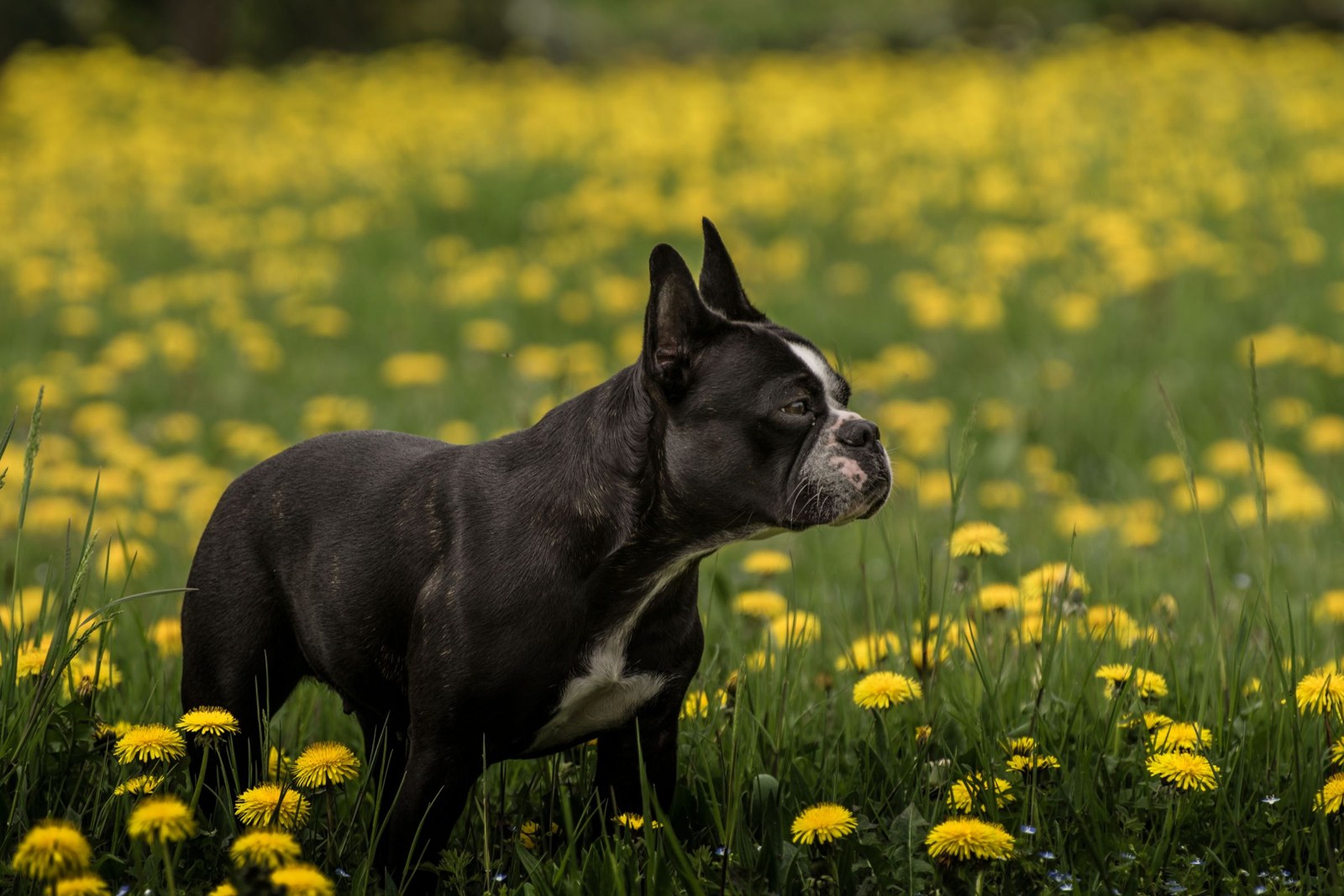
Boston Terrier snapshot
The American Kennel Club describes a lively little companion recognised by a tight tuxedo jacket, a sporty but compact body, and a friendly glow in big, round eyes. Its manners earned it the nickname the American Gentleman. The AKC placed the Boston Terrier at No. 23 in its Most Popular Dog Breeds of 2024 list, based on registration statistics, the same position it held the year before.
| Height | 15 to 17 inches at the shoulder. |
|---|---|
| Weight | 12 to 25 pounds. |
| Lifespan | 11 to 13 years, as listed by the AKC. |
| Coat | Short, smooth, and fine. Black, brindle, or seal, each with white markings that form the tuxedo pattern. |
| Temperament | Lively, friendly, and companionable, with impeccable manners and a playful streak. |
| Group | Non-Sporting Group. A small companion breed, not a toy breed and not a bulldog. |
| Energy and exercise | Moderate. Regular daily exercise suits the breed, and heat, humidity, and hard exertion are genuine risks because of the airway and the short muzzle. |
Two snapshot facts shape the insurance decision. The first is the head. A short muzzle and prominent eyes put breathing and the surface of the eye on the watch list for the dog's whole life. The second is the lifespan. At 11 to 13 years, a Boston lives long enough for a young dog eye condition and an older dog eye condition to both matter, and for a skin condition that starts young to run for years. Policies for this breed are judged over a long middle, not a short one.
The breed's own health program tells you where breeders look first. The Boston Terrier Club of America takes part in the Canine Health Information Center program run with the Orthopedic Foundation for Animals, often shortened to OFA. The breed club's health statement lists three required parts, an annual eye examination by a boarded ophthalmologist with results registered with OFA, a patellar luxation examination registered with OFA, and a BAER examination for congenital deafness registered with OFA. It then adds one more test the club recommends for all breeding stock, a DNA test for the early onset hereditary juvenile cataract mutation, known as HSF4. That four part record is the backbone of the screening section below.
Health tendencies in Boston Terriers
Cornell, the Merck Veterinary Manual, the breed club, and the university dermatology literature point to a Boston list that only partly overlaps the Bulldog list. The airway is there, but the centre of this breed's list is the eye, with hearing, kneecaps, spine, and allergic skin around it. These are tendencies, not predictions about an individual dog. The point of reading the list before you buy a policy is that each tendency has a clause attached to it, and the clause is easier to check before a claim than during one.
This section is general information about conditions a breed can be prone to. It is not veterinary advice and it is not a diagnosis of any dog. Signs listed here are possible signs owners may notice, and many of them have several causes. Only a veterinarian who examines your dog can say what a sign means.
Breathing problems (brachycephalic obstructive airway syndrome, or BOAS)
What it is
A group of upper airway problems that travel together in short headed breeds. Cornell's Riney Canine Health Center lists the Boston Terrier among the breeds where this condition is seen most frequently, alongside the English Bulldog, the Pug, and the French Bulldog. Cornell explains that the skull bones are compressed, while the tissues inside do not shrink by the same amount. The main findings can include narrowed nostrils that may collapse as the dog breathes in, a soft palate at the back of the mouth that is long enough to block airflow, small pouches of tissue near the vocal cords that get pulled inward, and in some dogs a windpipe that is narrower than it should be, called a hypoplastic trachea. Working harder to breathe can swell throat tissue over time, which narrows the airway further. A Boston is lighter and longer legged than a Bulldog, and many Bostons breathe comfortably for years. The tendency is real, and so is the range inside it.
Signs owners may notice
- Noisy breathing at rest, snoring while awake, snorting, or a harsh sound on a short walk.
- Breathing that looks like hard work, with more chest and belly movement than you would expect.
- Tiring quickly, sitting down on walks, or struggling in warm or humid weather.
- Gagging or retching, trouble swallowing, or restless sleep.
- Panting that does not settle after coming indoors, drooling, or wobbliness in heat.
How vets usually evaluate and treat it
Cornell notes that most dogs are diagnosed between one and four years of age, and that diagnosis rests on the breed, the signs, and a physical exam. Narrowed nostrils can be seen on a routine exam. Looking at the soft palate and the tissues near the vocal cords usually needs light anaesthesia, and X-rays of the neck and chest can show the width of the windpipe, with endoscopy or a CT scan used in some cases. Mild cases are often managed with weight control, a harness instead of a neck collar, controlled activity, and strict avoidance of heat, humidity, and stress. More severe cases may be referred to a surgical specialist. Surgery can widen the nostrils, shorten a long soft palate, or remove pulled in tissue. Cornell is clear that there is no surgical procedure to correct a narrow windpipe itself. Anaesthesia in a short headed breed carries extra risk, and swelling after airway surgery is a known risk the care team plans for.
Eye problems (cataracts and corneal ulcers)
What it is
Two different eye problems share this card, because a Boston owner can meet both and a policy can treat them very differently. A cataract is a clouding of the lens inside the eye, which blocks light from reaching the back of the eye and can range from a mild vision problem to blindness. The Merck Veterinary Manual notes that cataracts are often inherited in dogs. In this breed there are two cataract stories. The first is the early onset hereditary juvenile cataract tied to the HSF4 mutation, which is the form the breed's DNA test looks for. The second is a cataract that develops later in life, which that DNA test does not predict and does not rule out. A clear DNA result is therefore a narrow promise. It covers one named mutation, not the eye as a whole. The other problem is on the surface. A corneal ulcer is a sore on the clear front of the eye. A Boston's eyes sit prominently in a short face, so a scratch, a foreign body, dryness, or a rubbing eyelash can start one, and the surface has little protection.
Signs owners may notice
- A white, grey, or bluish cloudiness inside the eye, behind the pupil.
- Bumping into furniture in dim light, hesitating on stairs, or missing a treat held to one side.
- Squinting, tearing, pawing at the eye, or holding one eye partly closed.
- A cloudy, dull, or spotted area on the clear front surface of the eye.
- Thick discharge, redness of the white of the eye, or avoiding bright light.
How vets usually evaluate and treat it
For a cataract, evaluation is a full eye exam, often by a veterinary ophthalmologist, the specialist the breed club's annual eye examination also uses. Merck notes that treatment for cataracts involves surgery to remove the affected lens, that removal is most likely to succeed before the cataract has fully matured and before inflammation starts inside the eye, and that a dog whose cataract is not removed still needs continued monitoring because complications such as glaucoma can occur. For an ulcer, evaluation usually includes a stain test that reveals surface damage on the cornea, a check of tear production, and a close look for the cause, such as a foreign body or an eyelash rubbing the surface. Ulcers are treated by depth and cause, with topical medicine, pain control, protection from rubbing, and close rechecks, and deeper ulcers can need surgical care.
Luxating patella (slipping kneecap)
What it is
A developmental condition in which the kneecap slips out of the groove it should ride in. The Merck Veterinary Manual describes patellar luxation as displacement of the kneecap from its groove, often tied to the shape of the whole hind leg, and vets grade its severity by hand during an exam. In a small, active dog that jumps on and off furniture, a slipping kneecap is a common reason for a sudden odd step that then seems to vanish. In the Boston this is a screened condition, not a surprise. A patellar examination registered with OFA is one of the required parts of the breed club's health program.
Signs owners may notice
- A sudden skip or hop on a back leg for a few steps, then normal walking again.
- Holding a back leg up briefly, or stretching it out behind before continuing.
- In more severe cases, a crouched stance, bowed legs, or lameness that does not come and go.
When it can be urgent
A skipping gait is a book an appointment sign. A knee problem combined with a fall, a cry of pain, swelling, or a leg that will not bear weight at all could be a cruciate ligament injury or a fracture, and that combination needs prompt care.
How vets usually evaluate and treat it
Vets usually diagnose and grade the kneecap by hand during an exam, sometimes with X-rays to look at leg alignment and arthritis. Mild cases often suit conservative care, meaning weight management, controlled exercise, physical therapy, and pain medication. Surgery is usually considered for moderate to severe grades, persistent lameness, or a condition that is getting worse. Keep the grade from every exam. The breed club's health statement says the patellar examination is required once every two years for breeding stock, and that registration with OFA is open only to dogs 12 months or older. A grade recorded at any point is exactly the kind of early record an insurer will later line up against a surgery claim.
Congenital deafness
What it is
Hearing loss that is present from birth, in one ear or in both. Congenital means present from birth, and sensorineural means the problem sits in the inner ear or the hearing nerve rather than in wax or infection in the ear canal. A dog deaf in one ear only often behaves so normally at home that nobody notices. The dog turns toward sound with the hearing ear, sleeps through noise on one side, and learns the household by sight and vibration. That is why this breed does not rely on watching puppies. It tests them. The breed club's health statement requires a BAER examination for congenital deafness, registered with OFA, done after the age of 35 days, with most breeders testing puppies at six to eight weeks of age. BAER stands for brainstem auditory evoked response. The test measures the brain's response to sounds played into each ear separately, so it can find deafness in a single ear that home observation misses.
Signs owners may notice
- A puppy that does not startle at a loud sound, or that sleeps through noise that wakes littermates.
- Not coming when called from behind, or turning the same side toward sounds every time.
- Startling when touched while asleep, or barking more loudly than other dogs in the house.
- No signs at all at home, with deafness in one ear found only on the BAER test.
When it can be urgent
Congenital deafness itself is not an emergency, and a deaf or partly deaf Boston can live a full pet life with visual signals, a lead or a long line outdoors, and care around traffic and startling. Sudden hearing loss in an adult dog is a different picture. A dog that stops responding over days, especially with a head tilt, ear pain, discharge, or loss of balance, needs a prompt vet visit, because infection and other ear disease sit behind that pattern more often than the congenital form does.
How vets usually evaluate and treat it
Evaluation starts with an ear exam to rule out infection, wax, and other canal problems. The BAER test is the definitive hearing test, performed by a veterinary neurologist, an experienced veterinarian, a neuroscience professional, or an audiologist, in the breed club's wording. The breed club's health statement says the examination is required only once in the dog's lifetime. There is no routine medicine or surgery that restores congenital sensorineural hearing, so care is management and training rather than treatment. That fact changes the insurance question. For this condition the record itself, and how a policy classifies it, matters more than any treatment bill.
Spine malformations (hemivertebrae)
What it is
A hemivertebra is a spine bone that did not form completely, so it is shortened or wedge shaped instead of block shaped. The Merck Veterinary Manual lists hemivertebrae among congenital vertebral malformations, alongside fused block vertebrae and cleft butterfly vertebrae, and notes that hemivertebrae are most common in screw tailed dog breeds such as Pugs, Bulldogs, and Boston Terriers. The same build that produces the short screw tail can produce malformed bones further up the spine. Many of these findings are discovered by chance on imaging taken for another reason, and many never cause a sign in the dog's whole life. In some dogs, a wedge shaped bone angles the spine, narrows the canal the spinal cord runs through, or makes a section unstable, and then the cord itself is at risk.
Signs owners may notice
- Wobbliness or poor coordination in the back legs, or a gait that crosses or drags.
- Back pain, reluctance to jump, climb, or be lifted, or crying out when moving.
- Weakness in the back legs that builds slowly in a young adult dog.
- In a severe episode, loss of bladder or bowel control.
How vets usually evaluate and treat it
Evaluation starts with a physical and neurological exam to locate the problem and grade any weakness. X-rays can show a malformed bone, and Merck notes that specialised imaging such as a CT scan may be needed to judge whether a spinal defect can be corrected with surgery, with MRI used where the cord itself needs to be assessed. Where signs are present, care can include rest, pain relief, and weight control, and a dog with cord pressure may be referred to a neurology or surgery specialist to discuss stabilisation.
Allergic skin disease (atopic dermatitis)
What it is
An inherited tendency for the skin and immune system to overreact to ordinary things in the environment, such as pollen, dust mites, and moulds. The University of Minnesota's small and large animal dermatology handbook describes canine atopic dermatitis as a genetically predisposed, inflammatory, itchy allergic skin disease, and lists the Boston Terrier among the breeds recognised more frequently with it. The itch usually comes first and the visible skin damage follows it, because scratching, licking, and rubbing break the surface and invite bacterial and yeast infection on top of the allergy. Ears are part of the same picture in many dogs, so a Boston with repeating ear trouble and itchy paws is often one condition, not two. Unlike the Bulldog, this breed has no deep facial folds driving its skin story. The Boston skin story is allergy, and allergy is a long condition rather than a short episode.
Signs owners may notice
- Licking or chewing the paws, with staining on light coloured feet.
- Scratching, rubbing the face on the floor or furniture, or scooting.
- Redness in the ears, armpits, belly, or between the toes, and repeating ear infections.
- Itch that follows a season at first, then lasts longer each year.
- Hot spots, hair loss, or a sour smell from skin that has picked up a secondary infection.
When it can be urgent
Allergic skin disease is usually a prompt routine visit, not an emergency. Skin that is rapidly swelling, oozing, or bleeding, a swollen face, hives with vomiting or breathing change, or a dog that cannot sleep for itching needs a same day call. A skin infection left to deepen under an untreated allergy is a larger problem than the early visit would have been.
How vets usually evaluate and treat it
A vet will usually examine the skin and ears, look at material from the skin under a microscope to tell bacteria from yeast, check for fleas and other parasites, and build the pattern from the dog's age, seasons, and history, because atopic dermatitis is diagnosed from the pattern and by ruling other causes out. Care categories include treating any secondary infection, anti-itch and anti-inflammatory medicine, medicated bathing, ear care, and, for a dog whose pattern stays strong, referral to a veterinary dermatologist for allergy testing and immunotherapy, which is a long course of treatment aimed at the allergens themselves.
The breeder screening file, in plain language
No other breed guide on this site has this section, because no other breed in the series arrives with quite this file. A Boston Terrier puppy can come with four different kinds of evidence, and each kind proves a different thing. Owners often treat the file as a single pass or fail stamp. It is not. It is four separate records with four separate dates, and an insurer reading a claim will treat them separately too. Use this checklist to read any breeder's file, and to build the file for a dog you already own.
| Record | What to ask for | What it proves | What it does not prove |
|---|---|---|---|
| BAER hearing test | The certificate for each parent, and for the puppy if the breeder tested the litter, showing the result for each ear separately and the date. The breed club requires the test after the age of 35 days, and most breeders test at six to eight weeks. | That this dog's brain responded to sound in each tested ear, or in one ear only, on that date. It is a once in a lifetime test. | It does not prove anything about an adult dog's ears later. Infection and other ear disease can still happen, and a normal BAER result is not a promise about them. |
| CAER eye examination | The dated eye examination form from a boarded veterinary ophthalmologist, registered with OFA. The breed club lists this examination as annual, and the initial examination may occur at any time after 8 weeks of age. | That a specialist examined this dog's eyes on that date and recorded what was found, or found nothing, on that day. | It does not prove the eyes stay clear. An annual exam is a snapshot series, not a lifetime clearance, and a normal exam in a young dog does not rule out a cataract that forms later. |
| Patella evaluation | The OFA registered result and grade for each parent, with the examination date. Registration is open only to dogs 12 months or older, and the breed club requires the examination once every two years for breeding stock. | That a veterinarian graded this dog's kneecaps on that date, and what the grade was. | It does not prove a puppy's knees. A parent's grade is evidence about breeding stock, and a puppy's own knees are graded at the puppy's own exams. |
| Juvenile cataract DNA test (HSF4) | The laboratory result for each parent, registered with OFA, stated as clear, carrier, or affected. The test is done once in a dog's lifetime and may be done at any age. | Whether this dog carries the HSF4 mutation behind early onset hereditary juvenile cataracts. The breed club explains that the trait is autosomal recessive, that clear dogs cannot pass the mutation on, and that carriers must only be bred to clear dogs. | It does not prove the eyes are safe. It covers one named mutation for one early onset form. Later cataracts and every other eye condition sit outside it. |
Three habits make this file useful rather than decorative. First, check that each record names the dog, the date, and the result, and that the result is registered with OFA where the breed program expects registration, because a verbal summary from a breeder is not a record. Second, note the gaps honestly. A file with a BAER certificate and a DNA result but no current eye examination is a partial file, and the missing piece is the annual one, which is the piece that goes stale. Third, keep the whole file with the insurance policy from the first day. If a claim is ever questioned, the question will be about dates. A complete, dated file answers it in one folder instead of a scramble through old messages.
One caution belongs here in plain words. A screening result is a medical record, and a result recorded before a policy starts can be read by an insurer as evidence that a condition was already present. That is not a reason to avoid testing. Untested dogs get the same conditions, with worse records and later care. It is a reason to enroll early, ideally before the puppy's own record grows, and to ask the classification questions in the checklist below in writing while the file and the policy are both new.
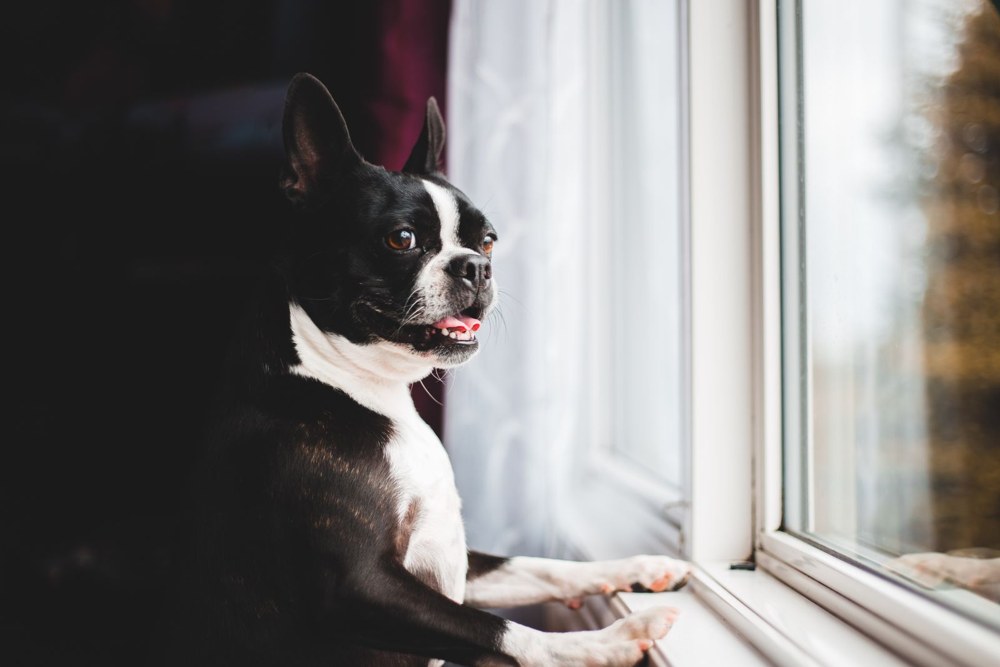
Policy decisions that matter for a Boston Terrier
For a Boston Terrier, read a policy from the exclusions inward, not from the benefits outward. Does the wording that carves things out carve out this breed's eyes, airway, spine, and skin? Work down this table in order, because the first rows can make the later rows irrelevant.
| Policy feature | Why it matters for a Boston Terrier | Stronger wording looks like | Watch out for |
|---|---|---|---|
| Breed condition exclusions | Airway, eye, spine, and skin problems are the breed's known conditions, so an exclusion aimed at breed conditions aims at this dog. | No exclusion for conditions a breed is prone to, or a short, named list that does not include the Boston core list. | Broad wording that excludes conditions common to a breed, or a brachycephalic exclusion buried in definitions. |
| Hereditary and congenital coverage | Juvenile cataracts, congenital deafness, hemivertebrae, BOAS anatomy, and luxating patella are inherited or present from birth. | Hereditary and congenital conditions are covered on the same terms as other illnesses. | Hereditary or congenital exclusions, low separate limits, or coverage that starts only after a long special wait. |
| Eye coverage and specialist care | Cataract surgery is specialist surgery, ulcers need fast repeat visits, and the second eye can follow the first. | Eye disorders, including hereditary ones, are covered, with ophthalmologist visits and cataract surgery named as covered care. | Eye exclusions for this breed, cataract surgery classified as elective, or cover that ends after the first eye. |
| Airway surgery and anaesthesia | Airway correction is specialist surgery on a short headed breed where anaesthesia and recovery swelling are part of the risk. | Corrective airway surgery, specialist care, anaesthesia, and hospital monitoring are covered when medically necessary. | Airway surgery treated as elective, or a brachycephalic exclusion that removes the breed's main respiratory claim. |
| Kneecap terms and the bilateral rule | Kneecaps come in pairs, patella grades are recorded from puppyhood, and surgery is a grade based decision. | Each knee is judged on its own record, with clear terms for the second side and for grades recorded early. | An orthopedic waiting period that resets the clock, or wording that treats the second knee as pre-existing after the first is diagnosed. |
| Spine and imaging terms | A hemivertebra found by chance is common in this breed, and judging its signs needs CT or MRI and a specialist. | Congenital spinal malformations are covered, and advanced imaging and neurology referral are covered services. | A congenital exclusion that removes spine care, or imaging covered only after a diagnosis the imaging itself is needed to make. |
| Skin chronicity and renewal | Atopic dermatitis is a lifelong, repeating condition, often with ear infections riding on top of it. | Repeat flares are counted under a clear rule, and a covered skin condition stays covered at renewal. | Each flare treated as a new condition with a new deductible, or skin cover that thins out after the first year. |
| Waiting periods and pre-existing definitions | Boston records start early and casually, as a BAER result, a kneecap grade, an eye form, or a note about snoring or itch. | Short, listed waiting periods, and a pre-existing definition tied to signs a vet recorded and explained. | Long orthopedic or eye waiting periods, and definitions that turn any early screening record into a permanent exclusion. |
Life stages: puppy, adult, and senior
Puppy
The puppy stage builds the file. Ask the breeder for the four part screening record set out above, for both parents and, where the breeder has them, for the puppy itself. A BAER result and a first eye examination can both exist before a puppy comes home, and a DNA result for the parents tells you the puppy's juvenile cataract position before any lens has clouded. Enrolling in the first weeks at home, before the puppy's own vet record adds a kneecap grade, an itch note, or a breathing comment, is the single most valuable move a Boston owner makes. The waiting periods every policy carries then run while the puppy is at its healthiest.
Adult
Adulthood is when the breed's list usually declares itself. Cornell places most BOAS diagnoses between one and four years of age. The first itchy seasons of atopic dermatitis tend to show in a young adult dog, kneecap skipping becomes obvious in an active dog, and an early cataract can appear while the dog still seems young for eye trouble. Do not let any of these become background noise in the house. Get each one examined and written down properly, keep the annual eye examination going even in a dog whose DNA result was clear, and check at each renewal that the conditions the dog now carries are still described as covered. If you change insurers in adulthood, the new policy will judge the dog on the record that already exists, screening file included.
Heat deserves its own habit in this breed, at every age. Keep a simple heat and breathing watch log through the warm months. Note the date, what the weather and the activity were, how the breathing sounded and how hard it looked, how long recovery took after coming indoors, and what you did next. The log takes a minute, it helps a vet judge whether the airway is changing, and it creates the clear timeline any airway claim review will look for. A video of noisy breathing at rest, saved with its date, belongs in the same folder.
| Date | Weather and activity | Breathing noise and effort | Recovery after coming in | What you did next |
|---|---|---|---|---|
| Example entry | Warm evening, short lead walk, no running. | Louder than usual, snorting at rest afterwards. | Settled slowly in a cool room. | Shortened the next walk, booked a vet check, saved a dated video. |
Senior
A Boston senior is a dog managing a long list at once. A later cataract can cloud an eye that the juvenile DNA test never spoke about, arthritis can build behind an old kneecap grade, skin care continues, and an airway that has worked for years needs gentler handling in heat and under anaesthesia. Keep the home logs going, breathing, mobility, appetite, hearing responses, and sleep, because change over time is what a vet, and any claim review, needs to see. Eye examinations still matter in this stage, since glaucoma can follow a cataract that was never removed.
A claim, step by step: a cloudy eye that leads to cataract surgery
The example below is hypothetical. It is not a real dog, a real claim, or a guarantee of how any insurer will decide. It follows an adult Boston Terrier through a cloudy eye, a specialist workup, cataract surgery, and the record questions that decide the claim, because that full arc is what Boston eye coverage has to handle. Pet insurance generally reimburses after you pay the vet, as explained in how pet insurance works.
The sign, and the notes that start the file
At a routine visit the owner mentions that the dog has started missing treats held on one side and hesitating at the stairs in dim light. The vet finds a cloudiness in the lens of one eye and records the finding, the date, and the owner's history of when the change began. That timeline matters, because the insurer will later compare it with the policy start date, the waiting periods, the puppy screening file, and any earlier eye examination form.
The specialist workup
The dog is referred to a veterinary ophthalmologist. The specialist examines both eyes, judges how mature the cataract is, and checks the parts of the eye the owner cannot see, including the pressure inside the eye and the back of the eye where the retina sits, because removing a cloudy lens only helps if the rest of the eye can still work. The written record, with the findings and the reasoning for surgery, becomes the backbone of the claim.
Checking the eye wording before anyone operates
Before booking the procedure, the owner checks three things in writing. Whether hereditary cataracts are covered for a Boston Terrier under this plan, or sit inside a hereditary or breed condition exclusion. Whether specialist cataract surgery is a covered treatment. And how the dog's screening record will be read, including the parents' DNA results and the annual eye examination forms. A short written answer from the insurer at this stage is worth more than a long argument after the bill exists.
The surgery and the aftercare
The specialist removes the cloudy lens, and the recovery plan runs for weeks, with eye drops, protection from rubbing, and a series of recheck visits to watch pressure and healing. The owner pays the clinic directly and collects the itemised invoices, the full records, the surgery report, and every recheck note, because aftercare visits are part of the same episode and need to be filed as part of it.
Submitting the claim
The claim is filed with the invoices and the complete records, including the first visit where the cloudiness was found, the specialist reports, and the screening file. If the insurer asks for earlier records, sending them promptly and completely is better than sending selected pages, because a gap in the timeline invites the worst reading of it.
How reimbursement works in general
Once a claim is accepted, the mechanics are the same as in what pet insurance costs and why. Eligible charges count against the deductible first, the policy's reimbursement rate then applies to eligible charges, and totals are tracked against the annual limit. Charges the policy excludes stay with the owner. In an eye case those excluded pieces can be specific, such as an exam fee in some plans, or a recheck classified differently, which is why the written check in step three mattered.
Where Boston cataract claims get denied
The pressure points are timing and wording. A cloudiness noted on an eye examination dated before coverage or during a waiting period. A hereditary exclusion the owner had not found. Cataract surgery described as elective. A DNA result or a breeder record produced late, out of order, so the timeline looks broken. And incomplete records that leave the insurer unable to tell when the change began. Each risk is reduced by enrolling early, reading the eye clause before the dog needs it, and keeping the full record, screening file included.
What drives a Boston Terrier premium
No responsible guide will name a price for your dog, because the quote depends on the dog, the address, and the settings chosen. What can be explained is why a Boston Terrier is priced the way it is, and which choices move the number. The full mechanics are in what pet insurance costs and why.
Breed risk profile. Insurers see a breed whose core conditions are anatomical and inherited at the same time. Breathing, eyes, spine, and skin do not depend much on luck, and several of them involve specialists, imaging, or surgery. Judge any Boston quote against the exclusions table above, not against the headline benefit list.
Small dog, specialist bills. A Boston is a small dog, and medication doses and handling follow its size. Specialist time does not shrink with the dog. An ophthalmologist's workup, an airway assessment under anaesthesia, or advanced spine imaging costs what it costs because of the specialist and the equipment, not the weight of the patient.
Age curve and lifespan. Premiums generally rise with age. A breed that lives 11 to 13 years spends a long middle in the years when skin, knee, and eye claims repeat, and then reaches a senior stage where a second eye and a second knee can both need care. A policy that is weak on eye and chronic condition wording is weak for most of this dog's life, not just at the end of it.
Location and plan settings. Vet prices in your area set the bill sizes the insurer expects, and specialist and emergency care vary widely by market. For this breed, picture one eye surgery plus a year of skin care in the same policy year when you size the limit, because that combination is a normal Boston year, not a freak one.
Pre-purchase checklist for a Boston Terrier policy
- Read the breed condition exclusions first, and check the Boston core list against them one condition at a time.
- Confirm hereditary and congenital conditions are covered, including juvenile cataracts, congenital deafness, hemivertebrae, and BOAS anatomy.
- Ask how a BAER result, a patella grade, an eye examination form, and a DNA result recorded before enrollment would each be treated at claim time.
- Get a written answer on specialist cataract surgery, and on how the second eye is treated if it is affected later.
- Ask whether a corneal ulcer that follows an injury is handled as an accident claim, an illness claim, or either.
- Ask how a chronic skin condition and its repeat flares are counted, and whether allergy testing and immunotherapy are covered.
- Read the bilateral clause with eyes and kneecaps in mind, not just one pair.
- List every waiting period that could touch this breed, including illness, orthopedic, and any eye or airway specific period.
- Check whether exam fees, specialist visits, advanced imaging, anaesthesia, and hospital monitoring are covered services.
- Keep the breeder screening file and your written insurer answers together with the policy, and enroll as a puppy, before the record grows.
Questions to ask an insurer, in writing: eyes, hearing, and knees
This is the tool this guide is built around. Copy each question exactly as written, name the breed, and keep the written answers with your policy documents. A verbal answer on a sales call is not part of your contract. A written answer shows what you were told before you relied on it.
- Eyes. Are hereditary cataracts covered for a Boston Terrier under this plan, and is cataract surgery by a veterinary ophthalmologist a covered treatment, or is either excluded as a hereditary or breed condition?
- Eyes. My Boston Terrier's parents hold DNA results for the HSF4 juvenile cataract mutation, stated as clear, carrier, or affected. How would those results, and a later cataract of any kind, be treated if I claim for eye surgery?
- Eyes. If one eye is treated for a cataract or a corneal ulcer, how does your bilateral rule treat the other eye if it needs the same care later?
- Hearing. My Boston Terrier holds a BAER hearing result recorded before enrollment, showing hearing in both ears, or in one ear only. How is that record classified, and does it affect later claims for ear care in either ear?
- Hearing. Are hearing testing and specialist referral for a hearing problem covered services under this plan?
- Knees. Is patellar luxation covered for a Boston Terrier, does an orthopedic waiting period apply, and does a kneecap grade recorded at a puppy or breeder examination count as a pre-existing condition?
- Airway. Is brachycephalic obstructive airway syndrome covered for a Boston Terrier, and is corrective surgery on the nostrils and soft palate a covered treatment, or is either excluded as a breed condition?
- Spine. Are hemivertebrae and other congenital spinal malformations covered for a Boston Terrier, including CT or MRI imaging and specialist care if back signs appear?
Questions Boston Terrier owners ask
Is BOAS covered by pet insurance for a Boston Terrier?
It depends on the exact breed condition wording. Some accident and illness policies cover brachycephalic obstructive airway syndrome as a hereditary or congenital condition, and some exclude airway conditions in flat faced breeds, limit corrective surgery, or apply a special waiting period. Ask the insurer in writing whether BOAS, narrowed nostrils, and a long soft palate are covered for a Boston Terrier under the exact plan, and keep the answer with the policy.
My Boston Terrier is deaf in one ear. Does that change anything for insurance?
It can. A BAER test result that shows hearing in one ear only is a dated medical record, and congenital deafness is present from birth, so a policy that excludes congenital conditions or pre-existing conditions can treat that record as part of the dog's history. There is no routine corrective treatment for congenital sensorineural deafness, so the practical questions are how the record is classified, whether related ear claims are affected, and whether the result was recorded before or after enrollment. Keep the BAER certificate with the policy file and ask the classification question in writing.
Are juvenile cataracts covered, and does a DNA test result matter?
They can be, when hereditary eye conditions are covered and the cataract was not present before enrollment or during a waiting period. The DNA test for the HSF4 mutation behind early onset hereditary juvenile cataracts shows whether a dog is clear, a carrier, or affected, and a breeder's result for a puppy's parents is part of the health record an insurer may ask to see. Ask in writing how hereditary cataracts are classified for this breed, whether cataract surgery by a specialist is a covered treatment, and how the second eye is treated if it is affected later.
Is a corneal ulcer an accident claim or an illness claim?
It depends on the cause and on the policy definitions. An ulcer that follows a scratch or a foreign body may be read as an injury, while an ulcer linked to dry eye, an eyelid problem, or another underlying condition may be read as illness. Either way, a painful or cloudy eye needs same day care. Keep the vet record that names the cause the vet found, because that record is what the claim will be judged on.
Are hemivertebrae covered, or excluded as congenital?
Hemivertebrae are malformed spine bones present from birth, and Merck notes they are most common in screw tailed breeds such as Pugs, Bulldogs, and Boston Terriers. Many dogs with them show no signs at all. Because the finding is congenital, a policy that excludes congenital conditions can exclude both the finding and later care linked to it. Ask in writing whether congenital spinal malformations, advanced imaging for back signs, and any surgery linked to them are covered for this breed.
When should I enroll a Boston Terrier?
As a puppy, before a breathing note, a cataract finding, a kneecap grade, a BAER result, or a spine finding enters the record. Boston Terriers can show breed related signs early, and insurers read notes as well as diagnoses when they judge whether a condition is pre-existing. Early enrollment also lets the waiting periods run while the dog is least likely to need the care those periods gate.
Sources and further reading
- American Kennel Club, Boston Terrier breed page for the breed description, the tuxedo jacket and compact body, the American Gentleman nickname, size, weight, lifespan, coat, and temperament.
- American Kennel Club, Most Popular Dog Breeds of 2024 for the Boston Terrier at No. 23 in the 2024 registration based ranking, holding its position from the year before.
- Boston Terrier Club of America, health statement for the breed club's CHIC health testing set: an annual eye examination by a boarded ophthalmologist registered with OFA, a patellar luxation examination registered with OFA and required once every two years, a BAER examination for congenital deafness after the age of 35 days, and the additional DNA test for the HSF4 early onset hereditary juvenile cataract mutation.
- Orthopedic Foundation for Animals, CHIC program by breed for the screening registration framework the breed club's health statement works through.
- Cornell Riney Canine Health Center, Brachycephalic Obstructive Airway Syndrome (BOAS) for the Boston Terrier among the breeds where the condition is seen most frequently, the airway findings, diagnosis between one and four years of age, conservative and surgical care, the narrow windpipe that has no surgical correction, and respiratory crisis as an emergency.
- Merck Veterinary Manual, Disorders of the lens in dogs for cataracts as a clouding of the lens that blocks light, cataracts as often inherited in dogs, surgery to remove the lens and when it is most likely to succeed, and monitoring for complications such as glaucoma when surgery is not performed.
- Merck Veterinary Manual, Disorders of the cornea in dogs for corneal ulcers and other disorders of the clear front surface of the eye.
- Merck Veterinary Manual, Patellar luxation in dogs and cats for the slipping kneecap, its skipping gait sign, grading, and conservative versus surgical care.
- Merck Veterinary Manual, Congenital and inherited disorders of the nervous system in dogs for hemivertebrae, block vertebrae, and butterfly vertebrae, hemivertebrae as most common in screw tailed breeds such as Boston Terriers, and CT imaging to judge whether a defect can be corrected.
- University of Minnesota, Small and Large Animal Dermatology Handbook, Atopic dermatitis in dogs for atopic dermatitis as a genetically predisposed, inflammatory, itchy allergic skin disease, and for the Boston Terrier among the breeds recognised more frequently with it.
Sources checked on November 6, 2026.