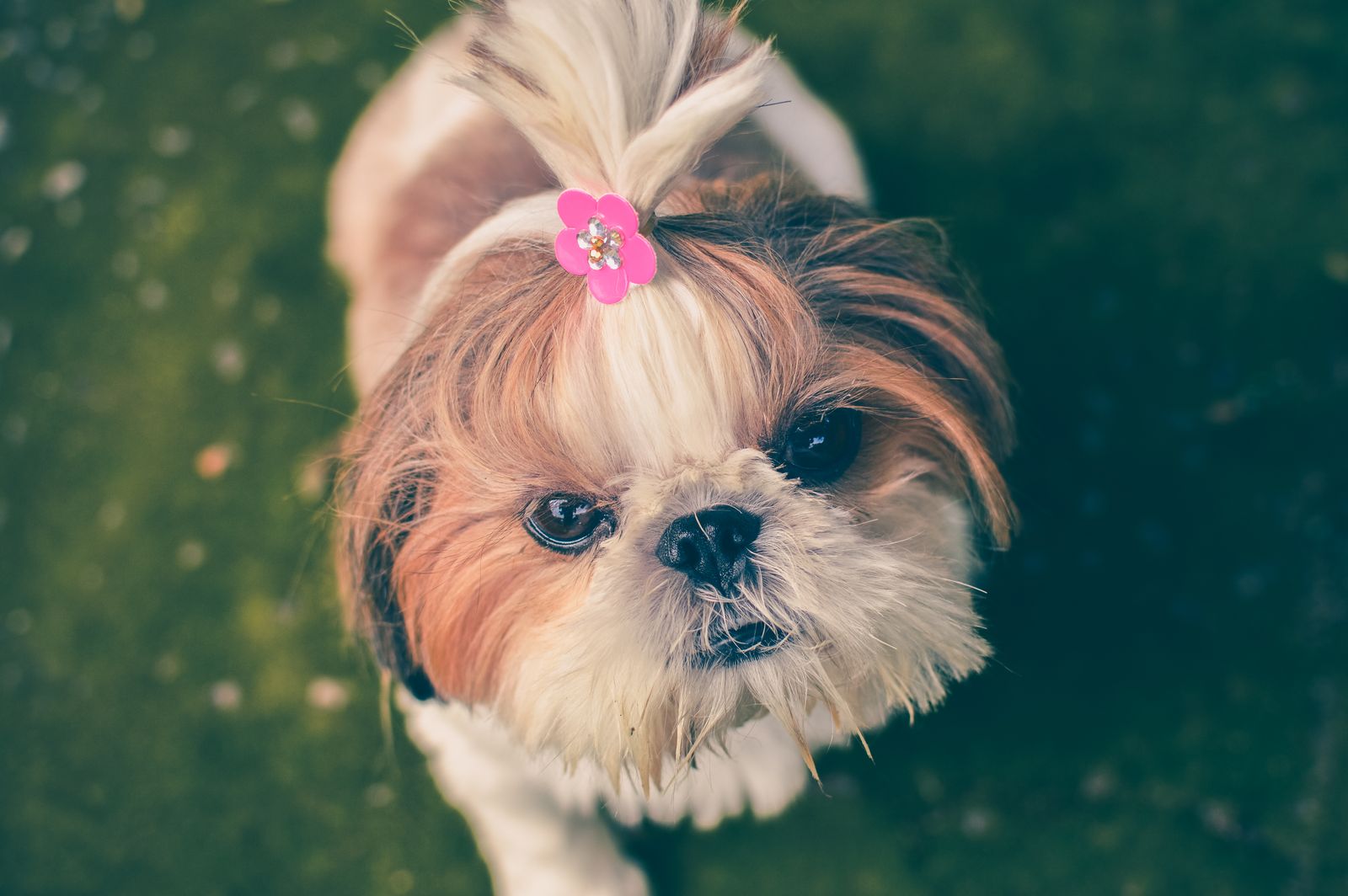
Shih Tzu snapshot
The American Kennel Club places the Shih Tzu in the Toy Group and describes a sturdy little companion dog whose name is tied to the lion dog of Chinese tradition. The dog owners live with is affectionate, playful, and outgoing, a dog bred for company rather than for work, and one that expects to be near people for most of the day. Its coat is the visible signature. Grown long, it is a dense double coat that flows to the floor. Kept short in a puppy cut, the same dog shows the round head, the short muzzle, and the large dark eyes that define the breed at a glance.
| Height | 9 to 10.5 inches at the shoulder. |
|---|---|
| Weight | 9 to 16 pounds. |
| Lifespan | 10 to 18 years, as listed by the AKC. |
| Coat | A long, dense, flowing double coat. Many pets are kept in a shorter puppy cut, which changes the grooming work but not the dog underneath it. |
| Temperament | Affectionate, playful, and outgoing, with a companion temperament shaped by a long history as a housedog. |
| Energy and exercise | A companion level of exercise, met with short walks and indoor play. Heat and hard effort deserve care, because the short face makes breathing and cooling harder work than in a long muzzled dog. |
Two snapshot facts shape the insurance picture. The first is the lifespan. A range that reaches into the late teens means years of eye drops, dental work, and ear checks can sit inside one policy life, and renewal wording matters as much as the first year price. The second is the head. Cornell lists the Shih Tzu among the breeds affected by brachycephalic obstructive airway syndrome, and the same forward set eyes that give the breed its expression are the eyes the breed club requires a specialist to examine. The face is not a cosmetic detail in this guide. It is the mechanism behind the two most distinctive condition cards below.
The Shih Tzu sits at No. 20 in the AKC 2024 registration rankings, holding the same place it held the year before. Insurers know this file well. Their hereditary, congenital, and dental definitions are the clauses that decide it.
Health tendencies in Shih Tzus
The American Shih Tzu Club set the breed screening program with the OFA Canine Health Information Center, known as CHIC, in August 2021. A CHIC number requires two tests, an eye certification through the Companion Animal Eye Registry after an examination by a board certified ophthalmologist, and a patella certification through the OFA. Cardiac testing and hip certification are optional under the program, and the club describes both as available additions rather than requirements. A large study of Shih Tzus under primary veterinary care in the United Kingdom, published by researchers working with the Royal Veterinary College VetCompass program in 2024, found periodontal disease and ear disorders among the most common specific diagnoses recorded in a year, with dental and eye problems also prominent as groups. These are tendencies, not predictions about any one dog. The value of the list is that it tells you which clauses to read before you need them.
This section is general information about conditions a breed can be prone to. It is not veterinary advice and it is not a diagnosis of any dog. Signs listed here are possible signs owners may notice, and many of them have several causes. Only a veterinarian who examines your dog can say what a sign means.
Brachycephalic obstructive airway syndrome (the short face and the airway)
What it is
Brachycephalic is the term for a dog with a shortened muzzle, where the skull bones are compressed and the face looks flattened. Cornell explains that the soft structures inside do not shrink to match the shorter skull, so the airway can narrow at several points. The main findings Cornell names are narrow nostrils that can collapse further as the dog breathes in, a soft palate that is long enough to obstruct airflow into the larynx, tissue near the vocal cords that gets pulled inward during inhalation, and in some dogs a windpipe that is proportionally too narrow. Cornell lists the Shih Tzu among the affected breeds, alongside the bulldogs, the Pug, the Pekingese, and others. Over time the effort of breathing through a narrow airway can swell and inflame throat tissue, which narrows the airway further. Heat, humidity, excitement, stress, and extra weight all make the work harder.
Signs owners may notice
- Noisy breathing at rest, loud snoring, or snorting that is new or getting worse.
- Panting that takes a long time to settle after mild activity, or a dog that stops early on walks it used to finish.
- Gagging, retching, or trouble swallowing, which Cornell groups with the airway picture through related throat and digestive effects.
- Sleep that only settles in certain positions, or a dog that props its chin up to breathe more easily.
How vets usually evaluate and treat it
Cornell notes that most dogs are diagnosed between one and four years of age, from the breed, the signs, and a physical examination. Narrow nostrils can be seen on a routine exam. Looking at the soft palate and the laryngeal saccules takes light anesthesia, and the width of the windpipe can be assessed on X-rays of the neck and chest, with endoscopy or a CT scan as advanced options. Mild cases are managed without surgery, with a healthy weight, controlled activity, avoidance of excessive heat and humidity, reduced stress, and a harness instead of a neck collar. More severe cases are referred to a surgical specialist. Narrow nostrils can be widened by removing a small wedge of tissue, pulled in saccules can be removed, and a long soft palate can be shortened. Cornell is clear that there is no surgical procedure that corrects a narrow windpipe itself, and that earlier intervention leads to better outcomes when surgery is the path.
Eye surface disease: corneal ulcers, dry eye, and the exposed eye
What it is
The Shih Tzu eye sits forward, with a large and exposed surface and eyelids that may not close fully over it. The cornea, the clear front surface of the eye, is therefore easy to scratch and slow to forgive. A corneal ulcer is an open sore on that surface, most often starting with an injury such as a scratch, a foreign body, or hair and lashes rubbing where they should not. The breed club eye examination checks the eyelids for problems that include lashes growing in the wrong place and lids that turn in or out, each of which can rub the cornea with every blink. Dry eye, called keratoconjunctivitis sicca or KCS, is the second half of the surface story. Cornell describes it as inadequate production of the watery part of the tears, most often from immune mediated inflammation of the tear glands, and lists the Shih Tzu among the breeds where it is more common. A dry cornea inflames, scars, and ulcerates, so the two conditions feed each other. A third inherited condition sits behind the surface. Progressive retinal atrophy is a slow and painless degeneration of the light sensitive cells at the back of the eye. Cornell notes that it usually affects night vision first and that there is no cure, which is why the club eye examination is repeated rather than done once.
Signs owners may notice
- Squinting, holding one eye partly or fully closed, pawing at the face, or shying away from light.
- A watering eye, or the opposite picture in dry eye, a thick yellow green discharge that returns after it is wiped away.
- A dull or dry look to the eye, redness, or a cloudy or blue grey patch on the surface.
- For retinal disease, hesitation in dim light, reluctance to enter a dark room, or bumping into things in a new place at night.
How vets usually evaluate and treat it
Evaluation starts with a full eye examination. A fluorescein stain test uses a dye that sticks to damaged cornea and shows an ulcer that can be hard to see, and a Schirmer tear test measures tear production with a small strip placed under the eyelid. Cornell notes that dry eye treatment usually centers on medicated drops that help the eye produce more tears and reduce inflammation, with artificial tears for lubrication and topical antibiotics when a secondary infection is present. Uncomplicated ulcers are treated with medication and rechecks to confirm the surface has healed. Deep, infected, or non healing ulcers can become a surgical category, and severe dry eye that does not respond to drops can also be referred to a veterinary ophthalmologist. Cornell is direct that dry eye usually requires lifelong management, and that early and consistent treatment protects comfort and vision.
Luxating patella (slipping kneecap), with hip dysplasia as the second joint
What it is
The patella, the kneecap, should ride in a groove at the front of the knee. In patellar luxation it slips out of that groove, usually toward the inside of the leg. The Merck Veterinary Manual grades the condition by severity and by whether the kneecap can be returned to the groove. At the mild end the kneecap can be pushed out by hand and returns on its own. In the middle grades it slips on its own, can stay out for a time, and produces the skipping gait owners describe. At the severe end it stays out, cannot be returned by hand, and the leg shows deformity. The breed club made a patella certification one of the two required CHIC tests, which reflects how central this joint is to the breed. Hip dysplasia is the second joint on the breed record. Merck describes it as abnormal development of the hip joint, with looseness that leads over time to degenerative joint disease and osteoarthritis. Hip certification is optional under the Shih Tzu CHIC program rather than required, and in a dog of this size the knees are usually the joint that drives claims, but a hip finding in the record is still read by an insurer.
Signs owners may notice
- A sudden skip or hop on a back leg for a few steps, then normal walking again. Merck names intermittent skipping lameness as a characteristic picture in the middle grades.
- Holding a back leg up briefly, kicking it out behind, or hesitating before stairs and jumps.
- For hips, stiffness after rest or after exercise, a bunny hopping run, or reluctance to rise.
When it can be urgent
A skipping gait is a book an appointment sign, not an emergency. A leg that will not bear weight after a fall or a jump from furniture, with crying, swelling, or a bent shape, needs prompt care the same day, because a small dog can injure a knee ligament or fracture a fine bone in the same event that draws attention to a loose kneecap.
How vets usually evaluate and treat it
The kneecap is diagnosed and graded by hand during an examination, sometimes with X-rays to look at leg alignment and arthritis. Merck describes conservative care, meaning weight management, controlled exercise, physical therapy, and anti-inflammatory pain medication, as the path for mild signs, while surgery is typically recommended for moderate to severe grades, marked lameness, or signs that keep getting worse. Surgical categories include deepening the groove and moving the point where the kneecap tendon attaches, so the kneecap tracks straight. Hip dysplasia is evaluated with an examination and radiographs, and Merck describes the same broad split, with medical management built on weight, activity, and pain control for many dogs and surgical options reserved for severe or unresponsive cases. In a dog this light, keeping weight off either joint is a genuine part of treatment and not a footnote.
Dental disease in a short jaw
What it is
A Shih Tzu carries a full set of adult teeth in a shortened jaw, and crowding is the predictable result. Crowded and rotated teeth trap plaque in places a brush reaches poorly. Cornell calls periodontal disease one of the most common health issues in veterinary medicine, explains that plaque laid down above and below the gum line drives inflammation of the gums and damage to the tissues that hold a tooth in place, and notes that the disease is worse in smaller breeds and increases with age. The 2024 VetCompass study of Shih Tzus under primary care found periodontal disease to be the most common specific diagnosis recorded in its sample year, which fits the anatomy. Cornell also warns that the disease is usually not recognized until it is advanced, because much of the damage sits below the gum line where an owner cannot see it. A puppy can start the story early, when baby teeth that do not fall out on time crowd the mouth further and push adult teeth off line.
Signs owners may notice
- Bad breath that goes beyond ordinary dog breath, often the first sign an owner can detect.
- Yellow or brown tartar along the gum line, red or bleeding gums, or gums pulling away from a tooth.
- Pawing or rubbing at the mouth, drooling, dropping food, taking longer over meals, or a new reluctance to chew a favorite toy.
- In a puppy, two teeth in the same spot, where a baby tooth sits beside the adult tooth that should have replaced it.
When it can be urgent
Most dental disease is a prompt routine visit, and its quiet progress is the reason not to wait for pain to announce it. A swollen face or jaw, a dog that cannot close its mouth, drooling with blood, or a broken tooth needs same day care. A puppy whose retained baby tooth is pushing an adult tooth into the gum also needs a timely appointment, because the bite is still forming.
How vets usually evaluate and treat it
Evaluation combines an awake mouth exam with, when disease is suspected, a full oral assessment under general anesthesia, which allows probing below the gum line and dental X-rays. Cornell describes professional cleaning under anesthesia, with scaling above and below the gum line, as one half of prevention and treatment, and daily home tooth brushing as the other half. Treatment categories for established disease include extraction of teeth that are loose, infected, or too damaged to save, and removal of retained baby teeth, often planned at the same anesthesia as another procedure when timing lines up. In a breed whose airway already needs respect, the anesthesia conversation is part of dental care, and a vet team that plans airway monitoring for a brachycephalic dog is a genuine quality marker.
Ear disease under heavy, hairy ear flaps
What it is
The Shih Tzu ear is a long and heavily coated flap that folds over the ear canal, and the canal itself grows hair. Air moves poorly under that cover, and warmth and moisture stay in the canal. Otitis externa, inflammation and infection of the outer ear canal, is the usual result when bacteria or yeast overgrow in that environment, and allergy is a frequent underlying driver that makes episodes repeat. The 2024 VetCompass study found ear disorders among the most common specific diagnoses in Shih Tzus under primary care. Ear disease in this breed is rarely a single event story. It is a repeat visit story, where the pattern of episodes, the organism found each time, and the underlying cause decide the long term cost.
Signs owners may notice
- Scratching at an ear, rubbing the ear along the floor or furniture, or frequent head shaking.
- Redness or swelling at the ear opening, a sour or yeasty smell, or dark or yellow discharge.
- Head held tilted toward one side, or a dog that objects when an ear is touched and used to tolerate it.
When it can be urgent
Most ear disease is a prompt routine appointment, and it should not be treated with leftover drops before an exam, because the right medication depends on what is growing in the canal and on whether the eardrum is intact. A swollen and closed ear flap from a blood filled swelling, a head tilt with loss of balance, or an ear that is suddenly very painful needs care the same day.
How vets usually evaluate and treat it
The vet looks into the canal with an otoscope and checks the eardrum. A swab of discharge is usually examined under a microscope, a test called ear cytology, to identify yeast, bacteria, or mites, because each is treated differently. Treatment categories include cleaning of the canal, topical medication matched to the organism found, and oral medication in deeper or more painful cases. When episodes repeat, the work turns to the underlying cause, most often allergy, and to a maintenance cleaning plan. Hair inside the canal is managed on the advice of the vet team rather than by routine plucking, which can irritate an already inflamed canal.
Juvenile renal dysplasia (a kidney condition of young dogs)
What it is
Renal dysplasia is abnormal development of the kidney. In the juvenile form the American Shih Tzu Club describes, some of the tiny filtering units of the kidney, called nephrons, never mature. Immature units that would normally disappear in the first weeks of life persist, some units never develop at all and are replaced by fibrous tissue, and the kidney is left with less working tissue than it should have. The club names the Shih Tzu, the Lhasa Apso, and the Soft Coated Wheaten Terrier as the breeds where this developmental or genetic defect is found most commonly. The course varies widely. The club describes an early silent stage, in which filtering units are lost without signs, a stage where signs appear once only a minority of working units remain, and a final stage of kidney failure. Severely affected puppies can fail to thrive in the first months of life, moderately affected dogs can look normal for months before the same course begins, and mildly affected dogs can show no signs at all. That range is exactly what makes the record, and the policy definitions, matter so much.
Signs owners may notice
- Drinking far more than expected and producing large amounts of pale and dilute urine, noticeable in a puppy older than the youngest weeks.
- Poor growth, weight loss, or a puppy that stays small and gains slowly compared with littermates.
- Intermittent loss of appetite and lack of vigor, and in later stages vomiting, weakness, and dehydration.
When it can be urgent
Heavy drinking with poor growth is a prompt appointment, not a watch for months item, because the club testing notes explain why time matters. A young dog that is vomiting, weak, dehydrated, or cannot be tempted to eat or drink needs care the same day. Kidney failure in a young dog is an emergency presentation, whatever its underlying cause turns out to be.
How vets usually evaluate and treat it
The club is candid about the limits of testing. The two common blood markers of kidney function do not rise until most of the kidney is no longer working, so a normal blood result does not rule this condition out in a mildly or moderately affected dog. A urine test that measures how concentrated the urine is gives a second view of kidney function, and a urine screen for small amounts of protein can flag ongoing damage to the filters earlier than the standard tests. Ultrasound can help in moderately affected dogs, whose kidneys may look smaller than normal with scarring, and X-rays can support a presumptive diagnosis in a young dog whose kidneys are markedly small. A definite diagnosis rests on kidney tissue examination, which is why this condition can stay uncertain during life. Treatment is the treatment of chronic kidney failure in general, built on diet adjustment, including phosphorus and protein moderation to ease signs, fluids and medication as the stage requires, and monitoring. There is no treatment that rebuilds the missing kidney tissue, which is why early records and early enrollment carry the weight they do in this breed.
The daily face, eye, and breathing check
No sibling guide on this site carries this log, because no sibling breed concentrates its risk in one small face the way this one does. The airway, the eye surface, the teeth, and the ears can all be looked at in under a minute at the same moment each day, and a dated record of those looks is useful twice over. It helps a vet see a pattern instead of a single snapshot, and it gives an insurer a timeline that shows when a sign actually started, which is the fact that pre-existing disputes turn on. Use the log at a calm moment, in the same light, and write what you see rather than what you think it means.
| Check | What to look at | What to write down | What it can point to |
|---|---|---|---|
| Breathing at rest | Watch the dog settle after a walk and again in the evening. Listen for new or louder noise, and note how long panting takes to settle. | The date, the activity before it, how the breathing sounded in plain words, and whether heat or excitement was involved. | A dated breathing record is the starting evidence in any airway claim, and it separates a long standing pattern from a sudden change. |
| Nostrils | Look at the nostril openings face on. Note whether they look open or pinched, and whether they move inward as the dog breathes in. | Open, narrow, or pinched, per side, with a photo in the same light when you notice a change. | Nostril shape is part of the airway examination, and a dated photo shows a vet what you saw at home. |
| Eyes | Check that both eyes are open equally, the surfaces look clear and moist, and there is no new discharge. Note the color and thickness of any discharge. | Clear, watery, or thick discharge, squinting yes or no, and which eye. Note any cloudiness in words, not guesses. | Squinting with cloudiness is the same day pattern from the eye card above. A discharge log also documents dry eye control between rechecks. |
| Face and tear area | Look at the skin and coat under the eyes and around the muzzle. Dampness, staining, odor, or sore skin all count. | What you cleaned, what you used, and whether the skin looked sore. | A face that stays damp can point back to tear production, blocked drainage, or hair rubbing the eye, each of which a vet will want to separate. |
| Mouth | Lift the lip on each side. Look at the gum line for redness, tartar, or a tooth that looks different, and smell the breath. | The date of each tooth brushing, any gum redness by side, and any tooth a puppy seems to have twice in one spot. | This is the dental record between cleanings. It dates the first gum change and the retained baby tooth window, both of which appear in claims. |
| Ears | Lift each flap and look at the opening. Note redness, smell, and discharge, and whether the dog objects. | Normal, red, or discharge, per ear, plus any head shaking that day. | A per ear log shows whether episodes are one sided or both sided, and how often they truly repeat, which is the fact the repeat episode clause turns on. |
| Water and urine | Notice how often the water bowl is refilled and whether the dog asks to go out to urinate more often, above all in a puppy or young dog. | A simple daily note of refills and any change in urination, with dates. In a young dog with a change, measure the water offered and the water left for a day and write down both. | This is the earliest home record for the kidney card above. A dated change in drinking is far more useful to a vet, and to a claim, than a later estimate. |
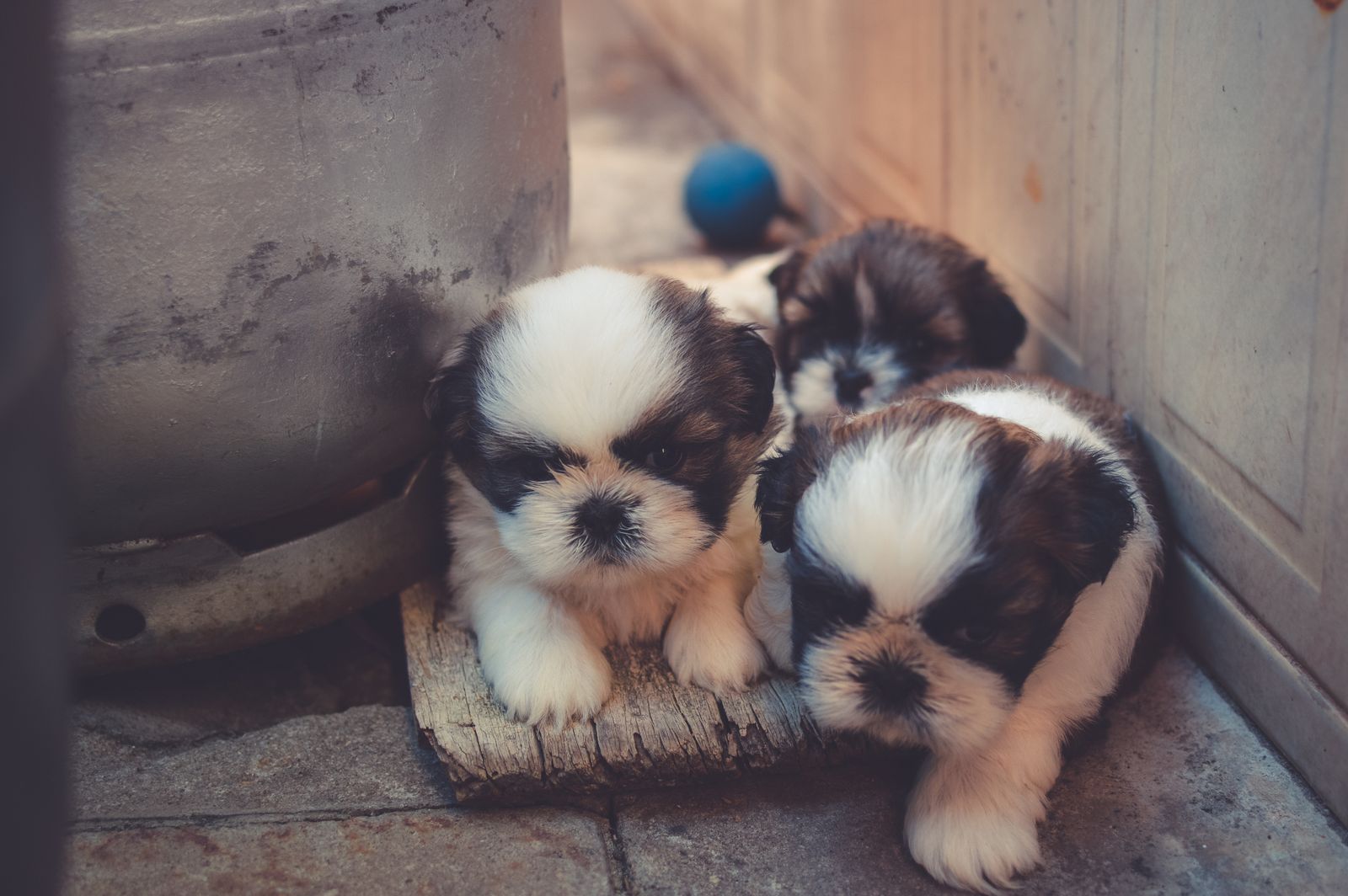
Two habits make the log worth keeping. The first is to bring it to every appointment, so its dates enter the veterinary record while they are current. The second is to photograph any eye change before you wipe the face, because the photo preserves the discharge and the squint that a cleaned face no longer shows. Neither habit takes the place of an examination. Both make the examination, and any claim that follows it, rest on dates rather than memory. The card photo on this page shows young Shih Tzu puppies, the stage at which this log is cheapest to start and most valuable to have.
Policy decisions that matter for a Shih Tzu
For this breed, the policy table is a face table and a record table. Two conditions grow directly out of the skull shape, one kidney condition is developmental by definition, and the steady costs arrive through the teeth and the ears. Read these rows before the price, because a cheaper policy that classifies the face out of coverage is not cheaper in any sense that matters.
| Policy feature | Why it matters for a Shih Tzu | Stronger wording looks like | Watch out for |
|---|---|---|---|
| Congenital and developmental condition coverage | Narrow nostrils are present from birth, and juvenile renal dysplasia is a developmental kidney defect. Both can be discovered long after they begin. | Congenital and developmental conditions covered when signs come after enrollment and the waiting period. | Wording that excludes anything present at birth or developmental in origin, which removes an airway operation and the breed kidney condition in the same line. |
| Hereditary condition coverage | Kneecaps, retinal degeneration, and dry eye with an immune mediated basis all have inherited or breed linked roots. | Hereditary conditions covered on the same terms as other illnesses. | Hereditary exclusions, or a named list that includes the conditions the breed club screens for. |
| Eye disorder terms | The exposed eye produces the breed's most time sensitive claims, from ulcers to lifelong dry eye drops. | Eye disorders covered, with ophthalmology referral, stain and tear testing, and chronic eye medication all as covered categories. | Eye carve outs, a separate low limit for eye conditions, or wording that treats every ulcer as a pre-existing repeat of the first one. |
| Airway and anesthesia terms | Airway assessment happens under light anesthesia, and dental work in this breed also needs careful airway planning. | Anesthesia and specialist assessment covered as part of a covered condition, including airway surgery where it is recommended. | Policies that pay for surgery but exclude the anesthetic assessment that establishes the diagnosis, or that exclude brachycephalic airway work by name. |
| Orthopedic waiting period and bilateral rule | Kneecaps come in pairs, and a grade on one side often leads to a grade on the other. | Each knee judged on its own record, with clear terms for the second side. | A long special waiting period, or wording that treats the second knee as pre-existing after the first is graded. |
| Dental wording | A short and crowded jaw makes periodontal disease the most recorded diagnosis in primary care data for this breed. | Dental disease treatment and extractions covered as illness, with cleaning and retained baby teeth described plainly. | Dental illness excluded, extractions classed as routine, or retained teeth denied as congenital without that being stated up front. |
| Chronic condition renewal terms | Dry eye is managed for life, kidney disease is monitored for life, and repeat ear disease returns across terms. | A covered condition stays covered in later terms while enrollment continues, including its medication and monitoring. | Wording that caps a condition per year, ends its coverage at renewal, or reclassifies it as pre-existing. |
| Pre-existing sign definitions | Snoring notes, a loose kneecap grade, a red ear, and a comment about drinking a lot can each be read later as an early sign. | Clear and narrow definitions of what counts as a sign, tied to a diagnosis or treatment. | Definitions so broad that a casual note about a noisy sleeper or a thirsty puppy is used against a later airway or kidney claim. |
Life stages: puppy, adult, and senior
Puppy
The puppy stage writes most of this breed's permanent record. The kidneys declare their question early in the severely affected dogs the breed club describes, through heavy drinking, pale urine, and poor growth in the first months. Baby teeth that stay in place need a removal decision while the adult bite is forming. Kneecaps are first graded at early examinations, and the eyes are first checked for the lid, lash, and surface problems the club screening program is built around. Enrolling before those notes exist, and keeping the complete record of every puppy visit including the normal findings, is the most valuable move a Shih Tzu owner makes. A record that shows normal eyes, tracking kneecaps, normal urine concentration, and a clean dental baseline is evidence in the owner's favor, and the daily face check log above is easiest to start at this stage.
Adult
Adulthood is when the face and the mouth present their bills. Cornell notes that most airway diagnoses are made in young adult dogs, as breathing noise and exercise limits become clearer with maturity and weight. Periodontal disease builds below the gum line, and the home brushing routine decides how much of it arrives. Ear episodes establish their pattern, often over an allergy background. Dry eye most often appears in middle aged dogs. The insurance work of this stage is steady. File claims as they happen, keep the face check log and the dental charts, use a harness, keep the dog lean, and confirm at each renewal that every condition the dog now has is still described as covered.
Senior
A senior Shih Tzu can be a senior for years, and the senior list combines. Advanced dental disease, daily dry eye management, arthritic knees and hips, repeat ear care, kidney monitoring, and vision that may be reduced by surface scarring or retinal change can all overlap in the same small dog. Anesthesia decisions get more careful with age and airway shape combined, which is one more reason earlier dental work serves the dog better. Review the policy for age based changes and any reduction in coverage at advanced ages. A plan that thins out when a long lived companion breed needs steady care fails the purpose it was bought for.
A claim, step by step: an airway workup in a young adult dog
The example below is hypothetical. It is not a real dog, a real claim, or a guarantee of how any insurer will decide. It follows a young adult dog through breathing signs at home, an examination, an anesthetic airway assessment, and a treatment decision, because that sequence, and the dated breathing record behind it, is what airway coverage has to handle. Pet insurance generally reimburses after you pay the vet, as explained in how pet insurance works. Our guide to brachycephalic obstructive airway syndrome covers the condition itself in depth.
The breathing that changes, and the log that dates it
The dog has always snored, and the owner treated it as a breed trait. Over one summer the picture shifts. Panting after a short walk takes longer to settle, the dog starts sleeping with its chin propped up, and twice it gags and retches after excitement. The owner has kept the daily face check log, so there are dated entries showing when the settling time changed and when the gagging began. That timeline matters, because it separates a stable and long standing snore from a change, and a change is what a vet acts on and what an insurer dates a condition from.
The first examination, and what it can see without anesthesia
The vet listens to the breathing, watches the nostrils as the dog breathes in, and checks the eyes, teeth, ears, and weight at the same visit. The nostrils look narrow and move inward on inhalation. The vet explains that the nostrils are the visible part of the picture, and that the soft palate and the tissue near the vocal cords can only be assessed with the dog lightly anesthetized. The record from this visit, including the weight and the log dates the owner brought in, becomes the clinical core of the claim.
The anesthetic assessment, and checking the policy dates
The dog is referred for an airway assessment under light anesthesia, with chest and neck X-rays to look at the width of the windpipe. The assessment finds a long soft palate that obstructs airflow and pulled in tissue near the vocal cords, with a windpipe that is narrower than ideal but not the main problem. On paper, the insurer lines the sequence up against the policy dates. The policy was started when the dog was a puppy, the illness waiting period ended long before the log shows any change, and no earlier record describes breathing difficulty. That clean timeline makes this a straightforward claim. A casual note from an earlier visit describing a noisy breather, written before enrollment, is the kind of line that turns the same file into an argument about pre-existing signs, which is why the wording of early notes is worth reading when they are made.
The treatment decision, and paying as you go
The surgical specialist lays out the options in the order Cornell describes them. The conservative path is weight loss, controlled activity, heat avoidance, and a harness, and it stays part of the plan either way. The surgical path widens the nostrils and shortens the soft palate, and the specialist is clear that the windpipe itself cannot be corrected by surgery, so expectations are set around improvement rather than a rebuilt airway. The owner pays each provider directly and collects the same two documents every time, the itemized invoice and the complete records, including the anesthetic assessment report and the imaging.
Submitting the claim
The claim is filed with the invoices and records from both clinics, the relevant pages of the face check log, and the specialist report. The diagnosis recorded is brachycephalic obstructive airway syndrome. The classification question is the one this guide flagged in advance. Under a policy that covers congenital conditions, the assessment and the surgery are assessed as a covered illness. Under a policy that excludes conditions present at birth, the same file can be denied on the ground that narrow nostrils and a long palate were always there, with the medicine itself never in dispute.
Follow up, and how reimbursement works
Recovery is monitored at recheck visits, and the log resumes, now recording settling time and sleep position against the new baseline. Each eligible bill moves through the same mechanics described in what pet insurance costs and why. Charges count against the deductible first, the policy reimbursement rate applies to eligible charges after that, and totals are tracked against the annual limit. The rechecks are not an optional extra. In an airway patient they are how the team confirms that swelling has settled and breathing has improved, and they should be filed with the same care as the surgery.
Renewal, and where airway claims get denied
At renewal, the question is whether a condition diagnosed in one term stays covered for its follow up in the next, since airway tissue can change again with age and weight. Denial pressure points are classification, with a congenital exclusion applied to airway anatomy. Timing, with an insurer reading an early snoring note as a pre-existing sign of the whole syndrome. And scope, with the anesthetic assessment billed separately from the surgery and challenged as a diagnostic extra. Each can be settled in writing before the breathing changes, not after the referral.
What drives a Shih Tzu premium
No responsible guide will name a price for your dog, because the quote depends on the dog, the address, and the settings chosen. What can be explained is the shape of Shih Tzu pricing. The full mechanics are in what pet insurance costs and why.
Breed risk profile. Insurers see a toy breed whose claims concentrate in the face, the eyes, the mouth, and the ears, with a developmental kidney condition in the background and knees that can need surgery. Several of those involve specialists, an ophthalmologist for the eyes and a surgeon for the airway or the knee, even though the dog is small. Pricing reflects specialist medicine in a small body.
Size. A dog in this weight range costs less to medicate and anesthetize than a large breed, and its drug doses are small. That economy is incomplete, because imaging, specialist time, dental work under anesthesia, and a lifetime of eye drops do not shrink in proportion to the dog. For this breed the value question is less the size of any one bill and more whether the classification clauses let the breed's actual claims through at all.
Age curve and lifespan. Premiums generally rise with age, and a lifespan range that reaches into the late teens means a long run of higher priced years. The puppy year carries the kidney and baby teeth questions, the young adult years carry the airway, the middle years carry the teeth, ears, and eyes, and the senior years combine them. A policy chosen only on its puppy price is being judged on the one year when the least is known about it.
Location and plan settings. Vet prices in your area set the bill sizes the insurer expects, and referral centers are not priced like general practices. Your deductible, reimbursement rate, and annual limit choices trade premium against claim returns, as explained in how to compare plans. An owner who knows that an eye emergency can arrive without warning should weigh the emergency care terms with that scenario in mind.
Pre-purchase checklist for a Shih Tzu policy
- Confirm congenital and developmental conditions are covered, because narrow airway anatomy is present from birth and renal dysplasia is developmental by definition.
- Confirm hereditary conditions are covered, including luxating patella and inherited eye conditions.
- Check that eye disorders carry no breed carve out, and that ophthalmology referral, stain testing, and tear testing are covered categories.
- Confirm that dry eye medication and monitoring stay covered at renewal for as long as you stay enrolled.
- Read the orthopedic waiting period and the bilateral clause for knees, and ask how a mild puppy grade is treated later.
- Separate the dental wording into cleaning, treatment of dental disease and extractions, and removal of retained baby teeth.
- Ask how repeat ear episodes are counted, and whether cytology and rechecks are covered.
- Ask what counts as a pre-existing sign, and how notes about snoring, drinking, or a red ear from early visits are used.
- Enroll as a young puppy, before an eye finding, a knee grade, or a kidney question enters the record.
- Start the daily face, eye, and breathing log on the day the puppy comes home, so the first change in breathing, eyes, or drinking already has a date.
Questions to ask an insurer, in writing
- How is brachycephalic obstructive airway syndrome classified for a Shih Tzu, and is corrective airway surgery a covered category when a specialist recommends it?
- Is juvenile renal dysplasia covered when it is diagnosed after the waiting period in a dog enrolled as a young puppy?
- If an early visit noted snoring with no diagnosis and no treatment, does that note make later airway treatment pre-existing under your definitions?
- How do you distinguish an ulcer caused by an injury from an ulcer caused by dry eye, and are both covered?
- Will dry eye drops and repeat tear tests stay covered at every renewal, and how are repeat ear infections counted across terms?
- How is luxating patella classified, what orthopedic waiting period applies, and how is the second knee treated under your bilateral rule?
Questions Shih Tzu owners ask
Does pet insurance cover airway surgery for a Shih Tzu?
An accident and illness policy can cover surgery for brachycephalic obstructive airway syndrome when hereditary and congenital conditions are included, the waiting period has passed, and no breathing difficulty was recorded before enrollment. Cornell notes that narrow nostrils can be widened and a long soft palate can be shortened, while a narrow windpipe itself has no surgical correction. Ask in writing how airway surgery is classified for this breed, because a policy that excludes congenital airway anatomy can exclude the operation on classification alone.
Is a corneal ulcer covered, and is it an emergency?
A corneal ulcer is usually assessed as an illness or an injury depending on its cause, and either way it needs prompt care. A squinting, watering, painful eye should be seen the same day, because ulcers can deepen quickly in a breed with prominent eyes. Keep the emergency clinic invoice and the stain test result with the claim, and confirm that emergency care is covered on the same terms as regular clinic care.
Will dry eye medication stay covered for my Shih Tzu?
It should, under a policy that keeps a covered chronic condition covered at renewal. Cornell describes dry eye, called keratoconjunctivitis sicca, as a condition that usually needs lifelong management with medicated drops. That makes renewal wording the clause to read. Avoid wording that treats a continuing condition as new and pre-existing each term, and confirm that the drops and the recheck tear tests for an ongoing covered condition are reimbursable.
Does insurance cover kneecap surgery for a Shih Tzu?
It can, when hereditary conditions are covered, the orthopedic waiting period has passed, and the kneecap was not recorded as loose before enrollment. Mild grades are often managed with weight control and controlled exercise, and surgery is usually discussed for moderate to severe grades or persistent lameness. Read the bilateral clause as well, because the second knee is often graded once the first one is.
Is juvenile renal dysplasia covered if my puppy drinks and urinates a lot?
Coverage turns on the congenital and hereditary definitions and on timing. The American Shih Tzu Club describes juvenile renal dysplasia as a developmental or genetic kidney defect, so a policy that excludes developmental or congenital conditions can exclude it even when the signs appear in a young puppy. Enroll early, keep the puppy blood and urine results, and ask in writing how a developmental kidney condition diagnosed after the waiting period is treated.
When is the best time to enroll a Shih Tzu puppy?
As early as the policy allows, before an eye exam records a surface problem, before a kneecap is graded, and before heavy drinking or pale urine raises a kidney question. The breed club screening program is built around an eye examination and a patella evaluation, and those same records are what an insurer reads later. Early enrollment also lets the waiting periods run while the puppy is least likely to need treatment.
Sources and further reading
- American Kennel Club, Shih Tzu breed page for size, weight, lifespan, coat, and temperament.
- American Kennel Club, Most Popular Dog Breeds of 2024 for the Shih Tzu at No. 20 in the 2024 registration rankings.
- Cornell Riney Canine Health Center, Brachycephalic obstructive airway syndrome for the Shih Tzu as an affected breed, the airway findings, diagnosis under light anesthesia, and conservative and surgical treatment.
- Cornell Riney Canine Health Center, Keratoconjunctivitis sicca in dogs for dry eye, its breed predisposition including the Shih Tzu, the tear test, and lifelong management.
- Cornell Riney Canine Health Center, Progressive retinal atrophy for inherited retinal degeneration, night vision loss first, and the absence of a cure.
- Cornell Riney Canine Health Center, Periodontal disease for plaque below the gum line, greater severity in smaller breeds, and professional cleaning with daily home brushing.
- Merck Veterinary Manual, Patellar luxation in dogs and cats for the slipping kneecap, its grading, and conservative versus surgical care.
- Merck Veterinary Manual, Hip dysplasia in dogs for abnormal hip development, joint laxity, degenerative joint disease, and medical and surgical management.
- American Shih Tzu Club, Shih Tzu now participating in CHIC for the required eye and patella certifications and the optional cardiac and hip tests, adopted in August 2021.
- American Shih Tzu Club, Juvenile renal dysplasia in Shih Tzu for the developmental kidney defect, its stages and signs, and the limits of blood and urine testing.
- Dale and colleagues, Demography, common disorders and mortality of Shih Tzu dogs under primary veterinary care in the UK, Canine Medicine and Genetics, 2024, from the Royal Veterinary College VetCompass program, for periodontal disease and ear disorders among the most common specific diagnoses.
Sources checked on November 6, 2026.