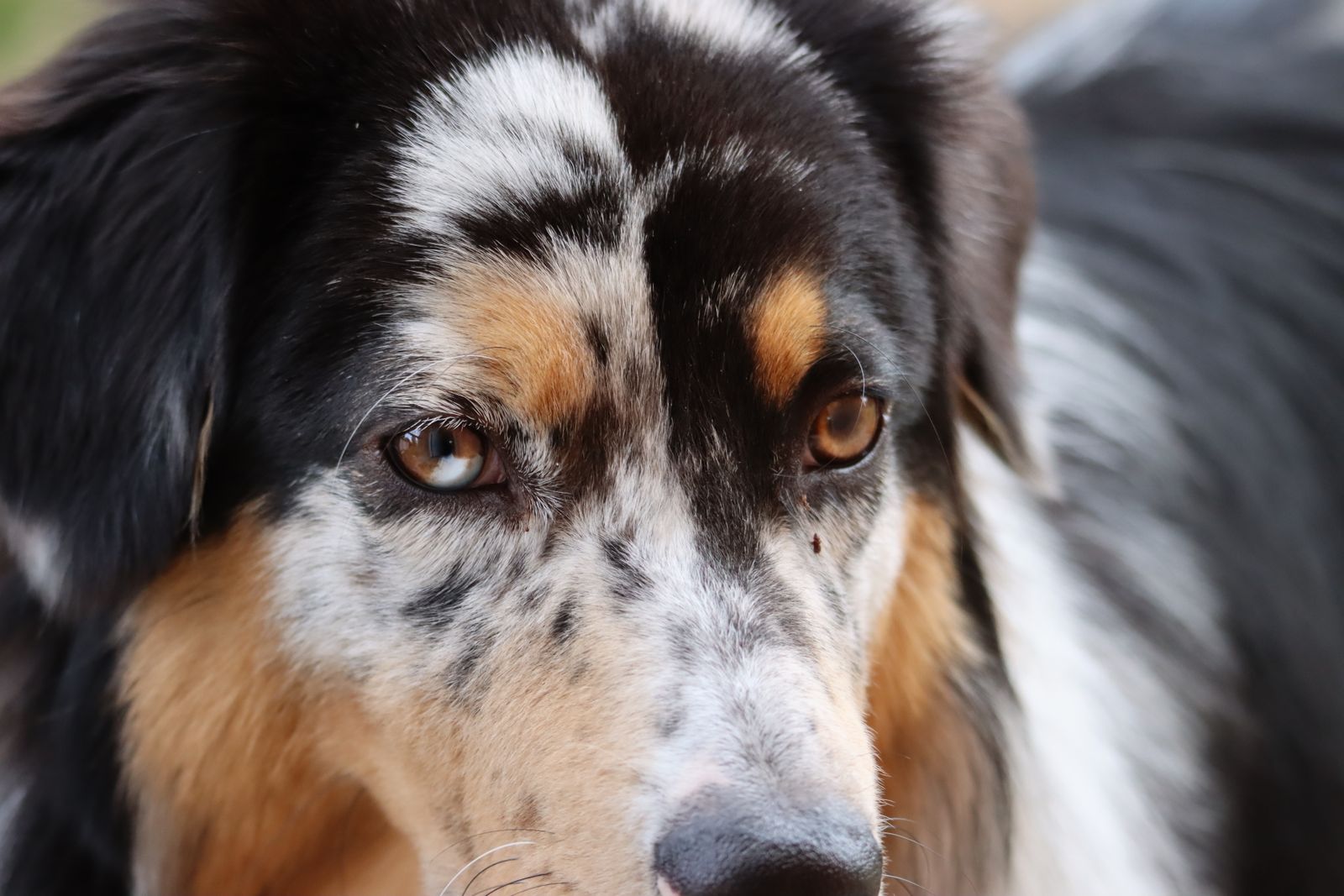
Miniature American Shepherd snapshot
The American Kennel Club describes this breed as a small Australian Shepherd in outline: a true herder in a compact body, bright and self-motivated, loyal and lively, with an affinity for horses. The breed was developed in California in the late 1960s by breeding small Australian Shepherds, and it was first registered under the older name Miniature Australian Shepherd. The AKC recognized it in 2015 in the Herding Group under its current name, Miniature American Shepherd, and the Miniature American Shepherd Club of the USA, called MASCUSA, is the AKC parent club. In the AKC registration rankings for 2024 the breed stood at No. 24, a striking position for a breed recognized less than a decade earlier. That popularity is exactly why the naming trap in the next paragraph matters.
| Height | 14 to 18 inches at the shoulder for males. 13 to 17 inches for females. |
|---|---|
| Weight | 20 to 40 pounds. |
| Lifespan | 12 to 13 years, as listed by the AKC. |
| Coat | A medium length double coat. Colors are black, blue merle, red, and red merle, with or without white markings and tan points. |
| Temperament | Good natured, intelligent, and devoted, with strong herding and guardian instincts and a watchful manner with strangers. |
| Energy and exercise | High. A working herder in a smaller frame, bred for agility and endurance, that needs daily exercise and a task to think about. |
Three snapshot facts shape the insurance picture. The first is size. At 20 to 40 pounds this dog is anesthetized, imaged, and medicated as a small to medium dog, which changes both procedure planning and drug dose calculations beside the larger Australian Shepherd. The second is the lifespan. A dog that commonly lives 12 to 13 years will renew a policy into its senior years, so the wording on chronic and progressive conditions matters more than the first year terms. The third is the name itself. Because the breed spent decades called the Miniature Australian Shepherd, and because unregistered sellers still advertise mini Aussies with no club connection at all, a buyer cannot tell from an advertisement whether a puppy comes with any screening. The registered name is the thread that leads to the test file. Pull it before you buy, and use that same name on the insurance application so the policy record and the veterinary record describe the same breed.
Health tendencies in Miniature American Shepherds
The screening map for this breed comes from the MASCUSA parent club health statement, approved by the club board on May 8, 2024, and used for the OFA Canine Health Information Center program, called CHIC, and for the AKC breeder programs the statement names. The required list has six parts: a hip evaluation by OFA radiograph, PennHIP, or FCI evaluation; an annual eye examination by a board certified veterinary ophthalmologist; and DNA tests from an approved laboratory for progressive retinal atrophy of the prcd type, for multiple drug sensitivity, for HSF4 hereditary cataracts, and for neuroaxonal dystrophy. The club's optional but recommended list adds elbow evaluation, patellar luxation evaluation, dentition, and DNA tests for collie eye anomaly, degenerative myelopathy, and several other conditions. Two things follow for a buyer. A breeder can show a complete required file and still never have run the collie eye anomaly test, because that test sits on the optional list. And a file with all six required results is a strong, checkable starting point that most breeds never offer. Two conditions owners often ask about get no card here, for different reasons. Degenerative myelopathy has a DNA test on the club's optional list, so a careful breeder may show a result, but it is a late-life spinal condition in the breeds where it is best documented and it is not a defining risk of this one. Epilepsy appears in no part of the club's screening program, so this page does not present it as a breed condition. Where the sources stop, this page stops. Each condition below is a tendency, not a prediction.
This section is general information about conditions a breed can be prone to. It is not veterinary advice and it is not a diagnosis of any dog. Signs listed here are possible signs owners may notice, and many of them have several causes. Only a veterinarian who examines your dog can say what a sign means.
MDR1 drug sensitivity (the ABCB1 mutation)
What it is
An inherited change in the gene the parent club lists as multiple drug sensitivity, widely called MDR1 and also named ABCB1. The gene normally builds a pump, P-glycoprotein, that moves many drugs out of the brain. Washington State University, whose Veterinary Clinical Pharmacology Laboratory identified the mutation in dogs, explains that a dog with a defective pump can become very ill or die when certain ordinary medications build up in the nervous system instead. WSU lists Australian shepherds among the breeds where the mutant gene is found, and this breed descends directly from those dogs, which is why MASCUSA places the DNA test on its required list rather than leaving it as a suggestion. What is the same as in the larger breed is the mechanism and the drug list. What differs here is the setting: the test is a required part of this breed's club file, and the dog receiving the drugs weighs 20 to 40 pounds, so every dose is a smaller-body calculation.
Signs owners may notice
- Nothing in daily life. A dog with the mutation eats, plays, and works normally until a problem drug is given. The condition announces itself only through a reaction.
- After a problem drug, the signs WSU describes are neurological: unsteadiness, tremors, disorientation, drooling, and in severe cases blindness, seizures, or coma.
- After a routine sedative, a dog with the mutation may sleep far more deeply and far longer than the clinic expected, which is why the result belongs on the chart before sedation day, not in a folder at home.
How vets usually evaluate and manage it
There is no procedure that repairs the gene. Evaluation is a DNA test, usually a cheek swab, and management is a permanent note on the medical record plus a check of each new drug against the current WSU problem drug list. WSU guidance treats loperamide, the human anti-diarrheal sold over the counter, as a drug to avoid in dogs with the mutation, because ordinary diarrhea doses can poison the nervous system. Acepromazine and butorphanol, both common around sedation and pain control, call for reduced doses rather than a ban. Ivermectin needs its dose stated plainly. WSU holds that the low dose used in heartworm prevention is safe for dogs with the mutation, while the much higher doses used against problems such as mange are the dangerous ones. Skipping heartworm prevention out of a general fear of this gene is the wrong conclusion, and it is a conclusion this breed's owners reach often because the warning travels without the dose attached.
Hereditary cataracts and progressive retinal atrophy (prcd-PRA)
What it is
Two different inherited eye diseases that share one card because this breed's club panel tests for both and owners meet them in the same eye file. A cataract is a clouding of the lens, the clear disc behind the pupil that focuses light. The Merck Veterinary Manual explains that a cloudy lens blocks light from reaching the retina, that cataracts in dogs are often inherited, and that the treatment for a lens that blocks vision is surgery to remove it, done early enough to work before the cataract fully matures and before inflammation starts inside the eye. In this breed a mutation in the HSF4 gene accounts for a share of hereditary cataracts, and its DNA test is one of the six required results. Progressive retinal atrophy of the prcd type is the second disease. Cornell describes PRA as an inherited degeneration of the light sensing cells of the retina. The rod cells that serve night vision usually fail first, day vision follows, and there is no cure. Its DNA test is also required on this breed's panel, which gives a buyer two separate answers, one about the lens and one about the retina, before a puppy comes home.
Signs owners may notice
- A white, cloudy, or bluish patch inside the pupil itself. Merck cautions that this true lens clouding is different from the normal hardening at the center of an older dog's lens, which does not take vision away.
- Hesitation at dusk, reluctance to cross a dark yard or enter a dim room, and new clumsiness on evening walks. Cornell lists these night signs early for PRA, because night vision is the first vision lost.
- Wider pupils than usual, eyes that catch light with an unusual shine, and bumping into furniture that was moved, as retinal vision fades.
- A red or painful eye, or an eye held shut, in a dog that already has a cataract. A mature cataract can stir inflammation inside the eye, and that complication is urgent even when the cataract itself was not.
How vets usually evaluate and treat it
Evaluation starts with a full eye examination with the pupil dilated, so the lens and the retina can both be inspected, and in this breed it repeats every year, because the annual ophthalmologist examination is itself a required item on the club panel. A confirmed cataract usually brings a referral to a veterinary ophthalmologist, who judges whether the retina behind the lens still works before anyone talks about removing the lens. Dogs whose cataracts are not removed still need scheduled monitoring, because glaucoma can follow a mature cataract. For PRA the examination and, where needed, retinal function testing confirm the diagnosis, and care then becomes practical: steady furniture layouts, lighting for evening movement, and monitoring visits, because no surgery restores a degenerating retina.
Collie eye anomaly
What it is
An inherited fault in how the back of the eye is built, present from birth. The common mild form is a thin, underdeveloped patch in the choroid, the blood vessel layer that feeds the retina. Heavier forms add a coloboma, a gap in or near the optic disc, and in the most severe cases the retina detaches from the back of the eye. The condition came down the same family line as the MDR1 mutation, through the Australian Shepherd and Collie ancestry this breed shares. Where it sits in this breed's paperwork is the point a buyer has to hold onto. MASCUSA places the collie eye anomaly DNA test on its optional but recommended list, not on the required list. A breeder can therefore present a complete required file, hips, annual eye exam, and four DNA results, and still have no collie eye anomaly result to show you. That is not dishonesty. It is the structure of the list, and it means the question has to be asked by name.
Signs owners may notice
- Usually none. Mild collie eye anomaly does not change how a puppy acts, and it is found by an examiner looking into the eye, not by an owner watching at home.
- In heavier cases, misjudging steps or jumps, bumping into objects on one side, or holding back in dim light or in an unfamiliar room.
- A suddenly blind eye, sometimes cloudy or bloodshot in appearance, which can mean a detachment. That is a same day problem, not a watch and wait problem.
When it can be urgent
Sudden vision loss, a painful eye, or a puppy or dog that abruptly cannot find its way around a familiar space needs prompt care. Retinal detachment is the complication where early treatment offers the only chance of keeping vision in that eye.
How vets usually evaluate and manage it
Evaluation is a dilated eye examination, ideally by a veterinary ophthalmologist, who can grade what is seen at the back of the eye. Breeders who screen puppies do it young, in the first weeks of life, because the mild form can be hidden later as pigment fills in while the eye matures. A DNA result answers the carrier question permanently, which an adult eye examination alone cannot do. No treatment rebuilds the underdeveloped tissue. Management is scheduled re-examination, fast care for any detachment, and breeding choices that use the result honestly.
Neuroaxonal dystrophy (NAD)
What it is
An inherited, slowly progressive disorder of the nervous system that belongs to this breed's story in a way no other card on this page does. Neuroaxonal dystrophy takes its name from the swollen nerve fibers, called spheroids, that build up through the central nervous system. A study published in Movement Disorders in 2024 examined affected Miniature American Shepherds and traced the condition to a small deletion in the RNF170 gene. The deletion is passed on in an autosomal recessive pattern, which means a puppy must inherit the change from both parents to be affected, while a puppy with one copy is a carrier that stays healthy itself. Affected dogs in the study were typically young adults. The researchers estimated the gene change itself at about 30 years old, which places its origin before this breed separated from the Australian Shepherd. For an owner, the practical fact is simpler. MASCUSA puts the NAD DNA test on the required list, so a complete breeder file answers this question before purchase, in writing.
Signs owners may notice
- A gait that slowly changes in a young adult dog: unsteadiness in the hind end, scuffing or knuckling of the back paws, and weakness that shows first on stairs, jumps, and slick floors.
- A dog that sways or crosses its hind legs when turning, tires on walks it used to finish easily, and loses muscle over the hindquarters over months.
- No pain as the leading sign. A painless, progressive hind end weakness in a young dog of this breed is a neurology picture, and it should not be filed away as clumsiness or a growing sprain that never heals.
When it can be urgent
This condition moves slowly and is not a midnight emergency. It becomes urgent in a different way: a young dog whose walking is clearly worsening week by week needs a prompt appointment, not a routine one months out, because several treatable spinal and nerve conditions can look similar at the start and the workup separates them. A dog that suddenly cannot stand or walk at all is an emergency whatever the cause.
How vets usually evaluate and manage it
Evaluation begins with a neurological examination that localizes where in the nervous system the problem sits, followed by the rule out work: bloodwork, imaging of the spine where indicated, and referral to a neurologist for cases that do not resolve. The DNA test for the RNF170 deletion settles whether this specific inherited cause is present, which is why the breeder's panel result, or a test run after signs appear, carries so much weight in the file. There is no cure and no treatment that removes the swollen fibers. Care is supportive and practical: traction and footing at home, ramps and harness help as strength fades, weight kept lean so weak legs carry less, rehabilitation where it helps the dog stay mobile, and monitoring visits that adjust the plan as the condition progresses.
Hip dysplasia
What it is
A developmental fault of the hip joint. Cornell describes a hip that forms incorrectly and sits loose in its socket, so the joint wears unevenly and arthritis develops over time, bringing pain and stiffness with it. The condition is inherited, and Cornell notes it can be worsened by rapid growth and overfeeding in puppies, a point worth hearing in a breed where a few extra pounds sit on a 20 to 40 pound frame. MASCUSA requires a hip evaluation for breeding dogs, by OFA radiograph, PennHIP, or FCI evaluation, with results registered through the OFA. The club's optional list adds elbows and patellar luxation, the kneecap slipping problem that matters more in smaller dogs than in the larger Australian Shepherd, so a thorough breeder file for this breed can run to three joint answers, not one.
Signs owners may notice
- Stiffness after rest, effort when rising, and reluctance with stairs, jumps, and getting into a vehicle.
- A swaying walk, a bunny hopping run with both hind legs moving together, and limping or stiffness in the back legs after hard play.
- Losing interest in work or games the dog used to demand, and thinning muscle over the hindquarters as the dog shifts weight onto its front end.
When it can be urgent
Dysplasia develops slowly and belongs in a routine appointment. A dog that abruptly will not bear weight, cries out, or shows a swollen joint after a fall or a hard collision may be dealing with a fracture or a torn ligament instead, and that dog needs prompt care.
How vets usually evaluate and treat it
Evaluation pairs a hands on joint examination with X-rays, taken under sedation so the hips can be positioned accurately. Cornell explains that OFA grading uses radiographs taken after the dog is two years old, while the PennHIP method measures the looseness of the joint directly. First line care is usually medical: a lean body weight, controlled low impact exercise, pain medication, and rehabilitation. Cornell lists the surgical options discussed for dogs that stop responding to medical care, and notes that femoral head ostectomy, removal of the ball of the hip joint, is more common in small to medium sized dogs, which is the size band this breed occupies. That size fact changes the surgical conversation beside the one held for a large breed, and it is worth raising with the surgeon rather than assuming the large dog menu applies.
Double merle eye and hearing defects
What it is
A breeding outcome that follows this breed's most admired coat. Merle is the mottled pattern, and a puppy that inherits the merle change from both parents is a double merle, often mostly white. The UC Davis Veterinary Genetics Laboratory explains that double merle dogs may have hearing, eye, skeletal, and other defects, because the pigment the double dose removes is needed in the inner ear and in the developing eye. The same laboratory notes that some dogs carry a merle variant without showing the pattern, sometimes called cryptic merle, which is why two visibly non merle parents are not a complete guarantee and why merle DNA testing exists. Merle puppies sell this breed. Photographs of blue merle puppies with pale eyes fill the advertisements, including advertisements from sellers with no test file at all. The color is not the problem. Breeding two merles together is the problem, and it is a question a buyer can ask in one sentence.
Signs owners may notice
- A puppy that does not startle at a sharp sound, does not come when called from another room, and sleeps through household noise that wakes the rest of the house.
- Eyes that look small or uneven, a puppy that bumps into objects on one side, or a puppy that tracks movement poorly in dim light.
- No sign at all in a puppy deaf in one ear only. Observation cannot settle hearing. A test can.
When it can be urgent
These defects are present from birth and are not an emergency. The time pressure sits earlier, at the buying decision, because a hearing test result requested after a puppy is home answers a question that should have been answered before money changed hands. Once such a puppy is home, the work is training with hand signals and safety around traffic and water. A painful or cloudy eye needs prompt care at any age.
How vets usually evaluate and manage it
Hearing is measured with a BAER test, which records the brain's response to sound in each ear separately. Eyes are assessed with a full ophthalmologist examination. No treatment restores lost hearing or rebuilds a malformed eye, so management is early diagnosis, training built around the senses the dog has, and honest records. For buyers the evaluation is a question, asked of any litter: were both parents merle, visibly or by DNA, and can I see a BAER result for a mostly white puppy.
Policy decisions that matter for a Miniature American Shepherd
For this breed the policy questions follow the breeder file. Six screening results exist before most puppies are sold. A nerve condition progresses slowly once it starts. A name on a form can quietly describe the wrong breed. Read these rows before comparing any prices.
| Policy feature | Why it matters for a Miniature American Shepherd | Stronger wording looks like | Watch out for |
|---|---|---|---|
| Hereditary condition coverage | MDR1 sensitivity, HSF4 cataracts, prcd-PRA, collie eye anomaly, neuroaxonal dystrophy, and hip dysplasia all arrive through the bloodline. | Hereditary and congenital conditions are covered on the same terms as other illnesses. | Hereditary exclusions, or carve-outs aimed at eye, joint, or neurological conditions in herding breeds. |
| DNA panel result handling | This breed's owners hold more DNA results than most, four required tests plus any optional results the breeder ran. | A test result alone is not treated as an illness or as a pre-existing condition, for any test on the panel. | Wording broad enough that a carrier result, in a dog that will never be affected, is read as a condition the dog already has. |
| Eye specialist and surgery coverage | The annual ophthalmologist exam is a required habit in this breed, and cataract surgery is its most likely planned operation. | Ophthalmology examinations, cataract surgery, and follow up eye medication are covered categories. | Eye exclusions, or a surgery limit sized for a minor procedure rather than lens surgery. |
| Congenital condition terms | Collie eye anomaly and double merle defects are present from birth, whether they are found in the first weeks or the first year. | Congenital conditions found after enrollment are covered, with complications judged on their own record. | A blanket congenital exclusion that removes the breed's birth present eye findings and their complications together. |
| Neurological workup and progressive condition renewal | Neuroaxonal dystrophy begins as a gait change and is confirmed by a workup, then managed for years with no cure. | Neurology referral and imaging are covered, and a covered progressive condition stays covered at renewal while enrollment continues. | Coverage that pays for named treatments but not the workup, or renewal terms that reclassify a progressive condition as pre-existing. |
| Orthopedic waiting period and bilateral rule | Hips are a required screening item, the joints come in pairs, and an agile dog loads both sides in sport and work. | A stated waiting period you can plan around, with each side judged on its own record. | Wording that treats the second hip as pre-existing after the first side is diagnosed. |
| Sedation and drug reaction handling | An MDR1 result changes drug choice and dose at every sedation, and a reaction can arrive at midnight without an appointment. | Anesthesia and medication for a covered procedure stay covered when the plan is adjusted for a documented result, and emergency care is reimbursable without pre-approval. | A standard protocol assumption, or a pre-approval rule with no emergency exception applied to a drug reaction claim. |
| Breed name accuracy on the policy | This breed answers to several names, and a policy written for an Australian Shepherd, or for a generic mixed herding dog, describes a different risk record than the dog in front of the vet. | The policy and the veterinary record carry the same registered breed name, Miniature American Shepherd, from the first day. | An application completed under an informal name, which invites questions about the dog's identity and history at claim time. |
Life stages: puppy, adult, and senior
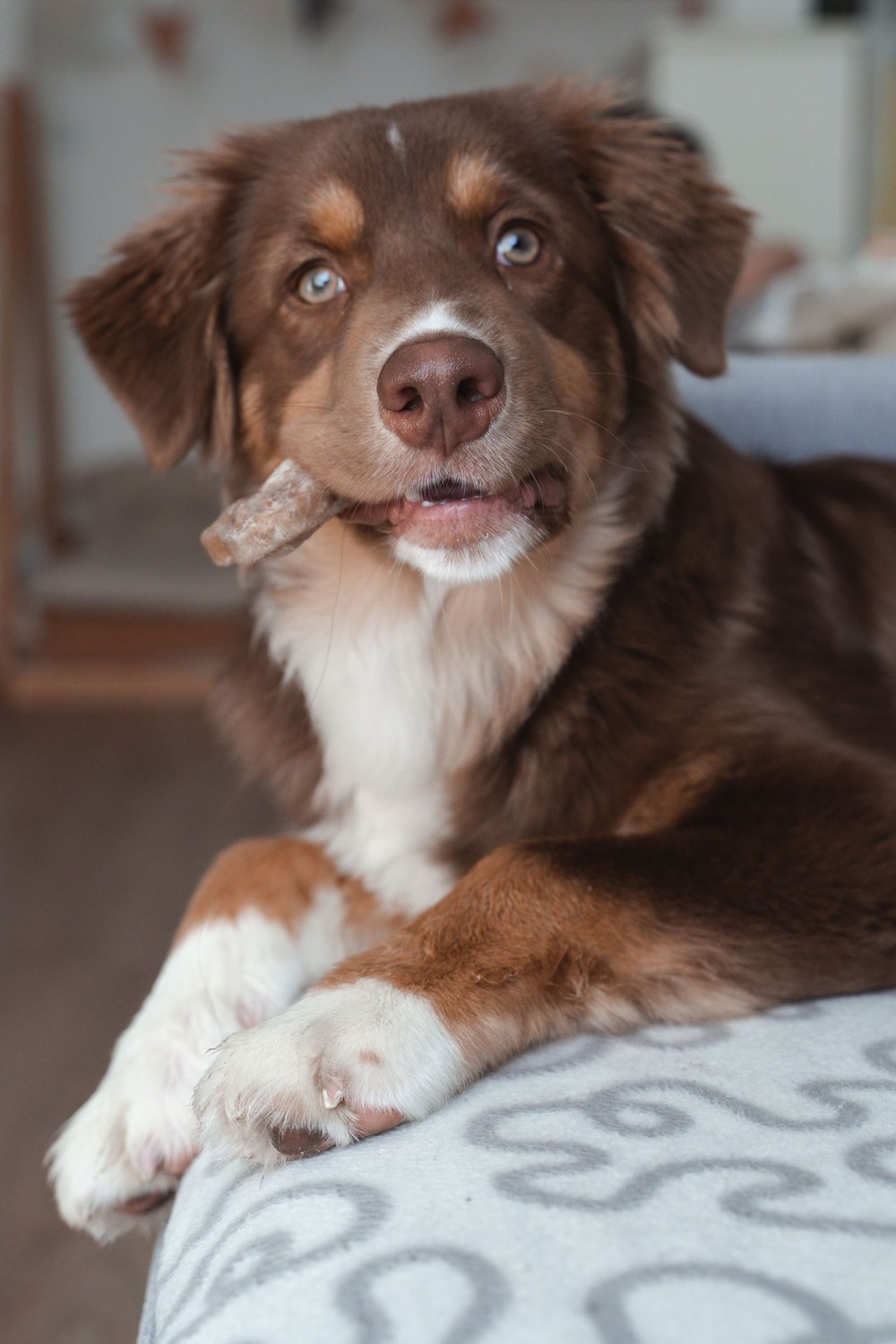
Puppy
Puppyhood is when this breed's file is either built or lost. Start with the name question. A breeder registering puppies as Miniature American Shepherds can point to the club program. A seller offering mini Aussies with no registration may still have healthy puppies, but there is no program behind the words, so every answer has to be produced on paper, one test at a time. Collect both parents' hip evaluations and annual eye examinations, and the four required DNA results: MDR1, HSF4 hereditary cataracts, prcd-PRA, and neuroaxonal dystrophy. Then ask the two questions the required list does not answer for you: was a collie eye anomaly test run, and was either parent merle. A first eye examination while the puppy is young can still catch the mild form of collie eye anomaly before pigment hides it. Enroll in this window, while the record holds screening results and nothing else. Feed for steady growth rather than speed, because Cornell ties rapid growth and overfeeding to worse hip development, and in a dog headed for 20 to 40 pounds the margin for extra weight is small.
Adult
The adult years are when the inherited list tends to speak. The NAD study found affected dogs were typically young adults, so a gait change in a two or three year old dog of this breed deserves a real workup rather than a season of rest and hope. Hereditary cataracts declare themselves on the annual eye examination, which is why that examination is a habit and not an event. The insurance work of this stage is continuity. Take the vet-file passport to every new clinic, including dental and emergency visits. Keep the dog lean, because hips and weak hind legs both carry extra pounds badly. Log any gait change, stumble pattern, or seizure like episode with a date and a short video. File claims as they happen so the record stays unbroken into the senior years.
Senior
A senior Miniature American Shepherd is a dog in its second decade on a 12 to 13 year expected lifespan, and the senior file is usually a managed file: arthritis in screened hips, eyes under watch for cataract change and retinal loss, and mobility help where a nerve condition or simple age has thinned the hind end. Night vision loss in an old dog still deserves an examination rather than an assumption, because a treatable lens problem and untreatable retinal degeneration can look alike across a dark kitchen. Review the policy at each renewal for age related changes in terms. The plan bought for the sport years should still be standing, on terms you have read, in the retirement years.
A claim, step by step: an MDR1 drug reaction at night
The example below is hypothetical. It is not a real dog, a real claim, or a guarantee of how any insurer will decide. It follows an adult Miniature American Shepherd through an adverse reaction to a common over the counter medication, an emergency hospital night, and the claim that follows. Pet insurance generally reimburses after you pay the vet, as explained in how pet insurance works.
The medication, and the signs that start the file
The dog develops diarrhea while staying with a family friend. The friend, meaning well, gives a human anti-diarrheal from a bathroom cabinet, the drug WSU lists as one to avoid in dogs with the MDR1 mutation. Within hours the dog is unsteady on its feet, drooling, and disoriented. The friend calls the owner, who knows the dog's MDR1 result from the breeder panel and says two things: the drug's name goes to the emergency hospital, and the words MDR1 mutation go with it.
The emergency hospital
At the hospital the team records the drug, the amount, and the time it was given, then examines the dog's neurological state. Because the owner can state the MDR1 result at the door, the team treats the presentation as a drug reaction in a known carrier rather than an unexplained collapse, and the workup narrows accordingly. The dog is admitted for monitoring and supportive care while the drug clears. Every report from this night is dated and signed, and those reports become the spine of the claim file.
The passport earns its place
The dog's vet-file passport, the tool in the checklist section of this guide, sits in the owner's phone and in the regular clinic's chart. It names the laboratory result, the date of the test, and the instruction to check new drugs against the WSU problem drug list. The hospital copies it into the emergency record. A result that was collected as a puppy, before any policy existed, is now doing clinical work, which is the order of events this breed's panel was designed for: the information first, the emergency second.
Checking the policy from the waiting room
While the dog is monitored, the owner reads the two clauses this guide flagged in advance: emergency care after an adverse drug reaction, and whether care needs any pre-approval step an emergency cannot meet. The answers were confirmed in writing when the policy was bought, so this is a re-read, not a first read. The owner also notes the deductible status for the policy year and keeps every invoice the hospital issues, itemized rather than summarized.
Submitting the claim
The claim is filed with the emergency record, the itemized invoices, the regular veterinarian's chart showing the MDR1 result and its test date, and a short statement of the timeline: drug given, signs, hospital arrival. The insurer lines the event up against the enrollment date and the waiting periods. The dog was enrolled as a puppy with a clean record, the reaction is an acute event in an adult dog, and the genetic result in the file is a prescribing record, not a prior illness. The claim is assessed as an emergency illness claim, which is the assessment the policy wording was chosen to support.
Recovery, and how reimbursement works
The dog steadies over the following days and goes home with instructions to flag the drug on every chart and to brief anyone who keeps the dog overnight. Follow up visits to the regular veterinarian check that the neurological signs have fully cleared. Each eligible bill moves through the same mechanics described in what pet insurance costs and why. Charges count against the deductible first, the policy's reimbursement rate applies to eligible charges after that, and totals are tracked against the annual limit.
Where this claim could have failed
Three failure points sit inside this story, and each one is preventable before the emergency. A dog with no MDR1 result on file gives the hospital a mystery instead of a mechanism. A policy that treats a known genetic result as a pre-existing condition invites an argument the owner should never have to have, and that wording can be read and rejected at purchase. A sitter with no instructions gives a well meant medication that a one line note would have prevented. The passport, the written policy answers, and the sitter briefing are the whole defense, and all three are built in the checklist below.
What drives a Miniature American Shepherd premium
No responsible guide will name a price for your dog, because the quote depends on the dog, the address, and the settings chosen. What can be explained is the shape of pricing for this breed and the choices that move it. The full mechanics are in what pet insurance costs and why.
Breed risk profile. Insurers see a small herding dog carrying a documented genetic panel: a drug sensitivity that turns routine medication into an emergency risk, two inherited eye diseases with a DNA test each, a progressive nerve condition, and a screened hip joint. The eye surgery pathway and the neurology workup are the two claim shapes that mark this breed, and both argue for strong specialist and diagnostics coverage rather than a thin policy.
Size, honestly counted. At 20 to 40 pounds this dog costs less to anesthetize, image, and medicate than its 40 to 65 pound Australian Shepherd relatives, and more than a toy breed. The same smaller body cuts the other way in one place. Doses and drug reactions are calculated per pound, and an MDR1 carrier of this size has less margin when a wrong drug is given at a dose guessed for a bigger dog. Size is a modest pricing factor and a real safety factor.
Age curve and lifespan. Premiums generally rise with age, and a 12 to 13 year lifespan gives this breed a long senior stretch in the higher priced years. The conditions that arrive young, cataracts found on an annual exam, a gait change in a young adult, argue for enrolling as a puppy and keeping coverage continuous, because a policy bought after the first finding treats that finding as history.
Location and plan settings. Veterinary prices in your area set the bill sizes the insurer expects, and ophthalmology and neurology are priced differently by region. Your deductible, reimbursement rate, and annual limit choices trade premium against claim returns. For this breed, check that the annual limit leaves room for an eye surgery and a neurology workup in the same policy year, because inherited conditions do not schedule themselves politely in separate years.
Pre-purchase checklist for a Miniature American Shepherd policy
- Collect the breeder file before you shop for a policy: both parents' hip evaluations, the annual eye examination records, and DNA results for MDR1, HSF4 hereditary cataracts, prcd-PRA, and neuroaxonal dystrophy.
- Ask the two optional list questions out loud: was a collie eye anomaly DNA test run, and was either parent merle, visibly or by DNA result.
- Use the registered breed name, Miniature American Shepherd, on the insurance application, and check that the veterinary record uses the same name.
- Confirm hereditary and congenital conditions are covered, including hereditary cataracts, prcd-PRA, collie eye anomaly, neuroaxonal dystrophy, and hip dysplasia.
- Ask whether a DNA result alone, including a carrier result for a recessive condition, is ever treated as a pre-existing condition. Get the answer in writing.
- Confirm ophthalmology examinations and cataract surgery are covered categories, and ask how the second eye is handled.
- Confirm the neurology workup is covered as a whole: examination, referral, imaging, and monitoring, plus supportive care at renewal for a progressive condition.
- Read the orthopedic waiting period and the bilateral clause for hips before enrolling, not after a stiffness note appears.
- Confirm emergency care after an adverse drug reaction is reimbursable without a pre-approval step that a midnight emergency cannot meet.
- Enroll as a puppy, before an eye finding, a gait change, a joint note, or a drug reaction enters the medical record.
The vet-file passport: medication alert and screening record in one
This passport is the breed specific tool for this guide. It joins the two halves of this breed's file, the drug safety record and the six-part screening record, on a single page an owner can hand to any clinic. Copy it into a phone note and a printed card. Keep one copy with the vaccination record, one with any sitter or boarding facility, and one in the insurance file. Fill in every line, including the lines for tests that came back clear, because a clear result with a date is evidence, and an empty line invites a clinic to assume the test was never run.
| Dog and contacts | Dog's name and registered breed name: ______. Owner name and phone: ______. Regular veterinarian and phone: ______. Emergency hospital and phone: ______. |
|---|---|
| MDR1 result, the alert line | Result in the laboratory's own words: ______. Laboratory: ______. Date: ______. This dog's drugs and doses must be checked against the current Washington State University problem drug list before any new medication, sedation, or anesthesia. Loperamide is to be avoided. Sedative doses may need reduction. |
| Eye DNA results | HSF4 hereditary cataracts result: ______. Date: ______. Prcd-PRA result: ______. Date: ______. Collie eye anomaly result, if run: ______. Date: ______. Laboratory for each: ______. |
| NAD result | Neuroaxonal dystrophy (RNF170) result: ______. Laboratory: ______. Date: ______. Note whether the result is clear, carrier, or affected, using the laboratory's words, and file the full report behind this page. |
| Examinations on record | Most recent annual eye examination, examiner and date: ______. Hip evaluation for this dog, if done, method and date: ______. Parents' hip and eye results are filed at: ______. |
| Reaction and medication history | Any past drug reaction, with drug, date, and signs: ______. Parasite prevention product in use: ______. Sedation plan agreed with the regular veterinarian: ______. |
| Instructions for sitters | Give no medication of any kind, including any human over the counter product, without calling the owner or the veterinarian first. If this dog shows tremors, unsteadiness, or cannot be woken after any medication, call the emergency hospital at once and show them this passport. |
Questions to ask an insurer, in writing
- Is a DNA test result, including a carrier result for neuroaxonal dystrophy or prcd-PRA, ever treated as a pre-existing condition by itself?
- Are hereditary cataracts and cataract surgery covered for a Miniature American Shepherd, including care of the second eye?
- How are congenital eye conditions, such as collie eye anomaly, and their complications classified?
- Is the neurology workup for a progressive gait change covered, including referral and imaging, and will a diagnosed progressive condition stay covered at renewal?
- Is emergency care after an adverse drug reaction covered without pre-approval?
- Will the policy record carry the breed name Miniature American Shepherd exactly as it appears on the registration and the veterinary record?
Questions Miniature American Shepherd owners ask
Is a Miniature American Shepherd the same thing as a mini Aussie?
Miniature American Shepherd is the breed name the AKC recognized in 2015, and it is the name on the registration papers and on the parent club health program. Mini Aussie and Miniature Australian Shepherd are older and informal names for the same kind of dog, and sellers who use them may or may not be registering puppies or running any health tests. The label on its own proves nothing either way. What proves the file is paperwork: the registration, both parents' hip and eye results, and the DNA results the parent club lists as required. Use the registered breed name on the insurance application so the policy record matches the veterinary record.
Does pet insurance pay for the MDR1 test or the rest of the DNA panel?
Usually not under a standard accident and illness policy, because a DNA test on a healthy dog is screening, not treatment of an illness. Breeders often run the panel on the parents, and many run it on puppies before sale, so ask what results already exist before paying for any test twice. The value of the results to an insured owner is different. They steer drug choices for life, they guide breeding and buying decisions, and the care that follows a drug reaction or an eye finding is judged as an ordinary illness or emergency claim on the policy dates. Ask in writing whether any screening is included under a wellness add-on.
What should happen before sedation if my Miniature American Shepherd has an MDR1 result?
The clinic should have the written result before the appointment, not after it. In a dog of 20 to 40 pounds, sedative and pain control doses are calculated from body weight, and Washington State University guidance calls for reduced doses of some drugs, such as acepromazine and butorphanol, in dogs with the mutation, while other drugs are to be avoided entirely. Hand over the vet-file passport from this guide, name the result out loud at check-in, and ask the team to check the planned drugs against the current WSU problem drug list. Do the same at emergency hospitals, dentists, and any clinic meeting your dog for the first time.
Are hereditary cataracts and prcd-PRA covered in this breed?
They can be, when the policy covers hereditary conditions, the first finding was recorded after enrollment and after the waiting periods, and eye care is not excluded. The two conditions behave differently. A cataract that blocks vision can be treated with surgery to remove the lens, while progressive retinal atrophy has no cure and its care is monitoring and home safety as vision fades. A DNA result by itself is not a diagnosis of either condition. Ask in writing how cataract surgery, ophthalmology exams, and care of the second eye are handled, and whether a known DNA result changes any of those answers.
What is neuroaxonal dystrophy, and can insurance help with it?
Neuroaxonal dystrophy is an inherited, slowly progressive nerve condition identified in young adult Miniature American Shepherds. A 2024 study in Movement Disorders traced it to a small deletion in the RNF170 gene, passed on when a puppy inherits the change from both parents. Signs center on a wobbly gait and weakness in the hind legs. There is no cure, so care is a neurology workup to confirm the cause, supportive care, and mobility help over time. An accident and illness policy that covers hereditary and neurological conditions can help with that workup and care when signs begin after enrollment. A DNA result alone, with no signs, is a risk record, not an illness.
When is the best time to enroll a Miniature American Shepherd?
As a puppy, after you have collected the breeder file and before any eye finding, gait change, joint note, or drug reaction is written into the medical record. This breed's club panel produces more paperwork than most, and early enrollment lets that paperwork sit in a clean file where the DNA results read as screening, not as symptoms. Because these dogs commonly live into their early teens, read the renewal wording for chronic and progressive conditions with the same care as the first year terms.
Sources and further reading
- American Kennel Club, Miniature American Shepherd breed page for height, weight, lifespan, coat, temperament, and the breed's description as a small Australian Shepherd type and true herder.
- American Kennel Club, Most Popular Dog Breeds of 2024, for this breed's registration ranking of No. 24 for 2024.
- Miniature American Shepherd Club of the USA, Parent Club Health Statement (board approved May 8, 2024) for the required hip evaluation, annual ACVO eye examination, and DNA tests for prcd-PRA, multiple drug sensitivity, HSF4 hereditary cataracts, and neuroaxonal dystrophy, and for the optional tests including collie eye anomaly and degenerative myelopathy.
- Washington State University, Veterinary Clinical Pharmacology Laboratory, MDR1 in dogs and problem medications for the mutation, the herding breeds affected including Australian shepherds, and the need for DNA testing to know an individual dog's status.
- Cook, S. R. and others, Canine RNF170 single base deletion in a naturally occurring model for human neuroaxonal dystrophy, Movement Disorders, 2024, for neuroaxonal dystrophy in Miniature American Shepherds, the RNF170 deletion, its autosomal recessive pattern, and signs in young adult dogs.
- Cornell Riney Canine Health Center, Canine hip dysplasia for joint looseness leading to arthritis, growth and feeding effects, OFA and PennHIP evaluation, and medical and surgical care including femoral head ostectomy in smaller dogs.
- Cornell Riney Canine Health Center, Progressive retinal atrophy for night vision loss first, its signs, and the absence of a cure.
- Merck Veterinary Manual, Disorders of the lens in dogs for a cataract as a cloudy lens blocking light, inherited cataracts, and surgery to remove the affected lens before it fully matures.
- UC Davis Veterinary Genetics Laboratory, Merle test page, for double merle dogs and the risk of hearing, eye, skeletal, and other defects, and for merle variants that do not show in the coat.
- Fédération Cynologique Internationale, Standard No. 367, Miniature American Shepherd, for the breed's development in California in the late 1960s from small Australian Shepherds and its first registration under the name Miniature Australian Shepherd.
Sources checked November 6, 2026.