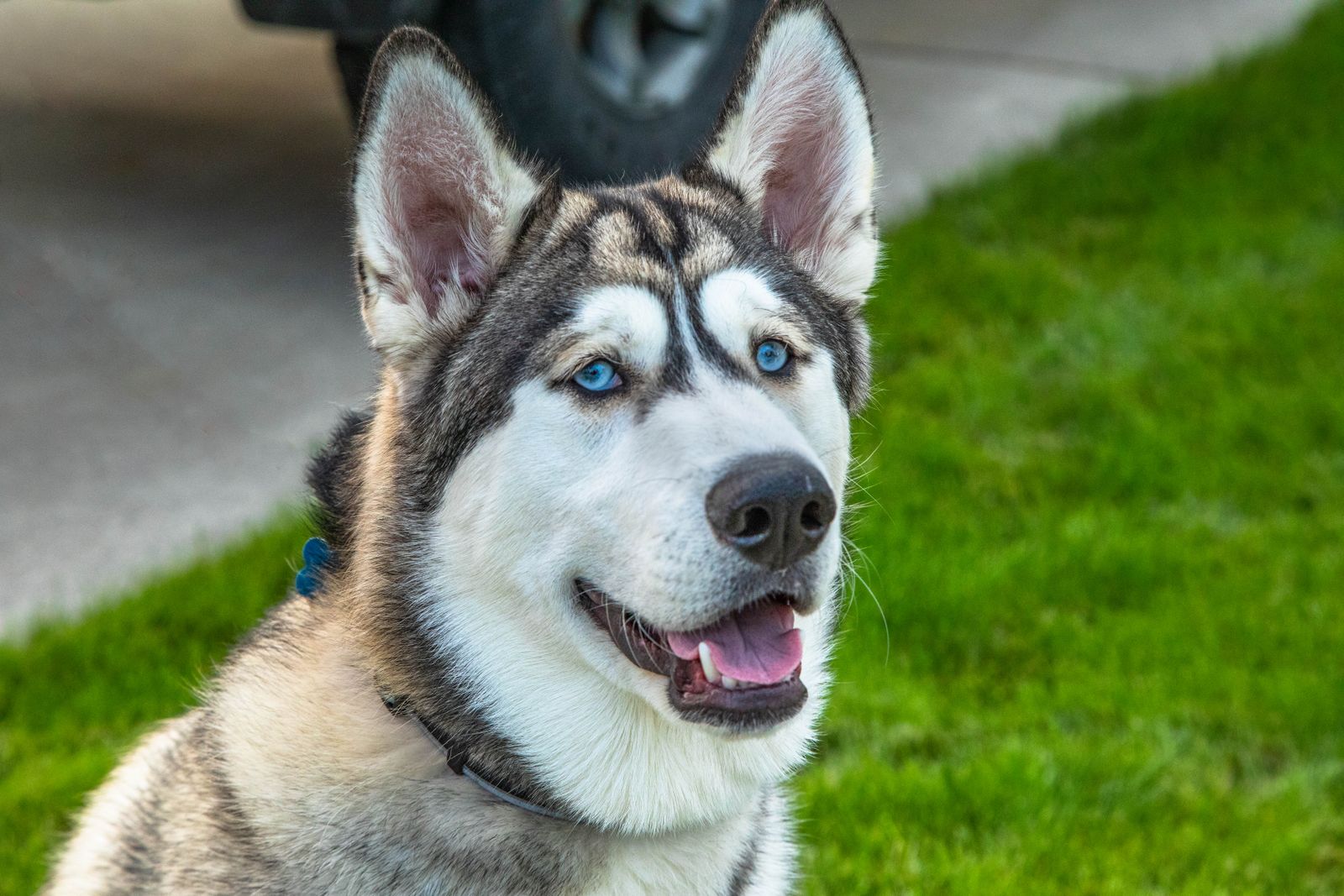
Siberian Husky snapshot
The American Kennel Club describes the Siberian Husky as a thickly coated, compact sled dog of medium size and great endurance, developed to work in packs, pulling light loads at moderate speeds over vast frozen expanses, and calls the breed friendly, fastidious, and dignified. The AKC placed the breed at No. 26 in its Most Popular Dog Breeds of 2024 list, based on registration statistics. This is a medium dog, not a large one, and that distinction matters when owners compare it with the much bigger Alaskan Malamute. A Siberian Husky is built for distance and efficiency rather than bulk. The breed standard describes erect ears, a brush tail, and a double coat of medium length, and the almond shaped eyes can be brown, blue, or one of each. Those eyes are also the center of the breed health story, which is why this guide spends more time on ophthalmology, the specialty that deals with eyes, than any other breed guide in this series so far.
| Height | Males 21 to 23.5 inches at the shoulder. Females 20 to 22 inches. |
|---|---|
| Weight | Males 45 to 60 pounds. Females 35 to 50 pounds. |
| Lifespan | 12 to 14 years, as listed by the AKC. |
| Coat | A double coat of medium length, dense and well furred, that sheds heavily at coat change and needs regular brushing. |
| Temperament | Friendly and gentle, alert and outgoing, as the AKC breed standard describes the characteristic temperament. |
| Energy and exercise | High. A working sled breed that needs substantial daily exercise, secure fencing, and a job for its mind. |
Two snapshot facts do quiet insurance work. The first is the lifespan of 12 to 14 years, which is long for a working breed of this size. A long life means more years in which a slow retinal disease can progress, more annual renewals in which a chronic skin condition has to stay covered, and more time for a young dog cataract to turn into a surgery decision. The second is size. A Siberian Husky is a medium dog, so it does not carry the giant breed surgery and anesthesia profile of some other breeds in this series. The insurance weight in this breed sits less in body size and more in specialty care, because eye diagnosis and eye surgery are specialist work wherever the dog lives.
Health tendencies in Siberian Huskies
The breed club health program and the veterinary literature point to a distinctive pattern. Four of the six cards below involve the eye or the skin around it. The Siberian Husky Club of America works with the Orthopedic Foundation for Animals through the Canine Health Information Center, called CHIC, which sets the breed specific tests a dog should have on public record. For this breed the club stresses two things by name: a hip evaluation, and eye testing through the Companion Animal Eye Registry, called CAER, or through the club own Siberian Husky Ophthalmic Registry, called SHOR. The club is explicit that a CHIC number means the required tests were done and the results made public. It does not mean every result was normal. The club also warns that DNA testing alone is not sufficient health testing without the hip X-rays and the eye exam. None of the conditions below is certain in any individual dog. They are tendencies with a strong enough pattern that they should drive which policy you buy, what you check before you pay, and how early you enroll.
This section is general information about conditions a breed can be prone to. It is not veterinary advice and it is not a diagnosis of any dog. Signs listed here are possible signs owners may notice, and many of them have several causes. Only a veterinarian who examines your dog can say what a sign means.
Juvenile cataracts
What it is
A cataract is a clouding, or opacity, of the lens inside the eye. The Merck Veterinary Manual explains that the lens sits behind the iris, the colored part of the eye, and helps focus light onto the retina, and that a cloudy lens blocks light from reaching the retina, so vision loss can range from mild problems to blindness. Merck notes that cataracts are often inherited in dogs. Cornell University College of Veterinary Medicine adds that healthy lenses are transparent, that cataracts are caused by proteins in the lens clumping together and clouding it, and that genetic inheritance is one of the named causes. In Siberian Huskies the inherited form can appear in a young dog, which is why the breed word for this card is juvenile, meaning young. A young dog cataract is a different insurance event from the slow lens hardening of old age, and Cornell is clear that the normal thickening and hardening of the central lens in older animals should not be confused with a true cataract.
Signs owners may notice
- A cloudy, white, or bluish area that appears inside the pupil of one or both eyes.
- A dog that becomes more cautious in its movements, stays closer to its owner than usual, or hesitates in bright light or in dim light.
- Bumping into furniture that has been moved, or missing a treat or a toy that is easy to see.
- Little change at home at first, because Merck notes that dogs often compensate with hearing and smell, so an early cataract can be hard for an owner to detect.
When it can be urgent
A cataract itself usually develops over time and is a prompt specialist appointment rather than a midnight emergency. It becomes urgent when the eye turns red or painful, when the dog squints or paws at the eye, or when vision seems to drop suddenly. Cornell explains that chronic cataracts can lead to painful secondary problems inside the eye, including inflammation called lens induced uveitis, glaucoma, which is raised pressure inside the eye, and dislocation of the lens. Those complications, not the cloudiness alone, are what can make an eye an emergency.
How vets usually evaluate and treat it
Evaluation usually starts with a full eye exam, and a referral to a veterinary ophthalmologist, a vet with specialist eye training, is the usual path when surgery is being considered. Cornell describes the pre-surgical workup as including an ocular ultrasound to rule out retinal detachment and an electroretinogram, a test of how the retina responds to light, to show that the retina still works before anyone operates on the lens in front of it. The surgery is called phacoemulsification. Small incisions are made, the cloudy lens is broken up and removed, and an artificial lens is usually inserted. Cornell notes that timing matters, because the ideal time to operate is before the cataract becomes fully mature, when inflammation and other complications are more likely. Dogs that do not have surgery still need monitoring, and Merck stresses that continued monitoring matters because complications such as glaucoma can occur.
Corneal dystrophy
What it is
The cornea is the clear front window of the eye. Corneal dystrophy is an inherited condition in which cloudy material builds up in the layers of the cornea, so a cornea that should be completely clear develops greyish white lines, circles, sparkles, or a clouded patch. Veterinary references describe it as bilateral, meaning it tends to appear in both eyes, and noninflammatory, meaning the eye is usually not red or painful from the dystrophy itself. In Siberian Huskies the inherited form has been described as a breed linked trait, and it is one of the eye findings a specialist eye exam is designed to catch and record. It is different from corneal degeneration, which follows an injury or an ulcer in one eye, and it is different from a cataract, which sits deeper in the eye in the lens rather than on the surface window.
Signs owners may notice
- A white, grey, or crystalline sparkle or patch that appears on the surface of one eye, and later often on the other eye as well.
- A comfortable eye with no squinting, no discharge, and no obvious pain, which is one reason owners can miss it or dismiss it as nothing.
- In more advanced cases, a haze that is visible in ordinary light and may begin to affect how clearly the dog sees.
When it can be urgent
Corneal dystrophy itself is usually slow and comfortable, and many cases need monitoring rather than treatment. Pain is the signal to change speed. A squinting, watering, or red eye, or a dog that suddenly rubs its face, suggests an ulcer or another surface problem on top of the dystrophy, and that deserves same day care because the surface of the eye can worsen quickly.
How vets usually evaluate and treat it
A vet or veterinary ophthalmologist usually evaluates the cornea with magnification and a focused light exam, and may use a fluorescein stain, a dye that shows up surface damage, to check whether the surface is intact or ulcerated. The appearance and the pattern in both eyes are what separate dystrophy from an injury related change. Many stromal cases, meaning cases in the middle layer of the cornea, cause no discomfort and do not interfere with vision, and no treatment is needed beyond monitoring and recording the finding at each eye exam. When vision is affected, or when surface erosions develop, treatment is aimed at the specific layer involved and at protecting the surface of the eye.
Progressive retinal atrophy (PRA)
What it is
Progressive retinal atrophy is a group of inherited diseases in which the retina, the light sensitive tissue at the back of the eye, degenerates slowly over time. The photoreceptor cells that detect light fail first in dim conditions and then more broadly, so vision is lost gradually and painlessly. Veterinary references note that the form documented in the Siberian Husky is linked to the X chromosome, which changes how the condition passes through a family line compared with the more common recessive pattern in many other breeds. There is no treatment that restores the retina. That single fact shapes the whole insurance discussion for this card, because the value of a policy here is not an operation. It is diagnosis, monitoring, and certainty about what is happening to the dog vision.
Signs owners may notice
- Trouble seeing at night or in dim rooms first, such as hesitating at a dark hallway, a dark yard, or a poorly lit stair.
- Bumping into objects in unfamiliar places while still navigating the home well, because the dog has memorized the usual layout.
- Pupils that look more widely open than usual, and eyes that seem to shine more in photographs or in headlights.
- A slow, painless worsening over time rather than a sudden change.
When it can be urgent
PRA itself is slow and painless, and a gradual change is a routine but important specialist appointment. Sudden blindness is different. A dog that loses vision quickly, or that has a red or painful eye alongside vision loss, may have a different and more urgent problem, such as retinal detachment, inflammation, or glaucoma, and that needs prompt, often same day, care.
How vets usually evaluate and treat it
Vets usually work through a full eye exam and a look at the retina at the back of the eye, where thinning blood vessels and changes in reflectivity can be seen as the disease advances. An electroretinogram, the retinal response test also used before cataract surgery, can show reduced retinal function, and genetic testing can identify the documented breed variant in some dogs. A DNA result is information about risk and status, not a substitute for an eye exam. Care is supportive. Categories include monitoring by an ophthalmologist, keeping the home layout consistent, using scent and sound cues, managing lighting on stairs and in yards, and planning for a dog that will navigate more by memory and smell as vision fades.
Hip dysplasia
What it is
An inherited condition in which the hip joint forms incorrectly, so the ball and socket fit loosely instead of snugly. Cornell Riney Canine Health Center explains that the looseness leads over time to arthritis, with pain and discomfort, and that genes are the main cause while nutrition and growth rate can modify how the condition shows. Hip dysplasia is a required screening item in the Siberian Husky CHIC program, which is why it belongs in this guide even though the eye is the breed headline. Cornell notes that hip dysplasia is common in medium and large breeds, and the Husky medium size puts it inside that frame. Screening by responsible breeders, and keeping a growing Husky lean rather than heavy, are the two levers that change the odds.
Signs owners may notice
- Difficulty getting up, or stiffness in the back legs, especially after rest.
- A bunny hopping run where both back legs move together, or a swaying motion in the hips when walking.
- Limping, reduced activity, or unwillingness to jump, and less muscle over the hind legs over time.
- Shifting weight forward onto the front legs.
When it can be urgent
Hip dysplasia itself usually develops slowly and is a prompt appointment rather than an emergency. A dog that suddenly cannot bear weight, cries out, or will not rise at all may have an injury or another problem on top of the joint disease, and that change deserves same day veterinary care.
How vets usually evaluate and treat it
Cornell describes diagnosis as X-rays combined with a physical exam and palpation of the hip joint, with specific positioning that requires sedation or anesthesia for the imaging. Two common evaluation methods are named in screening: the PennHIP method, which measures the amount of hip laxity, and the OFA method, in which hips are graded from radiographs, with a final grading approach used after the dog is two years old. Treatment depends on age and severity. Categories include keeping a healthy body weight, controlled low impact exercise such as walking and swimming, pain and anti-inflammatory medication, physical therapy, and, in severe cases that do not respond to medical management, referral to a veterinary surgeon to discuss surgical options.
Zinc responsive dermatosis
What it is
A skin condition in which the skin cannot build and shed itself normally in relation to zinc, an essential mineral the body uses in many enzyme systems. The University of Minnesota Small and Large Animal Dermatology Handbook describes zinc responsive dermatosis as a rare, chronic skin thickening and scaling disorder that responds to zinc supplementation, and it separates two forms. The first form, called Syndrome I in the handbook, occurs in dogs eating balanced diets, and Siberian Huskies and Alaskan Malamutes are the breeds most frequently represented in that form. The problem in that form is not simply a diet with too little zinc. Absorption and handling of zinc appear to be part of the breed story. The second form is linked to diets that are genuinely short of zinc or rich in components that interfere with zinc absorption, and it is seen mainly in rapidly growing puppies and young adults. Only a vet can tell which pattern, if either, fits a given dog, because several other skin diseases look very similar on the surface.
Signs owners may notice
- Redness, hair loss, and tightly stuck scales and crusts, most characteristically around the eyes, on the muzzle, around the mouth and chin, and on the ears.
- Crusts or thickened skin on pressure points such as elbows and hocks, and thickened footpads in some dogs.
- A dry, dull coat, and itching in some dogs, which can appear before the crusts are obvious.
- Secondary skin infection or yeast overgrowth on the damaged skin, which can make the picture look worse and itchier than the underlying condition alone.
When it can be urgent
This condition is usually a prompt routine appointment rather than an emergency, and the handbook notes that in the breed form the signs usually develop in young adults, at 1 to 3 years of age. It needs faster care when the skin becomes hot, oozing, or rapidly spreading, when the dog is in clear pain, or when an eye is involved beyond crusting on the skin around it, because infection and eye problems change the urgency.
How vets usually evaluate and treat it
The Minnesota handbook is direct about diagnosis. A tentative diagnosis can be made from the breed, the age, and the look and distribution of the lesions, but a skin biopsy is needed to confirm it, and skin scrapings and skin cytology, meaning samples checked under a microscope, should be done to rule out lookalikes such as mange mites, ringworm, yeast dermatitis, and an autoimmune skin disease called pemphigus foliaceus. Blood or hair zinc levels are variable and unreliable, so they do not settle the question on their own. A response to vet directed zinc supplementation also supports the diagnosis. Treatment categories include oral zinc supplementation directed by the vet, correction of any dietary imbalance, treatment of secondary infection, and skin care to loosen stuck scale and crust. Do not start zinc on your own. The dose is a veterinary decision, and too much zinc carries its own risks. In the breed form, supplementation is usually long term, because the handbook notes that lesions generally recur after supplementation is stopped in that form.
Uveodermatologic syndrome
What it is
A rare immune mediated condition in which the immune system attacks melanocytes, the cells that make pigment, and the tissues that carry the most pigment are the ones involved: the inside of the eye, the skin, and the mucous membranes. The University of Minnesota dermatology handbook lists Siberian Huskies among the breeds suspected to be predisposed to this syndrome, which is also called Vogt Koyanagi Harada like syndrome. Inside the eye the attack causes uveitis, which is inflammation of the uveal tract, the pigmented middle layer of the eye. On the skin it later causes loss of pigment. The eye part usually comes first, and the eye part is the part that can take vision if it is not controlled early.
Signs owners may notice
- Eye signs first in many dogs: sensitivity to light, squinting, tearing, redness, a cloudy look to the eye, or a dog that seems to see less well in both eyes.
- Later, whitening of the skin or hair around the eyelids, muzzle, nose, and lips, sometimes with redness, hair loss, or scaling in the same areas.
- A nose, lip, or eyelid that gradually changes from dark to light in color, weeks or longer after the eye trouble began.
How vets usually evaluate and treat it
Diagnosis is based on the history, the characteristic signs, and supportive skin biopsy findings, and the handbook stresses that a consultation with, or referral to, an ophthalmologist matters so that treatment can start as soon as possible. Later problems that can develop if the inflammation is not controlled include retinal detachment, secondary glaucoma, and cataracts. Treatment categories center on immune suppressing and immune modulating medication, including oral glucocorticoids and, in many cases, additional agents such as azathioprine or cyclosporine, plus topical eye treatment for the inflammation in the front of the eye. Treatment is usually maintained long term at the lowest dose that controls the disease, and dermatology and ophthalmology care often need to work together over that long term.
The Husky eye and skin record: a tool built for this breed
No other guide in this series carries this tool, because no other breed in the series needs records in quite this shape. A Siberian Husky health file has to do three jobs at once. It has to prove when an eye was last examined by a specialist and what was found, because eye clearances in this breed are valid for only one year under the breed club registry rules. It has to separate a skin episode around the eyes and muzzle from an eye problem itself, because crusting skin and a cloudy eye can appear close together and mean completely different things. And it has to give an insurer a clean timeline, because in an eye first breed the difference between a covered condition and a pre-existing one is often a single dated note. Keep the record below for your own dog. It takes a few minutes to set up, and it is the document you will wish you had on the day a claim is questioned.
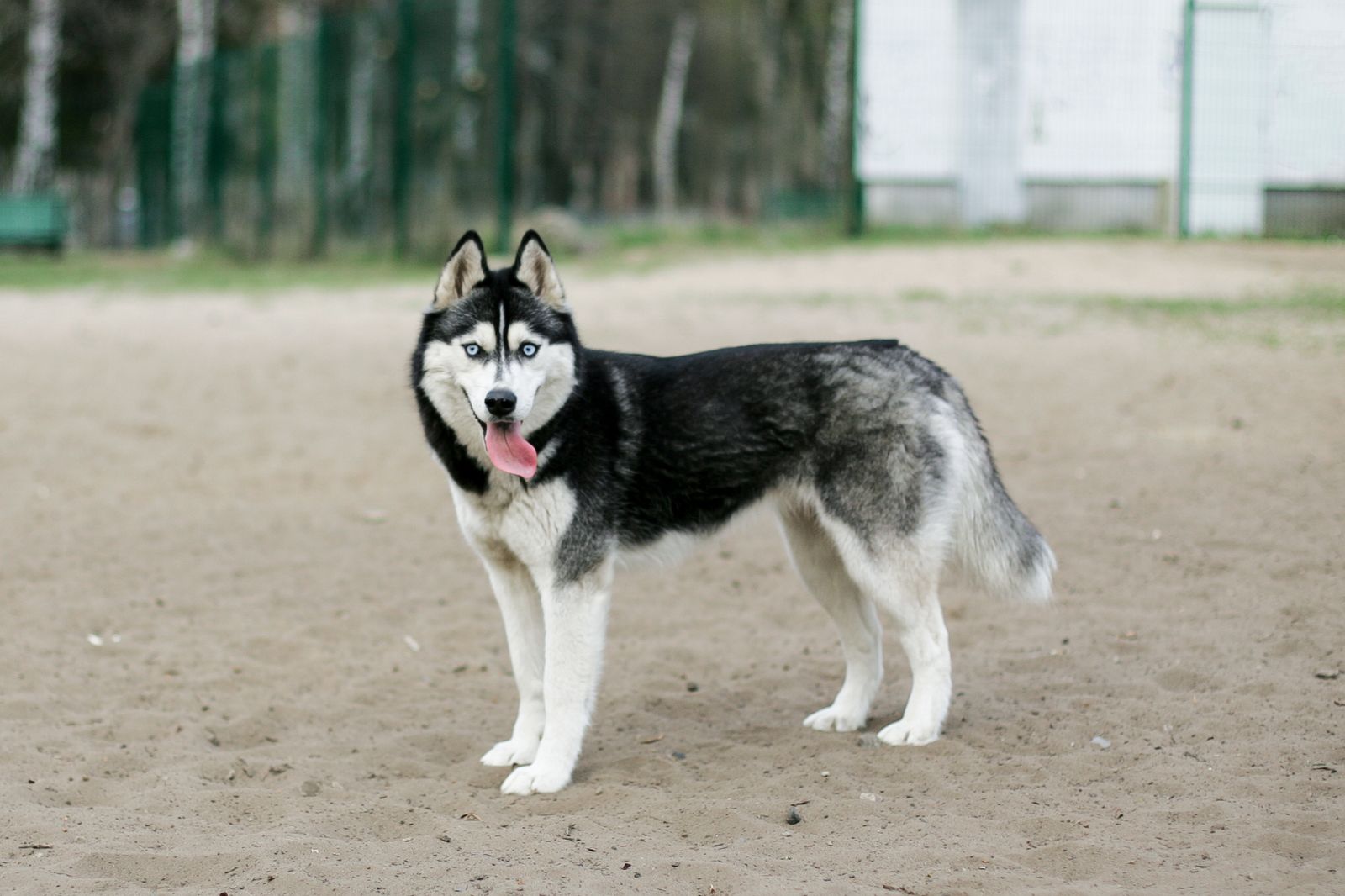
Part one: the eye screening record
Start one line for every eye exam, not only for exams where something was found. A run of normal results is valuable evidence. It dates the last time a specialist saw a clear lens, a clear cornea, and a healthy retina in your dog.
| What to record | Why it matters for a Siberian Husky | What to write |
|---|---|---|
| Date and examiner | Eye clearances for this breed are valid for only one year, so the date and the specialist name are the record. | The exam date, the clinic, and whether the examiner was a veterinary ophthalmologist. |
| Registry result, if any | CAER and SHOR results are the breed club recognized eye records, and a CHIC listing depends on tests being on public record. | The registry, the result for each eye, and any breeder option note, copied exactly as written. |
| Lens finding | Juvenile cataracts are the young dog eye risk in this breed, and the stage of a cataract drives the surgery timing discussion. | Clear, or the finding and its stage, in the examiner words, for the left eye and the right eye separately. |
| Cornea finding | Corneal dystrophy is usually comfortable and monitored, so the record of when it was first seen is what protects a later claim. | Clear, or the location and look of any corneal opacity, again per eye. |
| Retina finding | Progressive retinal atrophy has no procedure to attach a claim to, so the dated retinal record is the claim story. | Normal, or any thinning, reflectivity change, or retinal test result, with the date it was first noted. |
| Pressure and comfort | Glaucoma and uveitis are the painful complications that turn an eye finding into an emergency. | Whether the eye was comfortable, and any pressure reading or inflammation note the examiner recorded. |
| Next exam due | An annual rhythm is the breed pattern, and a missed year is a gap an insurer can ask about. | The date the examiner wants to see the dog again, and a reminder set for that month. |
A filled line shows the shape. It is an example format, not a real dog record: Date, the exam date. Examiner, the clinic name and the words veterinary ophthalmologist. Lens, clear in the left eye, and a small early cataract noted in the right eye, copied in the examiner words. Cornea, clear in both eyes. Retina, normal in both eyes. Pressure and comfort, both eyes comfortable, no inflammation noted. Next exam, the month the examiner asked for, with a reminder set. One line like that, written on the day of the visit, is worth more at claim time than a folder of undated invoices, because it proves which eye changed, when it changed, and who saw it first.
Part two: the skin episode log
Keep this log beside the eye record, and keep the two separate even when an episode involves skin right around the eye. For each skin episode, write the date it started, where on the body it appeared, and what it looked like in plain words: crust, scale, redness, hair loss, itching, odor, or oozing. Add what changed just before it, such as a food change, a season change, stress, or a new supplement. Add what the vet found, including whether a scraping, a cytology sample, or a biopsy was done, and what the result said. Add what was prescribed, and the date the skin settled. That last pair of dates does real work. A skin condition that settles on vet directed zinc and returns when zinc stops is a different record from a one time rash, and it is the record a vet needs before anyone calls an episode zinc responsive dermatosis. Photograph the episode in the same light each time, and keep the photos with the log. Do not start, stop, or change a supplement based on the log alone. The log is evidence for a veterinary decision, not a substitute for one.
Part three: the red eye rule
Tape this short rule to the front of the file. Crusty skin around the eyes, with a clear and comfortable eye, is a prompt routine appointment and a new entry in the skin log. A red, cloudy, squinting, or painful eye, or any sudden vision change, is same day care and a new entry in the eye record, whatever the skin is doing. Keeping those two paths separate is the whole point of this tool. The skin log can wait for the appointment. The eye cannot.
Policy decisions that matter for a Siberian Husky
Every breed guide on this site uses the same policy vocabulary, but the rows below are weighted for this dog. For a Husky, the expensive questions are a specialist eye surgery, a lifetime of monitoring for conditions with no cure, and a skin condition that needs a biopsy and long term management. Compare policies row by row, in the actual policy wording, not in a summary brochure.
| Policy feature | Why it matters for a Siberian Husky | Stronger wording looks like | Watch out for |
|---|---|---|---|
| Hereditary condition coverage | Cataracts, corneal dystrophy, retinal atrophy, and hip dysplasia in this breed are all inherited tendencies. | Hereditary and congenital conditions are covered on the same terms as other illnesses. | A hereditary exclusion, or a short named list of hereditary conditions that leaves out this breed eye list. |
| Eye surgery and specialist exams | Cataract surgery is specialist ophthalmology work, with pre-surgical retinal and ultrasound testing before it. | Specialist exams, pre-surgical eye testing, and cataract surgery are covered categories. | Policies that cover a general vet visit but exclude or tightly cap specialist care or eye procedures. |
| Diagnostics with no procedure attached | Retinal atrophy and corneal dystrophy are often diagnosed and monitored, not operated on. | Advanced eye testing and monitoring visits are covered even when no surgery follows. | Wording that pays mainly around a procedure and leaves monitoring and testing largely outside coverage. |
| Bilateral condition rule | Eyes and hips both come in pairs, and the breed eye conditions tend to appear in both eyes over time. | Each eye and each hip is assessed on its own facts, with clear wording about when the second side is covered. | Wording that treats the second eye or hip as pre-existing once the first side has been diagnosed or treated. |
| Chronic condition renewal terms | Zinc responsive dermatosis, retinal monitoring, and immune mediated eye disease are managed across many renewals. | A condition covered in one term stays covered in later terms while you remain enrolled. | Per-year condition caps, or renewal wording that reclassifies a chronic condition as pre-existing. |
| Prescriptions and prescribed supplements | Long term eye drops, immune suppressing medication, and vet directed zinc are treatment categories in this breed. | Prescription medication is covered, and the policy says plainly how it treats vet prescribed supplements. | Blanket exclusions for supplements that quietly remove a core skin treatment from coverage. |
| Orthopedic waiting period | Hip dysplasia is a screened breed condition, and a young dog joint claim can arrive early in a policy. | A defined orthopedic waiting period that can be shortened or waived with a documented vet exam, as some policies allow. | Long special waiting periods for orthopedic conditions that are buried in definitions rather than stated up front. |
| Annual limit | One eye surgery on both eyes, or one year of specialty immune disease care, can consume a small limit on its own. | A high annual limit, or no annual cap, that resets each policy year. | Low annual limits and per-condition caps that split one eye condition into several capped buckets. |
Life stages: puppy, adult, and senior
Puppy
Enrollment timing and breeder records do the most work in this stage. Ask the breeder for the parents hip evaluation results and their current eye exam results, and check them rather than taking a summary on trust. The breed club explains how to look a dog up in the OFA database by registered name, and it is explicit that a CHIC number only means the required tests were done and published, not that every result was normal. Read the actual results. Note the eye exam date in particular, because an eye clearance for this breed is valid for only one year, so a parent eye exam from several years ago is not a current clearance. Start your own eye screening record with the puppy first vet visit, keep growth steady and the puppy lean, and enroll before any cloudy lens note, skin episode, or limp reaches the record.
Adult
The adult years are when this breed list tends to declare itself. Zinc responsive dermatosis in its breed form usually appears in young adults. Juvenile cataracts, by definition, are a young dog finding. Corneal changes can be picked up at a routine specialist exam in an otherwise comfortable dog. This is also the stage to settle the annual eye exam rhythm and to keep the skin episode log current, because adult records are what an insurer reads when a chronic condition claim arrives. Keep claim habits boring and consistent. File for eligible visits as they happen, keep itemized invoices, and keep the eye record and the skin log as two separate files even when the dates overlap.
Senior
With an AKC lifespan of 12 to 14 years, the senior stage can be a long one. Retinal disease may progress in this stage, cataracts that were monitored for years can mature, and arthritis from hip changes can deepen. The senior spending pattern in this breed is monitoring, eye follow up, pain control, and home adaptation for a dog whose vision is fading, such as consistent furniture placement, lighting on stairs, and scent and sound cues. Any voice change, noisy breathing, dry cough, or new breathing difficulty in an older dog should be reported to a vet promptly rather than watched at home, because Merck lists those signs for laryngeal problems in dogs generally, and breathing changes in a senior dog are never a wait and see item. Check at renewal that premiums, limits, and chronic condition terms still fit a dog whose likely claims are diagnostics and long term care rather than one large operation.
A claim, step by step: a young dog cataract
The example below is hypothetical. It is not a real dog, a real claim, or a promise of how any insurer will decide. It follows the breed signature event, a cataract found in a young adult Siberian Husky, because it shows how an eye record, a specialist timeline, and policy wording come together without an emergency. Reimbursement in pet insurance generally works on a pay the vet first, claim back later basis, as explained in how pet insurance works.
A cloudy spot is noticed, and the record starts
During a routine visit, the regular vet notices a cloudy area inside the pupil of one eye and writes it in the record with the date. The owner does not wait for the next annual visit. That dated note matters in two directions. It starts the medical timeline, and it is the date an insurer will later compare with the enrollment date and the waiting period. The owner opens the eye screening record from the tool section above and enters the finding exactly as the vet wrote it, per eye.
Referral to an ophthalmologist
The dog is referred to a veterinary ophthalmologist, who examines both eyes, stages the cataract, and checks the parts of the eye the regular exam cannot fully assess. The specialist also looks for early change in the other eye, because inherited cataracts in this breed often involve both eyes over time. The referral letter, the specialist report, and the regular vet notes together form the core evidence for the claim. A card receipt alone would not be enough.
The retina is tested before anyone operates
Before surgery is scheduled, the specialist runs the pre-surgical workup Cornell describes: an ocular ultrasound to rule out retinal detachment, and an electroretinogram to show that the retina still responds to light. This step is not paperwork for its own sake. Operating on a cloudy lens only helps if the retina behind it works, and in a breed that also carries retinal atrophy, that test result is central to the whole decision. Keep the test reports with the claim file, whether or not surgery goes ahead.
The waiting period and hereditary checks happen on paper
Whether this cataract is covered turns on facts fixed before the cloudy spot was seen. Did the policy include hereditary conditions. Had the illness waiting period passed when the finding was first recorded. Had any vet ever noted a lens change, a cloudy eye, or a vision concern before enrollment. Had a breeder exam or a puppy visit mentioned the eyes at all. Owners cannot change those answers at the specialist office, which is why the checking in this guide happens before enrollment, not during a claim.
Surgery, hospital care, and paying the bill
If the dog is a suitable candidate and the timing is right, the surgeon performs phacoemulsification, removes the cloudy lens, and inserts an artificial lens. Cornell notes that follow up care at home involves eye drops given several times a day, oral medication, a hard protective collar, and activity restriction, with frequent follow up exams in the early period after surgery. The owner pays the hospital directly, as pet insurance normally requires, and asks for the itemized invoice and the complete records, including the surgical report and the pre-surgical test results, before leaving.
Submitting the claim
The claim is filed with the insurer form or portal, with the itemized invoice, the regular vet note that first recorded the finding, the specialist reports, the retinal and ultrasound test results, and the surgical report. The submission ties the dates together in order: enrollment, end of the waiting period, first recorded finding, referral, testing, and surgery. Follow up visits, eye drop refills, and any treatment for post-surgical inflammation are kept together and filed as part of the same episode, with each invoice saved.
How reimbursement is worked out
Once the insurer accepts the claim as a covered illness, it applies the mechanics described in what pet insurance costs and why. Eligible charges are counted against the deductible, the reimbursement rate in the policy is applied to the rest, and the total is checked against the annual limit. Each of those settings was chosen at enrollment, and a specialist eye surgery is exactly where a small annual limit or a per-condition cap stops being an abstract detail.
Where claims like this get denied or reduced
Common pressure points are a lens note recorded before enrollment or during a waiting period, a hereditary condition exclusion, specialist or pre-surgical testing classified as a separate excluded category, and missing or non-itemized invoices. A second eye claim can also be questioned under a bilateral rule, so the specialist record showing when each eye was first affected is worth keeping carefully. If the other eye later needs surgery, that per eye timeline is the document that supports it. A denial can be appealed with records, and a written explanation of which clause was applied is worth asking for.
What drives a Siberian Husky premium
No honest guide can quote a price for your dog, because premiums are set per dog, per address, and per set of choices. What can be explained is why this breed sits where it does in insurers pricing, and which levers you control. Our full breakdown is in what pet insurance costs and why.
Breed risk, and where it sits. Insurers price the conditions they expect a breed to claim for. In this breed the expectation is concentrated in specialty eye care rather than in giant breed orthopedics. A medium dog still generates specialist level bills when the claim is an ophthalmology workup, pre-surgical retinal testing, and cataract surgery, and that expectation is priced in even though the dog itself is not especially large.
Age curve and a long life. Premiums generally rise as a dog ages, and an AKC lifespan of 12 to 14 years means many renewal years. Slow conditions such as retinal atrophy and chronic skin disease spread their claims across those years rather than arriving as one event, so the total cost of insuring this breed is a long accumulation, not only a puppy or senior question.
Location and care market. Where you live changes both the premium and the size of the vet bills the policy is measured against. Specialist eye care is concentrated in larger centers, and the distance to an ophthalmologist, as well as local specialist pricing, shapes what a claim looks like in practice. Insurers set rates by area.
Plan settings you choose. The deductible, the reimbursement rate, and the annual limit are the three main settings, and each one trades monthly premium against what a claim returns. For this breed, cutting coverage for specialist care or diagnostics to lower the premium is the setting most likely to be regretted, because the defining claims are specialist diagnosis and eye surgery. Compare quotes at identical settings, or the comparison is meaningless.
Pre-purchase checklist for a Siberian Husky policy
- Confirm hereditary conditions are covered, with cataracts, corneal dystrophy, and progressive retinal atrophy not excluded by name or by category.
- Check that veterinary ophthalmology exams, pre-surgical retinal testing and eye ultrasound, and cataract surgery are covered categories, not excluded extras.
- Read the bilateral clause for eyes and for hips, and ask what happens to the second eye or the second hip after the first side is diagnosed.
- Confirm that diagnosis and monitoring are covered for a condition with no cure, such as retinal atrophy, and not only when a procedure follows.
- Check whether skin biopsy and dermatology visits are covered, because zinc responsive dermatosis needs a biopsy to confirm.
- Confirm how vet prescribed supplements are treated, since vet directed zinc is a core treatment category for the breed skin condition.
- Confirm a chronic condition stays covered at renewal, including long term eye drops and immune suppressing medication.
- Find the orthopedic waiting period, note the exact date it ends for your dog, and ask whether a vet exam can shorten it.
- Get the parents hip results and current eye exam results from the breeder, read the actual results rather than a CHIC summary, and check the eye exam date, because a clearance for this breed is valid for only one year.
- Enroll before any lens note, corneal finding, skin episode, or limp is in the record, start the eye screening record and the skin episode log, and keep the complete medical history from your vet.
Questions to ask an insurer, in writing
- Are inherited cataracts covered for this breed, including specialist exams, pre-surgical retinal testing, and surgery on one or both eyes?
- If one eye is treated for a cataract or a corneal condition, how is the other eye handled under your bilateral condition rule?
- Is progressive retinal atrophy covered for diagnosis and monitoring, even though there is no treatment that restores the retina?
- Is a skin biopsy covered when it is needed to diagnose zinc responsive dermatosis, and are vet prescribed supplements covered as part of its treatment?
- Does a covered chronic condition, such as an immune mediated eye disease that needs long term medication, remain covered at every renewal?
- Are exam fees for specialist visits covered, or are they deducted or excluded on every claim?
Questions Siberian Husky owners ask
Does pet insurance cover cataract surgery in Siberian Huskies?
Many accident and illness policies can cover cataract surgery, but only when the policy includes hereditary conditions, the waiting period has passed, and no lens change was recorded before enrollment or during that waiting period. A cloudy eye note in the medical record before coverage starts can lead the insurer to treat the cataracts as a pre-existing condition. Check also that specialist ophthalmology exams and the pre-surgical tests, such as the retinal response test and the eye ultrasound, are covered, because surgery is only one part of the claim.
My Husky has crusty, scaly skin around the eyes and muzzle. Is that zinc responsive dermatosis?
It could be, but it is not the only possibility, and it cannot be diagnosed from the look alone. Crusting around the eyes, muzzle, chin, and ears in a young adult Siberian Husky fits the pattern of zinc responsive dermatosis, a breed linked skin condition, but mange mites, ringworm, yeast dermatitis, allergy, and an autoimmune skin disease can look similar. Vets usually rule the lookalikes out with skin scrapings and samples, and a skin biopsy is needed to confirm the zinc condition. Do not start a zinc supplement on a guess. The dose is a veterinary decision, and the biopsy result is also the document an insurer will want.
Is a puppyhood eye exam enough for a Siberian Husky?
No. Eye clearances for Siberian Huskies are valid for only one year under the breed club registry rules, so a clear exam on a puppy, or on a parent several years ago, is not a current clearance. The breed pattern is repeat specialist eye exams over the dog life, with each result recorded per eye. Keep your own eye screening record with the date, the examiner, and the finding for the lens, the cornea, and the retina at each visit. A run of dated normal results is also useful evidence if a claim is ever questioned.
Does insurance help with progressive retinal atrophy if there is no cure?
It can help with the parts around the condition rather than with a cure, because there is no treatment that restores the retina. The value sits in specialist diagnosis, retinal testing, monitoring over time, and certainty about why the dog vision is changing, which also rules out other causes of vision loss that do need urgent treatment. Read the diagnostics wording before you enroll. Some policies pay mainly around a procedure, while others cover testing and monitoring visits even when no surgery follows.
My Husky nose is turning light in color. Should I worry?
Watch it, record it, and act fast if the eyes are involved. Loss of pigment on the nose, lips, or eyelids can follow the eye inflammation of uveodermatologic syndrome, a rare immune condition reported in this breed in which the immune system attacks pigment cells in the eyes and skin. The eye signs usually come first, and early treatment is what protects vision. A red, cloudy, squinting, or painful eye, or a sudden vision change, means same day veterinary care, whether or not the skin has changed. A nose that lightens on its own, with clear and comfortable eyes, is still worth a prompt routine appointment and a dated entry in your records.
When should I enroll a Siberian Husky?
As a puppy or young adult, before any of the breed conditions appears in the medical record. A lens note, a corneal finding, a skin episode, or a limp recorded before enrollment or during a waiting period can be treated as pre-existing, and in this breed the eye findings can arrive while the dog is still young. Enrolling early also means the waiting periods are finished before the young adult stage, when the breed skin condition and juvenile cataracts tend to be evaluated.
Sources and further reading
- American Kennel Club, Siberian Husky breed page for size, lifespan, temperament, and breed character.
- American Kennel Club, Most Popular Dog Breeds of 2024 for the breed ranking of No. 26 in the 2024 list.
- Siberian Husky Club of America, Health testing and how to interpret the OFA numbers for CHIC, hip and eye certification numbers, CAER and SHOR eye testing, the one year validity of eye clearances in this breed, and why DNA testing alone is not sufficient.
- Cornell University College of Veterinary Medicine, Canine cataracts for how cataracts form, the pre-surgical retinal and ultrasound workup, phacoemulsification surgery, timing, and complications.
- Merck Veterinary Manual, Disorders of the lens in dogs for cataracts as an often inherited opacity of the lens that blocks light from the retina, and for monitoring when surgery is not performed.
- Cornell Riney Canine Health Center, Canine hip dysplasia for how the loose hip joint leads to arthritis, how it is diagnosed with X-rays and exam, OFA and PennHIP evaluation, and treatment categories.
- University of Minnesota, Small and Large Animal Dermatology Handbook, Zinc responsive dermatosis for the breed form in Siberian Huskies on balanced diets, lesion distribution around the face, biopsy based diagnosis, and long term supplementation.
- University of Minnesota, Small and Large Animal Dermatology Handbook, Canine uveodermatological syndrome for the autoimmune attack on pigment cells, Siberian Huskies among the suspected predisposed breeds, eye signs before skin signs, and early aggressive treatment to prevent blindness.
- Merck Veterinary Manual, Laryngeal paralysis in dogs and cats for voice change, noisy breathing, and dry cough as signs to report in an older dog.
Sources checked November 6, 2026.