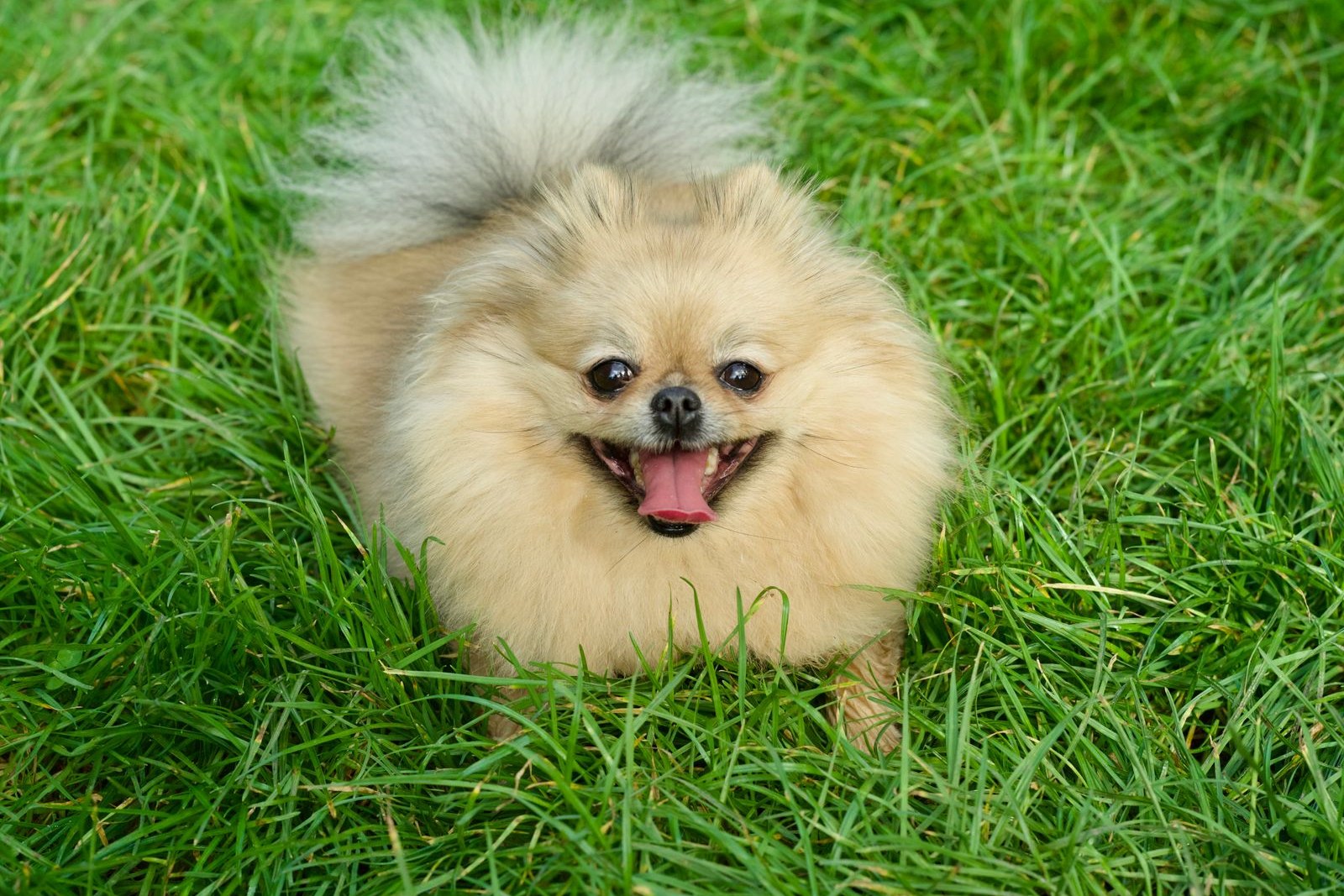
Pomeranian snapshot
The American Kennel Club describes the tiny Pomeranian, long a favourite of royals and commoners alike, as an ideal companion, with a glorious coat, a smiling foxy face, and a vivacious personality. The breed descends from larger spitz sled dogs, and the outline still shows it. A profuse double coat stands off the body, the tail curls over the back, and the dog carries itself like a much larger animal. Owners live with the scaled down version. A bold, inquisitive, lively dog that fits in one arm and supervises the whole house from it.
| Height | 6 to 7 inches at the shoulder. |
|---|---|
| Weight | 3 to 7 pounds. |
| Lifespan | 12 to 16 years, as listed by the AKC. |
| Coat | A profuse double coat, with a short dense undercoat and a longer outer coat that stands off the body. The tail is heavily plumed and curls over the back. |
| Temperament | Inquisitive, lively, and bold, with the confidence of the spitz family it descends from. |
| Energy and exercise | Active indoors and out for a toy breed. Needs daily play and short walks, a harness rather than neck pressure for walks, and care with jumps from furniture, because the legs are fine boned and the kneecaps are a known weak point. |
Two snapshot facts shape this guide. The first is size. At 3 to 7 pounds, the windpipe is narrow, the mouth is crowded, and the heart of a puppy fits under two fingers, yet each of those systems carries a named breed condition below. The second is lifespan. A dog that can live well into its teens spends years in the stages where a collapsing windpipe is managed daily, teeth need repeated professional care, and coat and thyroid changes appear slowly enough to be logged at home.
The Pomeranian sits at No. 22 in the AKC 2024 registration rankings, holding the same place as the year before. The breed club health program, run with the OFA Canine Health Information Center, known as CHIC, requires a patella evaluation and a cardiac evaluation for breeding dogs, plus one health elective chosen from an eye examination or an autoimmune thyroiditis evaluation. That test list is a useful map of this page. Knees, heart, eyes, and thyroid are the systems the breed's own club asks breeders to check.
Health tendencies in Pomeranians
The American Pomeranian Club health statement lists the problems found most often in the breed, and it names luxating patellas as the most common of them. It also covers collapsing trachea, coat loss, thyroid testing, heart testing, and eye testing. These are tendencies, not predictions. Most Pomeranians will not meet every condition on this page. The point of knowing the list is to know which policy clauses to read, and which home notes to keep, before you need either.
This section is general information about conditions a breed can be prone to. It is not veterinary advice and it is not a diagnosis of any dog. Signs listed here are possible signs owners may notice, and many of them have several causes. Only a veterinarian who examines your dog can say what a sign means.
Tracheal collapse (a weakening windpipe)
What it is
A progressive condition of the trachea, the windpipe, in which the C-shaped cartilage rings that hold the airway open weaken and flatten, narrowing the airway. Cornell's Riney Canine Health Center describes tracheal collapse as common in toy and small breed dogs such as Pomeranians, Yorkshire Terriers, and Toy Poodles, most often in middle aged or older dogs, and notes that a genetic component may be involved because small breeds are the ones most commonly affected. The collapse can occur in one section of the windpipe or in several, and in severe cases it can extend into the larger airways leading into the lungs. Cornell is direct that there is no cure, that the condition can worsen over time, and that ongoing medical management can improve signs and quality of life. Stress, excitement, physical activity, heat and humidity, inhaled irritants such as smoke, and pressure on the neck can all make coughing worse, which is why a harness instead of a neck collar is standard advice for this breed.
Signs owners may notice
- A persistent, harsh, dry cough, sometimes described as a goose honking cough. Cornell names this as the most common sign.
- Coughing fits set off by excitement, pulling against a collar, drinking, heat, or being picked up.
- A wheezing noise when breathing in, as the condition progresses.
- In severe cases, difficulty breathing, gums or tongue turning blue, or fainting.
How vets usually evaluate and treat it
Evaluation usually starts with a physical exam and bloodwork to assess overall health, and Cornell notes that a cough can often be set off by gently feeling the throat. Confirming the diagnosis can take more, because a plain X-ray is a snapshot in time and the windpipe may only flatten during one phase of breathing. Moving X-rays, called fluoroscopy, show the windpipe during breathing in and out, and a camera passed into the airway under general anesthesia, called bronchoscopy, lets the clinician see the collapse directly and collect fluid samples. Treatment is usually medical first, with cough suppressants, sedative or anti-anxiety medication, corticosteroids, bronchodilators, and antibiotics when infection is present, plus weight control and the harness change. Emergency care includes immediate attention and oxygen. A stent placed inside the windpipe by a board certified surgeon is considered when medical management fails or breathing emergencies occur, and medication usually continues after surgery.
The cough and gag log: one page that separates three lookalike sounds
A Pomeranian makes three sounds that owners describe in almost the same words, and each one points a vet in a different direction. A tracheal cough pushes air out, often ends in a gag, and is set off by excitement, neck pressure, drinking, or heat. A reverse sneeze pulls air in. Cornell describes it as a series of loud, sudden, rapid inhalations, with the dog standing still, neck extended, head tilted back, and elbows pointing outward, and notes that most episodes are sporadic and mild and need no treatment. A heart cough belongs to a different workup entirely, the cardiac one described in the heart card below, and it tends to arrive with lower stamina rather than with a honk. Because all three can be described as honking, gagging, or struggling for air in a claim note, the description in the file matters. Use this log at home. One line per episode, written the same day, with a short phone video when you can take one safely.
| What to write down | Tracheal cough pattern | Reverse sneeze pattern | Pattern to flag for a heart workup |
|---|---|---|---|
| Direction of the air | Air pushes out through the mouth, in repeated harsh bursts. | Air pulls in through the nose, in loud rapid snorts. | Air moves out, but the cough is softer and may come with faster breathing at rest. |
| Posture during the episode | Often normal standing, sometimes with the neck stretched forward at the end of a fit. | Standing still, neck extended, head tilted back, elbows pointing outward, mouth closed. | May stand or sit and seem unwilling to lie flat, or restless at night. |
| What set it off | Excitement, a greeting, pulling on a collar, drinking, heat, or being picked up. | Dust, a sudden sniff, excitement, eating or drinking quickly, or pulling against a leash. | Exertion that the dog used to manage, or nothing obvious, including episodes during sleep. |
| How it ends | Often ends with a gag or a retch, then the dog settles. | Ends on its own within a short episode, and the dog is normal straight away. | Does not end in a gag. The dog may seem tired afterwards and slow to recover. |
| What else you noticed | Wheezing when breathing in, or coughing that is getting more frequent over weeks. | No other signs between episodes, eating and playing as usual. | Lower stamina, tiring on walks, fainting, or a racing or irregular heartbeat felt through the chest. |
| What to bring to the vet | The dated log, the video, and a note of what medication or harness changes helped. | The dated log and the video, because the posture on film separates this from a cough at a glance. | The dated log, the video, and the date a murmur was first heard, if one was ever noted. |
The log does two jobs. For the vet, it turns a vague report of funny breathing into a pattern that can be tested, with fluoroscopy for a suspected windpipe problem or a heart scan for a suspected cardiac one. For the claim file, it dates the first episode honestly. An insurer reading a log that starts after enrollment, with normal entries from earlier vet visits, has a cleaner timeline than an insurer reading a memory written months later. The log is not a diagnosis, and any episode with difficulty breathing, blue or pale gums, or fainting skips the log and goes straight to emergency care.
Luxating patella (slipping kneecap), and its grades
What it is
A developmental condition in which the kneecap, the patella, slips out of the groove at the front of the knee that it should ride in, usually toward the inside of the leg in small breeds. The Merck Veterinary Manual describes patellar luxation as displacement of the kneecap from its groove, often tied to the shape of the whole hind leg, including a shallow groove. The American Pomeranian Club health statement calls luxating patellas the most common problem in the breed, and the OFA patella evaluation is a required part of the breed's CHIC health testing. Vets grade the kneecap during a hands-on exam, from grade 1, where the kneecap can be pushed out by hand but returns on its own, to grade 4, where it stays out permanently and cannot be put back. Merck notes that signs generally start before a dog is a year old, even when the grade stays mild for years.
Signs owners may notice
- A sudden skip or hop on a back leg for a few steps, then normal walking again. Merck calls this intermittent, short lived lameness the characteristic sign.
- Holding a back leg up briefly, kicking it out behind, or stretching it before continuing.
- In higher grades, consistent lameness, a crouched hind leg posture, or a puppy that bunny hops with both back legs together.
When it can be urgent
A skipping gait is a book an appointment sign, not an emergency. A knee problem combined with a fall, a cry of pain, swelling, or a leg that will not bear weight at all could be a cruciate ligament injury or a fracture, and that combination needs prompt care the same day.
How vets usually evaluate and treat it
Vets usually diagnose and grade the kneecap by hand, sometimes with X-rays to assess leg alignment and the shape of the groove. Merck notes that conservative care, meaning weight management, controlled exercise, physical therapy, and pain medication, suits grade 1 and some grade 2 cases with mild or no lameness, while surgery is typically recommended for moderate to severe grades, marked lameness, or signs that keep getting worse. Surgical categories include deepening the groove and realigning the pull of the thigh muscle so the kneecap tracks centrally. Keeping a dog this small lean is a real part of the plan, because on a frame this light, a small amount of extra weight is a large load on a loose knee.
Dental disease in a tiny jaw, and retained baby teeth
What it is
A Pomeranian fits a full set of adult teeth into one of the smallest jaws of any breed, and crowding is the predictable result. Crowded teeth trap plaque, and plaque below the gum line is the main driver of periodontal disease, the inflammation and damage in the tissues that hold the teeth in place. Cornell calls periodontal disease one of the most common health issues in veterinary medicine, notes that it is worse in smaller breeds and increases with age, and warns that it is usually not recognized until advanced, because much of the damage sits below the gum line where an owner cannot see it. A second, earlier problem belongs to the puppy months. Baby teeth that do not fall out when the adult teeth come in, called retained baby teeth, crowd the mouth further and can push adult teeth into the wrong position, so vets check for them at puppy visits and plan removal while the bite is still forming.
Signs owners may notice
- Bad breath that goes beyond ordinary dog breath, which Cornell notes can be a sign that disease is already advanced.
- Yellow or brown tartar along the gum line, red or bleeding gums, pawing or rubbing at the mouth, or drooling.
- Dropping food, taking longer to finish meals, carrying food away from the bowl, chewing on one side, or new reluctance to play with chew toys.
- In a puppy, two teeth in the same spot, a baby fang sitting alongside the adult fang, or adult teeth coming in at an angle.
When it can be urgent
Most dental disease is a prompt routine visit, and its quiet progress is why it should not wait for pain to announce it. A swollen face or jaw, a dog that cannot close its mouth, drooling with blood, or a broken tooth needs same day care. A puppy whose retained baby teeth are pushing an adult tooth into the gum also needs a timely appointment, because the bite is still forming.
How vets usually evaluate and treat it
Evaluation combines an awake mouth exam with, when disease is suspected, a full dental assessment under general anesthesia, the only way to probe below the gum line and take dental X-rays. Cornell describes professional cleaning as scaling above and below the gum line and polishing, with extraction of teeth that are loose, infected, or too damaged to save, and removal of retained baby teeth is often planned at the same anesthesia when timing lines up. Home care is the other half of treatment. Cornell identifies daily tooth brushing with a veterinary paste as the mainstay of home dental care, started gradually so the dog accepts it. In a mouth this small, home care decides how many teeth a senior Pomeranian still has.
Alopecia X (patterned coat loss, also called black skin disease)
What it is
A hair cycle disorder of plush coated breeds in which the coat thins and fails to regrow in a symmetrical pattern, for reasons that are still incompletely understood. A university veterinary dermatology handout on alopecia X lists Pomeranians first among the plush coated breeds it is most common in, alongside Chows, Keeshonds, Samoyeds, Huskies, Malamutes, and Miniature Poodles, and describes a likely role for hormone receptors on the hair follicles that respond abnormally. The guard hairs are lost first, leaving a woolly puppy like coat, and exposed skin may darken, which is where the older name black skin disease comes from. The same handout is clear on the point owners care about most. This is a cosmetic disorder. It does not affect the dog's quality of life, and the skin itself is not itchy or inflamed.
Signs owners may notice
- Gradual, symmetrical hair loss on the trunk, tail, thighs, and neck, in a pattern that mirrors on both sides of the body.
- The head and front legs keep their coat, even when the body coat is badly thinned.
- Exposed skin that darkens and may become scaly, with no itching, redness, or sore spots.
- Coat that fails to regrow normally after clipping or grooming.
When it can be urgent
Coat loss by itself is a routine appointment, never an emergency. The urgency in this card is diagnostic, not medical. Hair loss that comes with itching, redness, crusting, a pot belly, heavy drinking, or low energy points away from alopecia X and toward an allergy, an infection, or a hormone disorder, and those causes deserve a prompt visit rather than a wait and see approach.
How vets usually evaluate and treat it
Alopecia X is a diagnosis of exclusion. The handout describes blood tests to rule out other causes of hair loss first, including hypothyroidism, Cushing disease, and hormone sources from the ovaries or testicles, with a skin biopsy that can show changes consistent with a hormone pattern. Only when those causes are ruled out does the alopecia X name apply. Treatment is a discussion rather than a protocol. Neutering an intact dog is often recommended and can trigger regrowth, and medication options exist that regrow hair in some dogs, but response is unpredictable and several of the options carry side effects that need veterinary supervision. Many owners and vets choose no drug treatment at all, and protect thinned skin from sun and cold instead.
Hypothyroidism (an underactive thyroid)
What it is
A hormone disorder in which the thyroid gland, a small gland in the neck, produces too little thyroid hormone, and the body's metabolism slows down as a result. The Merck Veterinary Manual explains that most cases in dogs come from destruction of the thyroid gland itself, either by an immune mediated process or by gradual shrinkage of the gland. The American Pomeranian Club health statement describes hypothyroidism as very common in the Pomeranian breed and lists thyroid testing among the breed's health tests, and the breed's CHIC program accepts an autoimmune thyroiditis evaluation as one of its health electives. Merck adds an important caution that shapes this whole card. Hypothyroidism is probably one of the most overdiagnosed diseases in dogs, because many other illnesses and some medications lower thyroid test results in dogs whose thyroid is actually normal.
Signs owners may notice
- Weight gain without a bigger appetite, low energy, mental dullness, and reluctance to exercise.
- Coat changes that overlap with alopecia X. Dryness, heavy shedding, thinning that is often symmetrical on the trunk and tail, and slow regrowth.
- Skin thickening, repeated skin or ear infections, and seeking out warm places because body temperature is harder to hold.
- In intact dogs, breeding problems, such as females failing to cycle normally.
When it can be urgent
Hypothyroidism develops slowly and is a routine workup, not an emergency. A dog that becomes profoundly dull, weak, cold to the touch, or hard to rouse is a different picture and needs same day care, because severe illness of several kinds can look like a thyroid crash in a small dog.
How vets usually evaluate and treat it
Evaluation starts with the history and signs, then blood testing. Merck describes total T4, the main thyroid hormone, as a good first screening test, with a clearly normal result making hypothyroidism unlikely. A low result alone does not make the diagnosis, so free T4 and TSH testing, routine bloodwork, and the cholesterol level are used together to confirm it. Treatment is a synthetic thyroid hormone tablet given by mouth every day for the rest of the dog's life, with follow up blood tests to set the dose. Energy usually improves before the coat does, and coat and weight changes take longer to follow.
Patent ductus arteriosus (a heart vessel that stayed open)
What it is
A congenital heart defect, present from birth, in which a short bypass vessel that every puppy uses before birth fails to close afterwards. Before birth, the ductus arteriosus carries blood past the fluid filled lungs. The American College of Veterinary Surgeons explains that it normally closes in the first days of life, and that when it stays open, blood keeps shunting from the aorta into the lung circulation, overloading the left side of the heart over time. The ACVS lists the Pomeranian among the breeds at increased risk, and the breed's CHIC program requires a cardiac evaluation for breeding dogs for exactly this family of reasons. A second heart story belongs to older Pomeranians. A murmur that appears in a middle aged or senior dog is a different workup, usually about the heart valves rather than a birth defect, and it is one reason the cough log above asks owners to flag a cough that arrives with lower stamina.
Signs owners may notice
- Often, no signs at home at all. The first finding is a continuous murmur heard by the vet at a puppy visit, described by the ACVS as sounding like a washing machine on the left side of the chest.
- When signs do appear: tiring easily, weakness, lagging on walks or in play, and slower growth than expected.
- In more advanced cases, difficulty breathing, coughing from fluid building up in the lungs, or collapse after exercise.
How vets usually evaluate and treat it
The first step is the stethoscope. A vet can often identify the characteristic continuous murmur during a routine exam. Chest X-rays can show heart enlargement and lung changes, and confirmation comes from a heart ultrasound scan performed by a veterinary cardiologist, which shows the vessel directly, measures the heart chambers, and checks for other birth defects at the same time. Treatment depends on the size of the vessel and the size of the dog. A small defect may be monitored. A significant one is closed, either with a device placed through a leg artery by a cardiologist, or by surgical tying of the vessel. The ACVS notes that in toy breed dogs and dogs under five pounds, which describes most Pomeranians, surgery is usually the method of choice because the vessels are so small. Closed early, the ACVS describes this as one congenital defect that is essentially curable, with follow up scans to confirm the closure.
Policy decisions that matter for a Pomeranian
For a Pomeranian, the policy table is about classification, diagnostics, and records. Two conditions on this page turn on the word congenital or hereditary, one is diagnosed only by ruling others out, one is managed for life, and the breed's most famous sound, the cough, can belong to three different systems. Read these rows before the price, because a cheaper policy that classifies the breed list out of coverage is not cheaper in any sense that matters.
| Policy feature | Why it matters for a Pomeranian | Stronger wording looks like | Watch out for |
|---|---|---|---|
| Congenital condition coverage | A patent ductus arteriosus is open from birth and is usually found at a puppy visit. | Congenital conditions covered when signs or findings come after enrollment and the waiting period. | Wording that excludes anything present at birth, which removes the puppy heart question in one line. |
| Hereditary condition coverage | Kneecaps are developmental and hereditary in nature, and tracheal collapse may involve a genetic component in small breeds. | Hereditary conditions covered on the same terms as other illnesses. | Hereditary exclusions, or a named list that includes the conditions the breed club screens for. |
| Diagnostics coverage, including rule out testing | Alopecia X is named only after thyroid and adrenal disease are ruled out, and a collapsing windpipe may need moving X-rays to confirm. | Lab work, imaging, biopsy, and specialist exams are covered categories for a covered workup, even when the final diagnosis is benign. | Policies that pay only once a covered diagnosis exists, leaving the rule out panels that produced the diagnosis unpaid. |
| Orthopedic waiting period and bilateral rule | Kneecaps come in pairs, and a grade on one side raises the chance of the same grade on the other. | Each knee judged on its own record, with clear terms for the second side. | A long special waiting period, or wording that treats the second knee as pre-existing after the first is graded. |
| Dental wording | A tiny, crowded jaw makes periodontal disease a core risk, and retained baby teeth are a puppy decision with a deadline. | Dental disease treatment and extractions covered as illness, with cleaning and retained teeth described plainly. | Dental illness excluded, extractions classed as routine, or retained teeth denied as congenital without that being stated up front. |
| Chronic condition renewal terms | Tracheal collapse and hypothyroidism are both managed for life once they appear. | A covered condition stays covered in later terms while enrollment continues. | Wording that caps a condition per year, ends its coverage at renewal, or reclassifies it as pre-existing. |
| Pre-existing sign definitions | A puppy murmur, a grade 1 kneecap, a single cough, or a thinning coat can each be written into the record before any diagnosis exists. | Clear definitions of what counts as a sign, tied to a diagnosis rather than to any passing note. | Definitions so broad that a murmur note or a cough at a vaccination visit is used against a heart or windpipe claim months later. |
| Emergency care terms | A dog in respiratory distress from a collapsing windpipe, or a puppy in heart failure, goes to whichever clinic is open. | Emergency care covered on the same terms, with approval steps waived for true emergencies. | Lower reimbursement at emergency clinics, or approval steps that cannot be completed during a breathing emergency. |
Life stages: puppy, adult, and senior
Puppy
The puppy stage writes most of this breed's insurance record. A heart murmur is heard, or cleared, at the first visits. Kneecaps are graded by hand. Baby teeth that do not fall out need a removal decision while the adult bite is forming. The adult coat comes in over the puppy coat, and any failure to develop it properly is noticed in the first year or two. Every one of those events writes something into the record, and the record is what an insurer reads. Enrolling before those notes exist, and keeping the complete record of every puppy visit, including normal findings, is the single most valuable move a Pomeranian owner makes. A record showing a normal cardiac exam, normal knees, and a normal dental baseline is evidence in the owner's favour.
Adult
Adulthood is when the windpipe, the mouth, and the coat take over. Tracheal collapse most often appears in middle aged dogs, starting as a honking cough owners may first blame on a collar, excitement, or a reverse sneeze, which is exactly the confusion the cough log on this page is built to resolve. Periodontal disease builds quietly below the gum line, and a home brushing routine and professional cleanings decide how much of it arrives. Alopecia X typically appears in young adults, and thyroid signs develop slowly enough that dated coat photos and weight notes are genuinely useful. The insurance work of this stage is steady. File claims as they happen, keep the log and the dental charts, use a harness, keep the dog lean, and check at each renewal that any condition the dog now has is still described as covered.
Senior
A senior Pomeranian can be a senior for years, and the senior list is a combination. A collapsing windpipe needing daily management, advanced dental disease, arthritic knees, a heart murmur that now belongs to ageing valves rather than a birth defect, and a thyroid that needs daily tablets can all overlap in the same small dog. Anesthesia decisions get more careful with age, which is one more reason earlier dental work serves the dog better. Review the policy for age based changes and any reduction in coverage at advanced ages. A plan that thins out when a long lived breed needs steady care fails the purpose it was bought for.
A claim, step by step: a tracheal collapse workup in an adult dog
The example below is hypothetical. It is not a real dog, a real claim, or a guarantee of how any insurer will decide. It follows an adult Pomeranian through a worsening honking cough, a home log, imaging that watches the windpipe move, and a medical management plan, because that sequence, and the cough record behind it, is what trachea coverage has to handle. Pet insurance generally reimburses after you pay the vet, as explained in how pet insurance works.
The cough that keeps a diary, and the notes that start the file
The dog has coughed on and off for months, always when excited, always when a collar tightens, and more often this spring than last. The owner starts the cough and gag log from this guide. Each fit pushes air out, ends in a gag, and follows excitement or a drink. None of the entries show the inward snorting and extended neck of a reverse sneeze, and the dog's stamina on walks is unchanged. Two short videos show the honk clearly. That log is the first document in the file, because it separates the windpipe pattern from its two lookalikes before any test is run.
The first exam, and what a snapshot cannot show
The vet listens to the heart and lungs, feels the throat gently, and sets off the cough in the exam room, which Cornell notes is common in dogs with this condition. Bloodwork comes back unremarkable, and a plain X-ray does not settle the question, because the windpipe was holding its shape in the moment the image was taken. The vet explains that a snapshot can miss a collapse that happens during one phase of breathing, and refers the dog for moving X-rays. The records from this visit, including the normal heart exam, are the clinical core of the claim.
Fluoroscopy, and checking the policy dates
At the referral visit, fluoroscopy shows the windpipe flattening as the dog breathes in, in the section inside the chest. The diagnosis recorded is tracheal collapse. On paper, the insurer lines the sequence up against the policy dates. The policy was started when the dog was a young adult, the illness waiting period ended long before the first log entry, and there is no earlier record of a cough. That clean timeline makes this a straightforward claim. A single line in an old record, cough noted at a vaccination visit two years before enrollment, is the kind of entry that turns the same file into an argument about when the condition started, which is why the dated home log matters.
A medical plan first, and paying as you go
The plan is medical, as it is for most dogs with this condition. A cough suppressant for bad fits, a short course of anti-inflammatory medication, a harness in place of the collar the dog has worn for years, a weight target, and a house rule about smoke and excitement at the front door. The specialist explains that a stent exists for dogs who stop responding or who reach breathing emergencies, and that medication usually continues even then. The owner pays each provider directly and collects the same two documents every time: the itemized invoice and the complete records, including the imaging report.
Submitting the claim
The claim is filed with the invoices and records from both clinics, the imaging report, and the cough log with its videos listed by date. The log does quiet work in this file. It shows the first fit the owner can document, it shows the pattern that pointed to the windpipe rather than the heart, and it shows that stamina stayed normal, which supports the cardiac exam being clear. Under a policy that covers the condition, the workup and the medication are assessed as a covered illness. Under a policy that classifies tracheal collapse as an excluded hereditary condition in small breeds, the same file can be denied on classification alone, with the medicine itself never in dispute.
Management, follow up, and how reimbursement works
Care settles into management. Recheck visits track the cough frequency against the log, medication is adjusted, and the weight target is checked. Each eligible bill moves through the same mechanics described in what pet insurance costs and why. Charges count against the deductible first, the policy's reimbursement rate applies to eligible charges after that, and totals are tracked against the annual limit. The follow up visits are not an optional extra. In a condition with no cure, they are how the vet team knows whether management is still working.
Renewal, and where trachea claims get denied
At renewal, the question is whether a condition diagnosed in one term stays covered for its management in the next. Under wording that keeps covered conditions covered, rechecks and medication refills are filed the same way, referencing the original diagnosis date. Denial pressure points are classification, with a hereditary exclusion applied to a small breed windpipe condition. Timing, with an insurer reading an old cough note as the true start date. And scope, with imaging or specialist fees separated from medication and denied as a different category. Each can be settled in writing before the cough starts, not after the referral.
What drives a Pomeranian premium
No responsible guide will name a price for your dog, because the quote depends on the dog, the address, and the settings chosen. What can be explained is the shape of Pomeranian pricing. The full mechanics are in what pet insurance costs and why.
Breed risk profile. Insurers see a toy breed whose serious conditions concentrate in specific systems. The windpipe, the knees, the mouth, the heart in puppyhood, and the hormone and coat questions of adult life. Two of those can involve referral centers, cardiologists, and specialist surgery, even though the dog is tiny. Pricing reflects that mix of small body and specialist medicine.
Size. A dog under 7 pounds costs less to anesthetize and medicate than a large breed. That economy is incomplete, because imaging, specialist time, a heart scan, and dental work under anesthesia do not shrink in proportion to the dog. For this breed, the value question is less about the size of a single bill and more about whether the classification clauses let the breed's actual claims through at all.
Age curve and lifespan. Premiums generally rise with age, and a breed that lives 12 to 16 years spends a long time in the higher priced years. The puppy year carries the heart, knee, and retained teeth questions, the middle years carry the windpipe, teeth, and coat, and the senior years combine them with valve disease and daily thyroid care. A policy chosen only on its puppy price is being judged on the one year when the least is known about it.
Location and plan settings. Vet prices in your area set the bill sizes the insurer expects, and referral centers are not priced like general practices. Your deductible, reimbursement rate, and annual limit choices trade premium against claim returns. An owner who understands that a windpipe diagnosis may need moving X-rays at a referral center should weigh the annual limit and the diagnostics wording with that scenario in mind.
Pre-purchase checklist for a Pomeranian policy
- Confirm congenital conditions are covered, because a patent ductus arteriosus is present from birth even when the murmur is found later.
- Confirm hereditary conditions are covered, including luxating patella, and ask how tracheal collapse is classified for a small breed.
- Check that rule out testing is covered, because alopecia X is diagnosed by excluding thyroid and adrenal disease.
- Read the orthopedic waiting period and the bilateral clause for knees, and ask how a grade 1 puppy knee is treated later.
- Separate the dental wording into cleaning, treatment of dental disease and extractions, and removal of retained baby teeth.
- Confirm conditions managed for life, such as tracheal collapse and hypothyroidism, stay covered at renewal, including follow up blood tests.
- Check that fluoroscopy, bronchoscopy, a heart ultrasound scan, and specialist exams are covered categories for a covered condition.
- Ask what counts as a pre-existing sign, and how a puppy murmur note, a single cough, or a coat note will be used.
- Confirm emergency clinic care is covered on the same terms, for a breathing emergency or a puppy in heart failure.
- Enroll as a young puppy, before a murmur is investigated, a knee is graded, or a dental finding enters the record.
The puppy vet-record checklist: heart, knees, teeth, and coat
This breed's claims are decided by a record mostly written in the first year, plus one log kept at home. Use this checklist at the first puppy visits and keep it with the policy. Each item is a document an insurer, or a specialist, will ask for later.
| Record item | What to ask the vet to note | Why it belongs in the file |
|---|---|---|
| Heart exam | The cardiac finding at each puppy visit, in plain words. Either no murmur heard, or the murmur's character and the plan for a heart scan. | A continuous murmur is how a patent ductus arteriosus is usually found. A normal cardiac baseline, or an honest murmur note with dates, settles the timing question later. |
| Knees | The patella finding for each hind leg, including the grade if a kneecap can be slipped, or a plain note that both kneecaps track normally. | The starting point every later knee claim is measured against. |
| Teeth | Which baby teeth have fallen out and which are retained as the adult teeth come in, the bite alignment, and a baseline note on gums and tartar at the first adult dental check. | Retained teeth have a removal window, and a clean baseline separates later dental disease from the starting point. |
| Coat and weight | A weight at every visit, plus dated photos of the adult coat as it comes in, kept with the record rather than only on a phone. | Coat thinning and weight gain are the shared early signs of alopecia X and hypothyroidism. Dated evidence shows when each actually started. |
| Cough log | The home cough and gag log from this guide, started at the first episode of any kind, with videos listed by date. | The log separates a windpipe cough from a reverse sneeze and from a heart cough, and it dates the first sign honestly for both the vet and the insurer. |
Questions to ask an insurer, in writing
- Are congenital conditions covered, including a patent ductus arteriosus diagnosed after a murmur is heard at a puppy visit?
- How is tracheal collapse classified for a Pomeranian, and will its management, imaging, and recheck visits stay covered at every renewal?
- How is luxating patella classified, what orthopedic waiting period applies, and how is the second knee treated under your bilateral rule?
- If blood tests are run to rule out thyroid and adrenal disease before a diagnosis of alopecia X, are those tests reimbursable even though the final diagnosis is cosmetic?
- How do you handle dental care in three parts: routine cleaning, treatment of dental disease including extractions, and removal of retained baby teeth?
- If a puppy exam noted a heart murmur with no diagnosis, or a grade 1 kneecap with no treatment, do those notes make later heart or knee treatment pre-existing under your definitions?
Questions Pomeranian owners ask
Does insurance cover tracheal collapse in a Pomeranian?
An accident and illness policy can cover tracheal collapse when the condition is not excluded, no cough was recorded before enrollment or during the waiting period, and the policy treats it as a covered illness rather than an excluded hereditary condition. Cornell describes the condition as progressive with no cure, so the renewal wording matters as much as the first claim. Confirm that ongoing medication, recheck visits, and imaging such as moving X-rays stay covered for a condition that is managed for life.
Is a slipping kneecap covered, and what does the grade mean for a claim?
A luxating patella can be covered when hereditary conditions are included, the orthopedic waiting period has passed, and the kneecap was not recorded as loose before enrollment. Vets grade the kneecap from 1 to 4 during a hands-on exam. Mild grades are often managed with weight control, controlled exercise, and pain relief, while surgery is usually discussed for moderate to severe grades or a dog with marked or worsening lameness. Ask how the grade in your puppy record will be read, and read the bilateral clause, because knees come in pairs.
My Pomeranian is losing coat on both sides. Is it alopecia X or a thyroid problem?
Only testing can separate them, because the two can look alike at home. Alopecia X causes gradual, symmetrical, non-itchy hair loss on the trunk, tail, thighs, and neck while sparing the head and front legs, and it is diagnosed after blood tests rule out other causes such as hypothyroidism and Cushing disease. Hypothyroidism can also cause symmetrical thinning, along with weight gain and low energy. Keep dated photos of the coat and bring them to the visit, and ask in writing how your policy handles a diagnosis of exclusion, where several tests are run before a name is given.
A heart murmur was found at my puppy visit. What should I ask the insurer?
Ask whether congenital heart conditions are covered, whether a murmur noted before enrollment counts as a pre-existing sign even when no defect has been diagnosed yet, and whether a cardiologist visit and a heart ultrasound scan are covered categories. In a Pomeranian puppy, one cause of a continuous murmur is a patent ductus arteriosus, a vessel that should have closed after birth. The answer to the murmur question decides whether the follow up workup is assessed as a new illness or turned away on the puppy note alone, so get it in writing.
Does pet insurance pay for dental treatment in a Pomeranian?
Routine cleaning is usually treated as preventive care, which standard accident and illness policies generally do not cover unless a wellness add-on includes it. Treatment of dental disease is a separate question. Some policies cover extractions and treatment of diseased teeth as illness, and some exclude dental illness or limit it. A Pomeranian fits a full set of teeth into a very small jaw, so crowding and gum disease are core risks in this breed. Ask in writing how dental disease, retained baby teeth, and extractions are each handled.
When is the best time to enroll a Pomeranian puppy?
As early as the policy allows, before a heart murmur is investigated, before a kneecap is graded, and before a cough, a dental finding, or a thyroid result enters the record. The first puppy visits create the baseline an insurer will read later, so keep the complete records, including the cardiac exam, the knee findings, and the dental notes. Enrolling early also lets the waiting periods run while the puppy is least likely to need treatment, and it protects the long adult years when the windpipe, teeth, and coat questions usually appear.
Sources and further reading
- American Kennel Club, Pomeranian breed page for size, weight, lifespan, coat, and temperament, and AKC Most Popular Dog Breeds of 2024 for the No. 22 ranking.
- Cornell Riney Canine Health Center, Tracheal collapse for weakened cartilage rings, the goose honking cough, fluoroscopy and bronchoscopy, and medical and surgical management in toy breeds including Pomeranians.
- Cornell Riney Canine Health Center, Reverse sneezing for the inward airflow, the extended neck posture, and why most episodes are sporadic and mild.
- Cornell Riney Canine Health Center, Periodontal disease for dental disease in dogs, its greater severity in smaller breeds, professional cleaning, and daily home brushing.
- Merck Veterinary Manual, Patellar luxation in dogs and cats for the slipping kneecap, the four grades, and conservative versus surgical care.
- Merck Veterinary Manual, Hypothyroidism in animals for thyroid hormone deficiency, its nonspecific signs, the T4, free T4, and TSH testing sequence, and lifelong hormone replacement.
- American College of Veterinary Surgeons, Patent ductus arteriosus in small animals for the vessel that stays open after birth, the continuous murmur, heart ultrasound confirmation, and closure by device or surgery, including the note on toy breeds and small dogs.
- American Pomeranian Club health statement, hosted by the AKC, for luxating patellas as the breed's most common problem, collapsing trachea, alopecia X, and the recommended patella, heart, eye, and thyroid testing.
- Orthopedic Foundation for Animals, Canine Health Information Center (CHIC) requirements for the Pomeranian, for the required patella and cardiac evaluations and the eye or autoimmune thyroiditis health elective.
- University veterinary dermatology handout, Alopecia X (2022), for the plush coated breed pattern, symmetrical non-itchy loss that spares the head and front legs, diagnosis by ruling out thyroid and adrenal disease, and its cosmetic nature.
Sources checked on November 6, 2026.